
Reviewed · POMPEII & VESUVIUS TOURS
Pompeii: Skip-the-Line Tickets and Tour with Archaeologist
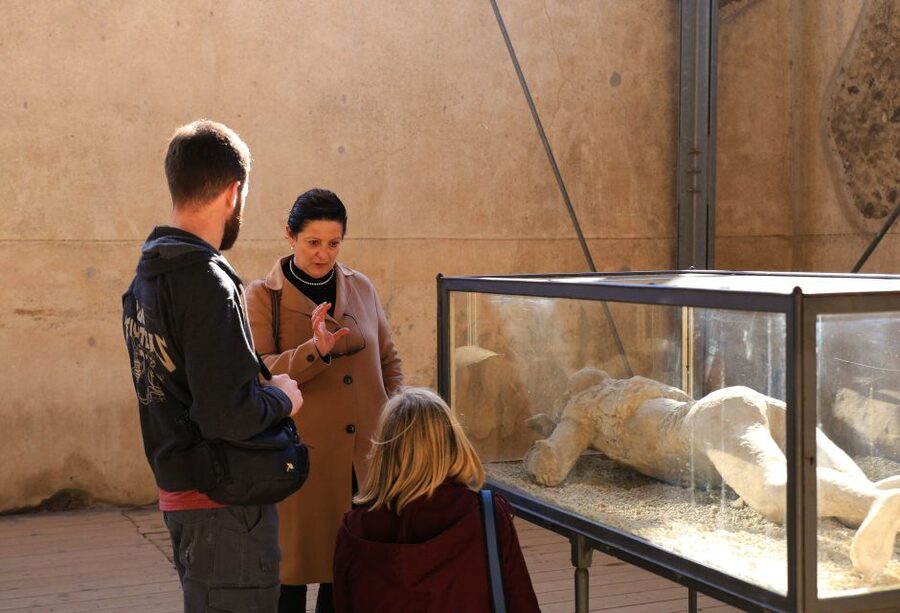
Pompeii rewards a careful guide. This small-group walking tour pairs fast entry with an archaeologist who can explain what you are seeing, not just point at old walls. I especially like the focus on Roman daily life and the way guides such as Lello, Italo, and Raffaele have used humor, stories, and sharp detail to keep families interested. I also like that the tour leaves you with suggestions for exploring more of the enormous site afterward.
The main consideration is time. Two hours is enough for a strong introduction, but Pompeii is far too large to see properly in one short visit. The $105 price is reasonable if you value expert interpretation and skip-the-line access, but less appealing if you prefer wandering alone or already know the site well.
In This Review
- Key things to know before you book
- Meeting the archaeologist near Porta Marina Inferiore
- Skip-the-line entry saves more than time
- Walking on Pompeii’s original streets
- Roman homes, meals, and private life
- Bakeries, markets, and the practical city
- The Forum and the city’s public life
- Why an archaeologist changes the experience
- Pace, group size, and family appeal
- Is $105 good value?
- Practical planning for a smoother visit
- Who should book this Pompeii tour?
- Should you book it?
- FAQ
- How long does the Pompeii tour last?
- Where do I meet the guide?
- Is admission included in the price?
- Is the tour offered in English?
- What should I bring?
- Can I bring luggage or a stroller?
Key things to know before you book
- Meet at Coffee Shop Vittoria: The meeting point is by the entrance, close to Porta Marina Inferiore, making it fairly easy to find before the walk begins.
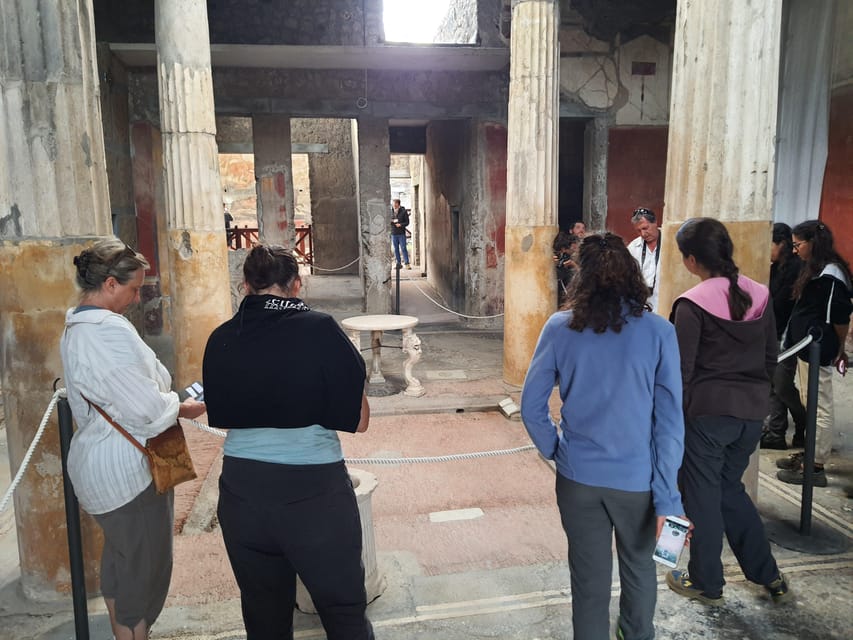
- An archaeologist leads the visit: The guide explains construction, customs, work, food, religion, and public life from an archaeological point of view.
- You enter through a separate access point: Skip-the-line entry matters most during crowded periods, when Pompeii’s entrance queues can eat into your sightseeing time.
- The tour covers major highlights, not the entire city: Expect streets, the Forum, public buildings, homes, bakeries, and other key areas, then continue alone if time allows.
- Family groups are well served: Guides have been praised for holding the attention of children and adults with questions, jokes, and vivid scenes from Roman life.
- Pack lightly and dress for walking: Comfortable shoes, water, a hat, and sunscreen will make the rough paving and open sun easier to handle.
Meeting the archaeologist near Porta Marina Inferiore
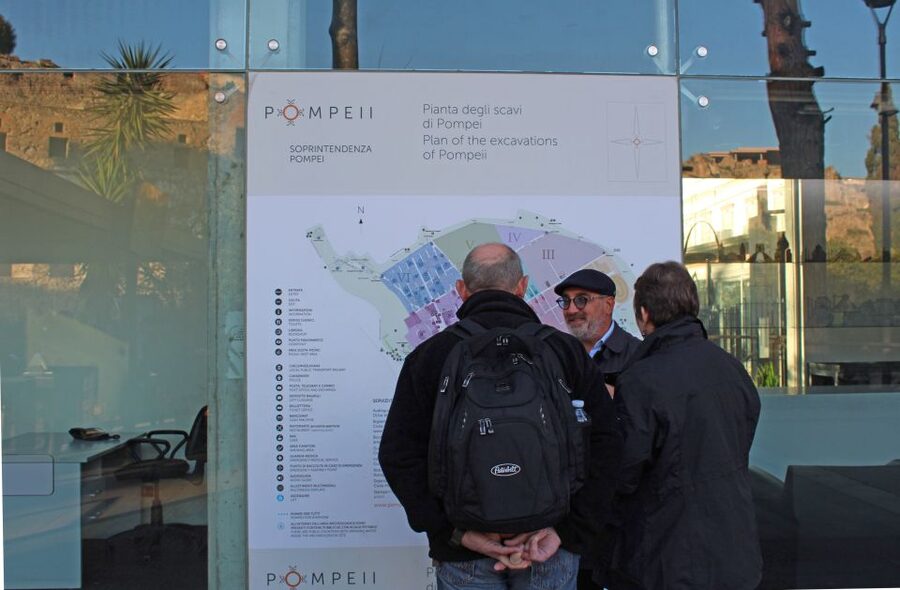
Your guide waits at the entrance of Coffee Shop Vittoria, close to Pompeii’s Porta Marina Inferiore entrance. This is not a hotel pickup tour, so you must make your own way to Pompeii and arrive at the coffee shop before the scheduled start.
That arrangement keeps things simple. You are already near the archaeological entrance, and the group can move inside without wasting time on a long transfer. Still, allow enough time to find the coffee shop and gather your party. Pompeii has several entrances and the site is large, so checking the meeting point carefully matters.
The tour is offered in English. Past guides have included Lello, also spelled Lello or Lelo in some accounts, Italo, Leonardo, Anna, Maria, Rosanna, and Raffaele. Names vary by departure, so you should book for the archaeologist-led format rather than expecting a particular individual.
The strongest guide accounts share a clear pattern: lively delivery, strong command of the subject, and an ability to involve the whole group. Lello has been particularly praised for working well with children, while Italo has helped people understand how to read the ruins after the guided portion ends. Raffaele has also been singled out for detailed explanations.
More Pompeii and Vesuvius trips:
- Pompeii: Entry Ticket and Guided Tour with an Archaeologist
★ 4.8 · 19,459 reviews - Pompeii: Entry Ticket with Optional Audio Guide
★ 4.2 · 12,360 reviews - Pompeii: Small Group Tour with an Archaeologist
★ 4.8 · 12,264 reviews
Skip-the-line entry saves more than time
The tour includes admission and access through a separate entrance. That is useful because Pompeii is one of Italy’s major archaeological attractions, and waiting outside in summer sun is not a good use of your limited sightseeing time.
Fast entry does not mean the site will feel empty. Once inside, you still share the streets with other groups, school parties, and independent visitors. The real benefit is getting your visit started promptly and moving with a guide who knows how to handle crowded sections.
One past experience described the guide steering the group away from heavy congestion and politely dealing with people who tried to jump ahead. That kind of practical crowd management can make a real difference in narrow streets and small rooms, where a large group can block the view.
The separate entrance is especially useful if Pompeii is part of a tightly planned day. It gives you a better chance of seeing the archaeological site without losing a large part of your morning or afternoon to a queue.
Walking on Pompeii’s original streets
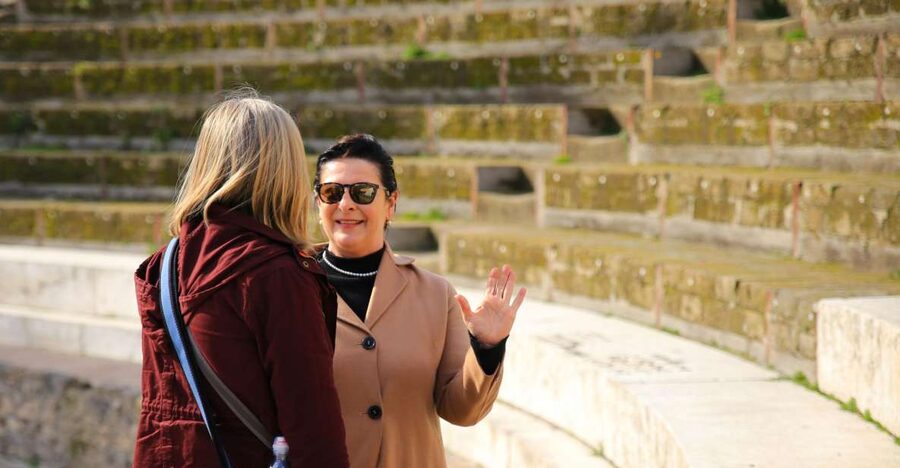
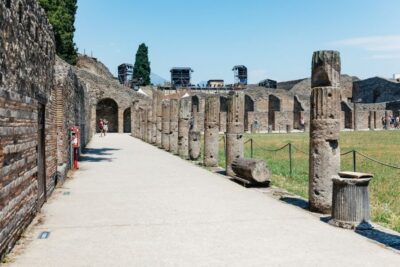
The first great pleasure here is simply walking through a Roman city instead of viewing isolated objects in a museum. You move along original volcanic stone paving and see how streets, homes, shops, public buildings, and gathering places once fit together.
The uneven surface is authentic, but it is also hard on your feet. Wear sturdy, comfortable shoes rather than thin sandals. A hat, sunscreen, and water are sensible because much of the walk takes place outdoors, with little relief from the sun.
Your guide’s job is to turn the remains into a readable city. A wall alone tells you little. An archaeologist can explain what a room was for, how its design reflected Roman customs, and what clues reveal the lives of the people who used it.
This is where the tour earns its price. You are not simply looking at preserved masonry. You are learning how to interpret the site, which helps you get more from the areas you explore after the group tour ends.
Roman homes, meals, and private life
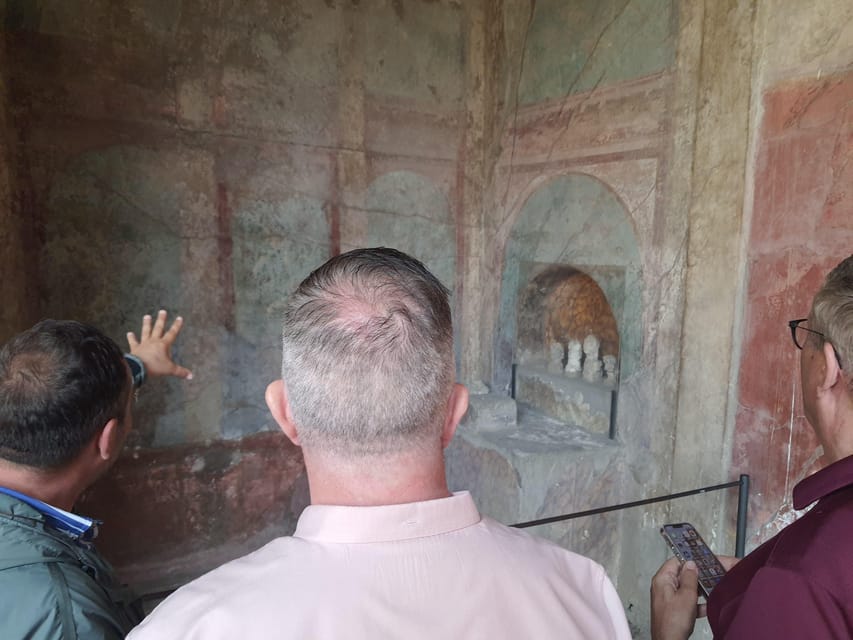
The tour uses Pompeii’s houses to explain how Roman people lived. You may hear about women reclining on marble dining couches during a feast, the arrangement of a Roman triclinium, and the social rules behind a meal.
These details make domestic spaces easier to understand. A beautiful room was not just decoration. Its layout could show how a family entertained, displayed wealth, and controlled who entered different parts of the house.
The guide also places ordinary life beside luxury. Pompeii was not only a city of grand villas. Its streets held workers, shopkeepers, bakers, politicians, enslaved people, and families with very different resources.
One especially thoughtful account praised a guide for treating a room connected with a slave woman with care and respect. That matters. Pompeii can tempt guides into easy jokes about sex, death, and ancient excess, but the strongest tours also remember that real people lived and suffered here.
You should expect a mix of humor and solemn moments. Several guides have been praised for being funny without losing sight of the human cost of the eruption and the difficult work needed to excavate and preserve the city.
A few more Pompeii bookings to compare
- Pompeii Small Group Tour with an Archaeologist
★ 5.0 · 6,593 reviews - Pompeii: Skip-the-Line Entrance Ticket with Audio Guide
★ 4.0 · 2,509 reviews - Naples: Pompeii and Mt. Vesuvius with Lunch and Wine Tasting
★ 4.5 · 2,454 reviews - Pompeii: Archaeological Park Tour with Ticket on request
★ 4.5 · 2,283 reviews
Bakeries, markets, and the practical city
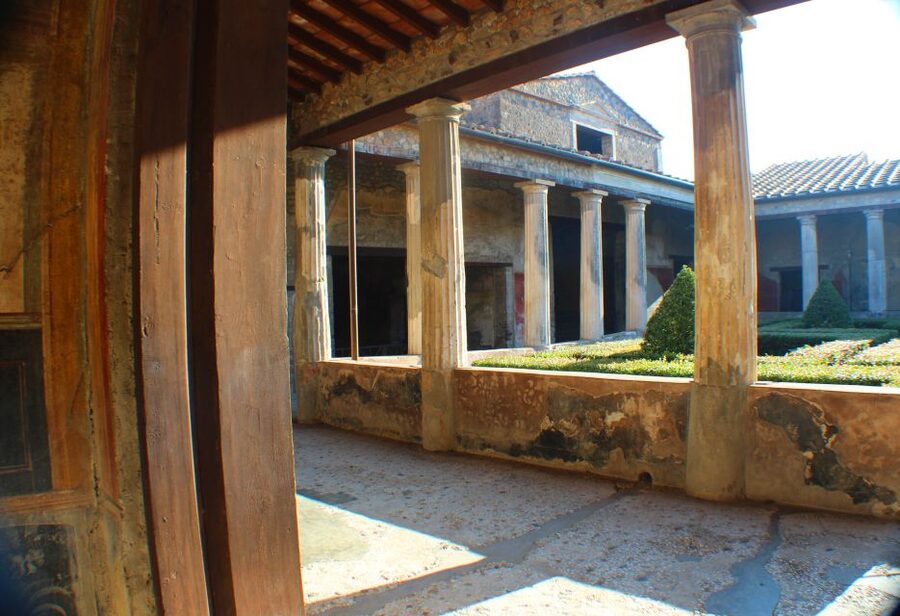
Pompeii becomes far more vivid when you consider its working spaces. The tour points toward bakeries, shops, and markets, helping you picture bread being prepared and sold rather than treating the ovens as lifeless ruins.
The smell of fresh-baked bread is part of the tour’s storytelling rather than a promise of food on site. That distinction is worth keeping in mind. Lunch and drinks are not included, so bring water and plan your meal separately.
The market area offers another useful window into daily routine. Here you can imagine people buying goods, meeting neighbors, and handling the basic business of city life. The guide’s explanations connect these spaces to the wider Roman economy and social order.
You might also hear about public debate and local politics near the Forum. Pompeii’s civic center was a place for business, ceremony, religion, and political activity. A good explanation helps you see why the Forum mattered instead of treating it as just another open rectangle surrounded by columns.
The Forum and the city’s public life
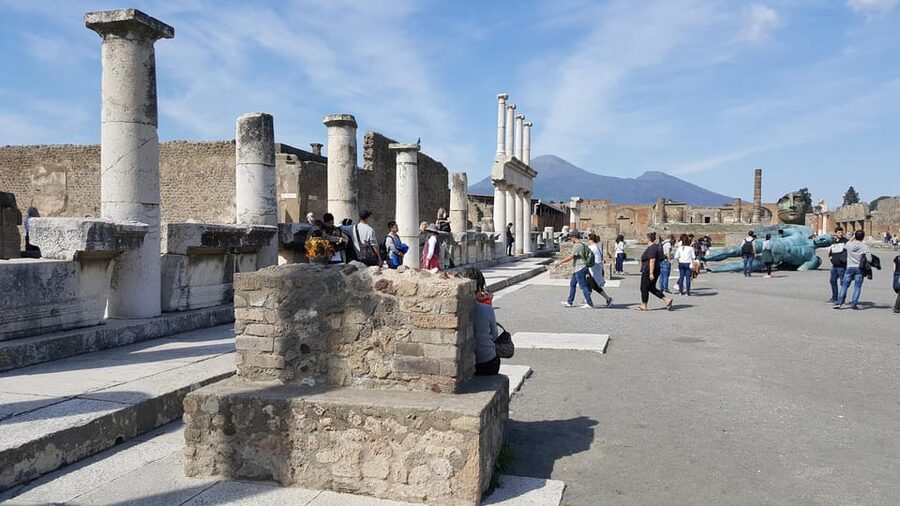
The Forum is one of the tour’s essential stops. It was where people gathered, conducted public business, and encountered the official side of Roman life.
The value here is context. You can look at temples, civic buildings, and open spaces on your own, but an archaeologist can explain how those pieces worked together. The guide’s descriptions of politicians, public gatherings, and local customs help you picture the city as an active community.
The tour also gives attention to public buildings and bathing culture. You might learn how gymnasiums, baths, and other shared spaces shaped Roman routine. The supplied route description mentions gladiators training in a gymnasium, which adds a memorable image to the discussion of exercise and public display.
Do not expect every corner of Pompeii in this visit. The site is enormous, and even a well-paced tour can cover only a portion of it. One useful feature is that guides often point out what to see next, giving you a plan for additional time on your own.
Why an archaeologist changes the experience
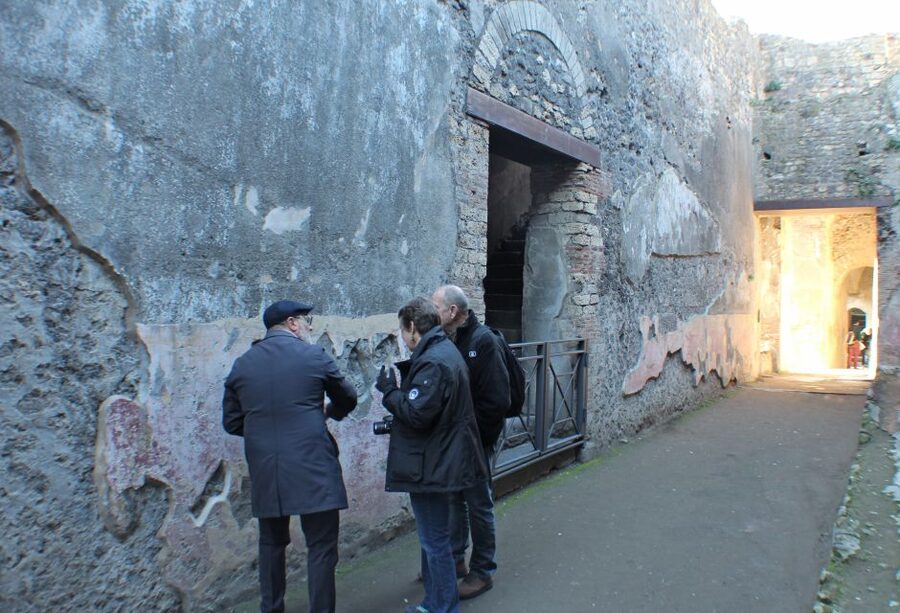
Pompeii is possible without a guide. You can walk in, follow a map, and admire the remains. What you lose is the system for understanding them.
An archaeologist can explain how excavation works, why some areas remain closed, and why restoration takes so much time and money. You also gain a sense of how researchers read evidence from walls, floors, objects, and building layouts.
That extra layer is most useful for first-time visitors. If you already know Roman architecture or have studied Pompeii, you may prefer a slower independent visit. For most people, though, the guided introduction makes the rest of the site easier to appreciate.
The best accounts describe guides who explain more than basic dates. Italo, for example, has been praised for teaching people how to interpret the ruins on their own. That is a strong sign of a good tour: you leave with a way of looking, not just a list of facts.
Pace, group size, and family appeal
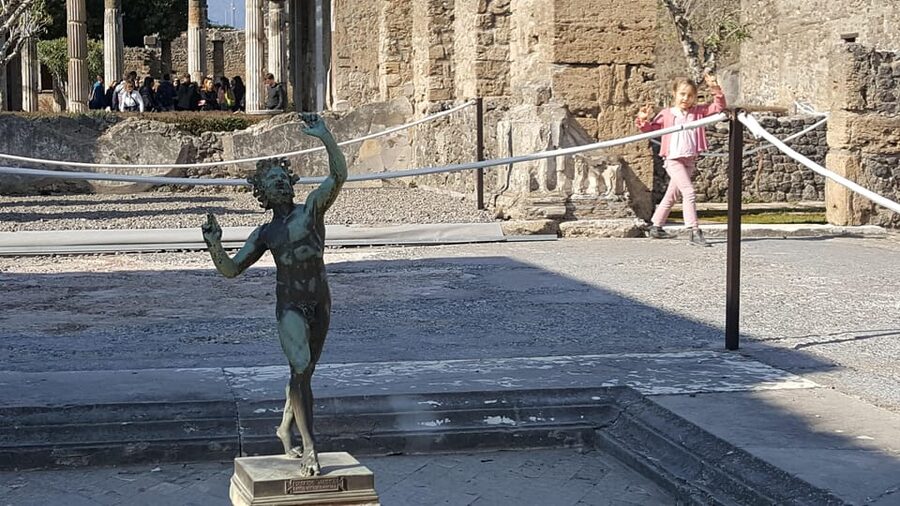
The experience is described as a small-group tour, and one account put the group at roughly 15 people. That is small enough for personal questions and direct contact with the guide, while still keeping the cost below a private tour.
Headsets have been used on some departures, allowing you to hear the guide without standing shoulder to shoulder. Equipment can vary, so do not treat that as guaranteed, but it is a useful feature in a noisy archaeological setting.
The pace receives strong praise. Guides cover a lot without making the walk feel frantic, and they usually allow time for questions and photographs. The tradeoff is that the route cannot pause at every interesting building.
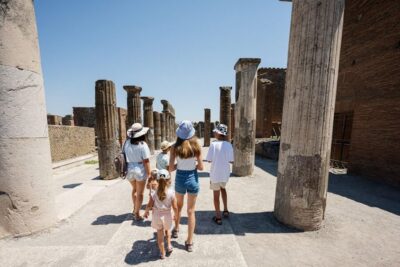
Families appear to be a particularly good match. Children aged 11, 14, and 16 were described as engaged throughout one tour, and another guide kept younger children laughing while still teaching them about Roman life. That comes down to storytelling and interaction, not simply the subject matter.
If your group includes children, tell them beforehand that Pompeii involves substantial walking over uneven volcanic paving. The stories will hold attention, but comfortable footwear and water still matter.
Is $105 good value?
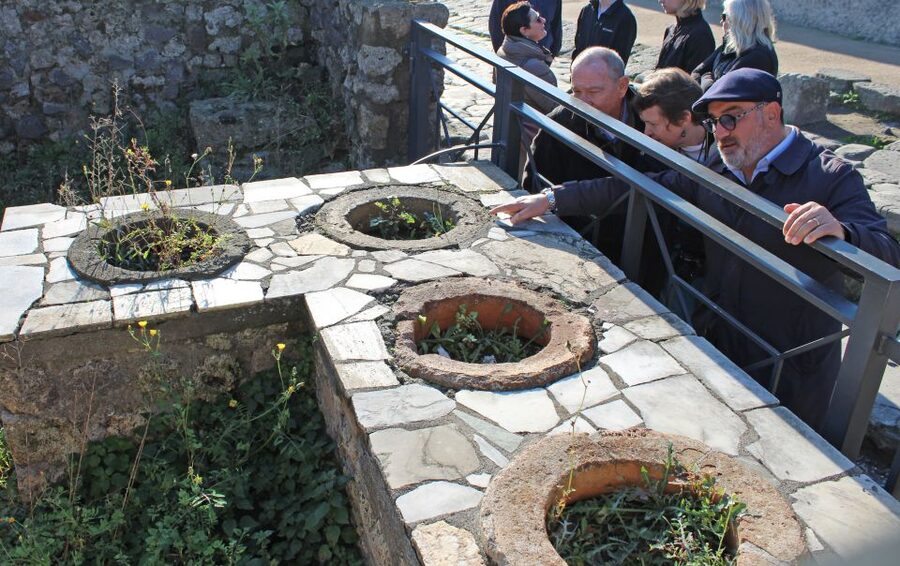
At $105 per person, this is not the cheapest way to enter Pompeii. The price includes admission, a professional English-speaking guide, and the benefit of separate entry.
I think the value depends on your priorities. If you have only one chance to visit, want to avoid a queue, and care about understanding what you see, the cost is defensible. Pompeii is too large and too complex for a casual stroll to reveal everything.
The value is also better if you stay after the tour. Several guides have offered suggestions for additional sights, and some people continued for another couple of hours using what they had learned. In that case, the tour functions as an orientation session followed by independent exploration.
The price is harder to justify if you have already visited with a strong guide, dislike group schedules, or want to spend a long time inside a single villa. A private tour would offer more control, while an audio guide or self-guided visit would cost less.
The advertised duration is two hours. Some past tours lasted around two and a half hours, but you should plan around the official two-hour schedule rather than count on extra time. If you want to see most of Pompeii, reserve additional time after the guided walk.
Practical planning for a smoother visit
Bring comfortable shoes, sunscreen, and a sun hat. A refillable water bottle is also a smart choice, since drinks are not included and the walk can be tiring.
Large bags, luggage, baby strollers, and umbrellas are not allowed. Pack only what you need for the site. Families with small children should check the stroller restriction carefully before booking.
You must provide each participant’s full name as shown on the relevant identification document. A passport or ID card is specifically required for children, so have the correct details ready when reserving.
The tour does not include hotel pickup or drop-off. You need to arrange transport to Pompeii and return afterward. The meeting point is close to Porta Marina Inferiore, and one past guide helped a group find its train after the tour, but that kind of assistance should be viewed as a courtesy rather than a promised transfer service.
Free cancellation is available up to 24 hours before the start time, and the reserve-now, pay-later option keeps your plans flexible. These terms are useful if your Campania schedule may change.
Who should book this Pompeii tour?
I would choose this tour for a first visit, a family group, or anyone who wants the ruins explained in plain English. It is also a good fit if your day is tight and you would rather spend your time inside Pompeii than in an entry queue.
History lovers should appreciate the archaeological viewpoint, especially the attention to Roman daily life, construction, food, politics, and social customs. The tour also suits people who enjoy a guide with personality. The strongest guides here are described as warm, witty, and highly engaged rather than dry lecturers.
I would think twice if you want a quiet solo walk, need a stroller, carry luggage, or plan to spend the entire day moving at your own speed. The route covers important areas, but it cannot represent the whole city in two hours.
Should you book it?
Yes, if you want Pompeii to make sense rather than simply look impressive. The separate entry, small group, and archaeologist-led commentary give you a useful start, and the guide’s suggestions can help you explore more afterward.
Book it with realistic expectations. You are paying for a focused introduction, not an all-day excavation visit. Wear good shoes, carry water, arrive at Coffee Shop Vittoria early, and leave extra time to continue alone. For most first-time visitors, that combination offers a strong balance of access, explanation, and value.
FAQ
How long does the Pompeii tour last?
The stated duration is two hours. Some past tours lasted approximately two and a half hours, but you should plan your schedule around the official two-hour duration.
Where do I meet the guide?
Meet the guide at the entrance of Coffee Shop Vittoria, close to the Porta Marina Inferiore entrance of the Pompeii archaeological site.
Is admission included in the price?
Yes. The tour price includes admission tickets to the archaeological site and a professional English-speaking guide.
Is the tour offered in English?
Yes. English is the listed tour language, and the experience includes a live English-speaking guide.
What should I bring?
Bring comfortable shoes, a sun hat, and sunscreen. Water is also sensible because drinks are not included.
Can I bring luggage or a stroller?
No. Luggage, large bags, baby strollers, and umbrellas are not allowed. A passport or ID card is required for children, and all participant names must match the names on their identification.
Recently added around Pompeii
- Pompeii Ruins Private Tour with Optional Skip-the-Line Entry★ 4.9 · 732 reviews
- Pompeii 3hours Villa of Mysteries tour with an Archaeologist★ 4.8 · 486 reviews
- Pompeii: Group Tour with an Archeologist Guide★ 4.4 · 490 reviews
- Pompeii: Exclusive Tour with Archaeologist and Entry Tickets★ 4.9 · 634 reviews
- Pompeii: Small-Group Tour of Pompeii and Herculaneum★ 4.8 · 867 reviews
- Pompeii: Skip-the-Line Guided Tour with Expert Archaeologist★ 4.8 · 196 reviews
- Pompeii: Skip-the-line-Ticket and Guided Tour★ 4.6 · 1,152 reviews
- Pompeii: Skip-the-Line Entry & Audioguide★ 3.8 · 225 reviews
Pompeii & Vesuvius Tours, compared.
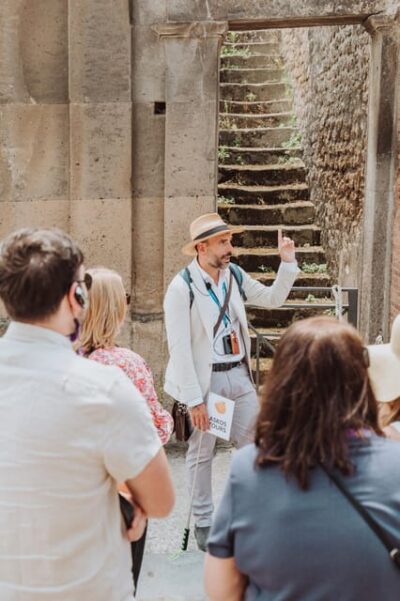
Entry Ticket and Guided Tour with an Archaeologist
Read our review →
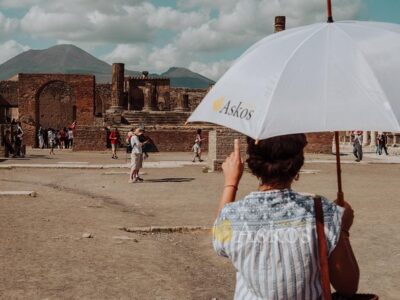

Pompeii Small Group Tour with an Archaeologist
Read our review →
Pompeii, Amalfi Coast and Positano Day Trip from Rome
Read our review →Browse the lists this tour appears in