
Reviewed · POMPEII & VESUVIUS TOURS
Private Day Tour to Vesuvius, Herculaneum & Pompeii with Pick Up
Three ancient worlds, one long day. This private tour links Pompeii, Herculaneum, and Mount Vesuvius with door-to-door transport, making a difficult day of sightseeing much easier to manage. I especially like the private vehicle and the chance to ask questions throughout the day, rather than follow a large group. I also like the contrast between Pompeii’s broad streets and Herculaneum’s smaller, better-preserved remains. The main drawback is the pace: seeing all three places in eight or nine hours leaves little room for wandering or a relaxed lunch.
The tour costs $120.98 per person before certain admissions, depending on the option you choose. You still need to account for the Mount Vesuvius ticket, listed at €12.60 per person, and Pompeii and Herculaneum admission may not be included unless you select that package. The volcano walk also requires decent fitness, solid shoes, and enough energy after several hours among the ruins.
In This Review
- Key points at a glance
- Why this private day works
- Pompeii’s west gate and public center
- Shops, villas, baths, and theatre
- Herculaneum’s smaller, better-preserved ruins
- Climbing Mount Vesuvius
- Guides, drivers, and the private format
- Lunch, timing, and the limits of one day
- Price and practical value
- Who should book this day?
- Should you book it?
- FAQ
- How long does the tour take?
- Is pickup included?
- Are Pompeii and Herculaneum tickets included?
- Is the Mount Vesuvius ticket included?
- Can I add a guide?
- How difficult is the Vesuvius walk?
Key points at a glance
- Three major sites in one day: Visit Pompeii, Herculaneum, and the crater trail of Vesuvius without arranging separate transport.
- Private vehicle and pickup: Pickup can be arranged from accommodation, ports, train platforms, and airports where road access permits.
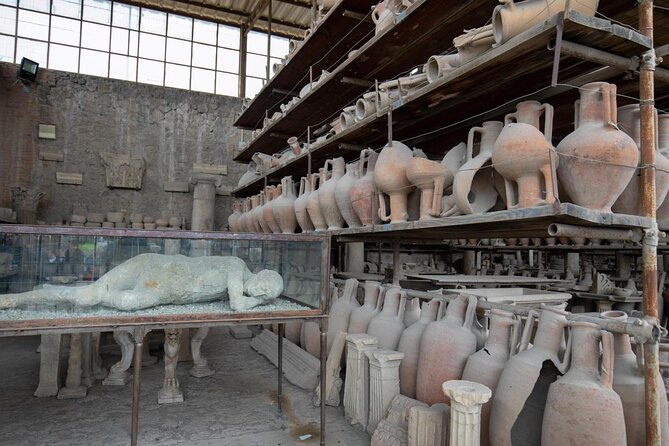
- Pompeii’s main sights: See the Forum, Basilica, Thermopolium, House of the Faun, House of the Vettii, baths, and theatre.
- Herculaneum offers a different experience: Its smaller scale and strong preservation make it more intimate than Pompeii.
- Crater walk included in the plan: Allow about 35 minutes up and 35 minutes back from the upper parking area, with time for views.
- Optional site guide: You can upgrade to include a licensed guide at the archaeological parks, a useful choice for first-time visitors.
Why this private day works
The great strength here is not simply getting from place to place. It is the way a private driver turns a complicated day into a single, organized outing. You do not need to work out regional trains, find the correct entrance, or search for a taxi up the volcano.
Pickup is offered from accommodation, ports, train stations, and airports in the Naples, Salerno, Amalfi Coast, and Sorrento areas, subject to road access. If your lodging sits on a narrow street, the vehicle may meet you at the closest point it can reach. Cruise passengers need to provide the ship name, docking time, disembarkation time, and re-boarding time when booking.
The driver also gives you useful context between stops. Antonio, Antonino, Tony, Domenico, and Enzo are among the names associated with the service in the feedback, though your assigned driver and guide may differ. Antonino receives especially strong praise for his energy, historical knowledge, patience, and ability to keep children interested. One family also appreciated his help with a wheelchair, although you should discuss mobility needs before booking because the tour requires moderate physical fitness.
A private outing gives you room to ask questions and adjust the pace within reason. It does not turn Pompeii into a quiet half-day visit, though. The schedule is built around roughly two hours at Pompeii, one hour and 40 minutes at Herculaneum, and about two and a half hours for the Vesuvius section, including drives and the walk.
More Pompeii and Vesuvius trips:
- Pompeii: Entry Ticket and Guided Tour with an Archaeologist
★ 4.8 · 19,459 reviews - Pompeii: Entry Ticket with Optional Audio Guide
★ 4.2 · 12,360 reviews - Pompeii: Small Group Tour with an Archaeologist
★ 4.8 · 12,264 reviews
Pompeii’s west gate and public center
Pompeii is first, and that is a sensible choice. You meet the licensed guide at the main gate after purchasing or receiving your admission, depending on the package selected. From there, the route begins near Piazza Porta Marina, the western entrance and one of the most impressive of Pompeii’s seven gates.
The visit then moves toward the Civil Forum, the city’s public heart. This open space once connected government, justice, trade, administration, and worship. Your guide can help you read the ruins as a working town rather than a field of broken stone. That matters because Pompeii can feel confusing at first. Walls, columns, and streets repeat themselves, and a good explanation gives each building a purpose.
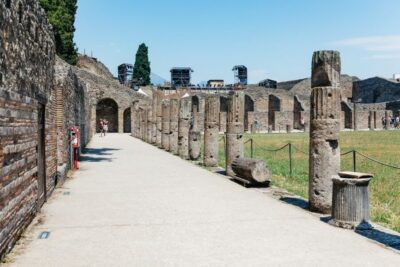
The Basilica follows. This was a place for business and legal matters, entered from the Forum through five openings separated by tuff pillars. It is not as instantly familiar as the villas, but it helps explain how public life operated.
Allow about 10 minutes at the Forum and five minutes at the Basilica within the larger Pompeii visit. Those brief stops are part of a fast overview, not a full archaeological study.
Shops, villas, baths, and theatre
The Thermopolium VI is one of the most appealing stops for visitors who want everyday life. It was a small cook-shop selling hot food, a useful reminder that Pompeii was not only a city of grand homes and temples. Details like this can make the ancient town feel practical and surprisingly familiar.
The House of the Faun is much grander. Covering roughly 3,000 square metres, it occupies a full city block and dates in its original layout to the second century BC. You get a sense of the size and ambition of wealthy Pompeian homes here, especially after seeing the compact shops.
The House of the Vettii adds another layer. It belonged to the brothers Aulus Vettius Restitutus and Aulus Vettius Conviva, freedmen who became wealthy through trade. Priapus, the god linked with prosperity, appears near the doorway. The house’s decoration and the story of its owners offer a useful lesson in social mobility and money in Roman society.
The Stabian Baths show a different side of daily routine. The complex includes a pool, colonnade, dressing room, cold bath, warm bath, and hot bath. Your guide can explain the sequence from the apodyterium to the frigidarium, tepidarium, and calidarium, so you understand how the spaces worked rather than simply seeing a series of rooms.
The Grand Theatre closes the main Pompeii route. Built into a natural slope, its divided seating and vaulted passage show how carefully the Romans designed public entertainment spaces. You should expect a strong introduction to the site, but not every street, house, or public building. Pompeii is far too large to cover fully in two hours.
Wear shoes with firm soles. The ancient paving is uneven, and you will spend much of this visit walking outdoors. Summer heat can also make a fast route feel more demanding than the timetable suggests.
Herculaneum’s smaller, better-preserved ruins
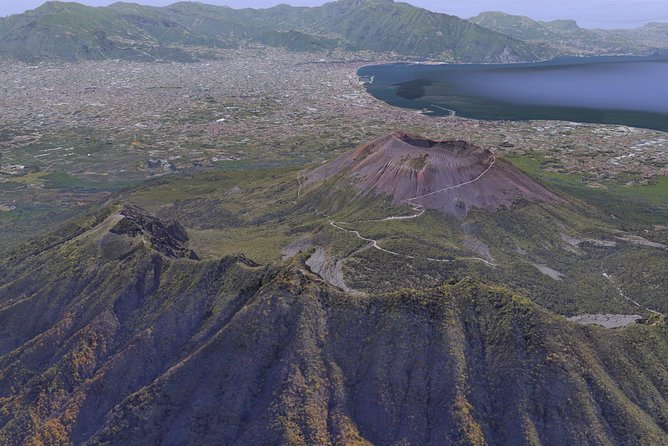
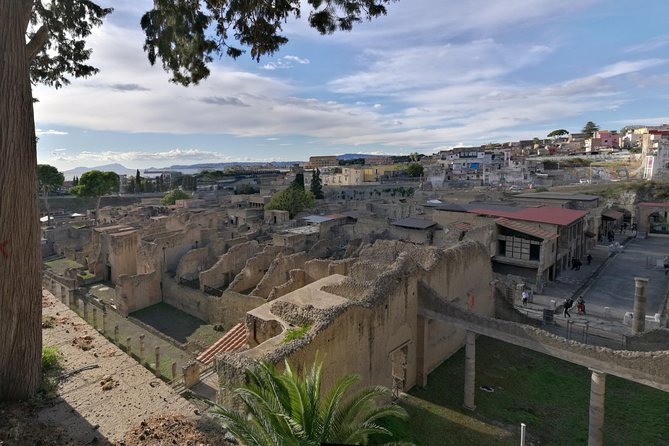
After Pompeii, the driver takes you to the Archaeological Park of Herculaneum. You meet another licensed guide at the entrance, then explore for about one hour and 40 minutes.
Herculaneum is smaller than Pompeii, which makes the visit easier to grasp in a limited period. Its preservation also gives you a closer look at details that did not survive as clearly elsewhere. I would not treat it as a lesser version of Pompeii. The two places tell different stories, and the contrast is one of the best reasons to include both.
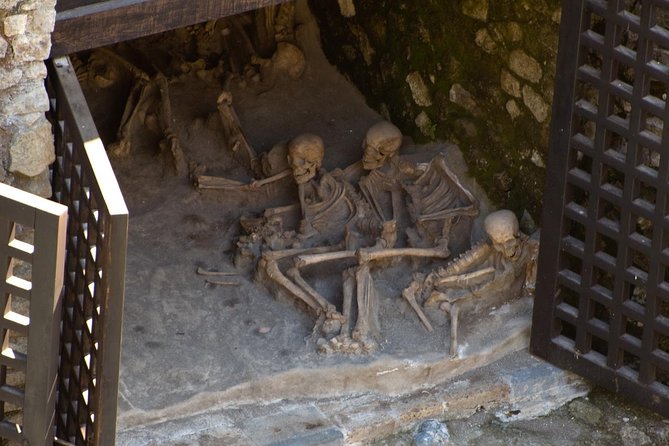
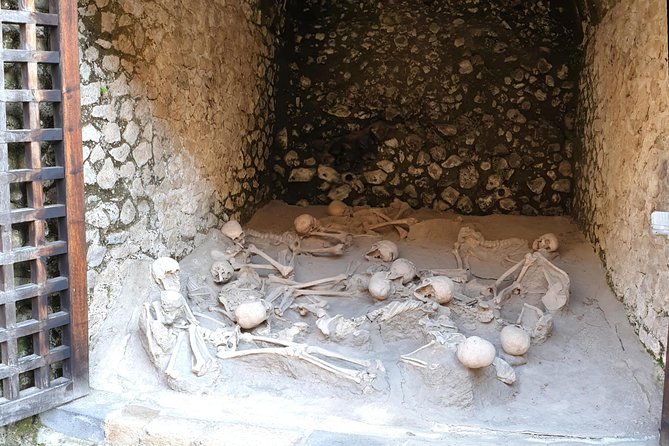
At the marina area, you can see the restored remains of a boat. The same area produced 300 skeletons, a stark reminder of the eruption’s human cost. The boat display is one of the newer archaeological discoveries highlighted on the route, and it gives the waterfront a direct connection to the people who lived and worked here.
Casa dei Cervi, one of Herculaneum’s wealthiest private homes, is another scheduled stop. The size and decoration point to an owner of immense wealth. It pairs well with Pompeii’s House of the Faun and House of the Vettii, allowing you to compare elite Roman homes across the two towns.
Herculaneum rewards careful looking, but the available time remains tight. If your main aim is to study architecture, mosaics, or domestic details at length, a separate visit would be better. On this day, the guide’s selection of important areas helps you use the time well.
A few more Pompeii bookings to compare
- Pompeii Small Group Tour with an Archaeologist
★ 5.0 · 6,593 reviews - Pompeii: Skip-the-Line Entrance Ticket with Audio Guide
★ 4.0 · 2,509 reviews - Naples: Pompeii and Mt. Vesuvius with Lunch and Wine Tasting
★ 4.5 · 2,454 reviews - Pompeii: Archaeological Park Tour with Ticket on request
★ 4.5 · 2,283 reviews
Climbing Mount Vesuvius
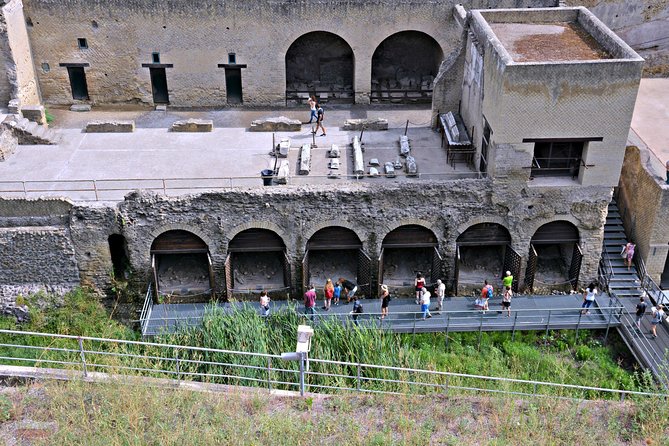
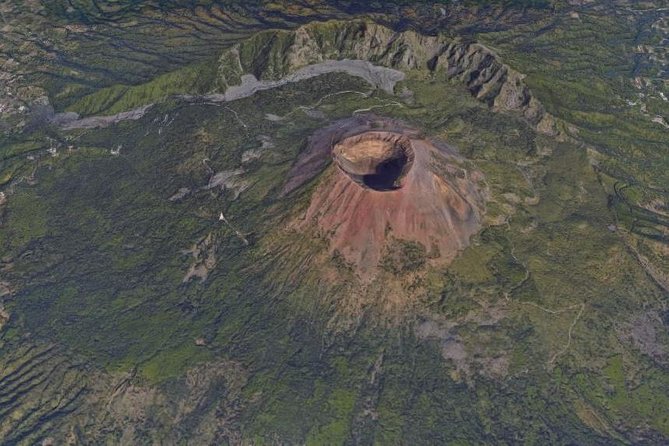
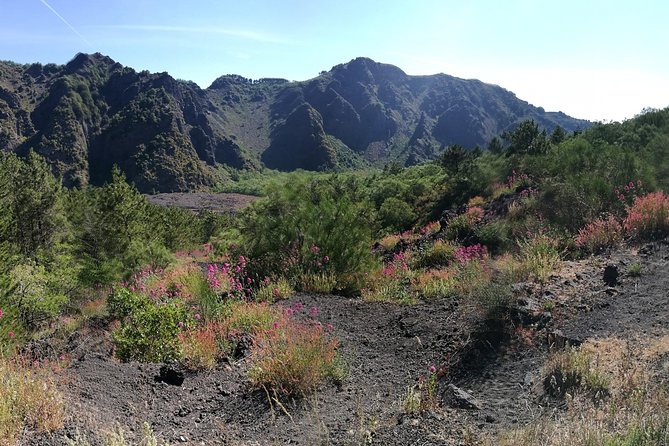
The volcano section begins at the upper parking area, around 1,000 metres above sea level, at the end of the Ercolano-Vesuvio road. The nature trail to the crater is called Il Gran Cono. Before walking, you can stop at a national park information point and buy a map.
The stated timing varies by how the day is described, but you should plan on roughly two and a half hours for the Vesuvius portion, including the drive from the highway, the walk, and the return drive. The climb itself takes about 35 minutes each way from the closest parking area. Some descriptions place the walk at about two miles up and back.
The trail is wide in parts but rough and gravelly, with a noticeable climb. Good walking shoes are important. One person described it as not too vertical, while another stressed the rough surface and hot ascent. Both points can be true: this is not a technical mountain hike, but it is still a real uphill walk after a full day of sightseeing.
At the top, you can look into the crater and across the Bay of Naples toward Sorrento when visibility is good. Clouds can hide the crater and reduce the views, so weather matters. The tour can be canceled for poor weather, with a different date or full refund offered, but even on a scheduled day cloud cover may limit what you see.
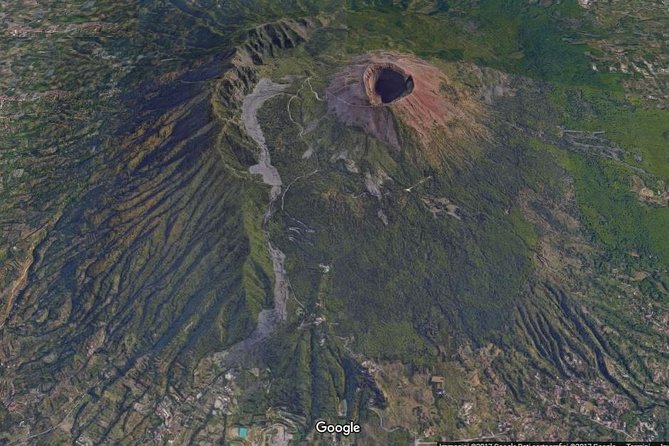
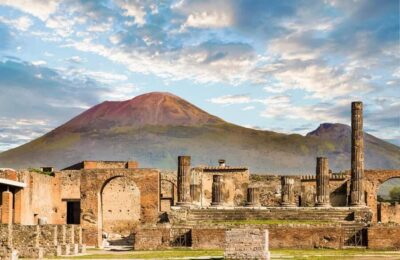
The opening view includes Mount Somma and the older volcanic formations around the summit. That setting adds geological context to the ruins below. You are not only visiting the volcano connected with the AD 79 eruption; you are walking through part of the volcanic system that shaped the whole area.
Guides, drivers, and the private format
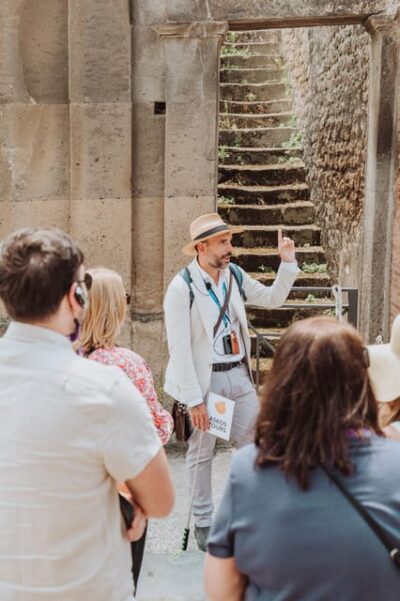
The guide upgrade is worth serious thought. Pompeii and Herculaneum are not self-explanatory places, and a private guide can connect buildings, social classes, food, bathing, theatre, politics, and the eruption into one clear story.
The strongest praise goes to guides such as Antonino, Antonio, Giacomo, Ilaria, and Alona for being friendly, clear, and engaging. Families particularly valued guides who kept children and teenagers involved. One couple described receiving photos and answers to many questions, while another appreciated a guide who adjusted the pace for a disabled family member.
Do confirm exactly what your chosen option includes. The basic description has a driver, while the professional guide and archaeological tickets may depend on the package. At Pompeii and Herculaneum, the route says admission tickets are not included unless selected. Mount Vesuvius is listed separately at €12.60 per person.
The private format also helps with transport comfort. A modern, spacious van has been praised, and drivers are described as prompt and polite. The vehicle matters here because you are moving between several sites, and a long day becomes tiring when transport is cramped or uncertain.
Lunch, timing, and the limits of one day
Lunch is not included. Food and drinks are also excluded, although bottled water is provided. Some versions of the day may include a stop at a local restaurant or organic farm, but that is not a fixed feature to assume when planning your budget.
You should ask about the lunch plan before setting out. One unhappy customer objected to the cost of a meal for four at an organic farm, while the operator replied that the group had requested a non-tourist restaurant after deciding not to climb Vesuvius. The practical lesson is simple: check the menu and prices before ordering, and tell the driver early if you want a quick meal, a set menu, or no restaurant stop.
The full day can stretch beyond eight hours, sometimes reaching nine or more without an added charge. That sounds generous, but the extra time does not remove the basic limit of daylight, traffic, opening times, and human energy. You are covering three major places, so the day feels active rather than leisurely.
For many people, the order works well: Pompeii in the morning, Herculaneum next, and Vesuvius last. Yet cloud conditions can make the volcano better earlier. If crater views are your top priority, ask whether the route can be adjusted. The final order is subject to the day’s traffic, site timing, and weather.
Price and practical value
At $120.98 per person, the price is attractive if you value private transport and are sharing the vehicle with several people. You are paying for a full-day driver service that links sites spread across the Bay of Naples, not merely for entry to Pompeii.
The value improves when you add the guide option and compare it with arranging separate taxis, local trains, volcano transport, and site guides on your own. It is also useful for a family, cruise passenger, or group staying in Sorrento, Naples, Salerno, or along the Amalfi Coast.
The cost is less compelling if you want a slow archaeological visit. Pompeii alone could occupy several days for a serious history enthusiast, and this outing gives you only about two hours there. Add ticket costs, lunch, and the Vesuvius fee, and the final bill will be higher than the headline price.
This is a convenience-and-context purchase. You are paying to make a demanding day possible, with explanations along the way and a private vehicle waiting between stops. You are not buying unlimited time at each site.
Who should book this day?
I would choose this tour if you want the three headline sights and have only one day available. It is particularly well suited to first-time visitors, families, cruise passengers, and anyone who does not want to manage transport across the region.
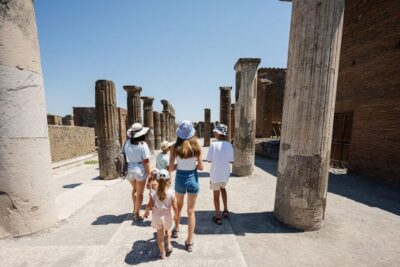
It also fits people who enjoy asking questions. Guides such as Antonino are praised for adjusting explanations, sharing local context, and keeping children involved. A private setting gives you more freedom than a large group, though the site schedule still controls the day.
I would choose a slower plan if Pompeii is your central interest. Spend a full day there, or give Pompeii and Herculaneum separate visits, then see Vesuvius another time. You will cover less, but you will have more room for side streets, houses, photographs, and pauses.
The tour requires moderate fitness. You should be comfortable walking over uneven ancient paving and climbing the volcano trail. Casual dress is fine, but comfortable shoes are essential. Service animals are allowed, and you should raise any mobility concern when arranging the pickup.
Should you book it?
Book this private Pompeii, Herculaneum, and Vesuvius tour if your priority is maximum coverage with minimum transport stress. The private driver, optional licensed guides, strong communication, and flexible pickup make a complicated day far easier.
Do not book it expecting a relaxed, scholarly examination of either archaeological park. The best version of this experience comes when you accept the pace, wear proper shoes, budget for admissions and lunch, and decide in advance whether the volcano climb is a must.
For a first look at the Bay of Naples ruins, I find the combination hard to beat. You see the public life of Pompeii, the preserved homes of Herculaneum, and the volcanic crater that links them. That is a lot for one day, but it is a memorable lot.
FAQ
How long does the tour take?
The experience lasts approximately eight to nine hours. The day can sometimes run longer without an additional charge, depending on the schedule and conditions.
Is pickup included?
Pickup and drop-off are offered from accommodation, ports, train stations, and airports in the Naples, Salerno, Amalfi Coast, and Sorrento areas, where the streets allow vehicle access. Otherwise, pickup occurs at the nearest accessible point.
Are Pompeii and Herculaneum tickets included?
Admission tickets are included only if you select the option that includes them. The base arrangement may require you to purchase tickets at the archaeological site.
Is the Mount Vesuvius ticket included?
No. The Mount Vesuvius admission fee is listed separately at €12.60 per person.
Can I add a guide?
Yes. You can upgrade to include a professional guide at the archaeological sites. The route includes a licensed guide at the main gate of Pompeii and Herculaneum when the guided option is selected.
How difficult is the Vesuvius walk?
The walk from the upper parking area takes about 35 minutes to the top and about 35 minutes back. The trail is rough and gravelly, so comfortable walking or hiking shoes and moderate physical fitness are needed.
Recently added around Pompeii
- From Pompeii: Bus Transfer to Vesuvius with Park Entry Fee★ 4.2 · 700 reviews
- Pompeii Skip-the-line Tour with Archaeologist Guide★ 5.0 · 559 reviews
- Skip the Line Guided Tour of Pompeii led by an Archaeologist★ 5.0 · 703 reviews
- Visit in Pompeii – Pompeii Private Tour with Ada★ 5.0 · 436 reviews
- Ancient Pompeii Private Tour: Skip the Line & Kid-Friendly Option★ 5.0 · 167 reviews
- Pompeii Private Tour with an Archaeologist and Skip The Line★ 5.0 · 391 reviews
- Pompeii Private Tour with an Archaeologist and Skip The Line – 3 hours★ 5.0 · 564 reviews
- Sharing Tour of Pompeii★ 5.0 · 487 reviews
Pompeii & Vesuvius Tours, compared.
Entry Ticket and Guided Tour with an Archaeologist
Read our review →
Pompeii Small Group Tour with an Archaeologist
Read our review →
Pompeii, Amalfi Coast and Positano Day Trip from Rome
Read our review →Browse the lists this tour appears in