

Reviewed · POMPEII & VESUVIUS TOURS
Pompeii: Archaeological Park Tour with Ticket on request
Pompeii makes daily life feel startlingly close. I like the archaeologist guide, who turns broken walls and faded frescoes into stories about Roman homes, food, entertainment, and family life. I also like the two-hour length, long enough to see major sights without wearing yourself out in the sun. The main catch is that the express entry ticket may be an extra, so check that you choose the ticket option when booking.
This group walk covers Pompeii’s Roman Amphitheater, small theater, public gymnasium, houses, frescoes, and poignant casts of people and pets. Guides such as Lara, Emiliana, Eraldo, Maria, and Marco have been praised for clear explanations, humor, patience, and the ability to make the eruption of Vesuvius easier to understand. The meeting point at the Circumvesuviana station can take a little finding, so arrive early.
In This Review
- Key points to know before you book
- Why a guided walk helps at Pompeii
- Meeting at the Circumvesuviana station
- Entering Pompeii with the express ticket
- Walking the ancient streets
- The Amphitheater and Pompeii’s public life
- The small theater and public gymnasium
- Houses, frescoes, and rooms frozen in time
- The eruption and the human cost
- How much of Pompeii you actually see
- Group size, headsets, and the pace
- Price and overall value at $31.89
- Who should book this Pompeii tour?
- Final verdict: book it if you want context first
- FAQ
- How long does the Pompeii tour last?
- What language is the tour offered in?
- Is the Pompeii entry ticket included?
- Where do I meet the guide?
- What should I bring?
- Are headsets provided?
- Does the tour include hotel pickup?
- Is entry free on the first Sunday of the month?
- Can I cancel the booking?
Key points to know before you book
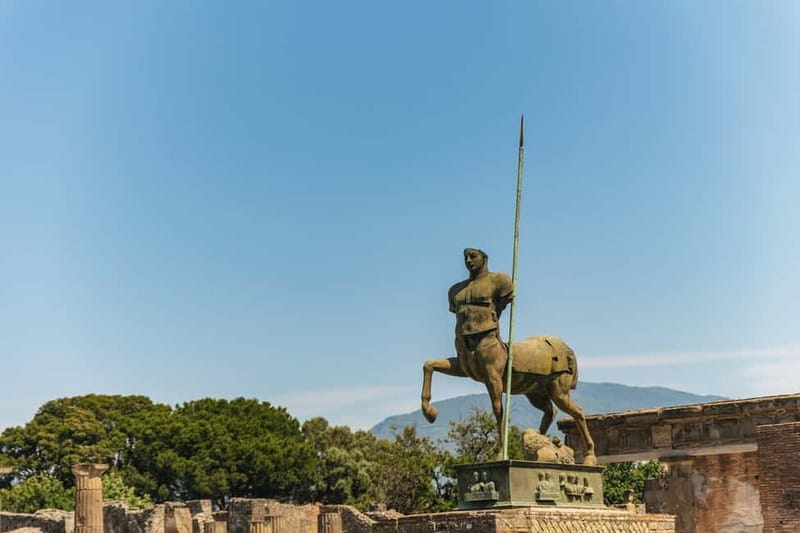
- Two hours gives you a useful first look: The guide leads you through important sections, then you can remain in the park and explore on your own.
- The guide adds real value: Pompeii can look like a maze of old stones without context. The explanations help you see how the streets, fountains, houses, theaters, and public buildings worked.
- The ticket choice matters: The express Pompeii ticket is included only if you select that option. A no-ticket booking does not guarantee entry.
- The meeting point is at the station: Meet on the first floor beside the entrance of the Tempio Travel Info Point in the Circumvesuviana Train Station.
- Expect heat and uneven walking: Shade is limited, and the archaeological park is large. Comfortable shoes, water, and sun protection make a real difference.
- The group can be fairly large: Headsets are available for groups of 16 or more, which helps you hear the guide even when the streets are crowded.
Why a guided walk helps at Pompeii
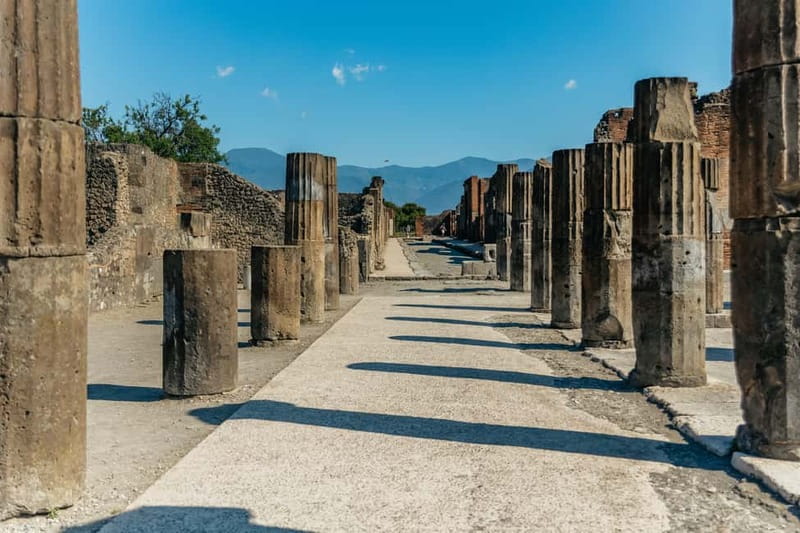
Pompeii is not a small ruin you can see in half an hour. It is an ancient Roman town spread across a large archaeological park, with streets, homes, shops, temples, theaters, baths, and public spaces. On your own, you can walk past a doorway or painted wall without knowing why it mattered.
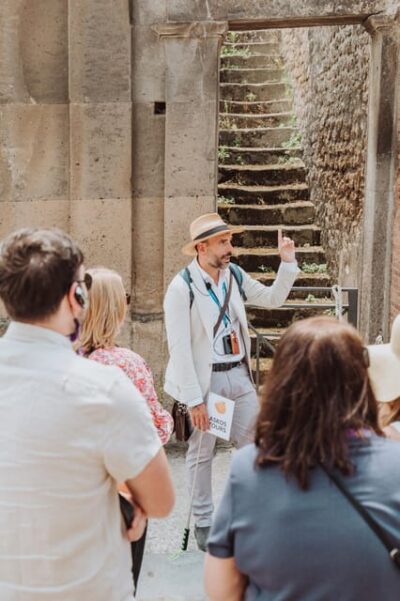
That is where this tour earns its price. An archaeologist guide gives you a framework for the site. Instead of seeing only collapsed buildings, you begin to understand how Pompeii functioned as an everyday town under the Roman Empire.
I particularly like the focus on ordinary life. The eruption is the famous story, but the strongest part of the visit is often the smaller detail: the design of a water fountain, the purpose of a room, the layout of a house, or the setting of a banquet. These details make Pompeii feel less like a museum and more like a town whose routine was suddenly interrupted.
The guides also bring different strengths. Lara has been praised for energy, detail, and humor. Emiliana is described as entertaining while leaving time for photographs and independent looking. Eraldo has a calm approach, including directing the group toward shaded areas during very hot weather. Maria and Laura have also been praised for clear speech and engaging explanations.
You cannot choose a particular guide, of course, but the pattern is encouraging. This is not simply a ticket handoff followed by a walk around the ruins. The guide is the main reason to book a group tour rather than enter alone.
More Pompeii and Vesuvius trips:
- Pompeii: Entry Ticket and Guided Tour with an Archaeologist
★ 4.8 · 19,459 reviews - Pompeii: Entry Ticket with Optional Audio Guide
★ 4.2 · 12,360 reviews - Pompeii: Small Group Tour with an Archaeologist
★ 4.8 · 12,264 reviews
Meeting at the Circumvesuviana station
The tour begins at the first floor of the Circumvesuviana Train Station, next to the entrance of the Tempio Travel Info Point. You exchange your voucher there for the Pompeii ticket, if your booking includes one, before heading into the archaeological park.
This location is practical if you arrive by train, but it is not completely obvious. Do not assume you will see a large booth with the tour company name. The station area can be busy, and the route toward the meeting point may feel unclear if you arrive at the last minute.
I would arrive at least 15 minutes early. That gives you time to find the Tempio Travel Info Point, sort out the voucher, and locate the guide without starting the day in a hurry. One useful detail is that luggage storage at the station has been available for 6 euros, which can help if you are carrying bags and visiting Pompeii between trains.
Parking information requires a little care. Free parking may be available at Osteria Nonna Cherubina on Via Andolfi 46, if the business is open and spaces are available. Construction has made that option difficult at times, and the walk to the site can take about 15 minutes. Parking directly near the archaeological site has been available for 3 euros per hour, but conditions can change.
The activity ends back at the meeting point. That makes the station a useful base for lunch, a train connection, or collecting luggage after the visit.
Entering Pompeii with the express ticket
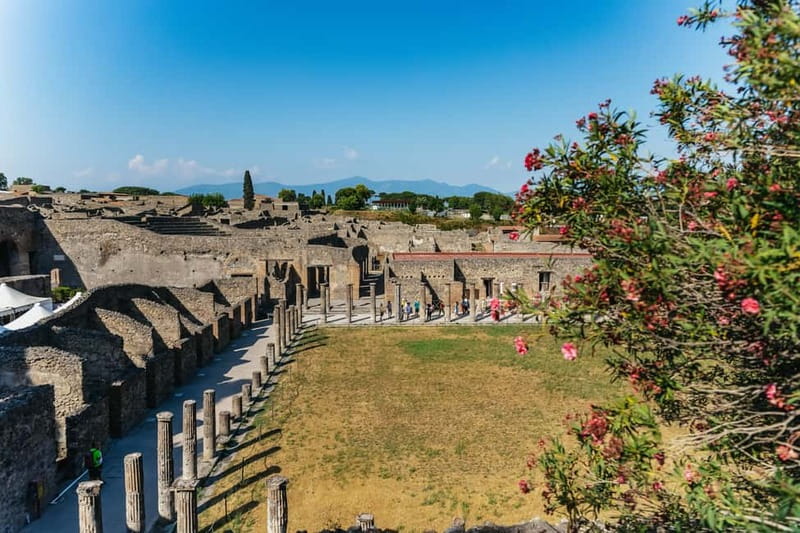
The ticket arrangement deserves close attention. The experience is advertised with skip-the-line entry, but the express ticket is included only if you select the ticket option as an extra. There is also a no-ticket choice, so read the booking screen carefully before paying.
The express ticket can be valuable during busy periods. Pompeii is one of Italy’s most visited archaeological sites, and waiting at the ticket office cuts into your limited sightseeing time. Paying a little more for entry may be sensible if you have a train to catch, are visiting in hot weather, or want to keep the day moving.
On the first Sunday of each month, entry is free. However, tickets cannot be reserved ahead of time on that day, and entry is not guaranteed. The free-entry date may save money, but it also removes the certainty that comes with a reserved ticket. If seeing Pompeii is a priority, the paid ticket option is the safer choice.
Bring your passport or identity card. The tour information specifically asks for one, so do not leave it at your hotel.
Walking the ancient streets
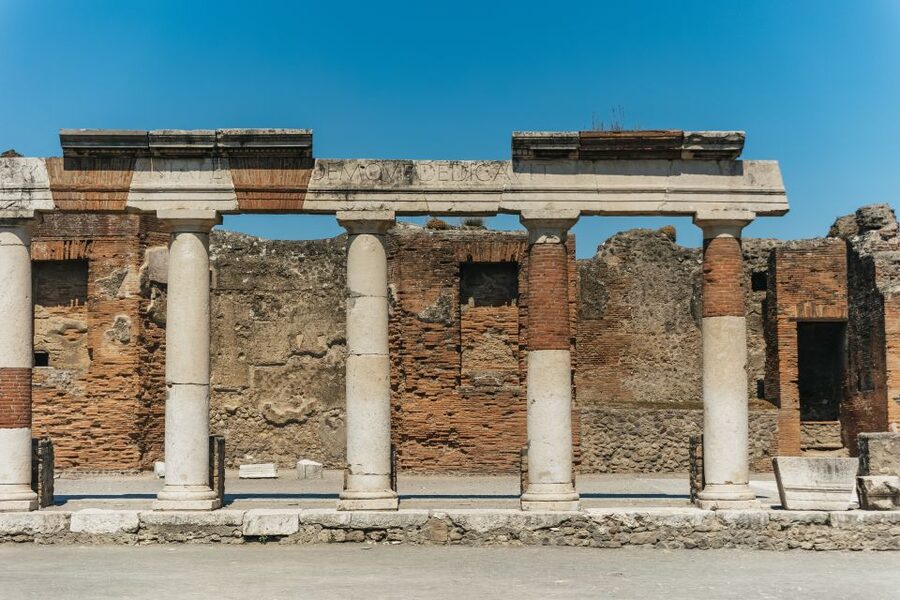
Once inside, the guide leads you along ancient Roman roads and through selected parts of the town. The exact route can vary, but the major themes remain consistent: public entertainment, private homes, civic spaces, and the physical evidence left by the eruption in 79 AD.
The streets are among the most revealing parts of the site. You can see how a Roman town was organized and how people moved between homes, public buildings, and places of entertainment. Look closely at the road surfaces and crossings as the guide explains them. A small feature that seems ordinary can reveal how residents dealt with water, traffic, and daily errands.
The tour does not cover every corner of Pompeii. That is both its limit and its strength. The park is too large for a full survey in two hours, especially when the group stops for explanations. You get a guided introduction rather than an exhaustive visit.
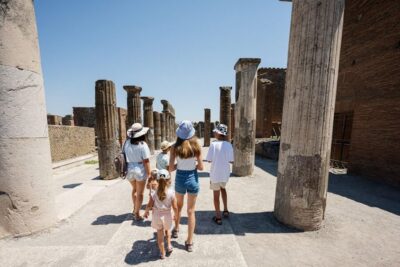
A two-hour route also works well in summer. Several people have found the length just right, since the heat and lack of shade can make a longer walk tiring. The park can be demanding in temperatures around 35 degrees Celsius. Wear firm shoes and bring water. Ancient paving stones are not always smooth, and the group may move between bright open areas and more sheltered spots.
A few more Pompeii bookings to compare
- Pompeii Small Group Tour with an Archaeologist
★ 5.0 · 6,593 reviews - Pompeii: Skip-the-Line Entrance Ticket with Audio Guide
★ 4.0 · 2,509 reviews - Naples: Pompeii and Mt. Vesuvius with Lunch and Wine Tasting
★ 4.5 · 2,454 reviews - Discover the Ancient Ruins of Pompeii: Day Trip from Rome
★ 3.5 · 2,247 reviews
The Amphitheater and Pompeii’s public life
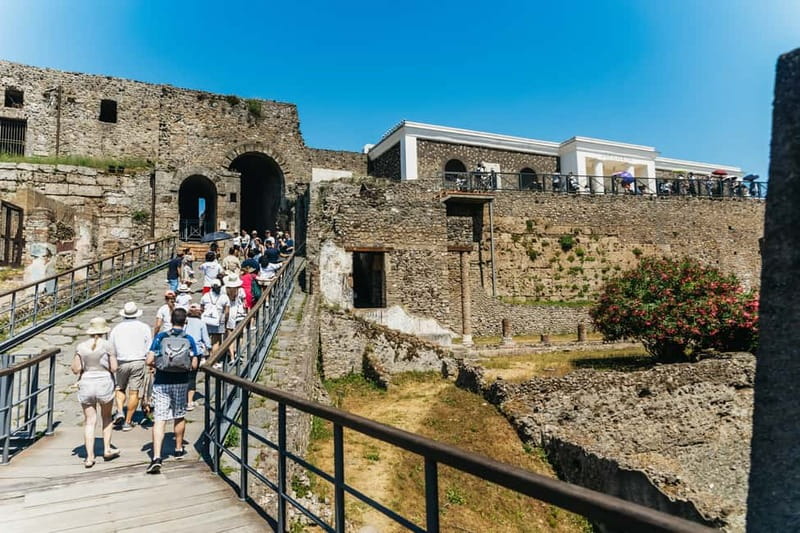
The Roman Amphitheater gives you a clear sense of Pompeii as a lived-in city, not just a collection of private houses. This was a place for public entertainment, where large crowds gathered and the town shared a communal experience.
The guide’s explanation helps put the building into its social setting. You learn not only what the structure looked like, but also why public entertainment mattered to Roman society. A bare arena becomes a meeting place, a civic space, and a reminder that leisure was part of city life.
The amphitheater is also a good stop for understanding the scale of Pompeii. Even when parts of the town feel intimate, public buildings show that this was an organized urban center with facilities designed for large numbers of people.
The small theater and public gymnasium
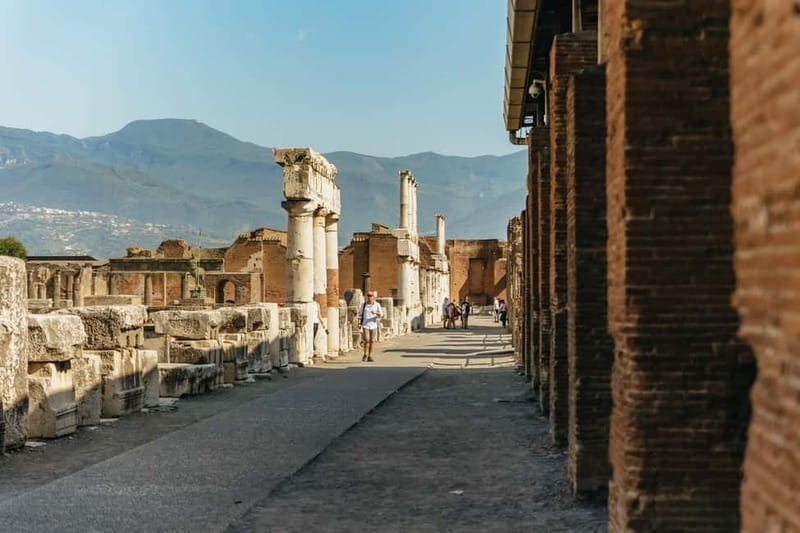
The small theater offers a different view of entertainment. Its more compact scale helps you imagine performances in a setting distinct from the huge crowds of the amphitheater. The guide explains the role of these spaces and the types of activities that took place there.
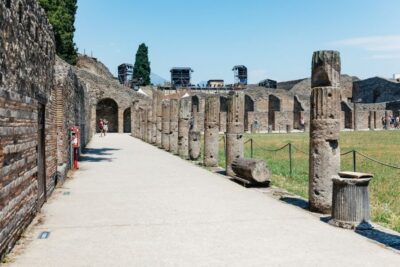
The public gymnasium adds another piece to the picture. Together, these stops show that Roman Pompeii was not focused only on work and worship. People exercised, attended performances, met friends, and took part in public events.
I like this part of the route because it corrects the usual image of Pompeii as a town defined only by disaster. Before Vesuvius erupted, it was a functioning community with leisure, social customs, and public routines.
Houses, frescoes, and rooms frozen in time

The private buildings are often the most memorable part of the walk. The guide takes you into houses where walls, room layouts, and decorative details still offer clues about daily life.
Frescoes are especially powerful. Their colors and scenes survived beneath layers of volcanic ash, giving you a rare look at Roman decoration. The guide can explain how the paintings fit into the room and what they suggest about the people who lived there.
You may also see everyday objects and household details that were preserved when the city was buried. These are not grand monuments, but they can tell you more about ordinary life than a large public building. A kitchen, a courtyard, a fountain, or a decorated reception room helps you picture how a family used its home.
The tour is strongest when the guide points out the purpose of each space. Without that explanation, several rooms can appear similar. With it, you begin to understand where people gathered, where guests were received, and how a Roman home was arranged.
The tour does not promise access to every house or fresco in the park. Pompeii’s open areas can change, and the group route covers only a section of the site. If you have a special interest in Roman painting or domestic architecture, use the end of the tour as a starting point for further exploration.
The eruption and the human cost
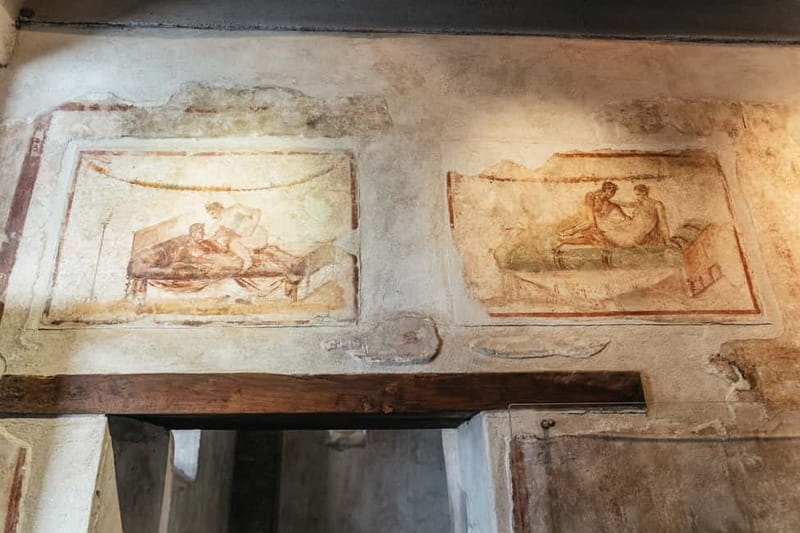
The eruption of Mount Vesuvius in 79 AD is present throughout the visit, but this tour connects the disaster to the people who lived through it. Pompeii was buried under mountains of volcanic ash, preserving streets, homes, objects, and traces of human activity.
The casts of citizens and pets are among the most emotional sights. They are not simply archaeological curiosities. They remind you that Pompeii was a town full of families, animals, workers, and children when the eruption struck.
A good guide handles this material with care while keeping the history clear. The strongest explanations place the tragedy within the wider story of the town. You learn about the eruption, but you also see what was lost: homes, routines, meals, celebrations, and relationships.
This balance matters. Pompeii can easily become a spectacle centered on death. The tour instead gives attention to the people’s lives before the catastrophe, which makes the casts and preserved objects more meaningful.
How much of Pompeii you actually see
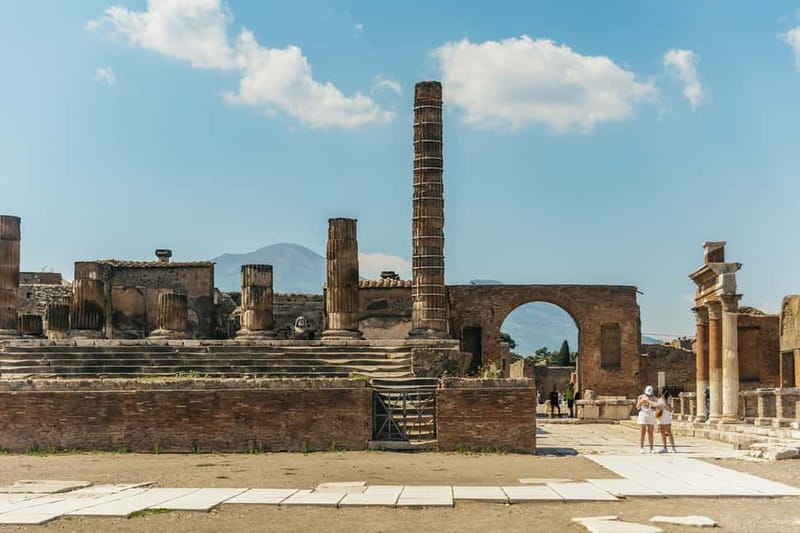
Two hours is enough for a well-chosen introduction, not a complete tour of Pompeii. The archaeological park is huge, and the guide must keep a steady pace to cover the main themes.
You can expect to see the amphitheater, small theater, public gymnasium, selected houses, frescoes, and other notable remains. The guide also gives recommendations for places to visit after the official walk ends. That is useful because you can continue at your own speed instead of trying to plan the entire park before arriving.
The tour ends back at the meeting point, but the option to remain and explore on your own adds value. If you are visiting with a teenager or anyone who tires easily, the two-hour format is a sensible compromise. You receive the essential context, then decide if you want more ruins or a break for food and drinks near the station.
If you have only one day in the area, a guided introduction is particularly useful. You avoid wasting time on navigation and gain a clear list of priorities for the rest of your visit.
Group size, headsets, and the pace
The group can include more than 20 people. That may feel larger than expected for an archaeological site where you want to look closely, although the headsets help keep the guide audible.
Headsets are supplied for groups of 16 or more. Clear audio is important in Pompeii because the group may spread out along a street or gather around a small room. Several guides have been praised for speaking clearly, and the audio equipment has worked well.
A larger group also affects the feel of the visit. You will not have the same flexibility as you would with a private guide. Stops need to suit everyone, and you may have to wait briefly while the group gathers. On the positive side, the organized format can make entry and orientation easier, especially if this is your first visit.
The pace is generally relaxed but purposeful. Guides leave some time for photographs and independent looking, though the park’s size means you should not expect long stretches at every stop.
Price and overall value at $31.89
At $31.89 per person, this is a reasonable price for a two-hour guided introduction, provided you confirm what the booking includes. The guide is the main value. You are paying for direction, interpretation, and help with the entry process, not only for access to the ruins.
The ticket may cost extra, so compare the total price rather than focusing only on the starting figure. If you choose the no-ticket option, you may need to arrange entry separately, and the skip-the-line benefit may not apply.
I would consider this tour good value for a first visit, a tight schedule, or a hot day when you do not want to wander without a plan. Independent visitors who enjoy reading signs and spending many hours at one house may prefer to buy entry alone and stay longer.
The free cancellation policy also gives you some flexibility. You can cancel up to 24 hours in advance for a full refund, and the reserve-now-pay-later option allows you to hold a place without paying immediately.
Who should book this Pompeii tour?
I would recommend it most strongly to first-time visitors who want the ancient town explained in plain language. Families can also benefit from the two-hour format, especially with older children or teenagers who may not enjoy an all-day archaeological walk.
It suits you if you are arriving by train, want to avoid the ticket office, or have limited time in Pompeii. It is also a good fit if you prefer stories about how people lived rather than a long list of dates and building names.
You may want a different plan if you have already visited Pompeii and want to focus on a particular neighborhood, villa, or collection. The group route covers only part of the park, and the larger group may limit how long you can linger.
Final verdict: book it if you want context first
Book this tour if you want Pompeii to make sense from the start. The two-hour walk covers major public buildings, houses, frescoes, and human remains, while the archaeologist guide adds the detail that is easy to miss alone.
Before booking, choose the express ticket option if you need guaranteed entry and line-saving convenience. Arrive early at the station meeting point, bring identification and water, and plan extra time afterward if you want to see more of the enormous site.
FAQ
How long does the Pompeii tour last?
The guided walking tour lasts two hours. Afterward, you may have the option to explore more of the archaeological park on your own.
What language is the tour offered in?
Live guiding is available in English and Italian.
Is the Pompeii entry ticket included?
The express ticket is included only if you select the ticket option as an extra. Clients can also choose a no-ticket option, so check your selection carefully.
Where do I meet the guide?
Meet on the first floor next to the entrance of the Tempio Travel Info Point in the Circumvesuviana Train Station. You exchange your voucher there for a ticket if your booking includes one.
What should I bring?
Bring your passport or identity card. Water, comfortable walking shoes, and sun protection are also sensible for the outdoor walk.
Are headsets provided?
Headsets are available for groups of 16 or more, helping you hear the guide during the walk.
Does the tour include hotel pickup?
No. Hotel pickup and drop-off are not included.
Is entry free on the first Sunday of the month?
Entry is free on the first Sunday of each month, but tickets cannot be reserved ahead of time and entry is not guaranteed.
Can I cancel the booking?
You can cancel up to 24 hours in advance for a full refund. The reserve-now-pay-later option lets you book without paying immediately.
Recently added around Pompeii
- Pompeii Ruins Private Tour with Optional Skip-the-Line Entry★ 4.9 · 732 reviews
- Pompeii 3hours Villa of Mysteries tour with an Archaeologist★ 4.8 · 486 reviews
- Pompeii: Group Tour with an Archeologist Guide★ 4.4 · 490 reviews
- Pompeii: Exclusive Tour with Archaeologist and Entry Tickets★ 4.9 · 634 reviews
- Pompeii: Skip-the-Line Tickets and Tour with Archaeologist★ 4.9 · 467 reviews
- Pompeii: Small-Group Tour of Pompeii and Herculaneum★ 4.8 · 867 reviews
- Pompeii: Skip-the-Line Guided Tour with Expert Archaeologist★ 4.8 · 196 reviews
- Pompeii: Skip-the-line-Ticket and Guided Tour★ 4.6 · 1,152 reviews
Pompeii & Vesuvius Tours, compared.
Entry Ticket and Guided Tour with an Archaeologist
Read our review →


Pompeii Small Group Tour with an Archaeologist
Read our review →
Pompeii, Amalfi Coast and Positano Day Trip from Rome
Read our review →Browse the lists this tour appears in