
Reviewed · POMPEII & VESUVIUS TOURS
Pompeii: Guided Small Group Tour Max 6 People with Private Option
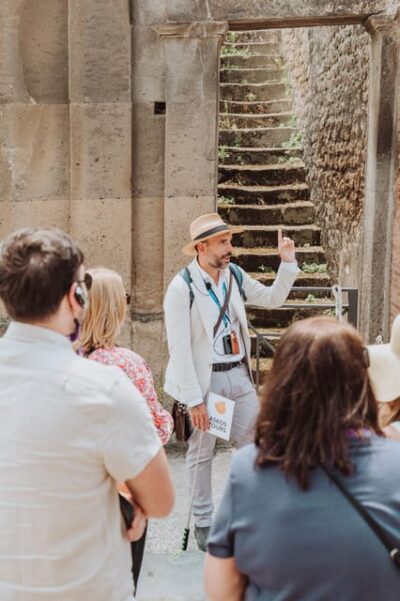
Pompeii makes ancient Rome feel close enough to touch. This tour pairs an archaeologist guide with a group capped at six, so you can ask questions and still move through the ruins at a sensible pace. I like the small size, and I like that skip-the-line admission is included. The main tradeoff is time: two and a half hours gives you the major sights, but Pompeii is too large to see in full.
The morning and afternoon choices also help you fit the visit into a busy southern Italy schedule. Guides such as Maria, Francesca, Imma, Luigi, and Mariana have been praised for clear explanations and warm service. Just prepare for strong sun and a lot of walking on uneven ground.
In This Review
- Key points to know before booking
- Why a guide matters at Pompeii
- Starting at Via Villa dei Misteri
- The forum and Pompeii’s public heart
- Homes that reveal Roman daily life
- Baths, bakeries, and practical Roman life
- The theater, gladiators, and public entertainment
- The Temple of Isis and the Lupanar
- What two and a half hours really gives you
- Is the $168.17 price good value?
- Who should book this Pompeii tour?
- Final verdict: a smart first visit to Pompeii
- FAQ
- How long does the Pompeii tour last?
- How many people can join the small group?
- Is a private tour option available?
- Are Pompeii admission tickets included?
- Which Pompeii sights are included?
- Where does the tour begin and end?
- What languages are available?
- Can the itinerary change?
Key points to know before booking
- The group never exceeds six people: This is small enough for direct questions and a more personal pace, with the option to book privately.
- An archaeologist leads the visit: You get context about Roman homes, public life, religion, bathing, entertainment, and the eruption instead of simply walking past old walls.
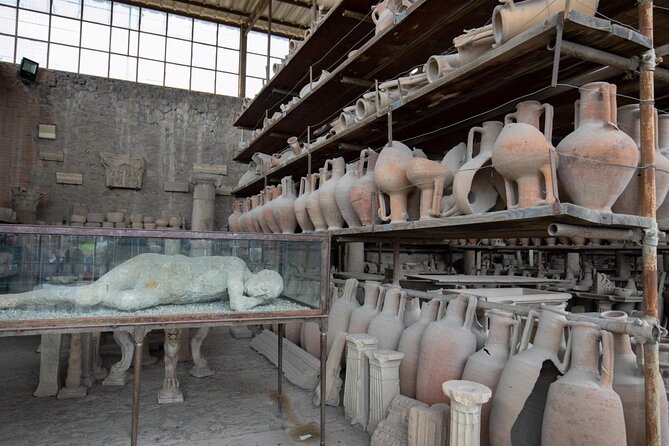
- The route covers major Pompeii landmarks: Expect the forum, theater, baths, selected villas, the Temple of Isis, and a view toward Mount Vesuvius.
- The tour lasts about two and a half hours: That is a useful introduction, not a complete survey of the archaeological park.
- Skip-the-line entry is included: You spend more of your limited time inside the ruins and less time waiting at the entrance.
- The route can change: Pompeii remains an active excavation site, so closures and archaeological work may affect the daily path.
Why a guide matters at Pompeii
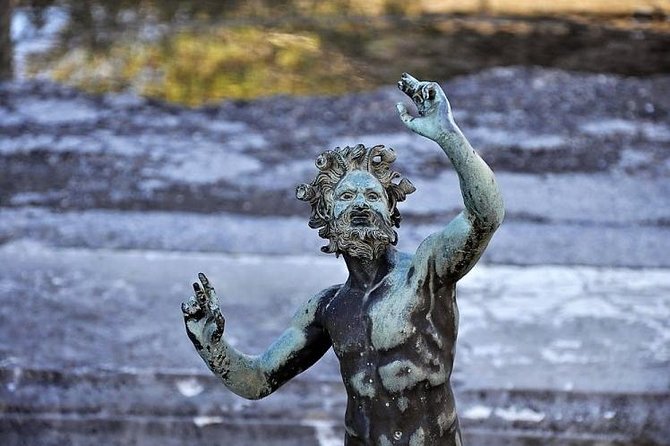
Pompeii can look simple at first: streets, walls, columns, and occasional bits of painted plaster. Then a guide points out a bakery, a household shrine, a public bath, or a worn stone crossing, and the city begins to make sense.
I would not choose to visit Pompeii without some help unless I had already studied the site. The ruins are spread across a large area, and many of the most interesting details are easy to miss. A trained guide can explain how rooms were used, what a building says about social life, and why one decorated house matters more than another.
This is where the archaeologist-led format earns its price. You are not just receiving dates and names. You are getting a reading of the surviving evidence. Imma, for example, was praised for her strong English and exceptional command of the site, while Luigi was singled out for sharing memorable stories about daily life.
The explanations also help with scale. Pompeii was not a collection of grand monuments waiting for modern tourists. It was a working city with homes, shops, religious buildings, entertainment venues, and public facilities. The best guides connect those pieces so you can picture the people who lived there before the eruption of Mount Vesuvius in 79 AD.
More Pompeii and Vesuvius trips:
- Pompeii: Entry Ticket and Guided Tour with an Archaeologist
★ 4.8 · 19,459 reviews - Pompeii: Entry Ticket with Optional Audio Guide
★ 4.2 · 12,360 reviews - Pompeii: Small Group Tour with an Archaeologist
★ 4.8 · 12,264 reviews
Starting at Via Villa dei Misteri
The meeting point is on Via Villa dei Misteri in Pompei. The tour begins and ends there, which keeps the arrangement simple. The location is near public transportation, though the provided details do not specify a particular train or bus connection, so you should check your route before setting out.
Your guide will lead you into the archaeological park with admission already arranged. That matters most during crowded periods, when an entry queue can eat into a short visit. Skip-the-line access does not make Pompeii empty, but it protects your sightseeing time.
The small group is the real advantage at the start. With six people or fewer, you are less likely to lose the guide in a crowd. You can also ask about a particular house or inscription without needing to shout across a large group.
If you book the private version, the experience becomes more flexible and personal. The supplied details do not promise a custom route, so I would not assume that every private request can be accommodated. Still, the private choice makes sense if your party values its own pace or wants to focus questions on architecture, religion, Roman homes, or daily life.
The forum and Pompeii’s public heart
The forum is one of the essential stops because it helps you understand how the city functioned. This broad public space connected political, commercial, and religious life. A guide can give meaning to the surrounding structures and explain how the forum fit into the routines of ancient residents.
I find this kind of introduction useful early in a Pompeii visit. Once you understand the city’s public center, the private villas and neighborhood streets become easier to place. You begin to see Pompeii as an organized community rather than a scattered field of ruins.
The forum also provides one of the clearest views toward Mount Vesuvius included on the route. That sight adds a powerful layer to the visit. The volcano is not an abstract cause mentioned in a museum label. It is visible from the city that was destroyed by its eruption.
Expect the guide to spend time explaining what you are seeing rather than rushing through every structure. Two and a half hours requires choices. The benefit is a coherent route. The cost is that you will not inspect every corner of the forum or every nearby building.
Homes that reveal Roman daily life
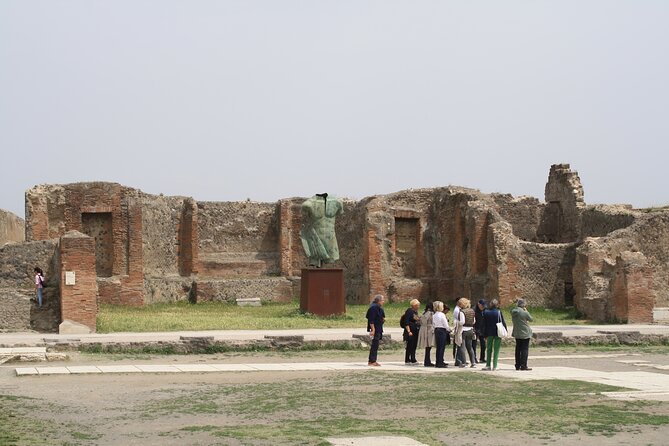
The residential buildings are among the most rewarding parts of the tour. The route may include the House of Menander, House of the Gladiators, House of Julia Felix, House of Loreius Tiburtinus, House of Sallust, House of the Tragic Poet, and House of the Vettii.
Each home offers a different way to think about Roman society. Some are notable for decoration and layout. Others help show how wealth, hospitality, household work, and private life fit together. Your guide can point out details that are easy to pass without context.
The House of Julia Felix is especially useful for understanding a large Roman property with more than simple living quarters. The House of Sallust helps bring the older residential fabric of Pompeii into the conversation. The House of the Tragic Poet and the House of the Vettii are important stops for the way their decoration and rooms help explain domestic culture.
The exact houses open on a given day can change. Pompeii is still being excavated and managed as an archaeological site, not operated like a fixed indoor museum. The daily route may shift because of closures or archaeological duties. That uncertainty is worth accepting, since it is part of visiting a living research site.
A few more Pompeii bookings to compare
- Pompeii Small Group Tour with an Archaeologist
★ 5.0 · 6,593 reviews - Pompeii: Skip-the-Line Entrance Ticket with Audio Guide
★ 4.0 · 2,509 reviews - Naples: Pompeii and Mt. Vesuvius with Lunch and Wine Tasting
★ 4.5 · 2,454 reviews - Pompeii: Archaeological Park Tour with Ticket on request
★ 4.5 · 2,283 reviews
Baths, bakeries, and practical Roman life
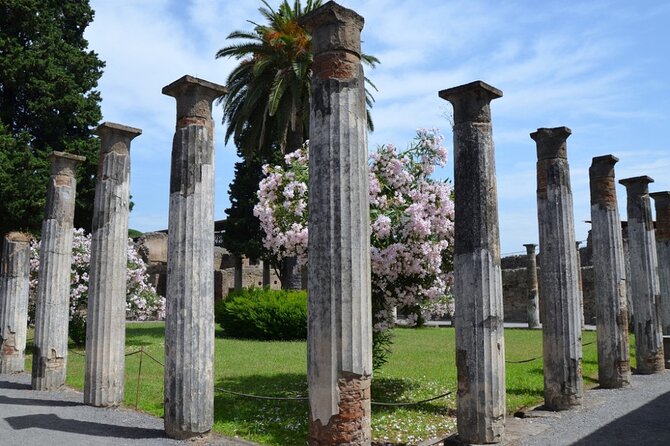
The Roman bath house gives you a useful look at public life beyond politics and temples. Baths were places for washing, exercise, conversation, and social contact. The surviving rooms and systems allow a guide to explain how Roman engineering supported ordinary routines.
The tour also includes the suburban baths in its suggested selection. These can make the visit feel more personal because they bring attention to comfort, leisure, and the practical side of city life. Rather than focusing only on famous monuments, the route asks how people spent their day.
One account of the tour specifically praised the way a guide included bath houses, theaters, bakeries, and homes while explaining Roman culture. That mix is one of the strongest features of the experience. You get variety without being sent on a frantic march from one headline sight to the next.
The itinerary does not include food or drinks. Bring your own water, especially in warm weather. Maria was praised for checking that her group had water and hats and for finding shade when the heat became difficult. That is a useful reminder: Pompeii rewards curiosity, but it offers little comfort if you arrive unprepared for sun.
The theater, gladiators, and public entertainment
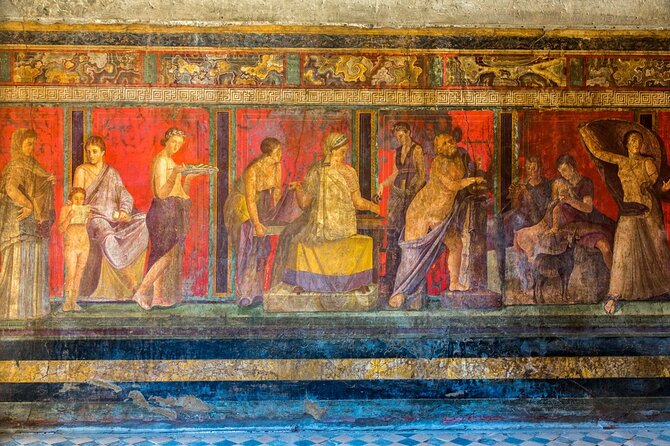
Pompeii’s theater area brings another side of Roman society into view. The tour includes the Pompeii theater and the House of the Gladiators, allowing your guide to discuss entertainment and the public identity of the city.
The theater is more than a photogenic ruin. Its shape, seating, and setting help explain how performances brought different parts of the community together. Your guide can turn the remaining stone into a place of music, drama, spectacle, and social display.
The House of the Gladiators adds a different angle. Its name points toward Pompeii’s connection with arena culture, though your guide will be the best person to explain the building and its current interpretation. This is another reason a guided visit works well: names attached to ruins can sound certain even when the full story is more complicated.
I like that these stops break up the residential material. A route made only of villas could begin to blur together. The theater and gladiatorial connection give you a stronger sense of public excitement and civic life.
The Temple of Isis and the Lupanar
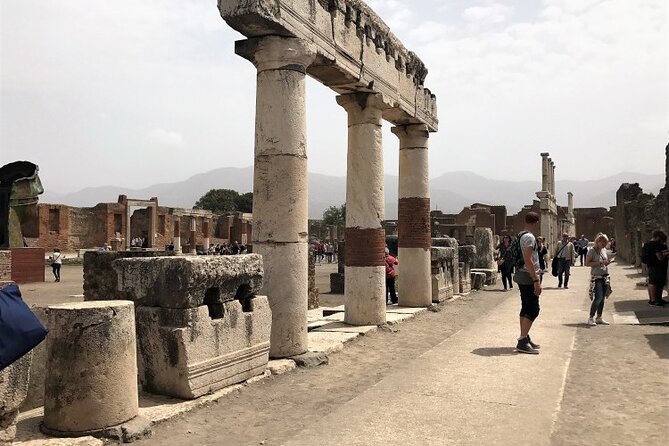
The Temple of Isis introduces religious life and the wider reach of the Roman world. Isis was an Egyptian goddess whose worship spread through the Roman Mediterranean. The temple gives your guide a chance to explain how religious practices, images, and communities moved across cultural boundaries.
The Lupanar, or brothel, is another frequently discussed Pompeii site. Its small rooms and surviving decoration can prompt a frank conversation about sex work, gender, and urban life in the ancient city. It is not a stop for every family or every visitor, so consider your group’s comfort level.
The suggested route also includes the House of Loreius Tiburtinus and the House of the Tragic Poet. Together with the Temple of Isis and the Lupanar, these stops widen the story beyond wealthy domestic life. You see religion, commerce, entertainment, and private behavior alongside formal civic buildings.
Because Pompeii’s route may change, I would treat these as intended highlights rather than absolute guarantees. The experience promises a selection of major locations, but the archaeologist may need to adjust the path on the day.
What two and a half hours really gives you
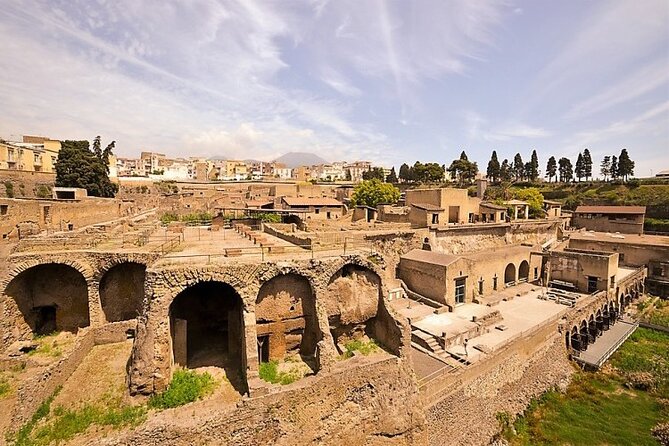
A two-hour-thirty-minute visit is a smart length for a first look. It is long enough to cover major themes and short enough to fit into a day that may also include Naples, Sorrento, or the Amalfi Coast. One direct account described the length as enough information without becoming tiring or losing focus.
You should arrive with the right expectation. This is not a full-day archaeological survey. You will not see every street, villa, shop, and public building. Instead, you get a guided route through a strong selection of homes, public spaces, baths, religious sites, and entertainment venues.
I see that as a benefit for many people. Pompeii can overwhelm you when you try to cover too much without a plan. A guide filters the site and keeps the experience moving. If you already have a strong interest in ancient Roman architecture or archaeology, you may want more time afterward to explore on your own, but the tour gives you a solid foundation.
The morning and afternoon departure options also help. Choose the time that fits your transport and energy level. The provided information does not promise a specific weather advantage for either slot, so I would focus on your wider schedule and bring water, a hat, and protection from the sun.
Is the $168.17 price good value?
At $168.17 per person, this is not the cheapest way to enter Pompeii. You are paying for more than admission: an expert archaeologist, a maximum group of six, skip-the-line access, and a planned route through important ruins.
The value is strongest when you care about explanation and time. A large group can cost less, but it may be harder to hear, ask questions, or keep track of the guide. A self-guided visit costs less still, but you must choose your own route and provide your own background.
The private option is likely to suit people who want the most personal service, though the supplied information does not give a separate private-tour price. If you are traveling alone or as a couple, the small shared group may offer the best balance. If you are marking a special occasion or have a family group, compare the private upgrade before booking.
The tour has a 5 out of 5 rating from 269 reviews, with 99 percent recommending it. The strongest praise centers on the guides’ clear English, command of Pompeii, friendly manner, and ability to make the ruins understandable. Francesca, Carla, Fran, Maria, Imma, Luigi, and Mariana are all praised by name in the feedback provided.
That consistency matters. A site like Pompeii can be impressive on its own, but the guide determines how much you take away. I consider the price fair for someone who wants a focused, well-explained introduction and does not want to waste time in an entrance queue.
Who should book this Pompeii tour?
I would choose this experience if you have limited time, want an archaeologist’s perspective, or prefer asking questions in a very small group. It is also a good fit if you are visiting Pompeii for the first time and want someone else to select the most useful stops.
It suits couples, families, and small friend groups who value personal attention. The private option may appeal if you want the visit to feel entirely your own.
I would hesitate if your main goal is to wander alone for several hours, photograph every street, or study a narrow subject in detail. The group route has a fixed length, and daily site work can alter the planned stops. You may need an additional unstructured visit if Pompeii is a major reason for your trip.
Book at least a day ahead if your schedule is firm. This experience is booked an average of 55 days in advance, which suggests that popular dates can fill well before arrival. Free cancellation is available up to 24 hours before the start time. Changes or cancellations inside that window are not accepted for a refund.
Final verdict: a smart first visit to Pompeii
I recommend this tour for most first-time visitors who want Pompeii to make sense, not just look impressive. The small group, archaeologist guide, included entry, and mix of homes, baths, theaters, religious sites, and public spaces give you a useful picture of Roman life.
The two and a half hour limit is the one clear constraint. You will see important highlights, but you will not finish the whole park. If you can accept that tradeoff, the tour offers a focused introduction with strong personal attention and a practical way to avoid losing time at the gate.
FAQ
How long does the Pompeii tour last?
The tour lasts approximately two hours and 30 minutes.
How many people can join the small group?
The small group has a maximum of six travelers.
Is a private tour option available?
Yes. You can choose to upgrade from the small-group format to a private tour.
Are Pompeii admission tickets included?
Yes. Admission is included, along with guaranteed skip-the-line access.
Which Pompeii sights are included?
The experience includes the Pompeii theater, forum, Roman bath house, House of Sallust, House of Julia Felix, and a view of Mount Vesuvius. The suggested route may also include several other villas, the Temple of Isis, the Lupanar, and the suburban baths.
Where does the tour begin and end?
The tour begins at Via Villa dei Misteri, 80045 Pompei NA, Italy, and ends back at the meeting point.
What languages are available?
The tour is offered in English, French, Spanish, Portuguese, and Italian. You should request a language other than English in the additional notes when booking.
Can the itinerary change?
Yes. Pompeii is an ongoing excavation site, so the archaeologist may adjust the route because of daily archaeological duties or site conditions.
Recently added around Pompeii
- From Pompeii: Bus Transfer to Vesuvius with Park Entry Fee★ 4.2 · 700 reviews
- Pompeii Skip-the-line Tour with Archaeologist Guide★ 5.0 · 559 reviews
- Skip the Line Guided Tour of Pompeii led by an Archaeologist★ 5.0 · 703 reviews
- Visit in Pompeii – Pompeii Private Tour with Ada★ 5.0 · 436 reviews
- Ancient Pompeii Private Tour: Skip the Line & Kid-Friendly Option★ 5.0 · 167 reviews
- Pompeii Private Tour with an Archaeologist and Skip The Line★ 5.0 · 391 reviews
- Private Day Tour to Vesuvius, Herculaneum & Pompeii with Pick Up★ 5.0 · 279 reviews
- Pompeii Private Tour with an Archaeologist and Skip The Line – 3 hours★ 5.0 · 564 reviews
Pompeii & Vesuvius Tours, compared.
Entry Ticket and Guided Tour with an Archaeologist
Read our review →


Pompeii Small Group Tour with an Archaeologist
Read our review →
Pompeii, Amalfi Coast and Positano Day Trip from Rome
Read our review →Browse the lists this tour appears in