
Reviewed · POMPEII & VESUVIUS TOURS
Herculaneum: Tickets & Tour with a Local Archaeologist
Ancient Rome feels close here. This two-hour Herculaneum tour pairs skip-the-line entry with a licensed archaeologist who can explain what each room, street, and household object meant. I especially like the remarkably preserved wooden features and the solemn Boat Houses, where skeletons remain, and I like the small-group feel that lets guides such as Raffaele Romano, Riccardo, Carlo, and Giovanni adjust the pace and answer questions. The main drawback is that two hours can feel tight, and a strong accent or crowd noise may make some explanations hard for young children to follow.
Herculaneum is smaller than Pompeii, but its remains often feel more intimate and immediate. You see upper floors, colorful wall paintings, mosaics, shops, baths, and household details that make Roman life easier to picture. At $58 per person, the tour is not the cheapest way into the site, but the fee includes admission and a licensed archaeologist, which makes good sense if you want more than a walk through old walls.
In This Review
- Key points to know before you go
- Why Herculaneum feels different from Pompeii
- Meeting your archaeologist at Biglietteria Ercolano
- The House of the Deer and Herculaneum’s upper floors
- Neptune and Amphitrite, color preserved in place
- The Augustales and public life
- The House of the Skeletons and the Boat Houses
- Casa dell’Albergo and the texture of daily life
- The final walk through the archaeological site
- Is $58 a fair price?
- How hard is the walk?
- Who will get the most from this tour?
- Should you book Herculaneum with an archaeologist?
- FAQ
- How long does the Herculaneum tour last?
- What is included in the price?
- Where does the tour begin?
- Which languages are available?
- Is hotel pickup included?
- Is food or drink included?
- Can wheelchair users join the tour?
- Can I book a private group?
- What identification should I bring?
- Can I cancel for a refund?
Key points to know before you go
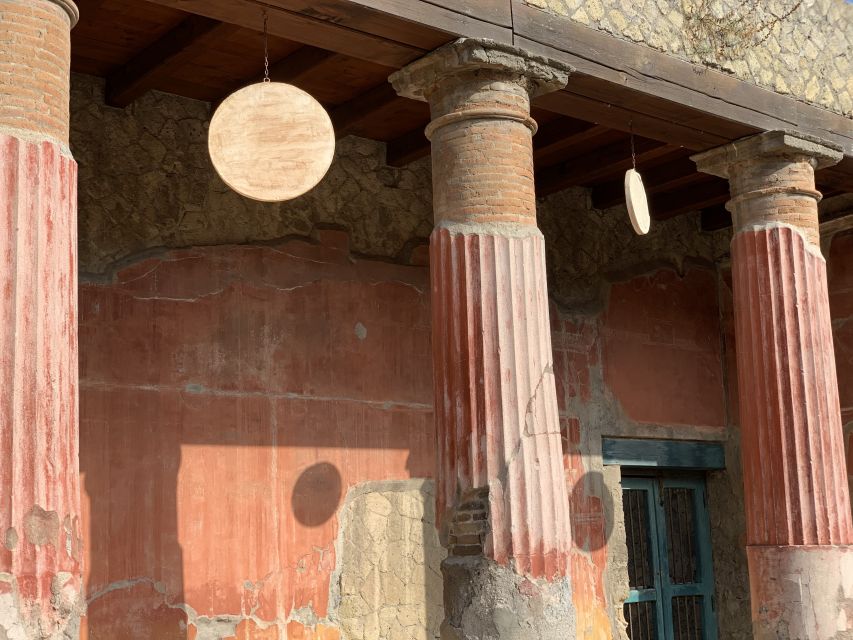
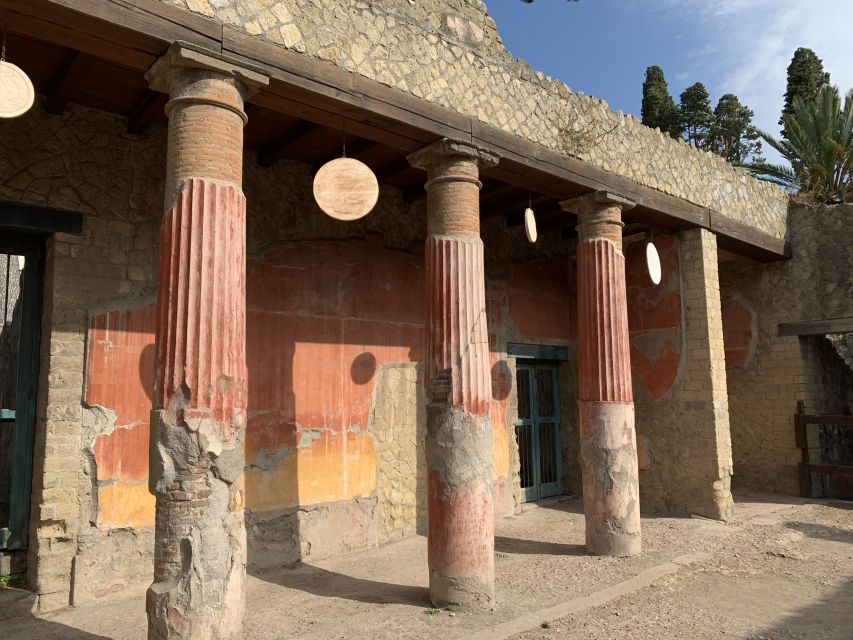
- Wood, furniture, and food survived: Herculaneum’s volcanic burial preserved objects that normally vanish from Roman sites.
- The Boat Houses are the emotional center: Skeletons found near the ancient shoreline offer a quiet, human view of the eruption.
- A local archaeologist changes the visit: Guides explain small details in homes, baths, shops, and water systems that are easy to miss alone.
- The route covers major houses: You visit the House of the Deer, House of Neptune and Amphitrite, House of the Skeletons, and Casa dell’Albergo.
- Two hours is efficient but focused: You get a strong introduction, though you may want extra time afterward for independent wandering.
- Late afternoon can help: One afternoon visit took place when the site was nearly empty, making it easier to hear the guide and study the ruins.
Why Herculaneum feels different from Pompeii
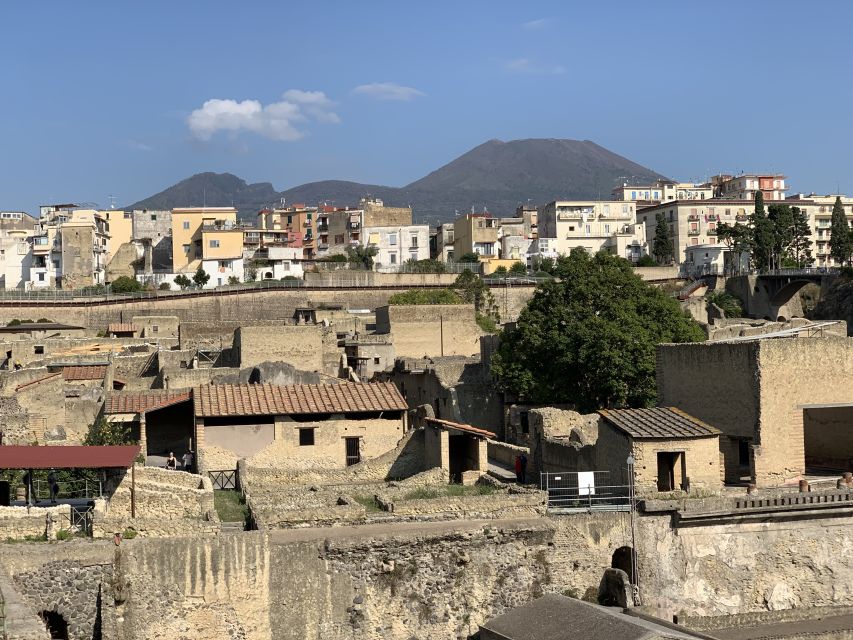
Herculaneum and Pompeii were both Roman towns destroyed by the eruption of Mount Vesuvius in 79 AD. Yet they offer different experiences, and I would not treat Herculaneum as simply a smaller Pompeii.
Herculaneum was buried under a dense mass of volcanic material. That helped preserve wooden doors, beds, furniture, carbonized food, and parts of upper floors. In Pompeii, you often read the shape of a vanished object through a plaster cast or empty space. Here, the object itself may still be visible.
That difference gives Herculaneum a domestic feel. You are not only looking at public monuments. You are stepping into homes, kitchens, baths, shops, and courtyards where ordinary routines once took place.
The smaller size also matters. You can cross much of the excavated town in two hours and leave with a clear sense of its layout. One family with children aged 11 and 15 found the site more engaging than expected after visiting Pompeii earlier in the day. That makes this a smart choice if a full day among Pompeii’s vast ruins sounds tiring.
Still, Herculaneum is not better in every way. Pompeii offers a larger range of streets, buildings, and famous art. One tour participant felt that some of Herculaneum’s frescoes did not match the best examples at Pompeii. The right choice depends on what you want: Pompeii gives you scale, while Herculaneum gives you preservation and closeness.
More Pompeii and Vesuvius trips:
- Pompeii: Entry Ticket and Guided Tour with an Archaeologist
★ 4.8 · 19,459 reviews - Pompeii: Entry Ticket with Optional Audio Guide
★ 4.2 · 12,360 reviews - Pompeii: Small Group Tour with an Archaeologist
★ 4.8 · 12,264 reviews
Meeting your archaeologist at Biglietteria Ercolano
The tour begins at the Herculaneum ticket office, listed as Biglietteria Ercolano. Arrive 10 minutes before the start time. You do not need to arrange hotel pickup, so plan your own way to the meeting point.
The included admission ticket saves you from dealing with the main ticket queue. That is useful on a busy day, though skip-the-line access does not mean the archaeological site will be empty. Crowds, school groups, and nearby voices can still affect how clearly you hear.
The guides work in English, Spanish, Italian, or French. Their individual styles vary, but the strongest feature is their command of the site. Raffaele Romano is described as having doctoral archaeological training, while other guides, including Riccardo, Carlo, Giovanni, Ornella, Livio, and Enrica, are praised for clear storytelling and a warm manner.
The experience can also be booked as a private group. That is worth considering if you are traveling with family members who need a slower pace, or if you have a strong interest in Roman architecture, daily life, or the eruption itself.
If the group exceeds 11 people, headsets are provided. That helps, but it is still wise to stay close to the guide, especially inside enclosed rooms where sound can bounce around.
The House of the Deer and Herculaneum’s upper floors
The House of the Deer, or Casa dei Cervi, is an early highlight. It was an elegant home, and its surviving structure helps you picture how wealthy Romans used private space.
The important point is not just the size of the house. Your guide can explain how rooms related to one another and what the decorations signaled about the owner. Without that context, it is easy to see a mosaic as a pretty floor and move on. With an archaeologist, you get a better sense of how the home functioned and how status appeared in Roman domestic design.
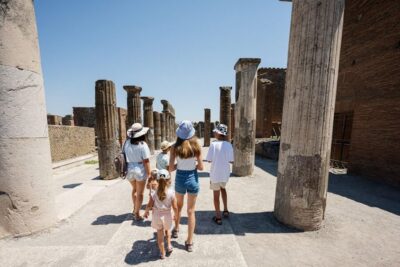
Herculaneum’s surviving upper levels add to the effect. Two-story walls and intact architectural elements give the town more height than many ancient ruins. You are looking at buildings rather than only foundations.
The tour does not attempt to cover every corner. That is both its strength and its limit. The guide selects important buildings and spends time explaining them, but you may not see every room available within the archaeological site.
Neptune and Amphitrite, color preserved in place
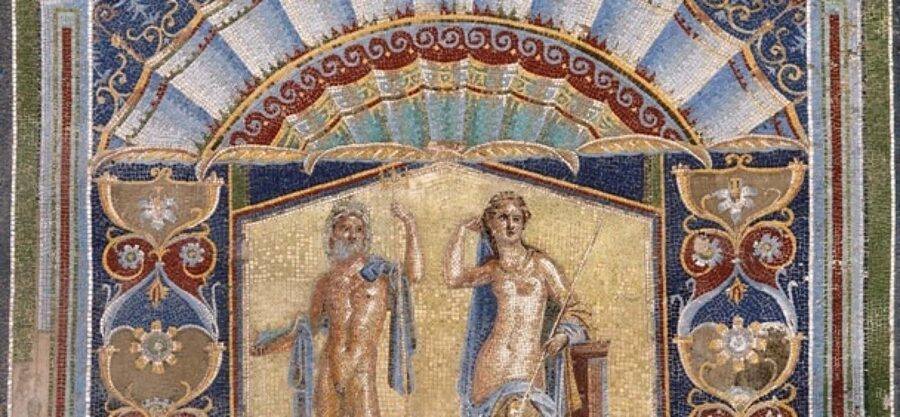
Casa di Nettuno ed Anfitrite is one of the most visually memorable stops. The house is known for its wall decoration, mosaics, and the Neptune and Amphitrite motif.
This is where a guide earns the admission fee. A quick solo visit can leave you admiring color without understanding how the decoration fitted into the room. Your archaeologist can point out the arrangement, materials, and likely purpose of the space, then connect the art to Roman ideas about wealth and taste.
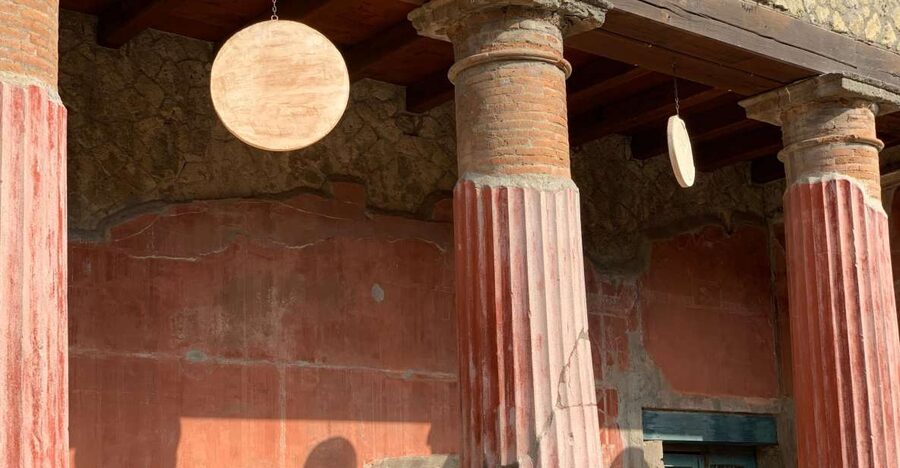
The preserved decoration is a major reason Herculaneum feels so immediate. Colors have survived with unusual strength, and the rooms retain enough structure to suggest how they looked when occupied. Do not rush these interiors. The best part is often a small design element your eye would skip while trying to keep up with a group.
There is a practical issue here: narrow spaces and other groups may make it hard to pause wherever you wish. If you want time for photographs, tell the guide early. The listed route includes a photo stop, but this remains a guided visit rather than an open-ended photography tour.
A few more Pompeii bookings to compare
- Pompeii Small Group Tour with an Archaeologist
★ 5.0 · 6,593 reviews - Pompeii: Skip-the-Line Entrance Ticket with Audio Guide
★ 4.0 · 2,509 reviews - Naples: Pompeii and Mt. Vesuvius with Lunch and Wine Tasting
★ 4.5 · 2,454 reviews - Pompeii: Archaeological Park Tour with Ticket on request
★ 4.5 · 2,283 reviews
The Augustales and public life
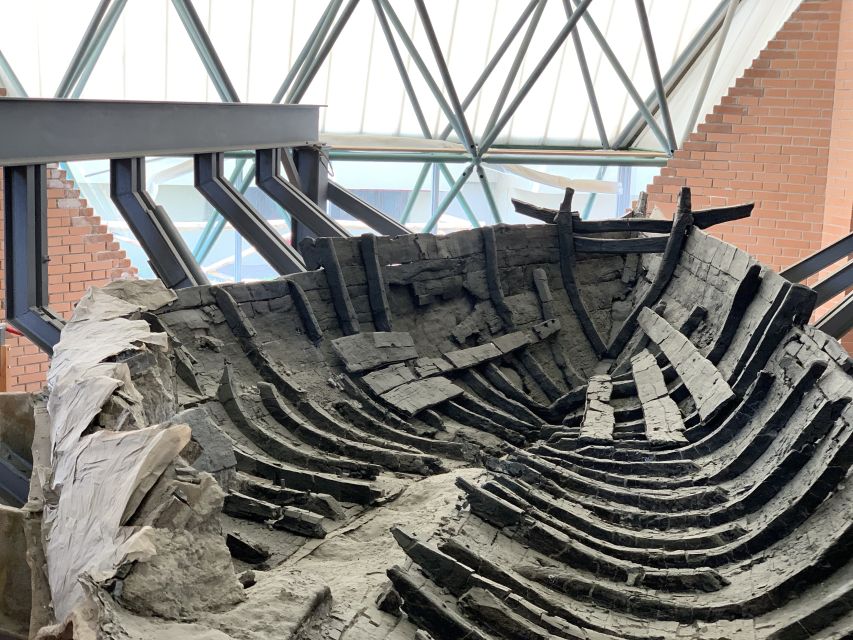
The Sacellum of the Augustales offers a change from private houses. This building was linked to the Augustales, a group connected with the imperial cult and civic life.
The stop helps balance the tour. You are not only learning how wealthy people decorated their homes. You also see how public identity, religion, and Roman authority appeared in the town.
A good guide makes this kind of building understandable without burying you in dates. José, who took an earlier version of the tour, particularly valued stories about Roman life instead of long lists of facts. That is the right approach for Herculaneum. The ruins make more sense when the explanation stays tied to what you can see.
This portion may be less immediately dazzling than a mosaic-filled villa. I would still keep it in the route because it shows that Herculaneum was a working community with civic structures, not simply a collection of grand private homes.
The House of the Skeletons and the Boat Houses
The House of the Skeletons is one of the most unsettling stops. The name points to the human remains found in or around the building, and the subject requires a respectful tone.
The Boat Houses are even more affecting. People sought refuge near the ancient shoreline, but the eruption overtook them. The skeletons remain a direct reminder that Herculaneum was a real town filled with people, not a theatrical set frozen for modern sightseeing.
This is where an archaeologist’s interpretation matters most. The guide can explain what the remains tell us while keeping the focus on human lives rather than spectacle. One afternoon visit was especially appreciated for its quiet, solemn treatment of the port skeletons, in contrast with the noisy photo-taking that can surround human remains elsewhere.
You should prepare children before the tour if they are sensitive to death or disaster. The remains are a central part of the site, and the guide may discuss the final moments of the town’s residents. For many people, this is the most memorable part of the visit, but it is not light entertainment.
Casa dell’Albergo and the texture of daily life
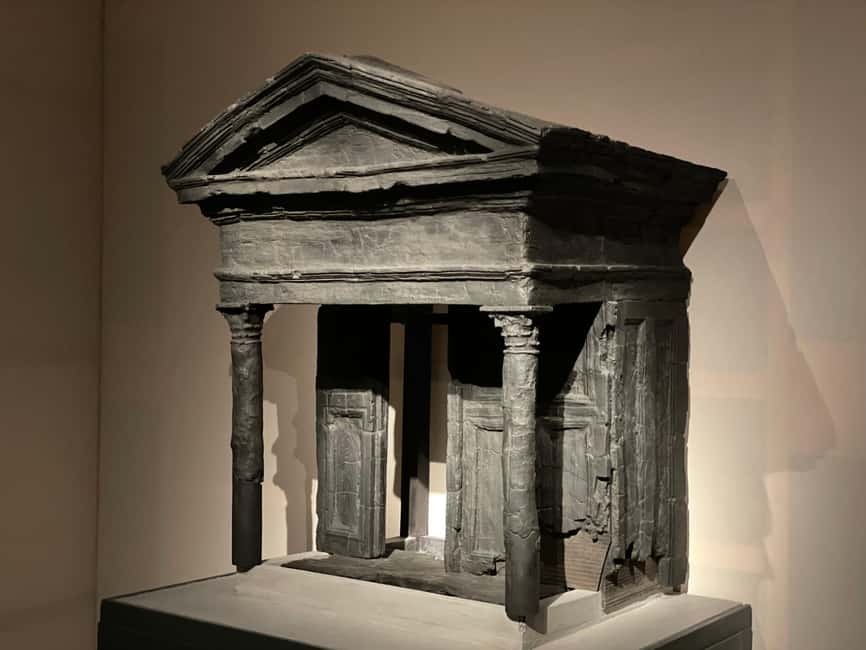
Casa dell’Albergo adds another domestic stop to the route. As you move between rooms and streets, pay attention to the ordinary details: thresholds, wall surfaces, floor patterns, doorways, and the relationship between private and public space.
Herculaneum works best when you look for evidence of routine. Shops and taverns once opened onto streets. Homes were arranged around social and household activity. The ancient water systems show the practical engineering behind daily life.
The guide can also connect Roman words and customs to modern language. Riccardo, for example, used the roots of Roman words to show how the ancient world still appears in everyday speech. That sort of link gives the tour a modern hook without turning the site into a classroom lecture.
Some groups may find the pace slightly slow. An eight-person group felt it could have covered more ground in two hours. If you already know Roman archaeology and want maximum coverage, tell the guide at the start. If you are new to the subject, the slower explanations may be exactly what you need.
The final walk through the archaeological site
The tour continues through the broader Archaeological Site of Herculaneum before returning to the ticket office. This final section pulls the individual buildings together.
After seeing villas, public buildings, baths, and remains, you can read the streets differently. The original cobbles are no longer just uneven stones. They become routes between homes, shops, and public spaces. The baths are not merely attractive ruins. They show the infrastructure of comfort and social life in a Roman town.
The route is compact enough to follow without feeling lost. That is one reason Herculaneum suits families and visitors with limited time. A guide can give you a coherent picture in two hours, rather than leaving you to assemble fragments from scattered signs.
You may want to stay after the tour and look around independently if your schedule allows. The guided portion is designed as an introduction with selected highlights, not a complete study of every excavated building.
Is $58 a fair price?
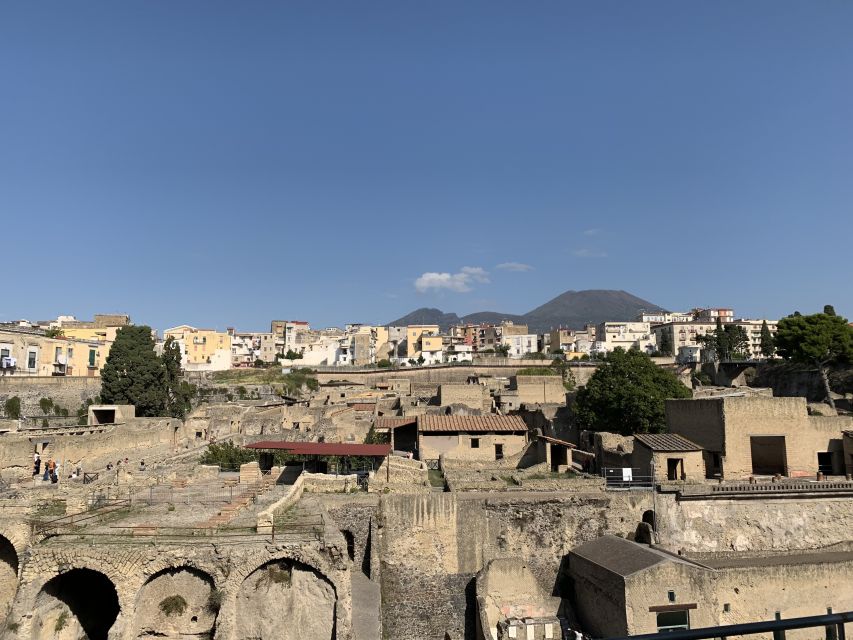
At $58 per person, this is a mid-range cultural tour. The price includes the archaeological site ticket, a licensed guide, and skip-the-line access. Food, drinks, transportation, and hotel pickup are not included.
I think the value is good if you care about understanding what you see. Herculaneum has enough visible detail to reward independent exploration, but its smaller features can be easy to miss. The guide explains why a room matters, how a water system worked, what a decoration suggests, and how the eruption changed the town.
The value is less clear if you only want to walk around quickly and take photographs. You are paying for interpretation, not just entry. That cost is justified by the archaeological training and the time saved at the ticket office, but it will not suit every budget.
The booking terms also help with planning. You can reserve now and pay later, and cancellation is allowed up to 24 hours before the tour for a full refund. Those details are useful when your Campania schedule depends on weather, trains, or a visit to Pompeii.
How hard is the walk?
The site includes original streets, paths, and stairs. A fit couple in their early 60s had no trouble with the walking or stairs, but the experience is not suitable for wheelchair users, and electric wheelchairs are not allowed.
Bring water and a passport or ID card. Wear shoes that feel secure on uneven ancient paving. The supplied information does not specify a total distance, so you should think of this as a steady archaeological walk rather than a seated museum visit.
Heat can make a difference, especially when you are concentrating on explanations and moving across exposed streets. A late afternoon start may offer a calmer atmosphere. One 4 pm visit had very few people on site, which improved both listening and photography conditions.
Who will get the most from this tour?
I would choose this experience for:
- First-time visitors who want a clear introduction to Herculaneum
- Families with older children who enjoy stories more than long museum labels
- Anyone visiting Pompeii and wanting a smaller, more preserved contrast
- People interested in Roman homes, art, engineering, and ordinary life
- Visitors who prefer a small or private group
- Anyone who wants an archaeologist rather than a standard scripted guide
I would think twice if you need step-free access, dislike discussions of death, or want several hours of unstructured exploration. The tour is focused and informative, but it cannot cover every house in depth during its two-hour schedule.
Should you book Herculaneum with an archaeologist?
Yes, if you want the ruins to make sense rather than simply look impressive. The preserved wood, mosaics, frescoes, upper floors, baths, and skeletons give Herculaneum unusual power, but the best details are not always obvious.
Book it if you value strong storytelling, a guide who can answer questions, and a compact visit with the main highlights. If possible, consider a quieter afternoon time and arrive 10 minutes early at Biglietteria Ercolano.
Skip it if you already have specialist knowledge and prefer to set your own route. For most first-time visitors, though, $58 is a reasonable price for admission plus two hours of focused guidance in one of Italy’s most revealing ancient sites.
FAQ
How long does the Herculaneum tour last?
The tour lasts two hours, including the guided visit through the archaeological site and the return to Biglietteria Ercolano.
What is included in the price?
The price includes skip-the-line entrance tickets and a guided tour with a licensed guide. Headsets are provided if the group has more than 11 people.
Where does the tour begin?
The meeting point is Biglietteria Ercolano, the Herculaneum ticket office. You should arrive 10 minutes before the scheduled start.
Which languages are available?
The live guide service is available in English, Spanish, Italian, and French.
Is hotel pickup included?
No. Hotel pickup and drop-off are not included, so you must make your own way to the ticket office.
Is food or drink included?
No. Food and drinks are not included. You should bring water with you.
Can wheelchair users join the tour?
No. The activity is not suitable for wheelchair users, and electric wheelchairs are not allowed.
Can I book a private group?
Yes. A private group option is available.
What identification should I bring?
Bring a passport or ID card, as this is listed among the required items for the activity.
Can I cancel for a refund?
Yes. You can cancel up to 24 hours in advance for a full refund. You can also reserve now and pay later.
Recently added around Pompeii
- Pompeii Ruins Private Tour with Optional Skip-the-Line Entry★ 4.9 · 732 reviews
- Pompeii 3hours Villa of Mysteries tour with an Archaeologist★ 4.8 · 486 reviews
- Pompeii: Group Tour with an Archeologist Guide★ 4.4 · 490 reviews
- Pompeii: Exclusive Tour with Archaeologist and Entry Tickets★ 4.9 · 634 reviews
- Pompeii: Skip-the-Line Tickets and Tour with Archaeologist★ 4.9 · 467 reviews
- Pompeii: Small-Group Tour of Pompeii and Herculaneum★ 4.8 · 867 reviews
- Pompeii: Skip-the-Line Guided Tour with Expert Archaeologist★ 4.8 · 196 reviews
- Pompeii: Skip-the-line-Ticket and Guided Tour★ 4.6 · 1,152 reviews
Pompeii & Vesuvius Tours, compared.
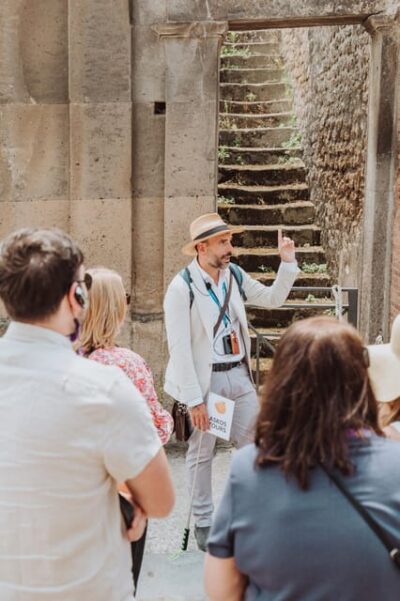
Entry Ticket and Guided Tour with an Archaeologist
Read our review →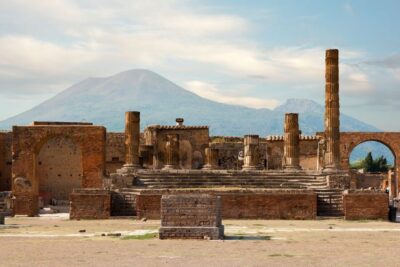
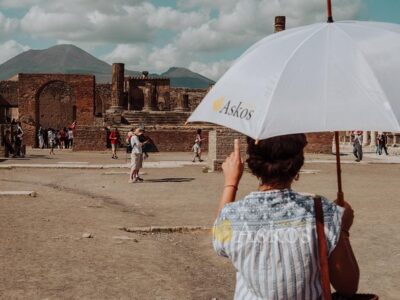
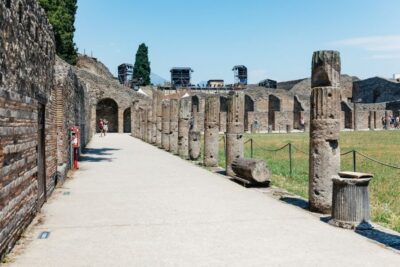

Pompeii Small Group Tour with an Archaeologist
Read our review →
Pompeii, Amalfi Coast and Positano Day Trip from Rome
Read our review →Browse the lists this tour appears in