
Reviewed · POMPEII & VESUVIUS TOURS
Herculaneum: Skip The Line Entrance ticket + Audioguide
The best Roman time capsule is smaller than Pompeii. Herculaneum’s compact streets, vivid mosaics, and remarkably preserved houses make this self-guided visit easy to shape around your own interests. I like the freedom to stop when you want, and I like having numbered audio commentary to explain what you are seeing. The main catch is that the rented device can be awkward to use without headphones.
This package costs $35 per person and includes entry, an audioguide, and a site map. It is a good fit if you dislike being herded from room to room, but less appealing if you want a human guide to explain hidden details or answer questions on the spot.
In This Review
- Key points to know before you go
- Why Herculaneum feels different from Pompeii
- Collecting your ticket and audioguide
- Following the map through the ancient streets
- Houses, villas, and mosaics worth your time
- How long to allow for the visit
- Food, water, weather, and practical comfort
- Is $35 good value?
- Who should choose this self-guided format?
- Cancellation and booking flexibility
- Should you book this Herculaneum experience?
- FAQ
- Where does the visit begin?
- What does the package include?
- Is a guided tour included?
- Are headphones provided?
- Which languages are available for the audioguide?
- What identification do I need?
- How long does the visit last?
- Can I cancel the booking?
- Can I pay later?
- What should I bring?
Key points to know before you go
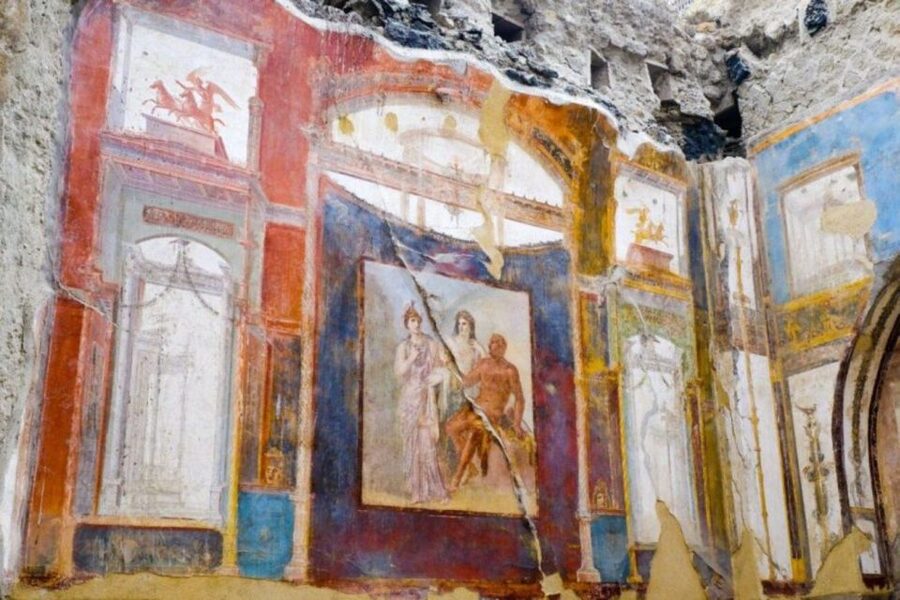
- Herculaneum is compact but not shallow: You can cover the main archaeological park in about two to three hours, yet the well-preserved homes reward a slower visit.
- The audioguide follows numbered points: The map and building numbers make it possible to match the commentary with the streets, houses, villas, and mosaics around you.
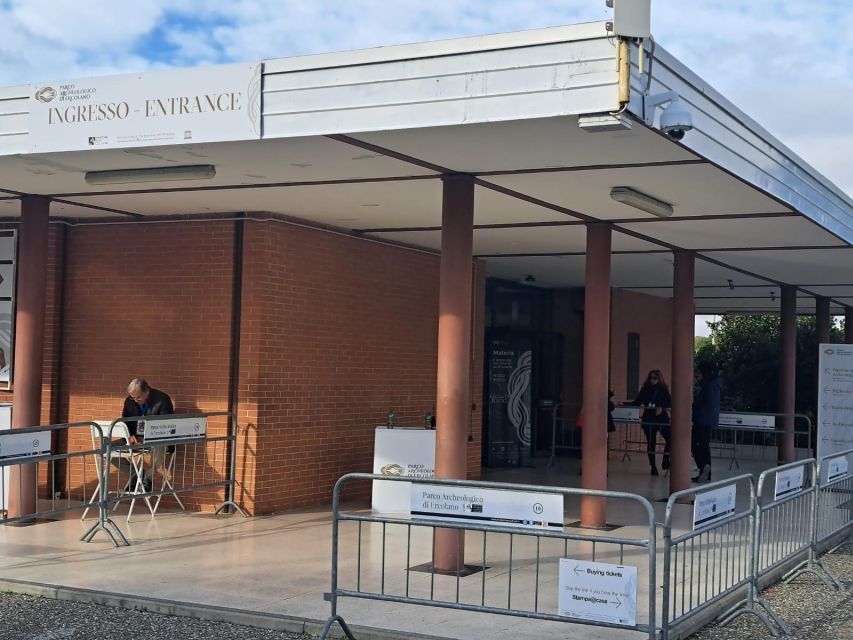
- You collect the device at the entrance: Look for the Audioguide Desk, not just the main ticket office.
- Bring your own headphones if possible: Headphones are not included, and the supplied device is held close to your ear.
- Sunday pricing deserves a check: The archaeological site may offer free entry on Sundays, so compare the package price with direct admission before booking.
- The site has vending machines but no café: Bring water and food if you expect to stay several hours.
Why Herculaneum feels different from Pompeii
Herculaneum was buried by the eruption of Mount Vesuvius in 79 AD, the same disaster that covered Pompeii. The two sites tell different stories, though. Pompeii sprawls across a much larger area, while Herculaneum is more compact and often easier to understand in one visit.
I find the smaller scale useful. You spend less time marching along broad roads between scattered ruins and more time looking closely at houses, villas, mosaics, and the remains of daily life. The shorter distances also make a self-guided visit less tiring, especially if you want to pause often.
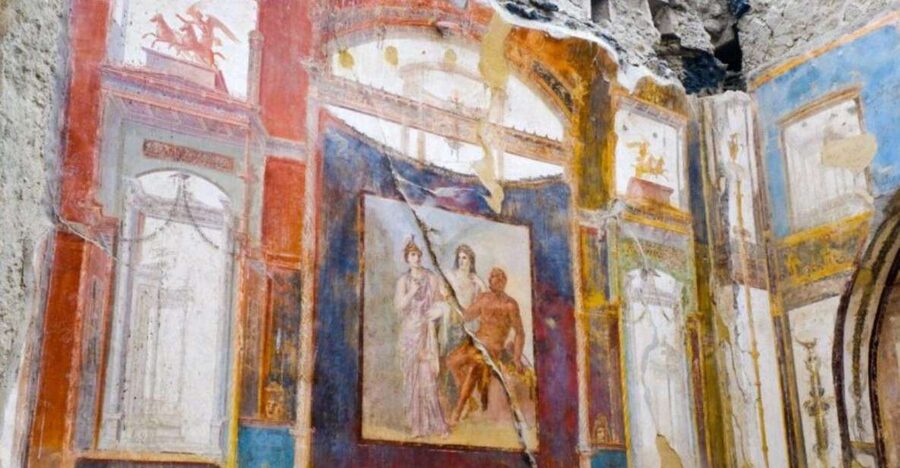
The preservation is the real draw. The ancient town gives you a close look at domestic spaces rather than only grand public monuments. You can walk through streets and alleys, look into rooms, and use the audio commentary to connect bare walls and decorative details with the people who once used them.
That does not mean Herculaneum is a quick stop. Two hours can feel rushed if you want to inspect everything. The suggested duration of three hours is more sensible for a first visit, giving you time to collect the device, orient yourself, follow the main route, and return to places that caught your eye.
More Pompeii and Vesuvius trips:
- Pompeii: Entry Ticket and Guided Tour with an Archaeologist
★ 4.8 · 19,459 reviews - Pompeii: Entry Ticket with Optional Audio Guide
★ 4.2 · 12,360 reviews - Pompeii: Small Group Tour with an Archaeologist
★ 4.8 · 12,264 reviews
Collecting your ticket and audioguide
Your meeting point is simple in theory: go to the entrance and find the Audioguide Desk. In practice, allow a few minutes to get your bearings. The entrance signs can be confusing, and the audio desk is not always immediately obvious to first-time visitors.
The skip-the-line feature is useful when ticket queues are long, but it is not a guarantee that you will find a crowd. Some people arrive when there is little or no wait. You are paying partly for convenience and advance planning, not only for the minutes saved at the gate.
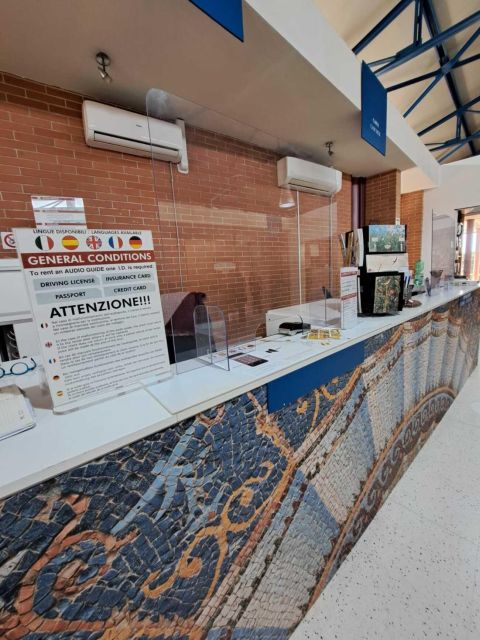
Bring a passport, identity card, or driving licence. A valid document is required when the audio device is issued, and it may be kept as part of the hire process. You are responsible for the device until it is returned before the office closes. Loss, theft, or damage can lead to repair or replacement costs.
The package includes the player and a map, but not headphones. The device is designed to be held close to your ear. It can sometimes stop playing if it touches your face, and the setup may take a little practice. I would bring simple wired earbuds if you have them, but do not count on pairing your Bluetooth headphones.
The audio guide is available in Italian, German, English, French, and Spanish. That range is helpful for mixed-language groups, and it lets each person listen in a familiar language if you are sharing the experience with family or friends.
Following the map through the ancient streets
Once inside, start by studying the map before pressing play. The park is not enormous, but the streets and buildings can blend together at first. The numbered points help you connect the audio with the exact house or area in front of you.
I recommend a simple rhythm: walk to a numbered stop, look around before listening, then play the explanation. This keeps you from staring at the device while the physical site is doing the important work. The commentary gives names and context, but your attention should remain on the masonry, wall decoration, floor patterns, and arrangement of rooms.
The route is not a live group tour, so you can move at your own speed. If a house interests you, stay longer. If a room feels less important to you, continue without waiting for anyone else. That freedom is especially useful when your day depends on limited rail connections.
The map is also a practical safety net. Several signs point toward entrances or directions, and it can be easy to begin by walking the wrong way. A quick look at the printed layout prevents you from wasting time and makes the visit feel calmer.
Houses, villas, and mosaics worth your time
The appeal of Herculaneum is not a single spectacular object. It is the repeated experience of stepping from one preserved domestic space into another. Houses and villas reveal how Roman buildings were planned, decorated, and used.
Mosaics reward slow looking. From a distance, they may appear to be attractive patterns. Up close, their materials and careful designs give a stronger sense of the effort that went into everyday surroundings. The audio guide helps explain why a particular room matters, rather than leaving you to guess from a wall and a floor.
The commentary is useful but not perfect. Some explanations use formal or high-level language, and a few parts may feel dated. I would treat the audio player as a solid foundation, not as the final word on every room.
A live guide may add stories, questions, and details that are not included here. You may hear a guide speaking to a group nearby and notice that the spoken tour offers extra context. That is the tradeoff: this package gives you independence and usually costs less than a private guide, but it cannot respond to your curiosity in real time.
Still, the freedom matters. You can stop listening whenever you want and simply look. You can return to a mosaic or house without asking a group to wait. For many people, that quiet control is more valuable than a constant stream of commentary.
A few more Pompeii bookings to compare
- Pompeii Small Group Tour with an Archaeologist
★ 5.0 · 6,593 reviews - Pompeii: Skip-the-Line Entrance Ticket with Audio Guide
★ 4.0 · 2,509 reviews - Naples: Pompeii and Mt. Vesuvius with Lunch and Wine Tasting
★ 4.5 · 2,454 reviews - Pompeii: Archaeological Park Tour with Ticket on request
★ 4.5 · 2,283 reviews
How long to allow for the visit
The stated duration is three hours, but this is not a rigid escorted tour. It refers to a sensible amount of time for the archaeological park, including a measured visit with the audio guide.
A fast visitor might complete the main circuit in around two hours. That pace can work if you have a tight schedule, but you will likely skip details. If you want to listen at most numbered stops, pause for photographs, and revisit the best-preserved rooms, plan closer to three hours.
Herculaneum works well as part of a wider day in Campania, but do not squeeze it into an impossibly narrow gap. Rail connections from Sorrento can be limited at certain times, with only two direct trains each way reported on some days. That makes flexible self-guiding particularly useful, but it also means you should check your return transport before entering.
The walk from the station to the archaeological site is roughly half a mile downhill. The return journey is uphill, so save a little energy if you are continuing by train. Comfortable shoes are essential because the ground is historic, uneven, and better explored slowly than hurriedly.
Food, water, weather, and practical comfort
The park operates rain or shine. A wet day will not cancel the visit, so bring suitable clothing and protect any personal headphones or electronics. On a hot day, shade and water become more important because there is no café or restaurant inside the site.
Vending machines provide limited refreshment, but they are not a replacement for lunch. I would carry water and a snack, especially if you plan to stay for the full three hours or combine Herculaneum with another outing.
Comfortable shoes are not optional advice here. You will be walking through ancient streets and alleys, often while looking down at floors and paving. Shoes with a steady sole will make it easier to focus on the ruins instead of each step.
The park’s compact form is helpful in poor weather because you are not crossing a huge area. Even so, rain can make historic surfaces slippery, and the audio equipment still needs to be returned before the office closes.
Is $35 good value?
At $35 per person, this is not the cheapest possible way to enter Herculaneum. The value depends on what you want from the visit and when you go.
The price covers the entry ticket, audio commentary, and map. You are also paying for the convenience of arranging the package in advance and avoiding the standard ticket line when a queue exists. If you have limited time or want a clear introduction without hiring a private guide, that combination is reasonable.
The value is weaker if you are visiting on a free-entry Sunday. Herculaneum has been reported as free on Sundays, so check the current admission rules and compare the direct site option before paying for a package. A price discrepancy can be frustrating when the park itself may not charge admission that day.
You should also consider the audio device. If you prefer listening through your own phone and earbuds, this setup may feel less convenient. The supplied player works best once you understand how to hold it, but it is not as simple as downloading an app.
For a first visit, I think the package earns its price when you want structure without a group. For repeat visitors, direct admission may make more sense, particularly if you already know the site or plan to bring your own reference material.
Who should choose this self-guided format?
I would recommend it to independent sightseers, couples, families with older children, and anyone who wants to decide how long to spend in each room. It also suits people with a tight transport schedule because you can skip less important stops and focus on the areas that interest you.
It is a good choice after Pompeii. Herculaneum is smaller and more manageable, yet its preservation gives you a different view of the eruption and Roman domestic life. Seeing both sites helps you compare scale and character rather than treating one as a substitute for the other.
The format is less suitable if you want a historian beside you throughout the visit. The audio guide provides information at each stop, but it cannot answer follow-up questions, adjust its explanation to your interests, or point out something you have missed.
It may also frustrate visitors who dislike shared equipment or who expect modern audio technology. Bring headphones if you can, learn the controls at the desk, and keep the map in hand. Those small steps make the experience much easier.
Cancellation and booking flexibility
You can cancel up to 24 hours in advance for a full refund. The reserve-now, pay-later option lets you hold a place without paying at the time of booking, which is useful when your Campania plans depend on weather or transport.
Check the available start times before confirming. Although the visit is flexible once you enter, the booking still depends on availability.
Remember that the device must be returned before the office closes. Do not leave the audio desk until you know the closing time and have a clear plan for getting back there.
Should you book this Herculaneum experience?
Book it if you want independence, a map, and useful commentary without committing to a group schedule. The site itself is the star, with well-preserved houses, villas, mosaics, streets, and alleys that reward careful looking.
Skip it and buy direct if you are visiting on a Sunday after checking free-entry rules, or if you already have your own guide material. I would also choose a live guide instead if personal stories, questions, and extra archaeological detail matter more to you than moving at your own pace.
For most first-time visitors with three hours available, this is a practical middle ground. It gives you enough context to understand what you are seeing while leaving the final decision to you: pause, listen, wander, and keep going when you are ready.
FAQ
Where does the visit begin?
Go to the entrance of the Herculaneum Archaeological Park and look for the Audioguide Desk.
What does the package include?
It includes entry to Herculaneum, an audioguide, and a map of the archaeological site.
Is a guided tour included?
No. This is a self-guided visit, not a live guided tour.
Are headphones provided?
No. Headphones are not included, so you may wish to bring your own.
Which languages are available for the audioguide?
The audioguide is available in Italian, German, English, French, and Spanish.
What identification do I need?
You need a valid passport, identity card, or driving licence for audioguide hire.
How long does the visit last?
The stated duration is three hours. You can explore at your own pace within the park’s opening hours.
Can I cancel the booking?
Yes. You can cancel up to 24 hours in advance for a full refund.
Can I pay later?
Yes. The reserve-now, pay-later option allows you to book without paying at the time of reservation.
What should I bring?
Bring comfortable shoes and a passport or other accepted identity document. Water and food are also sensible because the site has vending machines but no café or restaurant.
Recently added around Pompeii
- Pompeii Ruins Private Tour with Optional Skip-the-Line Entry★ 4.9 · 732 reviews
- Pompeii 3hours Villa of Mysteries tour with an Archaeologist★ 4.8 · 486 reviews
- Pompeii: Group Tour with an Archeologist Guide★ 4.4 · 490 reviews
- Pompeii: Exclusive Tour with Archaeologist and Entry Tickets★ 4.9 · 634 reviews
- Pompeii: Skip-the-Line Tickets and Tour with Archaeologist★ 4.9 · 467 reviews
- Pompeii: Small-Group Tour of Pompeii and Herculaneum★ 4.8 · 867 reviews
- Pompeii: Skip-the-Line Guided Tour with Expert Archaeologist★ 4.8 · 196 reviews
- Pompeii: Skip-the-Line Entry & Audioguide★ 3.8 · 225 reviews
Pompeii & Vesuvius Tours, compared.
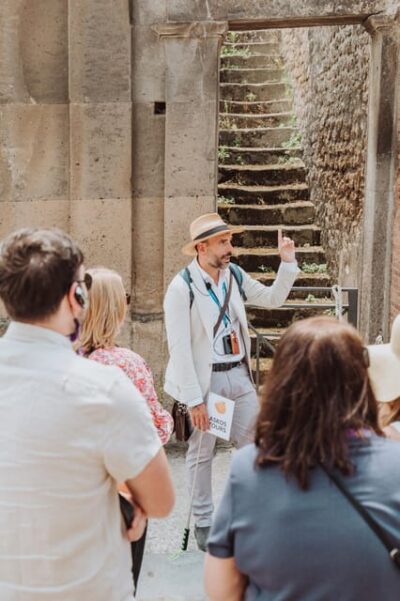
Entry Ticket and Guided Tour with an Archaeologist
Read our review →

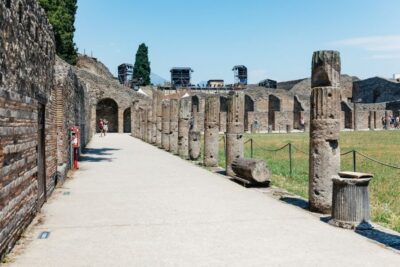


Pompeii Small Group Tour with an Archaeologist
Read our review →
Pompeii, Amalfi Coast and Positano Day Trip from Rome
Read our review →Browse the lists this tour appears in