
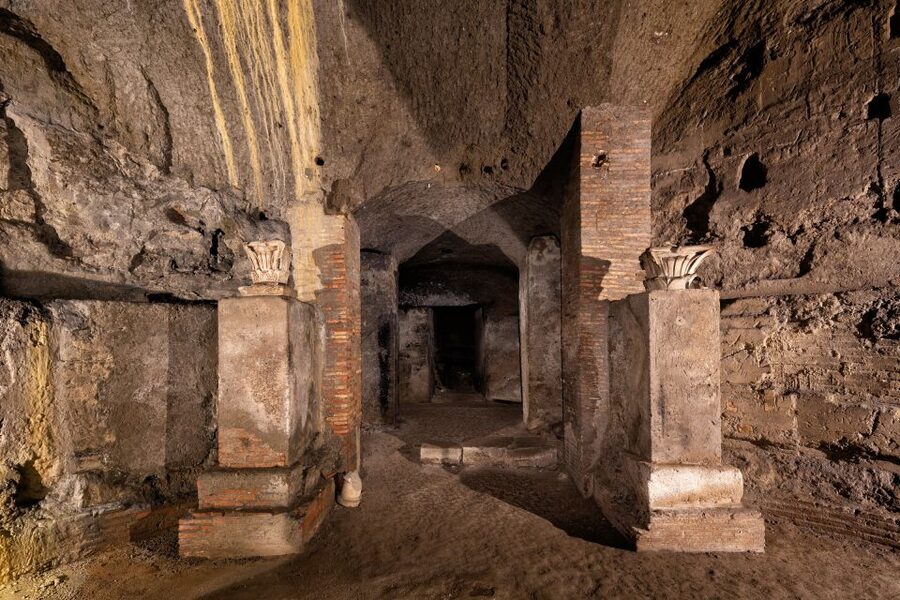
Reviewed · POMPEII & VESUVIUS TOURS
Ercolano: Herculaneum Skip-the-Line Ticket & Audio Guide
Herculaneum feels startlingly close to ancient life. This self-guided visit lets you walk the old Roman streets at your own pace, with time to study the remarkably preserved homes, mosaics, frescoes, furniture, and wooden screens. I especially like the freedom to linger where the site interests you most, and the mobile audio guide adds useful background without tying you to a group schedule.
The ticket costs $35 per person and is valid for one day. The main drawback is that the audio system can be confusing, and you must download its contents before arriving because the ruins do not offer free Wi-Fi and mobile coverage can be unreliable. You also need your own headphones.
In This Review
- Key points to know before visiting
- Why Herculaneum feels different from Pompeii
- Getting your ticket and preparing the audio guide
- Entering the archaeological site
- Walking the Roman alleys at your own pace
- What makes the preserved buildings special
- Using the audio guide without getting lost
- How long to allow and how to pace yourself
- Is $35 good value?
- Who should choose this experience?
- Should you book the Herculaneum ticket?
- FAQ
- Where is the Herculaneum experience located?
- How long is the ticket valid?
- Does the ticket include skip-the-line entry?
- Is a live guide included?
- Do I need to bring headphones?
- Can I use the audio guide without mobile data?
- What documents should I bring?
- Are transfers included?
- Are pets allowed?
Key points to know before visiting

- Herculaneum is smaller than Pompeii, making it easier to cover in a few hours without feeling rushed.
- Preservation is the star attraction, with homes, decoration, furniture, and wooden elements offering a close look at Roman daily life.
- The audio guide works on your smartphone, but download every file before you reach the entrance.
- Skip-the-line access saves time, though one part of the process may still involve collecting a physical ticket.
- The visit is self-paced, so you can pause often, avoid school groups, or move quickly through less interesting areas.
- Bring ID, headphones, and a charged phone, and remember that pets are not allowed.
Why Herculaneum feels different from Pompeii

Pompeii gets the fame, but Herculaneum offers a more intimate look at Roman life. The ancient town was buried by the eruption of Mount Vesuvius in AD 79, and its remains were brought back into public knowledge through Bourbon excavations in the 18th century.
The story of its rediscovery begins in 1710, when a farmer named Ambrogio Nucerino dug a well to irrigate his vegetable garden. He found valuable marble fragments, which were later identified as belonging to the theater of the ancient city. It is a wonderfully odd beginning for one of Italy’s most important archaeological sites: a vegetable garden leading to a lost Roman town.
I find Herculaneum rewarding because the ruins feel less spread out than Pompeii. You can stroll along the ancient alleys and get close to the buildings instead of spending much of the day crossing a huge area. One visit can still take about four hours if you want to see everything open and listen to the audio carefully, but the scale is easier to manage.
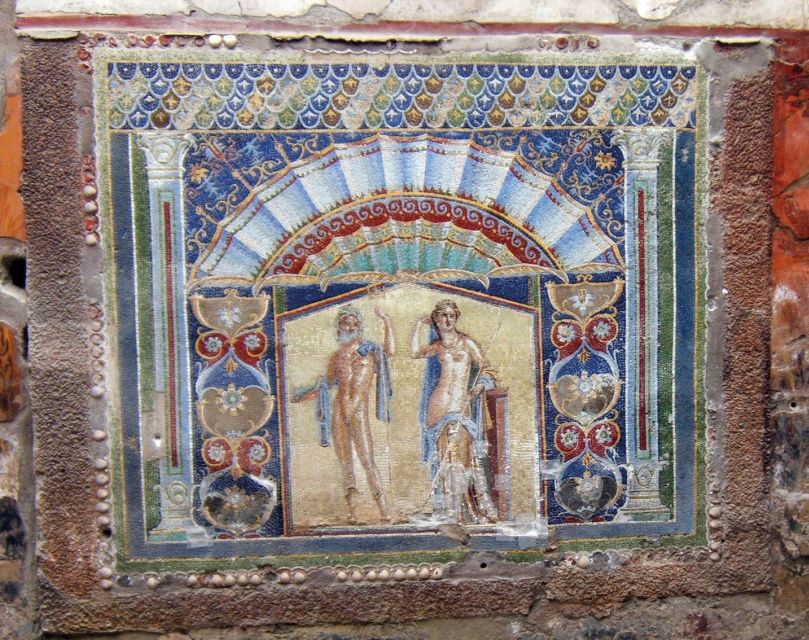
The site also gives you more than walls and street plans. You might find beautifully preserved frescoes, mosaics, statues, wooden screens, and furniture. These details help you picture rooms as lived-in spaces, not simply archaeological remains.
More Pompeii and Vesuvius trips:
- Pompeii: Entry Ticket and Guided Tour with an Archaeologist
★ 4.8 · 19,459 reviews - Pompeii: Entry Ticket with Optional Audio Guide
★ 4.2 · 12,360 reviews - Pompeii: Small Group Tour with an Archaeologist
★ 4.8 · 12,264 reviews
Getting your ticket and preparing the audio guide
The booking process is designed for an independent visit rather than a guided group. The team contacts you by WhatsApp or email the day before your visit, sending the ticket and instructions for downloading the smart audio guide if it is included with your selected option.
This message matters. Check your spam folder if it does not appear, and make sure the contact details used for the booking are correct. One booking problem described in the supplied information involved a WhatsApp message being treated as spam and addressed to the wrong person. That is easy to avoid if you look out for the message ahead of time.
Download all audio content before you start. The ruins and museums do not have free Wi-Fi, and mobile network service is not always dependable. Do not wait until you reach the entrance, especially if your phone has limited storage or a weak battery.
Bring:
- Your passport or ID card
- A fully charged smartphone
- Headphones
- Your ticket and audio content
Headphones are not supplied. This is a small but important point. Shared phone audio is hard to hear around other people, and one visitor felt the experience would have been better if earphones had been provided. Your own wired or wireless headphones will make the commentary much easier to follow.
Reservations made after 6 p.m. are processed the next morning after 8 a.m. That timing could matter if you book late for an early visit.
Entering the archaeological site
The ticket includes skip-the-line access, which is especially useful when the entrance queue is long or you need to avoid standing for extended periods. One booking account reported that a physical ticket still had to be collected on arrival, but the collection was quick. So I would treat skip-the-line as a way to avoid the main ticket queue, not as a promise that you will never stop at a ticket desk.
The meeting point can vary depending on the option you book. Read the instructions carefully when your ticket arrives, since getting there was described as difficult by one person. Transfers are not included, so you arrange your own transport to Ercolano.
The activity ends back at the meeting point, though this is a self-guided entrance rather than a round-trip excursion. If you are arriving from a cruise port, allow for transport costs separately. A taxi from the port was reported at about €50 one way and €60 for the return, but that is an individual cost rather than part of the ticket.
Walking the Roman alleys at your own pace
Once inside, the basic plan is simple: walk through the excavated streets, enter the open buildings, and use the audio guide to add context. You are not tied to a guide’s pace or a fixed group.
That freedom is one of the strongest reasons to choose this option. I can imagine stopping longer in a room with a striking mosaic, then moving on when the audio becomes less relevant. If you are with family or friends, each person can also spend time on different details and meet up again without holding up a formal group.
The alleys make the experience feel immediate. You are not viewing the town only from a distant platform. You can get close to the structures and study how the buildings were arranged around the streets. The compact scale helps you build a mental picture of the town without constantly checking a map.
This is also useful if you need to sit regularly. The skip-the-line arrangement reduces time spent waiting before entry, and one person with a disability found the process easy enough to use despite not being comfortable with phone apps. The information provided does not describe seating throughout the site, so you should still plan your pace carefully and take breaks when possible.
A few more Pompeii bookings to compare
- Pompeii Small Group Tour with an Archaeologist
★ 5.0 · 6,593 reviews - Pompeii: Skip-the-Line Entrance Ticket with Audio Guide
★ 4.0 · 2,509 reviews - Naples: Pompeii and Mt. Vesuvius with Lunch and Wine Tasting
★ 4.5 · 2,454 reviews - Pompeii: Archaeological Park Tour with Ticket on request
★ 4.5 · 2,283 reviews
What makes the preserved buildings special
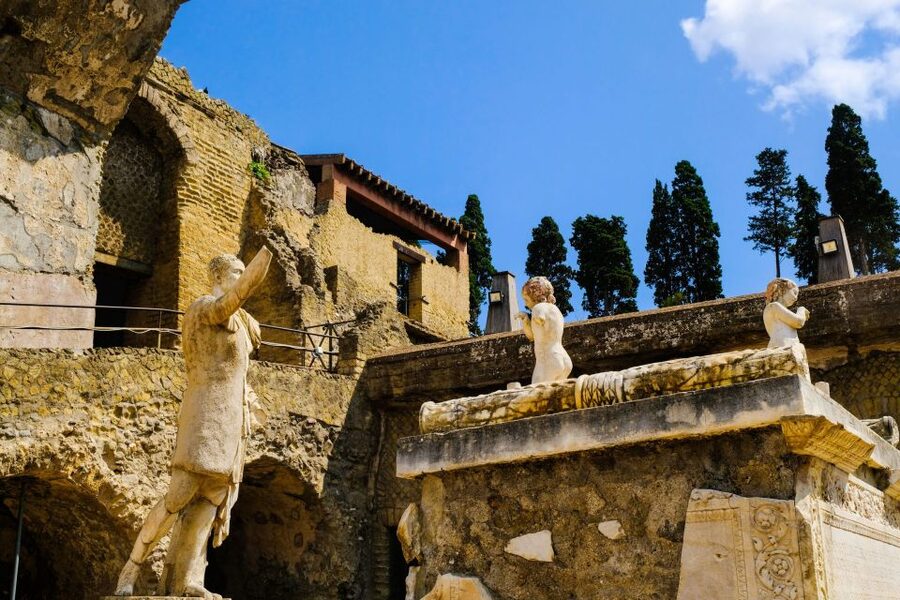
Herculaneum’s greatest strength is the condition of many objects and surfaces. The town was buried in the eruption, and the remains include decorative details that help explain how wealthy Roman households looked and functioned.
You can expect to see:
- Frescoes with surviving painted decoration
- Mosaics in the floors and rooms
- Statues
- Wooden screens
- Preserved furniture
- Building interiors and street layouts
These objects make the visit more personal than a simple walk among foundations. A wall tells you where a room stood. A preserved piece of furniture suggests how that room was used. A mosaic or fresco shows the taste and money of the people who lived there.
The audio guide is particularly useful here because the ruins do not always explain themselves. It offers facts about individual buildings and the history of the town, allowing you to understand why a particular room matters instead of passing through it as another ancient space.
The site has been described as a miniature version of Pompeii, but that comparison only goes so far. Herculaneum is smaller and, in some ways, better preserved. Pompeii is more famous and larger, while Herculaneum can feel more focused and manageable. If you have time for only one, your choice depends on whether you want Pompeii’s scale or Herculaneum’s closer look at domestic life.
Using the audio guide without getting lost
The audio guide is downloadable to your phone and available through a QR code in various languages. When it works well, it gives you the right amount of independence: you can listen to the commentary that interests you and skip ahead when you wish.
The weak point is organization. Some audio stops may not appear in the order you naturally walk through the site, making the guide confusing. It is informative, but you may need to match the commentary to the building or location yourself.
I suggest downloading the full guide before arrival, opening it once, and checking how the stops are labeled. Keep your phone charged, and bring headphones that are comfortable for several hours. If you are not confident with smartphone apps, give yourself extra time before entering to make sure the ticket and audio guide are both accessible.
This is not a live tour. There is no guide beside you to answer questions, point out a detail you missed, or correct your route. That is a drawback for anyone who prefers a clear narrative and personal explanation. It is a benefit if you dislike large groups or want to explore quietly.
How long to allow and how to pace yourself
The ticket is valid for one day, and you select an available starting time when booking. The supplied information does not promise a fixed tour length, but about four hours was enough for one full visit covering everything open at the time.
I would allow at least three hours if you want more than a quick walk-through. Four hours gives you room to listen to the audio, examine the houses, and stop for breaks. You can shorten the visit if you are combining Herculaneum with another Campania sight, but rushing would undermine the best part of the experience: noticing small details.
Start with the orientation information available at the entrance, then follow the route at a steady pace. If the audio order feels awkward, use the buildings themselves as your guide. Listen when a stop matches your location, and do not worry about completing every recording in numerical order.
Because the site is open-air in places and the visit involves walking through ancient streets, comfortable shoes and water would be sensible, although only the listed essentials are formally specified. Avoid planning a tight connection immediately afterward. The time needed at the entrance, ticket collection if required, and your own pace can vary.
Is $35 good value?
At $35 per person, this is not the cheapest way to see an archaeological site, but the price buys two useful things: admission and time saved at the ticket line. The audio guide adds a layer of interpretation without the cost or fixed schedule of a live guide.
I think the value is strongest during busy periods, when waiting could take a large part of your day. It is also worthwhile if you are visiting independently and want more explanation than the ruins alone provide. The ability to explore at your own speed is valuable for couples, families, and anyone who needs regular pauses.
The value is weaker if you already have a reliable guidebook, do not care about audio commentary, or are comfortable buying a standard ticket on your own. You are also paying for convenience, not transport. Transfers are not included, and taxi costs from the port can add considerably to the day.
The non-refundable policy is another reason to check your schedule before paying. Make sure you select the right date, starting time, and ticket category.
Who should choose this experience?
I would recommend this ticket to you if you want a flexible visit with basic historical explanation and minimal time in line. It suits people who prefer to move independently, pause often, or avoid being tied to a guide.
It is also a good fit if you are comparing Herculaneum with Pompeii. The smaller site can be easier to handle, and the surviving domestic details may interest you more than a vast collection of streets and ruins.
You may want a different option if you need a live guide, personal help with directions, or a perfectly ordered audio route. This product does not include a live guide, headphones, or transfers. The audio guide is useful, but it requires a little preparation and patience.
The student ticket has a strict condition: it is valid only for EU citizens aged 18 to 24. Bring identification, since a passport or ID card is listed as required.
Should you book the Herculaneum ticket?
Book it if you value independence, preserved interiors, and time saved at the entrance. Herculaneum rewards close looking, and the audio guide gives you enough background to understand what you are seeing without forcing you into a group.
Before paying, confirm the meeting point, watch for the WhatsApp or email instructions, download every audio file, and pack headphones. If you do those few things, this is a practical way to visit one of Campania’s most affecting ancient sites.
Skip it if you want transport, a live guide, or a fully managed excursion. For everyone else, $35 is a reasonable price for a self-paced visit to a compact Roman town where everyday life remains unusually visible.
FAQ
Where is the Herculaneum experience located?
It takes place at the ruins of Herculaneum in Campania, Italy.
How long is the ticket valid?
The ticket is valid for one day. Available starting times are shown when you check availability.
Does the ticket include skip-the-line entry?
Yes. Skip-the-line admission is included, although a physical ticket may still need to be collected quickly at the site, depending on the arrangement for your booking.
Is a live guide included?
No. The experience includes a downloadable audio guide, not a live guide.
Do I need to bring headphones?
Yes. Headphones are listed as something you must bring, and they are not included.
Can I use the audio guide without mobile data?
You should download all audio content before arriving. The ruins and museums do not have free Wi-Fi, and mobile coverage is not always reliable.
What documents should I bring?
Bring a passport or ID card. The student ticket is valid only for EU citizens aged 18 to 24.
Are transfers included?
No. Transport to and from Herculaneum is not included. The meeting point can vary according to the option booked.
Are pets allowed?
No. Pets are not allowed at the site.
Recently added around Pompeii
- Pompeii Ruins Private Tour with Optional Skip-the-Line Entry★ 4.9 · 732 reviews
- Pompeii 3hours Villa of Mysteries tour with an Archaeologist★ 4.8 · 486 reviews
- Pompeii: Group Tour with an Archeologist Guide★ 4.4 · 490 reviews
- Pompeii: Exclusive Tour with Archaeologist and Entry Tickets★ 4.9 · 634 reviews
- Pompeii: Skip-the-Line Tickets and Tour with Archaeologist★ 4.9 · 467 reviews
- Pompeii: Small-Group Tour of Pompeii and Herculaneum★ 4.8 · 867 reviews
- Pompeii: Skip-the-Line Guided Tour with Expert Archaeologist★ 4.8 · 196 reviews
- Pompeii: Skip-the-line-Ticket and Guided Tour★ 4.6 · 1,152 reviews
Pompeii & Vesuvius Tours, compared.

Entry Ticket and Guided Tour with an Archaeologist
Read our review →



Pompeii Small Group Tour with an Archaeologist
Read our review →
Pompeii, Amalfi Coast and Positano Day Trip from Rome
Read our review →Browse the lists this tour appears in