

Reviewed · POMPEII & VESUVIUS TOURS
Ercolano: Herculaneum Entry Ticket with Optional Audio Guide
Pompeii gets the fame. Herculaneum delivers the intimacy. I like the way this $21 entry ticket lets you explore at your own pace, and I love the unusually complete ruins, where roofs, doors, beds, mosaics, and frescoes still give ancient life a human scale. The main drawback is the optional audio guide, which can be awkward to navigate and may not work smoothly on site.
You get one full day of admission to this UNESCO World Heritage Site in Campania, with a digital app or physical audio device if selected. I would plan about three hours for a good visit, arrive early in summer, download the app before reaching the entrance, and bring headphones, water, comfortable shoes, and something for shade.
In This Review
- Key points to know before you go
- Why Herculaneum feels different from Pompeii
- Redeeming the mobile ticket at the entrance
- Walking down into the ancient town
- The houses, frescoes, and ordinary objects
- Public baths and the town’s shared routines
- The waterfront and the 300 skeletons
- Choosing between the app and a physical audio guide
- How long to spend inside Herculaneum
- Food, shade, and practical comfort
- Herculaneum compared with Pompeii
- Who should book this ticket?
- Should you book the Herculaneum entry ticket?
- FAQ
- How long is the Herculaneum ticket valid?
- Is a guided tour included?
- What languages are available for the audio guide?
- Can I cancel the booking?
- What are the opening hours?
- What should I bring?
Key points to know before you go
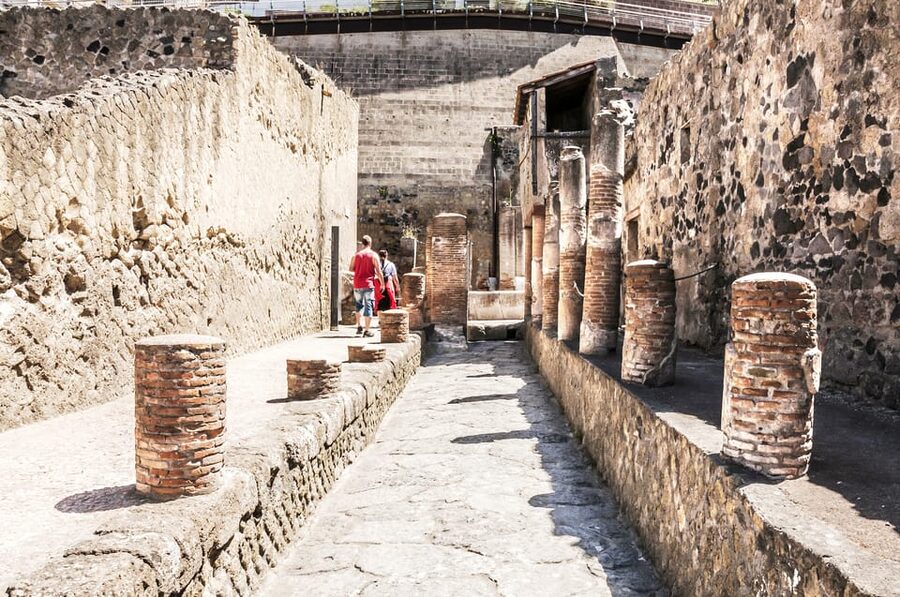
- Herculaneum is compact but remarkably complete: You can see homes, shops, public baths, a gymnasium, mosaics, frescoes, and everyday objects without the long distances found at Pompeii.
- The preserved wooden details make the site special: Roofs, doors, beds, and food survived beneath the volcanic material, helping you picture ordinary Roman life.
- The waterfront boat sheds are deeply moving: Around 300 skeletons were found near the ancient shoreline, a stark reminder of the eruption’s human cost.
- Three hours is a useful target: That gives you time to walk the main streets, enter buildings, pause at the best rooms, and listen to selected audio stops.
- The app needs preparation: Download it before arrival because mobile coverage can be weak inside the archaeological area.
- The ticket may not save money for everyone: At $21, it can be convenient, but check the official on-site price before booking if keeping costs low matters most.
Why Herculaneum feels different from Pompeii

The two Roman towns were buried by Mount Vesuvius in 79 AD, but they offer different experiences. Pompeii is far larger, with broad streets and an enormous number of buildings. Herculaneum is smaller and easier to absorb in a morning or afternoon.
I find Herculaneum especially rewarding because the ruins feel less like a collection of walls and more like a town interrupted. Several buildings retain upper sections, door frames, wooden features, interior decoration, and signs of daily use. You can look into a room and understand how it functioned, not simply admire a surviving fragment.
That smaller scale also helps you pace yourself. You are less likely to spend the day marching from one distant quarter to another. Instead, you can stop in a house, study its floor pattern, then move a short distance to a shop or bath complex.
The tradeoff is that Herculaneum does not offer Pompeii’s vast range. If you want to spend an entire day among miles of excavated streets, Pompeii may suit you better. If you want a concentrated site with strong visual detail, Herculaneum is the better choice for many first-time visitors.
More Pompeii and Vesuvius trips:
- Pompeii: Entry Ticket and Guided Tour with an Archaeologist
★ 4.8 · 19,459 reviews - Pompeii: Entry Ticket with Optional Audio Guide
★ 4.2 · 12,360 reviews - Pompeii: Small Group Tour with an Archaeologist
★ 4.8 · 12,264 reviews
Redeeming the mobile ticket at the entrance
The meeting point is at the archaeological site. You redeem your mobile voucher at the online ticket desk by showing the QR code on your phone.
This sounds simple, and often it is. Still, allow a little extra time at admission. The process may involve more than a quick scan, and the online ticket desk is not always obvious at first glance. Look for the ticket redemption point at the actual entrance area rather than assuming it will be somewhere in the town of Ercolano.
Some people have found that prebooked tickets join the same line as other ticket holders. That means the convenience is not always a faster entry. The benefit is having a reserved booking and the ability to cancel up to 24 hours before the visit for a full refund, rather than guaranteed priority treatment.
At $21 per person, the price is reasonable if convenience and flexibility matter to you. It is less attractive if you are trying to pay the lowest possible admission price, especially since one booking problem involved paying extra for an audio option that was not successfully supplied. Before paying, check exactly what your selected option includes and compare it with the current official site price.
The reserve-now, pay-later feature can help if your Naples plans are still shifting. You can hold the booking without paying immediately, then cancel up to 24 hours in advance for a full refund under the stated terms.
Walking down into the ancient town
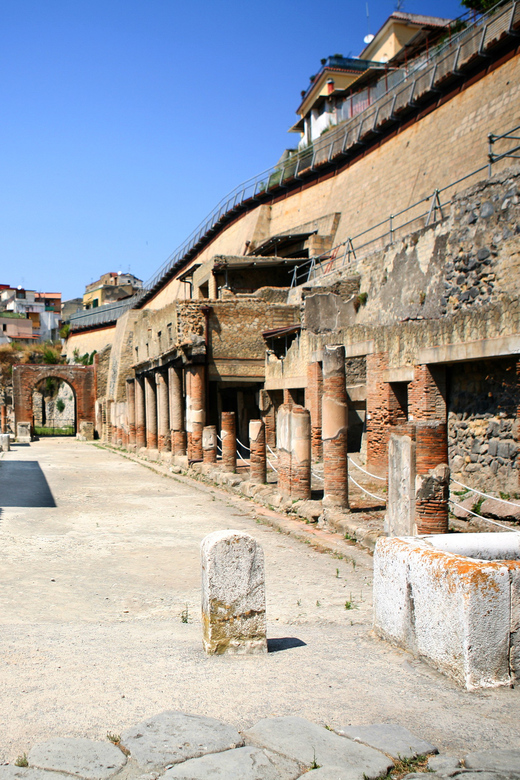
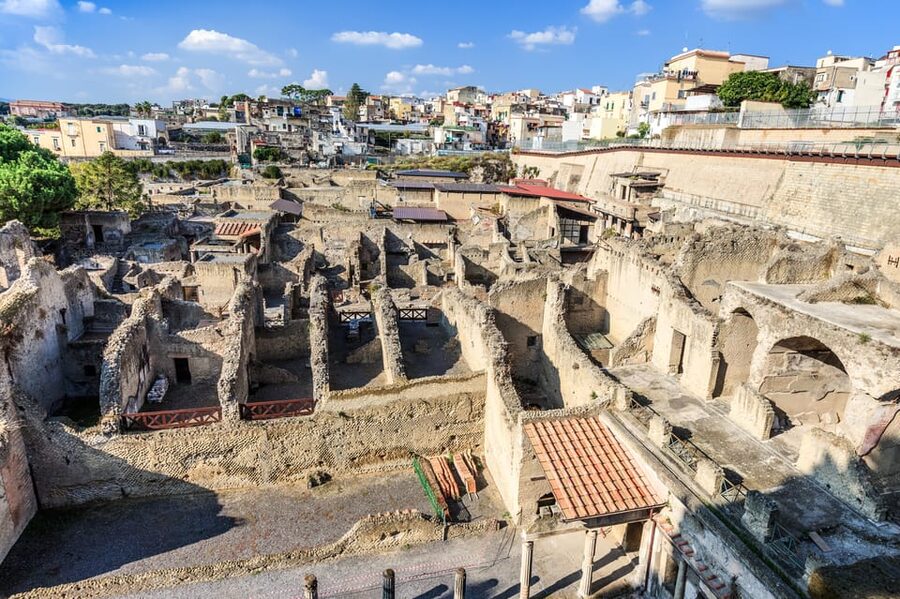
After entry, the first striking view comes from looking down over the excavated town. Modern Ercolano sits above the ancient site, while the Roman streets and buildings spread below in a broad archaeological hollow.
The difference in level helps explain the scale of the disaster. Herculaneum was covered by volcanic material after the eruption, preserving parts of the town beneath layers that kept buildings protected for almost 2,000 years.
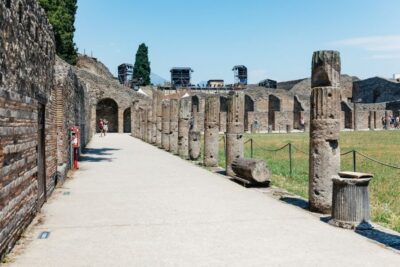
You walk on cobbled streets through the old urban grid. These are not empty ruins arranged for display. The roads lead past houses, commercial spaces, public buildings, and bathing complexes, giving you a sense of how closely daily activities were packed together.
Wear shoes with firm soles. The route is walkable, but cobbles and uneven surfaces reward practical footwear more than fashionable sandals. In hot months, take an umbrella or another form of shade. Some buildings and covered areas offer relief, but much of the visit takes place outdoors.
The houses, frescoes, and ordinary objects

The houses are the heart of the visit. Their value lies not only in their size or decoration, but in the way they preserve evidence of how people used them.
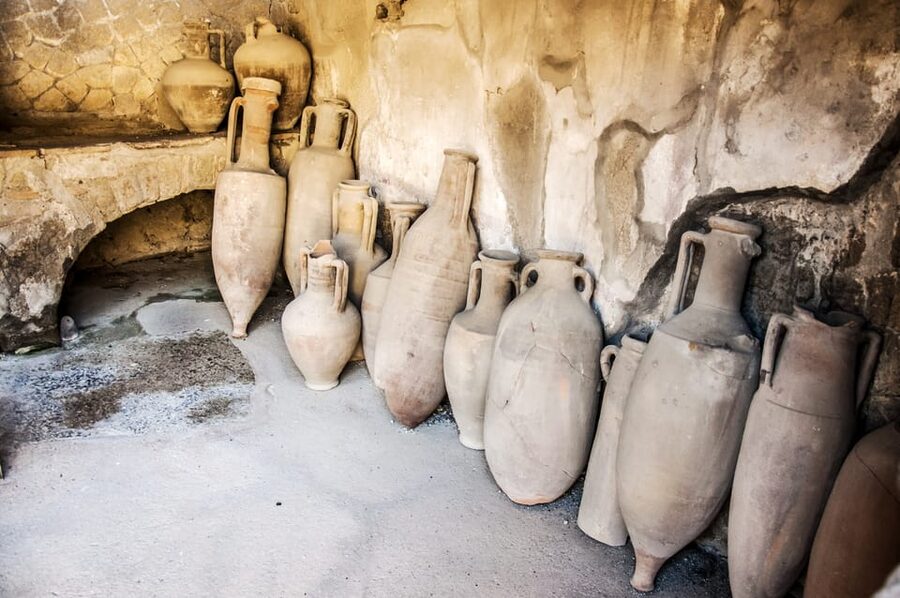
Look for surviving doors, beds, wall paintings, mosaics, and traces of household routines. In some rooms, the color and pattern remain strong enough to make the decoration feel intentional rather than merely archaeological.
The original form of objects is especially important here. A roof or wooden doorway can tell you more about construction than a foundation ever could. A bed suggests how a room worked. Food preserved by the eruption reminds you that this was a living town, not a ceremonial site abandoned for display.
Take your time in each building. I would rather examine three houses closely than rush through twenty while trying to follow every audio stop. Look up at walls and ceilings, then down at the floors. Small details often explain a room better than its general shape.
The site is also useful for comparing social spaces. Shops reveal commercial life, while private homes show domestic arrangements. Public buildings point to the routines shared by the wider community. The result is a more rounded picture of Roman society than a visit focused only on grand monuments.
A few more Pompeii bookings to compare
- Pompeii Small Group Tour with an Archaeologist
★ 5.0 · 6,593 reviews - Pompeii: Skip-the-Line Entrance Ticket with Audio Guide
★ 4.0 · 2,509 reviews - Naples: Pompeii and Mt. Vesuvius with Lunch and Wine Tasting
★ 4.5 · 2,454 reviews - Pompeii: Archaeological Park Tour with Ticket on request
★ 4.5 · 2,283 reviews
Public baths and the town’s shared routines
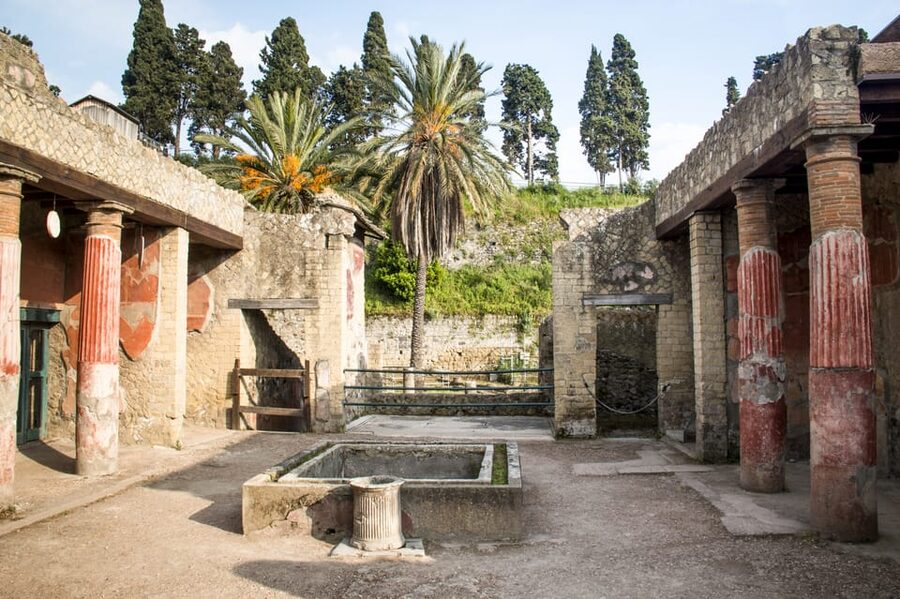
The public swimming baths are among the most useful stops for understanding ancient life. They were not simply places to wash. They were social spaces tied to routine, leisure, and community life.
Examine the arrangement of the rooms and the remaining decoration. The baths show how Roman public architecture was designed around shared habits, with different spaces serving different stages of the visit.
The public gymnasium adds another piece to that picture. Together, the gymnasium and baths show that Herculaneum was organized around more than private homes and shops. People worked, traded, exercised, met, and washed within a connected town.
The audio guide can help here by adding social context, especially if you want more than architectural labels. The strongest audio content explains how people lived and how social structures shaped the town. That makes it worthwhile for anyone interested in the people behind the stones.
The waterfront and the 300 skeletons
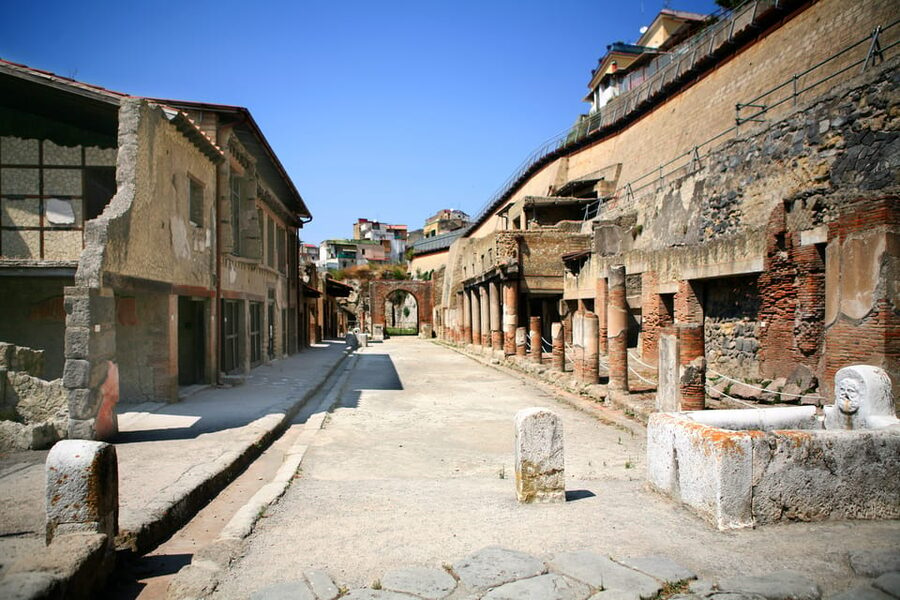
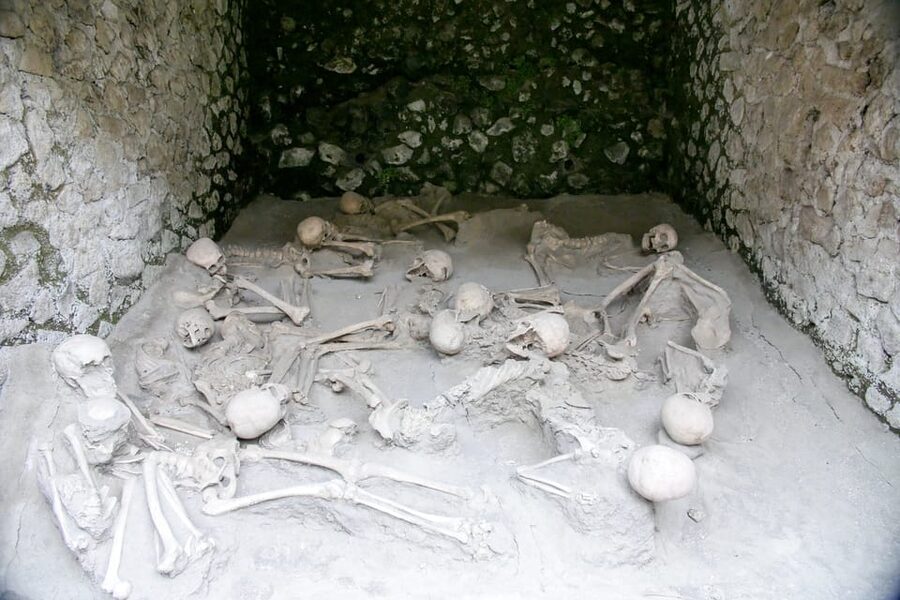
Near the ancient shoreline, the boat sheds offer the most somber part of the visit. Around 300 skeletons were found there, belonging to people who had gathered near the port while trying to escape the eruption.
This is not an easy display, but it is central to understanding Herculaneum. The preserved houses can feel almost comfortable, with their rooms and household objects. The remains at the waterfront abruptly bring the catastrophe back into focus.
I recommend slowing down here. You do not need a long explanation to understand the scene, but a guide or well-prepared audio commentary can add valuable context. The contrast between daily domestic life and the final moments of the town is what gives the site its emotional force.
For families, explain this area according to the age and sensitivity of your children. For adults with an interest in archaeology or human history, it may be the most memorable stop of the day.
Choosing between the app and a physical audio guide
There are two audio options. One uses a digital app downloaded to your smartphone. The stated digital languages are English, French, Italian, and Spanish. The broader activity information also lists German among the optional audio languages, so check the language shown for your exact booking before paying.
The digital guide is convenient because you carry your own phone. Bring headphones, and download the app and its content before arriving. Mobile coverage at the archaeological site can be poor, and the app may use a lot of data.
The app’s content can be interesting, especially when it explains social life, household habits, and the purpose of individual buildings. Its weak point is structure. You may find it difficult to match the correct dialogue to the building in front of you, and the map or tracking function may not always point clearly to the next stop.
A physical audio device is another option when offered with your booking. It avoids relying on your phone battery and personal data connection, but you should confirm where and how it is collected. One visitor paid for an audio option that was not recognized at the audio office, so keep your voucher details available and ask staff to confirm the device before leaving the desk.
The most reliable alternative is a licensed guide. The ticket does not include a guided tour, so a guide must be arranged separately. A live guide costs more, but you can ask questions, get help identifying rooms, and avoid the app’s navigation problems. For a history enthusiast, that added explanation may be worth more than the ticket’s audio upgrade.
How long to spend inside Herculaneum
Three hours is a practical visit length. It allows time to walk the main streets, enter several homes, see the baths and gymnasium, pause at the waterfront, and listen to at least part of the audio guide.
You can move faster if you want a highlights visit. You can also stay much longer, since the ticket is valid for one day. The compact layout means a full day is possible for anyone who studies architecture, mosaics, frescoes, or ancient household life closely.
Opening times change by season:
- From March 16 to October 14, the site is open from 9:30 AM to 7:30 PM. Last admission is at 6:00 PM, and you must leave the archaeological area by 7:00 PM.
- From October 15 to March 15, opening hours are 8:30 AM to 5:00 PM. Last admission is at 3:30 PM, and the site must be cleared by 4:40 PM.
Do not treat the closing time as your entry time. In winter, arriving after midafternoon leaves little room for a worthwhile visit. In summer, an early start helps with heat and crowds. The site can feel surprisingly quiet outside the busiest months, giving you more time to look closely at rooms without being hurried along.
Food, shade, and practical comfort
Facilities are basic. Do not count on a full café experience inside the archaeological area. Bring water, especially in summer, and plan your meal before or after the visit.
Shade is limited but not absent. You may find relief beneath roofs, inside buildings, or along covered sections of streets. An umbrella can serve as useful sun protection, particularly when waiting outside or crossing open sections.
Comfortable shoes are essential. The streets are ancient cobbles, and uneven ground can make a long visit tiring. Dress appropriately for the season, but choose clothing that lets you walk and climb small changes in level without fuss.
Your phone is important for the mobile voucher and possibly the audio guide. Charge it fully, download the app before arrival, and bring headphones. If you prefer not to depend on an app, choose the physical audio device only after confirming that it is included and available with your selected ticket.
Herculaneum compared with Pompeii
I would choose Herculaneum for a shorter visit and Pompeii for a full-day archaeological expedition. Herculaneum is easier to understand at a glance, yet it does not feel thin. Its houses, shops, baths, gymnasium, frescoes, mosaics, and objects cover the same broad themes of Roman life in a more concentrated area.
The better preservation is the deciding factor for many people. Pompeii is larger and more famous, but Herculaneum can give you a clearer view of domestic interiors and building details.
If you have time for both, visit both. Seeing Pompeii first may make Herculaneum feel refreshingly manageable. Seeing Herculaneum first may help you appreciate the architectural details that can get lost in Pompeii’s scale.
Who should book this ticket?
This experience suits you if you want independent exploration, a flexible one-day ticket, and access to one of Italy’s most important archaeological sites without committing to a group tour. It is particularly good for people who enjoy architecture, ancient daily life, frescoes, mosaics, and quiet observation.
Families may appreciate the shorter walking distances compared with Pompeii, although the skeleton display requires some thought for younger children. The site also works well for visitors with only part of a day available during a Naples trip.
I would be more cautious if you need a polished, fully guided experience. The audio app can be confusing, on-site signage is limited in places, and the ticket does not include a live guide. If detailed explanation is your main goal, budget for a private or small-group guide instead.
Should you book the Herculaneum entry ticket?
Yes, if you want a convenient independent visit and value the flexibility of a one-day booking. Herculaneum is compact, haunting, and unusually well preserved, with enough detail to reward both casual visitors and serious history fans.
Before booking, compare the $21 price with the current official admission cost and confirm the audio option. Download the app before you arrive, bring headphones and shade, and allow about three hours.
Choose the ticket without audio if you are happy reading limited site information and exploring freely. Choose the audio option if social context matters to you, but treat it as a helpful extra rather than a substitute for a live guide. If your budget allows only one ancient Roman site near Naples, Herculaneum deserves serious consideration, especially if you prefer close-up detail over vast scale.
FAQ
How long is the Herculaneum ticket valid?
The ticket is valid for one day. You can plan a shorter visit of about three hours or stay longer to examine the buildings and artifacts at your own pace.
Is a guided tour included?
No. The ticket includes entry and an optional digital or physical audio guide, but it does not include a live guided tour.
What languages are available for the audio guide?
The digital audio guide is listed in English, French, Italian, and Spanish. The activity information also lists German among the optional audio languages, so check your selected option before booking.
Can I cancel the booking?
Yes. You can cancel up to 24 hours in advance for a full refund under the stated cancellation terms.
What are the opening hours?
From March 16 to October 14, opening hours are 9:30 AM to 7:30 PM, with last admission at 6:00 PM. From October 15 to March 15, the site is open from 8:30 AM to 5:00 PM, with last admission at 3:30 PM.
What should I bring?
Wear comfortable shoes and dress appropriately for the weather. Bring headphones if using the app, download the audio content before arrival, and carry water and sun protection, especially in summer.
Recently added around Pompeii
- Pompeii Ruins Private Tour with Optional Skip-the-Line Entry★ 4.9 · 732 reviews
- Pompeii 3hours Villa of Mysteries tour with an Archaeologist★ 4.8 · 486 reviews
- Pompeii: Group Tour with an Archeologist Guide★ 4.4 · 490 reviews
- Pompeii: Exclusive Tour with Archaeologist and Entry Tickets★ 4.9 · 634 reviews
- Pompeii: Skip-the-Line Tickets and Tour with Archaeologist★ 4.9 · 467 reviews
- Pompeii: Small-Group Tour of Pompeii and Herculaneum★ 4.8 · 867 reviews
- Pompeii: Skip-the-Line Guided Tour with Expert Archaeologist★ 4.8 · 196 reviews
- Pompeii: Skip-the-line-Ticket and Guided Tour★ 4.6 · 1,152 reviews
Pompeii & Vesuvius Tours, compared.
Entry Ticket and Guided Tour with an Archaeologist
Read our review →



Pompeii Small Group Tour with an Archaeologist
Read our review →
Pompeii, Amalfi Coast and Positano Day Trip from Rome
Read our review →Browse the lists this tour appears in