
Reviewed · CITY TOURS
Verona: City Walking Tour with Cable Car & Wine Aperitif
Verona rewards a good first walk. This three-hour tour ties together the Roman Arena, medieval lanes, Romeo and Juliet landmarks, and a hilltop view in one clear route. I like the mix of major sights and quieter river walks, and I especially like the generous wine-and-food finale. The main drawback is that the tour sees the Arena and Juliet’s House from outside, so you will need a separate visit for the interiors.
I also like the small-group format, which makes it easier to ask questions and keep pace with the guide. Guides such as Mauro, Monica, Andrea, Maurice, and Elisabetta have been praised for lively storytelling and useful local tips. Expect a fairly long walk, some steps after the cable car, and a tasting that feels more like a light lunch than a quick nibble.
In This Review
- Key points at a glance
- Starting beneath Verona’s Roman Arena
- Roman gates and medieval Verona
- Bridges, river views, and stories of lost islands
- Riding up to Castel San Pietro
- Juliet’s Balcony from outside
- Signori Square, Erbe Square, and the city’s public rooms
- The wine aperitif is more than a sample
- What the $81 price really buys
- Pace, weather, and practical comfort
- Who should book this Verona walk?
- My verdict: a useful first day in Verona
- FAQ
- Where does the Verona walking tour meet?
- How long does the tour last?
- Which languages are available?
- Is entry to the Verona Arena included?
- Can I go inside Juliet’s House?
- Is the cable car ride both ways?
- What food and drink are included?
- Is the tour suitable for wheelchair users?
Key points at a glance
- Arena views without an interior ticket: Learn about Verona’s great Roman amphitheater while standing in Piazza Brà.
- A scenic hilltop ride: Take the cable car uphill to Castel San Pietro for broad views across the city and the Adige River.
- Romeo and Juliet from the street: See Romeo’s House and Juliet’s Balcony from outside, with stories from your guide.
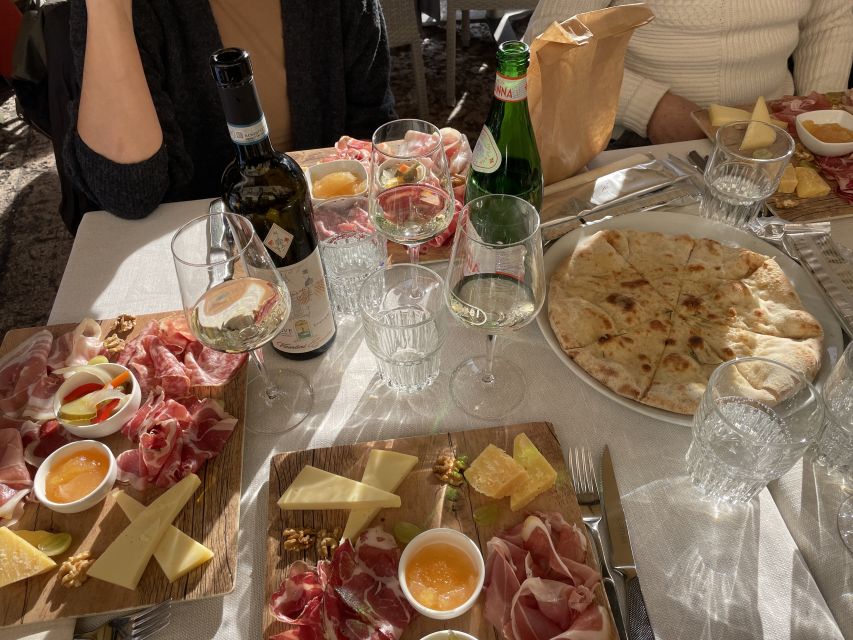
- A real amount of food: The final platter may include local ham, salami, bresaola, cheeses, focaccia, bread, and water.
- A useful first look at Verona: The route covers enough ground to help you choose where to return later.
- A proper walking commitment: You may walk about four miles, with steps and a downhill section after the hilltop stop.
Starting beneath Verona’s Roman Arena
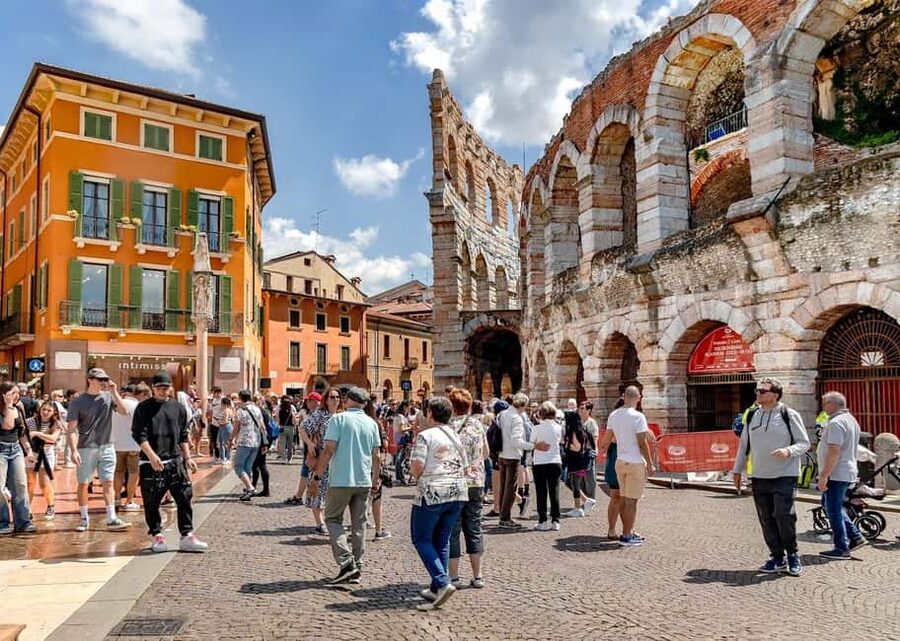
Meet your guide at Piazza Brà, 10, near the Arena. Look for the signboard marked Walks In Europe, and arrive five to ten minutes early. The group cannot be added after the tour begins, so this is not the time to cut things close with a delayed train or a last-minute coffee.
Piazza Brà is one of the best possible starting points. The Arena dominates the square, and its pinkish stone gives you an immediate sense of Verona’s age. Your guide explains the amphitheater from outside, including its Roman purpose and place in the city today.
The tour does not include entry to the Arena. That matters if you hoped to walk through the ancient arches or sit inside the amphitheater. Still, an exterior visit works well as an introduction, especially if you plan to return for a concert, opera, or interior visit later.
The opening walk lasts about 15 minutes, but the guide’s commentary gives the stop more weight than a quick photo opportunity. You learn how the Arena fits into Verona’s civic life, then move into the older streets beyond the square.
More Walking Tours in Verona
- Verona: History and Hidden Gems Guided Walking Tour
★ 5.0 · 1,379 reviews - Verona: Small Group Guided Walking Tour with Arena Tickets
★ 4.9 · 848 reviews - Verona Highlights Walking Tour in Small-group
★ 5.0 · 493 reviews
Roman gates and medieval Verona
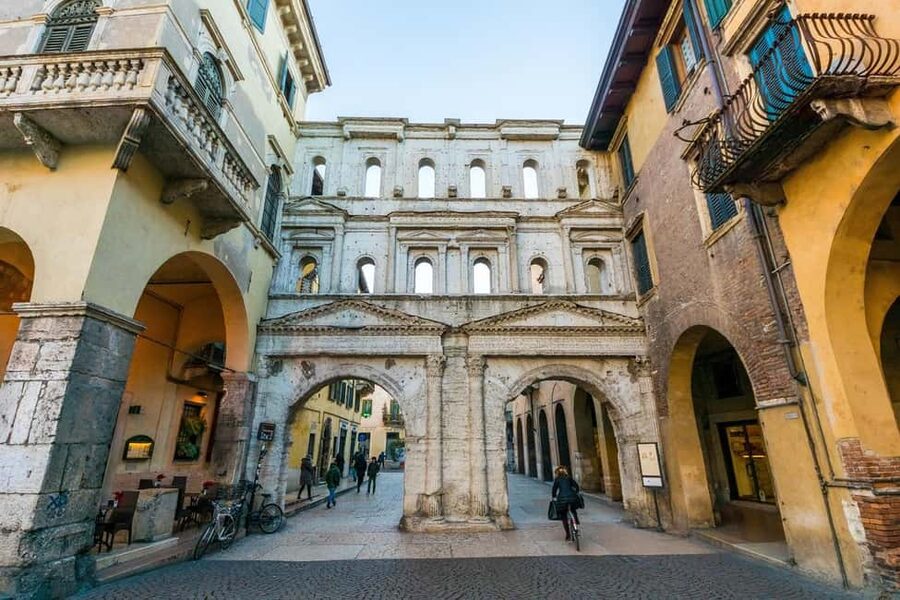
The next stops bring you to the Arco dei Gavi, or Gavi Arch, and Porta Borsari. These are easy to miss if you rush from the Arena to Juliet’s Balcony, yet they give Verona a stronger sense of place.
The Gavi Arch recalls the Roman city that once occupied this ground. Porta Borsari, one of the old city gates, offers another look at how people entered Verona centuries ago. The route links these monuments through streets where Roman, medieval, and later buildings sit close together.
This is where a local guide earns the tour price. You are not simply checking off an arch and a gate. You hear how the city changed over time, how its walls and entrances worked, and why certain buildings look the way they do.
The guides are a major strength here. Mauro and Maurice have been praised for humor, clear explanations, and a real affection for Verona. Monica has also received strong praise for keeping the pace comfortable while adding practical advice about food shops and restaurants. If your guide is as engaging as these examples, the same streets become much easier to read.
Bridges, river views, and stories of lost islands
The route continues toward the Adige River and Ponte Pietra, Verona’s old stone bridge. The itinerary also passes the Ponte Scaligero, the striking medieval bridge by Castelvecchio. You do not stop for interior visits, but both bridges help explain Verona’s defensive and commercial past.
The walk along the river is one of the tour’s better choices. It gives you a break from busy squares and offers changing views of the city walls, bridges, and buildings rising along the water. Your guide also discusses the former Saint Thomas Island, a piece of Verona’s past that adds an unusual detail to the city story.
I like this part because it slows the tour down. The Arena and Juliet’s Balcony are famous, but the Adige helps you understand why Verona developed where it did. You also get a chance to ask questions while walking rather than standing in a tight knot around a monument.
The route is not completely effortless. One description puts the total walk at roughly four miles, and that seems a useful expectation. Much of the route is manageable, but you should bring comfortable shoes and be prepared for several hours on your feet.
Riding up to Castel San Pietro
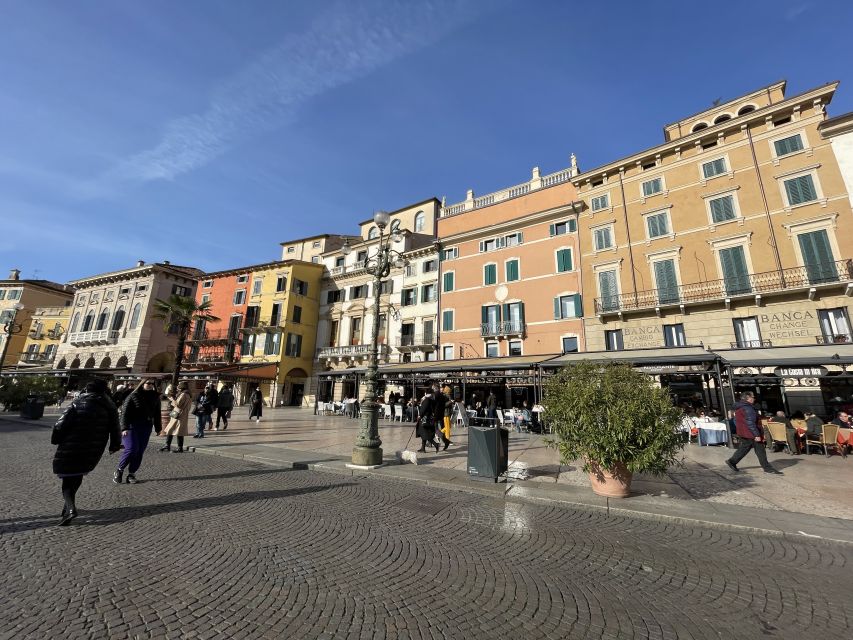
The cable car ride takes you uphill to Castel San Pietro in about five minutes. The ticket covers the uphill journey only, so you should understand the arrangement before booking: you ride up, enjoy the viewpoint, then walk back down.
At the top, the Belvedere viewpoint gives you one of Verona’s best wide views. You can see the red roofs, church towers, river bends, bridges, and the compact shape of the historic center. This is the moment when the earlier walking route begins to make visual sense.
The viewpoint is especially useful early in a Verona visit. After seeing the city from above, you can recognize its main districts and landmarks when you return to street level. One past participant also recommended the hot chocolate at the restaurant near the top, but that is an optional extra rather than part of the tour.
The downhill walk is part of the experience, not a missed transport connection. It offers more views along the Adige and changes the rhythm after the uphill ride. Still, it is a real consideration for anyone with knee, balance, or mobility concerns. The tour is not suitable for wheelchair users, and the stated route includes steps.
One guide adjusted the plan to use the funicular both ways for two older people with troublesome knees. That suggests some flexibility may be possible, but you should ask before booking rather than count on a change. The included ticket specifically covers the uphill ride, and the standard plan expects you to walk down.
Still Verona, but a slower afternoon:
- Verona: Hop-on Hop-off Tour 24 or 48-Hour Ticket
★ 4.4 · 2,010 reviews - Verona: Priority Access Arena Guided Tour
★ 4.6 · 1,152 reviews - Verona: Juliet’s House Fast-Track Entry Ticket & Audio Guide
★ 4.2 · 1,121 reviews - Verona: Arena di Verona Opera Ticket
★ 4.6 · 721 reviews
Juliet’s Balcony from outside
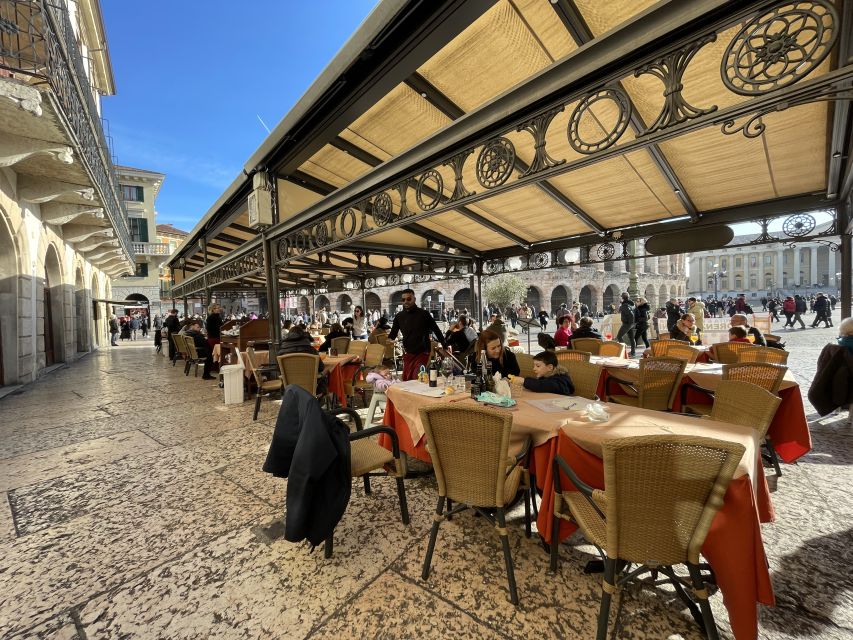
Back in the historic center, the tour passes Juliet’s House and Balcony. This is a street-level visit, not an interior tour. You will hear the story connected with Juliet and Verona, but you will not enter the house or visit the famous balcony as part of this experience.
That limitation is easy to overlook, since the name suggests a museum visit. I see the stop as a quick literary and cultural landmark rather than a full attraction. If you want courtyard access or the interior collection, plan another visit and allow extra time.
The route also passes Romeo’s House from outside. Together, these stops show how strongly the Shakespeare story shapes Verona’s identity, even as the city’s Roman and medieval remains tell a much older story.
Signori Square, Erbe Square, and the city’s public rooms
The walk continues through Piazza dei Signori and Piazza delle Erbe. These squares show a more social side of Verona, with elegant façades, historic monuments, cafés, market activity, and people moving through the center.
Piazza dei Signori has a formal, medieval character. Piazza delle Erbe feels more open and active, and it is a good place to notice Verona’s mix of architecture. Your guide helps connect the buildings to the city’s ruling families, trade, and public life.
The tour also includes the Della Scala Medieval Tombs and the Roman Theatre area. Some stops are passed from outside rather than explored at length, so do not expect a museum-style visit at each one. The value comes from the overall sequence: Roman remains, medieval power, river defenses, literary landmarks, and modern city life all appear in a single route.
This is also why the experience works well for a short stay. You receive a map in your head, not just a list of names. Afterward, you can decide where to return for a longer look.
The wine aperitif is more than a sample
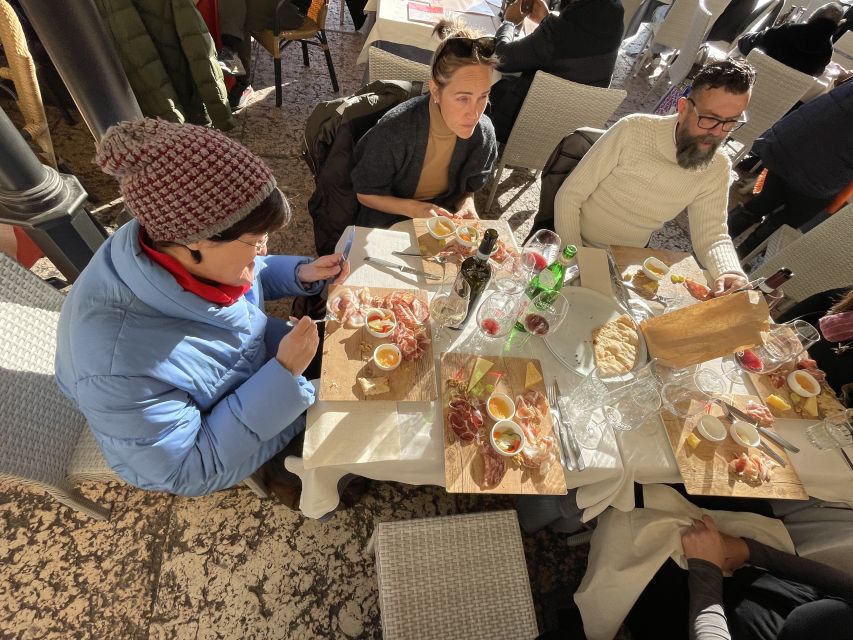
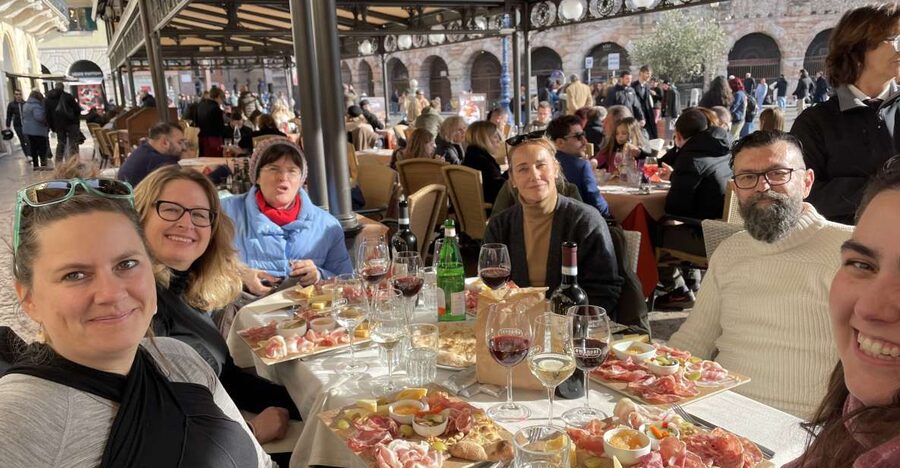
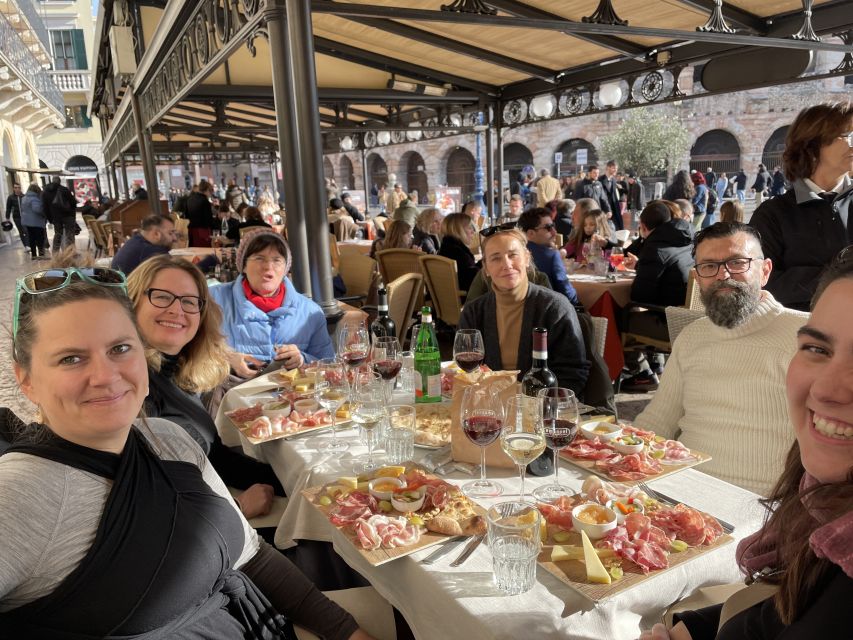
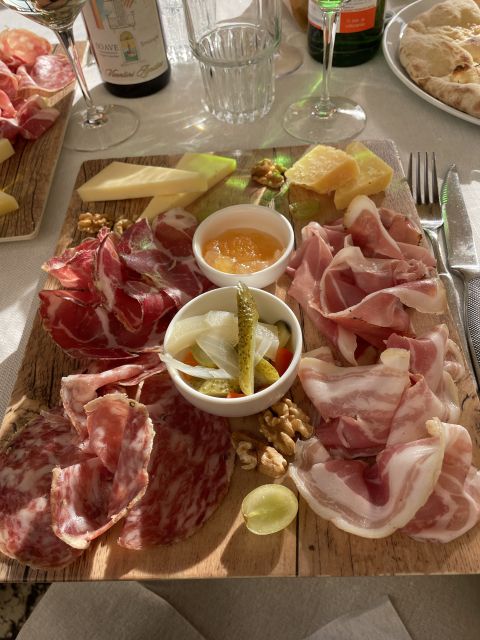
The tour returns to Piazza Brà for its final stop at a local restaurant. You receive two regional wines with a platter of local ham and cheeses. Depending on the serving, the food can include prosciutto, bresaola, soppressa, focaccia, bread, and Monte Veronese cheese.
Several descriptions of the meal make clear that it can be generous. Some people found it enough for lunch, and one person called it closer to a buffet than a tasting. That is good news if you want value from the final stop, but it also means you should not picture two tiny bites and a thimble of wine.
The aperitif includes two kinds of wine, usually one red and one white according to the tour description. Water and bread have also been included in reported servings. The food gives you a simple introduction to Veneto flavors without requiring a separate restaurant booking.
There is one social wrinkle. The guide may leave once the food arrives, and not every person in a group may take part in the tasting. One past participant felt the meal did not blend fully with the walking portion for that reason. If you want the final stop to become a guided food lesson or a group discussion, keep your expectations modest.
Dietary needs deserve advance attention. The restaurant has accommodated vegetarians, and one gluten-free diner with celiac disease received separate utensils, bread, focaccia, and antipasti to avoid cross-contamination. Still, the booking system may not provide a clear place to record allergies, so contact the provider ahead of time and explain your needs directly.
What the $81 price really buys
At $81 per person, this is not the cheapest way to walk around Verona. You can see many public streets and squares for free, and you can visit the Arena or Juliet’s House separately if you prefer to build your own day.
The price makes more sense if you value structure and context. You receive three hours with a local guide, a small-group or private format, the uphill cable car, two wines, and a substantial ham-and-cheese platter. You also cover a wide stretch of central Verona without spending time figuring out the best order.
I consider the value strongest for a first visit, a short stay, or a day trip from another Italian city. One person used the tour during a day trip from Milan and still had time afterward to shop and walk independently. The route gives you a strong orientation without consuming a full day.
The value is weaker if you dislike group pacing, already know Verona well, or want extensive interior visits. In those cases, you may prefer separate tickets and a self-guided route. The included food is also better understood as a satisfying finale than as a full food-focused tour.
Pace, weather, and practical comfort
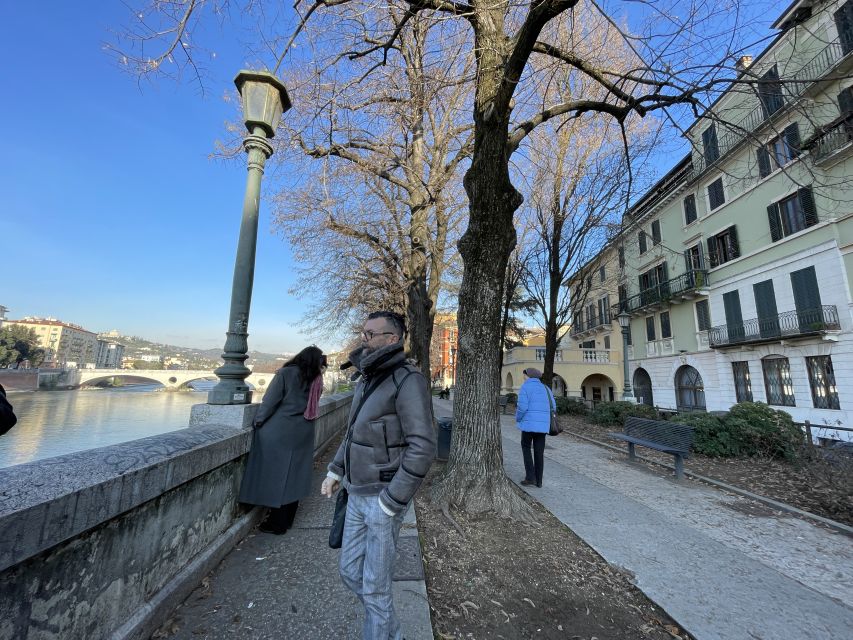
The walk is generally described as steady and manageable, with enough time to look around and ask questions. One guide took care to find shade during a 35-degree day, which shows how much the quality of the experience depends on the person leading it.
Summer heat can make the route harder, especially during the exposed portions and the walk down from Castel San Pietro. Bring water, wear shoes with good grip, and consider a morning start if the schedule allows. In rain, hearing the guide can be harder even in a small group. A past participant specifically wished for audio devices during wet weather, while another praised the use of hearing equipment on a different tour.
The languages are English and German. The tour is not suitable for wheelchair users. If steps, hills, or a four-mile walk would be a serious problem, this is not the right Verona introduction unless the provider confirms an adjusted plan in advance.
Who should book this Verona walk?
I would choose this tour if you want the main sights explained in a sensible order and you enjoy walking between them. It suits first-time visitors, couples, families with older children, and people arriving for only a day.
It is also a good choice for anyone who wants local food without committing to a long restaurant meal. The closing platter is generous enough to replace a light lunch for some people, and the two wines give the finale a distinctly regional feel.
I would think twice if your priority is entering monuments. The Arena and Juliet’s House are both outside-only stops, and the Roman Theatre and medieval tombs are also experienced mainly from the route. You should also skip it if you need step-free access or cannot comfortably walk several miles.
My verdict: a useful first day in Verona
I like this tour because it gives Verona shape. You see the Arena, Roman gates, old bridges, riverfront, medieval squares, Romeo and Juliet sites, and the city from Castel San Pietro. The guide’s stories are the thread holding it together, and names such as Mauro, Monica, Andrea, Maurice, and Elisabetta have been linked with warm, engaging tours.
The best part may be the balance between famous sights and ordinary streets. The cable car viewpoint adds a strong visual payoff, while the final wines, meats, cheeses, and focaccia turn a long walk into a pleasant lunch stop.
Book it if you want a friendly, well-paced introduction and accept that the monuments are viewed from outside. Skip it if you want a deep museum visit, a short stroll, or a strictly food-centered experience. For most first-time visitors who can manage the distance, $81 is a fair price for three hours of orientation, transport, local guidance, and a generous aperitif.
FAQ
Where does the Verona walking tour meet?
The meeting point is Piazza Brà, 10, 37121 Verona. Your guide will carry a signboard marked Walks In Europe.
How long does the tour last?
The tour lasts three hours, although one past participant described a slightly longer experience. Check the available start times when booking.
Which languages are available?
The live tour guide is available in English or German.
Is entry to the Verona Arena included?
No. The Arena is viewed from outside, and an interior visit is not included.
Can I go inside Juliet’s House?
No. Juliet’s House and Balcony are viewed from outside during this tour.
Is the cable car ride both ways?
The included cable car ticket covers the uphill journey only. The standard route returns downhill on foot along the Adige River.
What food and drink are included?
The finale includes two regional wines and a platter with local ham and cheeses. Reported servings have also included bread, focaccia, salami, bresaola, soppressa, and Monte Veronese cheese.
Is the tour suitable for wheelchair users?
No. The tour is not suitable for wheelchair users and includes walking, a hilltop section, and steps.
Recently added around Verona
- Verona: Highlights Walking Tour with Arena Priority Access★ 4.8 · 201 reviews
- The Highlights of Verona Small Group Walking Tour★ 4.8 · 294 reviews
- Verona: Highlights and Hidden Gems Walking Tour★ 4.7 · 179 reviews
- Verona: Juliet’s House Fast-Track Entry Ticket & Audio Guide★ 4.2 · 1,121 reviews
- Verona: Priority Access Arena Guided Tour★ 4.6 · 1,152 reviews
- Verona: Gelato Making Class★ 4.8 · 348 reviews
- Verona: Food and Wine Tasting Walking Tour★ 4.9 · 238 reviews
- Valpolicella: 1.5-Hour Guided Winery Tour with Wine Tasting★ 4.8 · 207 reviews
City Tours, compared.
City Sightseeing Hop-on Hop-off Bus with Audioguide
Read our review →
City Sightseeing Hop-On Hop-Off Bus with Audio Guide
Read our review →
City Sightseeing Rome Hop-On Hop-Off Bus Tour
Read our review →

Fettuccine Pasta Cooking Class in Rome’s City Center
Read our review →
Vatican City: Vatican Museums & Sistine Chapel Entry Ticket
Read our review →

City Sightseeing Florence Hop-On Hop-Off Bus Tour
Read our review →Browse the lists this tour appears in