
Reviewed · COOKING CLASSES
Verona: Gelato Making Class
Make dessert the main event. This two-hour Verona class takes you into a stylish vintage cooking school, where you help prepare handmade gelato and fresh fruit sorbet with a local chef. I like the hands-on kitchen work and the chance to taste unusual pairings such as olive oil, balsamic vinegar, and red wine reduction. The main consideration is price: at $74.02 per person, it costs more than simply visiting a gelateria, though the instruction, ingredients, tasting, and recipes add real value.
This is a particularly good choice for families, solo visitors, and anyone who wants a break from churches and museums. Children can take part in simple preparation, while adults get useful advice about gelato bases and toppings. The class is taught in English, and guides such as Laura, Sylvia, Christina, and Max have been praised for their patience and friendly manner. Just remember that the activity needs at least two participants and is not suitable for wheelchair users.
In This Review
- Key points to know before booking
- Meeting Laura or Sylvia outside the Ristori Theater
- A stylish vintage kitchen with room to get involved
- Cutting fruit and building the sorbet
- Gelato basics, from chocolate to coffee
- The tasting: more than a scoop in a cup
- Why this works for families
- A strong choice for solo visitors
- What the $74.02 price includes
- Timing, language, and practical limits
- Who should book this Verona experience?
- Should you book the gelato class?
- FAQ
- Where does the Verona gelato class begin?
- How long does the gelato-making class last?
- Is the class taught in English?
- Are children allowed to join?
- Can the class accommodate food allergies or intolerances?
- What happens if I need to cancel?
Key points to know before booking
- Five flavors may be prepared and tasted: Past sessions have included chocolate, coffee, panna, Greek yogurt, and seasonal fruit sorbet, though the exact menu can change.
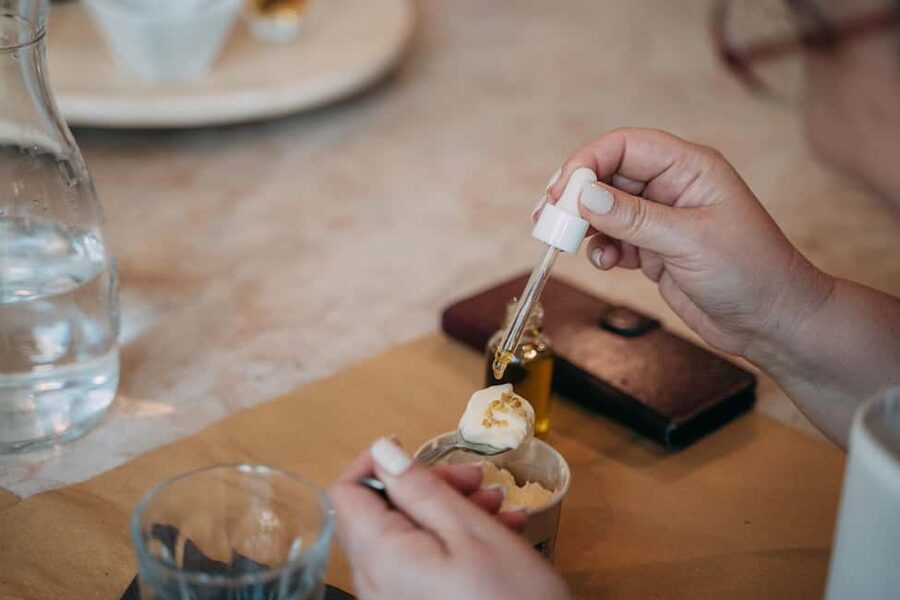
- The toppings are part of the fun: Try traditional additions alongside surprising pairings such as balsamic vinegar, olive oil, honey, salt, and red pepper.
- It works well for children: Young participants can help with fruit and toppings, but anyone underage must attend with an adult.
- You leave with recipes: The recipe book gives you a practical way to recreate the class at home.
- The meeting point is central: Meet outside the Ristori Theater, where the guide holds a yellow sign marked TOUR.
- The group can feel personal: Some sessions have had only four to six people, giving you plenty of time to ask questions.
Meeting Laura or Sylvia outside the Ristori Theater
The class begins in central Verona, in front of the Ristori Theater entrance. Look for the guide holding a yellow sign marked TOUR. This arrangement is simple, but arrive with enough time to identify the theater and guide without a last-minute scramble.
From there, you walk with the instructor to the cooking school. Hotel pickup and drop-off are not included, so you need to reach the meeting point under your own arrangements. The activity finishes back at the same meeting point, which makes it easy to continue sightseeing or return to your accommodation afterward.
The walk is part of the transition from city sightseeing to kitchen time. You are not spending the full experience at a restaurant table. Instead, you meet the chef first, settle into the school, and then shift into an active lesson.
More Cooking Classes in Verona:
- Verona: Pasta and Tiramisu Cooking Class With Free Flowing Wine
★ 5.0 · 575 reviews - Verona: Hands-on Fresh Pasta and Tiramisù Cooking Class
★ 4.9 · 295 reviews - Verona: Italian Cooking Class with Pasta, Risotto and Tiramisù
★ 5.0 · 268 reviews
A stylish vintage kitchen with room to get involved
The cooking school is described as a beautiful, stylish vintage space. You receive an apron and get settled at the work area before the preparation begins. The setting matters because it gives the class a sense of place without turning the lesson into a formal culinary demonstration.
The cooking school has been described as clean and well prepared. That is useful for families, since a tidy, organized kitchen makes it easier for children to follow along. The atmosphere also suits solo participants. Some people arrive alone and are paired with another participant, which creates an easy way to meet someone while working on a shared batch.
The class is not designed as a lecture. The chef leads you through the process, explains what is happening, and answers questions as you work. I like this format because gelato can look simple from the outside, but the balance of ingredients matters. Seeing the ingredients handled and mixed helps you understand more than simply reading a recipe.
Cutting fruit and building the sorbet
One of the first practical tasks involves cutting fresh fruit for the sorbet. The fruit flavors change with the seasons, so you may not receive the same sorbet combination at every class. Strawberry and pineapple have been used together in one session, giving you an idea of the fresh, fruit-forward style.
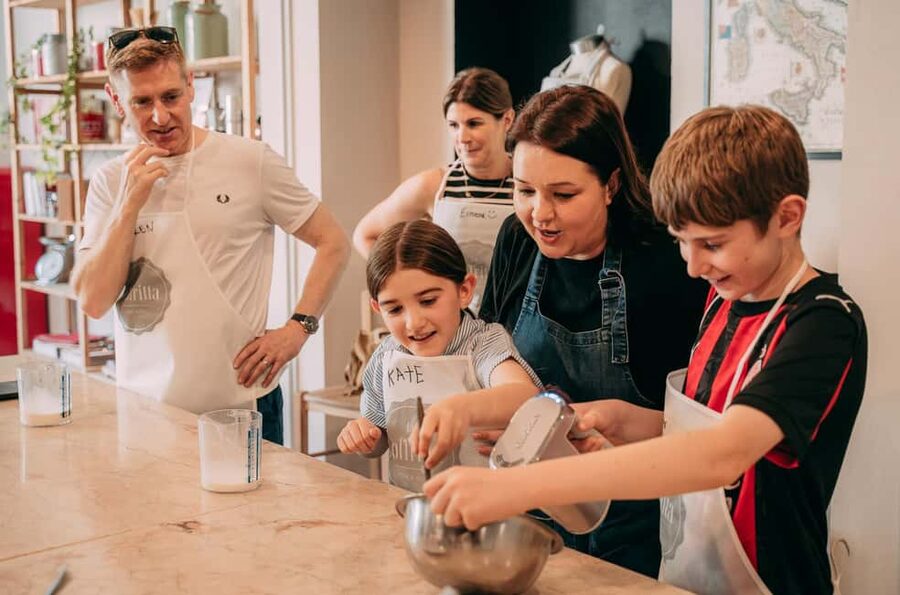
The chef guides you through the preparation rather than leaving you to guess. This is a good part of the class for children because cutting and assembling ingredients feel like real kitchen tasks. The adults in your group can also ask about substitutions and flavor balance, especially if you want to make sorbet at home.
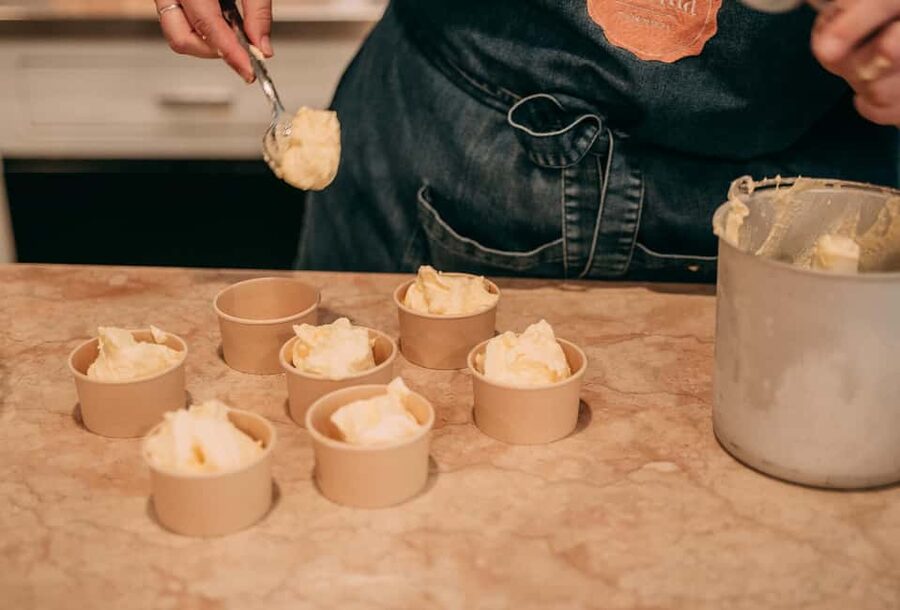
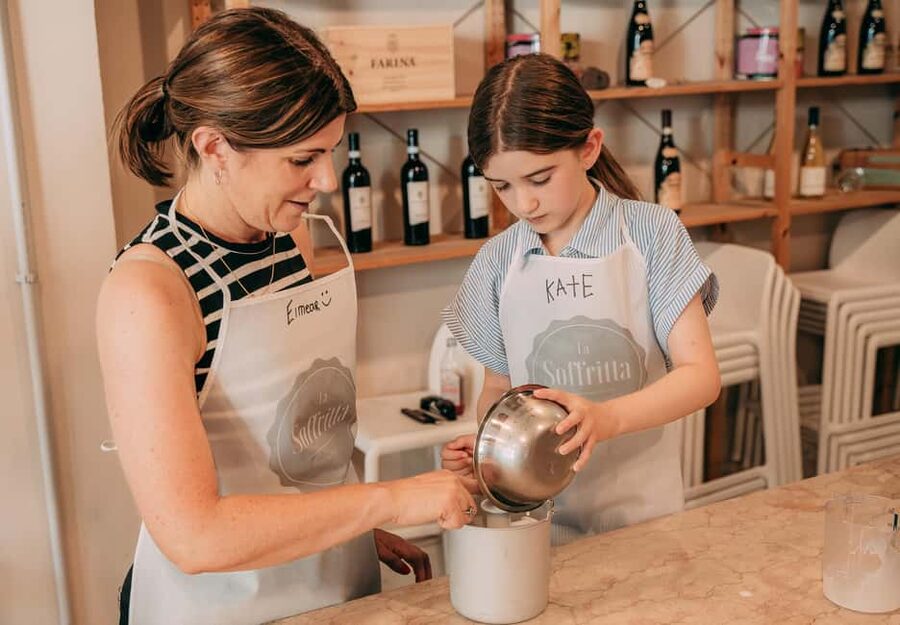
The sorbet is made alongside the gelato recipes. Ingredients for the different mixtures go into the machine during the class, so you can see the process move from preparation to finished dessert. Since the machine handles part of the work, the experience stays manageable within two hours.
You should not expect to operate a full commercial gelato laboratory or make large quantities for your freezer. The point is to learn the basic method, understand the ingredients, and taste the results with the group.
Gelato basics, from chocolate to coffee
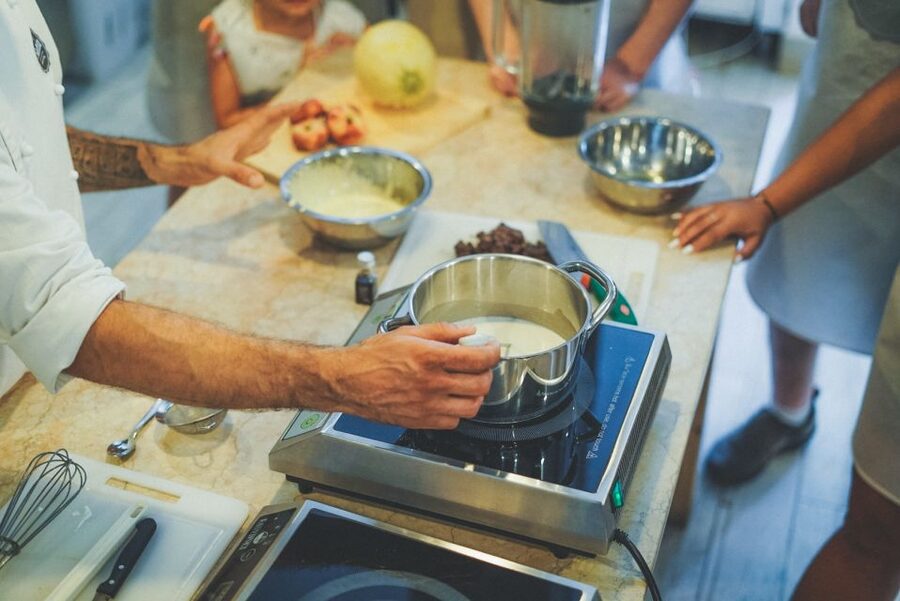
The gelato portion gives the class its main focus. Past menus have included chocolate, coffee, panna, and Greek yogurt, along with a fruit sorbet. These flavors cover several useful foundations: a darker chocolate style, a coffee recipe, a plain creamy base, and a lighter dairy flavor.
The exact selection is not fixed. The sorbet changes with the season, and the chefs may prepare a menu based on available ingredients. That variety is a plus if you enjoy food that reflects the time of year, but it means you should not book expecting one guaranteed flavor.
The instructors explain how the recipes work and provide tips for making them at home. The recipe book is included, and you can write additional notes as the class continues. I would take advantage of this. Write down the order of preparation, any suggested substitutions, and the topping combinations you like best.
The coffee gelato has received special praise for its strong flavor and quality coffee. You can also expect the chef to explain how a basic recipe can serve as a starting point for other gelato flavors. That makes the class more useful than a one-time tasting. You are learning a framework that can be adjusted later.
A few more Verona bookings to compare
- Verona: Hop-on Hop-off Tour 24 or 48-Hour Ticket
★ 4.4 · 2,010 reviews - Verona: History and Hidden Gems Guided Walking Tour
★ 5.0 · 1,379 reviews - Verona: Priority Access Arena Guided Tour
★ 4.6 · 1,152 reviews - Verona: Juliet’s House Fast-Track Entry Ticket & Audio Guide
★ 4.2 · 1,121 reviews
The tasting: more than a scoop in a cup
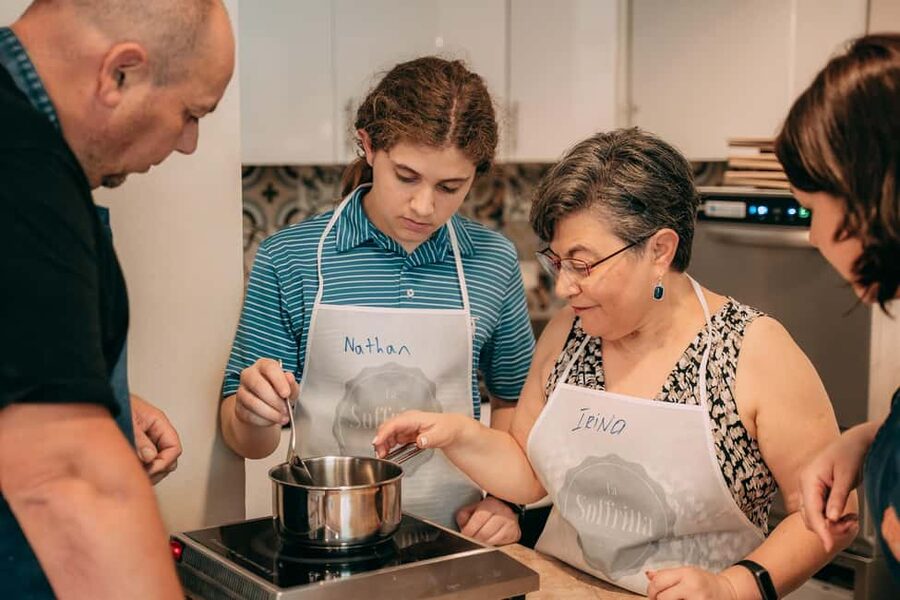
Once the gelato and sorbet are ready, the portions are placed into glasses for tasting. You may sample several flavors in one sitting, with some sessions offering five scoops and more than ten toppings. This is where the class shifts from cooking lesson to shared food experience.
The topping selection is one of the most distinctive parts of the activity. Alongside familiar choices such as hazelnuts and biscotti, you may be offered:
- Olive oil
- Balsamic vinegar
- Red wine reduction
- Honey
- Salt
- Red pepper
These combinations may sound unusual if you usually eat gelato with chocolate sauce or sprinkles. The instructors explain how different toppings pair with each flavor, so you can test the combinations rather than simply pile everything on.
Panna with red wine reduction has been a favorite pairing for some participants. Olive oil and salt can bring out the character of a creamy flavor, while balsamic vinegar may work well with fruit. The point is not to declare one correct combination. It is to encourage you to taste gelato in a more thoughtful way.
I would start with each flavor plain, then add toppings in small amounts. That lets you understand the base before the stronger ingredients take over. With a tasting of several flavors, small portions also help you enjoy the full selection without feeling overwhelmed.
Why this works for families
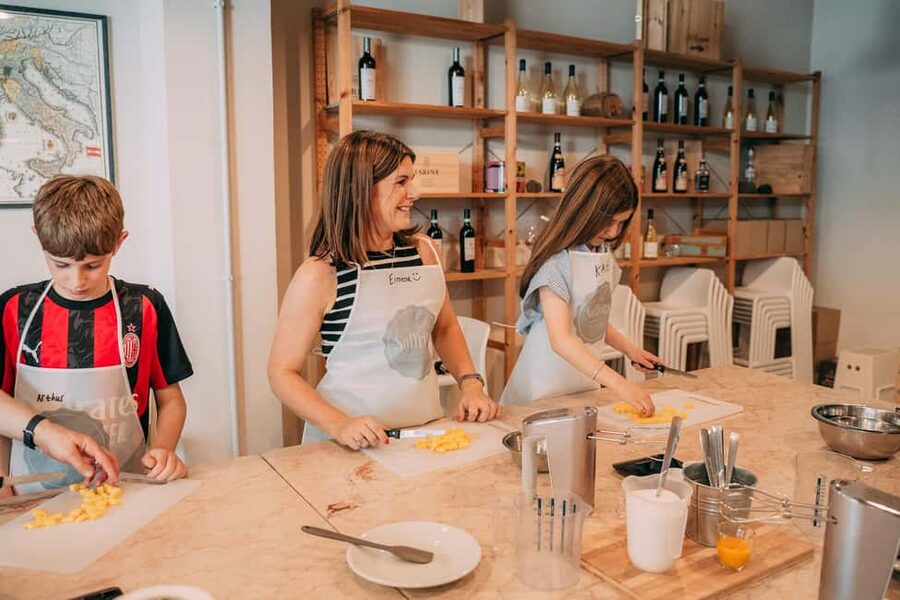
The class is explicitly kid-friendly, and that is not just a marketing detail. Children can help with fruit preparation, watch the mixtures go into the machine, choose toppings, and taste the results. Families with children as young as three and five have enjoyed the activity, while a nine-year-old participant particularly enjoyed experimenting with toppings.
The instructors have also been praised for staying calm with active children and making the younger participants feel included. That matters in a cooking class, where children can lose interest if they spend too long watching someone else work.
Still, you should keep expectations realistic. This is a guided group class, not an open kitchen where children can run around or choose every step. Underage participants must be accompanied by an adult, and parents should remain involved throughout.
For families, the class offers a useful change of pace. Verona sightseeing can involve a lot of walking, church interiors, and historic buildings. Two hours of making and tasting gelato gives children a clear role and gives adults a chance to enjoy the city’s food culture together.
A strong choice for solo visitors
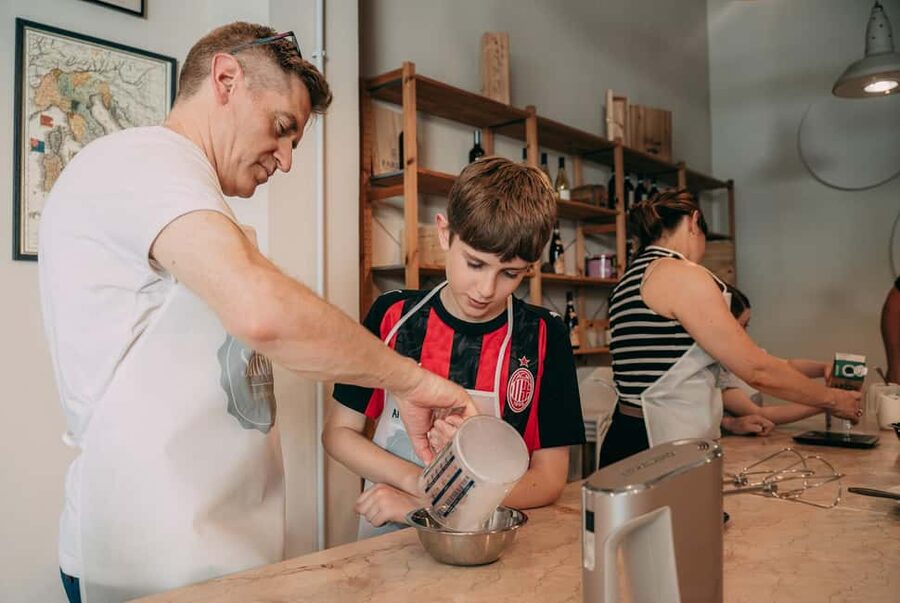
I also like this class for solo visitors. If you arrive alone, you may be paired with another participant, and the shared preparation gives you an easy conversation starter. You are not forced to make small talk in a restaurant or join a sightseeing group already made up of families and couples.
The small-group format can make the experience feel welcoming. Sessions have sometimes included only four to six people, allowing more direct contact with the instructors. That gives you time to ask about recipes, ingredients, gelato quality, and topping choices.
The class has also worked well as a relaxed afternoon activity. You can meet people, make dessert, and exchange stories while the mixtures are prepared. It is social without requiring a full-day commitment.
What the $74.02 price includes
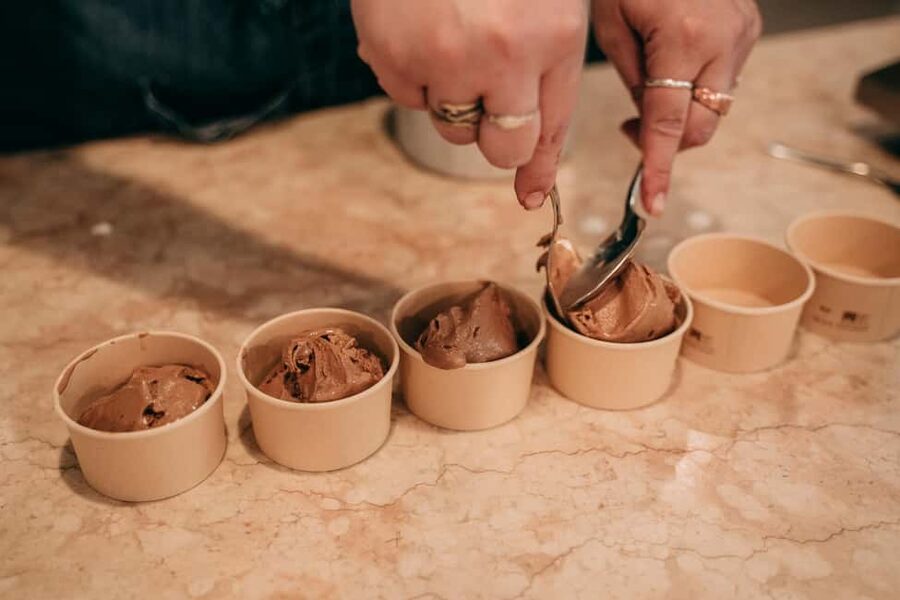
At $74.02 per person, this is not a bargain gelato tasting. You could buy several scoops at a local gelateria for much less. The value comes from the added instruction and the fact that you participate in making the food.
The price includes the professional chef, all ingredients, an apron, the gelato and sorbet tasting, and the recipe book. You are paying for a two-hour activity rather than a quick purchase at a counter. For a family, the cost can add up quickly, so compare it with other hands-on activities in your Verona plans.
I think the price makes the most sense if you value three things: learning a skill, spending time in a small group, and taking home recipes. It is less compelling if you only want the cheapest way to eat excellent gelato.
The inclusion of unusual toppings also adds to the value. You are not just sampling flavors chosen for you. You are learning how chefs think about contrast, sweetness, acidity, fat, and seasoning. That kind of tasting lesson can change the way you judge gelato in the rest of Italy.
Timing, language, and practical limits
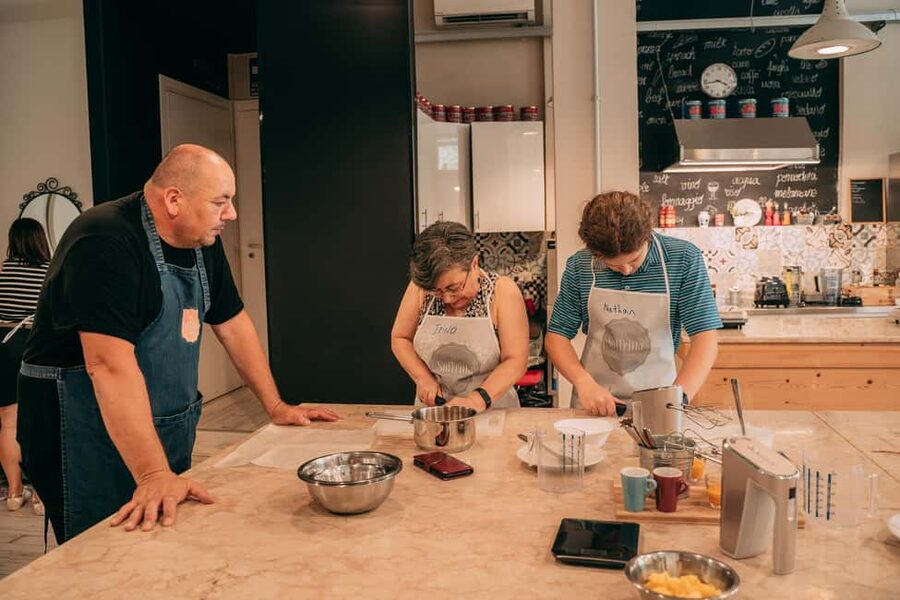
The activity lasts two hours, but starting times vary. Check the available departures before planning your Verona day. A morning class can make a sweet start to sightseeing, while an afternoon class offers a welcome rest from the heat and walking.
Instruction is in English. The activity requires a minimum of two participants, so solo visitors should keep that condition in mind when booking. Free cancellation is available up to 24 hours before the start time, and you can reserve now and pay later if that option is offered during booking.
Tell the provider in advance about food intolerances or allergies. The kitchen may be able to accommodate special needs, but you should not wait until the class begins to explain them. One session successfully prepared a gluten-free menu, but you still need to provide advance notice rather than assume every class will use the same ingredients.
The school is not suitable for wheelchair users, and some parts may be difficult for people with reduced mobility or other disabilities. Contact the provider before booking if access is a concern. Pets are not allowed.
Who should book this Verona experience?
I would choose this class for families who want an activity that keeps children involved. It is also a good fit for solo visitors who enjoy meeting people through food, couples looking for something beyond the usual city walk, and anyone curious about Italian dessert traditions.
You may want to skip it if your schedule is extremely tight, if you dislike group activities, or if you are only interested in eating rather than preparing food. The class includes practical work, instruction, and tasting, so its value depends on your interest in the process.
It also suits people who enjoy trying unexpected flavors. Olive oil, balsamic vinegar, salt, and red wine reduction are not just decorative extras. They are a chance to test how gelato changes when paired with savory or acidic ingredients.
Should you book the gelato class?
Yes, if you want a friendly, hands-on food activity with strong family appeal. The best parts are the patient instructors, the chance to make several flavors, the seasonal sorbet, and the creative topping lesson. Laura and Sylvia have been especially praised for warmth and clear instruction, while Christina and Max have also helped create relaxed, well-organized sessions.
I would book it early in your Verona plans if you want to use the recipe ideas during the rest of your trip. At $74.02, it is a splurge, but the two hours include far more than a dessert stop. You leave with a tasting experience, practical recipes, and a better sense of how to judge gelato in Italy.
FAQ
Where does the Verona gelato class begin?
Meet the guide in front of the Ristori Theater entrance in the city center. The guide will hold a yellow sign marked TOUR.
How long does the gelato-making class last?
The activity lasts two hours. Starting times vary, so check availability when choosing your date.
Is the class taught in English?
Yes. The instructor language is English.
Are children allowed to join?
Yes. The class is suitable for children, but all underage participants must be accompanied by an adult. Unaccompanied minors are not allowed.
Can the class accommodate food allergies or intolerances?
You should notify the activity provider in advance about any allergy, intolerance, or other special need. The provider will do its best to accommodate you.
What happens if I need to cancel?
You can cancel up to 24 hours before the activity for a full refund. Reserve now and pay later may also be available, allowing you to keep your plans flexible.
Recently added around Verona
- The Highlights of Verona Small Group Walking Tour★ 4.8 · 294 reviews
- Verona: Highlights Walking Tour with Arena Priority Access★ 4.8 · 201 reviews
- Verona: Highlights and Hidden Gems Walking Tour★ 4.7 · 179 reviews
- Verona: Juliet’s House Fast-Track Entry Ticket & Audio Guide★ 4.2 · 1,121 reviews
- Verona: Priority Access Arena Guided Tour★ 4.6 · 1,152 reviews
- Verona: City Walking Tour with Cable Car & Wine Aperitif★ 4.8 · 267 reviews
- Verona: Food and Wine Tasting Walking Tour★ 4.9 · 238 reviews
- Valpolicella: 1.5-Hour Guided Winery Tour with Wine Tasting★ 4.8 · 207 reviews
Cooking Classes, compared.

3 in 1 Cooking Class near Navona: Fettuccine, Ravioli & Tiramisu
Read our review →
Florence Pizza or Pasta Class with Gelato Making at a Tuscan Farm
Read our review →
Pasta & Tiramisu Cooking Class with Unlimited Wine
Read our review →
Pizza-Making Workshop with Drink and Appetizer
Read our review →
Pasta & Tiramisu Class with Fine Wine by the Vatican
Read our review →
Cooking Class and Lunch at a Tuscan Farmhouse with Local Market Tour from Florence
Read our review →Browse the lists this tour appears in