
Reviewed · CITY TOURS
Milan: City Sightseeing Hop-On Hop-Off Bus with Audio Guide
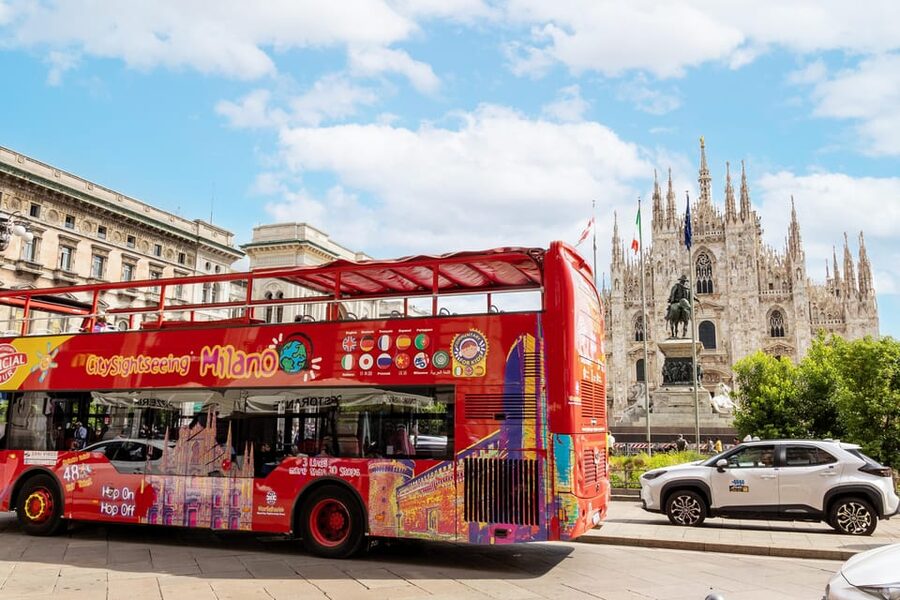
Milan reveals itself from the top deck. This open-top bus links the Duomo, La Scala, Castello Sforzesco, and Navigli across four connected routes, giving you a quick city overview without wearing out your shoes. I like the freedom to hop off when a neighborhood catches your eye, and I like the lively audio guide, which goes beyond buildings to explain cotoletta alla Milanese and panettone. The main drawback is waiting: traffic can slow the buses, and some connections may leave you standing around for close to an hour.
The $26 starting price is fair if you use the bus as both sightseeing and transport. A 24-hour ticket can work well for a short visit, while the 48-hour or 72-hour options make more sense if you plan to stop at several sights. Just remember that attraction admission is not included, and the starting point at Foro Buonaparte can be vague if you do not know exactly where to look.
In This Review
- Key points before you board
- What this Milan bus tour actually gives you
- Line A: the classic Milan route
- Line B: Central Station and the northern districts
- Line C: City Life and San Siro
- Line D: Navigli, Brera, and Milan’s evening character
- The audio guide: food, buildings, and city context
- Is $26 good value in Milan?
- Timing, traffic, and finding the first stop
- Who will get the most from this experience?
- Should you book the Milan hop-on hop-off bus?
- FAQ
- How long can I use the Milan hop-on hop-off ticket?
- How many bus routes are included?
- Which languages are available for the audio guide?
- Where do the buses start?
- Are attraction admission tickets included?
- Is a Milan Night Tour included?
Key points before you board
- Four routes cover very different sides of Milan: Historic center, Central Station, Navigli, Brera, City Life, and San Siro are all connected.
- The top deck gives you a useful first look: You can spot places to revisit instead of guessing which sights deserve your limited time.
- The audio commentary adds local flavor: Along with landmark facts, you hear about Milanese food and everyday city curiosities.
- A 24-hour ticket suits a quick city introduction: Choose 48 or 72 hours if you want to use the bus for repeated sightseeing and transport.
- Foro Buonaparte is the key starting point: Lines A, C, and D begin there, while Line B starts in Piazza Duomo.
- Plan around traffic and bus gaps: Milan traffic can delay departures, and a missed bus may mean a long wait.
What this Milan bus tour actually gives you
This is not a guided walking tour with a host beside you. It is a sightseeing pass covering four separate but connecting bus circuits, with an audio guide in Spanish, Chinese, English, French, German, Italian, Russian, Portuguese, Japanese, and Arabic.
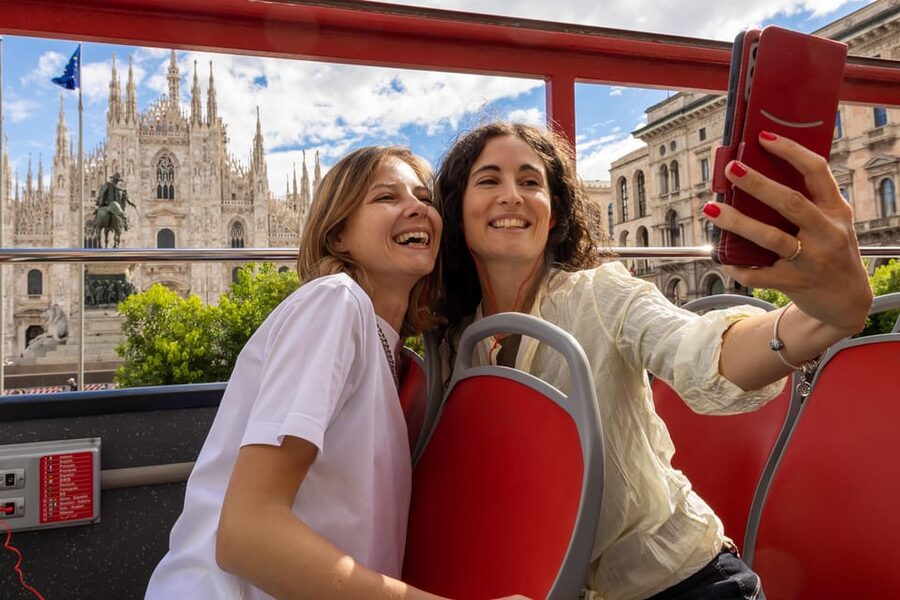
You board, choose your seat, plug in the supplied audio system, and watch Milan roll past from an open-top panoramic bus. When something interests you, get off and explore on foot. Then return to a designated stop and continue on the same route or change to another line.
That flexibility is the real point. Milan’s center is walkable in sections, but the city’s attractions spread well beyond the Duomo. The bus saves time between districts and gives you a simple way to reach places you might otherwise skip, especially San Siro, City Life, the Central Station area, and Navigli.
Wi-Fi is included onboard. You also receive a city map and access to free walking tours through the mobile app in five languages. The child-specific audio commentary is a useful touch for families, since younger passengers may not stay interested in a long list of dates and architectural details.
A few more Milan bookings to compare
- Milan: Cathedral and Duomo’s Terraces Entrance Ticket
★ 4.6 · 61,054 reviews - Milan: Da Vinci’s Last Supper Guided Tour
★ 4.7 · 10,143 reviews - Milan: Science and Technology Leonardo da Vinci Museum Entry
★ 4.5 · 7,169 reviews
Line A: the classic Milan route
Line A is the best starting circuit if you want the traditional sights. It begins at Castello, near Castello Sforzesco, and continues through Cadorna, Cenacolo, Corso Magenta, Duomo, Monte Napoleone, Manin, and Moscova.
Castello gives you an immediate sense of Milan’s monumental side. The castle is one of the city’s key landmarks, and the nearby streets make a good place to begin exploring. If you get off here, allow time for the castle area rather than treating it as a quick photo stop.
At Cadorna, the route connects with one of the city’s major transport areas. This can be useful if you are staying nearby or switching your plans between the central sights and the western part of town.
The Cenacolo stop is the one to note if you want to see Leonardo da Vinci’s Last Supper. The bus ticket does not include admission, so you need a separate reservation for the painting. The stop is convenient, but the artwork itself requires advance planning and should not be treated as a spur-of-the-moment hop-off.
Corso Magenta brings you into an attractive central district with historic buildings and cultural sights. Then comes Duomo, the obvious anchor of the whole system. From here, you can visit the cathedral area, walk through the surrounding piazzas, or use the stop to change routes.
The Monte Napoleone stop serves Milan’s famous fashion district. You do not need to shop to enjoy this section. The streets offer a sharp contrast with the castle and cathedral, and the audio commentary helps explain Milan’s role as Italy’s style capital.
Manin and Moscova take the route toward the city’s northern center. Moscova is useful for reaching the Brera and Corso Como areas, though the exact walk from the stop matters, so check your map before getting off.
The weakness of Line A is also its strength: it covers the sights most people already expect. It is excellent for orientation, but if you have several days, spend time on the other routes too.
Line B: Central Station and the northern districts
Line B starts at Piazza Duomo and follows a different path through Monte Napoleone, Manin, Repubblica, Palazzo Lombardia, Stazione Centrale, Buenos Aires, Porta Venezia, and San Babila.
The first section overlaps with parts of Line A, so do not expect four completely separate sightseeing experiences. Still, the northern route becomes more useful once it reaches Repubblica and Palazzo Lombardia.
Stazione Centrale is a worthwhile stop even if you are not catching a train. Milan’s main station is a grand, imposing building, and the area gives you a different view of the city than the postcard center.
The Buenos Aires stop serves a long shopping avenue and a more everyday Milanese district. Porta Venezia is another good place to get off if you want to see a less monumental side of the city. The route then returns toward San Babila, placing you close to the Duomo and fashion district.
Line B can be especially handy on a longer ticket, when you are using the bus to connect parts of town instead of simply riding for the commentary. One limitation is that repeated sections and Milan traffic can make the route feel slower than expected.
Line C: City Life and San Siro
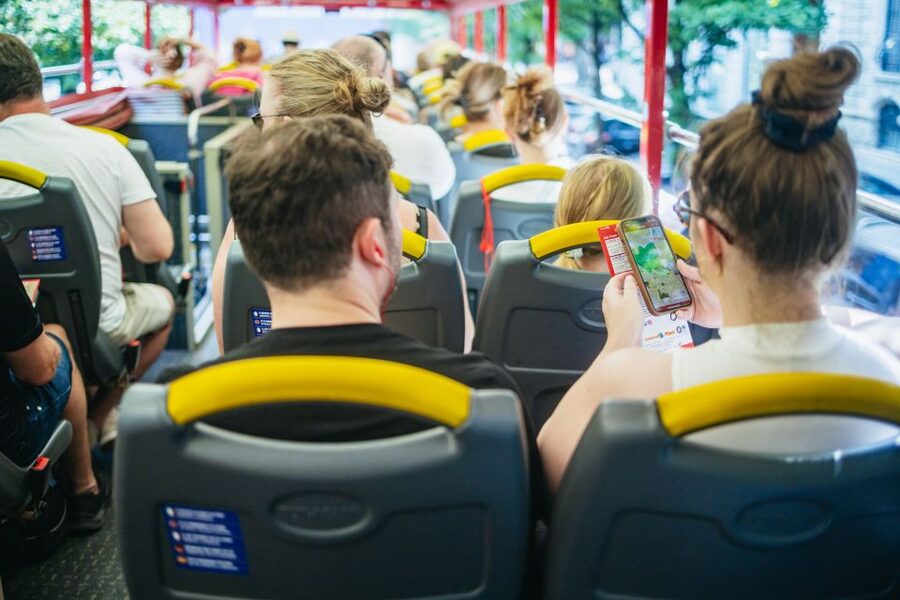
Line C is the widest-ranging circuit. Starting at Castello, it runs through Triennale, Arco della Pace, City Life, Casa Milan, Mico, Lotto, Lido, Ippodromo, Stadio San Siro, Monterosa, Buonarroti, Pagano, Conciliazione, and Parco Sempione.
Triennale is the stop for Milan’s design and arts scene. Arco della Pace and Parco Sempione offer a break from traffic and stone, while the route around them gives you a chance to see how Milan shifts from old monuments to broad public spaces.
The City Life area shows a newer side of Milan, with modern towers and contemporary urban planning. Casa Milan is linked to the city’s football culture, while Mico serves the convention center area.
The route continues toward San Siro, Milan’s major football stadium. This is one of the most useful reasons to choose the bus rather than relying only on the central walking circuit. At some points, you may face a choice between a very brief photo stop and waiting much longer for the next bus, so check the schedule before leaving the vehicle.
The western stops, including Buonarroti, Pagano, and Conciliazione, are practical if you want to see residential and cultural districts away from the Duomo. Line C is a good choice for anyone who wants more than the standard historic center.
The catch is distance. This route can be more exposed to traffic delays, and completing it takes planning. If you only have a few hours, do not assume you can hop off at every stop.
Still Milan, but a slower afternoon:
- Milan Cathedral: Duomo Terraces Ticket (No Church Access)
★ 4.6 · 6,111 reviews - Milan: Milan Cathedral Direct Entrance – Terrace Excluded
★ 4.5 · 5,782 reviews - Milan: Guided Walking Tour & Last Supper Visit with Ticket
★ 4.7 · 5,409 reviews - Milan: Fast-Track Milan Cathedral and Terraces Guided Tour
★ 4.7 · 5,240 reviews
Line D: Navigli, Brera, and Milan’s evening character
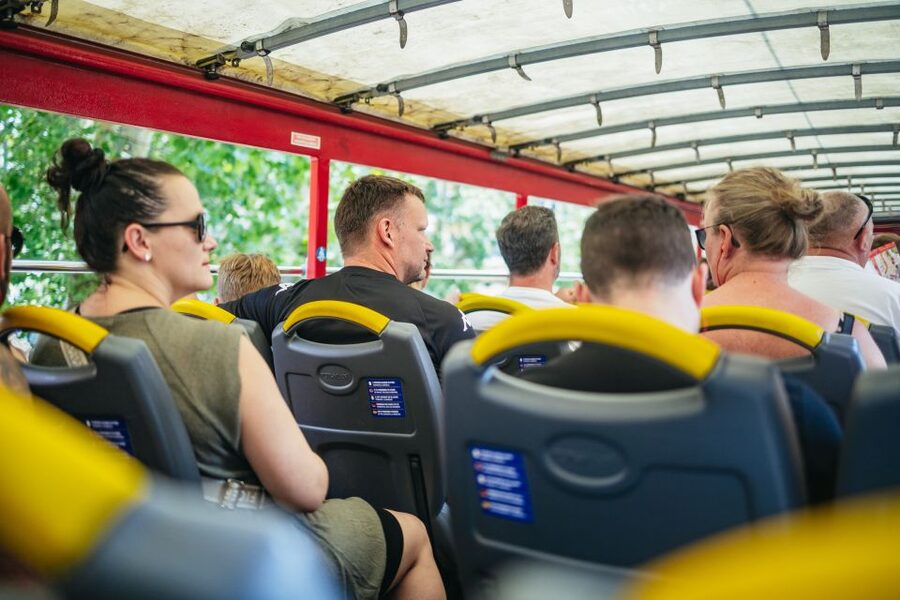
Line D begins at Castello and follows Cadorna, Cenacolo, Navigli, Piazza XXIV Maggio, Duomo, Monte Napoleone, and Brera.
Its most distinctive stop is Navigli, Milan’s canal district. This is where the bus route feels less like a monument checklist and more like a look at how the city spends its free time. Get off here if you want canal-side scenery, cafés, and a change from the formal center.
Piazza XXIV Maggio helps connect Navigli with the central districts. The route then returns to the Duomo and Monte Napoleone before finishing at Brera.
Brera is one of the best places to end a sightseeing circuit. Its streets have a more relaxed scale, and the district is closely linked with art and design. If you have only one day, Line D may be your most useful route after Line A because it combines major sights with a more local-feeling neighborhood.
The route repeats some of Line A, especially around Castello, Cadorna, Cenacolo, Duomo, and Monte Napoleone. That overlap makes route changes easy, but it also means you should not buy a longer ticket expecting four times as many unique sights.
The audio guide: food, buildings, and city context
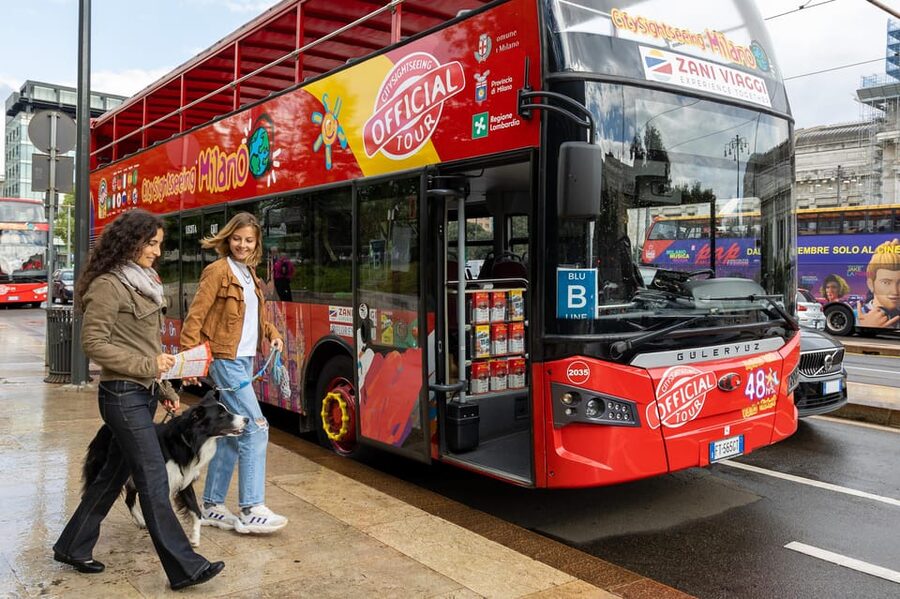
The commentary is recorded rather than delivered live by a guide. That keeps the experience simple and lets you listen in your preferred language, but the quality depends on the seat’s audio connection.
The content covers major buildings such as La Scala opera house and Castello Sforzesco. It also includes lighter local details, including the recipe for cotoletta alla Milanese and the story of panettone. Those food notes help break up the architecture and give you a small sense of Milan beyond its famous facades.
A practical warning: audio sockets do not work perfectly at every seat. If you hear nothing, change seats or ask staff for another headset. Some passengers found that one side of a bus worked while nearby seats did not. The equipment is generally clean and usable, but it is worth testing before the bus pulls away.
The children’s commentary makes this a better family option than many standard city circuits. Still, the bus is not a substitute for visiting the sights themselves. It tells you what you are seeing, then leaves you to decide where to spend your time.
Is $26 good value in Milan?
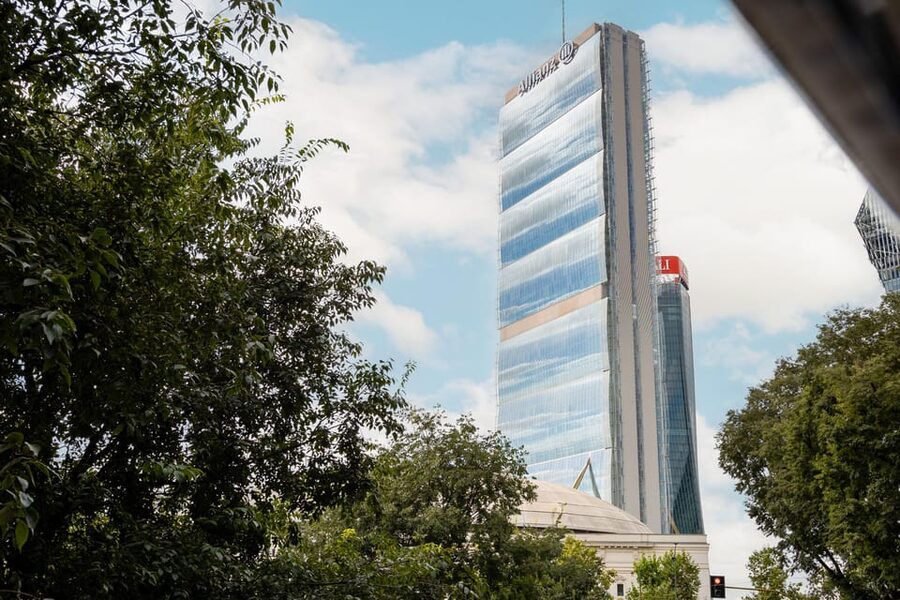
At $26 per person, the pass is good value when you use it actively. A single ride around the city can help you get oriented, but the ticket earns its keep when you combine sightseeing with transport between districts.
A 24-hour ticket is likely enough if you have one full day and mainly want a broad look at Milan. It can be a smart choice for a first morning, followed by selected hop-offs at the Duomo, Castello, Navigli, or Brera.
A 48-hour ticket gives you room to split the city into sections. You might use one day for Lines A and D, then return to Line C or B on the second day. A 72-hour ticket suits a slower visit or anyone who wants to revisit central stops after visiting museums and attractions.
The pass does not include admission to the Duomo, La Scala, the Last Supper, museums, or San Siro. Add those costs to your budget. The bus is best seen as a city orientation and transport tool, not an all-inclusive attraction ticket.
One useful seasonal detail: from June through September, a 72-hour weekend ticket covering Saturday and Sunday includes the Milan Night Tour. That can add value if your schedule matches those dates.
Timing, traffic, and finding the first stop
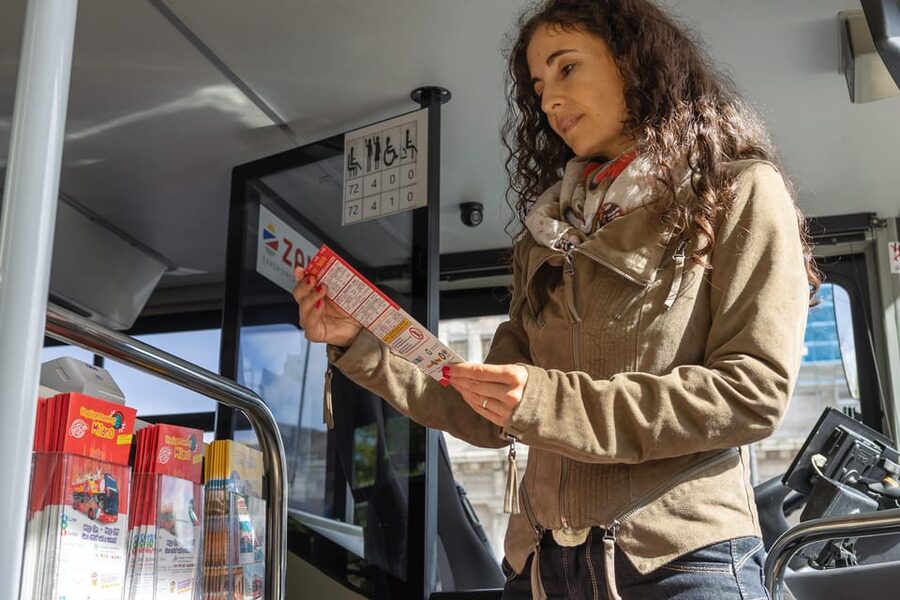
The buses are generally easy to spot, and the service has earned praise for clean vehicles, helpful staff, and accurate timetables. Staff are especially visible at the main stops, including around the Duomo.
Milan traffic is the part you cannot control. Red lights, crowded streets, and delays can make a route take longer than the map suggests. Bus gaps can also be substantial, with waits of around 50 minutes reported in some situations. If you get off, check when the next bus is due before wandering too far.
For Lines A, C, and D, the stated first stop is Foro Buonaparte. That is a large area, not a single obvious doorway. Look near the travel information point and confirm the corner with staff rather than relying only on a photograph.
Line B begins at Piazza Duomo, which is easier to identify but can be crowded. Give yourself extra time to locate the correct bus, especially if more than one sightseeing company is operating nearby.
Winter Olympic-related disruptions may affect service. The Green Line stop number 2 is listed as closed for the duration of the Games, and Castello is scheduled to be suspended on Saturday, February 21. Check current conditions before setting out if your visit falls during that period.
Who will get the most from this experience?
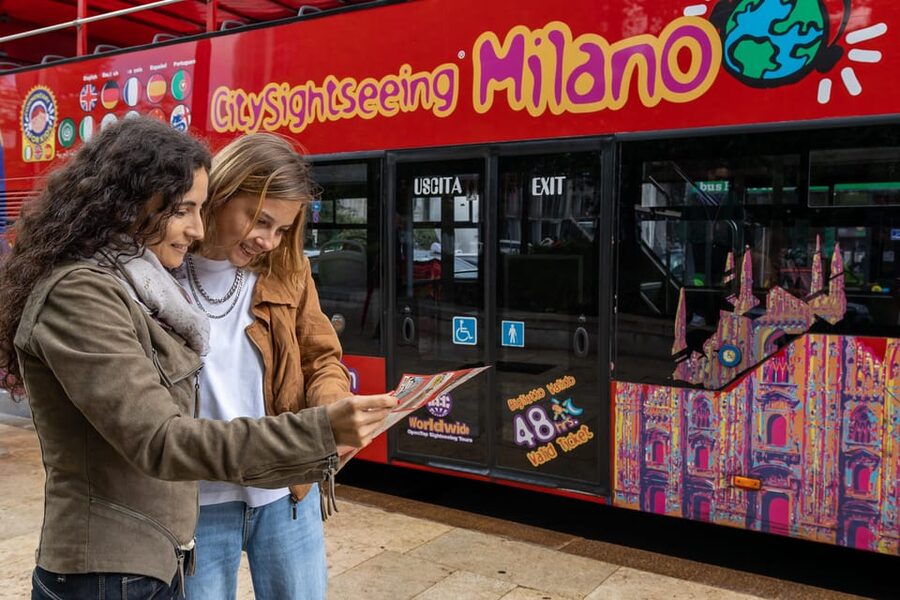
I would choose this bus if you have one full day, want a city overview, or prefer not to walk between every major sight. It is also helpful if you are traveling with children, older family members, or anyone who wants a seat and a broad view of Milan before deciding what to visit properly.
It works well for first-time visitors because you can use the first circuit to get your bearings fast. It is also useful for repeat visitors who want to reach San Siro, City Life, Navigli, or the Central Station area without piecing together every connection.
I would be more cautious if you are staying only in the compact historic center. Many central sights are walkable, and a short ticket may not save much time once traffic and bus waits are included. I would also avoid packing too many hop-offs into one day. Milan rewards a few well-chosen stops more than a rushed checklist.
Should you book the Milan hop-on hop-off bus?
Book it if you want flexibility, panoramic views, and an easy way to connect Milan’s central sights with districts farther out. The four routes, multilingual commentary, child audio option, map, Wi-Fi, and helpful staff make the $26 starting price reasonable, especially for a 48-hour or 72-hour visit.
Choose 24 hours for a quick introduction. Choose 48 or 72 hours if you plan to explore slowly and use the bus between neighborhoods. Before boarding, locate the exact Foro Buonaparte stop, test your audio connection, and check the return time before hopping off.
Skip it if your Milan plans already focus on a few nearby sights and you enjoy walking. For everyone else, this is a practical first look at the city, with enough route variety to show you where to spend the rest of your visit.
FAQ
How long can I use the Milan hop-on hop-off ticket?
The available ticket durations are 1, 2, or 3 days. Check the available options for your dates when booking.
How many bus routes are included?
One ticket includes four connected routes: Lines A, B, C, and D.
Which languages are available for the audio guide?
The audio guide is available in Spanish, Chinese, English, French, German, Italian, Russian, Portuguese, Japanese, and Arabic.
Where do the buses start?
Lines A, C, and D start at Foro Buonaparte. Line B starts in Piazza Duomo.
Are attraction admission tickets included?
No. The bus pass includes the sightseeing service and audio commentary, but attraction tickets are separate.
Is a Milan Night Tour included?
A Milan Night Tour is included with the 72-hour weekend ticket, valid on Saturday and Sunday from June through September.
Recently added around Milan
- Milan: City Highlights Walking Tour with The Last Supper★ 4.9 · 195 reviews
- Milan: The Milan Pass City Card★ 4.0 · 655 reviews
- Milan: Skip-the-Line Guided Walk and “The Last Supper”★ 4.5 · 606 reviews
- Milan: Duomo & Rooftop Tour with Optional Hop-On Hop-Off Bus★ 4.5 · 262 reviews
- Milan: Duomo and The Last Supper Skip-the-Line Guided Tour
- Milan: Leonardo’s Last Supper and Michelangelo’s Pietà Tour★ 4.6 · 559 reviews
- Milan: Sforza Castle and Michelangelo’s Pietà Rondanini Tour★ 4.7 · 1,119 reviews
- Milan: San Sepolcro Crypt Skip-the-Line Entry Ticket★ 4.2 · 512 reviews
City Tours, compared.
City Sightseeing Hop-on Hop-off Bus with Audioguide
Read our review →
City Sightseeing Rome Hop-On Hop-Off Bus Tour
Read our review →

Fettuccine Pasta Cooking Class in Rome’s City Center
Read our review →
Vatican City: Vatican Museums & Sistine Chapel Entry Ticket
Read our review →

City Sightseeing Florence Hop-On Hop-Off Bus Tour
Read our review →
Browse the lists this tour appears in