
Reviewed · CITY TOURS
Bologna: City Center Walking Tour
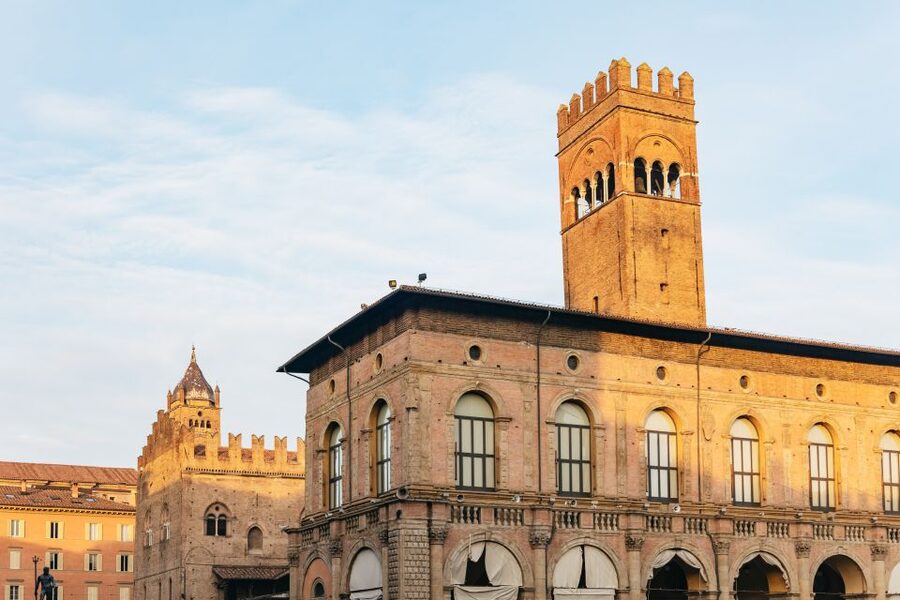
Bologna rewards a good first walk. This 2 to 3 hour tour brings the city’s key sights into one clear route, from Neptune Fountain and Piazza Maggiore to the Two Towers and Quadrilatero Market. I like the strong opening overview and the chance to hear local stories from guides such as Ricardo, Maria, Victoria, and Nicola. The main drawback is that the walk is not suited to people with limited mobility, and a larger group can make crowded streets less easy to manage.
I also like the mix of architecture, history, and food advice. Guides often point out places you might miss alone, and some, such as Leonardo and Matteo, add useful comments about local dishes and wine. The tour covers a lot in a short time, though a fast-speaking guide can make the information feel heavy.
In This Review
- Key points to know before booking
- Why this Bologna walk works well on day one
- Starting at Neptune Fountain and Palazzo d’Accursio
- Piazza Maggiore and the scale of San Petronio
- The market lanes of the Quadrilatero
- Piazza della Mercanzia and Bologna’s towers
- Piazza Santo Stefano and the contrasting churches
- What the guides add to the experience
- What the two to three hours feel like
- Who should book this walking tour
- Should you book the Bologna City Center Walking Tour?
- FAQ
- Where does the Bologna walking tour start?
- How long does the tour last?
- What sights are included?
- Does the tour enter the Basilica of San Petronio?
- What languages are available?
- Is this a small-group tour?
- What should I wear and bring?
- Can people with limited mobility take the tour?
Key points to know before booking
- Neptune Fountain begins the story: The meeting area puts you right in the middle of Bologna’s civic heart.
- San Petronio is the visual high point: The basilica gives the tour a powerful architectural and historical center.
- The Two Towers explain Bologna’s medieval character: You see the towers up close and hear why they mattered.
- Quadrilatero adds a food-focused layer: This old market quarter helps connect Bologna’s past with its eating culture.
- Guide quality is the biggest strength: Several guides are praised for clear storytelling, humor, local advice, and strong command of the city.
- Headphones may help in larger groups: One recent tour used audio equipment that let people take photos without losing the commentary.
Why this Bologna walk works well on day one
Bologna’s historic center is compact, but it is not simple at first glance. Red-brick palaces, covered walkways, narrow lanes, churches, towers, and market streets can blur together when you are trying to find your way. A guided route gives you a working map of the city without asking you to spend your first morning studying one.
The tour costs $26 per person. That is a reasonable price for two to three hours with a certified guide, especially if you are new to Bologna and want both orientation and context. You are not paying for transportation or a long list of paid admissions. The value comes from having the major center sights arranged into a story, plus getting suggestions for what to see and eat afterward.
I would book it early in your stay. That way, the market streets and central squares become familiar, and the guide’s restaurant and sightseeing tips can shape the rest of your visit. Several people specifically liked using the walk as a first-day introduction.
The pace is generally moderate, with regular stops rather than a nonstop march. Still, expect uneven city pavements, standing, and movement through crowded public areas. Bring comfortable shoes. A long-sleeved shirt is also required for religious sites, and clothing rules exclude vests, tops, shorts, and miniskirts.
More Walking Tours in Bologna:
- Bologna: Walking Food Tour with a Local Guide
★ 4.8 · 882 reviews - Bologna: City Center Guided Wine Walking Tour
★ 4.9 · 210 reviews - Bologna: Walking Food Tour and Highlights with a Local Guide
★ 4.9 · 179 reviews
Starting at Neptune Fountain and Palazzo d’Accursio
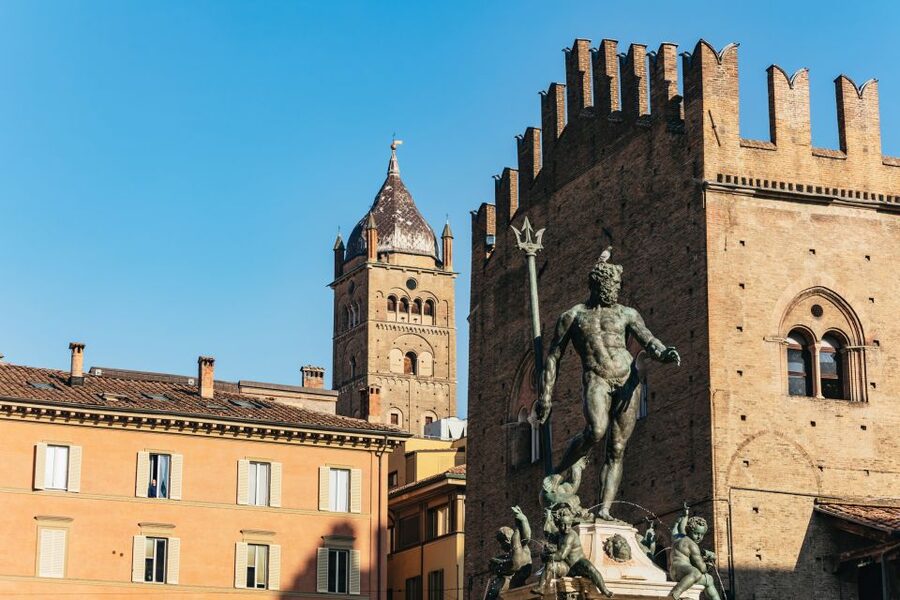
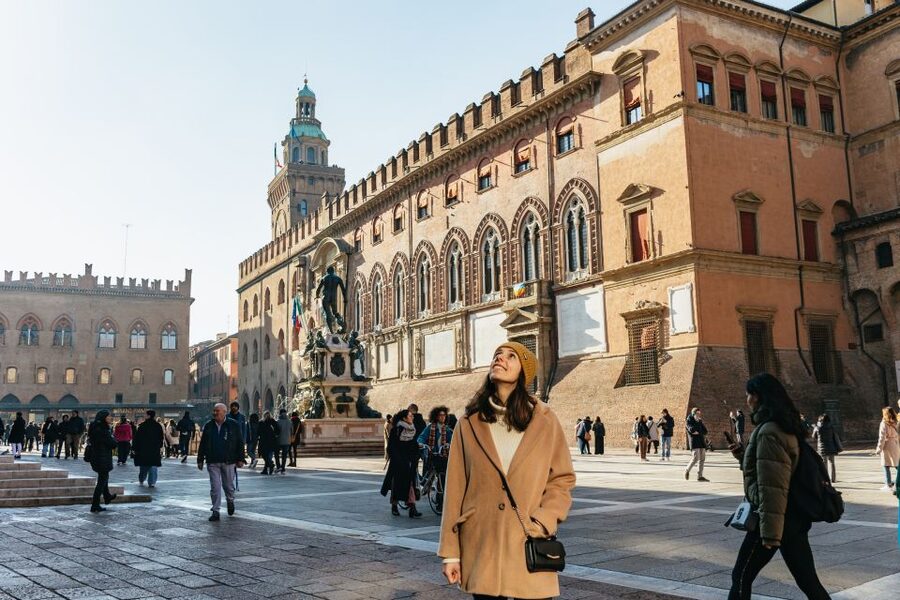
The route can begin at one of three listed options around Neptune Fountain, also called Fontana del Nettuno. Check your booking carefully because the exact meeting point may change with the option you choose. The fountain is a practical starting place because it puts you beside some of the city’s most important public buildings.
The fountain itself is more than a photo stop. Your guide invites you to make a wish, adding a playful moment before the historical material begins. The square also gives you an immediate sense of Bologna’s scale, with grand civic architecture close together and pedestrian streets leading in several directions.
From there, the walk reaches Palazzo d’Accursio. This major civic building helps explain how Bologna was governed and how public power shaped the center. You will likely spend more time listening than touring every room, so think of the stop as a historical introduction rather than a full palace visit.
This early section can be information-heavy. That is useful if you enjoy political and architectural background, but it may feel dense if you prefer a quick look and plenty of free time. Ricardo has been praised for his enormous store of facts and passion, while one person felt he spoke too quickly. If your guide moves fast, stay near the front and ask for clarification when needed.
Piazza Maggiore and the scale of San Petronio
Piazza Maggiore is the natural centerpiece of the walk. It gathers the city’s civic and religious power in one broad urban space, giving you a clear view of how Bologna’s public life developed around its main square.
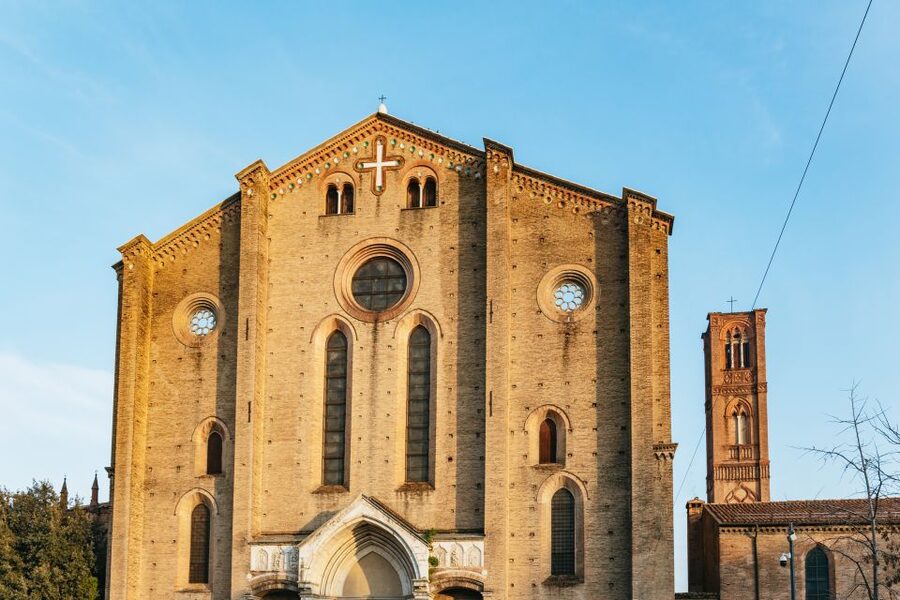
The Basilica of San Petronio is the major stop here. Its size and unfinished-looking exterior make an immediate impression, but the guide’s explanation is what gives the building meaning. You hear why it matters to Bologna and how it fits into the city’s cultural story.
The tour includes a look inside the basilica, though the exact amount of time can depend on the guide and the day’s conditions. Clothing must be suitable for a place of worship. This is not a place for shorts, miniskirts, sleeveless tops, or bare shoulders, so dress with the visit in mind rather than trying to adjust at the door.
I would treat San Petronio as the point where the tour’s separate themes come together. Civic power, religion, art, and local identity all meet here. One person called the basilica the highlight of the walk, while another appreciated the way the guide made the city’s history fit together instead of presenting isolated facts.
The market lanes of the Quadrilatero
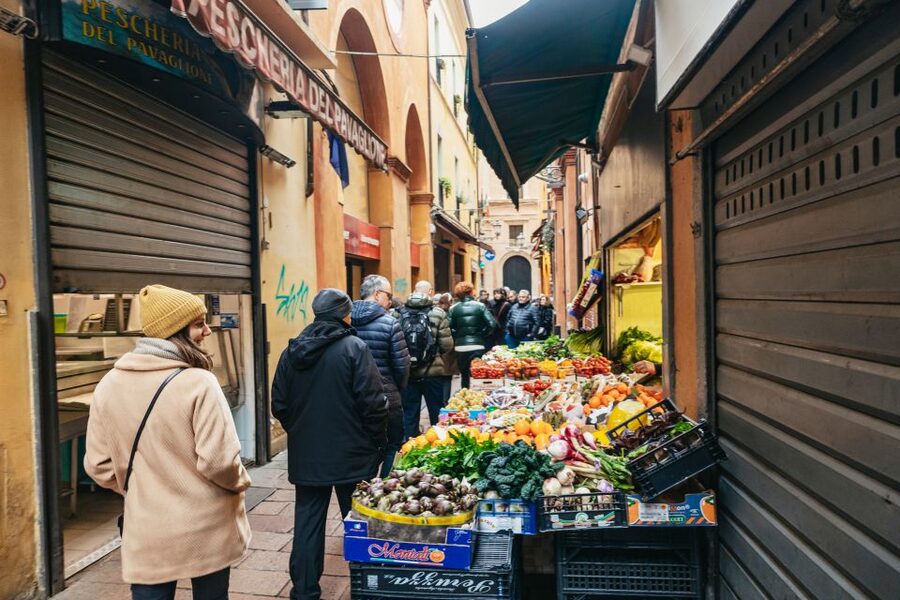
The Quadrilatero Market changes the feel of the tour. After the large square and formal buildings, you move into a tighter area associated with food shops and everyday trade. This is where Bologna becomes less about grand façades and more about how the city eats and works.
Your guide explains important facts about the market and may point out useful places for local food. Yoshiro particularly valued the guide’s advice about shops and restaurants, and Leonardo was praised for balancing food with history. Matteo’s group also included traditional food and wine tasting, but you should not assume every departure includes tastings. The advertised tour promises the market and food-related guidance, not a guaranteed meal.
The market can be crowded. That matters because you may need to listen while people move around you, and the group may pause in a narrow passage rather than a quiet open square. Keep close to the guide and avoid wandering too far for photographs unless you can still hear the explanation.
This is also a good place to ask practical questions. A guide can help you decide which parts of Bologna’s food culture deserve your time later. The advice is one reason I see the tour as more useful than simply following a list of monuments.
A few more Bologna bookings to compare
- Bologna Food & Market Tour with 6 Tastings, Pasta, Wines & More
★ 5.0 · 1,328 reviews - Bologna Food Experience: Factory tours & Family-Style Lunch
★ 5.0 · 1,201 reviews - Bologna Food Tour from a local perspective
★ 5.0 · 860 reviews - Bologna gastronomic experience with a local
★ 5.0 · 626 reviews
Piazza della Mercanzia and Bologna’s towers
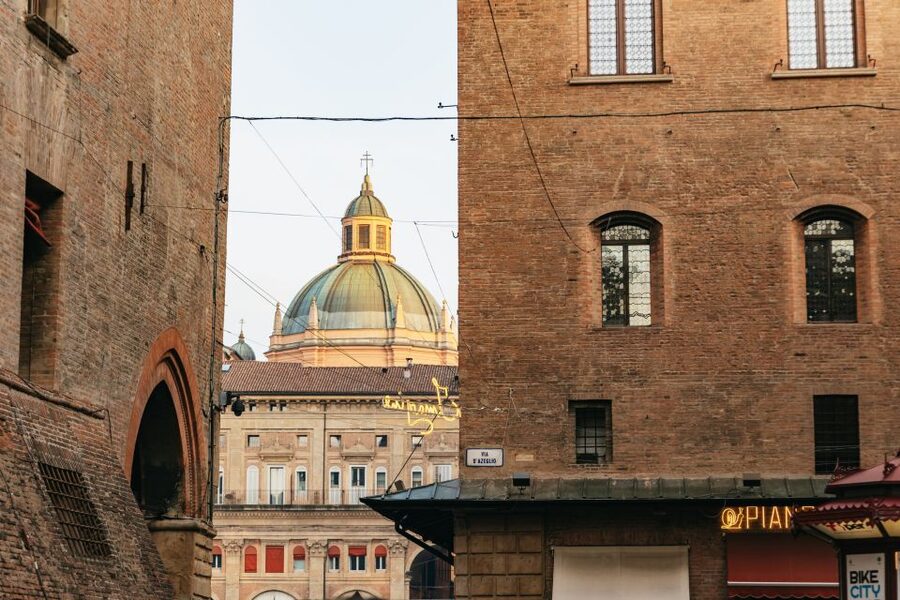
Piazza della Mercanzia brings the route toward Bologna’s tower district. The square and its surrounding buildings help set up the story of medieval trade, wealth, and competition. Your guide uses the architecture to explain why Bologna once had so many towers and what those structures represented.
The Two Towers, especially the Asinelli Tower, are the most recognizable sight on the walk. You see their height and hear about their importance to the city. The stop is primarily an exterior visit within the walking route. The tour details do not promise a climb, so do not book this experience expecting tower access.
The towers are easy to understand visually, but the explanation adds a useful layer. They are not just dramatic backdrops. Their presence helps you picture a city shaped by powerful families and a competitive medieval urban culture.
This section is also a reminder to look upward. Bologna’s arcades and ground-level shops can keep your attention low, while the towers rise above the historic center. A guide can direct you to details you might otherwise pass without noticing.
Piazza Santo Stefano and the contrasting churches

Piazza Santo Stefano is one of the quieter and more atmospheric stops on the route. The square is known for its group of connected religious buildings, giving the tour a chance to compare different church spaces and styles.
Several people valued the contrast between the churches visited along the walk. That comparison is more useful than seeing one beautiful interior in isolation because it helps you notice changes in design, decoration, and purpose.
The amount of time here may vary. One person wished for a longer visit to Basilica Santuario Santo Stefano and less time near Palazzo Re Enzo. That is a fair point for travelers who prefer detailed interior visits over a broad overview. A two-hour city tour has to make choices, and it cannot linger at every major building.
If Santo Stefano interests you most, ask your guide how to return later. The walk is designed to introduce the center, not replace independent visits. It gives you enough information to decide where you want a slower second look.
What the guides add to the experience
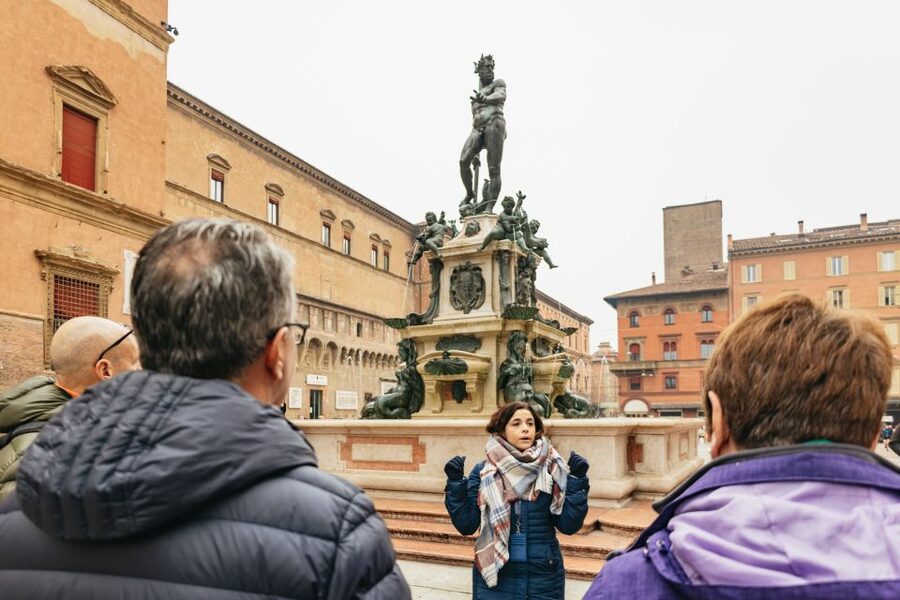
The strongest part of this tour is the guiding. The best guides do not simply recite dates. They connect buildings, food, politics, art, and daily life so the city feels easier to read.
Ricardo received especially strong praise for his historical depth and passion. Some people found his delivery almost encyclopedic, while one person wished he would slow down. Maria is praised for detailed explanations and an engaging manner. Victoria is described as an excellent storyteller who knew the center thoroughly.
Other names appear often in the feedback: Nicola for clear facts and a friendly manner, Michaela for humor, Leonardo for the balance of food and history, and Matteo for an enjoyable food and wine element. These comments suggest that guide style can differ from one departure to another, but the common strength is serious preparation and enthusiasm for Bologna.
Language choices include Italian, English, Spanish, and French. If you need English, the available feedback points to strong English from several guides, but you should still select the correct language when booking.
Some departures are offered as small groups. That is worth choosing if available. A smaller group is easier to keep together in the market lanes and central squares, and you can usually ask questions without holding up a large crowd. One person reported a group of 28 and still found the guide organized and engaging, but another described the ease of a small group in crowded areas.
Headphones may be provided on some tours. They can be very helpful when the guide is speaking beside a busy street or when you step away briefly to take a picture. Equipment is not specifically promised in the activity details, so consider it a bonus rather than a guarantee.
What the two to three hours feel like
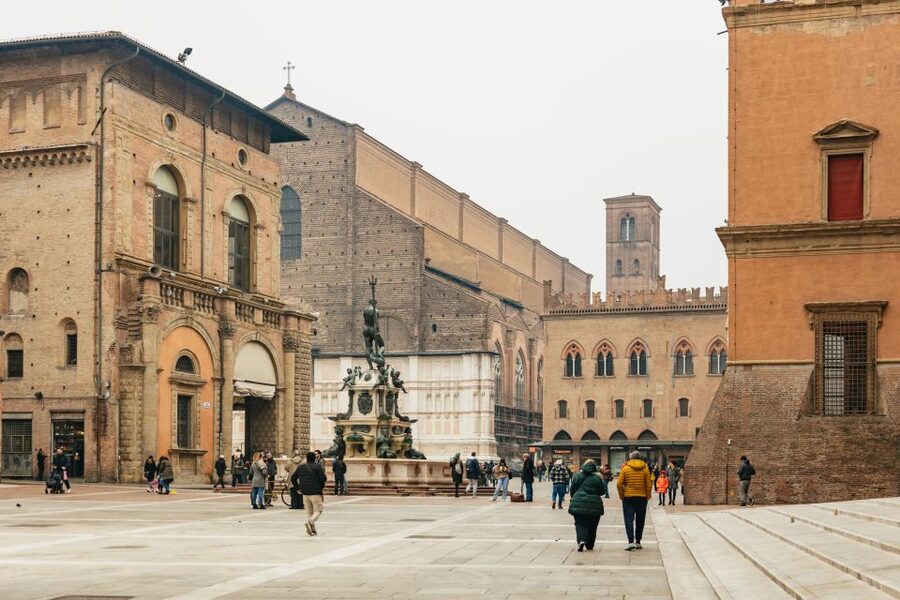
The route covers a substantial portion of Bologna’s historic center without becoming a hard physical workout. You stop often, and the walk is described as not strenuous by one person. Even so, you will be on your feet for most of the experience.
Expect a steady sequence of civic buildings, squares, churches, market streets, and towers. The reward is breadth. In one outing, you get a first look at Piazza Maggiore, San Petronio, the market quarter, Santo Stefano, and the Two Towers.
The compromise is depth. You will not receive a full guided visit inside every building, and some stops may feel brief. The tour is best understood as a well-organized introduction with a strong historical thread, not as a specialist art tour.
The information level can also vary with the guide. Enthusiastic guides may offer more material than you can remember. If you prefer a slower presentation, stand close enough to hear clearly and write down only the places you want to revisit.
Who should book this walking tour
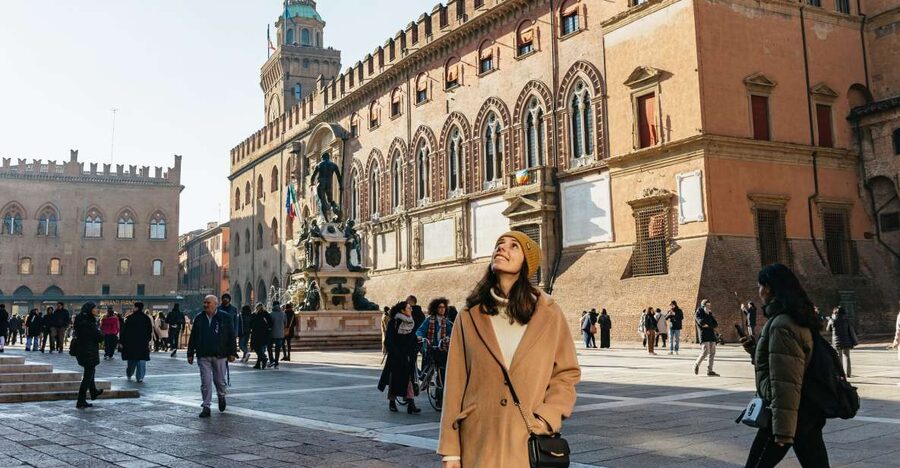
I recommend it most strongly for first-time visitors to Bologna, short-stay visitors, and anyone who wants the center to make sense before exploring alone. It is also useful for people who enjoy history but want food and local suggestions included.
Families with older children may find the mix of towers, fountains, markets, and stories easier to enjoy than a formal museum visit. The walk also suits solo visitors who want a planned introduction without committing to a full-day group outing.
You should think twice if you have limited mobility. The experience is specifically not recommended for people with mobility impairments, and the city-center route involves walking and standing. It is also a weaker choice if you want a slow, detailed visit inside San Petronio or Santo Stefano. In that case, use the walk to identify your priorities, then return independently.
Free cancellation up to 24 hours before the start and reserve-now, pay-later booking make the $26 commitment fairly flexible. The exact starting time depends on availability, so check the schedule before building other plans around it.
Should you book the Bologna City Center Walking Tour?
Book it if you want a friendly, fact-filled first look at Bologna’s center for a modest price. The best reasons are the guide quality, the logical route, the market advice, and the way the major sights become connected rather than scattered.
Choose a small-group departure if you can, wear proper shoes, and dress for San Petronio. Keep your expectations realistic: this is a broad city introduction, not a private tour or a full inspection of every monument.
For most first visits, I would place it near the beginning of the trip. It gives you the city’s basic framework, points you toward good food and follow-up sights, and leaves you with enough time to explore Bologna at your own pace.
FAQ
Where does the Bologna walking tour start?
The tour has three possible starting-location options around Neptune Fountain, also called Fontana del Nettuno. The exact meeting point depends on the option you book.
How long does the tour last?
The walking tour lasts between two and three hours. Starting times vary, so you need to check availability for the date you want.
What sights are included?
The route includes Neptune Fountain, Palazzo d’Accursio, Piazza Maggiore, the Basilica of San Petronio, Piazza della Mercanzia, Piazza Santo Stefano, and Bologna’s Two Towers, including the Asinelli Tower area.
Does the tour enter the Basilica of San Petronio?
The experience description says the guide welcomes you into the city of Bologna at San Petronio, and multiple tour accounts describe seeing important interiors. Access and time inside can vary, so you must follow the basilica’s clothing rules.
What languages are available?
Live guiding is available in Italian, English, Spanish, and French.
Is this a small-group tour?
Small-group departures are available. Group size can vary by booking, so select the small-group option if keeping the group compact matters to you.
What should I wear and bring?
Wear comfortable shoes and bring a long-sleeved shirt. Appropriate clothing is required for places of worship. Vests, sleeveless tops, shorts, and miniskirts are not allowed.
Can people with limited mobility take the tour?
The tour is not recommended for people with mobility impairments. It involves walking through the city center and standing at several stops.
Recently added around Bologna
- Stay Hungry Stay Bologna★ 4.0 · 170 reviews
- Bologna Private Highlights & Hidden Gems Tour with a Local★ 5.0 · 359 reviews
- Cesarine: Small group Pasta and Tiramisu class in Bologna★ 5.0 · 172 reviews
- Bologna gastronomic experience with a local★ 5.0 · 626 reviews
- Ferrari Lamborghini Pagani Factories and Museums – Tour from Bologna★ 5.0 · 171 reviews
- Bologna on the plate, Cooking Class with Alessia★ 5.0 · 260 reviews
- Bologna Private Food Tour with 6 or 10 Tastings★ 4.5 · 344 reviews
- Bologna: Full meal Food Tour with Local Delights by Do Eat Better★ 5.0 · 541 reviews
City Tours, compared.
City Sightseeing Hop-on Hop-off Bus with Audioguide
Read our review →
City Sightseeing Hop-On Hop-Off Bus with Audio Guide
Read our review →
City Sightseeing Rome Hop-On Hop-Off Bus Tour
Read our review →
Fettuccine Pasta Cooking Class in Rome’s City Center
Read our review →
Vatican City: Vatican Museums & Sistine Chapel Entry Ticket
Read our review →

City Sightseeing Florence Hop-On Hop-Off Bus Tour
Read our review →
Browse the lists this tour appears in