
Reviewed · VERONA TOURS
Verona: Hop-on Hop-off Tour 24 or 48-Hour Ticket
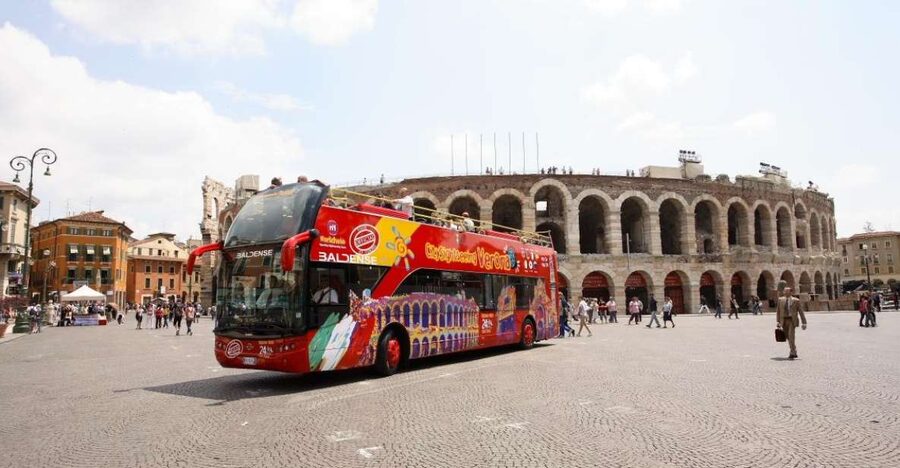
Verona reveals itself best from above. This red open-top bus gives you a quick read of the city, from the Roman Arena and medieval walls to San Zeno, the old riverfront, and the hilltop view near Castel San Pietro. I like the two-route design, which reaches both central landmarks and quieter corners, and I like the freedom to use the bus over 24 or 48 hours. The catch is simple: buses arrive about once an hour, so a short hop off can become a long wait.
The $29 price makes the most sense if you use both routes or need help getting between the train station and the historic center. I would not treat this as a replacement for walking Verona, since the most rewarding streets and squares are explored on foot. Think of it as a good first look, a useful rest break, and a practical ride on a hot or rainy day.
In This Review
- Key points to know before boarding
- Starting at Piazza Bra beside the Arena
- Red Route: from Piazza Bra to San Zeno and the station
- Piazza Bra
- Corso Porta Nuova and Giardini Pradaval
- Stazione FS Porta Nuova
- Piazza Pozza and Basilica San Zeno
- Castelvecchio
- Via Diaz and Porta Borsari
- Teatro Romano
- Porta Leoni and Piazza Leoni
- Blue Route: the smaller bus and Castel San Pietro
- Via Pallone and Tomba Giulietta
- Via G. Giusti and Santo Stefano
- Teatro Romano and Castel San Pietro
- Duomo and Piazza Erbe
- Casa Giulietta, Porta Leoni, and Piazza Leoni
- How to use a 24-hour or 48-hour ticket
- What the audio guide adds, and where it falls short
- Is $29 good value for Verona?
- Who should take this bus tour?
- Should you book the Verona hop-on hop-off tour?
- FAQ
- Where do both Verona bus routes begin?
- How long is the ticket valid?
- How often do the buses run?
- Does the ticket include admission to Verona’s attractions?
- Which route goes to Castel San Pietro?
- Which languages are available for the audio guide?
Key points to know before boarding
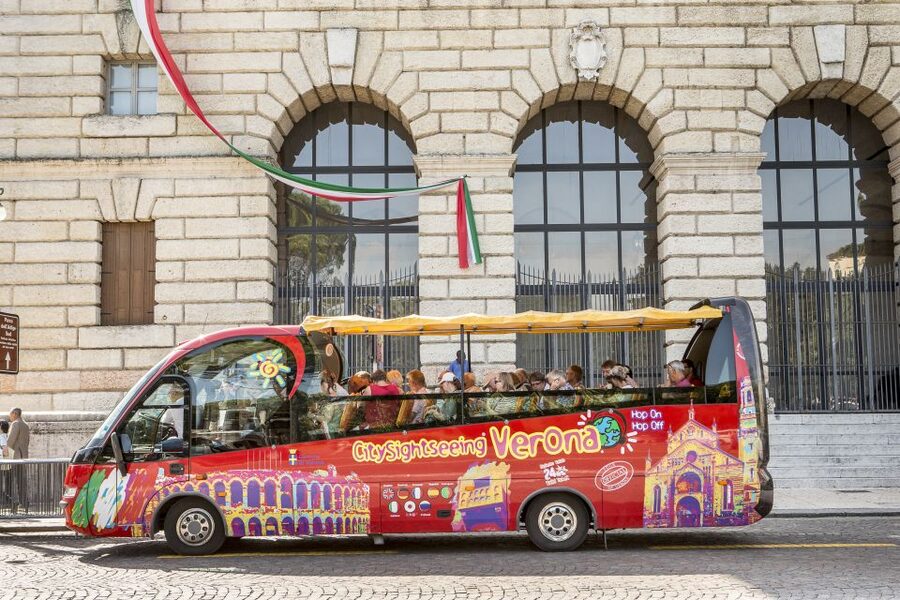
- Two routes show two different Veronas: The red route covers the main center, train station, San Zeno, Castelvecchio, and the Roman Theater. The blue route uses a smaller bus and climbs toward Castel San Pietro.
- Piazza Bra is the main starting point: Both lines begin at the Arena Square, making it easy to connect the ride with a visit to the Arena.
- The bus reaches Verona Porta Nuova station: This is useful if you arrive by train or stay near the station and want a simple ride toward the center.
- The hilltop stop is the photo stop: Castel San Pietro gives you a fine view over Verona, and the bus may pause briefly for pictures.
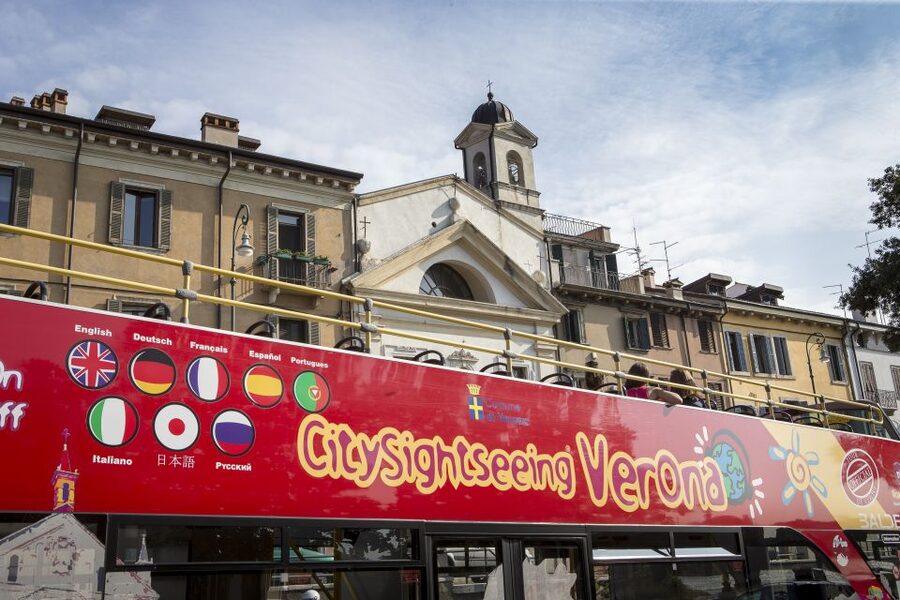
- Audio commentary comes in 12 languages: Options include English, Italian, Spanish, French, German, Portuguese, Japanese, Russian, Arabic, Chinese, Danish, and Dutch.
- Allow time between buses: Each route takes about an hour, and service runs roughly once per hour, so planning matters.
Starting at Piazza Bra beside the Arena
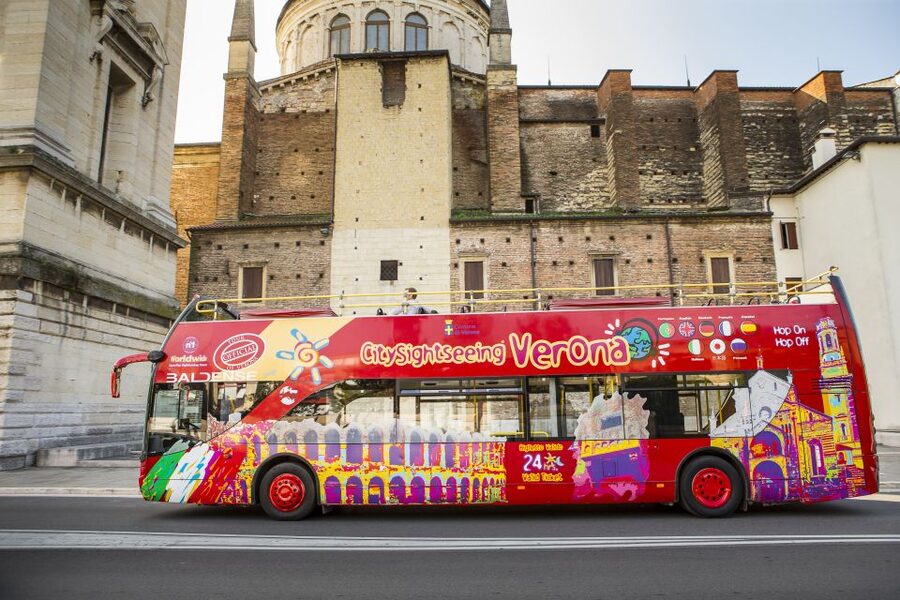
Piazza Bra is the natural place to begin. The square opens around Verona’s enormous Roman Arena, so you can orient yourself before the bus even moves. Both the red and blue routes start here, which makes changing lines fairly easy.
I suggest taking a full circuit before hopping off. It gives you a clear sense of Verona’s shape and shows how the compact old center connects with the train station, San Zeno, and the hills above the city. The open-top upper deck is best for views, but the lower section helps when the sun is fierce or rain rolls in.
The audio guide supplies background on Verona’s Roman beginnings, medieval power, Shakespeare’s Romeo and Juliet connection, and the city’s later life as an industrial center. It is useful for getting your bearings, though the commentary is not equally strong on every bus. The audio has been described as clearer on the red line, while the blue line can repeat some of the same information.
Bring your own headphones if you have them. The complimentary headphones may be uncomfortable or offer weak sound, especially on the smaller blue bus.
A few more Verona bookings to compare
- Verona: History and Hidden Gems Guided Walking Tour
★ 5.0 · 1,379 reviews - Verona: Small Group Guided Walking Tour with Arena Tickets
★ 4.9 · 848 reviews - Verona: Arena di Verona Opera Ticket
★ 4.6 · 721 reviews
Red Route: from Piazza Bra to San Zeno and the station
The red route is the larger, more straightforward circuit. It is the better choice for a broad look at the city and for connecting the historic center with Verona Porta Nuova railway station.
Piazza Bra
From the Arena Square, the bus moves through the city’s main center. This is a good point to get off if you want to visit the Arena, pause in the square, or begin walking toward Verona’s central streets.
At $29, the bus will not include admission to the Arena or any other monument. You pay separately for those visits, so consider the bus a transport and orientation ticket, not a package of attraction entries.
Corso Porta Nuova and Giardini Pradaval
This stop brings you toward the modern side of the center, with access to Corso Porta Nuova and the Giardini Pradaval. It can be useful if you want a change from the tight medieval streets around the Arena.
The route also helps you see how Verona is more than its famous Roman and Shakespearean sights. The city has a working modern identity, and the broad avenues near the center make that contrast clear.
Still Verona, but a slower afternoon:
- Verona: Classic and Hidden Gems Bike Tour
★ 4.9 · 577 reviews - From Verona: Valpolicella and Amarone Wine Tasting Tour
★ 4.9 · 560 reviews - From Verona: Sirmione and Lake Garda Day Tour with Cruise
★ 4.6 · 520 reviews - Verona: Wine Tasting with Snacks and Panoramic Views
★ 4.8 · 494 reviews
Stazione FS Porta Nuova
The railway station stop is one of the practical strengths of the tour. If you arrive by train, the bus gives you a simple first ride into the center. If you stay near the station, the pass can also work as a limited sightseeing shuttle toward the Arena.
One visitor used the pass this way during a two-day stay, finding the 48-hour option useful for getting from the station area to the historic center. That is a sensible use of the ticket, though the hourly schedule means you should not rely on it for a tight train connection.
Piazza Pozza and Basilica San Zeno
Piazza Pozza leads you toward San Zeno, one of Verona’s most worthwhile districts. The Basilica of San Zeno is famous for its Romanesque design and connection with the city’s medieval past. The stop also puts you near a quieter part of Verona, away from the busiest Arena and Juliet areas.
San Zeno is a good reason to use the hop-off feature rather than staying on the bus. You can see an important church, walk around the neighborhood, then continue when the next bus comes. Check the route timing before you get off, since waiting about an hour is possible.
Castelvecchio
Castelvecchio is Verona’s great medieval fortress, with sturdy walls and a position beside the Adige River. The bus passes through the area, giving you a useful look at the city’s defensive past.
This is another stop where a walk makes sense. Verona’s medieval walls and river views are easier to appreciate at street level than from the upper deck. If you are interested in museums or the castle interior, remember that attraction tickets are not part of the bus fare.
Via Diaz and Porta Borsari
Via Diaz brings you into the heart of Verona’s shopping and historic center. It is the place to pause for shops, cafés, and a walk toward the Roman remains of Porta Borsari.
Porta Borsari was a major ancient gateway into the city. Its surviving stonework gives you a direct link to Roman Verona, and it sits close to several central streets. This area works well as a combined sightseeing and shopping stop.
Teatro Romano
The Roman Theater sits near the Adige and below the hill leading to Castel San Pietro. It is one of the city’s key ancient sites, though the bus stop is only the beginning of the visit. You need to explore on foot and pay separately if you want to enter the attraction.
This stop is especially useful when paired with the blue route. You can get off near the theater, see the Roman setting, then continue uphill or take the bus toward the viewpoint.
Porta Leoni and Piazza Leoni
These stops serve the Juliet area and the central Roman remains. Piazza Leoni is listed with access to Juliet’s House, making it the most obvious place to leave the bus for Verona’s best-known romantic sight.
Expect this zone to be popular. The bus can get you close, but the final approach and any visit to Juliet’s House happen on foot. Since attraction admission is not included, check your sightseeing budget before adding paid entries.
Blue Route: the smaller bus and Castel San Pietro
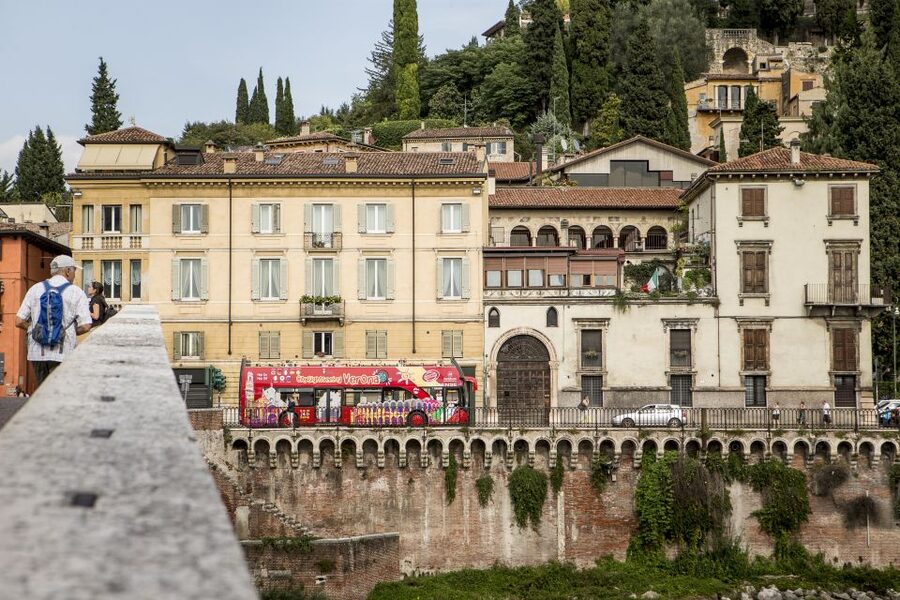
The blue route is the more distinctive of the two. It uses a smaller bus to manage narrower streets and steeper terrain, and it reaches the hilltop area above Verona.
Many people will find this the more memorable circuit. The red route is useful and comfortable, but the blue line adds views and streets you may not reach during a short visit.
Via Pallone and Tomba Giulietta
This section connects the central sights with the Juliet area and the streets near the old town. It is a good choice if you want to combine the bus with a walk through the center.
The route does repeat some commentary from the red line, so do not expect two fully separate audio programs. The value here comes from the different roads and viewpoints, not from entirely new narration.
Via G. Giusti and Santo Stefano
The blue bus moves through streets toward Santo Stefano and the Roman Theater. This part of the route feels more residential and local than the immediate Arena area, although the exact experience can depend on traffic and how busy the bus is.
The smaller vehicle is part of the appeal, but it can also be crowded. At busy times, not everyone may fit on the next blue bus. If you are determined to ride this line, going earlier in the day is wise.
Teatro Romano and Castel San Pietro
This is the highlight of the blue line. Castel San Pietro sits above the city, giving you a broad view of Verona, the river, and the red roofs of the old center. The hilltop is the best place on either route for photographs.
The bus may pause for about five minutes so people can take pictures. That is helpful because you do not always need to leave the bus and wait for the next one. Still, five minutes is brief. If you want time to enjoy the view, get off and treat Castel San Pietro as a proper stop.
The climb and terrain are exactly why the smaller bus is used. The route reaches places that are less convenient to cover during a short city break, and this is where the pass earns much of its value.
Duomo and Piazza Erbe
The blue route also serves the Duomo and Piazza Erbe. Piazza Erbe is one of Verona’s central gathering places, surrounded by historic buildings and daily city life. It is a natural place to hop off for a walk through the old center.
The Duomo offers another important stop for architecture and religious history. Since the bus does not include entry tickets, you can decide which sights deserve your admission money and which you prefer to view from outside.
Casa Giulietta, Porta Leoni, and Piazza Leoni
The blue line returns to the Juliet area, Porta Leoni, and Piazza Leoni. This overlap with the red route makes the central stops easy to reach, but it also means the two circuits are not completely separate.
If Romeo and Juliet is your main reason for visiting Verona, use the bus to orient yourself, then spend your time walking the nearby streets. The bus is most helpful before or after your visit, not as the main way to experience this compact part of town.
How to use a 24-hour or 48-hour ticket
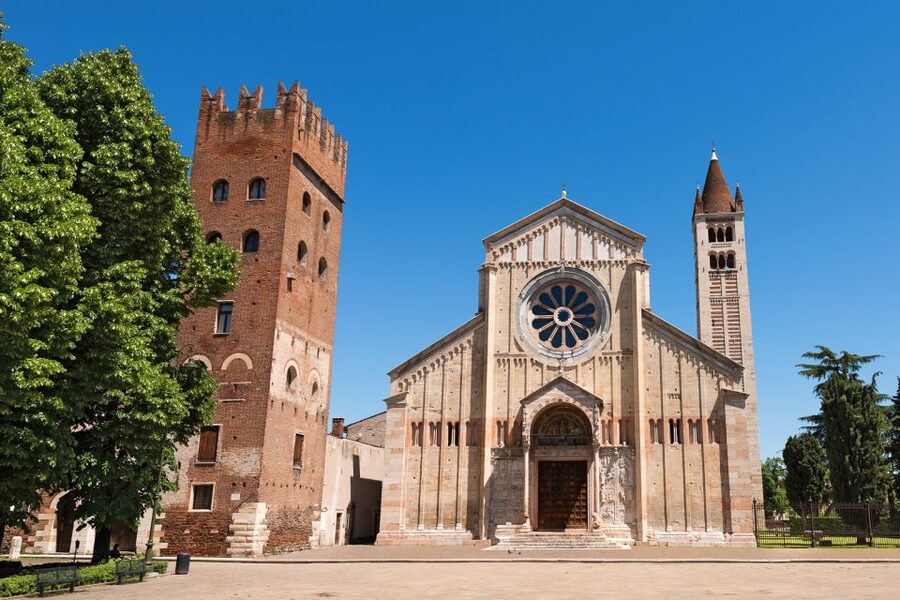
A 24-hour ticket works well for a short visit. You can take one full circuit, hop off at San Zeno or Castel San Pietro, and use the pass again later for the central sights. One smart plan is to ride the red route first, break for lunch, then take the blue route in the afternoon.
The 48-hour ticket gives you breathing room. You can use the first day for orientation and the second day for selected stops, especially if you want to visit the Arena, San Zeno, Castelvecchio, or the Roman Theater.
The pass is valid for 24 or 48 hours, not simply until the end of the calendar day. That can let you use part of the ticket on two dates. But do not assume the buses operate late into the evening. Service hours can end around late afternoon, and one account specifically found that buses did not continue past 5 p.m.
Route frequency is the main planning issue. Buses run approximately once an hour on each line. A quick photo stop can therefore become an hour-long pause, especially on the red route. Write down the approximate time of the next bus before you leave.
Schedules may change. One report found the first bus leaving Piazza Bra at 10 a.m. rather than 9 a.m., so check the current departure details before building your day around the ride.
What the audio guide adds, and where it falls short
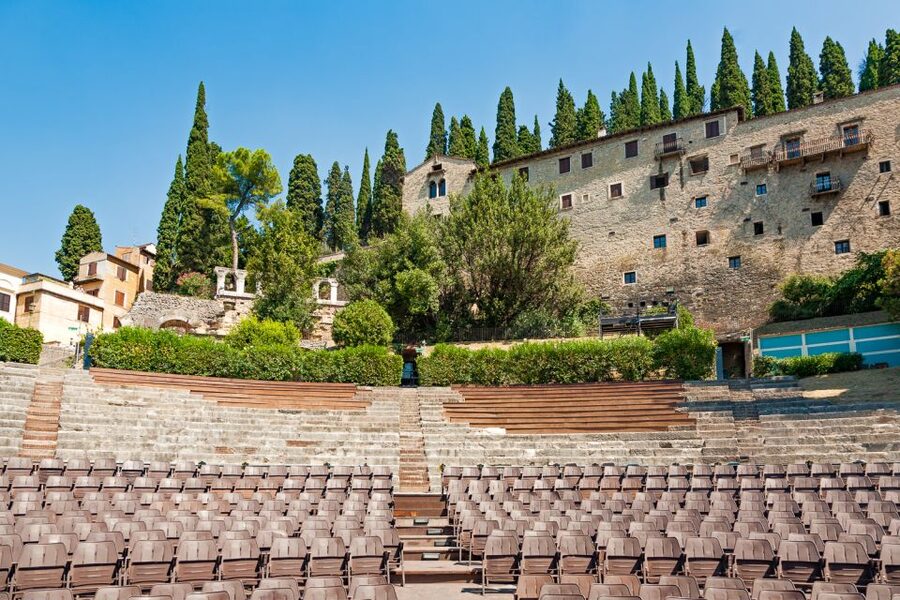
The multilingual commentary is useful for a first visit. It gives you the basic story of Verona while you look at the buildings, river, walls, and Roman remains. The music and narration can also make a simple circuit feel more purposeful on a rainy day.
The audio is not a substitute for a live city guide. Some information repeats between the red and blue routes, and the narration may not point out every sight you pass. The quality can vary between vehicles, with the red route generally offering the clearer audio experience.
I would use the commentary as background, then stop listening when you get off. Verona rewards close attention to small details, side streets, stone gateways, and squares that are easy to miss while following a recorded script.
Is $29 good value for Verona?
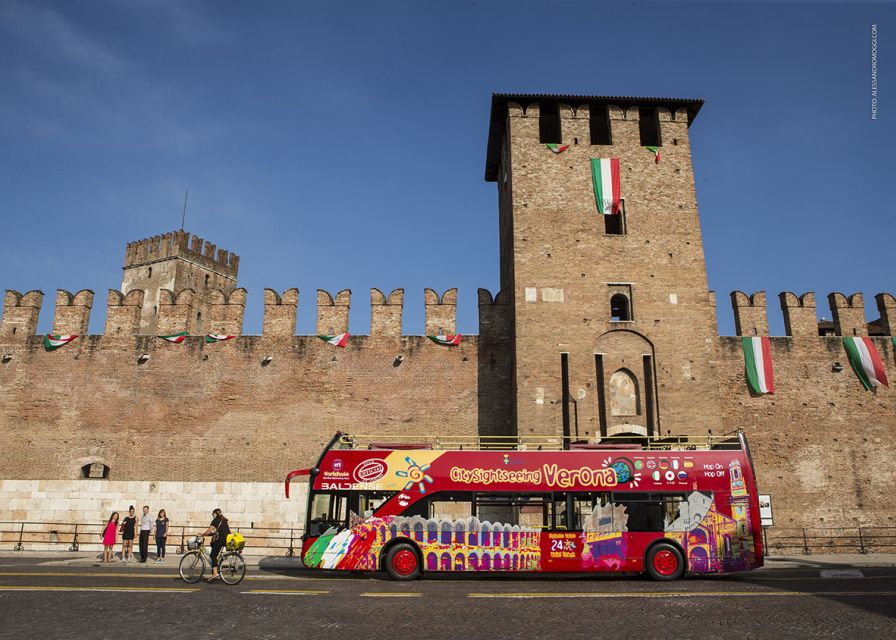
At $29 per person, the pass is fair value if you ride both routes and use the ticket over much of its validity. It is particularly useful for a one-night stay, a first afternoon in Verona, or a visit during very hot weather.
The value is weaker if you stay on for one circuit and spend the rest of your time walking. Verona’s historic center is compact, and many major sights sit close together. In that case, the bus gives you a pleasant overview, but not necessarily the cheapest transport.
Families may find the ticket worthwhile because it provides a break from walking. It can also help if you are traveling with a young child, carrying luggage near the station, or visiting in rain or heat. The open-top deck is enjoyable in good weather, while the covered lower section offers shelter when conditions turn wet.
A 48-hour ticket is the better choice if you want to spread out your sightseeing or use the bus for station-to-center transport. A 24-hour ticket is enough for most people with a focused plan.
Who should take this bus tour?
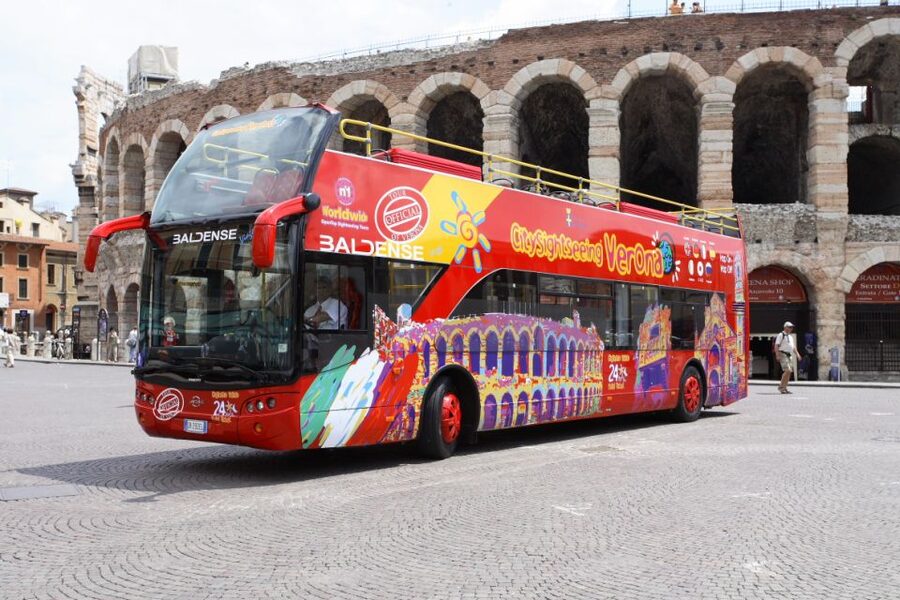
I would recommend it most strongly to:
- First-time visitors who want a quick sense of Verona’s layout
- People with only a few hours in the city
- Families looking to reduce walking
- Visitors staying near Porta Nuova station
- Anyone visiting during strong heat or rain
- People who want the hilltop view without arranging separate transport
I would be more cautious if you prefer a slow, street-level visit or plan to spend most of your time inside museums and churches. The bus cannot replace walking around Piazza Erbe, San Zeno, Castelvecchio, or the Juliet district.
The experience also suits visitors who like flexible sightseeing but do not want to study a city map first. Staff have been described as friendly and helpful, and the meeting point at Piazza Bra is easy to connect with once you reach the Arena area.
Should you book the Verona hop-on hop-off tour?
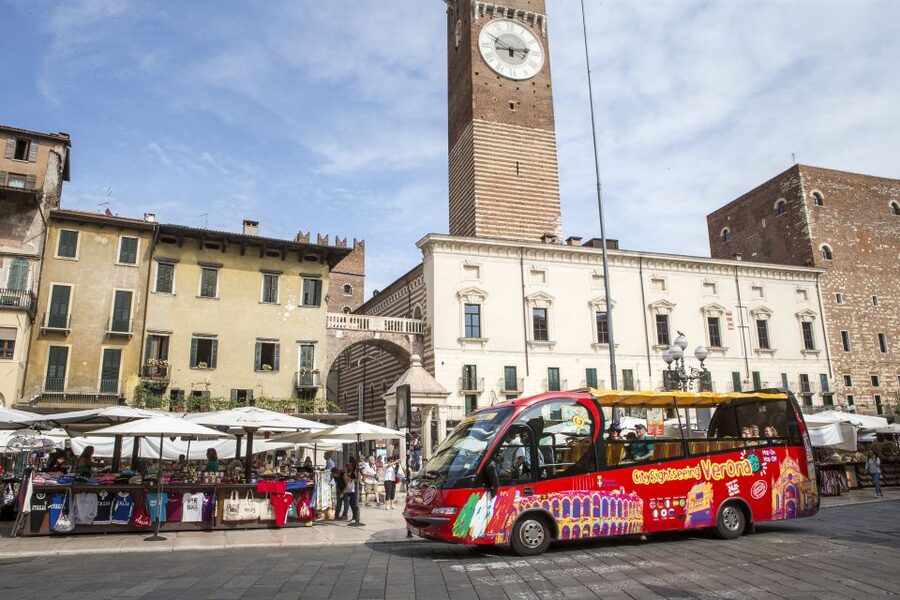
Book it if you want an overview, need a rest from walking, or have only one day in Verona. Make the blue route a priority for the hilltop view, and use the red route for San Zeno, Castelvecchio, the station, and the broad city introduction.
Choose the 48-hour pass if you are staying two days or want to use the bus in stages. Choose 24 hours if your visit is short and you can follow the schedule closely.
Skip it if you want the most intimate experience of Verona and are comfortable walking between the main central sights. For everyone else, this is a useful first ride with a genuinely worthwhile viewpoint, provided you plan around the hourly buses and bring your own headphones.
FAQ
Where do both Verona bus routes begin?
Both the red and blue routes start at Piazza Bra, also called Arena Square.
How long is the ticket valid?
You can choose a ticket valid for 24 hours or one valid for 48 hours.
How often do the buses run?
Buses run on each route approximately once an hour.
Does the ticket include admission to Verona’s attractions?
No. The ticket includes the bus ride and multilingual audio commentary, but attraction tickets are not included.
Which route goes to Castel San Pietro?
The blue route goes to Castel San Pietro, the hilltop area with views over Verona.
Which languages are available for the audio guide?
The audio guide is available in English, Italian, Spanish, French, German, Portuguese, Japanese, Russian, Arabic, Chinese, Danish, and Dutch.
Recently added around Verona
- Guided Food Tour with Wine Tasting in Verona★ 4.3 · 229 reviews
- From Verona: Sirmione and Lake Garda Day Tour with Cruise★ 4.6 · 520 reviews
- Verona: Hands-on Fresh Pasta and Tiramisù Cooking Class★ 4.9 · 295 reviews
- Verona: Classic and Hidden Gems Bike Tour★ 4.9 · 577 reviews
- Cavaion: Lake Garda Wine & Food Tasting with Vineyard Tour★ 4.7 · 202 reviews
- Verona: Arena di Verona Opera Ticket★ 4.6 · 721 reviews
- Verona: Montresor Winery Visit with Wine Tasting and Snacks★ 4.6 · 217 reviews
- Discover Valpolicella Vineyards and Wine Tasting Experience★ 4.5 · 341 reviews
Verona Tours, compared.
Small Group Guided Walking Tour with Arena Tickets
Read our review →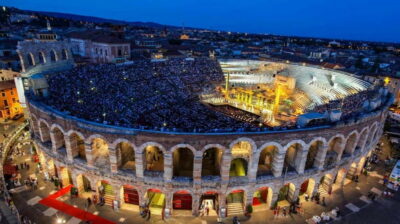


Verona walking tour:food, wine, legends, lunch/dinner & cable car
Read our review →Browse the lists this tour appears in