
Reviewed · WALKING TOURS
Verona: Highlights and Hidden Gems Walking Tour
Verona rewards a good first walk. I like the way this tour pairs major sights such as the Verona Arena and Piazza delle Erbe with quiet corners many people pass without noticing. I also like the flexible guiding style: guides such as Graziano, Sara, Elettra, Constanza, and Avdul have adjusted routes, pace, and advice to suit each group. The main drawback is simple: two hours moves quickly, and entry tickets, food, and drinks are not included.
At $38 per person, this is a sensible way to get your bearings before exploring alone. The tour is available as a private or shared group experience, with live guiding in English, French, Italian, or Spanish. It is also wheelchair accessible, though the historic center includes old streets and crowded public areas that may affect the pace.
In This Review
- Verona in two hours: the key points
- Starting in Piazza Bra beside the Arena
- From the medieval walls to Porta Borsari
- River views at Riva San Lorenzo
- Small churches and the character of the old town
- Piazza dei Signori and the Scaliger tombs
- Basilica di Santa Anastasia: Verona’s largest church
- Ponte Pietra and the river crossing
- Romeo’s House and Juliet’s balcony
- The Old Market Courtyard closes the loop
- How the guides shape the experience
- What the $38 price does and does not cover
- Who should book this Verona walk?
- Should you book the Highlights and Hidden Gems Walking Tour?
- FAQ
- How long does the Verona walking tour last?
- How much does the tour cost?
- Is the tour private or shared?
- Which sights are included on the route?
- Are entry tickets included?
- What languages are available?
- Is the walking tour wheelchair accessible?
- Where does the tour begin?
- Can I cancel the booking?
Verona in two hours: the key points
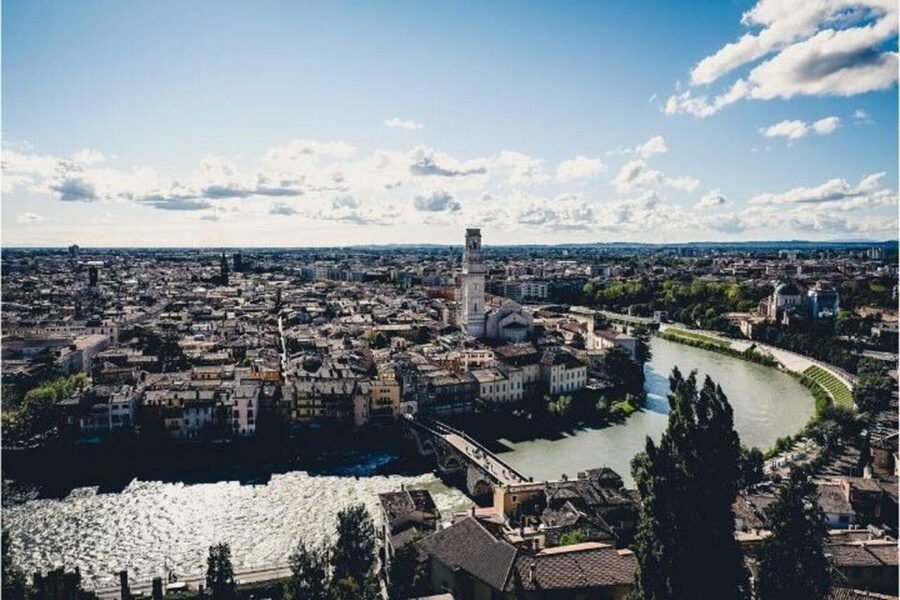
- A strong first look at Verona: The route links Piazza Bra, the Arena, the old town, the river, and several important churches.
- Local corners beyond the headline sights: Vicolo del Guasto, Riva San Lorenzo, San Giovanni in Foro, and the Old Market Courtyard add detail to the walk.
- Flexible private tours: A private booking can be adapted around your interests, places you have already seen, and your walking pace.
- Useful advice for later: Guides regularly provide restaurant suggestions and ideas for continuing your time in Verona.
- No admission tickets included: You see the Arena, Basilica di Santa Anastasia, and other sights from the route, but this is not an inside-entry tour.
- Good for tight schedules: The two-hour length suits a short Verona visit or your first afternoon in town.
Starting in Piazza Bra beside the Arena
The walk begins at one of two central meeting points, Via Roma 80 or Via Dietro Listone 1, depending on the option you book. Both put you near Piazza Bra, Verona’s grand approach to the old city, so you are immediately in the right part of town.
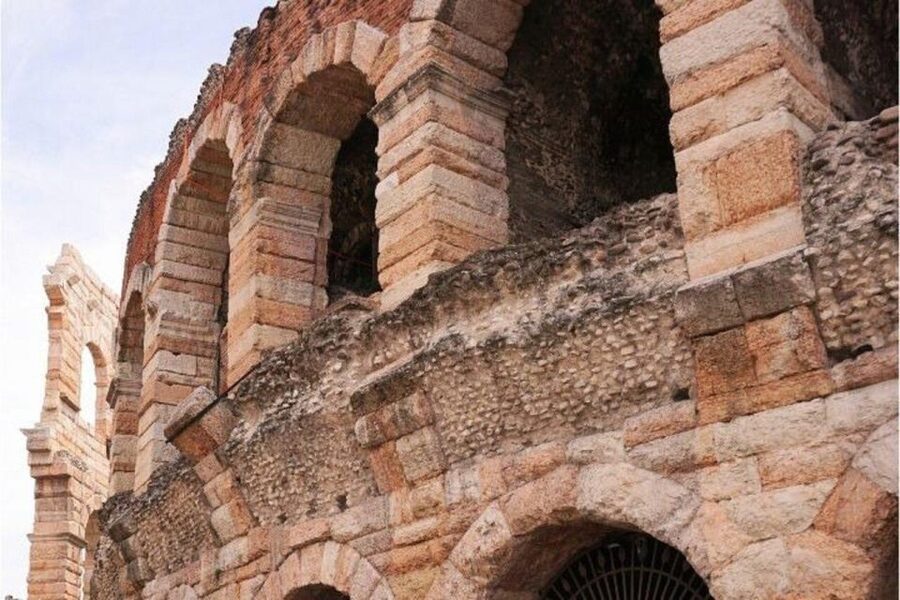
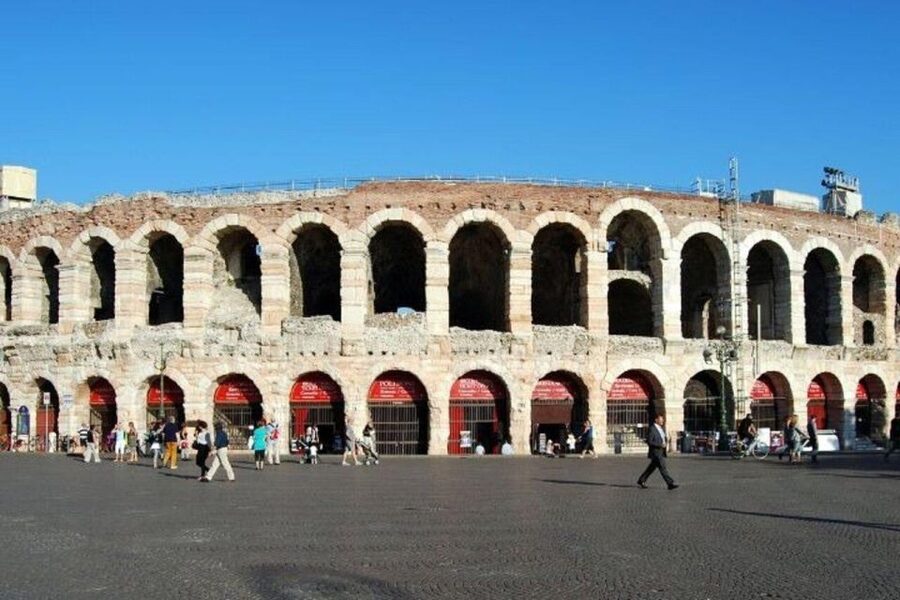
Piazza Bra is the natural opening scene. From here, your guide introduces the shape of Verona and points out the Roman Arena, the city’s most famous monument. The oval amphitheater is much older than Shakespeare’s Verona, yet it remains tied to the city’s modern identity through concerts and performances.
The useful thing about beginning here is orientation. You learn where the main streets lead before heading into the tighter lanes of the historic center. If this is your first visit, that short explanation can save you from spending your whole day wandering between disconnected sights.
You should not expect to enter the Arena during this walk. The tour includes guiding at the exterior and nearby streets, while admission tickets are separate. If you want to go inside, ask your guide for practical advice about fitting it into the rest of your day.
More Walking Tours in Verona
- Verona: History and Hidden Gems Guided Walking Tour
★ 5.0 · 1,379 reviews - Verona: Small Group Guided Walking Tour with Arena Tickets
★ 4.9 · 848 reviews - Verona Highlights Walking Tour in Small-group
★ 5.0 · 493 reviews
From the medieval walls to Porta Borsari
After Piazza Bra and the Arena, the route follows the old city streets toward the medieval walls and Corso. It passes Porta Jovia, then continues toward Porta Borsari, one of Verona’s most recognizable Roman gateways.
This section helps connect different periods of the city. The Arena belongs to Roman Verona, while the walls and later buildings show how the city changed and grew. Rather than seeing isolated monuments, you begin to understand how the old center fits together.
Porta Borsari is especially rewarding for visitors who like to look up and around instead of rushing from one famous address to the next. The gateway marks an ancient entrance, but the surrounding streets are also part of everyday Verona. Your guide can explain what you are seeing without turning the walk into a dry list of dates.
The route also includes Vicolo del Guasto, a small lane that represents the quieter side of the city. This is one of the places where a guide adds real value. On your own, you might walk past without knowing why it matters. With a local pointing out details, an ordinary-looking corner can become part of the larger story.
River views at Riva San Lorenzo
The walk reaches Riva San Lorenzo, where you get a scenic view toward the river and the surrounding old city. This change of setting is welcome after the enclosed lanes around the center.
The river gives you a better sense of Verona’s geography. It explains why bridges, gates, and defensive points mattered, and it offers a pause from the dense streets. Your guide may also use the view to explain how the city developed on both sides of the water.
This is a walking tour, not a photo stop circuit, so the pause is likely brief. Still, it adds variety and helps break up the succession of squares and churches. Wear comfortable shoes, as requested, and expect to spend the full two hours on foot.
Small churches and the character of the old town
One of the route’s less obvious stops is Chiesa di San Giovanni in Foro. The church sits in an area shaped by Roman and medieval layers, and it gives the walk a more local feel than the major piazzas alone.
The value here is not just the building itself. Verona’s character comes from these close-set streets, modest façades, and small places of worship that can disappear behind the larger attractions. A guide helps you notice how the city’s religious, civic, and commercial spaces sit beside one another.
The route then moves into Piazza delle Erbe, one of Verona’s central gathering places. This is where the city feels most social and open, with historic façades, market activity, cafés, and a steady flow of people. It can also be crowded, particularly at popular times, so stay close to your guide and expect a little stop-and-start walking.
Piazza delle Erbe rewards a slow look. Do not focus only on the square itself. Check the surrounding buildings, towers, painted details, and the way the space narrows into adjoining streets. Your guide can give you the context that makes these details easier to read.
Still Verona, but a slower afternoon:
- Verona: Hop-on Hop-off Tour 24 or 48-Hour Ticket
★ 4.4 · 2,010 reviews - Verona: Priority Access Arena Guided Tour
★ 4.6 · 1,152 reviews - Verona: Juliet’s House Fast-Track Entry Ticket & Audio Guide
★ 4.2 · 1,121 reviews - Verona: Arena di Verona Opera Ticket
★ 4.6 · 721 reviews
Piazza dei Signori and the Scaliger tombs
A short walk leads to Piazza dei Signori, a more formal square with strong links to Verona’s ruling families and civic life. Compared with Piazza delle Erbe, it often feels more composed and enclosed.
This is a good place to hear about the Scaliger family, who shaped much of medieval Verona. Nearby, the Arche Scaligere provide an ornate reminder of their power. These tombs are not a side note. They show how public display, religion, and political authority came together in medieval Italy.
You may find this part of the walk especially useful if you prefer architecture and political history to romantic anecdotes. The guide can explain how the city’s monuments fit into its changing leadership, rather than treating each building as a separate attraction.
Basilica di Santa Anastasia: Verona’s largest church
The tour continues to the Basilica di Santa Anastasia, described as the largest place of worship in Verona. Its position in the old center makes it easy to combine with the nearby squares, but the church deserves more than a quick glance from outside.
Your guide discusses the building and its place in Verona’s religious life. The stop also gives you a chance to see how the city’s major churches differ from its civic spaces. If you want to enter, check the arrangements on the day, since entry tickets are not part of the tour price.
Because the tour lasts only two hours, the amount of time spent inside any church may be limited or depend on access. I would treat this as an introduction and return later if the interior becomes a priority.
Ponte Pietra and the river crossing
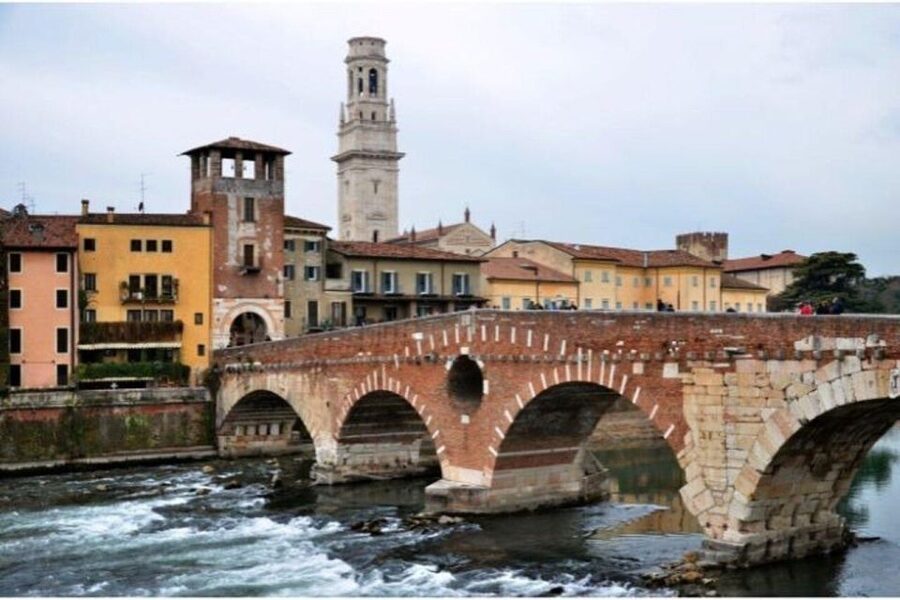
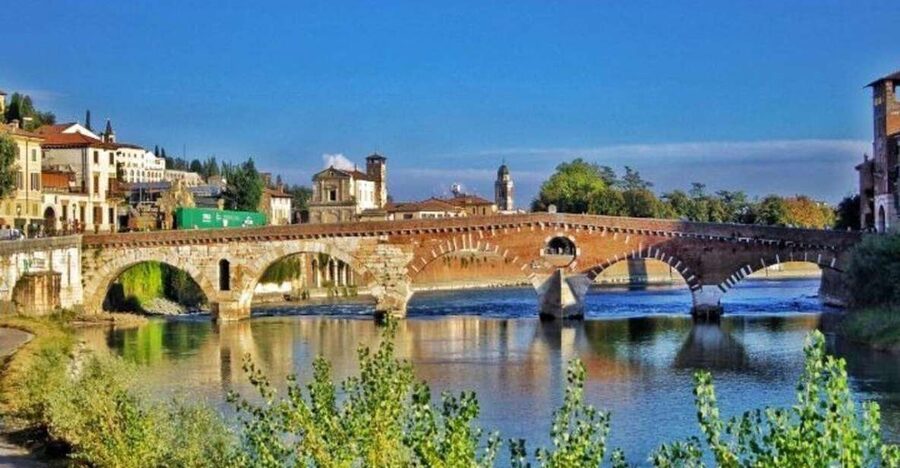
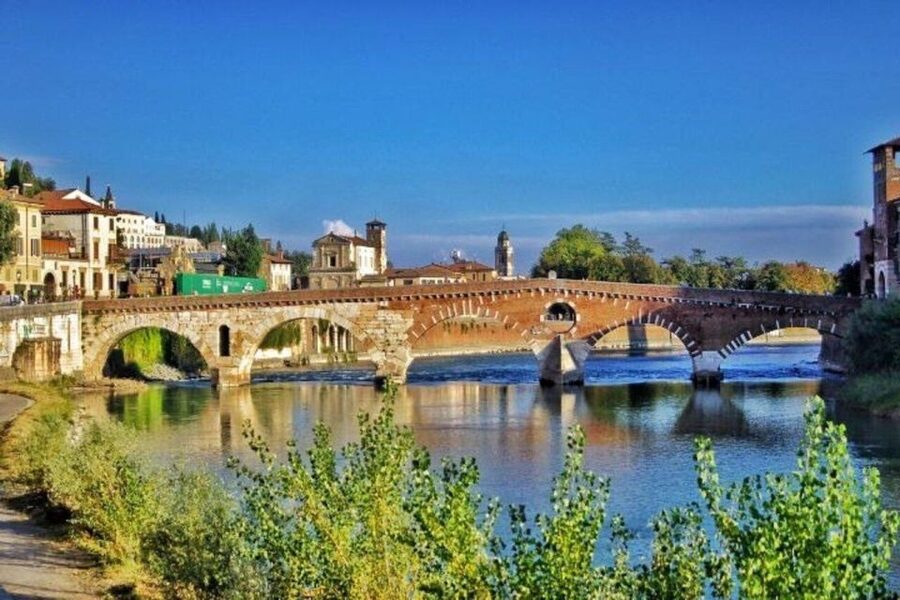
Ponte Pietra brings the route back toward the river. The bridge is one of the city’s best-known crossing points and offers another view of Verona’s position around the water.
The stop works well in the middle of the walk because it changes the rhythm again. You move from churches and squares to open views, bridges, and the opposite side of the old town. Your guide can point out how the river shaped movement through Verona and where the city’s older routes ran.
Ponte Pietra is also one of the places where the walking surface and crowd levels may affect your pace. The tour is wheelchair accessible, but anyone using a wheelchair or mobility aid should still expect historic paving and busy public spaces. A private tour may offer more room to adjust the route and timing.
Romeo’s House and Juliet’s balcony
No first visit to Verona feels complete without seeing the places connected with Shakespeare’s famous lovers. The route includes Casa di Romeo and Juliet’s balcony, two stops that attract plenty of attention.
Casa di Romeo is a useful counterpoint to Juliet’s balcony. It reminds you that the city’s romance story is a mix of literature, local tradition, and tourism. The balcony is one of Verona’s busiest photo points, so you may need patience, especially if the courtyard is crowded.
This portion is best approached with the right expectations. You are seeing the famous locations and hearing how they fit into Verona’s story, not taking a theatrical tour built only around Shakespeare. If you want an extended visit or museum entry, plan extra time and budget for admission.
The guide’s explanation is what keeps this section from becoming a quick photo stop. You can enjoy the romantic appeal while also understanding that Verona offers far more than one literary tale.
The Old Market Courtyard closes the loop
The final stop is the Courtyard of the Old Market, a quieter civic space that helps round out the tour. It is an appropriate ending because it brings you back to the city’s everyday public life after the Arena, churches, river, and Shakespeare addresses.
This last corner also reflects the tour’s main strength: it does not only connect the most famous sights. It adds smaller places that give you a better feel for the old center. The route then returns to one of the original drop-off points, Via Roma 80 or Via Dietro Listone 1.
Depending on the group and the guide, the exact balance between stops can vary. Recent guiding experiences have included extra time for late arrivals, route changes, restaurant advice, and direct help finding a lunch reservation or train transfer. That kind of practical assistance can be as useful as another monument.
How the guides shape the experience
The most praised part of this tour is the guiding. Sara is described as warm and engaging, with a talent for showing places that are easy to miss. Elettra has been praised for her humor, clear explanations, and broad cultural background. Constanza has adapted routes, helped late arrivals, and given restaurant advice that led to successful meals.
Graziano adjusted the walk after a cancelled train caused a late arrival and finished by guiding the group to a lunch reservation. Avdul was praised for matching the group’s interests and pace, even during a heat wave. Emanuela also went beyond the planned walk by helping arrange a transfer to the train station when hotel assistance fell short.
These details tell you what to hope for, but not what to demand. Guides are individuals, and the exact personality will depend on your booking. Still, the pattern is clear: this experience works best when you tell the guide what you care about. Mention architecture, food, Roman history, photography, churches, or places you have already visited.
A private tour gives you the most control. A shared group tour should cost less per person in practical terms, but it may offer less freedom to pause or change direction. The supplied price of $38 per person is reasonable for a central two-hour orientation with a live guide, especially if you are in Verona for only one day.
What the $38 price does and does not cover
The price includes the guide and your shared or private walking tour. It does not include food, drinks, or entry tickets.
That makes the value depend on how you use the walk. If you want a guided introduction, local recommendations, and a route that connects Verona’s main sights with smaller stops, $38 is fair. If your only goal is to enter the Arena or Santa Anastasia, you will need to pay separately and allow extra time.
The tour can also save you planning effort. Several guides have given dinner suggestions and helped groups organize the next part of the day. For a short visit, that advice may prevent an expensive or disappointing meal and help you choose which sights deserve a return visit.
Who should book this Verona walk?
I would choose this tour if you are visiting Verona for the first time, have only a few hours, or want a clear introduction before exploring alone. It also suits couples and families who prefer stories and local direction to reading signs at each monument.
It is a good fit for independent visitors who want ideas for the rest of the day without committing to a long organized excursion. The route covers enough ground to show the city’s main structure, but it ends with you still free to revisit the Arena, churches, squares, or river.
You may want something else if you prefer long museum visits, extended time inside monuments, or a very slow photography walk. Since tickets are not included and the walk is limited to two hours, this is best seen as a city orientation rather than a full tour of Verona’s interiors.
Free cancellation up to 24 hours before the start and reserve-now, pay-later booking add useful flexibility. Starting times depend on availability, and the meeting point can vary with the option booked, so check those details before setting your day around it.
Should you book the Highlights and Hidden Gems Walking Tour?
I would book it for a first look at Verona, particularly if you have a train connection, a short stay, or a free afternoon after arrival. The strongest reason is the combination of famous sights, lesser-known lanes, river views, and practical advice from guides who have shown real flexibility.
Choose a private option if you care about pace, accessibility needs, or a customized route. Choose the shared option if you mainly want good orientation at a lower overall cost. Either way, wear comfortable shoes, ask questions early, and tell the guide what you want from Verona. That is how a two-hour walk becomes useful for the rest of your visit.
FAQ
How long does the Verona walking tour last?
The tour lasts two hours.
How much does the tour cost?
The listed price is $38 per person.
Is the tour private or shared?
You can choose between a shared group tour and a private group tour.
Which sights are included on the route?
The route includes Piazza Bra, Verona Arena, Vicolo del Guasto, Porta Borsari, Riva San Lorenzo, Chiesa di San Giovanni in Foro, Piazza delle Erbe, Piazza dei Signori, Basilica di Santa Anastasia, Ponte Pietra, Casa di Romeo, Juliet’s balcony, the Arche Scaligere, and the Courtyard of the Old Market.
Are entry tickets included?
No. Entry tickets, food, and drinks are not included.
What languages are available?
Live guiding is available in English, French, Italian, and Spanish.
Is the walking tour wheelchair accessible?
Yes, the activity is listed as wheelchair accessible.
Where does the tour begin?
The meeting point may vary depending on the option booked. The listed starting locations are Via Roma 80 and Via Dietro Listone 1.
Can I cancel the booking?
Yes. You can cancel up to 24 hours in advance for a full refund. You can also reserve now and pay later.
Recently added around Verona
- The Highlights of Verona Small Group Walking Tour★ 4.8 · 294 reviews
- Verona: Highlights Walking Tour with Arena Priority Access★ 4.8 · 201 reviews
- Verona: Juliet’s House Fast-Track Entry Ticket & Audio Guide★ 4.2 · 1,121 reviews
- Verona: Priority Access Arena Guided Tour★ 4.6 · 1,152 reviews
- Verona: City Walking Tour with Cable Car & Wine Aperitif★ 4.8 · 267 reviews
- Verona: Gelato Making Class★ 4.8 · 348 reviews
- Verona: Food and Wine Tasting Walking Tour★ 4.9 · 238 reviews
- Valpolicella: 1.5-Hour Guided Winery Tour with Wine Tasting★ 4.8 · 207 reviews
Walking Tours, compared.
Guided Walking Tour & Last Supper Visit with Ticket
Read our review →
Rialto Bridge & Offbeat Unusual Venice Walking Tour
Read our review →
Private 3 hrs Venice Tour: St Mark’s, Walking tour & Boat tour
Read our review →
Skip the line: Uffizi and Accademia Small Group Walking Tour
Read our review →Browse the lists this tour appears in