
Reviewed · WALKING TOURS
Verona Highlights Walking Tour in Small-group
Verona’s story unfolds in a few lively streets. This two-hour walk gives you a clear introduction to the city, from the Roman Arena and Castelvecchio to Juliet’s House, medieval tombs, and handsome public squares. I especially like the small maximum group of 16 and the chance to ask a local guide questions as you go.
The tour also makes good use of limited time. You cover Roman, medieval, Renaissance, and modern Verona without being rushed from one distant sight to another. The main drawback is that admission tickets are not included for the Arena or Juliet’s House, and two hours allows only a quick look at some places.
In This Review
- Key points to know before booking
- Why this two-hour walk works well in Verona
- Meeting at Piazza Bra beside the Arena
- Castelvecchio and the rebuilt Scaligero Bridge
- Roman Verona at the Arch of Gavi and old city gates
- Piazza delle Erbe, Verona’s former Roman forum
- Piazza dei Signori and Dante’s statue
- The Scaliger tombs and medieval power
- Juliet’s House and the limits of the Shakespeare story
- Romeo’s House and a private medieval palace
- Ending at the Roman Arena
- What $42.33 gets you
- Who should book this Verona walk?
- Should you book the Verona Highlights Walking Tour?
- FAQ
- How long is the Verona Highlights Walking Tour?
- Where does the tour start?
- Where does the tour finish?
- Is the tour offered in English?
- What is the maximum group size?
- Are entrance tickets included?
- Does the tour include Juliet’s Balcony?
- Is hotel pickup included?
- Does the tour operate in bad weather?
- Can I cancel for a full refund?
Key points to know before booking
- Two hours in Verona’s historic center: The route links the major sights on foot and begins and ends at Piazza Bra.
- Maximum of 16 people: A small group makes it easier to hear the guide and ask questions.
- Roman and medieval Verona together: You see the Arena, Arch of Gavi, Castelvecchio, Scaliger tombs, and old city streets.
- Juliet’s House is a brief stop: The courtyard is included in the route, but entry and balcony access are not part of the tour.
- Guides add personality: Isabella, Frank, Priscilla, Maria, and other guides are praised for humor, warmth, clear English, and strong storytelling.
- Good value for first-time visitors: At $42.33 per person, the tour is useful for getting your bearings before exploring museums and interiors on your own.
Why this two-hour walk works well in Verona

Verona can look simple on a map. The Arena, Piazza delle Erbe, Juliet’s House, and Castelvecchio are all within the central area, yet the city’s story is spread across Roman gates, medieval lanes, church facades, palace courtyards, and old ruling-family monuments. A guide helps you connect those pieces.
I like the relaxed walking format. You are not sitting on a bus while the guide points at buildings through glass. You move through the streets, stop in squares, and see how the city is arranged. The route is active, but it is not described as difficult. One practical warning is worth noting: you should be able to walk at a reasonably steady pace, especially when the center is crowded.
The guide is the main reason to book this rather than simply follow a map. Isabella is praised for her warmth and passion. Frank is often described as funny, friendly, and full of useful stories. Priscilla brings detailed local knowledge and was especially attentive to an elderly participant. Maria also receives praise for making a rainy tour enjoyable.
The tone seems conversational rather than academic. You get dates and political background, but also legends, odd details, architectural clues, and practical suggestions for food and places to visit. That mix helps Verona feel like a lived-in city, not an outdoor museum.
More Walking Tours in Verona
- Verona: History and Hidden Gems Guided Walking Tour
★ 5.0 · 1,379 reviews - Verona: Small Group Guided Walking Tour with Arena Tickets
★ 4.9 · 848 reviews - Verona walking tour:food, wine, legends, lunch/dinner & cable car
★ 5.0 · 386 reviews
Meeting at Piazza Bra beside the Arena
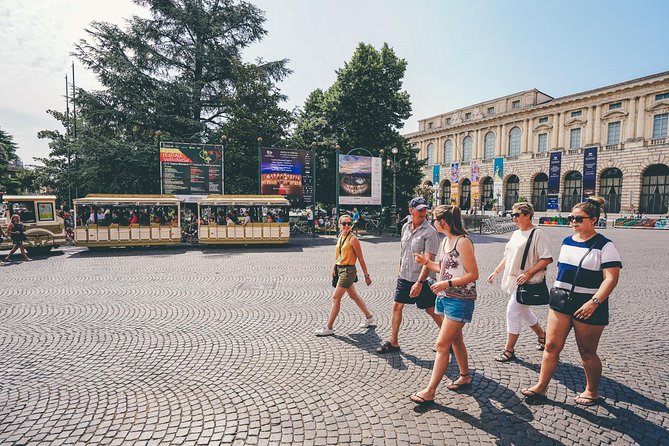
The tour starts at Piazza Bra, Verona’s largest public square, and finishes there as well. This is a convenient arrangement because the Arena is right beside the piazza, and the location is near public transportation.
Piazza Bra is more than a meeting point. It is a useful first lesson in Verona. Cafés and restaurants line the square, along with attractive historic buildings and the enormous Roman amphitheater. If you arrive early, you can get your bearings before the guide begins.
The tour runs in rain or shine, so check the forecast and wear shoes suited to stone streets. The walk is outside, and the itinerary includes several stops with limited time at each one. You do not need hotel transport, since pickup and drop-off are not included.
Castelvecchio and the rebuilt Scaligero Bridge
One early highlight is Castelvecchio, the medieval castle built by Verona’s ruling Scaliger family. The route takes you past the castle rather than providing a full museum visit, so think of this as an exterior introduction.
The attached Scaligero Bridge crosses the Adige and connects the late-medieval castle with the river’s left bank. It was almost destroyed in wartime bombing and later rebuilt to match the original design. That reconstruction adds a useful modern chapter to the medieval setting.
The bridge is a good example of how Verona has repeatedly repaired and reused its past. You see a fortified structure that once protected the city, but you also see a bridge still serving as a route across the river. If you want to visit Castelvecchio’s collections, plan a separate visit after the walking tour.
Roman Verona at the Arch of Gavi and old city gates
The Arch of Gavi is a small but important Roman monument near Castelvecchio. It dates to the first century AD and honors the Gavia family, an important Roman family in Verona. The guide also explains how the arch was demolished during the Napoleonic period, moved, and reconstructed in its present position in 1931.
This is the sort of stop that is easy to miss when exploring alone. It does not have the scale of the Arena, but it helps you understand that Roman Verona was not limited to one spectacular building.
The walk continues through the old center toward Roman remains such as Porta Borsari, the marble front of an original city gate. The stonework behind the facade and the remains of the old towers show how much of the Roman city has disappeared, even when a fragment survives.
A particularly memorable detail mentioned by the guide is the survival of Roman wall and house remains inside a Benetton store. It is a useful reminder that Verona’s archaeology often appears in ordinary modern spaces. You may walk past a shop, café, or street corner without realizing what lies beneath it unless someone points it out.
Still Verona, but a slower afternoon:
- Verona: Hop-on Hop-off Tour 24 or 48-Hour Ticket
★ 4.4 · 2,010 reviews - Verona: Priority Access Arena Guided Tour
★ 4.6 · 1,152 reviews - Verona: Juliet’s House Fast-Track Entry Ticket & Audio Guide
★ 4.2 · 1,121 reviews - Verona: Arena di Verona Opera Ticket
★ 4.6 · 721 reviews
Piazza delle Erbe, Verona’s former Roman forum
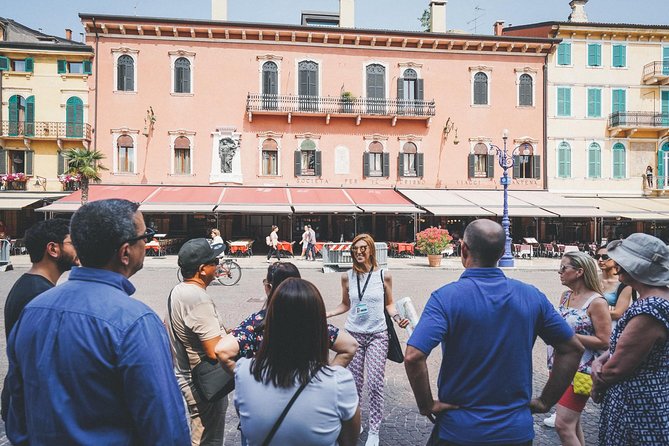
Piazza delle Erbe occupies the site of Verona’s Roman forum and remains one of the city’s central gathering places. The square is lined with historic buildings, market activity, cafés, and architectural details from several periods.
The fountain in the middle dates to the time of the Scaliger rulers and is one of the square’s key symbols. Look up as you walk. The facades include painted decoration, including frescoes dating from the Renaissance period.
The stop is short, about five minutes in the listed schedule, so you will not have much time to study every building. That is fine for a first orientation, but return later if the square interests you. This is one of the places where a guide’s explanation is more valuable than a quick photograph because the scene combines Roman planning, medieval power, Venetian influence, and later decoration.
Piazza dei Signori and Dante’s statue
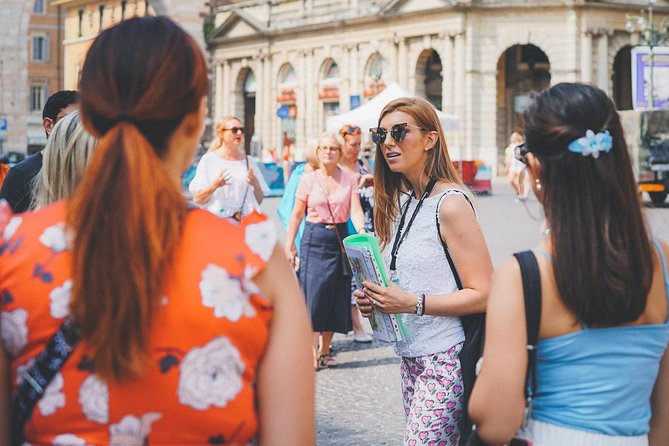
A side street leads to Piazza dei Signori, the former center of political power in Verona. It feels more formal than Piazza delle Erbe, with palaces and arcades that reflect the city’s years under different rulers.
A statue of Dante Alighieri has dominated the square since 1865. Because of it, the piazza is also called Piazza Dante. The statue is a reminder that Verona’s cultural identity reaches beyond the Romeo and Juliet story. The city has connections to major figures in Italian literature and politics, and this square gives the guide a place to explain that wider setting.
The square also provides a view toward the Torre dei Lamberti area. The tower’s viewpoint requires a separate visit, so do not expect to climb it during this tour. If panoramic views matter to you, make a note to return.
The Scaliger tombs and medieval power
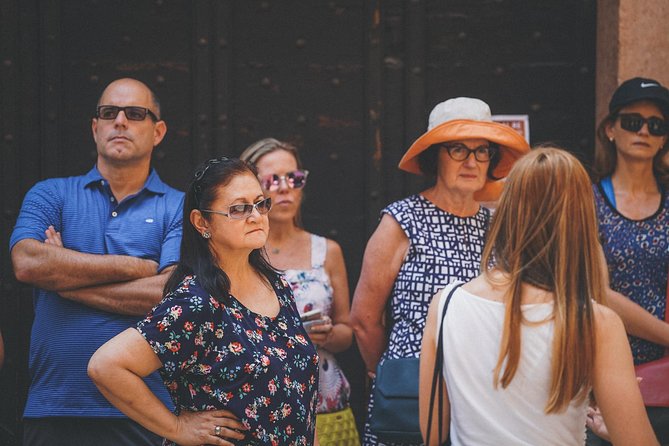
The Arche Scaligere are among Verona’s most striking medieval monuments. This outdoor cemetery contains ornate Gothic tombs for members of the Scaliger family, including Cangrande I, Mastino II, and Cansignorio.
The monuments are enclosed and admission is not included, so the walking tour provides an exterior look and an explanation of their role. Even from outside, the carved arches and sarcophagi are hard to overlook.
This stop gives needed balance to the itinerary. The Arena can make Verona seem like a Roman city with a Shakespeare connection, but the Scaliger tombs show the force of its medieval rulers. Their family controlled Verona during a major period of expansion and political power.
The tour spends roughly five minutes here. That is enough to understand what you are seeing, but not enough for close study of every carving. If Gothic sculpture interests you, return independently when you have more time.
Juliet’s House and the limits of the Shakespeare story
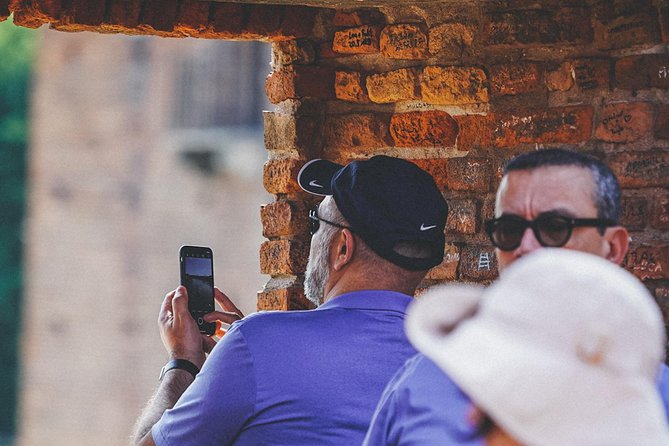
Casa di Giulietta is one of Verona’s most famous stops, but it requires a little clear thinking. The courtyard is associated with the Capulet family and the balcony is presented as the setting connected with Shakespeare’s tragedy. The building itself became a powerful tourist attraction, shaped in part by twentieth-century additions and presentation.
The tour includes about five minutes here and does not include admission. You will see the courtyard, but you should not assume that you can enter the museum or step onto the balcony as part of this booking.
From December 6, 2025 through January 6, 2026, the tour does not include access to Juliet’s Balcony in the usual way. Due to high visitor numbers, the city requires a separate ticket for access. The tour company can provide information about buying that ticket, but it will not purchase it for you.
The guide can help you separate medieval Verona from literary legend. That is one of the best reasons to visit with a local guide. You can enjoy the romance without confusing Shakespeare’s play with a fully documented biography.
Romeo’s House and a private medieval palace
The route also passes Romeo’s House, a medieval palace once associated with the Montecchi family. Tradition and literary texts connect the family with Romeo.
The building is privately owned and inhabited, so you see it from outside only. That limitation is useful to know before booking. This is a quick exterior stop, not a museum visit or a chance to enter a preserved medieval home.
Taken together, Juliet’s House and Romeo’s House show how Verona has built a public story around two figures who belong partly to literature and legend. The guide’s explanation gives you more context than simply posing for a photograph.
Ending at the Roman Arena
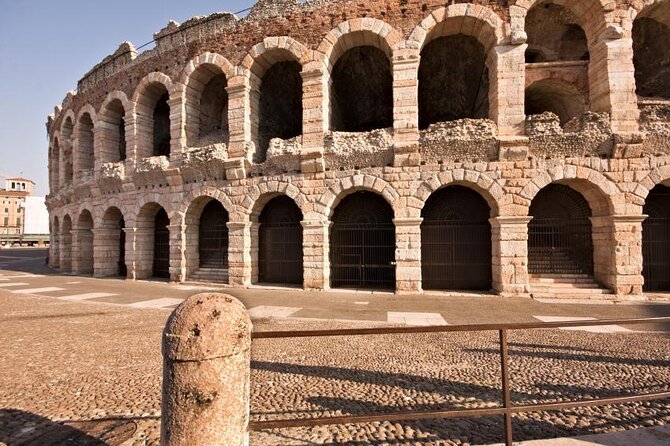
The tour returns to Piazza Bra and the Arena di Verona, the grand finale. Built in the first century AD during the Augustan period, the amphitheater predates Rome’s Colosseum by several decades and remains remarkably well preserved.
The Arena once held as many as 30,000 people. Today, its surviving inner tiers still give you a strong sense of the building’s size, even though much of the outer ring has been lost or removed over time.
The listed visit lasts about ten minutes, and admission is not included. That means the guide explains the building from outside, while you decide if you want to buy a separate ticket for an interior visit.
The Arena is still used for major concerts and the Verona Arena Festival, the city’s summer opera season. That living use gives the monument unusual energy. You are not only looking at an ancient ruin. You are looking at a Roman structure that remains part of Verona’s public life.
If you have time, consider pairing this walk with a separate Arena visit. One review specifically praised seeing the amphitheater from inside, and several people joined an Arena tour with the same guide afterward. The walking tour gives you the background; an interior visit lets you study the stonework and seating properly.
What $42.33 gets you
At $42.33 per person, this is not the cheapest way to walk around Verona, since the city center is easy to cover independently. The value comes from the explanation, route planning, and access to local perspective rather than included admissions.
You cover many major sights in two hours:
- Castelvecchio and Scaligero Bridge
- The Arch of Gavi and Roman city remains
- Piazza Bra and the Arena
- Juliet’s House
- Romeo’s House
- The Scaliger tombs
- Piazza delle Erbe
- Piazza dei Signori
Buying tickets separately for the Arena or Casa di Giulietta will raise the total cost. Still, the tour can save you from spending your first morning wandering without context. I think the price is fair for first-time visitors who want an organized introduction, especially if the group stays small.
The tour is offered in English, and confirmation is provided when you book. It requires at least two participants to run and allows a maximum of 16 people. The high rating of 4.8 from 494 reviews and a 97 percent recommendation rate suggest a strong level of satisfaction, though no short city walk can suit everyone.
Who should book this Verona walk?
I would choose this tour if you are visiting Verona for the first time, have only a day or two, or want the city explained before visiting museums on your own. It also suits people who enjoy architecture, Roman sites, medieval politics, and local stories more than a simple photo stop.
Families can take part, but minors must be accompanied by an adult. Most people can participate, and service animals are allowed. Some parts of the route may not be easy for people with reduced mobility or other disabilities, so ask the operator for current details before booking.
I would look elsewhere if you want long interior visits, a slow photography walk, or a tour focused only on Shakespeare. This is a brisk overview with several short stops. The payoff is breadth and context.
Rain does not cancel the experience by default. The tour runs in all weather, although extreme weather, sudden monument closures, or other unexpected problems may affect the route and refund options. You can cancel for a full refund up to 24 hours before the start time. Late cancellations and changes are not accepted.
Should you book the Verona Highlights Walking Tour?
Book it if you want a smart first look at Verona, especially with limited time. The route covers the city’s essential sights, and the strongest guides add humor, local detail, and a clear sense of how Roman, medieval, and modern Verona fit together.
I would treat it as a foundation, not a complete Verona visit. Use the two hours to mark places for later: the Arena interior, Castelvecchio’s museum, Torre dei Lamberti, or a longer look at Piazza delle Erbe. At $42.33, it is a sound choice for orientation and storytelling, provided you understand that entry tickets are extra.
FAQ
How long is the Verona Highlights Walking Tour?
The tour lasts approximately two hours.
Where does the tour start?
It starts at Piazza Bra in Verona, beside the Arena.
Where does the tour finish?
The tour ends at Piazza Bra, the same place where it begins.
Is the tour offered in English?
Yes. The tour is offered in English.
What is the maximum group size?
The tour has a maximum of 16 participants.
Are entrance tickets included?
No. Admission tickets for the Arena, Casa di Giulietta, and the Scaliger tombs are not included. Piazza Bra and Piazza delle Erbe are listed as free stops.
Does the tour include Juliet’s Balcony?
Balcony access is not included as part of the standard tour. From December 6, 2025 through January 6, 2026, access requires a separate ticket under the city’s temporary rules.
Is hotel pickup included?
No. Hotel pickup and drop-off are not included.
Does the tour operate in bad weather?
The tour runs rain or shine. In cases of severe storms, extreme events, sudden closures, or other unforeseen problems, a full refund is not guaranteed.
Can I cancel for a full refund?
Yes, if you cancel at least 24 hours before the experience start time. Cancellations made less than 24 hours before the start time are not refunded.
Recently added around Verona
- The Highlights of Verona Small Group Walking Tour★ 4.8 · 294 reviews
- Verona: Highlights Walking Tour with Arena Priority Access★ 4.8 · 201 reviews
- Verona: Highlights and Hidden Gems Walking Tour★ 4.7 · 179 reviews
- Verona: Juliet’s House Fast-Track Entry Ticket & Audio Guide★ 4.2 · 1,121 reviews
- Verona: Priority Access Arena Guided Tour★ 4.6 · 1,152 reviews
- Verona: City Walking Tour with Cable Car & Wine Aperitif★ 4.8 · 267 reviews
- Verona: Gelato Making Class★ 4.8 · 348 reviews
- Verona: Food and Wine Tasting Walking Tour★ 4.9 · 238 reviews
Walking Tours, compared.
Guided Walking Tour & Last Supper Visit with Ticket
Read our review →
Rialto Bridge & Offbeat Unusual Venice Walking Tour
Read our review →
Private 3 hrs Venice Tour: St Mark’s, Walking tour & Boat tour
Read our review →

Skip the line: Uffizi and Accademia Small Group Walking Tour
Read our review →Browse the lists this tour appears in