
Reviewed · POMPEII & VESUVIUS TOURS
Pompeii: Skip-the-Line Entry & Audioguide
Pompeii still feels startlingly close. This experience gives you skip-the-line entry and the freedom to explore the ancient city at your own pace, with an audioguide explaining the forum, homes, shops, baths, theaters, and streets buried by Mount Vesuvius in 79 AD. I like the chance to move at my own speed, and I like having both a paper map and spoken explanations to help make sense of a huge archaeological site. The main concern is value: at the advertised price of $53 per person, you should compare the cost with buying entry and an audioguide directly before committing.
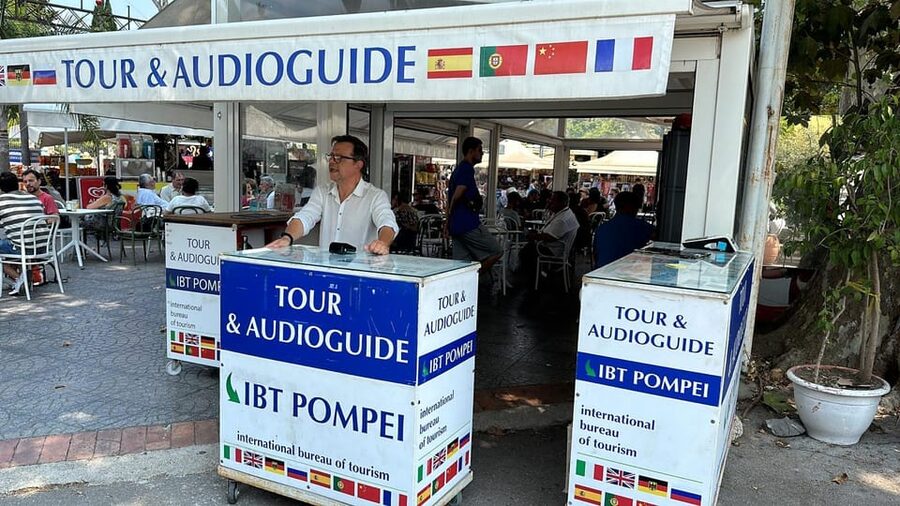
The process is generally easy once you find the IBT Center and Touristation beside Chalet Donna Lucia. A short introduction from Daniel was praised, and the audio commentary is useful, especially in English. Still, the meeting point can be unclear, the activity is non-refundable, and some packages may cost much more than the basic admission price.
In This Review
- Key Points Before You Go
- What This Pompeii Visit Actually Includes
- Finding the IBT Center Beside Chalet Donna Lucia
- Entering the Ruins With Skip-the-Line Access
- Starting at the Forum With Vesuvius in View
- Walking the Streets of an Ancient Roman City
- Homes, Frescoes, and Daily Life
- Baths, Aqueducts, and Roman Infrastructure
- The Amphitheater and Dramatic Theater
- How Useful Is the Audioguide?
- Is $53 a Fair Price?
- Who Should Book This Pompeii Experience?
- Final Verdict: Convenient, Useful, but Check the Cost
- FAQ
- Where is the meeting point?
- What does the package include?
- How long does the experience last?
- Which languages are available for the audioguide?
- Is Villa dei Misteri included?
- Is food or drink provided?
- Do I need identification?
- Can I bring luggage or a large bag?
- Are pets allowed?
Key Points Before You Go
- The forum gives you the essential first view of Pompeii: Begin here to understand the city’s public center, surviving columns, doorways, and its striking view toward Mount Vesuvius.
- The audioguide works best for independent explorers: Commentary is available in Italian, English, French, Spanish, German, Portuguese, Chinese, and Japanese.
- You can spend from two hours to a full day: The broad duration range suits both a quick visit and a slow walk through the archaeological park.
- The meeting point requires attention: Find the IBT Center and Touristation next to Chalet Donna Lucia before heading to the entrance.
- Villa dei Misteri is not included: If this famous site matters to you, check its separate admission arrangements before booking.
- Pack light and carry identification: A passport or ID card is required, while large bags, luggage, pets, smoking, alcohol, and drugs are not allowed.
What This Pompeii Visit Actually Includes
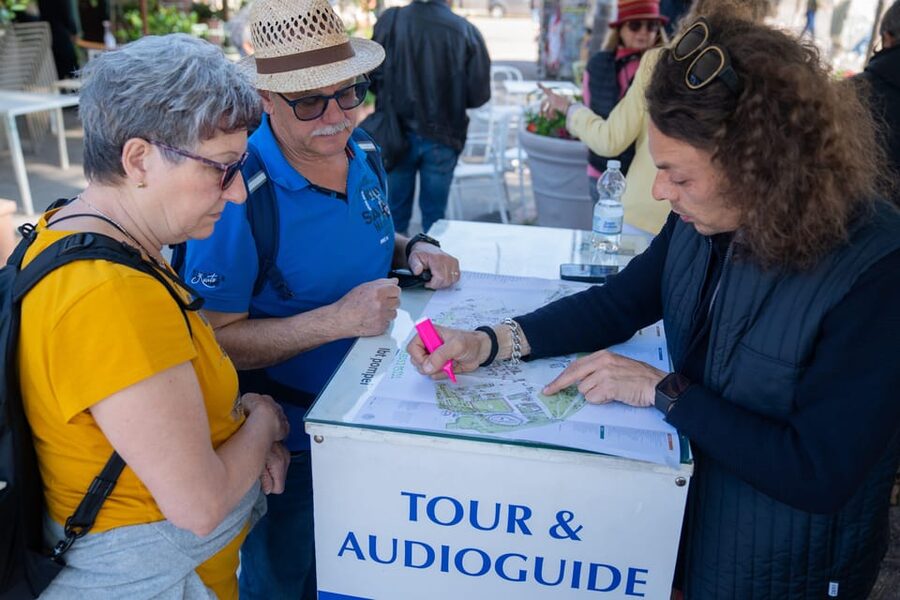
At its heart, this is an entry package with an audioguide, not a fully led archaeological tour. You meet at the IBT Center and Touristation, receive your admission arrangements, and enter Pompeii’s archaeological park with a paper city map and audio commentary.
A guided tour is available only if you select that option. Otherwise, you are free to choose your own route. That freedom is useful because Pompeii is large, and your interests may be different from those of the people around you. You can spend longer in a house with preserved frescoes, pause at the theater, or move quickly through streets when your attention starts to fade.
The stated duration ranges from two hours to one day. That is a wide spread, but it reflects the site itself. Two hours can give you an introduction to the forum, streets, and a few major buildings. A full day gives you time to walk farther, inspect more homes and businesses, and stop often for the audio explanations.
You should check the available starting times when booking. The experience does not include food, drinks, hotel pickup, or hotel drop-off, so you need to plan your arrival and departure separately.
More Pompeii and Vesuvius trips:
- Pompeii: Entry Ticket and Guided Tour with an Archaeologist
★ 4.8 · 19,459 reviews - Pompeii: Small Group Tour with an Archaeologist
★ 4.8 · 12,264 reviews - Pompeii: Skip-the-Line Entrance Ticket with Audio Guide
★ 4.0 · 2,509 reviews
Finding the IBT Center Beside Chalet Donna Lucia
The practical weak point is the meeting point. You are told to go to the IBT Center and Touristation next to Chalet Donna Lucia, but the location may not feel obvious once you are in the area. One visitor found the process easy overall, while another found it unclear where to meet.
I would not leave this until the last minute. Give yourself extra time to locate the desk, especially if you have a fixed train, bus, or meal plan afterward. Look for the Touristation or IBT Center signs rather than assuming the archaeological park entrance is the meeting point.
You also need identification for all participants. Bring a passport or ID card, and keep it accessible. One unusual concern raised about the process involved a passport deposit, which caused discomfort because of how the document was handled. The supplied instructions clearly say identification is required, so confirm exactly what the operator needs before handing over any original document.
Entering the Ruins With Skip-the-Line Access
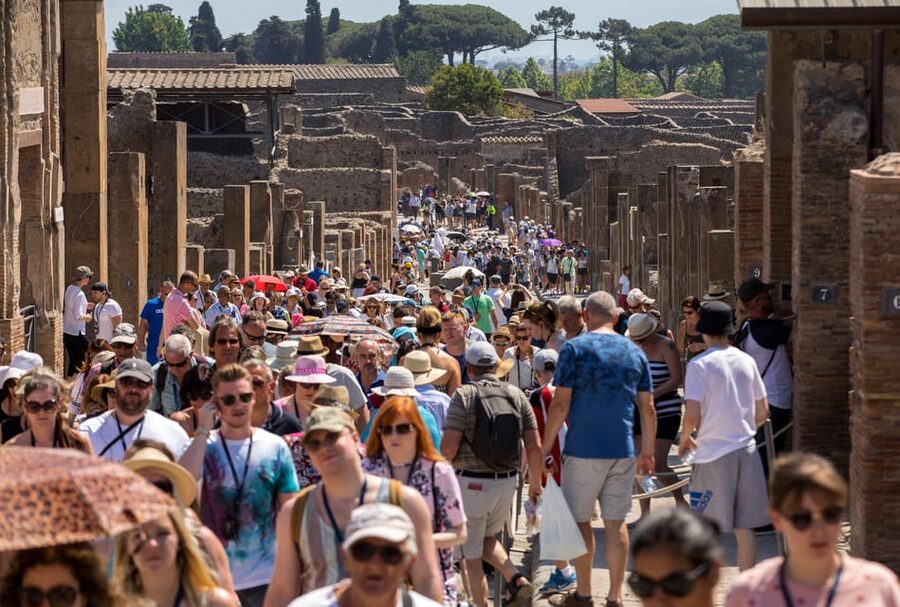
The main selling point is skip-the-line entry to Pompeii Archaeological Park. In busy periods, avoiding a long ticket queue can be useful, especially if you have only a few hours or are visiting during the warmer part of the day.
The practical value depends on the crowd when you arrive. Pompeii can receive many organized groups, and at some times the regular line may not be extreme. That means the premium for this package is not automatically worthwhile. You are paying for convenience, the audio device, and the booking arrangement, not only for the admission ticket.
Once inside, the scale becomes clear. Pompeii is not a single building with a neat route. It is an ancient city spread across streets, public spaces, houses, businesses, and entertainment venues. The map matters because it helps you choose a sensible path and avoid wandering without a plan.
Wear comfortable shoes and bring only what you need. Large bags and luggage are not allowed, and the instructions prohibit smoking, alcohol, and drugs. Small dogs are permitted in the archaeological area if kept on a leash, but they must be carried inside buildings. Other pets are not allowed.
Starting at the Forum With Vesuvius in View
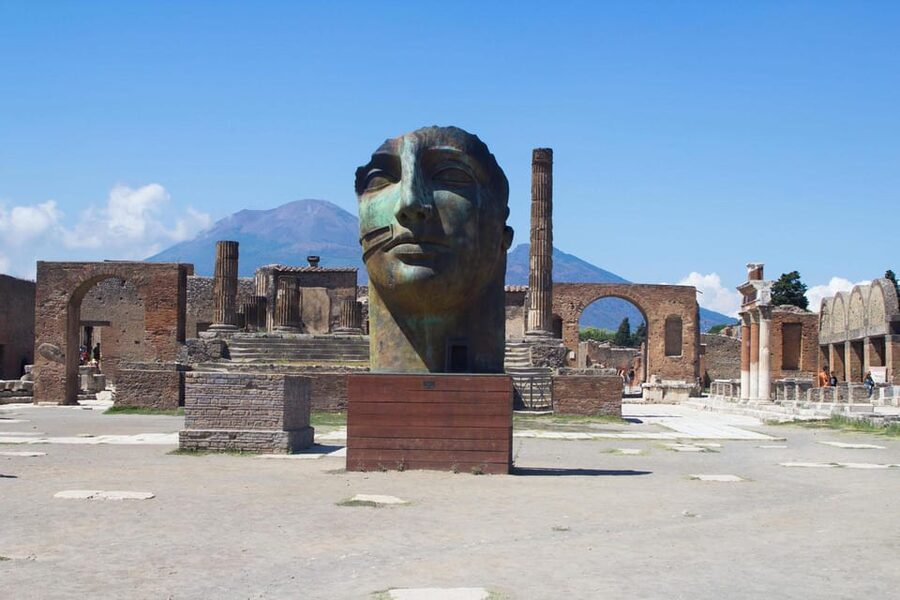
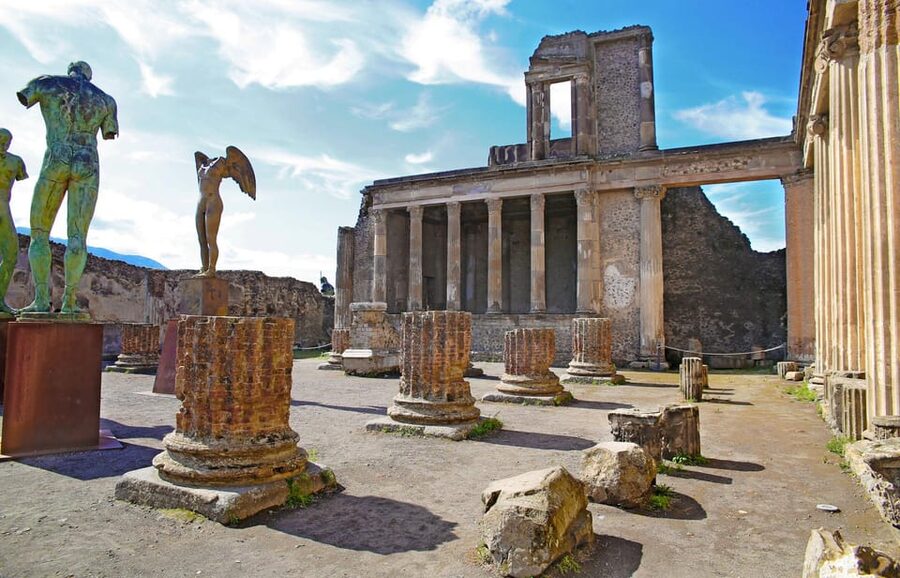
Begin at the central forum if you want the clearest introduction to Pompeii. This was the public heart of the city, and the remaining columns, doorways, and open space help you picture how people once gathered, traded, conducted public business, and moved through daily life.
The forum also gives you one of the site’s most memorable views. Mount Vesuvius rises in the background, linking the quiet ruins to the eruption that destroyed the city in 79 AD. That view adds meaning to the broken walls. You are not simply looking at old stones. You are seeing a city preserved because volcanic material covered it.
The audio commentary can help you read the forum without a guide standing beside you. It provides context for the buildings and surviving features, while the map helps you understand where you are. Listen in short sections rather than trying to absorb everything at once. Pompeii rewards looking up, checking details, and allowing the setting to sink in.
If you have only two hours, the forum should be a priority. It gives you the strongest sense of Pompeii’s public life and places the rest of the visit in context.
A few more Pompei Campania bookings to compare
- Naples: Pompeii and Mt. Vesuvius with Lunch and Wine Tasting
★ 4.5 · 2,454 reviews - Pompeii: Skip-the-line-Ticket and Guided Tour
★ 4.6 · 1,152 reviews - Pompeii: Small-Group Tour of Pompeii and Herculaneum
★ 4.8 · 867 reviews - Pompeii: Guided Tour with Skip-the-Line Entry
★ 4.9 · 812 reviews
Walking the Streets of an Ancient Roman City
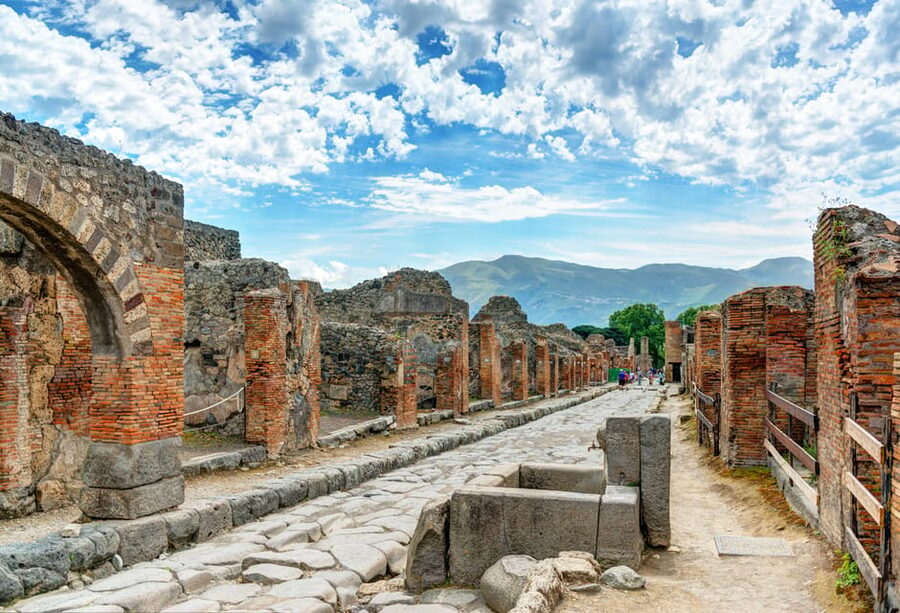
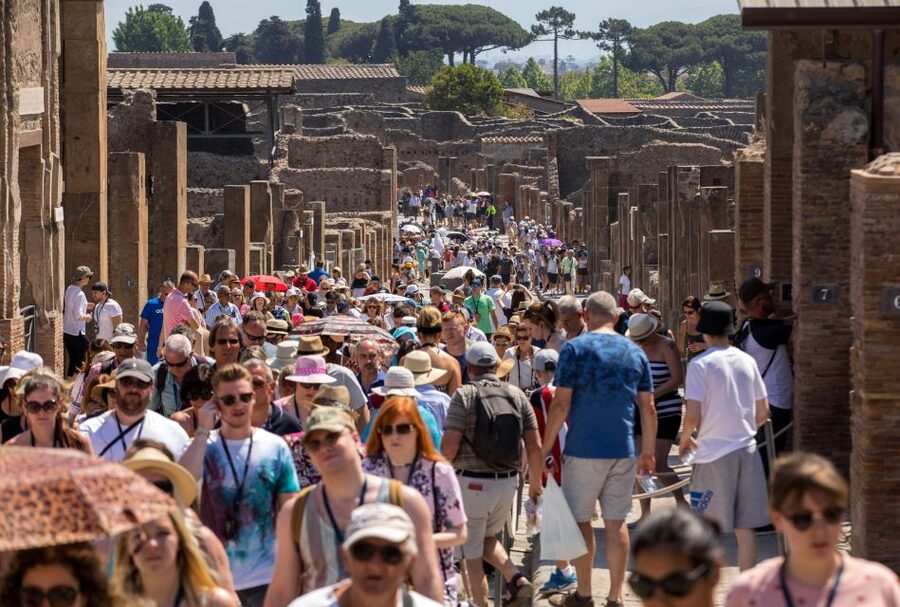
The streets are where the experience becomes most human. You can follow the old roads, pass fountains, and look at the remains of homes and businesses that once served residents. The audio guide is useful here because many structures are easy to mistake for empty rooms unless you know what they were used for.
The remains of the aqueduct and fountains show how water was brought into and distributed around the city. Public baths reveal the social side of Roman life, while private houses offer a closer look at domestic spaces. Surviving doorways, walls, and fresco fragments help you imagine the difference between public streets and private rooms.
Colorful frescoes are among the details worth slowing down for. They may not all be complete, but even partial decoration shows that these buildings were not plain stone boxes. The art also helps you understand the taste and status of the people who lived or worked there.
Businesses give the visit another layer. They connect the grand public spaces with ordinary commerce. Instead of seeing Pompeii only as a collection of monuments, you begin to picture a functioning town with customers, shopkeepers, water carriers, bath users, and residents moving through the same streets.
The condition of the ruins varies. Some areas are strikingly intact, while others are fragmentary or closed off. The audioguide can help explain what you are seeing, but it cannot replace your own patience. Pompeii is best approached as a city to read slowly, not as a checklist of perfect buildings.
Homes, Frescoes, and Daily Life
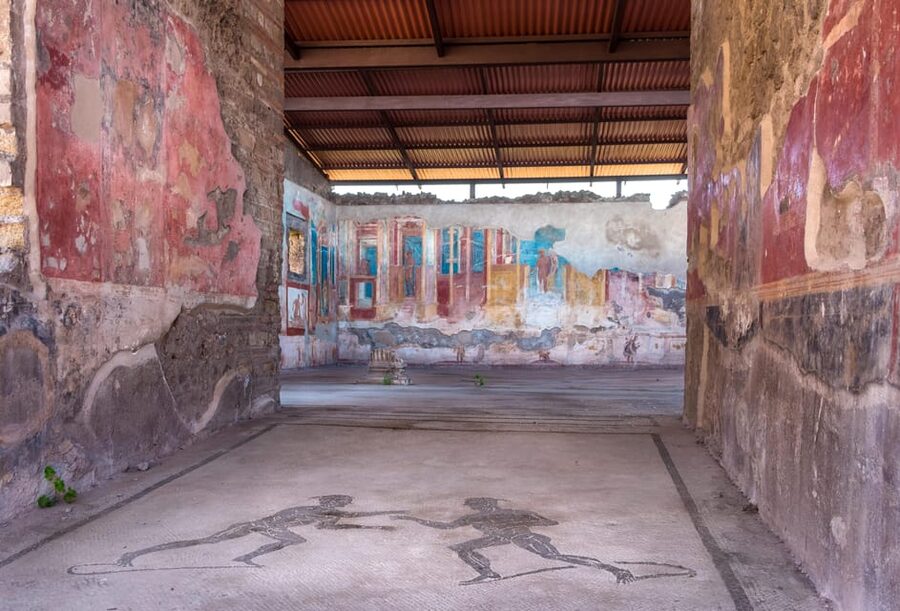
Private homes are a major reason to choose the audio option. The commentary can point out the purpose of different rooms and explain the surviving decoration, allowing you to connect architecture with daily routines.
You might see courtyards, wall paintings, fountains, and doorways that reveal how Roman homes were arranged. Even when only portions remain, the combination of rooms and decoration gives a clearer picture of family life than a single monument could.
Do not rush through these spaces simply because the forum receives more attention. The houses and businesses are where Pompeii becomes personal. You can see the difference between a public meeting place and a private residence, and between a grand building and a small commercial space.
The limitation is that the audio guide’s quality depends on how well you use it. You need to keep track of the relevant points on the map and listen while moving through an open archaeological area. A guided option may suit you better if you prefer a person to manage the route and explain details in real time.
Baths, Aqueducts, and Roman Infrastructure
The aqueduct, fountains, and public baths show the practical systems behind city life. These features are easy to overlook beside the theaters and forum, but they explain how Pompeii worked from day to day.
A fountain is more than a decorative object here. It points to the way residents accessed water in a city without modern plumbing. The baths also reveal a social habit, since public facilities were places for washing, meeting, and spending time.
The remains are not presented as a modern museum display. You are walking through open ruins, and the condition of each area can vary. The audio guide gives you a way to connect scattered remains, while the paper map prevents the infrastructure from becoming a blur of disconnected features.
If you enjoy seeing how ancient cities functioned, give these areas proper time. If your interest is limited to major monuments, you may prefer to focus on the forum, theaters, and a few important houses during a shorter visit.
The Amphitheater and Dramatic Theater
Pompeii’s entertainment buildings provide a sharp change of mood. The amphitheater and dramatic theater once held eager crowds, and their surviving forms make it easier to imagine public performance and spectacle in the ancient city.
The amphitheater is one of the visit’s strongest stops because its purpose is immediately clear. The theater offers a different setting, with a more formal performance space and a sense of how culture fit into Roman urban life.
These buildings also break up the walking route. After several streets and houses, moving through large audience spaces gives you a better feel for Pompeii’s population and public life. Use the audio commentary to understand what each venue was for and how it fit into the city.
The package does not promise a fixed route, so you need to use the map to find these sites. If time is short, ask at the meeting point or follow the map before entering so you do not spend your limited hours circling back.
How Useful Is the Audioguide?
The audioguide is included in several languages: Italian, English, French, Spanish, German, Portuguese, Chinese, and Japanese. That range makes the experience accessible to many international visitors.
The English commentary has been found helpful, though an audio guide naturally requires more effort than a live guide. You must select the right stop, listen while walking, and decide how much detail you want. Some people enjoy that independence. Others may find it less engaging than following a guide who reacts to questions and points out small details.
The paper map is a real advantage. Pompeii’s streets can be confusing, and the map helps you link the forum, homes, baths, businesses, amphitheater, and theater. Keep it handy rather than folding it away after entry.
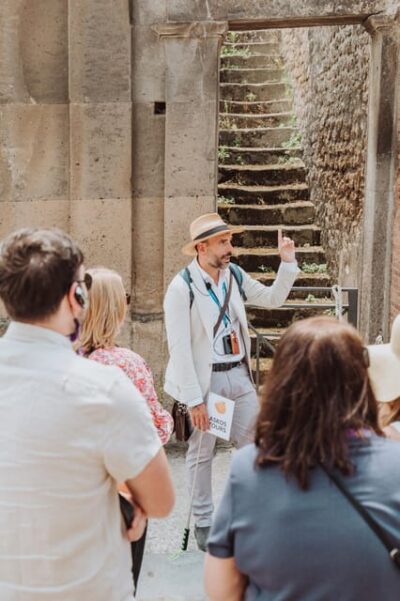
If you select the guided tour option, the experience changes. You have a person leading the route instead of relying only on recorded commentary. A short introduction from Daniel was praised, so his welcome may help you get oriented, although the available guide and format can vary.
Is $53 a Fair Price?
The advertised price is $53 per person. That can be reasonable if the package saves you a long wait, includes the audioguide you want, and fits a busy schedule. The value is strongest when you care about convenience and want the booking handled before arrival.
The price is less attractive if you can buy entry and an audioguide directly for considerably less. One cost comparison put local admission with an audioguide at €78, while another booking cost €140. These figures show why you should check the exact package price and compare inclusions before paying. They may reflect different dates or options, but the gap is large enough to deserve attention.
Some people may find that most of the queue is already made up of organized groups, reducing the benefit of skip-the-line access. If the line is short when you arrive, the premium may feel hard to justify.
For a first visit with limited time, paying extra for convenience can still make sense. For a budget-focused visit, the price deserves careful checking. The guided-tour option may also change the total, so do not assume every package includes the same service.
Who Should Book This Pompeii Experience?
I would consider it a good fit for you if you want independent sightseeing with some structure. The map and audio commentary give you direction without forcing you to follow a group for the entire visit.
It also suits visitors who have only two or three hours and want to start quickly. The forum, streets, a few houses, and one entertainment venue can create a satisfying short visit if you plan your route.
You may prefer the guided option if you want explanations delivered in person. Families and first-time visitors who dislike navigating large archaeological parks may also appreciate having a clear introduction.
I would hesitate if your top priority is the lowest possible cost. Compare the price with direct admission and audioguide options, and remember that Villa dei Misteri is not included. I would also avoid booking until the meeting point and identification requirements are clear to you.
Final Verdict: Convenient, Useful, but Check the Cost
This Pompeii experience gives you the essentials: skip-the-line entry, an audioguide, a paper map, and the freedom to explore from two hours to a full day. I especially like the route’s mix of public spaces and everyday buildings. The forum and Vesuvius provide the dramatic opening, while the homes, shops, fountains, baths, and theaters make the city feel lived in.
The weak point is price transparency. At $53, the package may be worthwhile for convenience, but local alternatives can make the premium hard to defend. Check the exact inclusions, confirm the meeting point beside Chalet Donna Lucia, and bring identification.
Book it if you value a ready-made visit and want to start exploring quickly. Skip it or compare carefully if you are comfortable buying admission directly and building your own route.
FAQ
Where is the meeting point?
Go to the IBT Center or Touristation next to Chalet Donna Lucia.
What does the package include?
It includes skip-the-line entry to Pompeii Archaeological Park, an audioguide, and a paper city map. A guided tour is included only if you select that option.
How long does the experience last?
The stated duration ranges from two hours to one day. Check the available starting times when booking.
Which languages are available for the audioguide?
The audioguide is available in Italian, English, French, Spanish, German, Portuguese, Chinese, and Japanese.
Is Villa dei Misteri included?
No. Entrance to Villa dei Misteri is not included.
Is food or drink provided?
No. Food and drinks are not included, and hotel pickup and drop-off are also excluded.
Do I need identification?
Yes. All participants must bring a passport or ID card.
Can I bring luggage or a large bag?
No. Luggage and large bags are not allowed inside the archaeological area.
Are pets allowed?
Small dogs are permitted if kept on a leash, but they must be carried inside buildings. Pets are otherwise listed as not allowed, so check the specific rule before arriving with an animal.
Recently added around Pompei Campania
- Pompeii 3hours Villa of Mysteries tour with an Archaeologist★ 4.8 · 486 reviews
- Pompeii: Small-Group Tour of Pompeii and Herculaneum★ 4.8 · 867 reviews
- Pompeii: Skip-the-line-Ticket and Guided Tour★ 4.6 · 1,152 reviews
- Pompeii: Guided Tour with Skip-the-Line Entry★ 4.9 · 812 reviews
- Pompeii: Afternoon to Sunset Guided Tour with Ticket★ 4.9 · 484 reviews
- Pompeii: Tour with Archaeologist Guide & Skip-the-Line Entry★ 4.5 · 478 reviews
- Pompeii: Skip-the-Line Entry Ticket with Digital Guide App★ 4.1 · 770 reviews
- Pompeii: Day Tour of Pompeii and Vesuvius with Bus Transfer★ 4.2 · 250 reviews
Pompeii & Vesuvius Tours, compared.
Entry Ticket and Guided Tour with an Archaeologist
Read our review →


Pompeii Small Group Tour with an Archaeologist
Read our review →
Pompeii, Amalfi Coast and Positano Day Trip from Rome
Read our review →Browse the lists this tour appears in