
Reviewed · POMPEII & VESUVIUS TOURS
Pompeii: Guided Tour with Skip-the-Line Entry
Pompeii rewards a good guide. This two to three-hour walking tour pairs priority entry with an archaeologist guide who explains the city’s streets, homes, temples, theaters, and tragic final day. I like the choice between a small group and a private tour, and I like that guides such as Frankie, Angelo, Anna, and Sasa are praised for making the ruins understandable rather than simply reciting dates. The main drawback is time: Pompeii is huge, and two hours gives you the essential sights, not the whole archaeological park.
I also like the practical route planning. Several guides deliberately used quieter paths or visited important houses early, helping groups avoid the worst crowds. That matters in Pompeii, where the sun can be fierce and the uneven ancient paving demands attention. Still, this is a walking tour in an exposed site, so it may not suit anyone with a pre-existing medical condition.
In This Review
- Key points to know before booking
- Meeting your guide near the Pompeii entrance
- What two hours can show you in Pompeii
- The Antiquarium and the first layer of Pompeii’s story
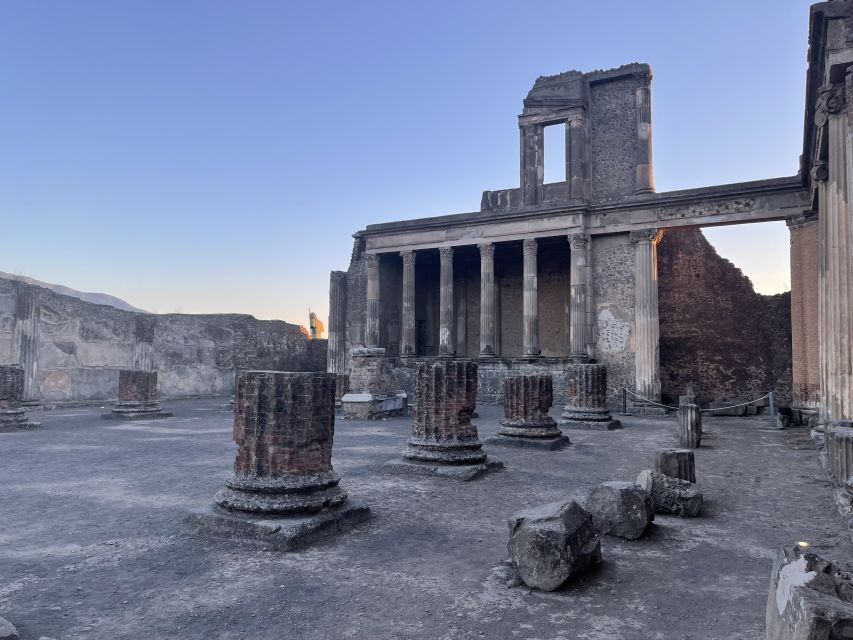
- The Basilica and Forum, Pompeii’s public center
- Thermal baths and the ordinary routines of Roman life
- The Theater and Pompeii’s entertainment culture
- Bakeries, houses, and the human scale of Pompeii
- Frescoes, casts, and the difficult final chapter
- Heat, footwear, and the physical side of the walk
- Small group or private tour?
- Is $58 a fair price?
- Who should book this Pompeii tour?
- FAQ
- How long does the Pompeii guided tour last?
- What is included in the price?
- Where is the meeting point?
- Is parking included?
- Which languages are available?
- Can I choose a private tour?
- Can I cancel for a refund?
- Is Pompeii entrance free on any day?
- Should you book it?
Key points to know before booking
- The tour begins at Ristorante Bar Sgambati: Look for the Enjoy Pompeii red sign and meet your guide there.
- Priority entry uses a separate entrance: This can save time at a busy archaeological site, though it does not mean you will have the ruins to yourself.
- You see the major civic sights: The itinerary includes the Antiquarium, Basilica, Forum, thermal baths, and Theater.
- Guides shape the experience: Frankie is often praised for humor and storytelling, while Angelo adds specialist knowledge of Vesuvius and volcanology.
- Small groups are a strong middle ground: You get explanation and the chance to ask questions without the feel of a large coach tour.
- Plan for heat and rough ground: Shade is limited, and summer conditions can make a two-hour walk feel longer.
Meeting your guide near the Pompeii entrance
The meeting point is Ristorante Bar Sgambati, where you should look for the Enjoy Pompeii red sign. That simple landmark is useful because Pompeii has several entrances and the streets around the site can be busy with tour groups, cafes, and people trying to work out where to go.
Your skip-the-line ticket is included, along with the walking tour and guide. Parking is not included, so if you arrive by car, you need to arrange that separately. The information provided does not specify transport from Naples, Sorrento, or elsewhere, so this experience is best treated as a site tour rather than a complete day-trip package.
The separate entrance is one of the practical advantages. You do not have to spend part of your limited visit standing in the standard ticket queue. Priority entry is especially useful at popular times, although you should keep your expectations sensible. Once inside, the ancient streets can still be crowded, and the busiest buildings may have their own flow of visitors.
More Pompeii and Vesuvius trips:
- Pompeii: Entry Ticket and Guided Tour with an Archaeologist
★ 4.8 · 19,459 reviews - Pompeii: Small Group Tour with an Archaeologist
★ 4.8 · 12,264 reviews - Pompeii: Skip-the-Line Entrance Ticket with Audio Guide
★ 4.0 · 2,509 reviews
What two hours can show you in Pompeii
Pompeii covers a large area. You could spend many hours walking between its neighborhoods, gardens, workshops, public buildings, and houses. A two to three-hour guided visit therefore needs a clear plan, and the strongest part of this experience is the focus on the city’s main story.
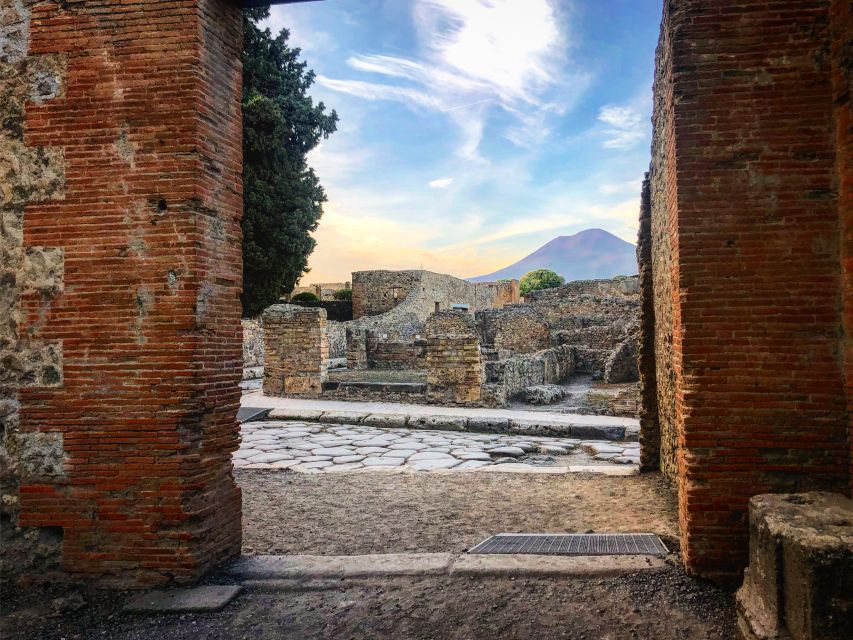
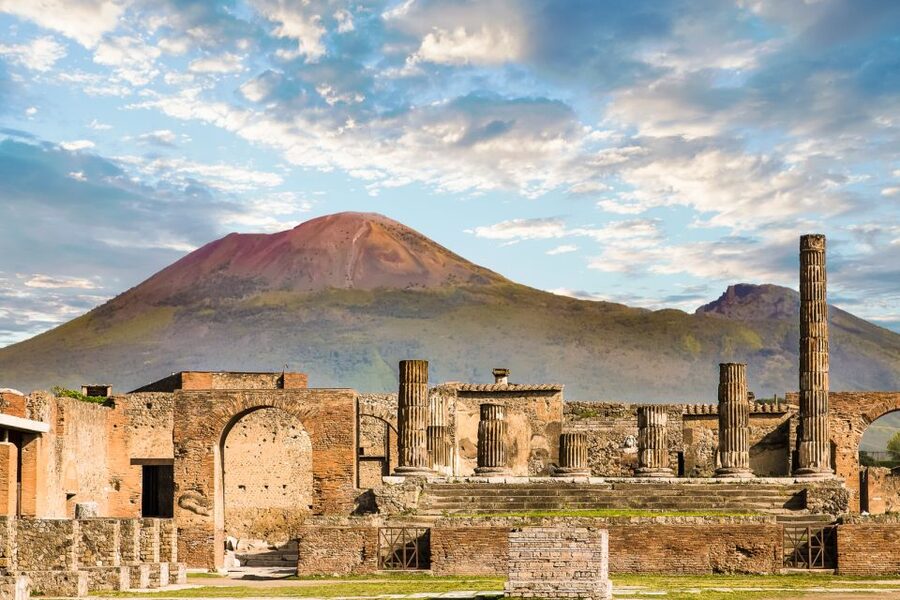
The route takes in buildings tied to public life, religion, bathing, entertainment, trade, and home life. That mix is important. Pompeii is not only a place of volcanic disaster. It was a functioning Roman city with businesses, political spaces, entertainment venues, and ordinary homes before Mount Vesuvius erupted in 79 AD.
A guide helps connect these fragments. Without context, a row of stones can look like just another ruin. With an explanation of how the space was used, the same stones begin to show the shape of a bakery, a bathhouse, a civic building, or a private residence.
Several guides also adjusted their routes to reduce crowding. Angelo took one group toward the House of the Vettii early, before the area filled up. Another guide used a reverse route to reach one of the most impressive houses first. This kind of local judgment is valuable because the order of stops can affect how much you see and how calmly you see it.
The Antiquarium and the first layer of Pompeii’s story
The new Antiquarium is part of the planned route. It helps set the scene for the archaeological site and gives you a starting point for understanding what happened to Pompeii.
The value of beginning with this kind of context is easy to miss. Many people arrive knowing only that Vesuvius buried the city. A good guide places the eruption after the city’s daily life, social structure, and architecture have been explained. That makes the later sights feel connected instead of isolated.
Guides also explain the work of excavating and preserving Pompeii. Angelo, who is described as a volcanologist, added details about the eruption and the forces that buried the city. His specialist background is useful if you want more than a basic account of ash, pumice, and destruction.
The Basilica and Forum, Pompeii’s public center
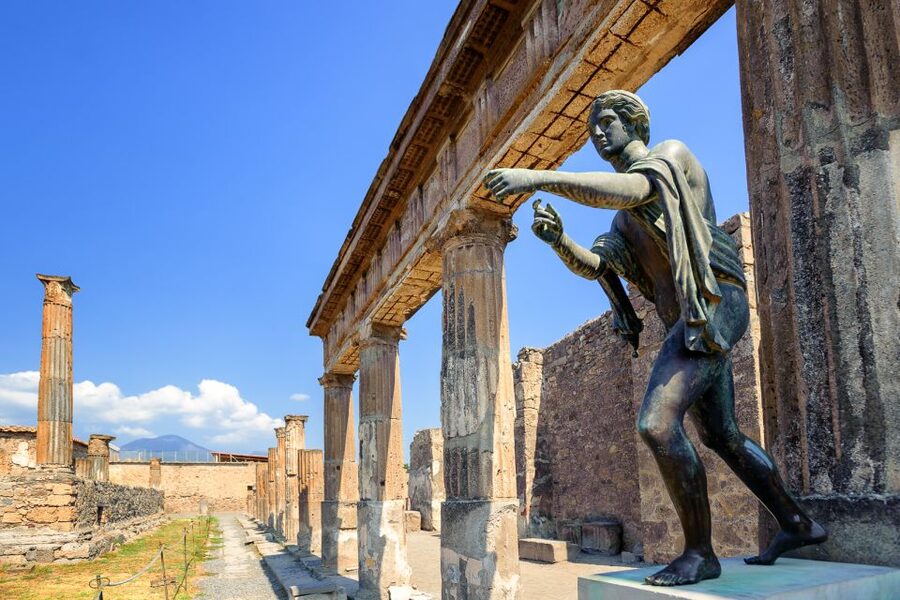
The Basilica and Forum show you how important public space was in Roman city life. These are among the stops that help explain civic activity, commerce, ceremony, and local power.
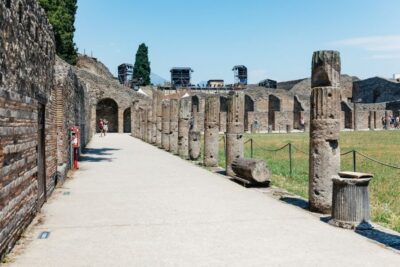
The Forum can be visually confusing at first. You see columns, broad paving, broken walls, and open space, but the original functions are not always obvious. Your guide’s job here is to identify what happened in the space and why its buildings mattered.
I value this part of the tour because it shifts Pompeii away from the narrow image of a city frozen by disaster. The Forum was part of a working urban center. People came here for business, public affairs, religious activity, and social contact. Learning that makes the ruins feel more human and less like a collection of archaeological objects.
This is also a place where group size matters. Guides need to find a position where everyone can hear without blocking other groups. The smaller groups described in the tour details are well suited to that task. One group was limited to about 12 people, a size that allowed questions and kept the tour manageable.
A few more Pompei Campania bookings to compare
- Naples: Pompeii and Mt. Vesuvius with Lunch and Wine Tasting
★ 4.5 · 2,454 reviews - Pompeii: Skip-the-line-Ticket and Guided Tour
★ 4.6 · 1,152 reviews - Pompeii: Small-Group Tour of Pompeii and Herculaneum
★ 4.8 · 867 reviews - Pompeii: Skip-the-Line Entry Ticket with Digital Guide App
★ 4.1 · 770 reviews
Thermal baths and the ordinary routines of Roman life
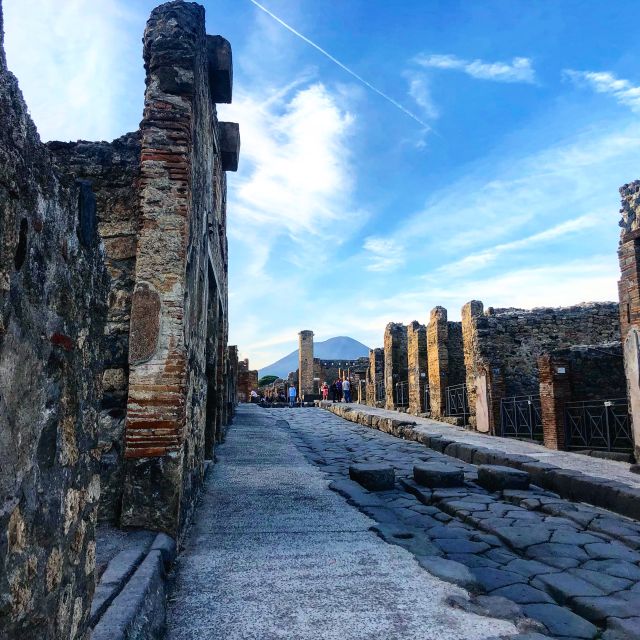
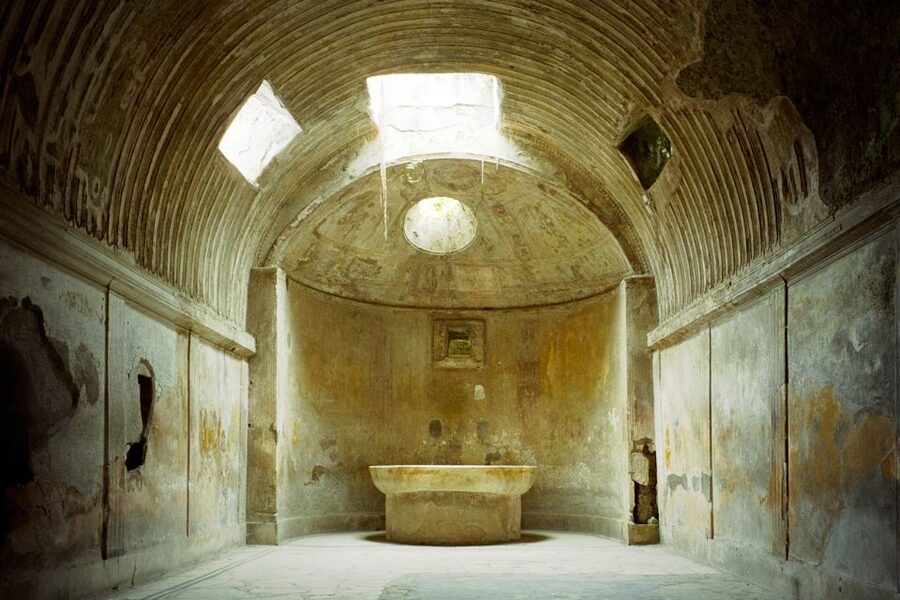
The thermal baths offer a look at a routine part of Roman society. They were not simply places to wash. They were social and civic spaces, and the remains help you picture how residents spent time away from home.
This stop works best when the guide explains the architecture and the order of rooms rather than leaving you to guess what each chamber was for. The tour promises discussion of both history and architecture, which is exactly what you need here.
The baths also balance the more dramatic parts of Pompeii. You are not only looking at death and destruction. You are seeing the places where people carried out normal routines, met friends, and took part in city life. That contrast gives the visit more emotional weight.
The Theater and Pompeii’s entertainment culture
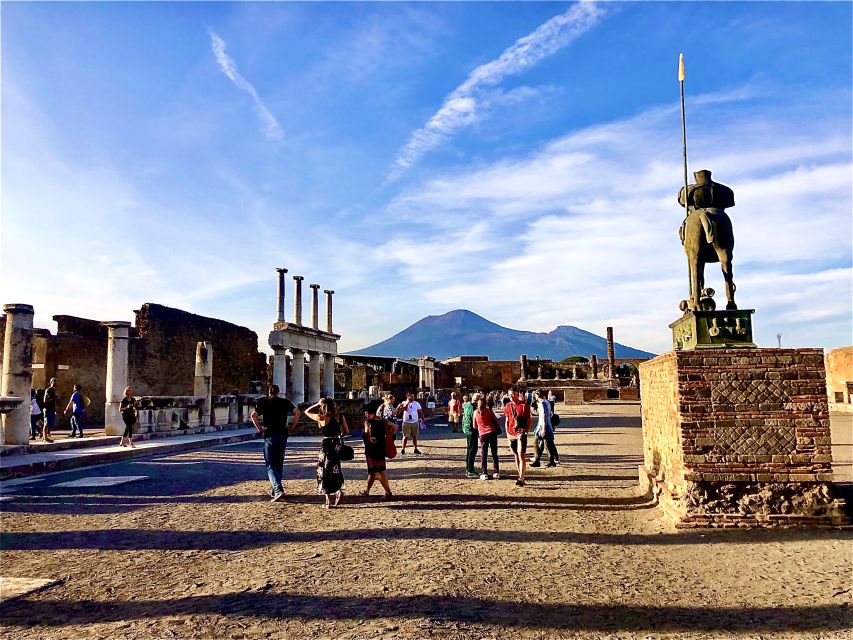
The Theater is another major stop. It shows the city’s interest in performance and public entertainment, adding a cultural side to the picture of Pompeii.
A good guide can make an ancient performance space easier to read. The arrangement of the seating, stage, and surrounding structure becomes more meaningful when you understand how the audience used it. This is one reason I would choose a guided tour over wandering alone, especially if you have only a short visit.
The tour is designed to cover major highlights efficiently. That means you should not expect a long pause at every building. You will have time for photographs and questions, but the guide needs to keep the group moving to fit the planned route.
Bakeries, houses, and the human scale of Pompeii
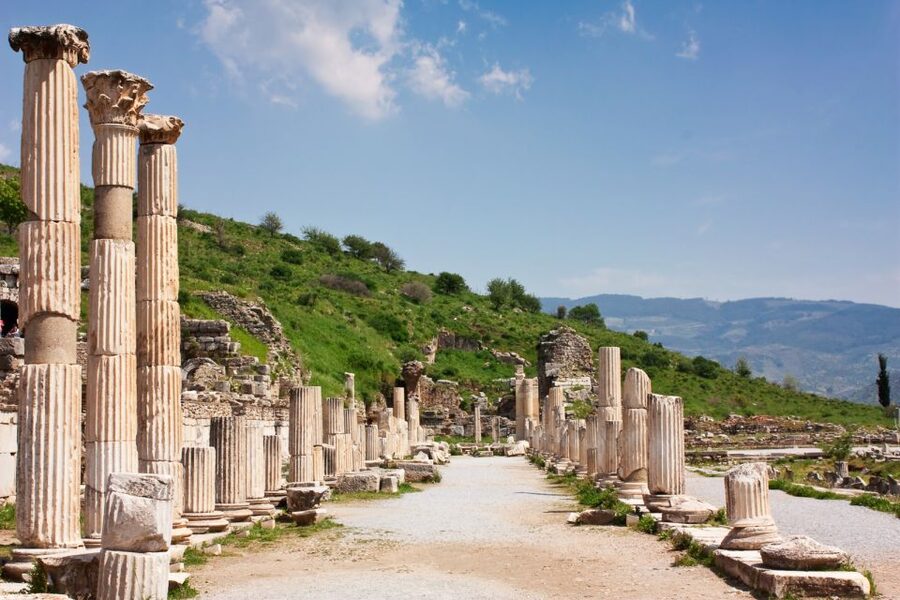
The commercial and residential neighborhoods are where Pompeii feels most personal. The itinerary includes a bakery and typical housing blocks, allowing you to look beyond monumental ruins and see evidence of work and home life.
A bakery may not sound as impressive as a forum or theater, but it can be one of the most revealing stops. Commercial spaces show that the city was made up of businesses serving daily needs. Housing blocks and private residences help you consider how people lived, organized rooms, and shared urban space.
The House of the Vettii is among the special houses guides may prioritize. Reviews of the experience describe guides taking groups there early or approaching it by a less common route. That strategy can make a major difference, since a quieter visit gives you more time to look at the rooms and architectural details without being swept along by a crowd.
The residential areas also help correct a common mistake: imagining Pompeii as a small village. It was a substantial Roman city with a busy urban life, varied buildings, and social differences. Your guide can explain that broader picture while pointing out details you could easily pass without noticing.
Frescoes, casts, and the difficult final chapter
Pompeii’s preserved decoration is one of the major reasons to visit. Frescoes and other remains offer direct evidence of taste, religion, status, and household decoration.
The casts of victims are another important part of the experience. They can be disturbing, and you should be prepared for an emotional moment rather than treating them as a simple photo stop. Guides who handle this subject well provide context without turning tragedy into spectacle.
This is where storytelling matters most. Several guides are praised for bringing the city to life, explaining daily routines as well as the eruption. Frankie is repeatedly described as warm, funny, and engaging, while Angelo is praised for combining a clear account of Pompeii with information about Vesuvius. Anna is described as an art historian born in Pompeii, with a personal connection that added feeling and detail to the visit.
Guide assignments are not guaranteed, so do not book on the assumption that one particular person will lead your tour. Still, the repeated praise for several guides points to a strong guiding team rather than a single lucky match.
Heat, footwear, and the physical side of the walk
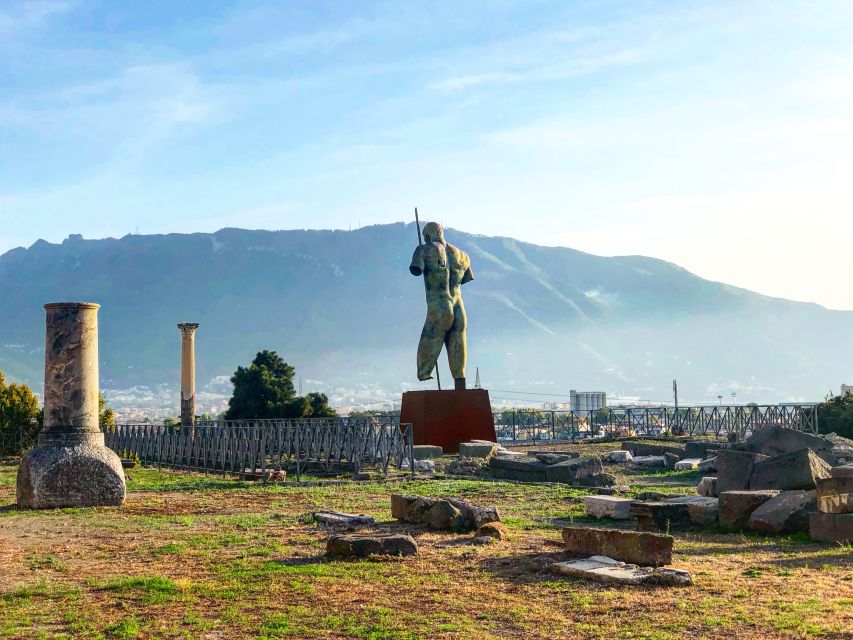
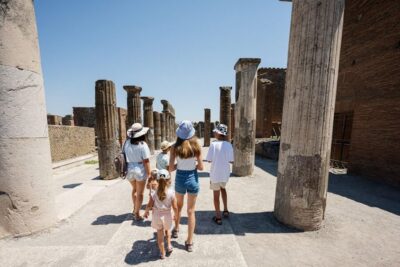
Pompeii is an outdoor archaeological park with limited shade. Summer heat can be serious. One tour took place in 35 degrees Celsius, and guides made a point of explaining sights from shaded areas when possible. Another guide was careful to protect a group that included a nine-year-old from prolonged sun.
That care is welcome, but it cannot remove the basic conditions. You should expect exposed walking, uneven surfaces, and possible trip hazards on the ancient streets. Wear sturdy, comfortable shoes and bring protection from the sun. The activity is specifically listed as unsuitable for people with pre-existing medical conditions.
Timing can help. Early visits are useful for manageable crowds and cooler conditions. Afternoon tours may benefit from a breeze, but the exact weather and crowd levels will vary. The tour lasts two to three hours, and one booking ran longer because the guide had more to explain. That can be a bonus if you have room in your schedule, but it matters if you have a train, lunch reservation, or Mount Vesuvius visit planned afterward.
Small group or private tour?
The small-group option is likely the best value for most people. You get a live guide in English or Italian, a planned route, and the chance to ask questions without paying the full cost of a private visit.
The private option makes more sense if your party has a specific interest in art, architecture, volcanoes, or Roman daily life. It may also suit families who want a slower pace or older relatives who need more flexibility. A private guide can respond more directly to your questions and interests, though the supplied information does not state a separate private-tour price.
Families should think about attention span. A two-hour visit worked well for adults traveling with children aged nine and twelve, but the younger members found the tour somewhat long. This is not described as a child-specific tour, so expect serious historical explanation rather than games or entertainment designed for children.
Is $58 a fair price?
At $58 per person, the cost is reasonable if you value time, interpretation, and a smoother arrival. Your price includes the Pompeii entry ticket, priority access through a separate entrance, and a two to three-hour walking tour with a live guide.
The ticket alone would give you access to the ruins, but Pompeii can be hard to read without help. The added value here is the route and explanation. Guides point out details you might overlook, explain the purpose of buildings, answer questions, and often choose paths that reduce crowd exposure.
The price is less attractive if you prefer to spend a full day exploring alone or want to move at your own pace. A short guided route cannot cover every neighborhood, and you may still want extra time after the guide leaves. Several people stayed inside the park for additional self-guided exploration, which is a good way to use the tour as an introduction rather than your entire Pompeii visit.
You can reserve now and pay later, keeping your plans flexible. Cancellation is free up to 24 hours before the activity for a full refund. On the first Sunday of each month, entrance to Pompeii is free, so the value calculation changes on that date. The tour may still offer useful guiding, but the included ticket is not as significant a saving.
Who should book this Pompeii tour?
I would choose this experience if you have two or three hours, want the main sights explained, and do not want to lose time at the entrance. It is particularly suitable for first-time visitors, people interested in Roman architecture, and anyone who wants a clear introduction before exploring alone.
It also suits visitors who care about crowd management. Guides such as Angelo, Frankie, Anna, and Sasa are praised for choosing sensible routes, finding shade, answering questions, and keeping the group together without rushing every stop.
I would think twice if you have limited walking ability, a medical condition affected by heat, or a strong preference for silent, independent exploration. You should also allow extra time if you want to see more than the main route.
FAQ
How long does the Pompeii guided tour last?
The tour lasts two to three hours. Starting times vary, so check availability when booking.
What is included in the price?
The price includes a skip-the-line entry ticket, a walking tour of Pompeii, and a live tour guide.
Where is the meeting point?
Meet your guide at Ristorante Bar Sgambati. Look for the Enjoy Pompeii red sign.
Is parking included?
No. Parking is not included in the activity.
Which languages are available?
The live tour is available in English and Italian.
Can I choose a private tour?
Yes. Private and small-group options are available.
Can I cancel for a refund?
Yes. You can cancel up to 24 hours in advance for a full refund.
Is Pompeii entrance free on any day?
Entrance is free on the first Sunday of each month. The tour information specifically notes this exception.
Should you book it?
Book this tour if you want Pompeii to make sense quickly. The priority entrance saves useful time, while the guide turns streets, walls, houses, and public buildings into a readable Roman city. The strongest qualities are the small groups, thoughtful routing, and guides who combine facts with humor and clear storytelling.
For the best experience, choose an early time when possible, prepare for sun and uneven ground, and leave a little time afterward to explore on your own. At $58, it is a sound choice for a first visit, especially if you want the highlights without spending hours trying to interpret the ruins alone.
Recently added around Pompei Campania
- Pompeii 3hours Villa of Mysteries tour with an Archaeologist★ 4.8 · 486 reviews
- Pompeii: Small-Group Tour of Pompeii and Herculaneum★ 4.8 · 867 reviews
- Pompeii: Skip-the-line-Ticket and Guided Tour★ 4.6 · 1,152 reviews
- Pompeii: Skip-the-Line Entry & Audioguide★ 3.8 · 225 reviews
- Pompeii: Afternoon to Sunset Guided Tour with Ticket★ 4.9 · 484 reviews
- Pompeii: Tour with Archaeologist Guide & Skip-the-Line Entry★ 4.5 · 478 reviews
- Pompeii: Skip-the-Line Entry Ticket with Digital Guide App★ 4.1 · 770 reviews
- Pompeii: Day Tour of Pompeii and Vesuvius with Bus Transfer★ 4.2 · 250 reviews
Pompeii & Vesuvius Tours, compared.
Entry Ticket and Guided Tour with an Archaeologist
Read our review →

Pompeii Small Group Tour with an Archaeologist
Read our review →
Pompeii, Amalfi Coast and Positano Day Trip from Rome
Read our review →Browse the lists this tour appears in