
Reviewed · COOKING CLASSES
Bologna: Pasta Tagliatelle Ragu Cooking Class with Spritz
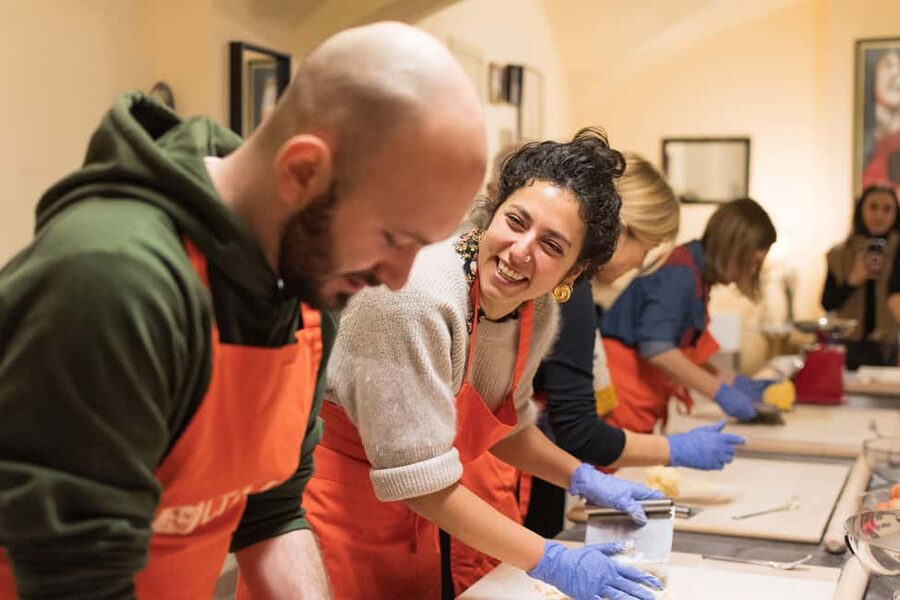
Fresh pasta tastes better when you make it. This three-hour Bologna class puts you at a worktable with flour, eggs, a rolling pin, and a local sfoglina, or pasta maker. I like the hands-on dough work, and I like that the lesson feels social rather than stiff, with Mortadella, Pignoletto, wine, and a spritz helping strangers relax.
The class also gives you a proper Bolognese meal at the end: your tagliatelle with house-made ragù, aged Parmigiano Reggiano, Sangiovese, Moka coffee, and Montenegro. The main drawback is clear: you make the pasta, but not the ragù itself. You should also know that a large flight of stairs makes this a poor fit for anyone with major mobility needs.
At $79.64 per person, the price is fair if you value food, instruction, and drinks together. The friendly hosts are a major part of the appeal. Names reported for the teaching team include Valentina, Stefania, Sonia, Lupo, Claudia, Roberta, Beatrice, Giorgia, and Caterina, so the exact pairing can vary by session.
In This Review
- Key points at a glance
- Why this Bologna cooking class works so well
- Starting with Mortadella, Crescenta, and Pignoletto
- Mixing dough by hand, the old-fashioned way
- The honest catch: you do not prepare the ragù
- Mixing your own Casoni Spritz
- Sitting down to eat your own tagliatelle
- Finishing with Moka coffee and Montenegro
- The instructors make the difference
- Who should book this class?
- Is $79.64 a fair price?
- Practical details before you go
- Should you book it?
- FAQ
- How long does the Bologna pasta class last?
- What pasta will I make?
- Do I make the ragù myself?
- Is the class taught in English?
- What drinks are included?
- Is food included besides the pasta?
- Can vegetarians or vegans join?
- Can someone with gluten intolerance attend?
- Is the class accessible for wheelchair users?
Key points at a glance
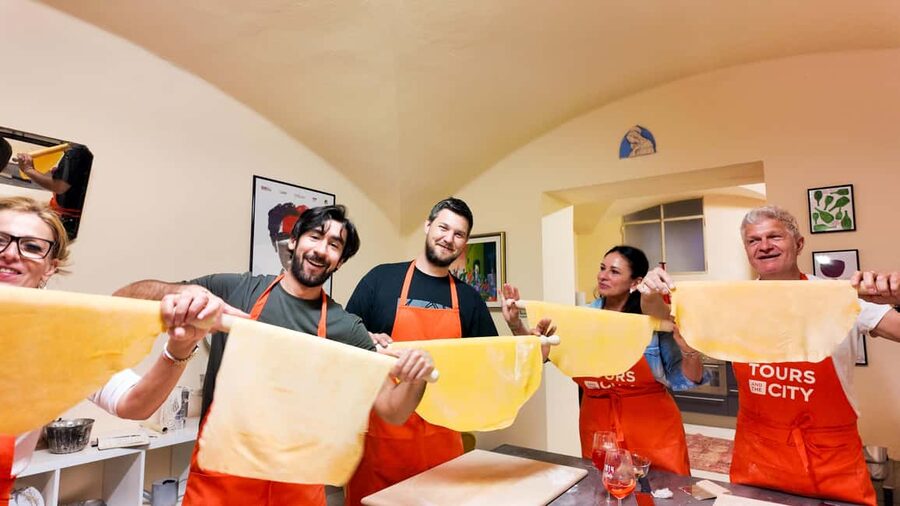
- Hand-rolled tagliatelle: Mix, knead, roll, shape, slice, and cook fresh egg pasta without a machine.
- Aperitivo before the work begins: Start with Mortadella, Crescenta, and Pignoletto sparkling wine.
- A local spritz: Prepare a Casoni Spritz made with a Bologna-area herbal liqueur.
- A full regional meal: Eat your pasta with prepared ragù, 24-month Parmigiano Reggiano, and Sangiovese.
- A sociable English class: The warm teaching style helps people from different countries talk and cook together.
- Important limits: Ragù is prepared ahead of time, and the class is not suitable for vegans, vegetarians, children under 12, or people with gluten intolerance.
Why this Bologna cooking class works so well
Bologna is one of Italy’s best cities for a food class because its everyday cooking is direct and generous. The local specialties are not museum pieces. They are dishes people still make, serve, and argue about at home.
This experience focuses on tagliatelle al ragù, one of the city’s signature combinations. It is worth noting that this is not the same as the heavy, tomato-forward sauce many English-speaking diners call Bolognese. The local version is built around slow-cooked meat, vegetables, and careful seasoning, then served with broad fresh egg pasta.
I like that the class teaches a useful skill instead of simply taking you to a restaurant. You learn how pasta changes as you add flour, eggs, pressure, and time. You also see why the shape matters. Tagliatelle has enough width and texture to hold the sauce properly.
The class is taught in English, and the instructors focus on helping people keep up. That matters if you have never made fresh pasta. The teaching style has been praised for being clear, patient, funny, and encouraging, especially when someone struggles with rolling or cutting the dough.
More Cooking Classes in Bologna
- Bologna Local Pasta Cooking Class, Ragu, Spritz, Wine & Gelato
★ 5.0 · 527 reviews - Pastamama, Home Cooking Classes at Grace’s Home
★ 5.0 · 521 reviews - Bologna: Pasta and Tiramisu Cooking Class with Wine
★ 4.7 · 507 reviews
Starting with Mortadella, Crescenta, and Pignoletto
The opening aperitivo is more than a plate of snacks. It gives you a gentle start before the flour appears and helps the group talk to one another.
You begin with Mortadella, Bologna’s famous finely textured pork sausage. It is served with Crescenta, a local bread, and Pignoletto, a sparkling white wine from the region. This is a good introduction to Bolognese food culture because the combination is casual, local, and built for sharing.
I appreciate the order of the afternoon. You do not walk into a room and immediately face a technical lesson. You get a drink, something to eat, and a chance to meet the people beside you. The social side is not a minor extra. Many people describe the class as a highlight because it turns a group of strangers into a cheerful cooking team.
The amount of food at this opening stage is not specified, so you should think of it as an aperitivo rather than a full meal. Save room for the pasta, which is the main event.
Mixing dough by hand, the old-fashioned way
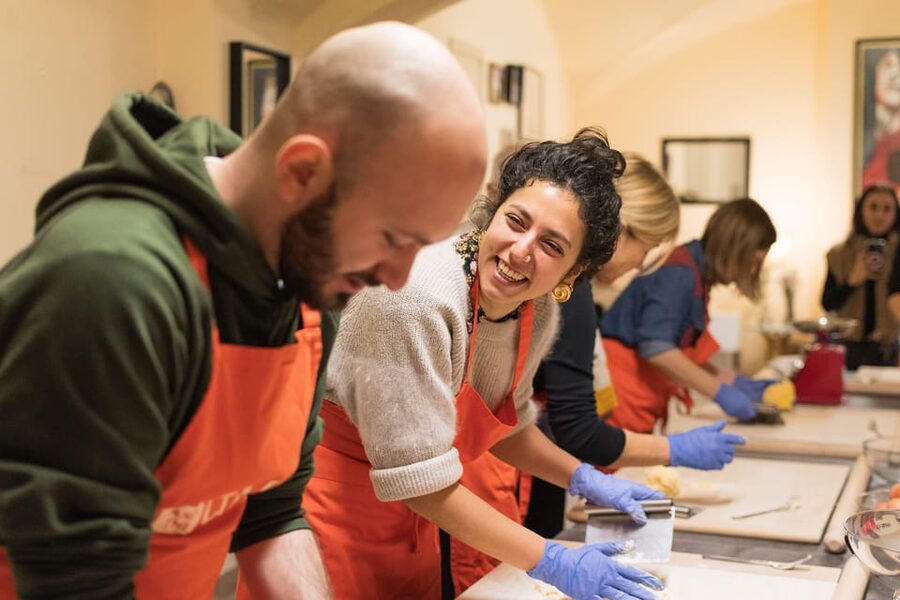
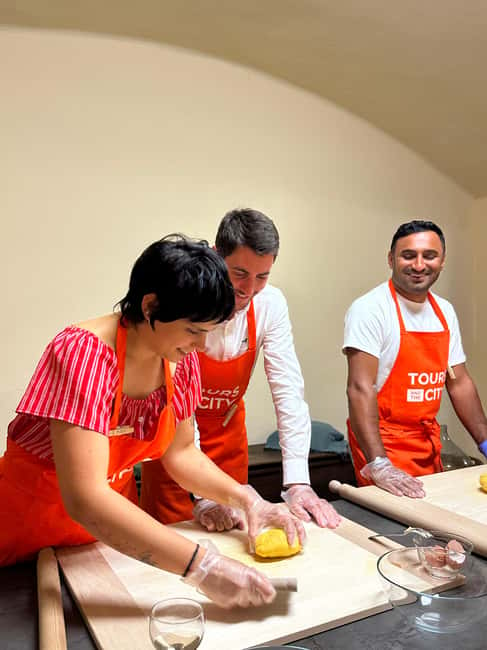
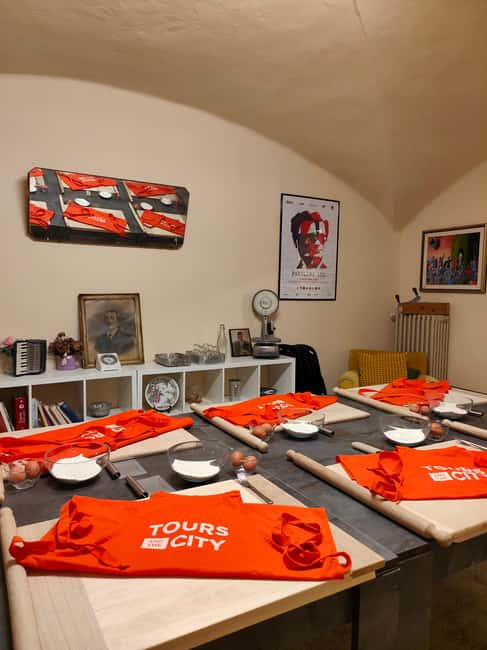
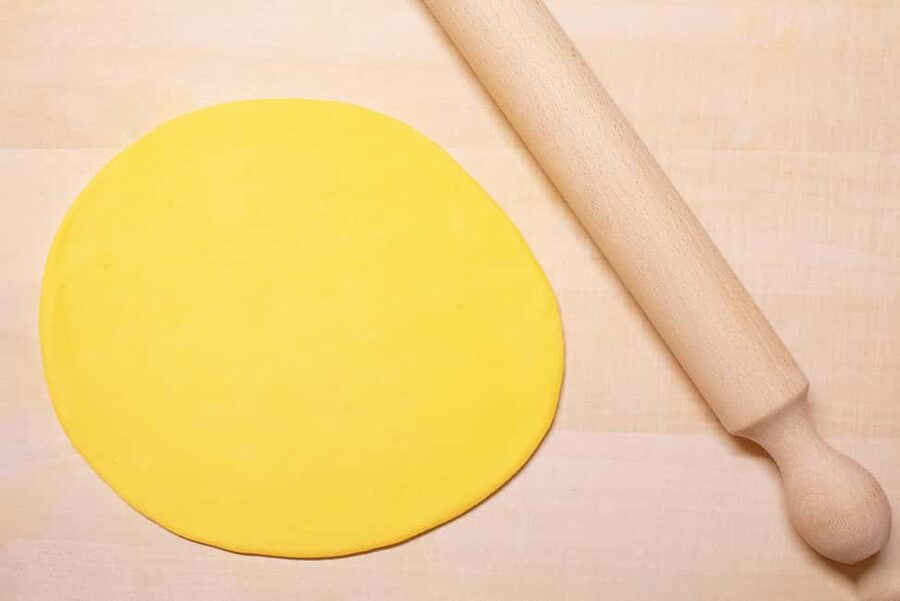
The core lesson begins with fresh eggs and flour. You mix the dough yourself, then knead it until it becomes workable. There are no pasta machines here. You use your hands and a rolling pin.
That choice makes the class more physical and more memorable. A machine can produce tidy sheets quickly, but it hides the small decisions that matter. You learn to feel when the dough is too dry, too wet, or ready to roll.
For a first-timer, the hardest part may be keeping the dough even as you flatten it. The instructors help when needed, and the pace is designed for people learning from scratch. You do not need advanced cooking skills, though comfortable clothes are sensible once flour starts moving around.
The practical lesson continues when you shape and slice the pasta into tagliatelle. This is where the work becomes visibly rewarding. A rough ball of dough turns into long ribbons that are ready for the pot.
You may also have extra pasta to take home, depending on the session and the amount you produce. That detail has been part of the experience for some participants, but it is best not to count on it as a guaranteed inclusion.
The honest catch: you do not prepare the ragù
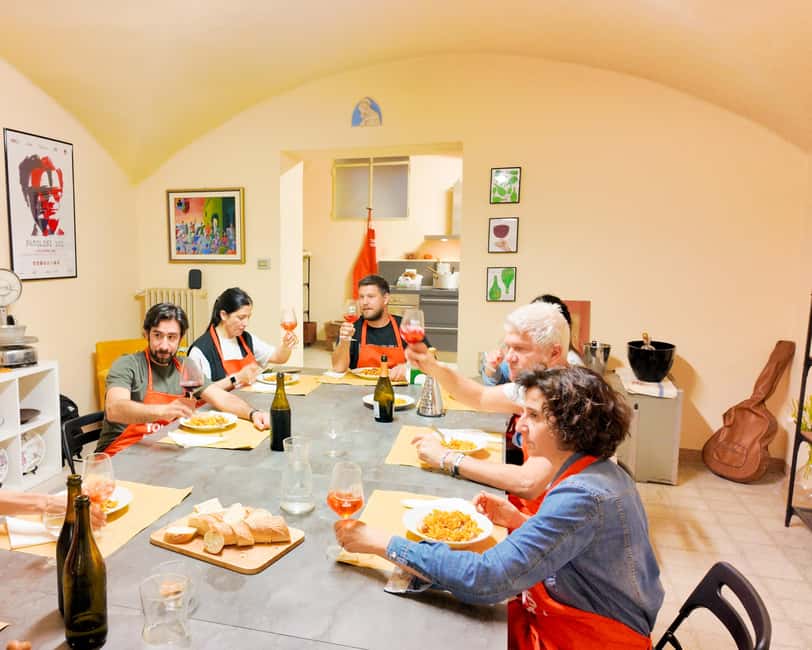
The ragù is made in advance each week by the kitchen team. It follows a family tradition and is served with your freshly made pasta, but you do not cook the sauce yourself because of the three-hour schedule.
This is the one important limitation to understand before booking. If your goal is to learn a complete tagliatelle al ragù recipe from start to finish, this class stops short of that. You can ask for tips about ragù, and the instructors explain how it differs from the sauce many people know as Bolognese, but the hands-on lesson centers on pasta.
There is still value in the arrangement. Making pasta from scratch takes time, especially with a group. Preparing the ragù ahead allows you to spend your energy on the dough while still eating a properly developed sauce.
The finished dish is paired with 24-month-aged Parmigiano Reggiano. That cheese adds a sharp, savory finish and gives you a taste of how carefully chosen regional ingredients can make a simple plate feel complete.
Still Bologna, but a slower afternoon:
- Bologna: City Center Walking Tour
★ 4.5 · 3,478 reviews - Bologna Food & Market Tour with 6 Tastings, Pasta, Wines & More
★ 5.0 · 1,328 reviews - Bologna Food Experience: Factory tours & Family-Style Lunch
★ 5.0 · 1,201 reviews - Bologna: Walking Food Tour with a Local Guide
★ 4.8 · 882 reviews
Mixing your own Casoni Spritz
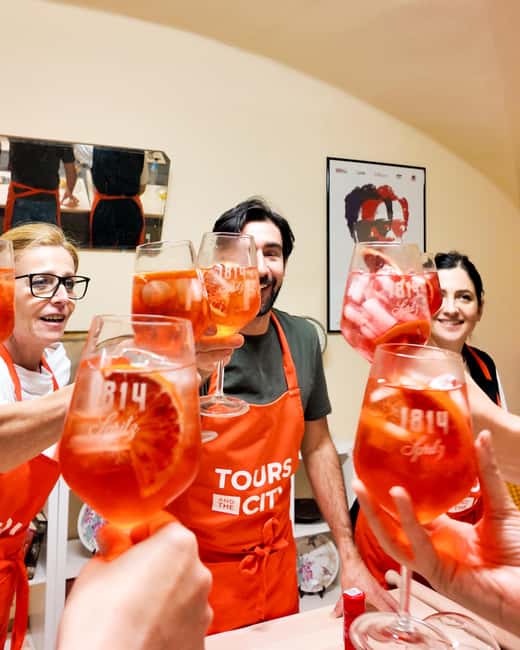
At some point during the cooking session, you prepare a Casoni Spritz. Casoni is a local herbal liqueur made using traditional recipes, giving the drink a distinctly regional character rather than the familiar taste of an international brand.
The class lets you prepare and sip your own cocktail while the pasta work continues. This is a smart break in the rhythm. Rolling dough requires attention, and the spritz adds a relaxed, celebratory note without turning the class into a formal cocktail workshop.
You also receive Pignoletto and Sangiovese during the experience. The Pignoletto is the sparkling white served with the opening aperitivo. Sangiovese, a red wine associated with the region, accompanies the pasta.
Unlimited water and soft drinks are included as well. That is useful if you want to enjoy the drinks without making every glass alcoholic. The exact quantity of wine and spritz is not stated, so you should expect tastings and servings as part of the meal rather than an all-night bar.
Sitting down to eat your own tagliatelle
The best moment comes when the pasta leaves the pot and reaches your plate. You have handled every stage of the noodles, so the meal feels more satisfying than an ordinary restaurant dish.
The ragù is already prepared, but the tagliatelle is fresh from your work. That contrast lets you notice what fresh pasta contributes: a soft, springy texture and a broad surface for the sauce.
The meal is served with Parmigiano Reggiano and Sangiovese. It is not a cooking demonstration where you watch someone else eat the result. You sit down with the group and enjoy the dish together.
That shared table is one reason the class receives such strong praise. The instructors make a point of bringing people into the conversation, and the atmosphere is repeatedly described as relaxed, warm, and full of laughter. You may leave with a recipe, but you also leave with the feeling of having spent an afternoon in a friendly local kitchen.
Finishing with Moka coffee and Montenegro
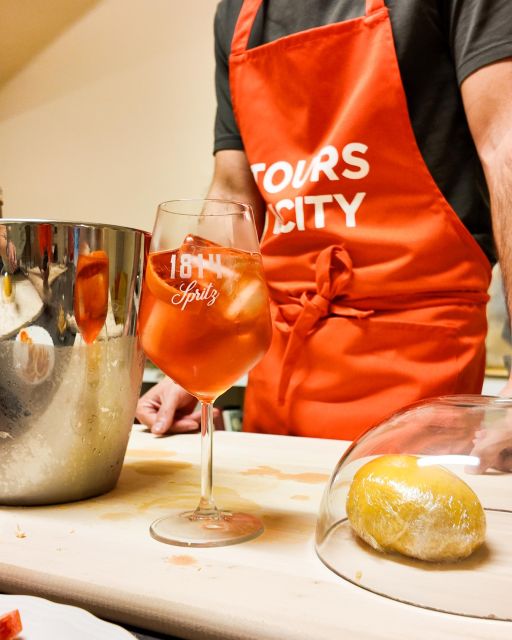
The final course is distinctly Italian: Moka coffee and Montenegro, an amaro traditionally served as a digestif.
The Moka coffee is prepared in the familiar stovetop style. Montenegro gives the meal a bitter, herbal finish after the richness of pasta, meat sauce, cheese, and wine. It is a small detail, but it completes the meal in a way that a quick espresso alone would not.
You receive the recipes by email in PDF format upon request. That makes the class more useful once you return home, although you should ask for them if they are not sent automatically.
The instructors make the difference
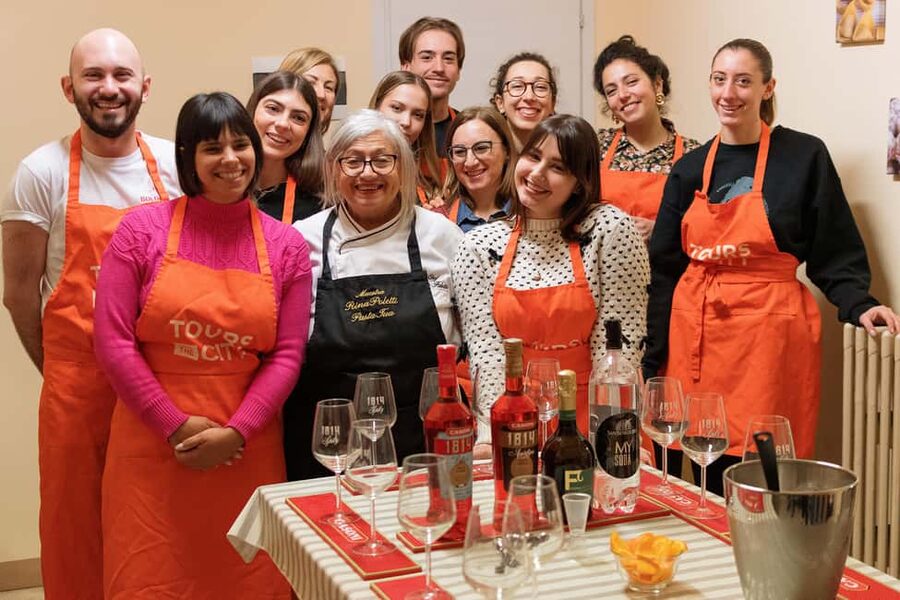
The teaching team changes, but the names associated with the sessions include Valentina, Stefania, Sonia, Lupo, Claudia, Roberta, Beatrice, Giorgia, Caterina, Lucia, Claire, and Katerina.
The repeated praise is not only about the food. It is about how the instructors handle a mixed group. They explain the steps clearly, assist people who fall behind, and keep the mood light without losing control of the class.
Several instructor pairings have been singled out for being especially welcoming and engaging. Valentina and Beatrice, Sonia and Stefania, Stefy and Lupo, and Roberta and Valentina are among the combinations associated with warm hosting and practical help.
Because the exact instructors can change, I would book this for the style of the experience rather than for one particular teacher. The consistent pattern is an English-speaking team that treats the class as a shared social occasion.
Who should book this class?
This is a strong choice if you want to do something active in Bologna and enjoy meeting people over food. It suits couples, solo visitors, friends, and families with children aged 12 or older.
You will get the most from it if you like learning by doing. The class involves mixing, kneading, rolling, slicing, cooking, and eating. If you prefer to sit back while a chef demonstrates, a restaurant meal may suit you better.
It is also a good fit for people who enjoy regional drinks. You taste Pignoletto and Sangiovese, make a Casoni Spritz, and finish with coffee and amaro. The drinks are part of the social flow, not an afterthought.
The class is not suitable for vegans, vegetarians, or people with gluten intolerance. You should report dietary requirements in advance, and serious food allergies may prevent the kitchen from hosting you.
Children under 12 are not accepted. Comfortable shoes and clothes are recommended, and the activity involves a large flight of stairs, so it is not recommended for anyone using a wheelchair or crutches or needing substantial mobility support.
Is $79.64 a fair price?
At $79.64 per person, this is not the cheapest way to eat pasta in Bologna. It is also not simply a meal. Your price covers instruction, fresh local ingredients, the aperitivo, cocktails, Pignoletto, Sangiovese, water and soft drinks, coffee, amaro, and the finished pasta dish.
I consider that good value if you would otherwise pay separately for a meal, drinks, and a cooking activity. The three-hour length gives the class enough time to feel like an event rather than a rushed demonstration.
The price is less compelling if your only goal is to eat tagliatelle al ragù. Bologna has many restaurants where you can do that for less. Here, you are paying for the process, the guidance, and the chance to make the pasta with your own hands.
The 4.9 rating from 407 reviews also suggests a very reliable experience, though no cooking class can promise that every group will have the same energy. Your enjoyment will depend partly on how much you like social activities and group instruction.
Practical details before you go
The class lasts three hours, but starting times depend on availability. Check the time carefully so it fits around your Bologna plans.
The meeting point is in the city center. The guide comes outside to meet you and escort you into the building, wearing an orange apron. The activity ends back at the same meeting point.
Plan to arrive ready to cook. Comfortable shoes matter because of the stairs, and comfortable clothes are sensible for kneading and rolling dough. You do not need to bring special equipment.
Free cancellation is available up to 24 hours before the start time for a full refund. You can also reserve now and pay later, which helps if your Bologna schedule is still changing.
Should you book it?
I would book this class if you want a social, hands-on food experience rather than a quiet meal. The combination of fresh pasta, local drinks, aperitivo, and easygoing instructors gives you a full afternoon with a clear sense of place.
I would skip it if you need a wheelchair-accessible activity, avoid gluten, follow a vegetarian or vegan diet, or specifically want to prepare ragù yourself. For everyone else, the class offers a useful skill, a filling regional meal, and a pleasant way to meet people in Bologna. That is a lot of Italy for $79.64.
FAQ
How long does the Bologna pasta class last?
The experience lasts three hours. Starting times vary, so check availability when selecting your date.
What pasta will I make?
You will make fresh tagliatelle from flour and eggs. You will mix, knead, roll, shape, slice, cook, and eat the pasta.
Do I make the ragù myself?
No. The ragù is prepared in advance each week by the kitchen team. You serve it with the tagliatelle you make during class.
Is the class taught in English?
Yes. The instructor language is English.
What drinks are included?
The experience includes a Casoni Spritz workshop, Pignoletto sparkling white wine, Sangiovese red wine, coffee, Montenegro, unlimited water, and soft drinks.
Is food included besides the pasta?
Yes. The welcome aperitivo includes Mortadella, Crescenta, and Pignoletto. Your meal includes tagliatelle with ragù and 24-month-aged Parmigiano Reggiano.
Can vegetarians or vegans join?
No. The activity is not suitable for vegetarians or vegans.
Can someone with gluten intolerance attend?
No. The activity is not suitable for people with gluten intolerance. You should also report serious food allergies in advance, as the kitchen may not be able to host you.
Is the class accessible for wheelchair users?
The activity includes a large flight of stairs and is not recommended for people who use a wheelchair or crutches or have similar mobility needs.
Recently added around Bologna
- Stay Hungry Stay Bologna★ 4.0 · 170 reviews
- Cesarine: Small group Pasta and Tiramisu class in Bologna★ 5.0 · 172 reviews
- Bologna Private Highlights & Hidden Gems Tour with a Local★ 5.0 · 359 reviews
- Bologna gastronomic experience with a local★ 5.0 · 626 reviews
- Ferrari Lamborghini Pagani Factories and Museums – Tour from Bologna★ 5.0 · 171 reviews
- Bologna on the plate, Cooking Class with Alessia★ 5.0 · 260 reviews
- Bologna Private Food Tour with 6 or 10 Tastings★ 4.5 · 344 reviews
- Bologna: Full meal Food Tour with Local Delights by Do Eat Better★ 5.0 · 541 reviews
Cooking Classes, compared.
3 in 1 Cooking Class near Navona: Fettuccine, Ravioli & Tiramisu
Read our review →
Florence Pizza or Pasta Class with Gelato Making at a Tuscan Farm
Read our review →
Pasta & Tiramisu Cooking Class with Unlimited Wine
Read our review →
Pizza-Making Workshop with Drink and Appetizer
Read our review →
Pasta & Tiramisu Class with Fine Wine by the Vatican
Read our review →
Cooking Class and Lunch at a Tuscan Farmhouse with Local Market Tour from Florence
Read our review →Browse the lists this tour appears in