
Reviewed · CYCLING TOURS
Rome: Top Highlights & Hidden Gems Tour by Cannondale E-Bike
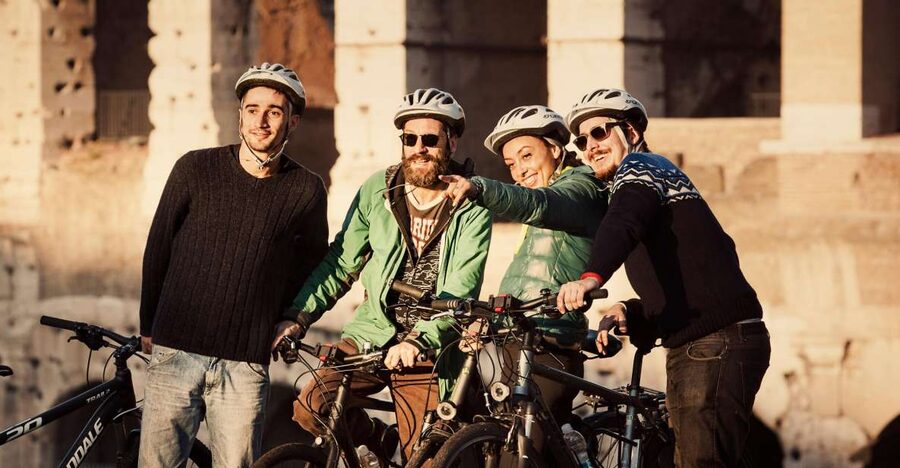
Rome rewards a faster look. I like the well-planned 14-kilometre route, which links the Colosseum, Trevi Fountain, Pantheon, and other major sights without wasting the day on long walks. I also like the quiet lanes and hill-climbing e-bike, which let you see corners of Rome that buses cannot reach and walking feet may skip.
The trade-off is simple: Rome is still Rome. Crowds, uneven streets, and traffic can make some riding feel lively rather than peaceful, especially near the historic center. Your guide keeps the group together, but you should be comfortable handling a bicycle in an active city.
In This Review
- Key points at a glance
- Why a bike makes sense in central Rome
- Starting near the Colosseum on Via Labicana
- Colosseum and the Roman Forum
- Piazza Venezia and the Imperial Fora
- Trevi Fountain and the Spanish Steps
- Piazza del Popolo and the Pincio terrace
- Piazza Navona and the Pantheon
- The Jewish Ghetto and Theatre of Marcellus
- Back streets, safety, and the real riding conditions
- Families, languages, and who should book
- Is $85 a fair price?
- Should you book this Rome e-bike tour?
- FAQ
- How long is the Rome e-bike tour?
- Where does the tour start and finish?
- Which sights are included?
- Is the tour suitable for children?
- Is a helmet required?
- What languages are available?
- What happens if the tour does not reach four participants?
Key points at a glance
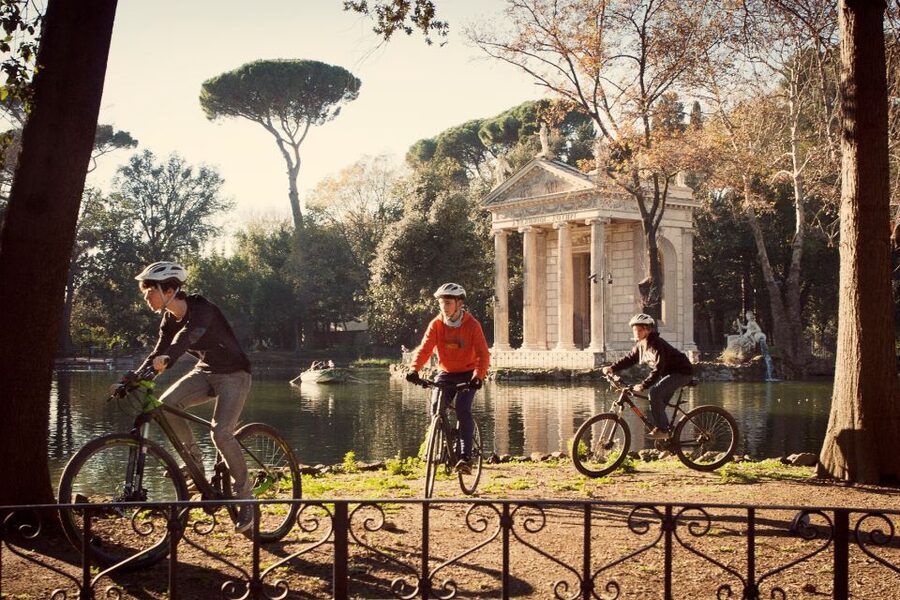
- Four hours and 14 kilometres: A useful first look at central Rome without committing to a full-day outing.
- Cannondale e-bikes: Well-maintained bikes with anti-puncture tires and electric help for Rome’s hills.
- Small groups of up to 10: Easier to hear the guide and safer to manage through busy streets.
- Famous sights plus quieter corners: The route covers the Colosseum and Pantheon, then slips through lanes, squares, parks, and older neighborhoods.
- A scenic Pincio stop: Villa Borghese and the terrace above Piazza del Popolo provide one of the tour’s best city views.
- Good family planning: Child seats are available for ages 1 to 4, tag-along extensions for ages 5 to 8, and properly sized e-bikes for children 9 and older.
Why a bike makes sense in central Rome
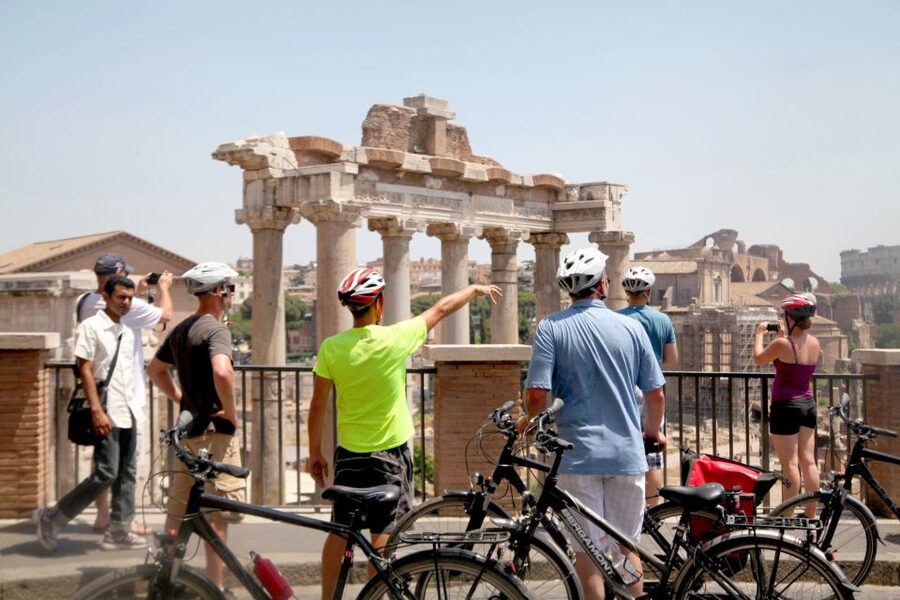
Rome’s historic center is compact on a map, but its sights are spread across hills, busy avenues, pedestrian areas, and winding lanes. On foot, you can spend much of a day moving between the Colosseum, Trevi Fountain, Spanish Steps, Piazza Navona, and the Pantheon.
An e-bike changes the pace. You can cover the distance between these places while still stopping for stories and photos. The electric motor matters most around Rome’s inclines, including the climb toward Villa Borghese. It also helps you finish the ride with enough energy left to visit a museum, eat dinner, or return to a site you want to see more closely.
This is not a racing tour. The listed difficulty is leisure, or intermediate when a child seat or child extension is attached. Still, you need basic bicycle control, the ability to start and stop, and enough confidence to ride in a city where streets can become crowded quickly.
The group is limited to 10 people, which is a useful size for Rome. A guide can watch the riders more closely than on a large convoy, and you have a better chance of hearing the history at each stop. Several guides have been praised for balancing safety with humor and clear storytelling. Names that come up include Oscar, Bita, Chris, Meghan, Fabio, and Khalid, though your guide will depend on the date and language.
More Bike Tours in Rome
- Rome EBike Tour: Appian Way, Catacombs & Roman Aqueducts
★ 5.0 · 1,766 reviews - Rome: Appian Way, Catacombs, & Roman Aqueducts E-bike Tour
★ 4.9 · 1,421 reviews - Rome City Small Group Bike Tour with quality Cannondale EBike
★ 5.0 · 1,380 reviews
Starting near the Colosseum on Via Labicana
You meet at the operator’s shop at Via Labicana 49, a few minutes on foot from the Colosseum. This gives the tour a practical beginning: you can pair it with a morning visit to the Colosseum or use it as an easy way to get your bearings on your first afternoon.
Before setting off, you receive a Cannondale e-bike, helmet, handlebar bag, and biodegradable bottle of water. The helmet is mandatory. The bikes have anti-puncture tires, and the equipment is described as well maintained. Several riders specifically praised the bikes for being comfortable, powerful, and easy to use.
Take a moment to adjust the saddle and ask how the controls work. If you have not used an e-bike before, an explanation of the assistance levels and brakes will make the first streets less stressful. The operator’s equipment has a total weight limit of 300 pounds, or 136 kilograms.
Colosseum and the Roman Forum
The Colosseum is the first major sight, and it is hard to imagine a better opening scene. From the outside, you can take in the scale of the ancient amphitheater and hear how it fits into Rome’s imperial story.
The tour is described as sightseeing at the Colosseum, not an interior visit. Do not expect four hours of archaeological exploration inside the monument. If you want to enter, reserve a separate timed ticket and plan that visit around the bike ride rather than assuming it is included.
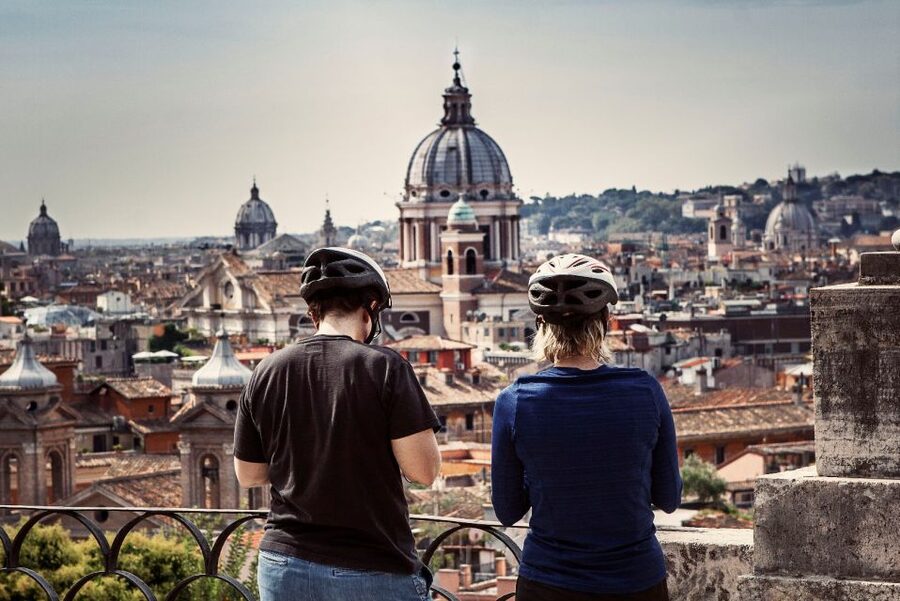
From there, the route reaches the Roman Forum and the Imperial Fora. These ruins stretch across one of the city’s most important ancient zones, where temples, government buildings, markets, and monuments once filled the center of Roman public life. The views are especially useful for understanding how much ancient Rome remains below and around the modern city.
A panoramic view of the Roman Forum is also part of the route. This is valuable because the ruins can be difficult to read from street level. From above, the columns, arches, and open foundations make more sense as parts of a former city rather than isolated stones.
Piazza Venezia and the Imperial Fora
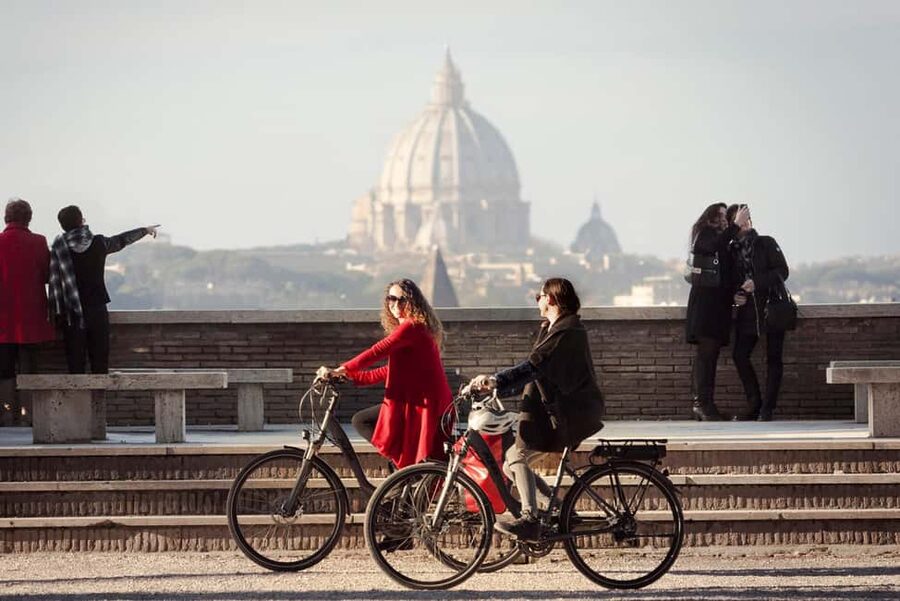
The ride continues toward Piazza Venezia and the Vittoriano monument. The huge white monument is one of Rome’s most recognizable modern landmarks, and its scale gives you a sharp contrast with the older masonry nearby.
The area can be crowded and exposed, so this is a place where the group may pause briefly rather than linger. Your guide’s explanation helps put the monument in context, while the bike keeps the tour moving before the traffic and crowds become tiring.
The Imperial Fora route adds another layer to the ancient story. Unlike a standard walk between major sights, cycling allows you to see how the archaeological zones connect with today’s roads and public spaces. You get a broad view rather than a long stop at a single ruin.
More E-Bike Tours in Rome
- Rome:Appian Way E-bike Tour with Catacombs, Aqueducts & Food
★ 4.9 · 1,210 reviews - Rome: E-Bike Night Tour with Food and Wine Tasting
★ 4.9 · 1,131 reviews - Rome: Appian Way E-Bike Tour Catacombs, Aqueducts & Picnic
★ 4.6 · 727 reviews - Rome: Appian Way & Catacomb Sunset E-bike Tour with Aperitif
★ 4.5 · 682 reviews
Trevi Fountain and the Spanish Steps
Trevi Fountain is one of Rome’s most famous stops, and it is also one of the busiest. Expect a lively setting, limited room to move, and time for photographs rather than a quiet look at the water and sculpture.
The fountain itself is worth seeing for its theatrical design and place in Roman street life. Your guide can also help you notice the way the monument is framed by the surrounding buildings, something that is easy to miss when you are focused only on reaching the front.
The Spanish Steps bring another famous landmark and another crowded setting. The steps connect Piazza di Spagna with the upper streets near Trinità dei Monti, and the area is one of Rome’s classic meeting points. Since bikes cannot simply glide through every pedestrian space, you should expect to park or walk the bike for parts of the stop if local conditions require it.
These two sights are useful on a highlights tour, but they are not the best places to expect solitude. The value here is efficient orientation. You learn where they are, hear their story, take your photos, and can return later at a quieter time if you want a longer look.
Piazza del Popolo and the Pincio terrace
Piazza del Popolo is one of the tour’s more spacious pauses. Its broad oval shape, twin churches, and central obelisk give the guide room to explain Rome’s urban design without squeezing the group into a narrow lane.
The climb toward the Pincio terrace and Villa Borghese is where the e-bike earns its keep. The motor takes much of the sting out of the uphill ride, though you still need to steer and pay attention to the path.
From the Pincio terrace, you get a scenic view across Rome. This is one of the tour’s most worthwhile stops because it offers a change from street-level monuments. You can see the city as a connected whole, with domes, rooftops, and the historic center spread below.
Villa Borghese provides greenery and a calmer stretch after the tighter streets around Trevi and the Spanish Steps. The route offers a glimpse of the park rather than a full visit to the Borghese Gallery, so reserve that museum separately if it is a priority.
Piazza Navona and the Pantheon
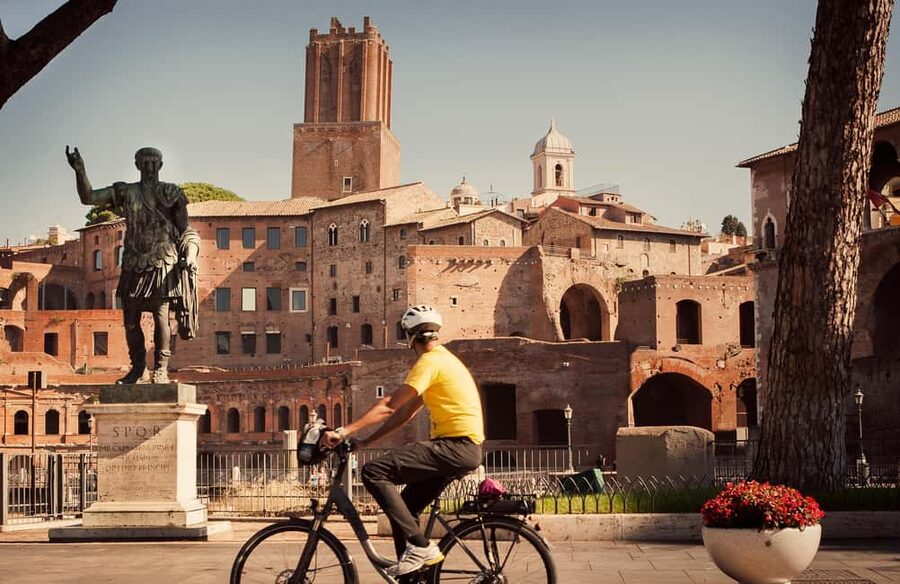
Piazza Navona occupies the site of the ancient Stadium of Domitian. Its long, open shape still reflects that earlier function, while the fountains and surrounding buildings give it the look of a grand Roman square.
This is a good place for your guide to connect ancient and later Rome. You are not just collecting famous photo stops. You are seeing how Roman spaces were reused, reshaped, and given new public roles over time.
The Pantheon is another major highlight. Its ancient exterior and enormous dome make it one of Rome’s most impressive buildings, even before you know the engineering behind it. The tour provides sightseeing around the monument, not a guaranteed interior visit, so check the current entry rules separately if you want to go inside.
The lanes around Piazza Navona and the Pantheon are part of the pleasure. They are narrow, full of small architectural details, and better experienced at a slow pace. The guide’s choice of streets is important here. The route aims to avoid unnecessary main-road riding and uses smaller lanes where possible.
The Jewish Ghetto and Theatre of Marcellus
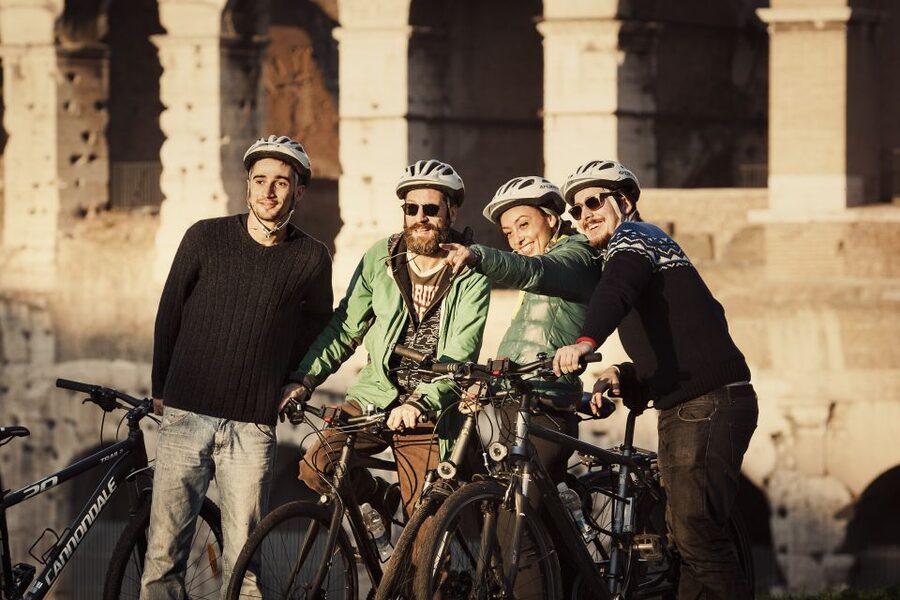
The Jewish Ghetto gives the tour a different side of central Rome. The area around the Portico di Ottavia carries layers of Roman, medieval, and Jewish history, and it feels less like a checklist stop than a chance to understand one of the city’s historic neighborhoods.
The Portico di Ottavia is an ancient structure with later buildings and streets woven around it. That mix is typical of Rome, where an archaeological fragment may sit beside a church, apartment, restaurant, or modern road.
Nearby, the Theatre of Marcellus offers another strong example of Rome’s habit of building on top of the past. Its ancient curved façade is still visible within the modern city. A guide is particularly helpful here because the remains do not always explain themselves at first glance.
This section may be the most rewarding part of the ride for anyone who wants more than the standard postcard list. You see famous Rome, but you also get a sense of how ordinary city life continues around very old structures.
Back streets, safety, and the real riding conditions
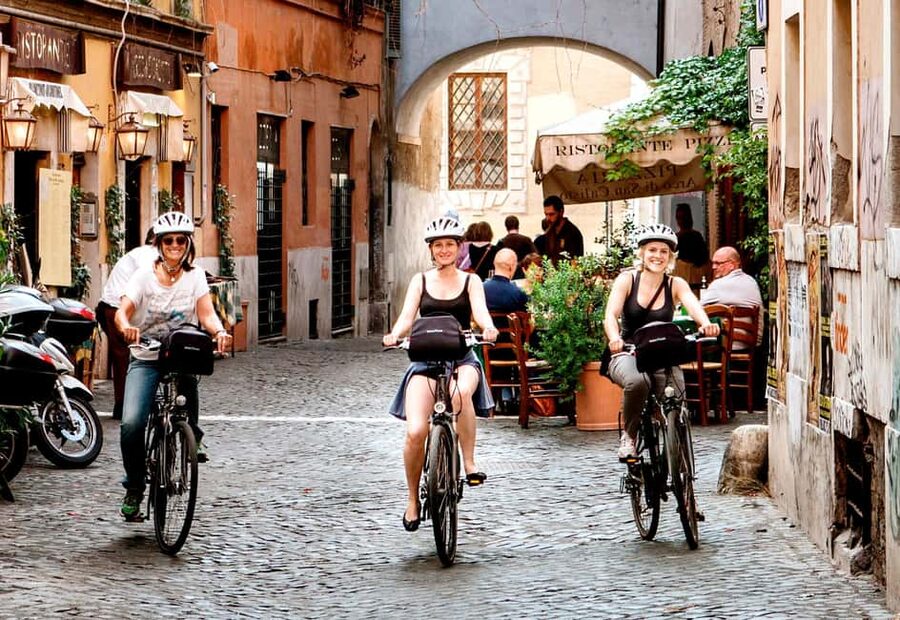
The operator has spent nearly two decades refining this central route, and the design is one of its main strengths. The ride connects major stops through selected back streets and small alleys, reducing the need to spend the entire four hours on large roads.
That does not mean the route is traffic-free. Rome can be chaotic, and one rider described the streets as a little crazy while still feeling well supervised. Another praised the guide for keeping the group together through crowded areas. That is the right expectation: the guide improves the experience, but cannot remove the city’s traffic, pedestrians, or rough patches.
Guides are expected to lead at a controlled pace and watch the group closely. Some have also adjusted stops for hot weather, choosing shade when possible. If you ride in summer, an afternoon departure can be more comfortable than the middle of the day. One rider particularly liked a 4 p.m. start for the cooler conditions.
Wear practical clothing and closed shoes. Bring sun protection if the forecast is hot, and use the supplied water bottle. You may find that the e-bike makes the physical effort light, but four hours in the open air still calls for sensible preparation.
Families, languages, and who should book
The tour works well for families, provided you choose the right equipment. Infants under one year are not allowed. Children from 1 to 4 can ride in a child seat with a load limit of 49 pounds, or 22 kilograms, at no extra charge. Children aged 5 to 8 use a tag-along extension, and children 9 and older can ride an appropriately sized e-bike.
With a child seat or extension, the ride is classified as intermediate. That is worth taking seriously because the adult is carrying extra weight and managing more responsibility in traffic. Ask the operator about the equipment when booking and allow time for the correct bike size.
Guiding is available in English, Italian, Spanish, French, German, and Dutch. A small group helps in any language, especially when the guide is explaining a site beside a noisy street.
This tour suits you best if you want a broad introduction to Rome, enjoy active sightseeing, and prefer stories from a local guide to reading every plaque yourself. It is also useful early in a stay because it shows you which places deserve a return visit.
It is less suitable if you want long interior visits, extended time at each monument, or a quiet archaeological tour. The pace is designed to cover a lot, not to replace dedicated visits to the Colosseum, Pantheon, or Roman Forum.
Is $85 a fair price?
At $85 per person, the price is reasonable for a four-hour, small-group experience that includes a quality e-bike, helmet, guide, handlebar bag, and water. You are paying for route planning as much as for the bicycle. Knowing which lanes connect the major sights and how to manage a group through Rome saves time and reduces the stress of figuring it out alone.
The value is strongest if you are visiting Rome for a short stay or want an overview before choosing where to spend more time. Covering 14 kilometres by bike lets you see far more than a typical walking tour, while the electric assistance keeps the hills manageable.
The value is weaker if your main goal is entering monuments. No admission is listed, so budget separately for any interior visits. The tour is a moving introduction, not a substitute for a full day among the ruins.
Free cancellation up to 24 hours before departure and reserve-now, pay-later booking add useful flexibility. A minimum of four participants applies, and if that number is not reached, you are offered an alternative or a full refund. Public celebrations or city-center events may also force changes to one or more stops.
Should you book this Rome e-bike tour?
I would choose this tour for a first or second day in Rome, especially if you want to see the city’s major landmarks without wearing out your legs. The combination of a small group, strong bicycles, careful route selection, and guides who bring humor to the history makes the $85 price easier to justify.
Book it if you are comfortable riding in an urban setting and want a lively overview with time for photos. Skip it if you dislike bicycles, need long quiet stops, or want an interior-focused tour.
For most reasonably confident riders, this is a smart way to meet Rome: fast enough to cover ground, slow enough to notice the alleys, parks, and old neighborhood corners between the headline monuments.
FAQ
How long is the Rome e-bike tour?
The tour lasts four hours and covers about 14 kilometres, or 8.5 miles.
Where does the tour start and finish?
It begins and ends at the operator’s shop at Via Labicana 49, a few minutes’ walk from the Colosseum.
Which sights are included?
The route includes the Colosseum, Roman Forum, Imperial Fora, Piazza Venezia and the Vittoriano monument, Trevi Fountain, Spanish Steps, Piazza del Popolo, Villa Borghese, the Pincio viewpoint, Piazza Navona, the Pantheon, the Jewish Ghetto, the Portico of Ottavia, and the Theatre of Marcellus.
Is the tour suitable for children?
Children under one year are not permitted. Ages 1 to 4 can use a child seat, ages 5 to 8 can use a child extension, and children aged 9 and older can ride an appropriately sized e-bike.
Is a helmet required?
Yes. Wearing a helmet is mandatory for everyone on the tour.
What languages are available?
The live guide may lead the tour in English, Italian, Spanish, French, German, or Dutch.
What happens if the tour does not reach four participants?
The operator will offer an alternative tour or provide a full refund if the minimum of four participants is not reached.
Recently added around Rome
- Palatine Hill and Roman Forum Tour with Fast-Track Entrance★ 4.2 · 417 reviews
- Tivoli: Villa D’Este & Villa Adriana Pass & App Audioguide★ 4.4 · 364 reviews
- From Rome: Villa D’Este & Villa Adriana Day Trip with Lunch★ 4.4 · 289 reviews
- Vatican Museums & Sistine Chapel Skip-the-Line Guided Tour★ 4.6 · 254 reviews
- Rome: The Three Tenors at St. Paul’s Church Concert Ticket★ 4.7 · 699 reviews
- Tivoli: Villa D’Este Entry Ticket and App Audio Guide★ 4.3 · 191 reviews
- Rome: Capitoline Museums and Centrale Montemartini Tickets★ 4.4 · 328 reviews
- Rome: St. Peter’s Basilica and Papal Tombs Guided Tour★ 4.6 · 477 reviews
Cycling Tours, compared.

Rome EBike Tour: Appian Way, Catacombs & Roman Aqueducts
Read our review →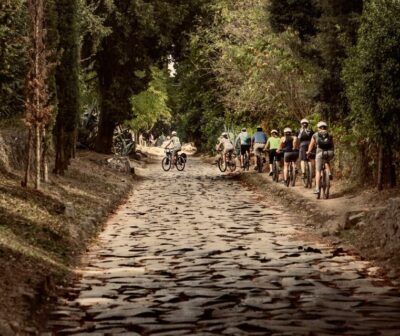
Appian Way, Catacombs, & Roman Aqueducts E-bike Tour
Read our review →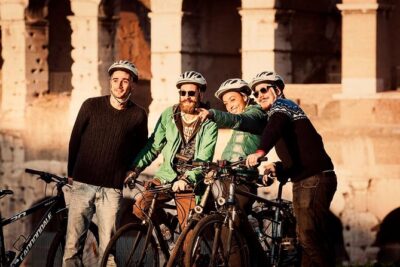
Rome City Small Group Bike Tour with quality Cannondale EBike
Read our review →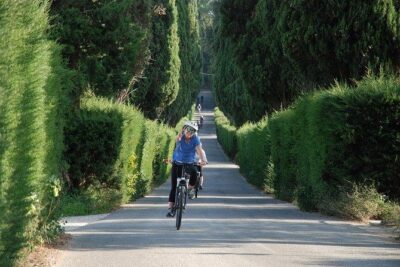
Tuscany Bike Tours Through the Chianti Hills with Wine Tasting
Read our review →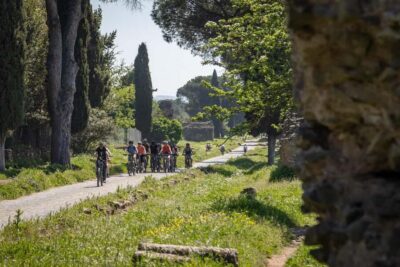
Appian Way E-bike Tour with Catacombs, Aqueducts & Food
Read our review →

Browse the lists this tour appears in