Reviewed · GUIDED
Rome: Pantheon, Trevi Fountain & Roman Squares Guided Tour
Rome rewards anyone willing to walk. This three-hour route links Piazza Navona, the Pantheon, Trevi Fountain, and the Spanish Steps in one well-planned outing. I especially like the small groups of up to 10 and the Pantheon’s separate entrance, which can save valuable time. The main drawback is simple: there is a lot of walking, and on a hot day you may wish for a short break.
The guide-led format adds much more than directions between famous sights. You hear about buildings, fountains, paintings, and side streets you might otherwise pass without a second glance. The tour costs $41 per person, a fair price if you want context and a smooth introduction to central Rome, but it is less suitable if you prefer to linger privately at every stop.
In This Review
- What makes this Rome walking tour useful
- Starting at Teatro Argentina in central Rome
- Piazza Navona and Bernini’s Four Rivers Fountain
- San Luigi dei Francesi and Caravaggio’s dramatic paintings
- Inside the Pantheon, Rome’s great ancient survivor
- Trevi Fountain, where the crowds gather
- Spanish Square and the famous steps
- How the three hours feel on foot
- Is $41 a fair price?
- Who will enjoy this route most?
- What to bring and what to wear
- Should you book the Pantheon and Rome squares tour?
- FAQ
- How long does the Rome walking tour last?
- Where does the tour begin?
- Does the tour include Pantheon entry?
- Is San Luigi dei Francesi Church included?
- What languages are available?
- What clothing is required?
What makes this Rome walking tour useful
- Caravaggio inside San Luigi dei Francesi: See three major paintings in a working church, not only the city’s headline monuments.
- Pantheon entry included: A separate entrance helps avoid one of central Rome’s most frustrating lines.
- A compact group of up to 10: You have a better chance of hearing the guide and asking questions.
- Rome’s great squares in one route: Piazza Navona, Trevi Fountain, and the Spanish Steps create a strong first look at the city.
- English and Spanish guides: Guides such as Serena, Roberto, Marco, Alessia, and Barbara have received especially warm praise for clear explanations and local tips.
- A useful orientation walk: The route ends near the Spanish Steps, giving you a good base for more exploring afterward.
Starting at Teatro Argentina in central Rome
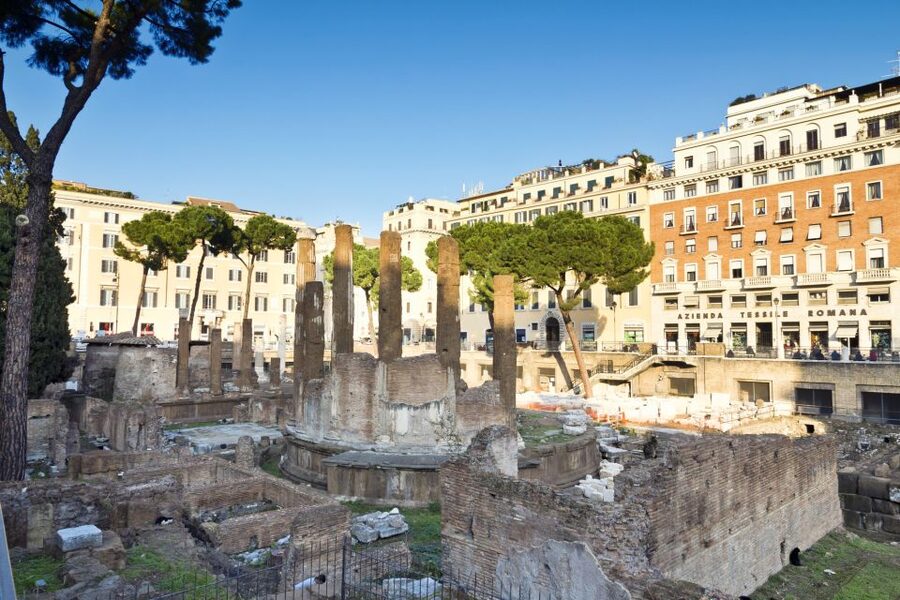
The meeting point is in front of Teatro Argentina, a historic theater near the Largo di Torre Argentina area. This is a practical starting place because the tour moves quickly into Rome’s old center rather than spending time on transport or hotel pickups.
You should arrive early. The tour does not wait for late arrivals, and there is no refund if you miss the group. Bring your booking details and an ID, since new security rules require identification for entry.
The route is conducted in English or Spanish, with headsets supplied. That small detail matters in Rome, where traffic, street musicians, café noise, and crowds can make it hard to hear a guide standing only a few feet away. A group capped at 10 people also helps keep the walk manageable.
There is no hotel pickup or drop-off. This is a walking experience from start to finish, so wear comfortable shoes and expect to make your own way back after the Spanish Steps. One useful side effect is that you finish in a different part of the center, rather than returning to the same starting point.
A few more Rome bookings to compare
- Vatican: Museums & Sistine Chapel Entrance Ticket
★ 4.5 · 144,003 reviews - Vatican Museums & Sistine Chapel Tour with Optional Basilica
★ 4.3 · 67,413 reviews - Colosseum, Roman Forum & Palatine Guided Tour
★ 4.7 · 63,148 reviews
Piazza Navona and Bernini’s Four Rivers Fountain
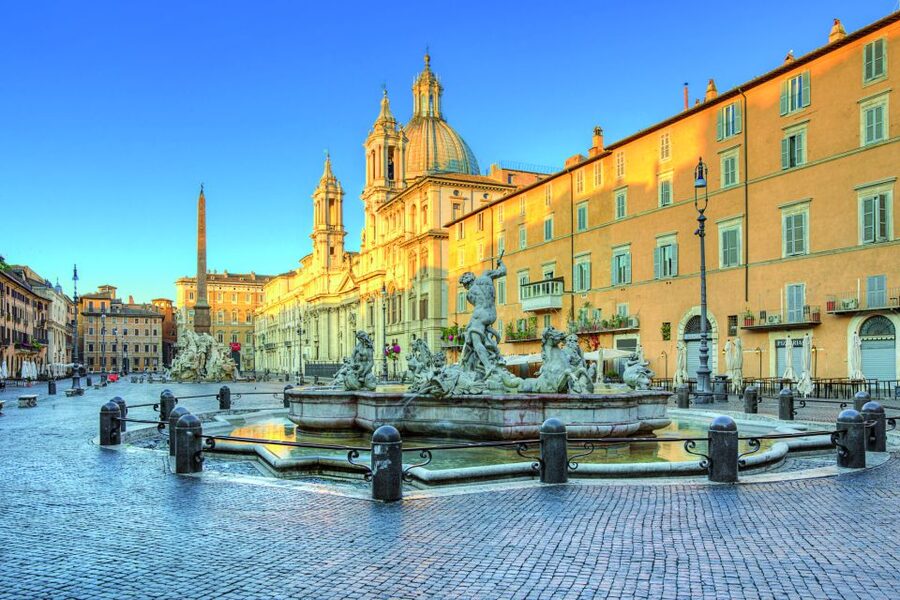
Piazza Navona is one of Rome’s most rewarding urban spaces. Its long, open shape follows the footprint of an ancient stadium, giving the square an unusual layout compared with Rome’s more compact piazzas.
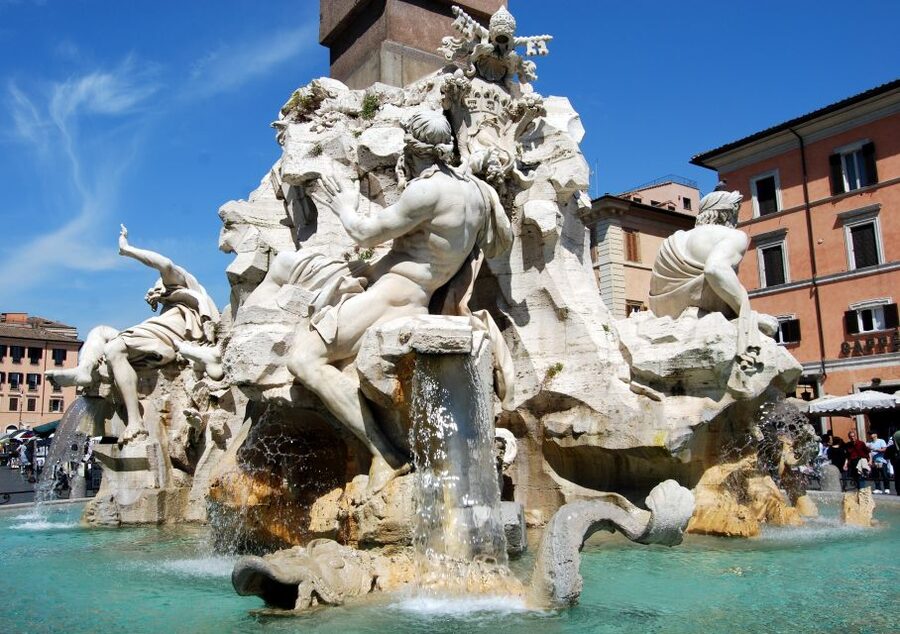
The focus here is Bernini’s Fountain of the Four Rivers, an elaborate Baroque centerpiece with sculpted river gods and a tall obelisk. A guide can help you see the fountain as more than an impressive mass of stone by explaining its artistic details and the rivalry between Bernini and other artists working in Rome.
Piazza Navona also gives you a first taste of Rome as a social city. Outdoor cafés line the edges, and seasonal fairs may fill the square with stalls and decorations. That atmosphere can be part of the pleasure, but it also means noise and crowds can affect how easily you hear the explanation.
I like this early stop because it sets up a theme that continues all day: Rome is not just an archaeological site. Ancient foundations, Renaissance churches, Baroque art, cafés, shops, and everyday city life all share the same streets.
San Luigi dei Francesi and Caravaggio’s dramatic paintings
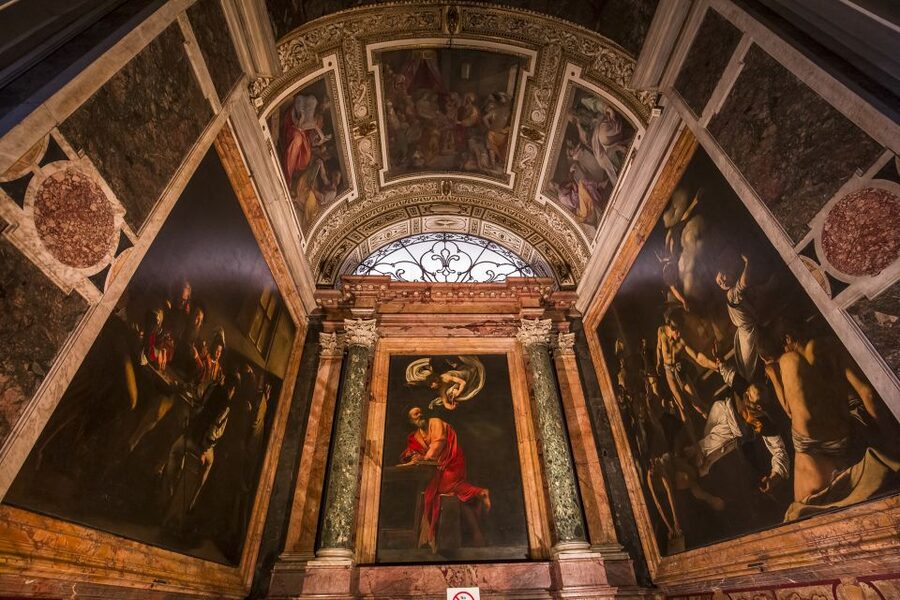
The Church of St. Louis of the French, or San Luigi dei Francesi, is easy to miss if you are focused only on Rome’s big outdoor sights. Inside, the Contarelli Chapel contains Caravaggio’s famous cycle of paintings about Saint Matthew.
This is one of the tour’s most valuable inclusions. You are not simply looking at a church interior. You are seeing a concentrated group of major works by one of the most influential painters associated with Rome.
Caravaggio’s art is known for strong contrasts between light and darkness, direct human expressions, and scenes that feel close to ordinary life. The church setting gives the paintings added force, since they were made for religious use rather than a modern gallery wall.
The visit is short, so you should not expect a long period for quiet study. Still, a guide can point out what to look for before you enter, which makes the limited time count. San Luigi dei Francesi is also a good example of why guided walking works well in Rome. Without someone drawing your attention to the chapel, you could enter, glance around, and leave without realizing what you had missed.
Dress rules are strict. You need covered shoulders, long pants or a long skirt, and no shorts or short skirts. A long-sleeved shirt is specifically recommended. These rules apply to the church and the Pantheon, so dressing correctly from the start prevents an awkward interruption.
Inside the Pantheon, Rome’s great ancient survivor
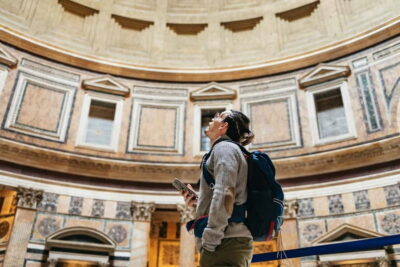
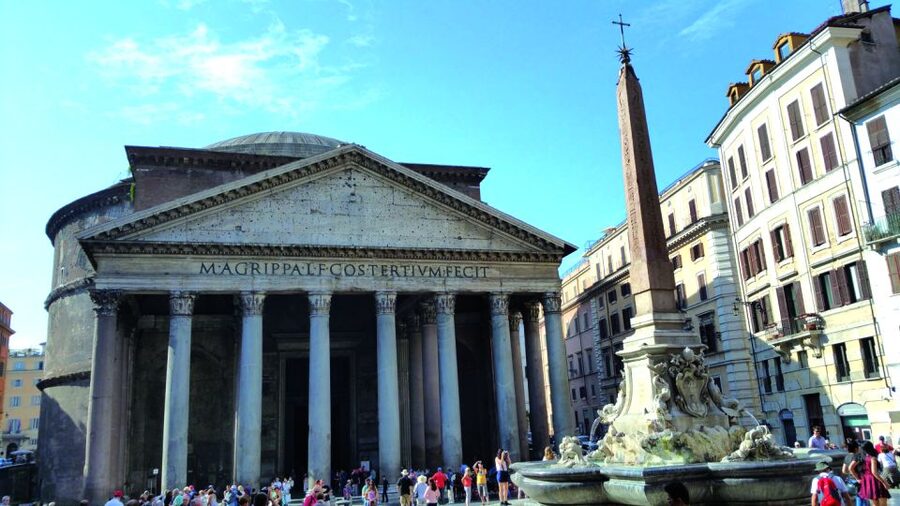
The Pantheon is the tour’s major interior visit. It is among the best-preserved ancient Roman buildings and is famous for its enormous unreinforced concrete dome.
The building’s scale becomes clearer once you are inside. Look upward to the central oculus, the open circular opening in the dome. It is both a structural feature and the building’s main source of natural light. Depending on the weather, rain can enter through the opening, adding another reminder that this is an ancient building still functioning in the open air.
The Pantheon’s survival gives you a rare chance to understand Roman architecture without viewing it only as scattered ruins. Walls, columns, proportions, and the dome remain part of one complete structure. A guide can connect the building’s engineering to the wider story of ancient Rome and explain why the Pantheon remains such a powerful landmark.
Entry is included, with access through a separate entrance intended to bypass the regular line. This is a real value point at $41, especially during busy periods when a wait outside can eat into your sightseeing day.
There is one important qualification. If the Pantheon is closed or cannot be entered during your scheduled time, the guide will explain it from outside instead. That possibility is worth keeping in mind if the interior is your main reason for booking.
Metal objects and large bags are not allowed. Assistance dogs are permitted, but other animals are not. Security rules also require an ID. Check your pockets and pack lightly before you arrive.
Still Rome, but a slower afternoon:
- Vatican Museums, Sistine Chapel & St Peter’s Basilica Guided Tour
★ 4.5 · 39,149 reviews - Rome: Colosseum, Palatine Hill and Roman Forum Guided Tour
★ 4.8 · 32,814 reviews - Rome: Guided Tour of Colosseum, Roman Forum & Palatine Hill
★ 4.7 · 27,897 reviews - Rome: Colosseum & Forum with Audio Guide App -Optional Arena
★ 4.2 · 24,770 reviews
Trevi Fountain, where the crowds gather
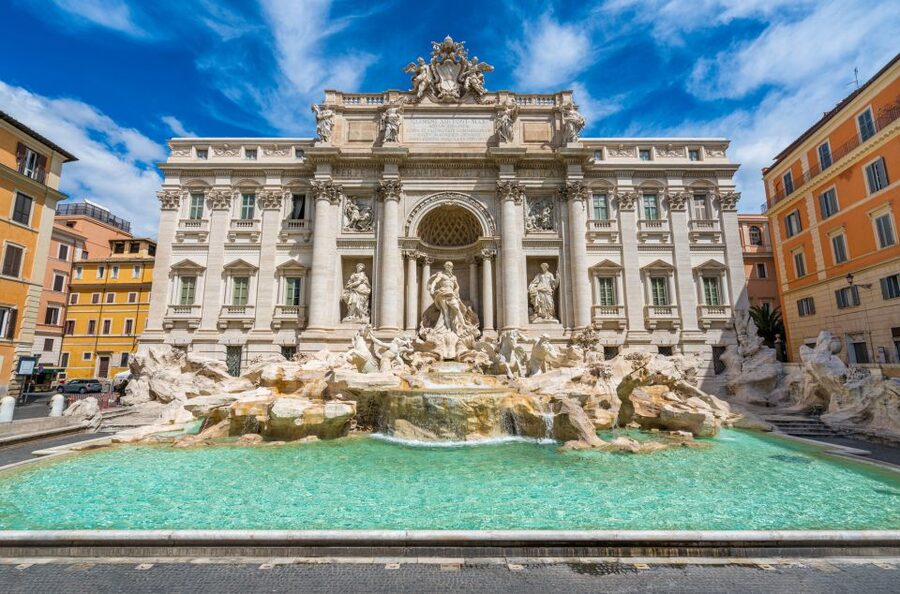
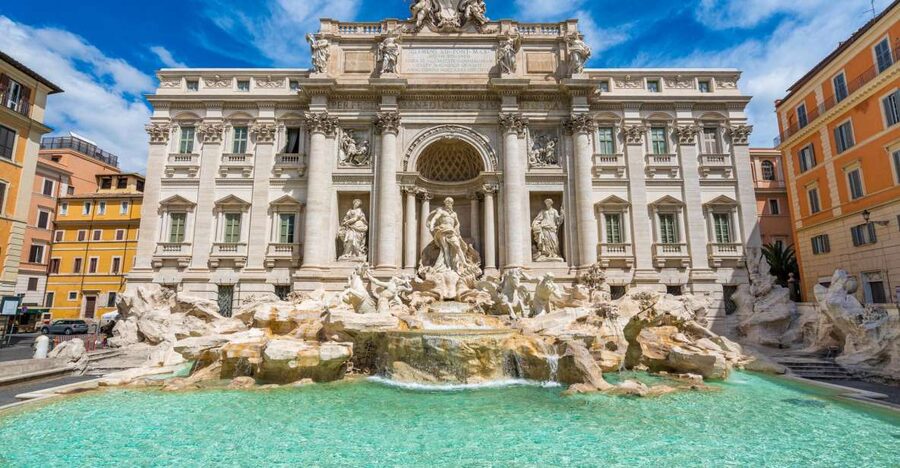
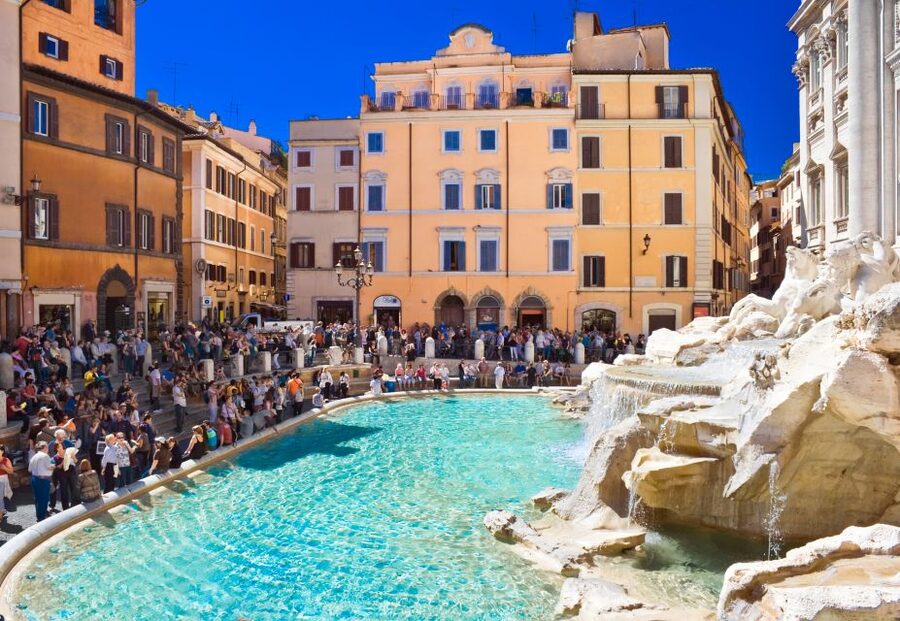
Trevi Fountain is one of Rome’s most recognizable sights, and the tour brings you there after the quieter church and the Pantheon. The fountain’s Baroque design fills the entire end of a small square, with Neptune at the center and figures, horses, rockwork, and rushing water arranged around him.
This is the classic coin-toss stop. Tossing a coin with your right hand over your left shoulder is the familiar Roman custom, traditionally linked with the hope of returning to the city. The tour gives you the setting and the story, but you should expect a crowded scene rather than a peaceful fountain visit.
One practical tip is to keep your belongings secure. The narrow space and heavy foot traffic require attention, especially while taking photos. A guide can also help you understand the surrounding streets and point out places to eat or stop for something cold. One guide specifically suggested ice cream near Trevi Fountain, a sensible idea after several hours on foot.
Timing matters here. A February visit during the week may feel far easier than a weekend visit in a busy season. The fountain is always popular, and the experience can become more about finding a clear photo than studying the sculpture. Go in with realistic expectations and enjoy the spectacle.
Spanish Square and the famous steps
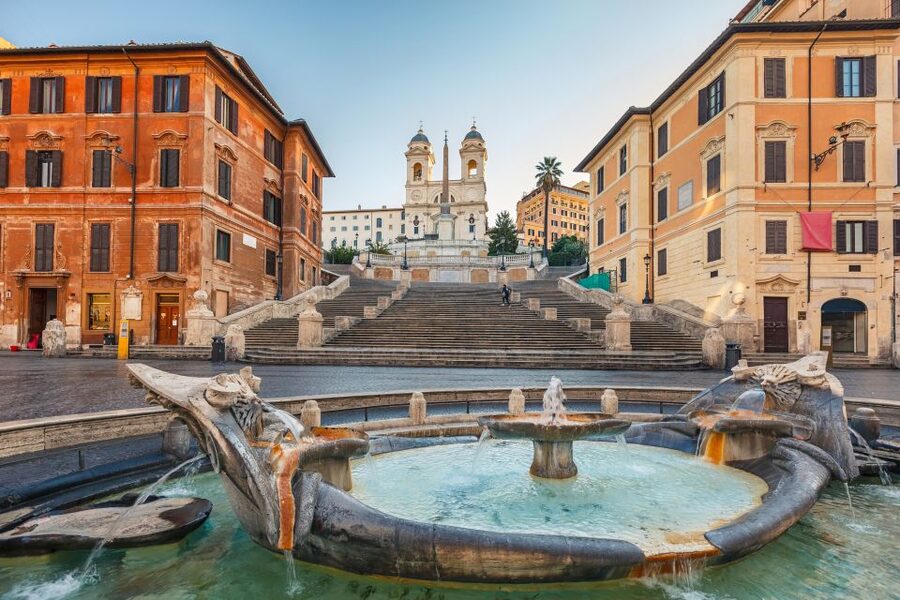
The final major stop is Piazza di Spagna, home to Bernini’s Fountain of the Boat, known as La Barcaccia. The fountain sits at the foot of the Spanish Steps, which climb toward the Church of Trinità dei Monti.
The steps are one of Rome’s classic photo locations. From the lower square, you get a strong view up the staircase and toward the church. From above, you can look back across the area and into the streets below.
This is also Rome’s fashion district. Streets leading away from the piazza contain boutiques from major high-fashion brands, so you can combine the final stop with window-shopping or a longer walk through the surrounding neighborhood.
The Spanish Steps are a natural ending point because they place you near several onward options, but remember that the guide does not return you to Teatro Argentina. If you have a timed reservation elsewhere, allow extra time to orient yourself after the tour.
How the three hours feel on foot
The pace is generally described as relaxed and well managed, with stops for photos and explanations. Guides such as Serena, Roberto, Marco, Barbara, Donatella, and Alessia have been praised for clear English, good organization, patience, and strong storytelling.
That consistency is one of the tour’s biggest strengths. Serena has been praised for making Rome’s architecture easier to understand, while Roberto is often noted for his warm manner and ability to explain history in both English and Spanish. Marco has been credited with pointing out details that even repeat visitors might miss. These comments suggest that the guide can make a real difference to the experience.
You should still prepare for continuous walking. One participant felt a break would have helped, especially in hot weather. Another guide took care to find shade, remind the group about water, and pause for photos during a very warm day. Conditions can vary, but Rome’s stone streets and open squares offer little relief at midday.
The tour is wheelchair accessible, although the route includes several busy public areas and the Spanish Steps. The supplied information confirms accessibility, but you may still want to ask the operator about the exact handling of each section before booking if step-free movement is essential for your group.
Is $41 a fair price?
At $41, the tour sits in a reasonable range for a three-hour guided walk with two interior entries. You are paying for the guide, headsets, San Luigi dei Francesi entry, and Pantheon admission through a separate entrance.
The best value comes from the combination of interpretation and time saved. You could walk between these sights independently, but you might miss the Caravaggio chapel, spend longer in a Pantheon queue, or fail to notice architectural details along the way. A guide also handles the sequence, which is useful during a first visit.
The price is less attractive if you already know Rome well, prefer audio guides, or want to spend a long time at each site. The route covers many major sights, so each stop receives a focused explanation rather than an unhurried museum-style visit.
Free cancellation is available up to 24 hours before the start time, and you can reserve now and pay later. Those options help if your Rome schedule is still changing, though arriving late remains costly because the group will not wait.
Who will enjoy this route most?
I would recommend this walk to first-time visitors who want a strong introduction to central Rome without committing to a full-day tour. It also suits anyone who likes art and architecture but wants a guide to connect the sights rather than simply point them out.
Families and mixed-age groups may appreciate the three-hour length, though children need to be comfortable walking and listening in busy public spaces. The small group makes questions easier, and several guides have been praised for patience and a cheerful approach.
This tour also works well on the first or second day of a Rome visit. You get your bearings, learn where the main squares are, and collect ideas for later meals and walks. Guides have offered practical suggestions about restaurants, areas to avoid, and other places of interest that are easy to miss.
I would not choose it for a slow art study day. You will see the key works and monuments, but the group must keep moving. I would also avoid scheduling it immediately before another fixed appointment, since late arrivals are not accommodated and the route ends away from its starting point.
What to bring and what to wear
Dress for religious sites before you leave your hotel. Wear long pants or a long skirt, and bring a long-sleeved top that covers your shoulders. Shorts, short skirts, and sleeveless shirts are not permitted.
Pack light. Large bags and metal objects are forbidden, and security checks may require you to show identification. Comfortable shoes, water, and protection from the sun are sensible choices because the route moves between open squares and interior spaces.
If rain is forecast, bring suitable cover. Guides have managed wet-weather walks well, but three hours outside is still more pleasant with a waterproof layer and shoes that handle slick stone.
Should you book the Pantheon and Rome squares tour?
Book it if you want a well-organized first look at Rome’s historic center, especially with the Pantheon and Caravaggio’s paintings included. The small group, headsets, separate Pantheon entrance, and consistently praised guides make $41 a solid value.
Choose another format if you want extensive free time, a shorter walk, or a quiet visit at Trevi Fountain and the Spanish Steps. For most visitors, though, this is a useful way to turn a string of famous Roman sights into a connected story. Book a weekday time if your schedule allows, dress correctly, arrive early at Teatro Argentina, and carry only what you need.
FAQ
How long does the Rome walking tour last?
The tour lasts three hours.
Where does the tour begin?
The meeting point is in front of Teatro Argentina.
Does the tour include Pantheon entry?
Yes. Pantheon admission is included, with access through a separate entrance. If the building is closed or inaccessible during the scheduled time, the guide provides an explanation from outside.
Is San Luigi dei Francesi Church included?
Yes. Entry to San Luigi dei Francesi is included, allowing you to see Caravaggio’s celebrated paintings of Saint Matthew.
What languages are available?
The live tour guide is available in English or Spanish.
What clothing is required?
You need covered shoulders and long pants or a long skirt. Shorts, short skirts, and sleeveless shirts are not permitted.
Recently added around Rome
- Vatican: Pope Francis Tomb and Papal Basilicas Tour★ 4.7 · 340 reviews
- Vatican: St. Peter’s Basilica with Audio Guide and Options★ 3.4 · 269 reviews
- Rome: Vatican Museums Skip-the-line Entry Ticket and Tour★ 4.2 · 400 reviews
- Rome: Vatican Museums & Sistine Chapel Ticket + Tour Options★ 4.7 · 344 reviews
- Vatican: Museums, Raphael & Sistine Chapel + Basilica Option★ 4.7 · 350 reviews
- Vatican Museums & Sistine Chapel Guided Tour★ 4.3 · 832 reviews
- Vatican Museums & Sistine Chapel Entry Ticket★ 4.4 · 245 reviews
- Vatican: Vatican Gardens with Bus Tour & Vatican Museums★ 4.2 · 392 reviews
Guided, compared.
Colosseum, Roman Forum & Palatine Guided Tour
Read our review →
Vatican Museums, Sistine Chapel & St Peter’s Basilica Guided Tour
Read our review →
Colosseum, Palatine Hill and Roman Forum Guided Tour
Read our review →
Guided Tour of Colosseum, Roman Forum & Palatine Hill
Read our review →
Colosseum & Forum with Audio Guide App -Optional Arena
Read our review →
Colosseum, Roman Forum and Palatine Hill Guided Tour
Read our review →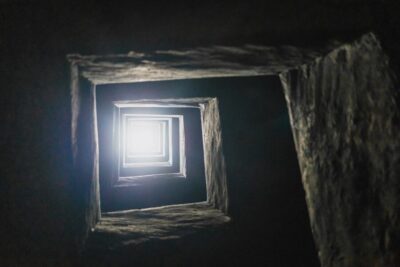
Naples Underground Entry Ticket and Guided Tour
Read our review →