

Reviewed · CYCLING TOURS
Rome EBike Tour: Appian Way, Catacombs & Roman Aqueducts
Rome has more than ruins in the city center. This e-bike tour carries you past ancient gates, rocky roads, burial tunnels, and huge aqueduct arches, giving you a look at the quieter side of the capital. I like the way the pedal-assisted Cannondale bikes make a 27-kilometer route manageable, and I like the small groups, capped at 10 riders, which allow guides such as Cas, Carmen, Fabio, and Nami to keep an eye on everyone.
The route combines major sights with open fields and rough park paths. That mix is the main appeal. The tradeoff is clear: about 40 percent of the ride uses city streets, and the remaining route includes dirt, stone, narrow paths, and uneven ground. You need to feel comfortable on a bike for several hours.
In This Review
- The essential facts at a glance
- Why this ride shows you a different Rome
- Starting at Porta San Sebastiano and the Aurelian Walls
- Riding the Appian Way, Rome’s ancient highway
- Catacombs of San Callisto or San Sebastiano
- Circus of Maxentius and Cecilia Metella’s tomb
- Villa dei Quintili and the open Roman countryside
- Park of the Aqueducts and Rome’s water system
- Caracalla Baths and the return to central Rome
- How hard is the ride?
- Food, weather, and what to bring
- Is the price fair?
- Who should book this Rome e-bike tour?
- Should you book it?
- FAQ
- Where does the Rome e-bike tour start?
- How long does the tour last?
- How far do you ride?
- Are the catacombs included?
- Which catacombs are visited?
- Is the tour suitable for beginners?
- What is included in the price?
The essential facts at a glance
- Ancient roads and aqueducts: Ride the Appian Way and the Park of the Aqueducts, two of Rome’s best outdoor history sites.
- A real e-bike outing: The route covers about 17 miles, or 27 kilometers, with roughly 60 percent off-road.
- Catacombs depend on the option: The six-hour tour includes a 45-minute guided visit. The four-hour version includes only a short pause, and on Wednesdays the catacomb stop is not included in that shorter tour.
- Small groups help with safety: A maximum of 10 riders makes street crossings and rough sections easier to manage.
- Expect an intermediate ride: The e-bike reduces effort, but it does not remove the need for balance, steering, and confidence on rocky paths.
- Bring money for food: Lunch is not included, although there are places along the route to buy food or drinks during a suitable break.
Why this ride shows you a different Rome
Most first visits to Rome focus on the Colosseum, Vatican Museums, Pantheon, and crowded central streets. This outing changes the pace. You leave the dense center by bike and reach a broad belt of ancient roads, farms, grass, and monumental ruins.
The route also helps you understand how Rome worked. The Appian Way carried people and goods toward southern Italy. The aqueducts brought water into the city. The catacombs reveal how people buried their dead below ground. These are not isolated museum objects. You see them in the places where they functioned.
I especially like the contrast between the modern city and the old countryside. One moment you are riding through streets with traffic, and soon after you are following a narrow path through tall grass beneath enormous stone arches. It is an outdoor history lesson with a little dust on it.
The tour costs $102.79 per person. That is not a cheap bike rental, but it includes a high-quality Cannondale e-bike, helmet, guide, handlebar bag, water, and, on the six-hour option, the guided catacomb visit. The price makes the most sense if you want several major sites in one outing and value the commentary and route planning. If you only want to pedal along the Appian Way for an hour, it is more than you need.
More Bike Tours in Rome
- Rome: Top Highlights & Hidden Gems Tour by Cannondale E-Bike
★ 4.9 · 1,760 reviews - Rome: Appian Way, Catacombs, & Roman Aqueducts E-bike Tour
★ 4.9 · 1,421 reviews - Rome City Small Group Bike Tour with quality Cannondale EBike
★ 5.0 · 1,380 reviews
Starting at Porta San Sebastiano and the Aurelian Walls
The meeting point is at Via Labicana 49, in central Rome. The ride begins with equipment, helmet, and route preparation before heading toward the Appian Way.
One of the early sights is Porta San Sebastiano, a large gate in Rome’s third-century defensive walls. You stop for about 10 minutes, enough to look closely at the structure and hear why this entrance mattered. The walls give you an immediate sense of old Rome as a fortified city, not just a collection of temples and arenas.
This first section includes city riding. The operator says the route uses carefully chosen streets, but traffic cannot be avoided completely. That matters if you have not ridden in an urban setting recently. Your guide manages crossings and keeps the group together, but you still need to pay attention.
The maximum group size is 10 people plus the guide. That is a useful limit for a route that shifts between streets and rough paths. Guides are repeatedly praised for giving clear directions, waiting for slower riders, and staying alert to safety. Cas is noted for patience and humor, while Carmen is praised for keeping the group organized and explaining the history along the way.
Riding the Appian Way, Rome’s ancient highway
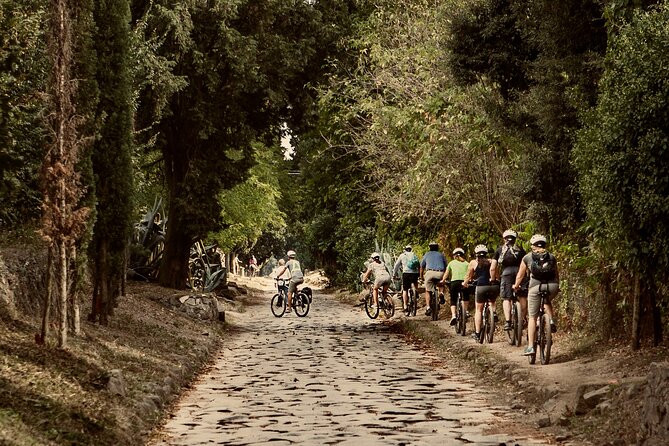
The Appian Way is the heart of the excursion. Known in Latin as the Via Appia Antica, it was built beginning in 312 BC to connect Rome with southern Italy. In its early form, the road reached toward Brindisi and stretched about 538 kilometers.
Do not expect a smooth modern cycleway. Parts of the road are rough dirt or stone, and some sections can be difficult for a rider who lacks confidence. Several riders found the e-bikes comfortable and easy to control, but the electric motor cannot flatten every bump. If you are unsure, you may prefer to walk the roughest part rather than force it.
The reward is a close look at an ancient road in its original setting. Cars and tour buses cannot provide the same view. You can stop near ruins, feel the uneven surface under your tires, and watch the city give way to open ground.
The e-bike has several levels of pedal assistance, including a stronger turbo mode. This helps the group stay together when riders have different fitness levels. It also makes the long distance much less taxing, though you still spend a long time in the saddle. One six-hour outing was reported to cover close to 20 miles, while the official route is about 17 miles. Either way, plan for a full half-day or more.
Catacombs of San Callisto or San Sebastiano
The catacomb choice is one of the most important details when booking. On the six-hour tour, you receive a guided 45-minute visit to the Catacombs of San Callisto. These second-century underground burial tunnels became the resting place of about half a million people.
Inside, your guide explains Roman burial traditions and the structure of the tunnels. The setting is atmospheric and somewhat eerie, but the value is historical rather than theatrical. You are seeing an underground burial complex tied to the early Christian story of Rome.
On Wednesdays, the six-hour route visits the Catacombs of San Sebastiano instead. The four-hour tour does not include the guided underground visit. It includes only a short pause at the catacomb area, and on Wednesdays even that stop is not included. If the catacombs are a main reason for booking, select the longer tour and check the day carefully.
Photography is not allowed inside the catacombs. Leave your camera ready for the outdoor sights instead. The underground visit is also a reason to choose the six-hour option even if you are not especially interested in cycling. It adds a structured historical visit to a ride that otherwise centers on outdoor ruins.
More E-Bike Tours in Rome
- Rome:Appian Way E-bike Tour with Catacombs, Aqueducts & Food
★ 4.9 · 1,210 reviews - Rome: E-Bike Night Tour with Food and Wine Tasting
★ 4.9 · 1,131 reviews - Rome: Appian Way E-Bike Tour Catacombs, Aqueducts & Picnic
★ 4.6 · 727 reviews - Rome: Appian Way & Catacomb Sunset E-bike Tour with Aperitif
★ 4.5 · 682 reviews
Circus of Maxentius and Cecilia Metella’s tomb
The next stops bring you to the remains of the Circus of Maxentius and its adjoining imperial villa. The circus was a private chariot racetrack from the early fourth century AD. The stop is brief, about five minutes, so your guide’s explanation matters more than a long independent visit.
You also pass the Mausoleum of Cecilia Metella, the largest mausoleum built along the ancient Appian Way. It dates from the first century AD and was dedicated to a young noblewoman. The nearby Castrum Caetani adds to the fortified character of the site.
These brief stops work well as part of a moving route. You see a sequence of different Roman remains without spending the entire day at one monument. The limitation is that you do not receive a long, quiet visit at every site. If you want detailed time inside each archaeological complex, a walking tour or dedicated ticket would suit you better.
Villa dei Quintili and the open Roman countryside
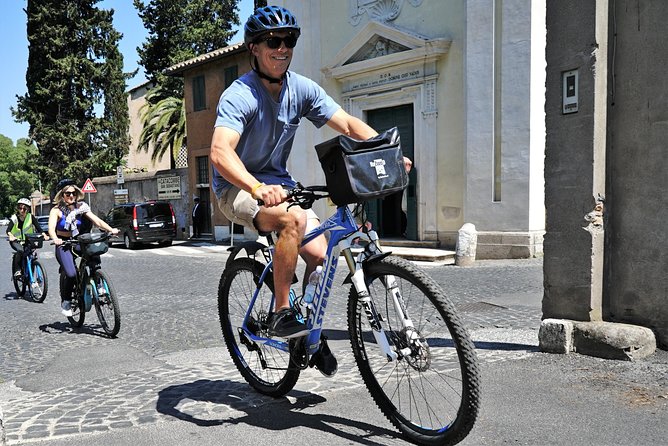
The six-hour route continues to Villa dei Quintili and Santa Maria Nova. This sprawling second-century villa was so impressive that it reportedly raised the envy of Emperor Commodus. The stop is included only on the longer route.
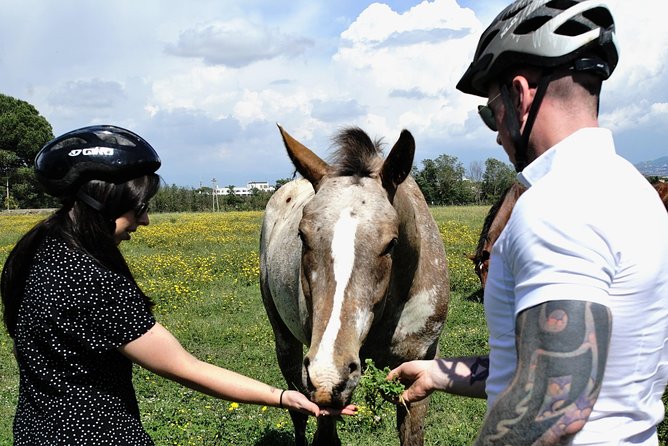
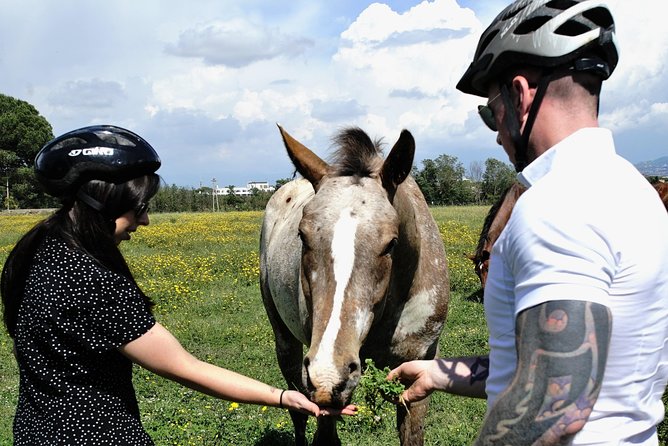
Here, the point is scale. The remains help show how wealthy Romans lived outside the central city, with large estates and extensive grounds. You ride through a part of Rome that feels rural, with green fields and rustic animal farms despite being within the wider metropolitan area.
The countryside is not polished like a formal garden. Paths can be dusty, rocky, or narrow. Wear clothes and shoes that can handle dirt. A rider who expects smooth pavement may find this section tiring, while someone who enjoys an active outing will likely see the rough surface as part of the fun.
Park of the Aqueducts and Rome’s water system
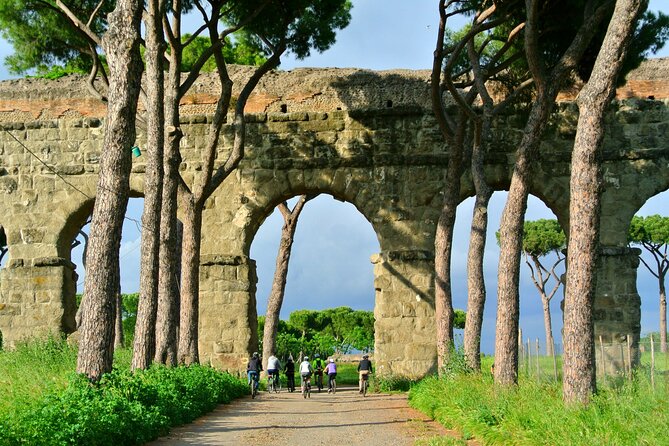
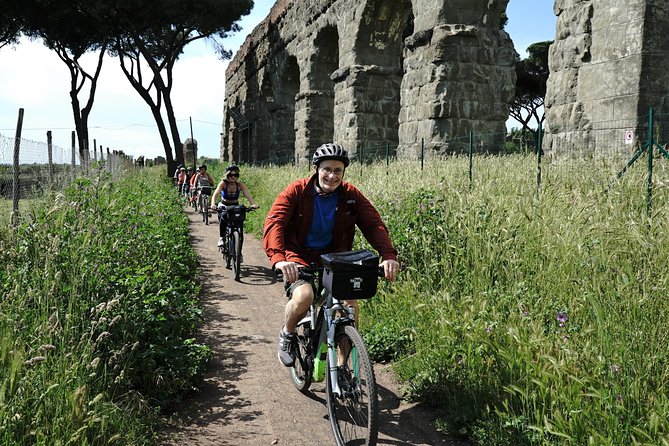
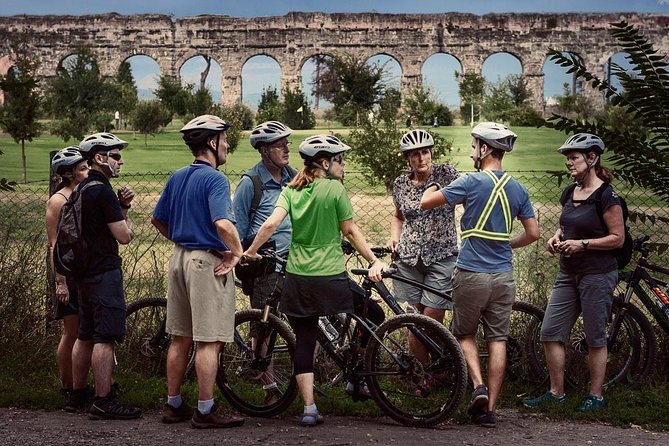
The Park of the Aqueducts is one of the strongest parts of the ride. Several ancient aqueducts cross the park in long lines, supplying Rome with water in antiquity. Their arches are big enough to make the modern city feel small.
You spend about 30 minutes here. That is longer than at several of the archaeological stops, and rightly so. The aqueducts need space to appreciate. From the bike paths, you can see the arches stretching across open fields, with tall grass and broad skies around them.
The paths through the park can be narrow. You may need to ride carefully, especially where grass crowds the route or the surface becomes uneven. The extra time can feel excessive if you prefer a faster-moving itinerary, but it also gives you one of the best chances to stop, take photographs, and listen to the guide.
This is where the tour feels most different from a standard Rome sightseeing circuit. You are not looking up at a single monument in a crowded square. You are moving through the infrastructure that once kept an enormous city supplied with water.
Caracalla Baths and the return to central Rome
The six-hour tour includes a view over the Baths of Caracalla, one of ancient Rome’s largest bathing complexes. The stop lasts about five minutes, so treat it as a final exterior sight rather than a full visit.
The baths once served as a major public center, with spaces for bathing and social life. Even from outside, the scale of the remains helps explain how much labor and engineering supported everyday Roman life.
After the parks and ancient roads, the ride returns toward central Rome. City streets make up about 40 percent of the total route, so the final stretch is not all quiet countryside. Your guide remains important here, especially at crossings and points where the group must share the road.
The activity ends back at the meeting point. There is no hotel pickup or drop-off, so plan your route to Via Labicana 49 before the start time.
How hard is the ride?
The operator rates the tour as intermediate. That is the right way to think about it. You do not need to be a serious cyclist, but you should be comfortable riding for several hours and handling a bike on rough surfaces.
The official route covers about 27 kilometers, with 60 percent off-road. You may encounter:
- Rocky or uneven stone surfaces
- Dusty dirt tracks
- Narrow paths through grass
- City traffic during connections between parks
- Street crossings that require attention
- Long periods on the bike, even with electric assistance
The e-bike makes a major difference. It lets riders with different fitness levels stay together, and several people who had not used an e-bike before found the controls easy to manage. Still, pedal assistance does not replace cycling skills.
The tour is difficult with a child seat or child extension attached to the bicycle. The equipment has a 300-pound, or 136-kilogram, weight limit. Helmets are mandatory and provided free.
Food, weather, and what to bring
Food and drinks are not included. The route offers a few chances to buy something, and you can eat or drink during an appropriate break. Some outings have included a pizza stop, but you should not assume lunch is part of the package.
Bring water beyond the biodegradable bottle provided if you normally drink often during exercise. Wear comfortable clothes that can get dusty, and choose shoes suited to bike pedals and uneven paths. Sun protection is sensible for the open park sections.
Weather can affect the experience. The company has offered rescheduling or a refund when rain made riding unattractive, but you should confirm the day’s conditions and cancellation terms before setting out. Wednesday rides can last about 30 minutes longer because of a route change. The same extra time may apply from January 14 to February 11, 2026.
The six-hour catacomb tour will not run on Easter Sunday, April 5, 2026, because the catacombs are closed.
Is the price fair?
At $102.79, this is a substantial half-day expense. I think the value is good if you want a guide, a quality e-bike, and access to several sites that are awkward to connect by public transportation.
You are paying for more than the bicycle. The route links the Aurelian Walls, Appian Way, catacombs, imperial ruins, Villa dei Quintili, aqueducts, and Caracalla Baths. A taxi-based day would cost more and would not let you experience the ancient road or countryside at ground level.
The four-hour tour is the better value for a shorter outing, but it gives up the guided catacomb visit and some longer-route stops. I would choose the six-hour option if your schedule allows and the underground visit matters to you.
A minimum of four participants is required. If fewer people book, the tour may be canceled after confirmation, with an alternative or full refund offered. Free cancellation is available up to 24 hours before the start time. Changes or cancellations inside that window are not refunded.
Who should book this Rome e-bike tour?
I would recommend it to active adults, families with cycling experience, and anyone who wants a break from indoor museums and crowded central streets. It also suits a mixed-age group because the motor assistance helps people ride at a similar pace. One group ranging from 42 to 70 managed well, including a 70-year-old who was new to e-bikes but already rode a regular bicycle often.
I would not pick it for a first-time cyclist, someone uncomfortable around city traffic, or anyone who needs a fully smooth route. The rocky Appian Way can feel intimidating, and the ride is long even when the motor is doing part of the work.
Should you book it?
Book it if you want Rome’s ancient infrastructure in its original setting, not just monuments behind barriers. The aqueducts, Appian Way, and countryside give you a rare sense of how Rome stretched beyond its famous center.
Choose the six-hour tour for the guided catacombs and Villa dei Quintili. Choose the four-hour version only if you want a shorter ride and can accept the limited catacomb stop. Check the day of the week, bring clothes that can get dusty, and be honest about your cycling confidence.
For the right rider, this is one of the most rewarding ways to see Rome: active, historical, slightly rough around the edges, and far removed from the usual sightseeing loop.
FAQ
Where does the Rome e-bike tour start?
The meeting point is Via Labicana 49, 00184 Rome. The tour ends back at the same meeting point.
How long does the tour last?
The tour has four-hour and six-hour options. On Wednesdays, a route change may extend the duration to about four and a half hours or six and a half hours.
How far do you ride?
You cover approximately 17 miles, or 27 kilometers. About 60 percent of the route takes place off-road.
Are the catacombs included?
A guided 45-minute catacomb visit is included only with the six-hour tour. The four-hour tour has a short pause at the catacombs, but no guided underground visit. On Wednesdays, the four-hour tour does not include the catacomb stop.
Which catacombs are visited?
The six-hour tour visits the Catacombs of San Callisto on most days. On Wednesdays, it visits the Catacombs of San Sebastiano instead.
Is the tour suitable for beginners?
The tour is rated intermediate. You should be comfortable riding a bike for several hours and handling city streets, rocky roads, dirt paths, and narrow park tracks.
What is included in the price?
The price includes a Cannondale e-bike, helmet, professional guide, handlebar bag, and water in a biodegradable bottle. The six-hour tour also includes the guided catacomb visit. Food, drinks, and hotel transportation are not included.
Recently added around Rome
- Palatine Hill and Roman Forum Tour with Fast-Track Entrance★ 4.2 · 417 reviews
- Tivoli: Villa D’Este & Villa Adriana Pass & App Audioguide★ 4.4 · 364 reviews
- From Rome: Villa D’Este & Villa Adriana Day Trip with Lunch★ 4.4 · 289 reviews
- Vatican Museums & Sistine Chapel Skip-the-Line Guided Tour★ 4.6 · 254 reviews
- Rome: The Three Tenors at St. Paul’s Church Concert Ticket★ 4.7 · 699 reviews
- Tivoli: Villa D’Este Entry Ticket and App Audio Guide★ 4.3 · 191 reviews
- Rome: Capitoline Museums and Centrale Montemartini Tickets★ 4.4 · 328 reviews
- Rome: St. Peter’s Basilica and Papal Tombs Guided Tour★ 4.6 · 477 reviews
Cycling Tours, compared.
Top Highlights & Hidden Gems Tour by Cannondale E-Bike
Read our review →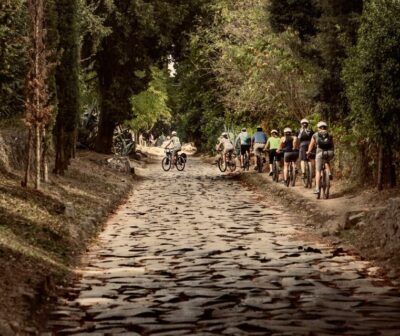
Appian Way, Catacombs, & Roman Aqueducts E-bike Tour
Read our review →
Rome City Small Group Bike Tour with quality Cannondale EBike
Read our review →
Tuscany Bike Tours Through the Chianti Hills with Wine Tasting
Read our review →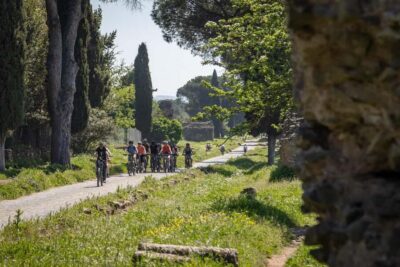
Appian Way E-bike Tour with Catacombs, Aqueducts & Food
Read our review →

Browse the lists this tour appears in