
Reviewed · CITY TOURS
Rome: Guided City Center Evening Sightseeing Walking Tour
Rome looks better after the heat fades. This three-hour walk links several of the city’s grandest sights, from Piazza del Popolo and the Pincio Terrace to the Trevi Fountain, Pantheon, Piazza Navona, and Campo de’ Fiori. I especially like the sunset view over Rome and the way a guide adds meaning to monuments you might otherwise pass without a second thought. I also like the evening timing, which can make the city cooler and more pleasant. The main drawback is the pace: you walk almost the whole time, with hills, steps, and little opportunity to sit.
This is an excellent first-evening introduction, especially if you have just arrived and want to get your bearings fast. Guides such as Andrada, Carolina, Marzia, Ava, and Ghil have been praised for their clear explanations, humor, and practical advice. Still, you should wear comfortable shoes and expect a brisk three hours rather than a relaxed stroll.
In This Review
- Key points at a glance
- What this Rome evening tour is really like
- Piazza del Popolo and the climb to Pincio Terrace
- The Spanish Steps and Bernini’s Barcaccia Fountain
- Trevi Fountain and the return-to-Rome coin toss
- The Pantheon from Piazza della Rotonda
- Piazza Navona and Bernini’s Four Rivers Fountain
- Campo de’ Fiori, the final stop
- Why the evening timing matters
- Pace, comfort, and accessibility
- The guide can make or break the experience
- Who should book this walk?
- Should you book the Rome evening walking tour?
- FAQ
- How long is the Rome evening walking tour?
- Where does the tour begin?
- Where does the tour end?
- Which sights are included?
- Is the tour suitable for wheelchair users?
- Are children allowed to join for free?
Key points at a glance
- Sunset from Pincio Terrace: Begin above Piazza del Popolo with broad views across Rome’s rooftops.
- Classic Rome in one route: See the Spanish Steps, Trevi Fountain, Pantheon, Piazza Navona, and Campo de’ Fiori.
- Strong guide element: The best part is the explanation of art, architecture, religion, legends, and Roman customs.
- Evening brings relief: Cooler air and changing light make the walk easier and more atmospheric than a midday outing.
- A useful first-night plan: The route helps you decide which squares, fountains, and neighborhoods deserve a return visit.
- Bring walking stamina: This is not suitable for wheelchair users, and the first climb to Pincio Terrace is steep.
What this Rome evening tour is really like
The tour begins at Piazza del Popolo, in front of the Church of Santa Maria del Popolo. Look for the guide holding a Rome Your Way sign. The church is next to the Leonardo da Vinci Museum, a useful landmark if you are finding the meeting point in a busy part of central Rome.
From there, you walk through the historic center for about three hours. The route is designed around Rome’s outdoor monuments and public squares, so you do not enter the Pantheon or other attractions along the way. That matters if you want detailed interior visits. It is also a benefit if your goal is to see a broad slice of central Rome in one evening without booking separate admission times.
The tour costs $46 per person. I consider that a fair price for a live English-speaking guide and three hours of focused sightseeing, particularly on a first visit. You are paying less for transportation or entry tickets and more for the stories, route planning, and explanations that turn a collection of famous places into a connected Roman experience.
Children aged five and younger join for free. Hotel pickup and drop-off are not included, so you need to reach Piazza del Popolo yourself and arrange your own way onward from Campo de’ Fiori.
More Walking Tours in Rome
- Rome: Trastevere & Campo de Fiori Street Food Walking Tour
★ 4.9 · 2,768 reviews - Rome: Paranormal Night Walking Tour & Secret Backstreets
★ 4.9 · 1,921 reviews - Rome by Night Walking Tour – Legends & Criminal Stories
★ 4.5 · 1,003 reviews
Piazza del Popolo and the climb to Pincio Terrace
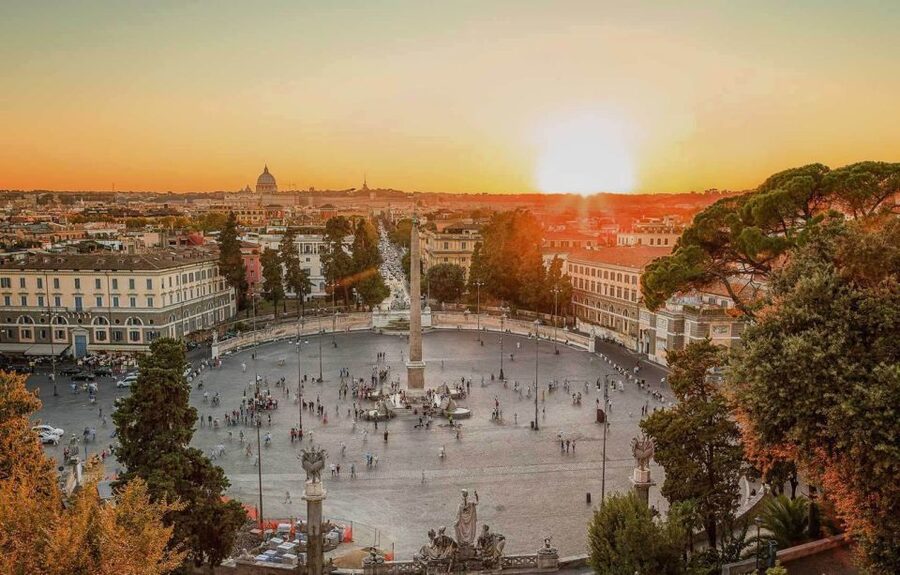
Piazza del Popolo is a fitting place to begin. Churches, fountains, monuments, and the broad open shape of the square give you an immediate sense of Rome’s grand civic style. Rather than starting with a single building, the tour begins with a complete urban setting.
The first section includes a walk uphill to Pincio Terrace. This is one of the tour’s most rewarding moments, but also one of its clearest physical challenges. One person specifically found the opening climb difficult, so do not treat the word walking as a polite label for an easy pavement stroll.
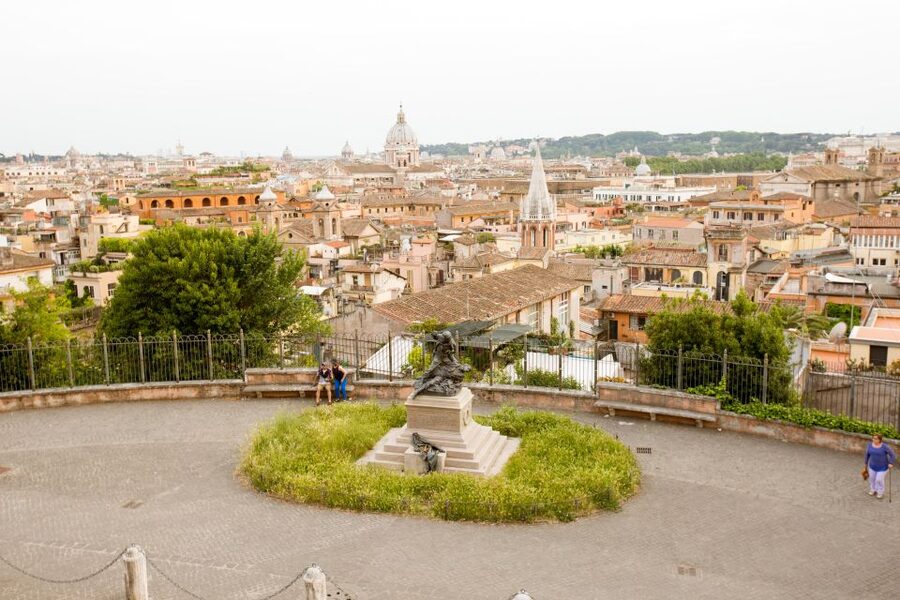
At the terrace, you look over Rome as the sun drops behind the rooftops. The view gives you a useful mental map before the tour moves into the narrower streets below. The changing light also does something a textbook cannot: it shows you how Rome’s domes, church towers, and warm-colored buildings fit together as a city.
I would pay close attention here, even if you are eager to reach the famous fountains. This opening viewpoint creates a calm pause before the faster part of the route.
The Spanish Steps and Bernini’s Barcaccia Fountain
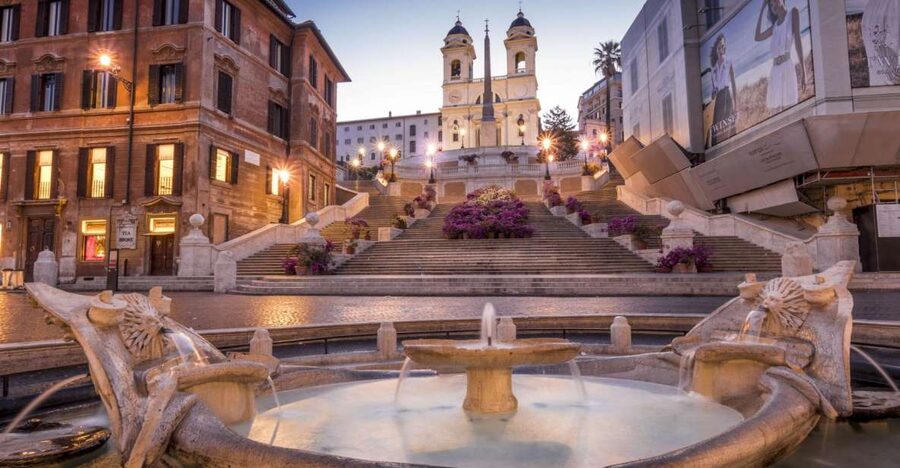
The walk continues to Piazza di Spagna, home of the Spanish Steps and Bernini’s Barcaccia Fountain. This is one of Rome’s most photographed corners, but the guide helps you look beyond the usual photo stop.
The Barcaccia, shaped like a partly sunken boat, sits at the foot of the steps. The fountain gives the square a playful touch, while the grand staircase pulls your eye upward toward the church above. You can appreciate the contrast between formal architecture and the everyday life of one of Rome’s busiest gathering places.
The tour does not turn this into a long, separate visit. You stop, listen, look, and continue. That approach suits people who want an overview, but it may feel too brief if the Spanish Steps are high on your personal list. You will have time to take in the setting, though this is not the place to linger for a quiet portrait or extended people-watching session.
Your guide may also explain the art and architectural choices that shape the square. Several guides praised in the feedback, including Andrada and Carolina, were especially appreciated for connecting facts with stories and keeping the group interested as it moved.
Trevi Fountain and the return-to-Rome coin toss
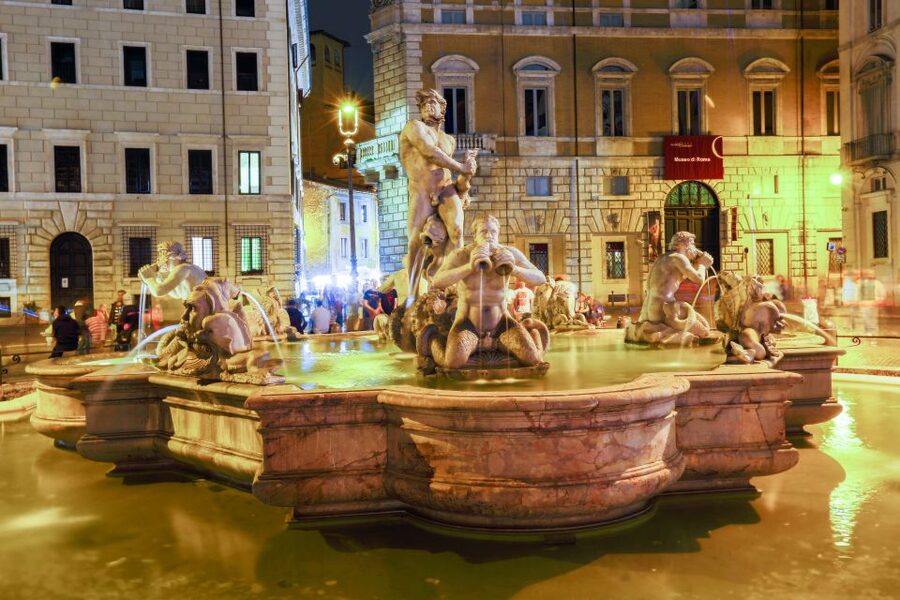
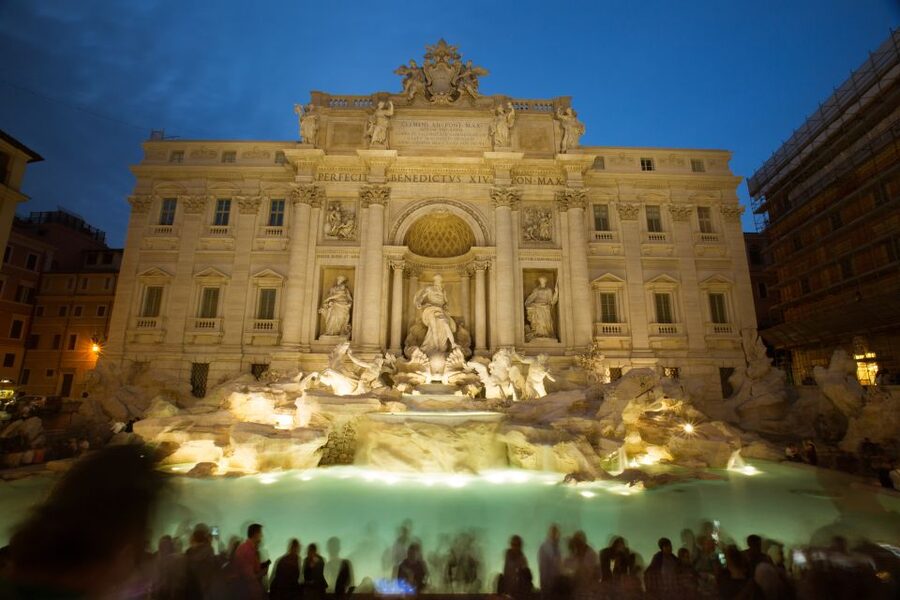
The Trevi Fountain is the route’s biggest crowd magnet. Even in the evening, expect a lively scene around this enormous Baroque fountain. The sound of water, bright stone, and tightly packed buildings make the first view dramatic.
The familiar custom says that tossing a coin over your left shoulder into the fountain ensures a return to Rome. It is a small ritual, but it fits the mood of the stop. You get a famous sight, a local tradition, and a simple reason to imagine coming back.
This is also a place where a guide earns the tour price. Without context, you may see an impressive fountain, take a picture, and move on. With an explanation of the design, period, and legend, you have a better reason to study the figures, movement, and water rather than treating the fountain as a quick backdrop.
Do not expect a quiet encounter. The Trevi Fountain is one of Rome’s busiest public sights, and your time here may include waiting for a clear view through the crowd. The evening helps with heat, but it does not guarantee empty streets.
Still Rome, but a slower afternoon:
- Vatican: Museums & Sistine Chapel Entrance Ticket
★ 4.5 · 144,003 reviews - Vatican Museums & Sistine Chapel Tour with Optional Basilica
★ 4.3 · 67,413 reviews - Colosseum, Roman Forum & Palatine Guided Tour
★ 4.7 · 63,148 reviews - Vatican Museums, Sistine Chapel & St Peter’s Basilica Guided Tour
★ 4.5 · 39,149 reviews
The Pantheon from Piazza della Rotonda
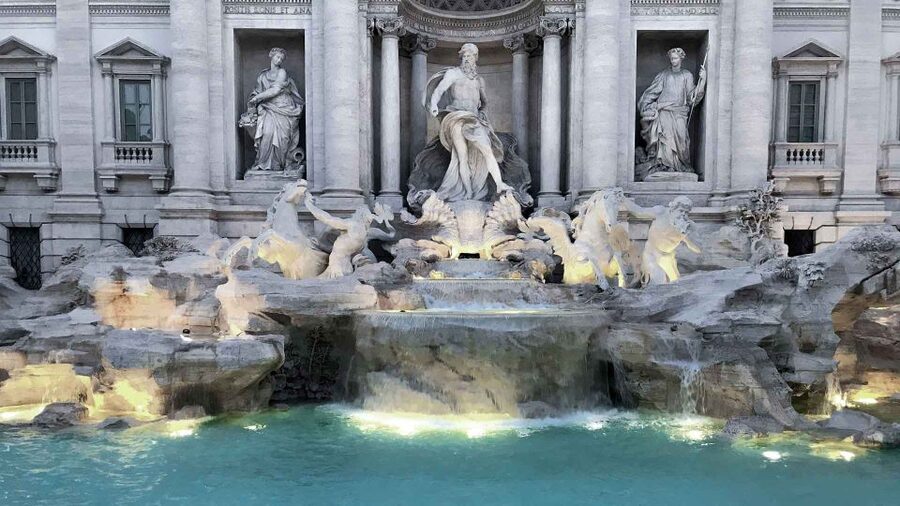
Next comes Piazza della Rotonda and the exterior of the Pantheon. The building began in 27 B.C. as a temple dedicated to all the Roman gods. In the seventh century, it became a church dedicated to Mary and the martyrs.
That long change of purpose is one reason the Pantheon matters. It is not only an ancient Roman monument preserved for modern eyes. It is also a building that continued to serve new religious and civic needs across centuries.
The square gives you a good setting for understanding the Pantheon’s scale. The columns and pediment look formal from a distance, but the building’s survival is the real story. You also learn that the Pantheon is the burial place of major Renaissance artists, including Raffaello.
Because this tour views the exterior, you should plan a separate interior visit if seeing the inside is important to you. The walking tour provides useful historical background, but it does not replace time spent examining the interior.
Piazza Navona and Bernini’s Four Rivers Fountain
Piazza Navona is one of the tour’s richest stops. Its long shape follows the outline of an ancient stadium, and the square contains several major works of art and architecture.
At the center is Bernini’s Four Rivers Fountain. The sculpture represents four great rivers, and the guide can help you understand the figures and the symbolism rather than leaving you to guess what the dramatic forms mean.
The square also includes Sant’Agnese in Agone, designed by Borromini, along with Palazzo Pamphili. At either end, you find the Neptune Fountain and the Moor Fountain. This concentration of fountains, churches, and palaces makes Piazza Navona a good place to compare different artistic styles in a single setting.
This is a point where a strong guide can make a real difference. Andrada was praised for explaining complex Roman history with ease, while other guides were appreciated for their passion for art and architecture. That sort of explanation is valuable here because the square can look like a pleasant open space unless someone points out how much history and artistic rivalry surround it.
You should also expect interruptions from the setting itself. Piazza Navona is a popular public square, and street activity can make it harder to hear. Headsets are provided when needed, which is useful when the group is standing near crowds or traffic.
Campo de’ Fiori, the final stop
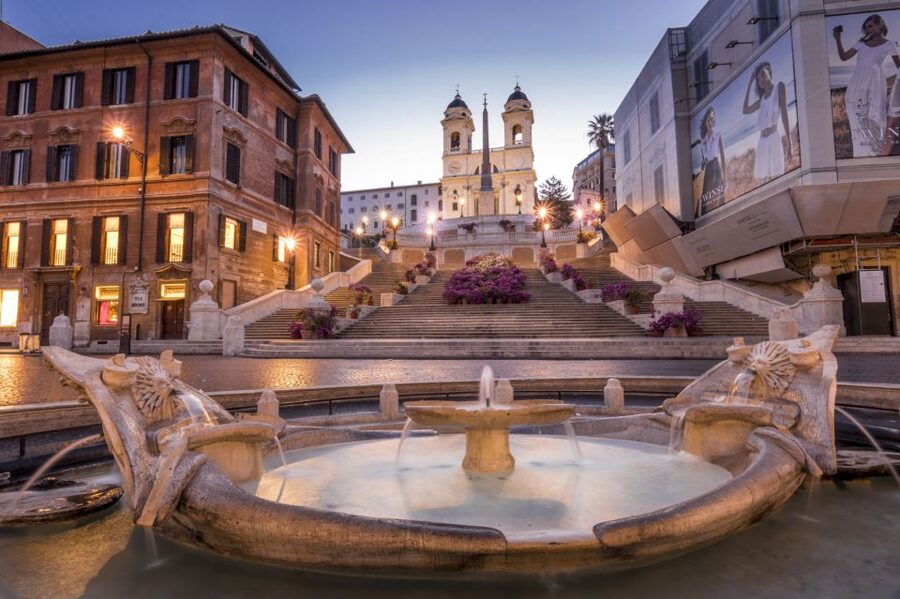
The tour ends at Campo de’ Fiori, a square with a darker past than its cheerful evening atmosphere suggests. It was once associated with races and public executions. The statue of Giordano Bruno in the center recalls one of the people executed there.
Today, Campo de’ Fiori serves as a morning marketplace and an evening meeting place. Its final-stop role is practical as well as atmospheric. You are not dropped in an isolated location at the end of the walk. Instead, you finish in an area where you can continue your evening, find food, or simply explore nearby streets on your own.
Restaurant suggestions have been part of the guide experience for some groups. Marzia, an archaeologist who led one tour, was also praised for offering restaurant tips and advice for later visits. Juliano recommended supplì, a Roman fried rice snack, giving one group a simple local food suggestion along the route.
I would not book this tour solely for dining advice, since restaurants and food options can change. But ending at Campo de’ Fiori gives you a useful starting point for an unplanned evening.
Why the evening timing matters
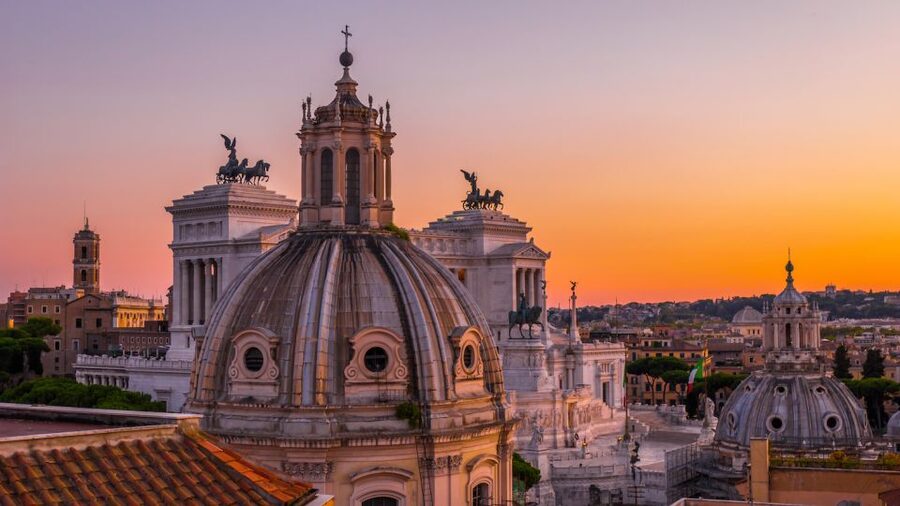
Rome can be tiring in the middle of the day, especially during summer. The evening schedule lets you see the city after the worst heat has passed, and the sunset at Pincio Terrace gives the route a natural beginning.
Several people found the cooler conditions a major advantage. One group booked the tour after arriving in Rome during the afternoon and found it a strong way to begin the trip. Another used it to decide which sights and areas deserved a second visit.
The light changes the character of the monuments. Fountains glow against darker streets, church facades appear warmer, and the view from Pincio Terrace becomes more memorable. You also get a useful introduction without spending the entire day inside museums or waiting in lines.
The tradeoff is that evening does not mean empty. The Trevi Fountain and major squares can still be crowded, and some parts of the route may feel busy. If you want long, quiet stops at each monument, a private visit or self-guided day plan may suit you better.
Pace, comfort, and accessibility
The full walk takes three hours, and you should plan to be on your feet for nearly all of it. One detailed account described the pace as fast, with no real break, while others found the pace comfortable and well judged. That difference probably reflects personal fitness, group rhythm, weather, and the guide leading the walk.
For most people, the safest plan is simple:
- Wear shoes you already trust.
- Carry water.
- Allow extra time to reach Piazza del Popolo.
- Avoid bringing more than you want to carry for three hours.
- Expect steps and an uphill start.
- Keep some energy for the walk after the tour.
The experience is not suitable for wheelchair users. The opening climb to Pincio Terrace is the clearest concern, but the route also includes uneven city streets, steps, and crowded public areas. Families with young children should note that children five and under are free, but free admission does not remove the physical demands of the walk.
Headsets are available when needed. That can help you hear the guide in busy squares, though you should still stay close to the group and watch for the meeting instructions.
The guide can make or break the experience
The strongest praise focuses on the guides. Andrada received repeated approval for her explanations of history and architecture, her friendly manner, and her ability to keep track of a wandering group. Carolina was praised for her energy, humor, and passion. Ava, Ghil, Marzia, Juliano, and others were also described as engaging and clear.
The useful pattern is not one particular guide name. It is the way the best guides connect facts to what you are looking at. They explain religion, art, architecture, legends, and daily Roman life without turning the walk into a dry lecture.
That matters in Rome. You can pass an obelisk, fountain, or church on your own and appreciate its appearance. A guide can tell you why it is there, who commissioned it, and how it fits into the city’s long story. The result is a better understanding of places you may already have visited independently.
The tour is offered in English. If you need another language, this experience will not meet that need.
Who should book this walk?
I would choose this tour for a first night in Rome, a short stay, or any trip where you want a fast orientation to the center. It works especially well if you prefer outdoor sights, like asking questions, and want a guide to connect famous places with less obvious details.
It is also a smart choice for people arriving in the afternoon who have not yet planned their first evening. You see a large portion of central Rome and finish in a square where you can continue eating or walking.
I would be more cautious if you have limited mobility, dislike hills and steps, or want to spend extended time at one monument. The route covers many places, so the reward is breadth rather than depth. You will not enter the Pantheon, and the stops at the Spanish Steps and Trevi Fountain are part of a moving walking tour, not private visits.
At $46, the value is strongest when you use the tour as an introduction. The guide, route, sunset view, and historical explanation save you from wandering past major sights without understanding them. If you already know central Rome well, the experience may feel less essential, though an evening walk can still provide a pleasant change of pace.
Should you book the Rome evening walking tour?
Book it if you want to see Rome’s key center sights in one evening, learn the story behind them, and finish with options for food and nightlife at Campo de’ Fiori. Schedule it early in your stay so you can return later to the places that catch your eye.
Skip it if three hours of continuous walking sounds tiring or if your priority is entering monuments rather than viewing their exteriors. For everyone else, this is a well-priced way to meet Rome at sunset, hear useful stories, and begin the rest of your visit with a clearer sense of the city.
FAQ
How long is the Rome evening walking tour?
The guided walking tour lasts three hours.
Where does the tour begin?
Meet at Piazza del Popolo, in front of the Santa Maria del Popolo Church. The church is next to the Leonardo da Vinci Museum. Look for a guide holding a Rome Your Way sign.
Where does the tour end?
The walk ends at Campo de’ Fiori.
Which sights are included?
The route includes Piazza del Popolo, Pincio Terrace, the Spanish Steps, Bernini’s Barcaccia Fountain, the Trevi Fountain, Piazza della Rotonda and the Pantheon exterior, Piazza Navona, Bernini’s Four Rivers Fountain, and Campo de’ Fiori.
Is the tour suitable for wheelchair users?
No. The experience is not suitable for wheelchair users and includes an uphill walk to Pincio Terrace.
Are children allowed to join for free?
Children aged five and younger go for free.
Recently added around Rome
- Palatine Hill and Roman Forum Tour with Fast-Track Entrance★ 4.2 · 417 reviews
- Tivoli: Villa D’Este & Villa Adriana Pass & App Audioguide★ 4.4 · 364 reviews
- From Rome: Villa D’Este & Villa Adriana Day Trip with Lunch★ 4.4 · 289 reviews
- Vatican Museums & Sistine Chapel Skip-the-Line Guided Tour★ 4.6 · 254 reviews
- Rome: The Three Tenors at St. Paul’s Church Concert Ticket★ 4.7 · 699 reviews
- Tivoli: Villa D’Este Entry Ticket and App Audio Guide★ 4.3 · 191 reviews
- Rome: Capitoline Museums and Centrale Montemartini Tickets★ 4.4 · 328 reviews
- Rome: St. Peter’s Basilica and Papal Tombs Guided Tour★ 4.6 · 477 reviews
City Tours, compared.
City Sightseeing Hop-on Hop-off Bus with Audioguide
Read our review →
City Sightseeing Hop-On Hop-Off Bus with Audio Guide
Read our review →
City Sightseeing Rome Hop-On Hop-Off Bus Tour
Read our review →

Fettuccine Pasta Cooking Class in Rome’s City Center
Read our review →
Vatican City: Vatican Museums & Sistine Chapel Entry Ticket
Read our review →

City Sightseeing Florence Hop-On Hop-Off Bus Tour
Read our review →Browse the lists this tour appears in