
Reviewed · WALKING TOURS
Rome: Paranormal Night Walking Tour & Secret Backstreets
Rome gets stranger after sunset. This two-hour walk mixes dark Roman history with ghost tales, quiet lanes, old churches, and famous sights that feel quite different at night. I like the route for two clear reasons: it takes you beyond the usual daytime circuit, and it turns small details, such as street Madonnas and grim church art, into memorable stories. The main thing to consider is that this is a walking-and-storytelling tour, not a theatrical haunted-house show, so the quality depends heavily on your guide and your appetite for legends.
I also like the timing. At $34 per person, you get a full evening of guided sightseeing without paying for a meal or a major museum ticket. Guides such as Ana, Maham, Antonio, Domenica, Dinara, and Yousef have been praised for their humor, warmth, and storytelling. Still, late arrivals cannot join for a refund, so you need to reach Campo de’ Fiori early.
In This Review
- Key points before you book
- Why Rome’s ghost stories work so well at night
- Starting under Giordano Bruno in Campo de’ Fiori
- Piazza Farnese and the city behind the grand facades
- Small Madonnas and the details you could miss
- Ponte Sisto and the walk toward the river
- The Fountain of the Mask and Via Giulia
- A church for the dead at Santa Maria dell’Orazione e Morte
- Santa Maria in Monserrato degli Spagnoli
- Clivo di Rocca Savella and the final approach
- Ending at Castel Sant’Angelo
- Guide style, group size, and atmosphere
- Is $34 good value for Rome?
- Who should book this night walk?
- Should you book the Rome Paranormal Night Walking Tour?
- FAQ
- How long does the Rome Paranormal Night Walking Tour last?
- How much does the tour cost?
- Where does the tour begin?
- How do I find the guide?
- Where does the tour finish?
- Is the tour offered in English?
- How large is the group?
Key points before you book
- The route crosses central Rome at night: You walk from Campo de’ Fiori to Castel Sant’Angelo, passing Ponte Sisto, Via Giulia, and several atmospheric churches.
- The stories focus on Rome’s darker side: Expect tales of murders, executions, popes, emperors, artists, ghosts, and places linked to death.
- You visit unusual details, not just headline monuments: The stops include small Madonna images, the Fountain of the Mask, and a church connected with prayer for the dead.
- The group is limited to 20 people: That is small enough for a more personal feel, though busy streets may still make it hard to hear at times.
- The experience is in English: A live local guide leads the walk, and private groups are available.
- The finish is near Castel Sant’Angelo: You end beside one of Rome’s most dramatic night views, rather than circling back to the starting point.
Why Rome’s ghost stories work so well at night
Rome does not need much help creating atmosphere. Its lanes are old, its churches hold centuries of human drama, and ordinary fountains or alley corners often carry stories that are easy to miss during a busy daytime walk. After dark, the tour asks you to slow down and listen.
The tone appears to sit between history lesson, ghost story, and light entertainment. You hear about bloody executions and grisly deaths, but the guides also use jokes and personal warmth to keep the mood from becoming too heavy. Maham, Ana, Antonio, and Yousef have each been praised for making the material lively and easy to follow. One guide may tell a story gently and emotionally, while another may lean harder into comic timing.
That variation is part of the appeal, but also one of the few uncertainties. The company assigns different guides, so you should expect a strong storyteller, but not a single fixed personality or identical performance every night.
The walk also works well after a day of major sights. You are not asked to study another long list of dates and rulers. Instead, you look at the city around you and hear why a particular statue, bridge, chapel, or street gained a darker reputation.
More Walking Tours in Rome
- Rome: Trastevere & Campo de Fiori Street Food Walking Tour
★ 4.9 · 2,768 reviews - Rome by Night Walking Tour – Legends & Criminal Stories
★ 4.5 · 1,003 reviews - Rome: Guided City Center Evening Sightseeing Walking Tour
★ 4.4 · 953 reviews
Starting under Giordano Bruno in Campo de’ Fiori
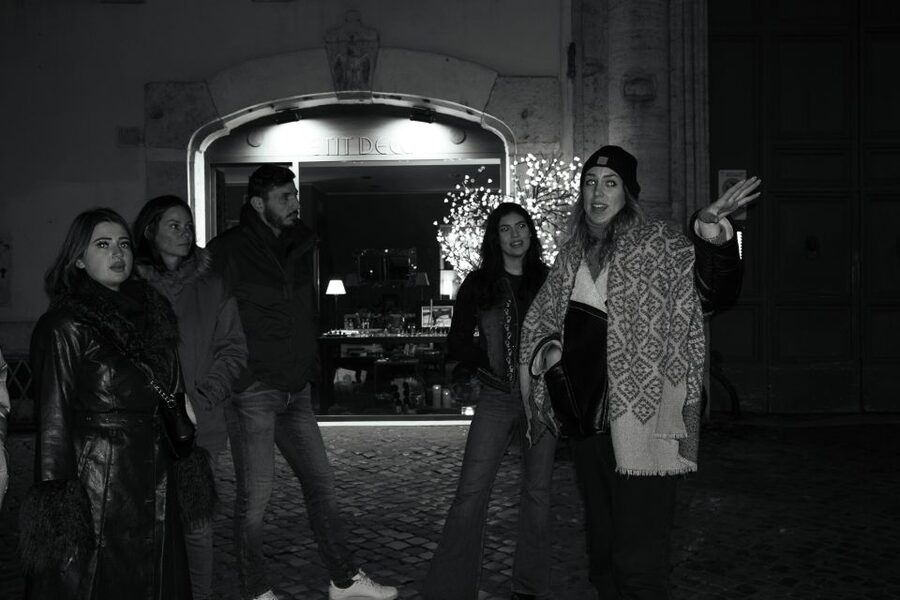
The meeting point is beneath the statue of Giordano Bruno in Piazza Campo de’ Fiori. Arrive at least 10 minutes before the scheduled start and look for the yellow Carpe Diem Tours flag or sign.
Campo de’ Fiori is a fitting place to begin. By day, it is known for its market and lively public life. The statue of Bruno gives the square a more serious edge, and the guide uses the setting to introduce the uneasy relationship between power, belief, punishment, and public spectacle in Rome.
The stop lasts about 15 minutes, including walking and sightseeing. Do not expect a long historical lecture on every person connected with the square. The point is to establish the mood and show how a familiar place can look very different when you know what happened there.
This first stop also reveals an important practical detail: the group may gather in a busy square, so keep an eye out for the yellow sign rather than waiting at a random corner. If you arrive late, the group may already be moving, and refunds are not available for late arrivals.
Piazza Farnese and the city behind the grand facades
From Campo de’ Fiori, the route continues to Piazza Farnese, another elegant Roman square with a darker undercurrent. Here, the tour moves from a famous public space into the kind of historical setting where powerful families, church officials, artists, and ordinary citizens crossed paths.
I like this part because it gives you a chance to notice how Rome’s grand architecture can conceal unpleasant stories. The tour is not only about ghosts floating through abandoned buildings. It is also about real people, harsh decisions, public punishment, and the way legends grow around them.
The walk between stops is part of the experience. You are not transported from one attraction to the next. You cross small streets and pass ordinary corners, which makes the city feel less like a collection of monuments and more like a place where strange events unfolded in daily life.
The route description assigns roughly 15 minutes to each stop, but that includes movement and commentary rather than a full quarter-hour lecture at every location. Wear shoes you can walk in comfortably, since the experience is entirely on foot.
Small Madonnas and the details you could miss
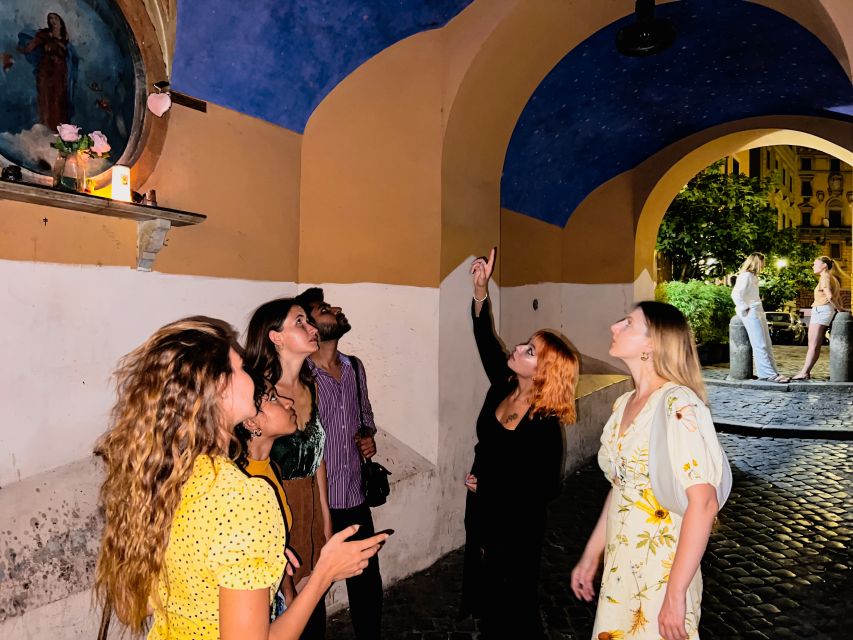
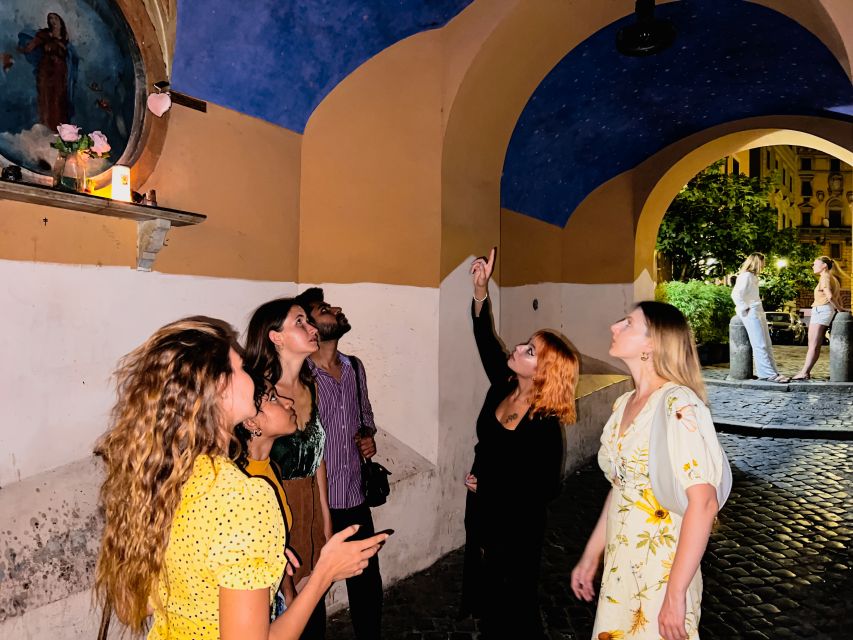
One of the more unusual stops is Madonna della Pietà, Madonnelle, referring to the small Madonna images found around Rome. These modest religious images are easy to pass without a second glance. In the context of a ghost walk, they become clues to the city’s older habits of faith, fear, protection, and remembrance.
This is one reason the tour suits people who have already seen Rome’s major monuments. You will not spend the evening ticking off famous ticketed attractions. Instead, you are encouraged to notice smaller features in the street scene.
The stop offers a change of pace from murder stories and executions. Rome’s darker history is not only made up of dramatic villains and doomed celebrities. It also lives in small devotional objects placed into the urban fabric.
The guide’s delivery matters here. A good storyteller can make a small image feel significant without pretending it is more dramatic than it is. The strongest comments about guides such as Domenica, Sara, and Maham focus on this ability to bring overlooked details to life.
Still Rome, but a slower afternoon:
- Vatican: Museums & Sistine Chapel Entrance Ticket
★ 4.5 · 144,003 reviews - Vatican Museums & Sistine Chapel Tour with Optional Basilica
★ 4.3 · 67,413 reviews - Colosseum, Roman Forum & Palatine Guided Tour
★ 4.7 · 63,148 reviews - Vatican Museums, Sistine Chapel & St Peter’s Basilica Guided Tour
★ 4.5 · 39,149 reviews
Ponte Sisto and the walk toward the river
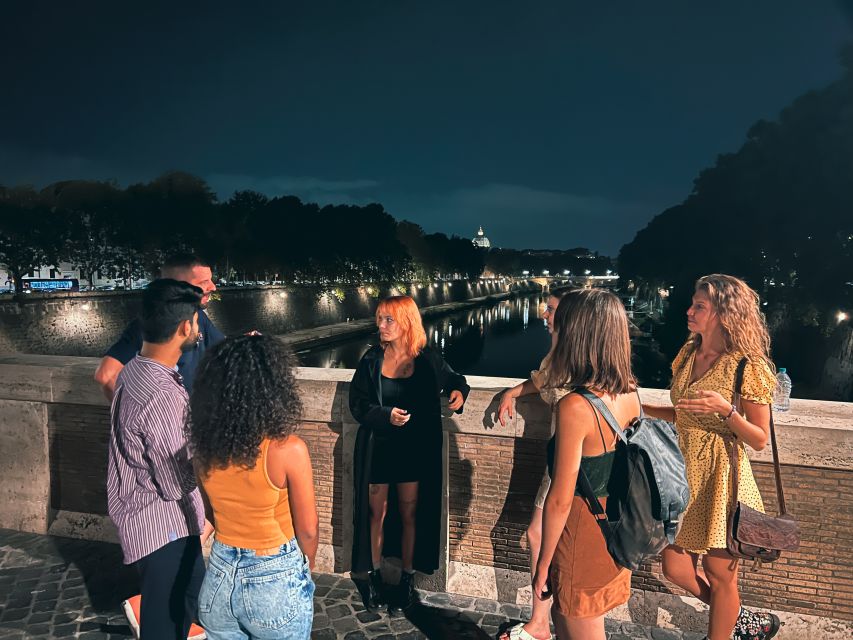
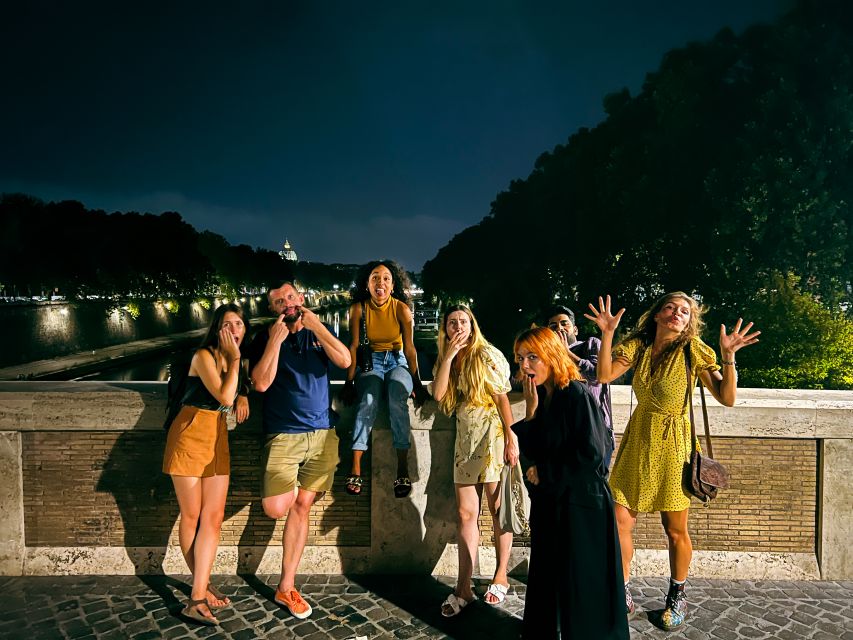
At Ponte Sisto, the group reaches one of the route’s major landmarks. The bridge gives you a different view of Rome and provides a natural point for stories involving movement across the city, danger, death, and the river.
The wider description refers to a corpse-lined bridge, though the exact story presented can depend on the guide. Think of this section as atmospheric historical storytelling rather than a claim that you will see a supernatural event. The bridge is a real place with a powerful setting, and the legends add a layer of unease.
The bridge can also be busy. One review praised Yousef for keeping the group’s attention even on crowded streets, which tells you something useful about the practical side of the tour. A strong guide needs to project well, keep people together, and make sure nobody is lost while looking at the sights.
If you prefer quiet, private sightseeing, a group walk across a central Roman bridge may feel a little social. If you enjoy sharing a strange story with other curious people, the group atmosphere adds to the fun.
The Fountain of the Mask and Via Giulia
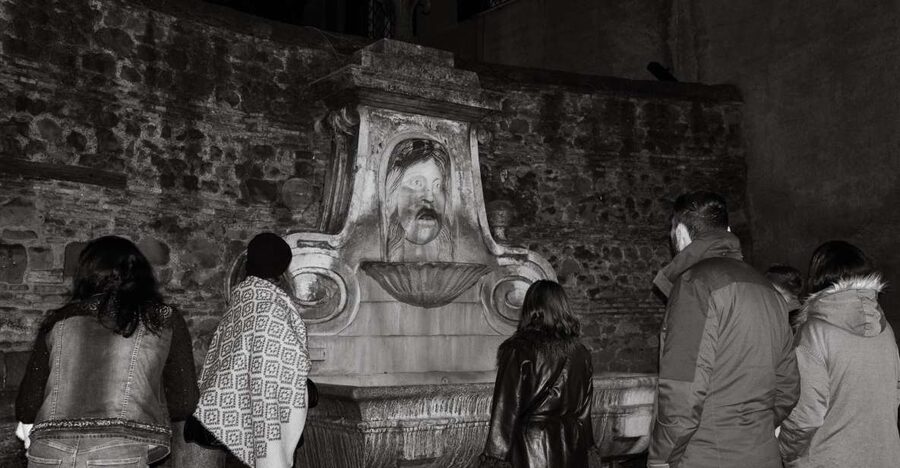
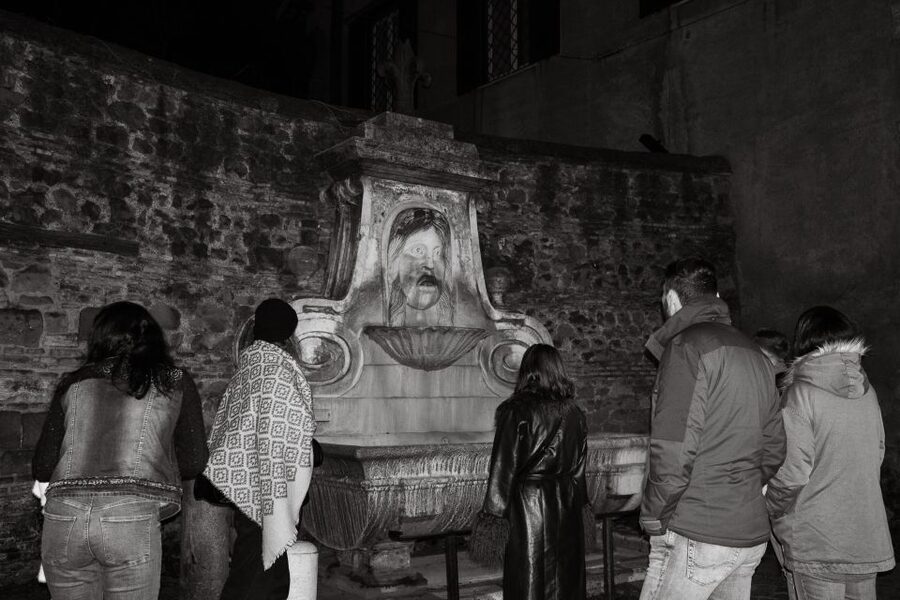
The next stop is the Fountain of the Mask, a small but memorable feature along the route. This is exactly the sort of place that can vanish into the background when you are rushing between major churches and piazzas. Here, the guide gives you a reason to stop and consider the symbolism and stories attached to an otherwise easy-to-miss fountain.
The route also takes you through Via Giulia, one of Rome’s most attractive old streets. The tour’s focus is not a formal architecture lesson, but walking here helps connect the stories to the city’s physical layout. You see how grand streets, narrow lanes, churches, and bridges fit together.
I would pay close attention during this stretch. The walking time is not filler. It gives you a chance to look around, ask questions, and hear about people or events you can research later. Patrick from Germany described leaving with more ideas for places and subjects to explore afterward. That is a useful measure of a good tour: it sends you back into Rome with fresh curiosity.
A church for the dead at Santa Maria dell’Orazione e Morte
The most naturally spooky stop is Chiesa di Santa Maria dell’Orazione e Morte, the Church of Saint Mary of Prayer and Death. The name alone sets the tone.
The church is associated with prayer for the dead, and the tour description points to a chapel decorated with human bones. The subject is grim, but it is also a window into an older religious culture that treated death as a visible part of daily life rather than a subject kept out of sight.
Your guide may frame this place with a mix of respect and unease. That balance matters. The best moments of this tour are not simply about trying to frighten you. They show how people in earlier centuries understood death, charity, punishment, and the fate of the body.
If you dislike stories involving executions, corpses, or human remains, this is the point to consider carefully. The tour promises a sinister theme from the beginning, so it is not designed for someone seeking a light evening stroll with only mild folklore.
Santa Maria in Monserrato degli Spagnoli
The route then reaches Santa Maria in Monserrato degli Spagnoli, a church with a strong connection to Rome’s Spanish community. Here, the tour continues its pattern of using a real place as the setting for stories about people, power, belief, and death.
The stop adds variety. You are not visiting one haunted site after another with no pause. Instead, the guide places unsettling tales within Rome’s broader religious and political setting.
I find this approach more rewarding than a simple list of ghost sightings. It helps you understand why Rome produces so many legends. The city has long been a meeting point for rulers, artists, clergy, pilgrims, criminals, and ordinary residents. Their stories overlap, and the old streets preserve traces of that collision.
The church is also a reminder that the tour is sightseeing as well as storytelling. Even if you remain unconvinced by the supernatural claims, you still get a guided look at places you might otherwise walk past.
Clivo di Rocca Savella and the final approach
Near the end, the walk reaches Clivo di Rocca Savella, a quieter and more atmospheric route segment. The name may not mean much before the tour, but that is part of its value. You are taken away from the most obvious routes and into a less familiar corner of central Rome.
The guide uses the final stretch to build toward the conclusion. You may hear more stories about Rome’s dead, its ghosts, and the people whose lives became legend. The exact tales vary by guide, but the structure gives the evening a clear arc: public square, old streets, religious sites, bridge, and final castle.
This is also where the walking conditions matter most. Rome’s center is not a smooth museum corridor. You should expect a city walk at night, with changing street surfaces and occasional crowds. The tour lasts two hours, so it is manageable for most people who are comfortable walking, but it is not a seated activity.
Ending at Castel Sant’Angelo
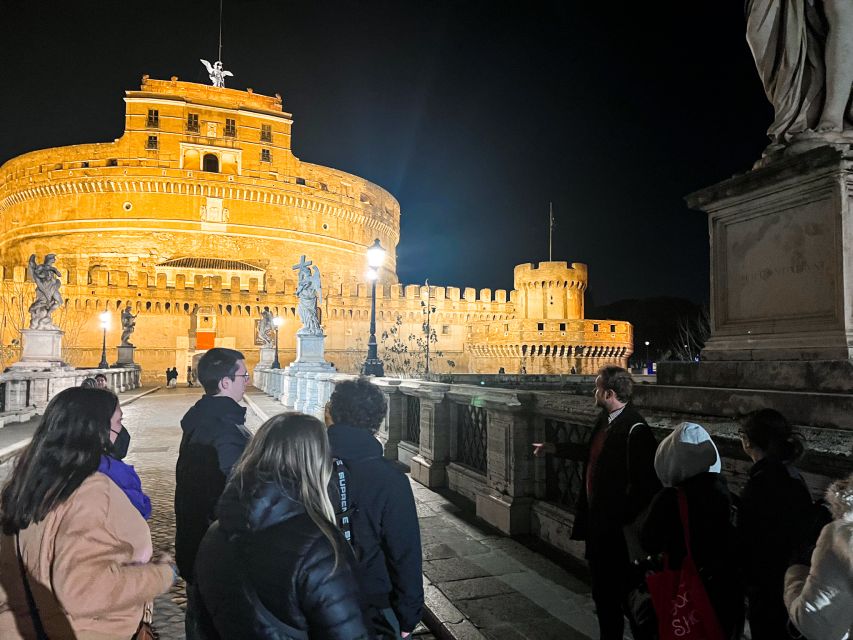
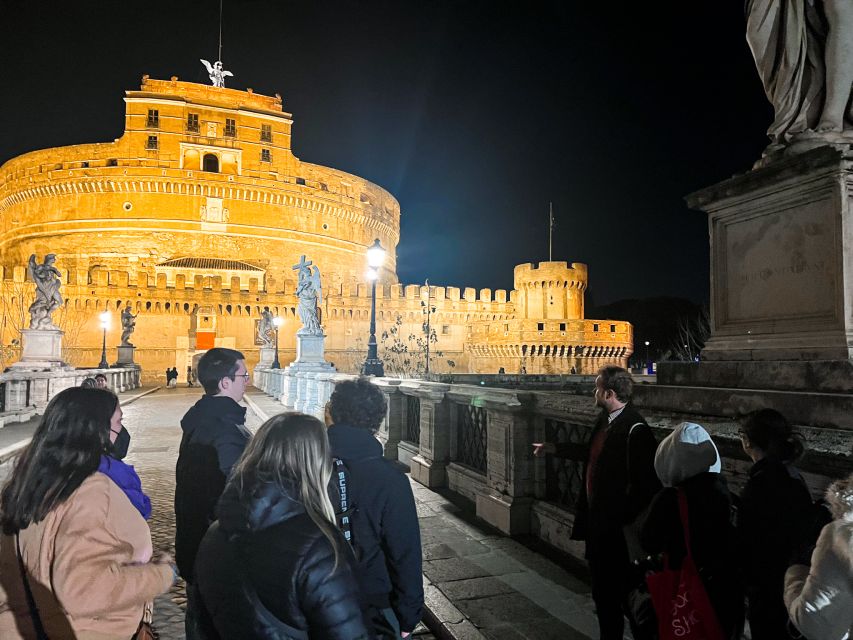
The tour finishes at Castel Sant’Angelo, one of Rome’s strongest night-time landmarks. The castle’s fortress shape, riverside location, and long association with popes, prisoners, and political drama make it a satisfying final setting for a paranormal tour.
You do not need to buy a separate castle admission to take part in the walk. The experience ends outside at the listed finish point, so you can continue with dinner, a drink, or more evening sightseeing afterward.
This ending is especially useful for planning. The tour does not return you to Campo de’ Fiori, so consider where you want to go next before setting off. The route connects several central areas, but you should not assume the finish is beside your accommodation.
Guide style, group size, and atmosphere
The tour includes a maximum group size of 20 people. That is not a private walk, but it is more manageable than a huge crowd. The guide can usually speak with people individually, and several comments praise guides for making everyone feel included.
The strongest pattern in the feedback is storytelling. Ana is described as vivacious and informative. Maham receives repeated praise for her passion, humor, and ability to make dark stories feel touching rather than merely frightening. Antonio is praised for his historical detail and story delivery, while Domenica is described as friendly and engaging.
Other named guides include Dinara, Yusuf or Yousef, Sara or Sarah, Simon, Csenge, and Anna. Since the assigned guide can change, treat these names as examples of the company’s guide team, not a booking guarantee.
The mood is spooky, but not relentlessly scary. One useful description is a mix of funny, interesting, and quirky stories with a balance of spooky and silly moments. That makes the tour a good fit for couples, friends, families with older children, and solo people who enjoy meeting others.
Is $34 good value for Rome?
At $34 per person, the tour offers two hours of guided sightseeing, local storytelling, and a route through several parts of central Rome. You are paying for interpretation and atmosphere, not transport, food, drinks, or admission to a major attraction.
I consider that fair value if you want an evening activity that feels different from the standard Roman circuit. The price is less compelling if you only want major monuments explained in a conventional historical tour, since this walk gives priority to legends, murders, executions, and eerie details.
The small group limit helps support the price. So does the route, which covers several sights rather than stopping in one square. You also avoid the heat and daytime crowds, a real benefit during warmer months.
The best value comes when you treat it as a lively introduction to Rome’s stranger side. Afterward, you may want to return to a church, street, or historical figure for a closer look. Several guides also point people toward subjects and places worth exploring later.
Who should book this night walk?
I would choose this tour if you have already seen some of Rome’s famous landmarks and want a different angle. It is also a smart first or second-night activity because it helps you get oriented around Campo de’ Fiori, Piazza Farnese, Ponte Sisto, Via Giulia, and Castel Sant’Angelo.
You should book it if you enjoy:
- Ghost stories grounded in real places
- Dark religious and political history
- Small street details and lesser-known corners
- Friendly guides who use humor
- A social group walk after dinner or sightseeing
I would skip it if you want a serious academic lecture, a guaranteed paranormal encounter, or a completely gentle family outing. The themes include murder, executions, corpses, and human bones, even though the guides soften the mood with jokes and warmth.
Bring comfortable walking shoes and dress for the weather. A December group still enjoyed the tour in cold rain, but that does not make wet weather pleasant. The tour runs in English, and private groups are available if you want a more controlled setting.
Free cancellation is available up to 24 hours before the start, with a full refund. You can also reserve now and pay later, which helps if your Rome plans are still shifting.
Should you book the Rome Paranormal Night Walking Tour?
Book it if you want Rome after dark to feel curious, personal, and a little unsettling. The route offers more than ghost claims: it connects public squares, churches, bridges, fountains, and backstreets with the people and events that gave them their darker character.
At $34, it is a sensible evening splurge for a two-hour walk, especially if your guide is as warm and entertaining as Ana, Maham, Antonio, or Domenica. Just remember that the stories are the main attraction, the exact guide may vary, and the subject matter is genuinely grim in places. For a different view of Rome, this is an easy recommendation.
FAQ
How long does the Rome Paranormal Night Walking Tour last?
The tour lasts two hours.
How much does the tour cost?
The listed price is $34 per person.
Where does the tour begin?
It begins in Piazza Campo de’ Fiori beneath the statue of Giordano Bruno.
How do I find the guide?
Look for a guide holding a yellow Carpe Diem Tours flag or sign.
Where does the tour finish?
The tour finishes at Castel Sant’Angelo.
Is the tour offered in English?
Yes. The live guided tour is offered in English.
How large is the group?
The group can include up to 20 people. A private group is also available.
Recently added around Rome
- Palatine Hill and Roman Forum Tour with Fast-Track Entrance★ 4.2 · 417 reviews
- Tivoli: Villa D’Este & Villa Adriana Pass & App Audioguide★ 4.4 · 364 reviews
- From Rome: Villa D’Este & Villa Adriana Day Trip with Lunch★ 4.4 · 289 reviews
- Vatican Museums & Sistine Chapel Skip-the-Line Guided Tour★ 4.6 · 254 reviews
- Rome: The Three Tenors at St. Paul’s Church Concert Ticket★ 4.7 · 699 reviews
- Tivoli: Villa D’Este Entry Ticket and App Audio Guide★ 4.3 · 191 reviews
- Rome: Capitoline Museums and Centrale Montemartini Tickets★ 4.4 · 328 reviews
- Rome: St. Peter’s Basilica and Papal Tombs Guided Tour★ 4.6 · 477 reviews
Walking Tours, compared.
Guided Walking Tour & Last Supper Visit with Ticket
Read our review →
Rialto Bridge & Offbeat Unusual Venice Walking Tour
Read our review →
Private 3 hrs Venice Tour: St Mark’s, Walking tour & Boat tour
Read our review →
Skip the line: Uffizi and Accademia Small Group Walking Tour
Read our review →Browse the lists this tour appears in