
Reviewed · CITY TOURS
Rome City, Pantheon, and Trevi Fountain Walking Tour
Rome rewards curious walkers. This two-hour tour links the city’s grandest squares with quieter corners, giving you a useful first look at central Rome without the cost or time of a full-day outing. I like the small group limit of 15 people, which makes it easier to hear the guide, and I like the mix of famous sights and easy-to-miss places such as Galleria Sciarra. The main drawback is that the Pantheon entrance fee is not included, and the route involves steady walking on Rome’s hard pavement.
This is a good way to get your bearings early in a visit, especially if the Colosseum and Vatican already fill your schedule. Guides such as Dan, Sharon, Domenica, Anna, and Vlad have been praised for clear explanations, humor, patience, and useful suggestions for food, drinks, gelato, and places to return to later.
In This Review
- Key points before you book
- What you get for $24.20
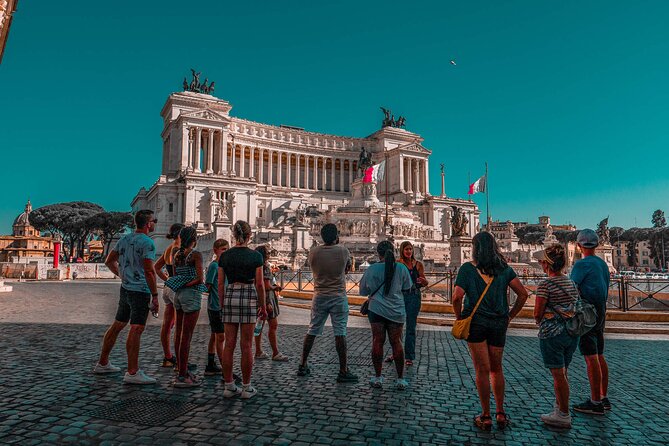
- Starting at Piazza Venezia and the ancient city
- Galleria Sciarra, a quiet surprise near the main route
- Trevi Fountain, Rome’s grand theatrical pause
- Sant’Ignazio and Rome’s painted illusion
- The Pantheon, the tour’s biggest architectural lesson
- Ending at Piazza Navona with room for dinner
- The guides make the difference
- Pace, footwear, and choosing your departure
- Who should book this Rome walking tour?
- Should you book it?
- FAQ
- How long is the Rome walking tour?
- How many people can join the group?
- What sights are included on the route?
- Is admission to the Pantheon included?
- Where does the tour start and finish?
- Is the tour offered in English?
- Can I cancel for a full refund?
Key points before you book
- Six central Rome stops in about two hours: The route runs from Piazza Venezia to Piazza Navona, passing the Trevi Fountain, Sant’Ignazio, and the Pantheon.
- A group capped at 15 people: This is small enough for questions and clear hearing, unlike a large flag-following crowd.
- Ancient, Renaissance, Baroque, and Napoleonic Rome: You get a broad sense of how the city changed over many centuries.
- The Pantheon costs extra: The guide explains the building, but entry is not part of the tour price.
- Morning and afternoon times are offered: Some feedback also refers to dusk and evening outings, so check the exact departure when booking.
- A practical first-day tour: You finish at Piazza Navona, close to restaurants and bars, with advice on where to eat nearby.
What you get for $24.20
At $24.20 per person, this tour is priced as an affordable introduction to Rome’s historic center. You are paying for a local guide, a planned route, and explanations that help the monuments make sense. The cost is especially fair if this is your first visit and you want to avoid spending your first day wandering between major sights without a plan.
The value is not in long interior visits. Most stops are outdoor explanations, and the schedule gives you only a short look at each place. Think of it as a guided orientation rather than a substitute for a full Pantheon visit, museum tour, or archaeological walk.
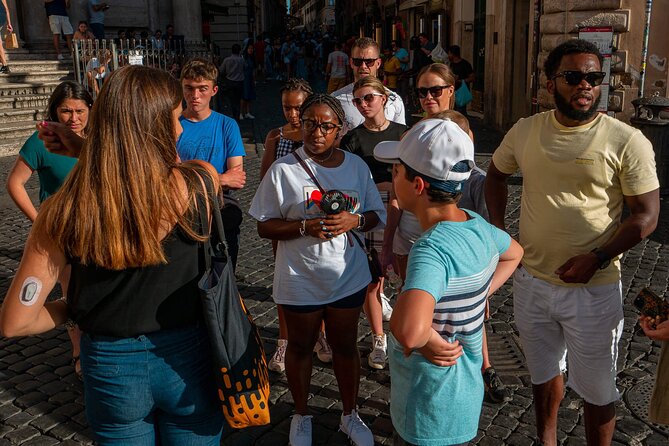
The small group matters here. A guide can speak without shouting, answer questions, and notice if someone has fallen behind. One outing had only four people, while another had 13, so the actual group may feel quite personal while remaining large enough to have a social atmosphere.
Group discounts are available, though the details are not provided. A mobile ticket is included, and confirmation is issued when you book. Free cancellation is allowed up to 24 hours before the start time, which gives you some flexibility if your Rome plans change.
More Walking Tours in Rome
- Rome: Trastevere & Campo de Fiori Street Food Walking Tour
★ 4.9 · 2,768 reviews - Rome: Paranormal Night Walking Tour & Secret Backstreets
★ 4.9 · 1,921 reviews - Rome by Night Walking Tour – Legends & Criminal Stories
★ 4.5 · 1,003 reviews
Starting at Piazza Venezia and the ancient city
The meeting point is at Piazza d’Aracoeli, on Via di S. Venanzio 8, near Piazza Venezia. This is a central location, but allow extra time to find it. One person had trouble locating the starting point, so do not arrive at the last minute, especially if you are unfamiliar with Rome’s lanes and large, busy squares.
The first stop takes about 20 minutes and introduces you to Piazza Venezia and the ancient Roman forums. This is a smart place to begin because several periods of the city meet here. Your guide connects the age of emperors with later Renaissance building projects and Napoleonic influence, giving you a basic timeline before the route becomes more detailed.
You will not receive an admission ticket for the archaeological area. The value comes from seeing the remains in context and learning how the forum district once worked as the center of public life.
I like this opening because it helps you recognize the difference between the surviving ancient structures and the grander later buildings around them. Rome can feel like a pile of unrelated ruins at first. A good explanation turns that confusion into a story.
Galleria Sciarra, a quiet surprise near the main route
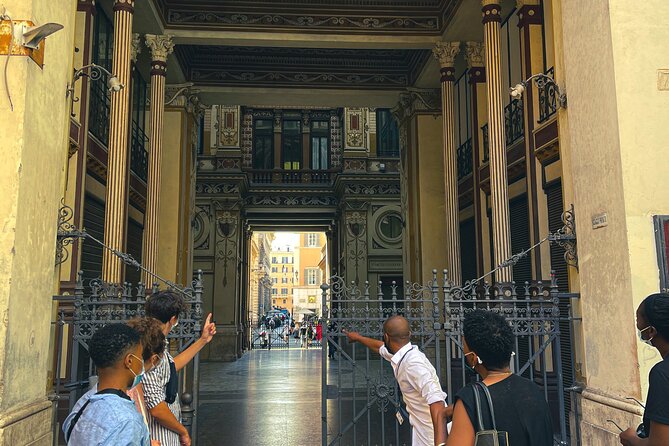
The ten-minute stop at Galleria Sciarra is one of the tour’s most distinctive touches. This 19th-century building is decorated with art nouveau frescoes and paintings, offering a change of mood after the open spaces around Piazza Venezia.
You might walk past this place alone without realizing what is inside or just beyond the main street. That is exactly why a guide adds value here. The stop is brief, but it shows you a less obvious side of Rome, one built around decoration, design, and urban detail rather than imperial monuments.
Do not expect a long visit. Ten minutes is enough to see the decoration and hear the story, but not enough for a slow study of every painted panel. I would keep this stop in mind as a place to revisit if you enjoy architecture and smaller discoveries.
Trevi Fountain, Rome’s grand theatrical pause
The Trevi Fountain receives about 20 minutes, giving you time to see its sweeping sculpture and listen to the guide explain what you are looking at. This is one of Rome’s most famous sights, and the fountain can feel overwhelming when you first approach it.
The guide’s role is useful here because the fountain is more than a place for a quick photograph. The sculpture, water, setting, and dramatic lighting work together, particularly during a later departure. Feedback about dusk and evening tours describes the fountain lit up, though the main schedule lists morning and afternoon departure options. Check your selected time if seeing it after dark matters to you.
The area can be crowded, so stay close to the group and listen for the guide’s meeting instructions. You may not get a quiet, empty view. Still, 20 minutes is a sensible amount of time for an orientation stop, especially when several more landmarks follow.
Still Rome, but a slower afternoon:
- Vatican: Museums & Sistine Chapel Entrance Ticket
★ 4.5 · 144,003 reviews - Vatican Museums & Sistine Chapel Tour with Optional Basilica
★ 4.3 · 67,413 reviews - Colosseum, Roman Forum & Palatine Guided Tour
★ 4.7 · 63,148 reviews - Vatican Museums, Sistine Chapel & St Peter’s Basilica Guided Tour
★ 4.5 · 39,149 reviews
Sant’Ignazio and Rome’s painted illusion
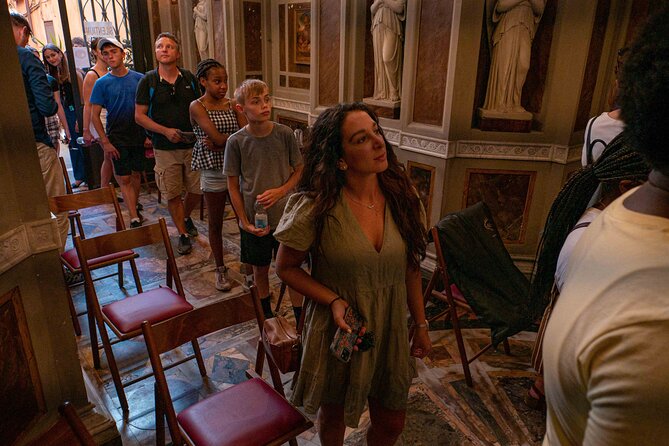
The 15-minute visit to Chiesa di Sant’Ignazio di Loyola brings you into one of central Rome’s major Baroque churches. The church is known for its painted architectural effects, including an artificial dome that creates the impression of a much larger space above you.
This is a useful reminder that Rome’s visual tricks are not limited to ancient engineering. Here, painting creates depth where architecture could not, and a guide helps you notice the illusion instead of simply looking upward and moving on.
The stop is free, according to the tour details, but church access can always depend on local conditions such as religious services. The published route includes the church, so you should expect an exterior or interior explanation as conditions allow, rather than a guaranteed extended visit.
The Pantheon, the tour’s biggest architectural lesson
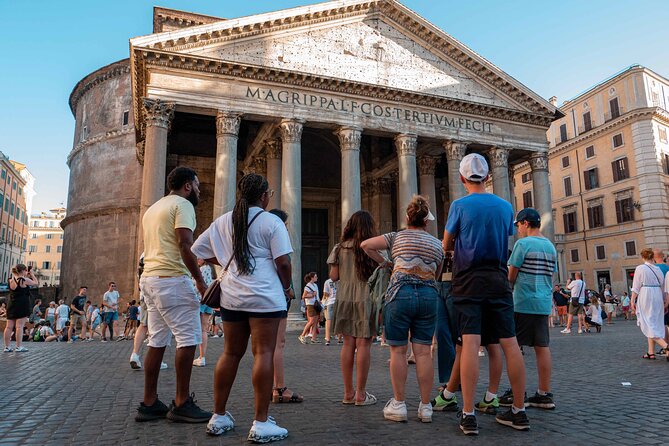
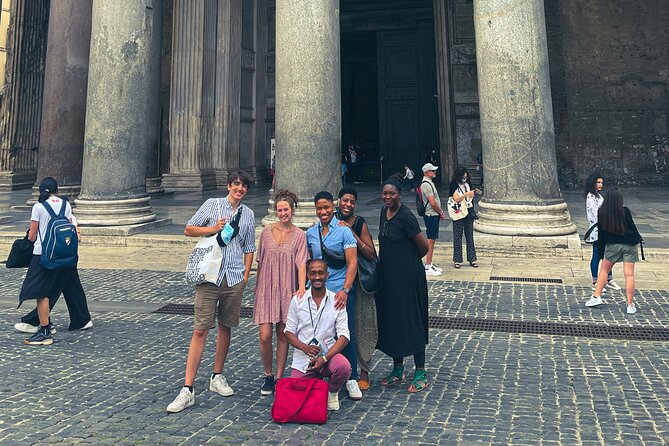
The Pantheon gets about 20 minutes, and this is likely the most important stop for anyone interested in Roman building methods. The ancient temple is remarkably well preserved and now serves as a church, so you see both its original Roman purpose and its later religious life.
The guide explains the building’s design and the features that make it so striking. The tour description promises the secrets behind its architecture, but the entry ticket is not included in the $24.20 price. If you want to go inside, plan for that extra cost and check the current admission arrangements separately.
This is the clearest limitation of the itinerary. Twenty minutes can provide a strong introduction, but it is not a leisurely interior visit. If the Pantheon is high on your list, use the tour to understand what you are seeing, then return on your own if you want more time.
The Pantheon’s position in the route is also convenient. By this point, you have moved from the broad story of Rome into a close look at one building that has survived through many changes in the city.
Ending at Piazza Navona with room for dinner
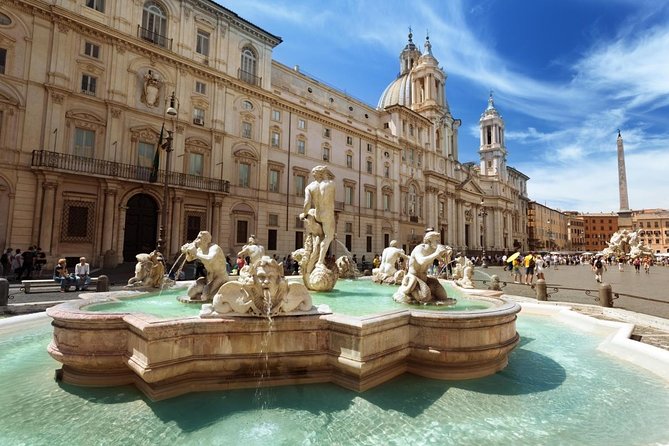
The tour finishes at Piazza Navona after about 15 minutes there. This long, elegant square is known for its three fountains and the Baroque church of Sant’Agnese in Agone, making it a fitting final stop after Sant’Ignazio and the Pantheon.
Piazza Navona is not simply a place to take one last picture. It is a good area to pause, compare the different Baroque styles you have seen, and decide what deserves a return visit. The tour ends near restaurants and bars, and guides can suggest places to eat, drink, or find gelato.
That ending gives the tour practical value beyond the history lesson. You do not have to work out where to go next from an isolated meeting point. You can stay in the area for dinner or continue walking through central Rome.
Food advice is a recurring strength of the guiding style described for this tour. Eleonora, for example, was praised for suggestions on restaurants, drinks, and gelato, while Sharon was appreciated for pointing out places to explore on later days. These tips can be more useful than a long list of facts, especially on your first night.
The guides make the difference
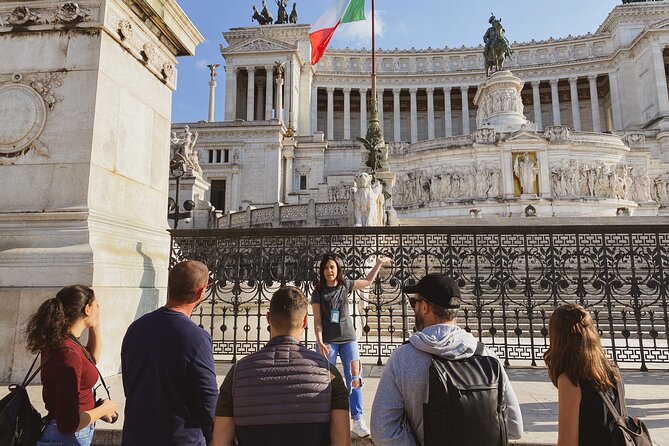
The tour uses different guides, so the tone will vary. The strongest pattern is a friendly, well-prepared guide who explains the sights clearly, welcomes questions, and keeps the pace moving without making the walk feel like a race.
Dan has been praised for his facts, humor, and ability to answer questions beyond the planned route. One particularly useful detail from his tours was a stop near the Gregorian Pontifical University, where the group learned about Rome’s public drinking fountains and how to use them. Another outing with Dan included the tiny Cappella della Madonna, a place most people could easily pass without noticing.
Sharon is a good fit if you want orientation and practical help. She has been praised for a casual manner, clear explanations, and suggestions for places to visit later. Domenica, also spelled Domineqa in one account, is described as personable and engaging, making the tour a good choice for people who want an introduction beyond the Vatican and Colosseum.
Anna has been praised for patience, humor, and warmth, including on an evening outing. Vlad received especially strong praise for keeping a group of 13 involved and making sure he spoke with everyone. Other guides named in the feedback include Sila, Pollina, Cayie, Paulina, Sarah, Den, and Eleonora.
Because the guide is central to the value, your experience may depend on who leads your departure. The overall rating of 4.9 from 249 reviews and a 98 percent recommendation rate suggest a very strong record, but no walking tour is identical from one guide to the next.
Pace, footwear, and choosing your departure
The route is not described as arduous, and one participant called the length manageable for a two-hour walk. Still, Rome’s historic center means uneven streets, stone surfaces, crowds, and frequent standing while the guide talks.
Wear shoes you can comfortably use for a steady walk. The tour is not recommended for people with foot injuries, and most people can participate, including those traveling with service animals. It is close to public transportation, which helps with reaching the start and leaving the end.
The tour is offered in English. Morning departures suit people who want to use the rest of the day for museums or longer visits. Afternoon departures can fit better after a late arrival or a morning activity.
Some feedback describes dusk or night versions, including a first-evening outing after getting off a plane. Since the listed schedule says morning and afternoon, confirm the exact time before booking if evening light is important to you.
Who should book this Rome walking tour?
I would choose this tour for a first visit, an arrival day, or a trip where the Colosseum and Vatican already fill the schedule. It gives you a useful map of the center, introduces several major monuments, and points out smaller places you could miss alone.
It also suits repeat visitors who want a fresh explanation of familiar sights. One person who had already visited Rome three times still learned new facts from the guide, which says something about the depth a good local explanation can add.
I would be less likely to choose it if you want long interior visits, detailed archaeology, or plenty of free time at each monument. The Pantheon ticket is extra, and 20 minutes at the Pantheon and Trevi Fountain is enough for context, not full exploration.
Should you book it?
Book this tour if you want an affordable, well-paced introduction to central Rome, especially early in your stay. The strongest reasons are the 15-person limit, the blend of major sights and less obvious stops, and guides who appear to add practical advice along with history.
Skip it if walking is difficult or if you already know the center well and prefer independent, unhurried visits. For most first-time visitors, though, $24.20 is a sensible price for getting oriented, learning what you are seeing, and ending at Piazza Navona with dinner choices close by.
FAQ
How long is the Rome walking tour?
The tour lasts approximately two hours.
How many people can join the group?
The group is capped at a maximum of 15 participants.
What sights are included on the route?
The route includes Piazza Venezia and the ancient city area, Galleria Sciarra, Trevi Fountain, Chiesa di Sant’Ignazio di Loyola, the Pantheon, and Piazza Navona.
Is admission to the Pantheon included?
No. Access to the Pantheon is not included in the tour price.
Where does the tour start and finish?
It starts at Piazza d’Aracoeli, Via di S. Venanzio 8, in Rome. It ends at Piazza Navona.
Is the tour offered in English?
Yes. The tour is offered in English.
Can I cancel for a full refund?
Yes, if you cancel at least 24 hours before the experience start time. Cancellations made less than 24 hours in advance are not refunded, and the tour may also be rescheduled or refunded if the minimum number of participants is not reached.
Recently added around Rome
- Rome: Pantheon, Trevi Fountain & Roman Squares Guided Tour★ 4.7 · 386 reviews
- Vatican: Pope Francis Tomb and Papal Basilicas Tour★ 4.7 · 340 reviews
- Vatican: St. Peter’s Basilica with Audio Guide and Options★ 3.4 · 269 reviews
- Rome: Vatican Museums & Sistine Chapel Ticket + Tour Options★ 4.7 · 344 reviews
- Rome: Vatican Museums Skip-the-line Entry Ticket and Tour★ 4.2 · 400 reviews
- Vatican: Museums, Raphael & Sistine Chapel + Basilica Option★ 4.7 · 350 reviews
- Vatican Museums & Sistine Chapel Guided Tour★ 4.3 · 832 reviews
- Vatican Museums & Sistine Chapel Entry Ticket★ 4.4 · 245 reviews
City Tours, compared.
City Sightseeing Hop-on Hop-off Bus with Audioguide
Read our review →
City Sightseeing Hop-On Hop-Off Bus with Audio Guide
Read our review →
City Sightseeing Rome Hop-On Hop-Off Bus Tour
Read our review →

Fettuccine Pasta Cooking Class in Rome’s City Center
Read our review →
Vatican City: Vatican Museums & Sistine Chapel Entry Ticket
Read our review →

City Sightseeing Florence Hop-On Hop-Off Bus Tour
Read our review →Browse the lists this tour appears in