
Reviewed · CITY TOURS
Rome: City Highlights Private Golf Cart Tour
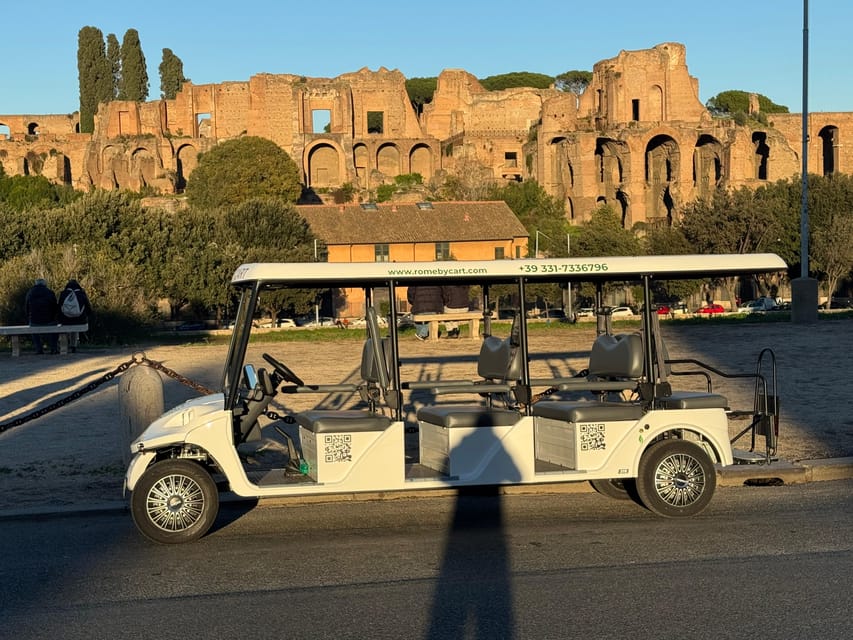
Rome rewards stamina, but you do not need to spend your first day marching. This private golf cart tour covers the Colosseum, Pantheon, Spanish Steps, St. Peter’s Square, and more while a local guide handles Rome’s traffic. I like the flexible pickup and drop-off, and I like that the route can bend toward your interests instead of following a rigid script. The main tradeoff is time: three hours is enough for an excellent overview, not a full visit inside Rome’s monuments.
I also like the food stop, which can bring you to a family-run deli, pizzeria, or local shop for Roman flavors such as cheese, meats, wine, espresso, pizza, or arancini. Guides including Valerio, Fabio, Giulio, Massimiliano, Marco, Max, and Stefano have been praised for humor, patience, safe driving, and personal stories about the city. Bring a hat, sunscreen, and comfortable shoes, since the cart gets you close but does not eliminate walking.
In This Review
- Key things to know before booking
- Why a golf cart works so well in Rome
- Colosseum and Circus Maximus: Rome’s ancient core
- Orange Garden and Janiculum Hill: Rome’s best views
- Piazza Venezia and Piazza Navona: Rome in grand public spaces
- Pantheon and two remarkable churches
- Spanish Steps and Saint Peter’s Square
- The food stop: a welcome taste of Roman life
- How the guides shape the experience
- Price, timing, and who gets the best value
- What to bring and how to prepare
- Should you book this Rome golf cart tour?
- FAQ
- How long is the private golf cart tour?
- How much does the tour cost?
- Is pickup and drop-off included?
- Which landmarks are visited?
- Does the tour include entrance fees?
- Is food included?
- Which languages are available?
- Can I customize the route?
- What happens if I need to cancel?
Key things to know before booking
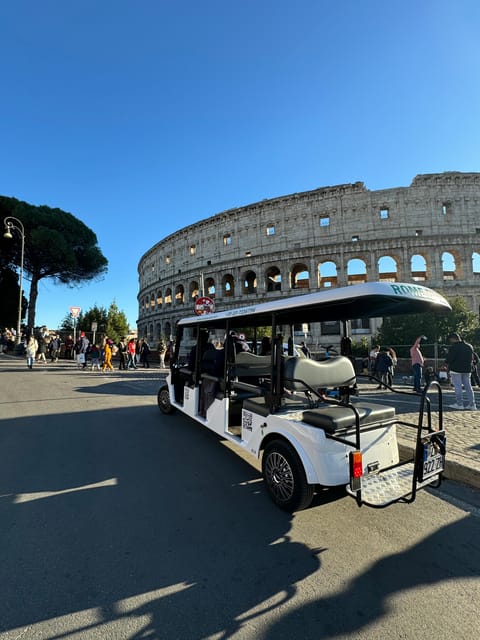
- A private route with real flexibility: Choose your pickup and drop-off points, then tell the guide what matters most.
- Rome’s big sights in three hours: The route links ancient ruins, grand piazzas, churches, hilltop views, and Vatican City.
- A useful first-day tour: You get a city orientation and can decide which places deserve a longer visit.
- A local food break: Tastings may include fresh deli products, wine, espresso, pizza, or other Roman specialties.
- A strong choice for mixed ages: The cart saves energy for children, older family members, and anyone with limited mobility.
- A small practical weakness: Several people found it hard to hear the guide from the back while the cart was moving.
Why a golf cart works so well in Rome
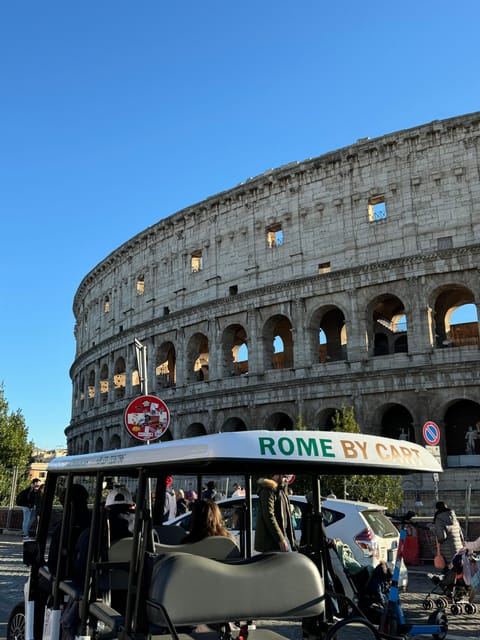
Rome’s center is compact on a map and tiring in real life. The Colosseum, Pantheon, Spanish Steps, Vatican, and Janiculum Hill are not next door, and cobbled streets make a long walking day harder than it first appears.
The cart gives you a moving view between stops. You can see more ground than you would on foot, avoid spending your best sightseeing hours hunting for directions, and arrive at major viewpoints without using up all your energy before lunch.
I especially like this format for a first visit. You see the city’s shape, learn where the main districts sit, and gather ideas for the rest of your stay. It is also useful if you have only one day in Rome, are traveling with children, or have an older relative who cannot manage several miles of walking.
This is not a replacement for a proper Colosseum tour or a slow visit to the Vatican Museums. The listed stops are mainly photo stops, usually lasting 10 to 20 minutes. Think of the experience as a guided overview with selected walks and food, rather than a series of long interior visits.
The private setup matters. You can ask to linger at a favorite church, skip a place you have already seen, or focus on art, fountains, ancient Rome, food, or viewpoints. One family had already visited several sights, so the guide adjusted the route instead of repeating them.
More Golf Cart Tours in Rome:
- Rome by Golf Cart Private Tour: Beyond the Landmarks
★ 5.0 · 4,361 reviews - Rome on a Golf Cart Semi-Private Tour Max 6 with Private Option
★ 5.0 · 2,502 reviews - Rome Highlights by Golf Cart Private Tour
★ 5.0 · 2,379 reviews
Colosseum and Circus Maximus: Rome’s ancient core
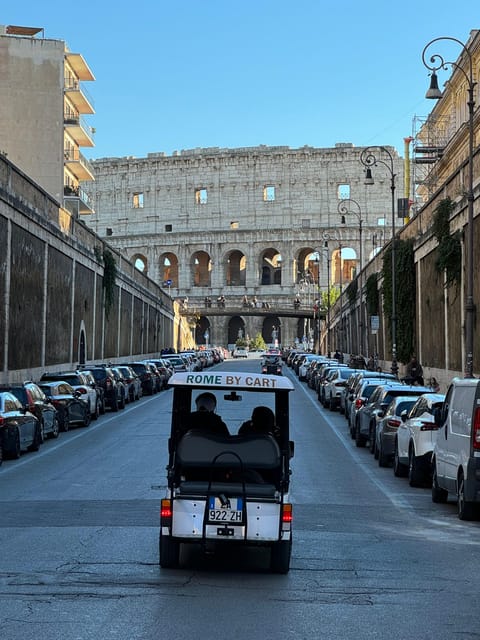
The Colosseum is the natural opening spectacle. You get about 20 minutes for photographs and an explanation of the amphitheater’s role in ancient Rome. From the cart, you can appreciate its immense scale without first dealing with ticket lines or an extended interior visit.
You should be clear about expectations. Entrance fees are not included, and this stop does not promise entry. If walking through the Colosseum is a top priority, book that separately and use this tour to understand the wider setting.
The next stop is Circus Maximus, with about 10 minutes for photographs. The ancient chariot-racing venue is now a long open valley between the Aventine and Palatine hills. It takes imagination to picture the crowds and races, so your guide’s storytelling is especially useful here.
The short stop works well for orientation, but it will feel brief if you want to study the archaeology. This is one of several places where the cart gives you a taste rather than a full archaeological visit.
Orange Garden and Janiculum Hill: Rome’s best views
The Giardino degli Aranci, or Orange Garden, is one of the tour’s quieter pauses. Allow about 15 minutes to enjoy the outlook across Rome. The setting gives you a break from traffic and stone, with a broad view that helps explain the city’s hills and domes.
Janiculum Hill comes later, with around 20 minutes for another high viewpoint. It is a fine place for photographs, especially if your tour catches sunset. One evening group timed the route for fading light and came away with particularly strong pictures.
These viewpoints are valuable because Rome can feel like a chain of separate monuments when you are walking street by street. From above, the city becomes easier to understand. You see how the historic center, churches, river, and Vatican area fit together.
Sun protection matters here. The cart is open to the air, and the itinerary includes stops where you may be standing in direct sun. Wear sunglasses and a hat, and apply sunscreen before pickup.
Piazza Venezia and Piazza Navona: Rome in grand public spaces
At the Altar of the Fatherland, you stop for about 15 minutes. The huge white monument dominates Piazza Venezia and offers one of Rome’s most dramatic urban scenes. It is hard to miss, and it gives your guide a chance to explain modern Italian history alongside the older Roman layers around it.
The monument is visually imposing, though some people find it less charming than Rome’s fountains and small lanes. I would treat it as a useful landmark and photo stop, not the emotional high point of the tour.
Piazza Navona gets about 20 minutes. This long, elegant square follows the shape of an ancient stadium and is framed by fountains, church architecture, artists, and cafés. It is a good place to hear about Bernini and the papal families who shaped Rome’s public spaces.
The tour’s art focus becomes clearer here. You may hear about Bernini, Borromini, and the competition between artistic patrons that helped produce Rome’s remarkable squares. The guide can point out details you might otherwise walk past without noticing.
A few more Rome bookings to compare
- Vatican: Museums & Sistine Chapel Entrance Ticket
★ 4.5 · 144,003 reviews - Vatican Museums & Sistine Chapel Tour with Optional Basilica
★ 4.3 · 67,413 reviews - Colosseum, Roman Forum & Palatine Guided Tour
★ 4.7 · 63,148 reviews - Vatican Museums, Sistine Chapel & St Peter’s Basilica Guided Tour
★ 4.5 · 39,149 reviews
Pantheon and two remarkable churches
The Pantheon receives about 15 minutes. Its ancient concrete dome and open central oculus make it one of the most memorable buildings in Rome. The stop is short, so plan your own interior visit if you want time to study the tombs, altars, and engineering.
The tour includes a guided visit to one of Rome’s important churches, and the route also calls at Sant’Ignazio di Loyola and the Church of St. Louis of the French. These stops add something that an ancient-monument tour often misses: Rome’s art is not confined to museums.
Sant’Ignazio is famous for its painted illusion of a dome and the dramatic ceiling work associated with Andrea Pozzo. St. Louis of the French is especially important for its Caravaggio paintings. The route description also highlights Michelangelo, Bernini, Borromini, and Caravaggio, so you can expect the guide to connect art with the churches and patrons who commissioned it.
Allow about 10 minutes at Sant’Ignazio and 15 minutes at St. Louis of the French. That is enough to enter, look up, and hear the main story, but not enough for a slow art-history study. If sacred art is your main interest, tell the guide early so the route can give those stops proper attention.
Church visits require respectful clothing and behavior. The supplied information does not give a dress code, but comfortable, appropriate clothing is a sensible choice for any Roman church.
Spanish Steps and Saint Peter’s Square
The Spanish Steps receive around 20 minutes. This is a lively place for photographs and people-watching, with the Barcaccia Fountain below and the Trinità dei Monti church above. The steps are a classic Roman stop, though they can be crowded and are not a place for lingering with food.
St. Peter’s Square also gets about 20 minutes. The sweeping colonnade and the scale of the square make it one of the tour’s strongest visual moments. You are in Vatican City for this portion, but this experience does not include Vatican Museums or a guaranteed visit inside St. Peter’s Basilica.
That distinction is important. If you already have basilica tickets, the guide may be able to adjust the timing or drop you at a useful location. One guide changed the plan for a family whose older relatives most wanted to see the basilica. Confirm your exact needs when arranging the tour, since the three-hour schedule has limits.
The food stop: a welcome taste of Roman life
Food is not an afterthought here. The experience includes a tasting at selected local eateries, and the exact choice can reflect your interests. Stops described by families included a family-owned deli with fresh cheese and cured meats, wine, espresso, and a pizzeria serving items such as pizza, lasagna, meatballs, potatoes, and arancini.
This is one of the tour’s most appealing details because it connects sightseeing with daily Roman habits. At a local shop, you may have the chance to speak with the owner and learn what you are eating instead of receiving a generic snack handed over at a tourist stop.
Tell the guide what you want. One family with teenagers asked for pizza, and another group enjoyed cheese and wine. Espresso also appeared as a useful pick-me-up, including a rainy morning stop where children were given chocolate-covered espresso beans.
Do not assume the food tasting is a full meal. It sounds more like a generous snack or sampling session, though one group received enough food to make it feel substantial. Dietary needs are not specified, so raise them before the tour begins.
If you avoid single-use plastic, bring your own reusable cup for the wine tasting. That small preparation can make the stop more comfortable and fits Rome’s practical, low-fuss style.
How the guides shape the experience
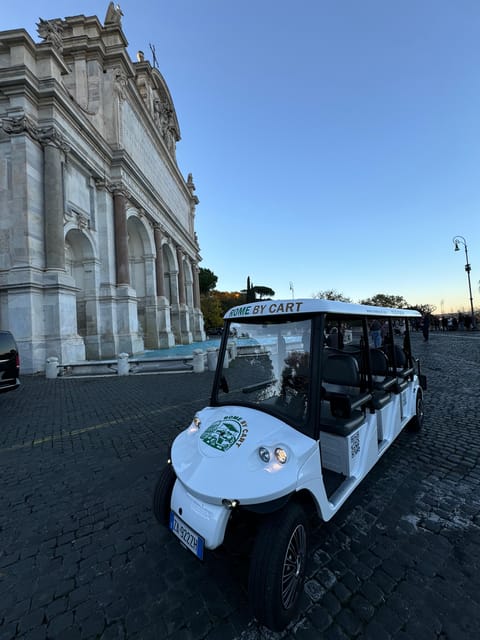
The guide is the key variable. The cart provides the vehicle, but the quality comes from the person explaining Rome, judging traffic, choosing pauses, and listening to your requests.
Valerio has been singled out for warmth, humor, local recommendations, and flexibility. Fabio is praised for safe driving and for adjusting routes when time was tight. Giulio has been especially good at adapting food and sightseeing plans, while Massimiliano has been praised for his enthusiasm about fountains, churches, and piazzas.
Other named guides include Marco, Max, Stefano, Pippo, Philip, Ruben, Alberto, Mario, and Massi. The recurring strengths are clear: personal attention, good English, patience, historical context, and an easygoing manner. Several families with children found the experience fun rather than lecture-heavy.
The listed guide languages are English, Spanish, Italian, and Portuguese. If you have a strong language preference, select it when booking or confirm it in advance.
One practical issue comes up more than once: hearing the guide from the rear seats can be difficult when the cart is moving. There are no headsets mentioned in the tour details. If you are hard of hearing, ask about seating or request that the guide pause before giving longer explanations.
Price, timing, and who gets the best value
At $49 per person, the tour offers good value if you want coverage rather than lengthy entry visits. In three hours, you receive a private vehicle, a guide, pickup and drop-off service, major landmarks, viewpoints, church art, and a food tasting.
The value rises when your group includes four or more people, older relatives, children, or anyone who would struggle with Rome’s distances. You also save the mental work of plotting a route across several neighborhoods.
The price is less compelling if you want only one monument in depth. A dedicated Colosseum, Vatican, or Pantheon visit will give you more time inside that site. I would use the golf cart for your first day, then return on foot to the places that caught your attention.
The tour can run in the daytime or evening, depending on available starting times. Night sightseeing offers a different mood, while late afternoon may give you sunset views from the Spanish Steps or Janiculum Hill. Check the start time carefully if you have a cruise transfer, dinner booking, or timed monument ticket afterward.
Free cancellation is available up to 24 hours before the tour for a full refund, and you can reserve now and pay later. That flexibility helps when your Rome schedule is still shifting.
What to bring and how to prepare
Wear comfortable shoes. You will not walk as far as you would on a traditional city tour, but the itinerary includes steps, piazzas, church interiors, and uneven streets.
Bring sunglasses, a hat, sunscreen, and a camera. The open cart provides fresh air and broad views, but sun exposure is part of the bargain.
Before pickup, list your top three priorities. For example, you might choose ancient Rome, Caravaggio and church art, or food and viewpoints. A good guide can then protect those priorities when traffic or timing forces a choice.
If you have mobility limits, explain them clearly. The cart can reduce walking and has worked well for families using a walking frame, but the experience still includes getting in and out, standing at viewpoints, and some walking.
Should you book this Rome golf cart tour?
I would book it for a first day in Rome, a short stay, a family group, or anyone who wants a broad look without exhausting their feet. The combination of private routing, local food, hilltop views, and major landmarks gives you more than a simple drive-by tour.
I would not book it as your only sightseeing experience if the Colosseum, Vatican Museums, or Pantheon interiors are your main goals. Use it to get your bearings, hear the stories, and choose where to spend more time afterward.
For the best result, request a route built around your interests, ask for the pickup and drop-off points that save you time, and mention any mobility or hearing concerns. At $49 per person, it is a practical way to see a great deal of Rome quickly, with enough personal attention to make the city feel less like a checklist.
FAQ
How long is the private golf cart tour?
The tour lasts three hours.
How much does the tour cost?
The listed price is $49 per person.
Is pickup and drop-off included?
Yes. Pickup and drop-off service is included, and you can choose the pickup and drop-off point in Rome.
Which landmarks are visited?
The route includes the Colosseum, Circus Maximus, Giardino degli Aranci, Altar of the Fatherland, Piazza Navona, Pantheon, Spanish Steps, Saint Peter’s Square, Janiculum Hill, Sant’Ignazio di Loyola, and St. Louis of the French.
Does the tour include entrance fees?
No. Entrance fees to attractions are not included.
Is food included?
A tasting of local cuisine is included. The stops may include local foods such as cheese, cured meats, wine, espresso, pizza, or other Roman specialties.
Which languages are available?
Live guiding is available in English, Spanish, Italian, and Portuguese.
Can I customize the route?
Yes. The private format allows the guide to tailor the route to your interests, including famous artworks, churches, local food, viewpoints, and lesser-known corners of Rome.
What happens if I need to cancel?
You can cancel up to 24 hours in advance for a full refund. You can also reserve now and pay later.
Recently added around Rome
- Palatine Hill and Roman Forum Tour with Fast-Track Entrance★ 4.2 · 417 reviews
- Tivoli: Villa D’Este & Villa Adriana Pass & App Audioguide★ 4.4 · 364 reviews
- From Rome: Villa D’Este & Villa Adriana Day Trip with Lunch★ 4.4 · 289 reviews
- Vatican Museums & Sistine Chapel Skip-the-Line Guided Tour★ 4.6 · 254 reviews
- Rome: The Three Tenors at St. Paul’s Church Concert Ticket★ 4.7 · 699 reviews
- Tivoli: Villa D’Este Entry Ticket and App Audio Guide★ 4.3 · 191 reviews
- Rome: Capitoline Museums and Centrale Montemartini Tickets★ 4.4 · 328 reviews
- Rome: St. Peter’s Basilica and Papal Tombs Guided Tour★ 4.6 · 477 reviews
City Tours, compared.
City Sightseeing Hop-on Hop-off Bus with Audioguide
Read our review →
City Sightseeing Hop-On Hop-Off Bus with Audio Guide
Read our review →
City Sightseeing Rome Hop-On Hop-Off Bus Tour
Read our review →
Fettuccine Pasta Cooking Class in Rome’s City Center
Read our review →
Vatican City: Vatican Museums & Sistine Chapel Entry Ticket
Read our review →

City Sightseeing Florence Hop-On Hop-Off Bus Tour
Read our review →Browse the lists this tour appears in