
Reviewed · GOLF CART TOURS
Rome on a Golf Cart Semi-Private Tour Max 6 with Private Option
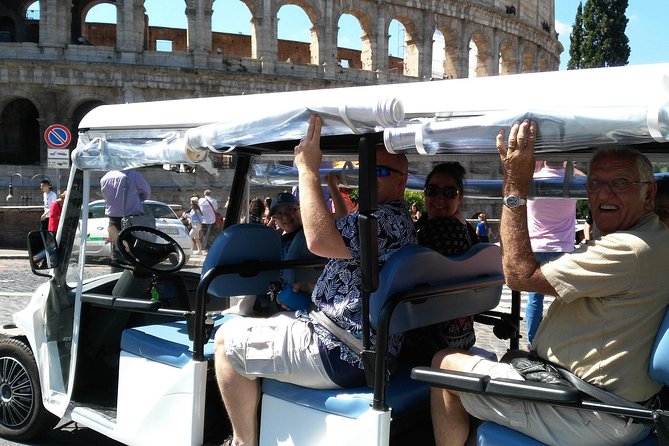
Rome rewards a fast first look. This golf cart tour packs ancient ruins, grand piazzas, fountains, and hilltop views into about three hours, with a maximum of six people. I like the easy way it covers far more ground than a walking tour, and I like the local guides, who add personal stories and practical advice rather than simply pointing at monuments. The main tradeoff is time: you see many places, but most stops are for viewing and explanation, not long interior visits.
The private upgrade makes sense for families, couples, and anyone with a fixed wish list. A semi-private ride costs $168.09 per person, which is not cheap, but the small group, door-to-door feel, and wide route can make it good value on a first day in Rome. Traffic, heat, and a slightly unclear meeting point deserve attention, so arrive early at Piazza della Repubblica and confirm exactly where the cart will meet you.
In This Review
- Key points at a glance
- Why a golf cart works so well in Rome
- Starting at Piazza della Repubblica
- Michelangelo’s church on a quiet side street
- Ancient Rome around the Arch of Constantine and Palatine Hill
- Circus Maximus and the Mouth of Truth
- Capitoline Hill and Michelangelo’s city design
- Largo di Torre Argentina and Piazza Venezia
- The Pantheon, Trevi Fountain, and Piazza Navona
- Janiculum Hill for the big Roman view
- Finishing at the Spanish Steps
- Guides make or break the three hours
- Comfort, mobility, and group size
- Is $168.09 per person good value?
- The best time and the main practical cautions
- Who should book this Rome golf cart tour?
- Should you book it?
- FAQ
- How long is the Rome golf cart tour?
- How many people can join the semi-private tour?
- Is a private tour option available?
- Where does the tour start?
- Where does the tour finish?
- Is the tour suitable for people with mobility challenges?
- What happens if I need to cancel?
Key points at a glance
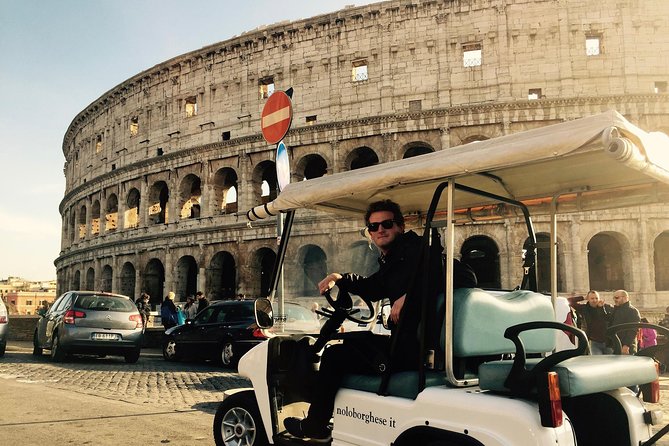
- Fourteen major sights in roughly three hours: You move from the Colosseum area to the Trevi Fountain, Pantheon, Piazza Navona, and the Spanish Steps without spending the day on foot.
- A true small-group ride: The semi-private cart is capped at six people, and a private option is available for a more personal route.
- Useful for limited mobility: The cart reduces walking between sights, and guides can adjust stops where possible, though you still need to get out and walk around at several locations.
- Strong guide-led experience: Guides named Andy, Luca, Riccardo, Matt, Alice, Francesco, Valentina, Chiara, and others are praised for clear storytelling, calm driving, and good local tips.
- A smart first-day orientation: You can see where Rome’s main areas fit together, then return later to the places you want to explore properly.
- Flexible atmosphere: The tour can feel relaxed rather than rushed, with time for photographs, questions, and occasional adjustments to suit the group.
Why a golf cart works so well in Rome
Rome is not a compact museum. Its sights spread across hills, busy roads, ancient ruins, grand squares, and small side streets. On foot, you can spend much of three hours simply getting from one famous place to another. In a car or van, you cover ground, but lose the open-air feel and the ability to pull close to many stops.
The golf cart offers a useful middle ground. You sit outside, see the streets as you move, and get a better sense of how old and modern Rome overlap. The guides also handle Rome’s traffic, which is no small job. Several comments praise their calm driving and ability to navigate crowded streets.
This is not a hop-on, hop-off service. You remain with the guide, and the pace is set by the group and traffic. Still, the cart lets you see a broad sweep of the city while keeping your energy for later sightseeing.
More Golf Cart Tours in Rome:
- Rome by Golf Cart Private Tour: Beyond the Landmarks
★ 5.0 · 4,361 reviews - Rome Highlights by Golf Cart Private Tour
★ 5.0 · 2,379 reviews - Rome: City Highlights Golf Cart Tour
★ 4.8 · 857 reviews
Starting at Piazza della Repubblica
The meeting point is Piazza della Repubblica, a central location near public transportation. This gives you a practical start, especially if you are arriving by train or staying near central Rome.
Pay close attention to the exact pickup spot. One person nearly missed the tour after waiting at a different place about a block away. That problem was solved, but it is a useful warning: do not rely on finding the cart by chance. Allow extra time, keep your phone available, and check the meeting instructions before you leave.
The tour ends in central Rome, but the exact final point can vary within the city center. That is helpful if you want to continue sightseeing, find lunch, or return to your hotel.
Michelangelo’s church on a quiet side street
Early in the ride, you get a look at a church designed by Michelangelo on a nearby side street. This is the sort of stop that gives the tour some character. Rome’s famous monuments get most of the attention, but a less obvious church can show you how much art sits outside the usual route.
The stop also sets the tone for the tour. You are not only racing between the best-known landmarks. Your guide may point out smaller details and places you would likely pass without knowing their importance.
Do not expect a long church visit unless the guide’s timing allows it. The value here is the setting, the story, and the chance to see a quieter corner of central Rome.
Ancient Rome around the Arch of Constantine and Palatine Hill
The Arch of Constantine is one of the tour’s most striking ancient sights. Built in 312 AD to celebrate Emperor Constantine’s victory, it remains one of the clearest symbols of imperial power near the Colosseum area. From the cart, you get a strong exterior view and a useful explanation of where it fits into the Roman Forum and Colosseum district.
Next comes Palatine Hill, traditionally linked with the birth of Rome. It later became the preferred address of emperors and wealthy Romans. From street level, the hill’s ruins can seem like a jumble of broken walls and trees. A good guide gives those remains shape by explaining who lived there and why the hill mattered.
This portion is ideal for orientation, but it is not a substitute for entering the Colosseum, Roman Forum, or Palatine archaeological area. The tour shows you the setting and gives you the historical framework. Plan a separate visit if you want to walk through the ruins at length.
A few more Rome bookings to compare
- Vatican: Museums & Sistine Chapel Entrance Ticket
★ 4.5 · 144,003 reviews - Vatican Museums & Sistine Chapel Tour with Optional Basilica
★ 4.3 · 67,413 reviews - Colosseum, Roman Forum & Palatine Guided Tour
★ 4.7 · 63,148 reviews - Vatican Museums, Sistine Chapel & St Peter’s Basilica Guided Tour
★ 4.5 · 39,149 reviews
Circus Maximus and the Mouth of Truth
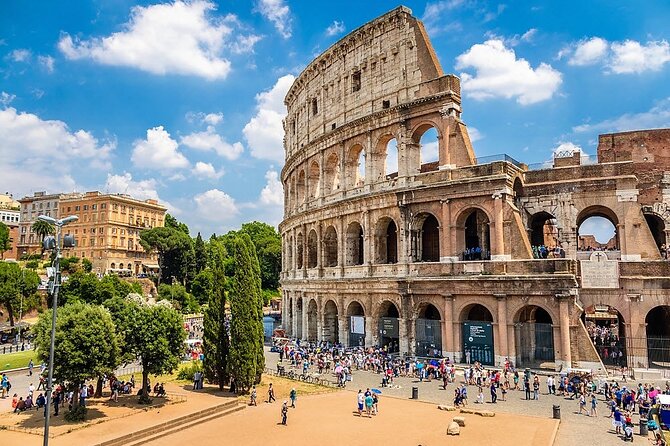
Circus Maximus once hosted chariot races before crowds said to exceed 150,000 people. Today, it is a wide open space, and the scale can be hard to grasp from a quick glance. Your guide helps you picture the stands, racing track, and enormous public events that once filled this valley.
The Mouth of Truth adds a lighter moment. This ancient marble mask is linked to the famous claim that it bites the hand of a liar. It is a playful stop, especially for families and children, and it breaks up the heavier material about emperors and ancient power.
Time at both places may be brief. Circus Maximus is best understood through the guide’s explanation, while the Mouth of Truth can attract a queue at certain times. If taking the traditional hand-in-the-mouth photograph matters to you, ask how much time is available before leaving the cart.
Capitoline Hill and Michelangelo’s city design
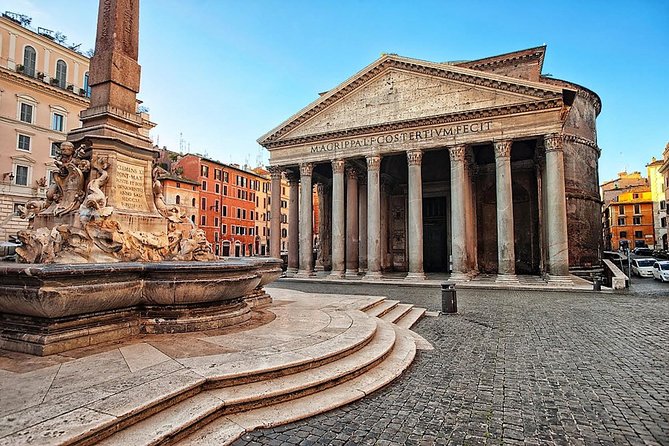
Capitoline Hill is one of the most important stops for understanding Rome’s civic identity. It was a religious and political center in ancient times, and Michelangelo later redesigned its piazza and approach. The result is one of Rome’s most carefully composed urban spaces.
From the cart, you can appreciate the hill’s position and the grand design without committing to a museum visit. The Capitoline Museums are here, but admission is not part of this experience. I see this as another strong orientation stop: the guide can explain what you are looking at, then you can return later if you want a slower visit indoors.
The hill also shows why a cart is useful. Rome’s slopes are manageable for many people, but they can be tiring after a morning at another major site. The ride cuts down the transitions and keeps the tour moving.
Largo di Torre Argentina and Piazza Venezia
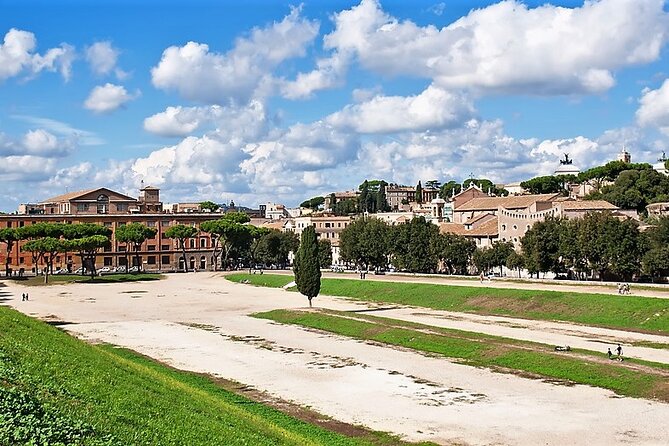
At Largo di Torre Argentina, ancient temple remains mark the site associated with Julius Caesar’s assassination. It is an unusual Roman stop because the ruins sit in the middle of the modern city, surrounded by traffic and ordinary urban life.
That contrast is one of the pleasures of Rome. You can be looking at stone foundations from antiquity while buses, scooters, and pedestrians carry on around them. The tour gives you enough context to understand why this otherwise rough-looking archaeological area matters.
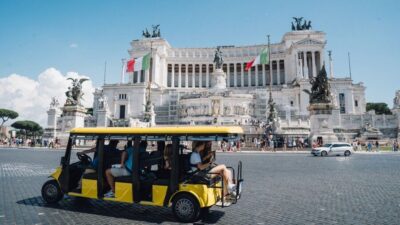
Piazza Venezia then shifts the mood to monumental nineteenth-century Rome. The huge Vittorio Emanuele II Monument dominates the square, creating a grand gateway between several historic districts. The area can be noisy and crowded, so the cart is a comfortable way to take it in without trying to cross every lane of traffic on foot.
The Pantheon, Trevi Fountain, and Piazza Navona
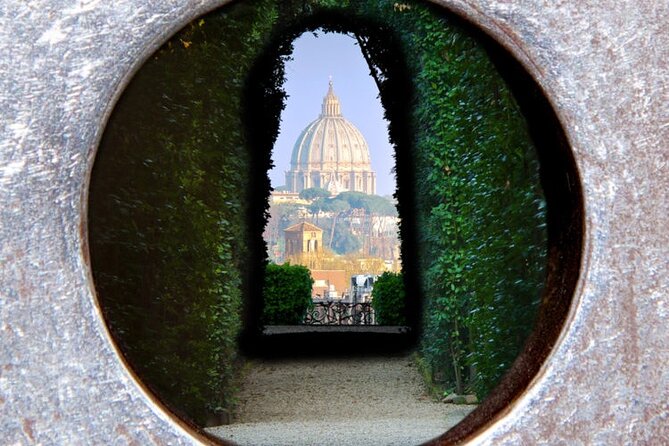
The Pantheon is one of Rome’s essential sights, and this tour includes a view of its iconic portico. You will see the massive columns and the building’s powerful front, but the experience does not include a full interior visit. That distinction matters. The inside is where the Pantheon’s architecture becomes even more impressive, so place it on your own list if you have time.
The Trevi Fountain brings the classic Rome moment: marble figures, rushing water, and the familiar coin ritual. The fountain is one of the busiest stops on the route. Your cart may bring you close, but expect people, noise, and limited space around the basin.
Piazza Navona offers a different kind of spectacle. Its long shape follows the outline of an ancient stadium, while Baroque fountains and church façades give the square its theatrical look. You may have time to stroll here, take photographs, and listen to the guide before moving on.
These three stops are close enough in spirit but different in character. The Pantheon is architectural power, Trevi is ceremony and spectacle, and Navona is a public square designed for lingering. Seeing them together helps you understand why central Rome feels like several eras sharing one neighborhood.
Janiculum Hill for the big Roman view
Janiculum Hill is one of the tour’s best changes of pace. From above, Rome opens out beneath you, and the city’s domes, rooftops, and church towers become easier to place. The view gives your earlier stops a wider setting.
This is also a welcome pause after the dense streets of the historic center. You are no longer studying one façade or ruin. You are looking across the city and getting a sense of its scale.
Weather will affect this stop. On a clear day, the panorama can be a highlight. On a hazy or rainy day, it may be less rewarding, but the hill still provides a different perspective from the central squares.
Finishing at the Spanish Steps
The Spanish Steps provide a fitting final stop. The staircase connects the lower part of Rome with Trinità dei Monti above, and the surrounding streets are filled with shops, cafés, and historic buildings.
Because the steps are a popular gathering place, expect plenty of people. The cart cannot turn the area into a private photo session, but the guide can explain the setting and help you understand how it connects to the city’s elegant northern center.
Ending in central Rome gives you choices. You can continue toward the Trevi area, shop, find a meal, or use the tour’s overview to plan the rest of your day.
Guides make or break the three hours
The strongest part of this experience is the guide. The names that come up repeatedly include Andy, Luca, Riccardo, Matt, Alice, Emmanuel, Francesco, Valentina, Chiara, Brando, Carlo, Massimo, and Francesca. Individual guide assignments can change, so you should not assume a particular person will lead your tour, but the pattern is clear: the experience depends heavily on local personality and storytelling.
Andy is praised for lifting the mood after an exhausting Vatican visit and for explaining ancient Rome in ways that worked for children. Riccardo is described as a lifelong Roman who shared local advice, lesser-known stops, and even a gelato break. Alice received special praise for helping a family member with limited mobility.
Francesco and Francesca are noted for making the experience personal and entertaining, while Valentina kept both children and adults engaged during hot weather. These details matter because three hours in a cart can either feel like a lively conversation or a dull lecture. The best guides leave space for questions, explain modern Rome as well as ancient Rome, and adjust the route when practical.
Comfort, mobility, and group size
The cart is especially helpful if you have limited stamina, are traveling with older relatives, or want to avoid spending a hot afternoon walking between distant sights. One guide brought the cart close to stops where possible and helped a family member with limited mobility.
You should still be realistic. The cart does not remove all walking. You will get out at viewpoints and monuments, and some surfaces around ancient sites and piazzas may be uneven. The tour information says most people can participate, but anyone with specific mobility needs should confirm the details before booking.
A six-person limit is a major advantage. You are not lost in a large crowd, and the guide can answer questions more easily. If you want complete control over the pace or have a private family plan, choose the private option.
Is $168.09 per person good value?
At $168.09 per person, this is a premium sightseeing option. You are paying for the guide, the cart, the small group, and the ability to connect widely separated sights in one session. It is not the right purchase if you prefer slow, low-cost exploration on foot.
I think the price makes the most sense in three cases:
- You have only a short stay and want a quick city overview.
- Walking in heat or over Rome’s hills is difficult for you.
- You want a private or nearly private guide who can answer questions and adjust the experience.
The value is strongest at the beginning of your stay. You can use the tour to decide where to spend your next day, instead of guessing which neighborhoods and monuments deserve your time. It is also useful after a long museum morning, when your legs need a break but you still want to see the city.
Group discounts may be available, and gratuities are optional. If you are traveling with six people, compare the semi-private total with the private option, since the extra control may be worth it for your group.
The best time and the main practical cautions
A morning ride is a smart choice if you want a fresh introduction to Rome. One guide specifically suggested doing the tour in the morning, and that timing can leave your afternoon open for an interior visit.
An evening tour has its own appeal. One group booked at the last minute to see Rome lit up, and the lights added a special mood to the fountains and monuments. The best choice depends on your priorities: morning for orientation and energy, evening for atmosphere.
Rome’s traffic can be intense. The guides are praised for calm driving, but no cart can make congestion disappear. Build your expectations around seeing many places from the outside, with short stops and explanations rather than long visits at every monument.
Free cancellation is available up to 24 hours before the start time. Changes or cancellations inside that window are not refundable, so keep the local start time in mind.
Who should book this Rome golf cart tour?
I would book it for a first visit, a short stay, a family group, or anyone who wants to cover the city without a full day of walking. It is also a good fit for families with teenagers, since the cart adds movement and the guides mix facts with stories and humor.
You should think twice if your main goal is to tour the interiors of the Pantheon, Colosseum, museums, or churches. This is an exterior highlights ride and city orientation, not a replacement for Rome’s major admission-based visits.
Should you book it?
Book this tour if you want a fast, comfortable introduction to Rome with a small group and a lively local guide. The route is wide, the views are varied, and the cart solves a real problem: Rome’s best sights are spread farther apart than they look on a map.
Skip it if you prefer to move slowly, linger at every ruin, or keep your sightseeing budget low. For everyone else, especially visitors with limited time or limited walking stamina, the combination of six-person seating, flexible guiding, and citywide coverage makes this a sensible first-day choice. Just confirm the meeting spot, arrive early, and treat the ride as your overview of Rome, not your complete visit to every monument.
FAQ
How long is the Rome golf cart tour?
The tour lasts approximately three hours.
How many people can join the semi-private tour?
The tour has a guaranteed maximum of six people.
Is a private tour option available?
Yes. You can upgrade to a private tour for a more personalized experience.
Where does the tour start?
The tour starts at Piazza della Repubblica in central Rome.
Where does the tour finish?
It finishes in Rome city center. The exact final point within the center is not specified.
Is the tour suitable for people with mobility challenges?
The cart reduces the amount of walking between sights, and most people can participate. You still need to get out and walk at some stops. Guides may bring the cart close to certain locations where possible.
What happens if I need to cancel?
You can cancel at least 24 hours before the experience start time for a full refund. Cancellations or changes made less than 24 hours before the start time are not refunded.
Recently added around Rome
- Palatine Hill and Roman Forum Tour with Fast-Track Entrance★ 4.2 · 417 reviews
- Tivoli: Villa D’Este & Villa Adriana Pass & App Audioguide★ 4.4 · 364 reviews
- From Rome: Villa D’Este & Villa Adriana Day Trip with Lunch★ 4.4 · 289 reviews
- Vatican Museums & Sistine Chapel Skip-the-Line Guided Tour★ 4.6 · 254 reviews
- Tivoli: Villa D’Este Entry Ticket and App Audio Guide★ 4.3 · 191 reviews
- Rome: The Three Tenors at St. Paul’s Church Concert Ticket★ 4.7 · 699 reviews
- Rome: Capitoline Museums and Centrale Montemartini Tickets★ 4.4 · 328 reviews
- Rome: St. Peter’s Basilica and Papal Tombs Guided Tour★ 4.6 · 477 reviews
Golf Cart Tours, compared.
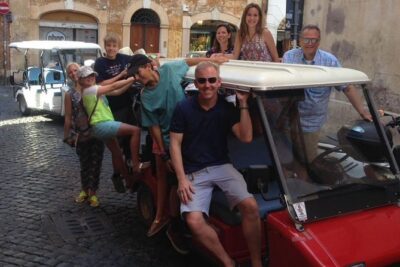
Rome by Golf Cart Private Tour: Beyond the Landmarks
Read our review →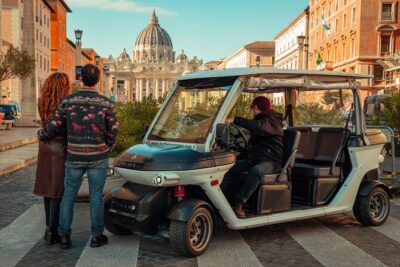
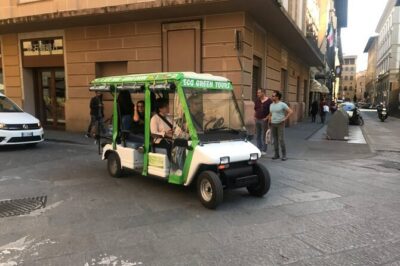
Golf Cart Tour to Fiesole Roman Theatre and Museum
Read our review →
Eco-Friendly Golf Cart City Tour with Audio Guide
Read our review →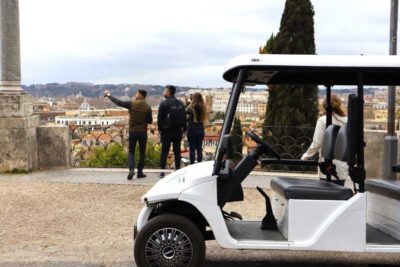
City Highlights Golf Cart Tour with Local Guide
Read our review →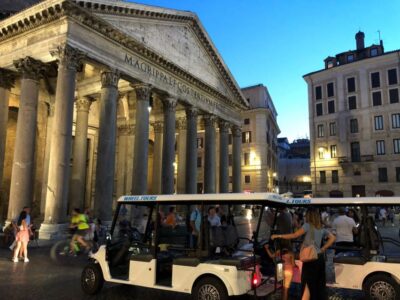
Browse the lists this tour appears in