
Reviewed · CITY TOURS
Rome at Night: Small Group Guided City Walking Tour
Rome looks best after sunset. This two-hour walking tour links major sights with quieter streets, illuminated monuments, and stories you could easily miss alone. I like the small groups of up to 15 and the way guides such as Sharon, Alina, Dan, and Antonio turn a basic sightseeing walk into a lively introduction to Rome. I also like the price: at $29.04 per person, it offers a lot of orientation for very little money.
The main thing to consider is the walking time. The advertised duration is about two hours, but some outings have lasted two and a half hours or even longer. You will also see the Pantheon, churches, the Roman Forum, and the Colosseum from outside, but admission is not included.
In This Review
- What makes this Rome night walk worth considering
- Why Rome at night changes the sightseeing game
- Piazza Navona and the Pantheon area
- Trevi Fountain after the day crowds
- Piazza Venezia and the Altare della Patria
- Walking beside the Roman Forum
- Finishing beneath the Colosseum lights
- What the guides add to the walk
- Price, group size, and the real value
- Timing, comfort, and sensible planning
- Who will enjoy this tour most
- Should you book Rome at Night?
- FAQ
- How much does Rome at Night cost?
- How long does the tour last?
- Where does the tour begin?
- Where does the tour finish?
- Which sights are included?
- Are entry tickets included?
- How many people can join the group?
- Is the tour offered in English?
- Can I cancel for a full refund?
What makes this Rome night walk worth considering
- Rome after dark changes the mood: Illuminated fountains, churches, ancient ruins, and the Colosseum feel less like a checklist and more like part of a living city.
- A group capped at 15 is easier to hear: You can ask questions and keep pace without being swallowed by a large crowd.
- The route covers Rome’s big names: Piazza Navona, the Pantheon area, Trevi Fountain, Piazza Venezia, the Roman Forum, and the Colosseum all fit into one evening.
- Guides add local color: Sharon is praised for her humor and practical help, while Alina is known for interactive storytelling and a comfortable walking pace.
- It works well early in your stay: You get a useful map of central Rome and ideas for places to revisit during daylight.
- Bring proper shoes and a warm layer: Rome’s paving stones are not your feet’s closest friends, especially after dark.
Why Rome at night changes the sightseeing game
Rome is not a city you understand from a bus window. Its treasures sit close together, but the streets can twist, church doors can hide behind plain facades, and a fountain that looks ordinary on a map may carry centuries of stories.
This walk gives you a first look at the city without asking you to plan every turn. I like that balance. You are not spending the evening inside one museum, and you are not merely collecting photographs. You are moving through public squares, ancient roads, churches, and busy city streets while a guide explains what you are seeing.
Night brings a practical benefit, too. Several guides take the group through well-used central streets and help everyone stay together in crowded areas. One guide, Sharon, made a point of ensuring people knew how to return to their hotels. That sort of help is valuable on a first evening, when Rome can feel exciting and slightly confusing at the same time.
The small-group format matters here. With no more than 15 people, you have a better chance of hearing the guide beside a fountain or in a square. You can also ask about restaurants, churches, transport, or places to revisit. The experience is offered in English, although one booking was conducted in Spanish with Antonio, so language availability may vary by date.
More Walking Tours in Rome
- Rome: Trastevere & Campo de Fiori Street Food Walking Tour
★ 4.9 · 2,768 reviews - Rome: Paranormal Night Walking Tour & Secret Backstreets
★ 4.9 · 1,921 reviews - Rome by Night Walking Tour – Legends & Criminal Stories
★ 4.5 · 1,003 reviews
Piazza Navona and the Pantheon area
Piazza Navona is the first major stop in the route as described. It is Rome’s grandest theatrical square, shaped around the footprint of an ancient stadium and lined with elegant buildings, cafes, and fountains.
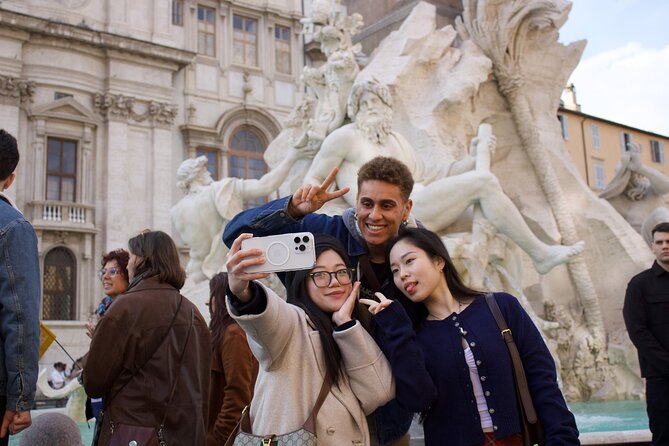
The star is Bernini’s Fountain of the Four Rivers. At night, lighting picks out the figures and movement in the stone, making it easier to appreciate the fountain as sculpture rather than merely a place to toss coins or take a selfie. You are given about 20 minutes here, enough for an explanation, photographs, and a quick look around.
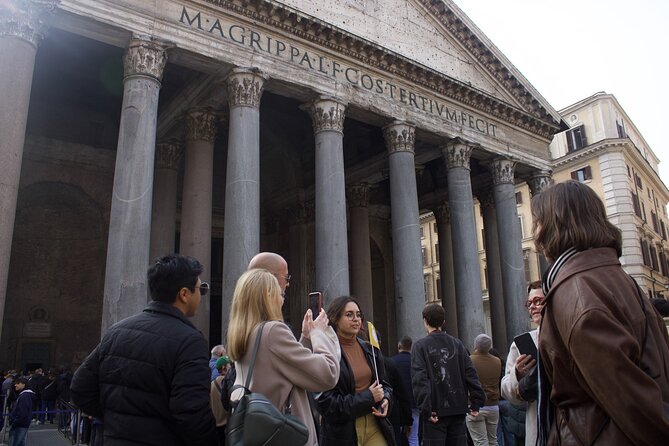
The tour then points you toward the Pantheon, described as one of the best-preserved buildings from antiquity and famous for its great dome. The Pantheon is one of Rome’s essential stops because its scale and construction are easier to understand when a guide explains the building in front of you.
Do not expect entry to the Pantheon. Admission is specifically excluded, and the walking tour focuses on exterior context. If you want to go inside, you will need to return separately and follow the current visiting rules.
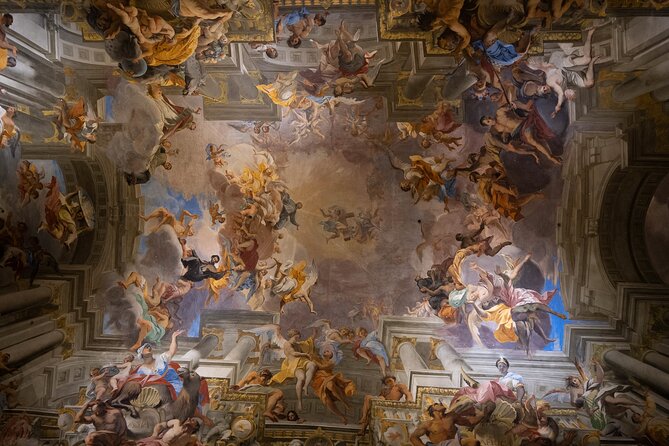
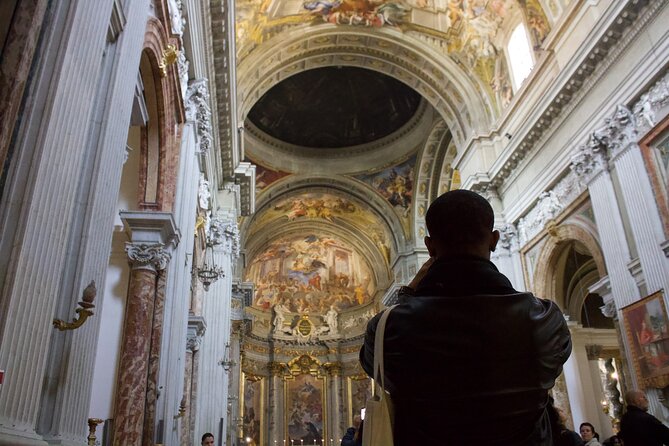
A church visit may also form part of this section. One outing included St. Ignazio church, whose interior was a pleasant surprise for the group. The exact church experience may depend on opening hours and the guide’s route, so treat it as a possibility rather than a guaranteed interior visit.
Trevi Fountain after the day crowds
Trevi Fountain receives about 20 minutes. That sounds brief, but it is enough to hear the basic story, see the dramatic composition, and take photographs if the crowd allows.
The fountain is Rome’s most famous among the more than 2,000 fountains in the city center. Its water, carved figures, and curved backdrop are especially effective under lights. At night, you may find the atmosphere less frantic than during the busiest daytime hours, though this is still one of Rome’s most popular places.
Your guide can also help you approach the fountain sensibly. Keep valuables secure, stay with the group, and do not expect an empty plaza. The value of visiting with a guide is not simply finding Trevi Fountain. It is getting the story, understanding the design, and learning what details deserve your attention before you move on.
I would not treat this as a long photo stop. If Trevi Fountain is a major priority, return during the day or later in the evening with more time. On the tour, the point is to place it within Rome’s larger story.
Piazza Venezia and the Altare della Patria
The walk continues to Piazza Venezia, home to the huge Altare della Patria, also called the Monument to Victor Emmanuel II. The monument is tied to the unification of Italy and the creation of the modern Italian state.
This is a useful stop because many people see the enormous white structure but do not know what it represents. A guide can connect the building to Victor Emmanuel II and the political changes that shaped Italy.
The square is broad, busy, and visually striking. It also marks a transition between Renaissance and modern Rome, the ancient ruins of the Forum, and the city’s major traffic routes. The tour allows about 20 minutes here.
The drawback is that the monument can feel imposing rather than intimate. You will not get a long museum visit or a detailed examination of every statue. Instead, you get a clear explanation and a chance to understand why this prominent building occupies such a central place in Rome.
Still Rome, but a slower afternoon:
- Vatican: Museums & Sistine Chapel Entrance Ticket
★ 4.5 · 144,003 reviews - Vatican Museums & Sistine Chapel Tour with Optional Basilica
★ 4.3 · 67,413 reviews - Colosseum, Roman Forum & Palatine Guided Tour
★ 4.7 · 63,148 reviews - Vatican Museums, Sistine Chapel & St Peter’s Basilica Guided Tour
★ 4.5 · 39,149 reviews
Walking beside the Roman Forum
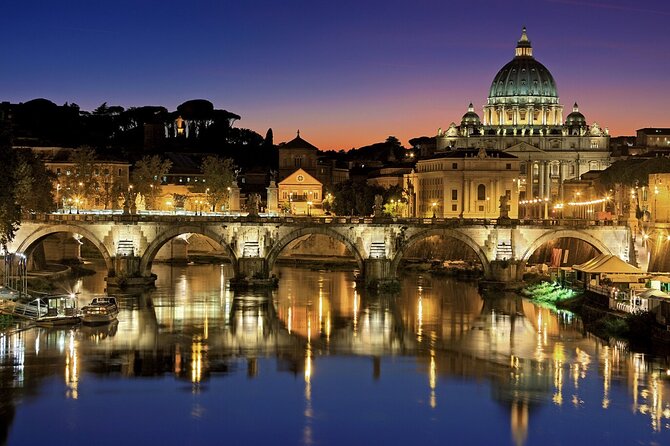
The route then follows Via dei Fori Imperiali, the broad avenue beside the ancient Roman Forum and Imperial Forums. This is where the night setting becomes particularly effective.
The ruins are not entered as part of the tour. Admission to the Roman Forum is excluded, so you view the ancient city from the route and hear about daily Roman life, politics, religion, and public space from outside the archaeological area.
That limitation is important. If you want to walk among the Forum’s temples, arches, and basilicas, book a separate daytime ticket or guided visit. This evening tour gives you orientation, not an archaeological-site visit.
Still, the outside view can be surprisingly useful. A guide helps you picture the Forum as a working center rather than a pile of broken columns. The route lets you connect what you are seeing to the larger city around it, with modern Rome on one side and the ancient city on the other.
The paving and walking surface deserve attention. Wear comfortable walking shoes, as several hours on Rome’s streets can be tiring even when the pace is gentle. One guide, Alina, was specifically praised for stopping in safe spots to explain details and keeping the pace comfortable.
Finishing beneath the Colosseum lights
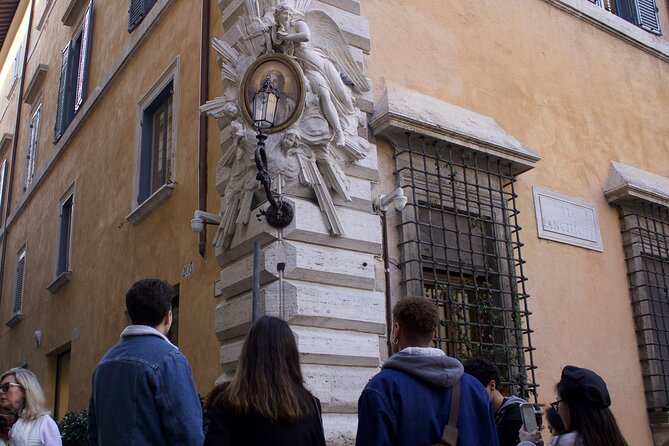
The Colosseum is the final major sight and the visual payoff of the evening. Seeing its outer walls lit against the night sky gives the building a different character from the daytime view, when the surrounding crowds and tour groups can dominate your attention.
The tour does not include entry. You will see the Colosseum from outside and finish at a viewpoint overlooking it. That is a strong ending for a short city walk, especially if this is your first evening in Rome.
Again, keep expectations clear. You are not going inside the amphitheater, walking through its underground levels, or learning every detail of its construction. You are getting the setting, the main story, and a memorable night view.
The meeting information lists Piazza del Colosseo, 1, by the Colosseum, as both the start and end point. The route description also places the early stops away from the Colosseum, so check the exact meeting instructions and timing carefully before you set out. Ending where you began is convenient for public transport and makes the tour easier to fit into an evening plan.
What the guides add to the walk
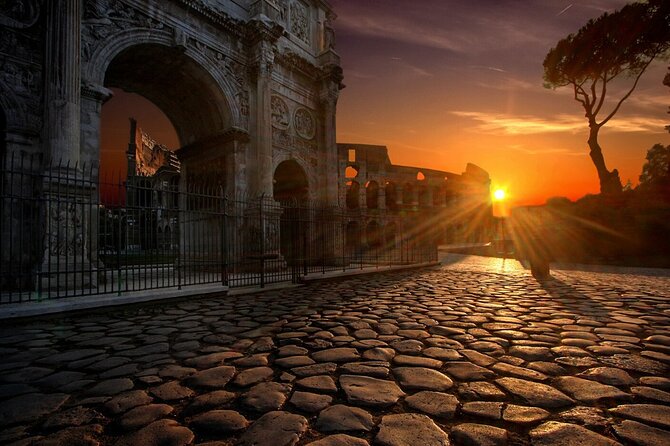
The strongest part of this experience is the guide. The route itself is easy to reproduce with a map, but the explanations, stories, and local suggestions are what make the fee worthwhile.
Sharon receives especially warm praise for her energy, humor, and practical help. She has lived in Italy for much of her life and brings an easy conversational style. One outing with her extended well beyond the advertised length, with extra streets and informal conversation afterward. That sounds enjoyable if you like a relaxed social evening, but it may be less ideal if you need the tour to end at an exact time.
Alina is praised for asking questions, inviting participation, and keeping the pace comfortable. She also adds smaller stops when time allows. Dan is described as strong on unusual details and background information, while Antonio helped with photographs and offered a friendly introduction to the city.
Other named guides include Yousef, Yusuf, Sila, Domenica, Pablo, and Aline. The repeated pattern is clear: the guide makes a major difference. You may receive a lively storyteller, an art-history specialist, or a guide who focuses more on practical orientation. The quality of the route depends partly on that individual style.
Price, group size, and the real value
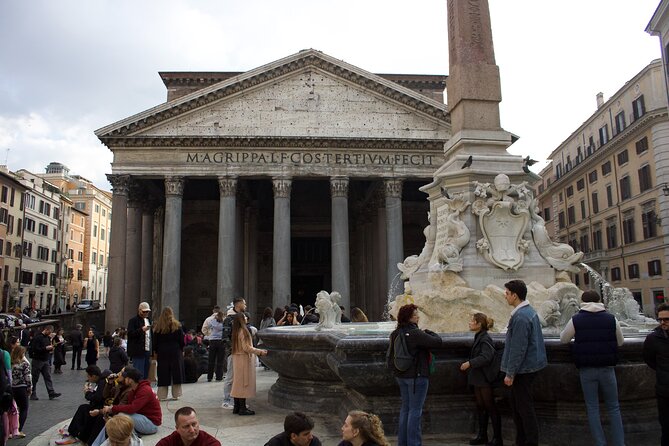
At $29.04 per person, this is inexpensive for a guided evening in central Rome. You are paying for a local guide, a planned route, and a compact introduction to several of the city’s most important places. You are not paying for monument entry, food, drinks, or transport.
That distinction helps you judge the value fairly. If you want to enter the Pantheon, Colosseum, and Roman Forum, the tour will not replace those visits. You will need separate tickets, ideally with advance planning for the Colosseum and Forum.
As an orientation walk, however, the price is strong. You cover several major areas in one evening, learn which places deserve a return visit, and gain useful advice for the rest of your stay. I would especially consider booking it near the beginning of a Rome trip, as several people found that the route helped them get their bearings.
The group limit of 15 is another benefit. It is not a private tour, but it is small enough to feel more personal than a large street procession. Group discounts are available, which may make the cost even more appealing for families or friends booking together.
Timing, comfort, and sensible planning
The stated duration is approximately two hours. Actual outings can be longer, with reports of two and a half hours and one especially extended walk lasting three and a half hours. Guides may add side streets, churches, viewpoints, or conversation when the group is enjoying itself.
Plan for flexibility. Do not book a tightly timed dinner immediately afterward unless you are comfortable leaving early and telling the guide. One person noted that it was possible to leave before the end when necessary, but you should communicate that clearly.
The walk is described as smooth rather than athletic, and most people can participate. You still need comfortable shoes, a warm coat in winter, and an umbrella during unsettled weather. Night temperatures can make the tour feel colder than expected, particularly when you stop in open squares.
The tour is near public transportation, and both the listed start and end point are at the Colosseum. Confirmation arrives at booking, and free cancellation is available up to 24 hours before the start time. Cancellations or changes made inside that window are not accepted for a refund.
Who will enjoy this tour most
I think this experience suits first-time visitors who want a friendly introduction before tackling Rome’s museums and archaeological sites. It also works well for solo visitors, couples, and families who prefer stories and conversation to a formal lecture.
You will likely enjoy it if you:
- Want to see famous monuments lit at night
- Prefer a small group to a large guided crowd
- Need help finding your way around central Rome
- Enjoy history explained through stories and questions
- Want ideas for places to revisit during the day
- Feel more comfortable walking through the city with a local guide
It may not suit you if you want extensive time at every sight, guaranteed interior visits, or a strictly timed two-hour program. Visitors with limited walking stamina should also consider the possible extra time and uneven city surfaces.
Should you book Rome at Night?
I would book this tour if you are new to Rome and want a low-cost, social introduction to the historic center. The combination of Piazza Navona, Trevi Fountain, Piazza Venezia, the Forum, and the Colosseum gives you a useful first sweep of the city, while the night lighting adds real atmosphere.
Book it early in your stay if you want restaurant tips, route advice, and a better sense of where to spend your next few days. Choose another experience if your priority is entering the Colosseum or Roman Forum, since those tickets are not part of this walk.
The best reason to go is simple: Rome can feel overwhelming at first. A good guide turns that confusion into a story, and this tour gives you a friendly start for $29.04.
FAQ
How much does Rome at Night cost?
The listed price is $29.04 per person. Group discounts are available.
How long does the tour last?
The advertised duration is approximately two hours. Some outings have lasted two and a half hours or longer, so allow extra time if your evening schedule is tight.
Where does the tour begin?
The listed meeting point is Piazza del Colosseo, 1, by the Colosseum in Rome.
Where does the tour finish?
The listed end point is also Piazza del Colosseo, 1. The walk finishes at a viewpoint overlooking the Colosseum.
Which sights are included?
The route includes Piazza Navona, the Pantheon area, a major church stop when possible, Trevi Fountain, Piazza Venezia, the Roman Forum area, and the Colosseum exterior.
Are entry tickets included?
No. Entry to the Pantheon, Colosseum, and Roman Forum is not included.
How many people can join the group?
The maximum group size is 15 travelers.
Is the tour offered in English?
Yes. English is the listed language for this experience.
Can I cancel for a full refund?
Yes, if you cancel at least 24 hours before the experience start time. Cancellations or changes made less than 24 hours before the start are not refunded or accepted.
Recently added around Rome
- Rome: Pantheon, Trevi Fountain & Roman Squares Guided Tour★ 4.7 · 386 reviews
- Vatican: Pope Francis Tomb and Papal Basilicas Tour★ 4.7 · 340 reviews
- Vatican: St. Peter’s Basilica with Audio Guide and Options★ 3.4 · 269 reviews
- Rome: Vatican Museums Skip-the-line Entry Ticket and Tour★ 4.2 · 400 reviews
- Rome: Vatican Museums & Sistine Chapel Ticket + Tour Options★ 4.7 · 344 reviews
- Vatican Museums & Sistine Chapel Guided Tour★ 4.3 · 832 reviews
- Vatican Museums & Sistine Chapel Entry Ticket★ 4.4 · 245 reviews
- Vatican: Museums, Raphael & Sistine Chapel + Basilica Option★ 4.7 · 350 reviews
City Tours, compared.
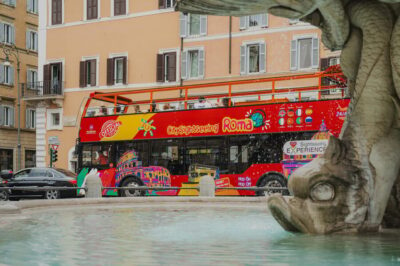
City Sightseeing Hop-on Hop-off Bus with Audioguide
Read our review →
City Sightseeing Hop-On Hop-Off Bus with Audio Guide
Read our review →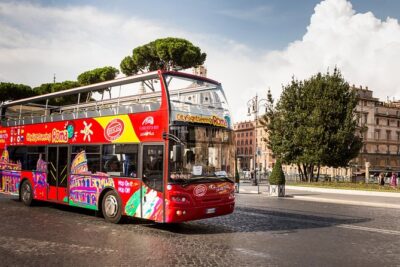
City Sightseeing Rome Hop-On Hop-Off Bus Tour
Read our review →

Fettuccine Pasta Cooking Class in Rome’s City Center
Read our review →
Vatican City: Vatican Museums & Sistine Chapel Entry Ticket
Read our review →

City Sightseeing Florence Hop-On Hop-Off Bus Tour
Read our review →Browse the lists this tour appears in