
Reviewed · CYCLING TOURS
Highlights of Rome Bike Tour (Including Jubilee Sights)
Rome rewards a rolling start. This three-hour bike tour links ancient ruins, Baroque squares, fountains, churches, and Jubilee-era sights in one useful circuit. I especially like the small group of no more than 14 and the chance to choose a bike that suits your pace and budget. The front pouch and rear rack also give you a practical place for valuables and spare layers.
I also like how much ground you cover without turning the day into a forced march. Guides such as Daniele, Nico, Elena, Stefano, Marika, and Sarah have been praised for clear stories, humor, safety, and good Rome tips. The main caution is Rome’s traffic, crowds, and uneven cobbles. Afternoon and Friday evening departures can be harder, and one rider reported falling on slick stones when a crowded street became difficult to manage.
In This Review
- Five useful things to know before you book
- Why a bike is a smart first look at Rome
- Starting in the Jewish Ghetto
- Campo de’ Fiori and the Baroque heart
- Piazza Navona and the Stadium of Domitian
- The Pantheon, Sant’Ignazio, and Hadrian’s Temple
- Trevi Fountain and the Imperial Forums
- Piazza Venezia, Constantine, and Circus Maximus
- What the ride feels like on Rome’s streets
- The guides are a major part of the value
- Who should book this Rome bike tour?
- Should you book it?
- FAQ
- How long does the Rome bike tour last?
- Where does the tour begin and end?
- What is included in the price?
- Are drinks included?
- Are attraction admission tickets included?
- How many people can join the tour?
- Can children join the tour?
- What happens if I need to cancel?
Five useful things to know before you book
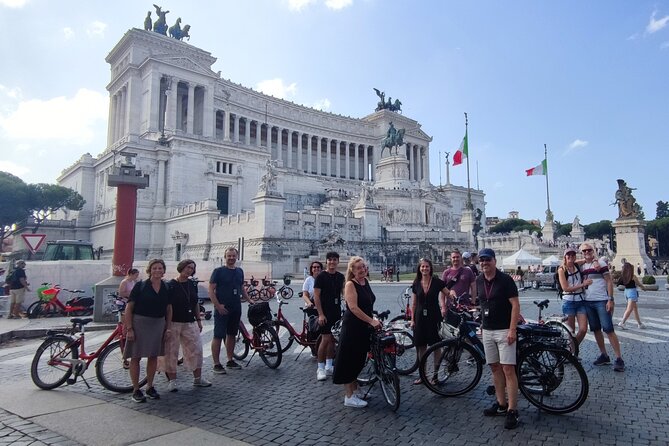
- You see a wide slice of central Rome: The Jewish Ghetto, Campo de’ Fiori, Piazza Navona, the Pantheon, Trevi Fountain, Imperial Forums, Piazza Venezia, the Arch of Constantine, and Circus Maximus all fit into one ride.
- The route is mostly flat: Several riders found the cycling easy, though cobbles and traffic demand attention.
- The guide makes the difference: Daniele’s comparisons to Netflix seasons and lasagna, along with Elena’s storytelling and Sarah’s careful group control, show how much personality can add to the tour.
- It is designed for first-time visitors: You get a quick city orientation, photo stops, and suggestions for places to revisit later.
- Morning is the safer bet for comfort: Crowds can make the ride slower and less relaxed, especially around the fountains and central squares.
Why a bike is a smart first look at Rome
Rome can feel scattered when you explore it on foot. The Pantheon sits a short walk from Piazza Navona, the Trevi Fountain lies farther east, and the ancient forums and Circus Maximus spread south toward the Colosseum. A bike connects these sights quickly, while still letting you stop for stories and photographs.
I like this format for a first day in the city. You get enough context to understand how Rome’s ancient, Renaissance, Baroque, and modern layers sit on top of one another. Then you can return later to the places that caught your attention.
The tour costs $54.44 per person. That is fair value if you want transport, a bicycle, helmet, guide, and a broad introduction in one package. It is less suitable if you prefer long indoor visits or detailed archaeological lectures at every stop. Most stops are brief, and several attractions are viewed from outside.
The advertised duration is about three hours. One account described a four-hour ride, so allow some flexibility if the group needs extra time or traffic slows the route. The group size is capped at 14, which is small enough for a guide to keep an eye on the riders without making the experience feel private or expensive.
More Bike Tours in Rome
- Rome EBike Tour: Appian Way, Catacombs & Roman Aqueducts
★ 5.0 · 1,766 reviews - Rome: Top Highlights & Hidden Gems Tour by Cannondale E-Bike
★ 4.9 · 1,760 reviews - Rome: Appian Way, Catacombs, & Roman Aqueducts E-bike Tour
★ 4.9 · 1,421 reviews
Starting in the Jewish Ghetto
The ride begins at Via dei Delfini, 35, in central Rome. Arrive 15 minutes early so you can get fitted with a bike and helmet without cutting into the tour.
The first stop is the Antico Quartiere Ebraico, Rome’s Jewish Ghetto. Created in 1555 by order of Pope Paul IV, it is one of the oldest Jewish quarters in the world, second only to Venice’s by the description provided for the tour. Its past includes compulsory residence and visible identification for Jewish residents, details that give the neighborhood a serious historical weight.
You get about seven minutes here. That is enough for an introduction and a quick look, but not enough for a full museum visit or a slow architectural walk. Think of this stop as a useful opening chapter rather than a complete exploration.
Campo de’ Fiori and the Baroque heart
The route continues toward Campo de’ Fiori, a square that changes character during the day and evening. Its market is associated with flowers, fruit, and vegetables, while the surrounding terraces fill later in the day.
This is a good place to notice how Rome uses public squares. They are not just monuments surrounded by traffic. They are places to shop, meet, eat, and linger. The stop lasts about ten minutes and is paired with the Navona and Pantheon area, so the guide can connect several nearby sights in one stretch.
Crowds are the main issue. Campo de’ Fiori and the streets around it can be tight, and you should expect to walk your bike or wait for the group at busy points. The tour is not a quiet ride through empty lanes.
Piazza Navona and the Stadium of Domitian
Piazza Navona is one of Rome’s great Baroque spaces. Its long oval shape follows the outline of the ancient Stadium of Domitian, built in AD 86 for athletics and horse racing.
The modern square’s elegant fountains and church facades can make it easy to forget the sporting venue beneath your feet. A guide can help you read the shape of the piazza as an ancient structure rather than just a pretty square.
You get about seven minutes here. Admission is not included, and the stop is primarily an exterior visit. That works well for a quick orientation, but you will need to return on your own if you want a slower look at the architecture or an interior visit.
Still Rome, but a slower afternoon:
- Vatican: Museums & Sistine Chapel Entrance Ticket
★ 4.5 · 144,003 reviews - Vatican Museums & Sistine Chapel Tour with Optional Basilica
★ 4.3 · 67,413 reviews - Colosseum, Roman Forum & Palatine Guided Tour
★ 4.7 · 63,148 reviews - Vatican Museums, Sistine Chapel & St Peter’s Basilica Guided Tour
★ 4.5 · 39,149 reviews
The Pantheon, Sant’Ignazio, and Hadrian’s Temple
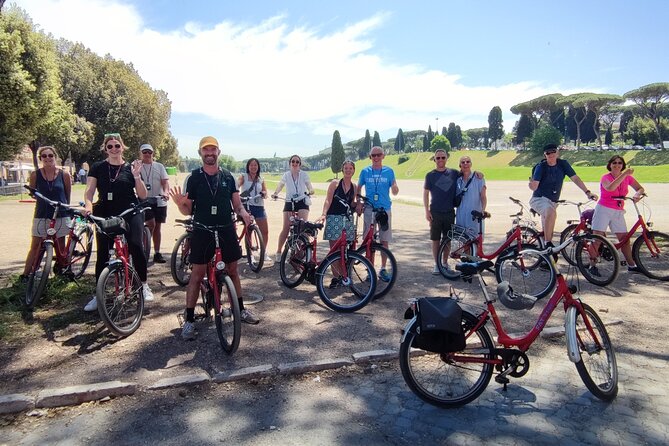
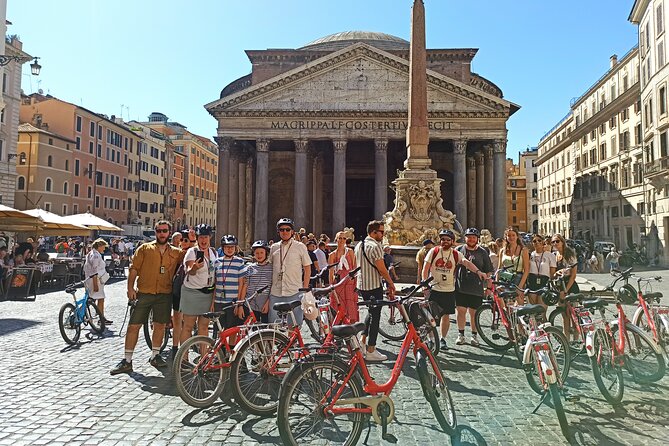
The Pantheon receives about 15 minutes, one of the longer stops on the route. Its story begins in 27 BC, when Marcus Vipsanius Agrippa commissioned a temple dedicated to all the gods. The building you see today is one of the best-preserved examples of Roman monumental architecture and has influenced architects for centuries.
The tour gives you time to hear the main story and take photographs. Admission is not included, so check the current entry arrangements separately if you want to go inside. The stop is valuable even from the outside, since the proportions, columns, and huge dome make the building easy to appreciate without a long visit.
Next comes Sant’Ignazio di Loyola. The guide explains the church from outside and may use pictures to show its interior features. This is a short, ten-minute stop, so do not expect a full church tour.
The nearby Tempio di Adriano gets about five minutes. The temple was probably commissioned by Emperor Hadrian for his wife, Vibia Sabina, and completed around AD 145 by Antoninus Pius. The surviving columns are incorporated into a later building, which makes this a fine example of Rome’s habit of reusing ancient structures rather than preserving them in isolation.
Trevi Fountain and the Imperial Forums
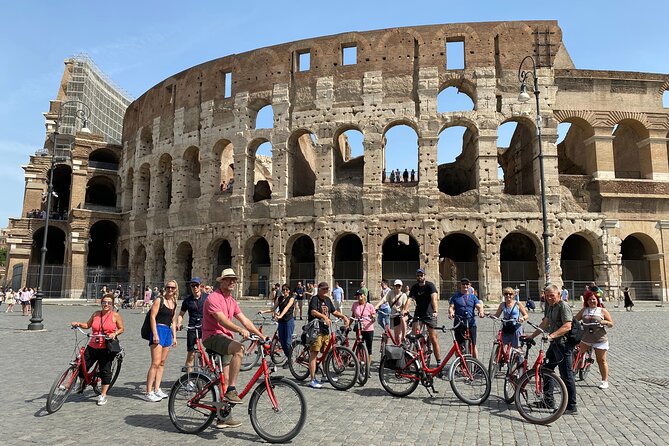
The Trevi Fountain is a seven-minute stop. It marks the terminal point of the Vergine aqueduct, the only ancient Roman aqueduct still in continuous use today. The fountain is famous, crowded, and visually impressive, but the short stop tells you something important: this is a quick orientation and photo opportunity, not a leisurely fountain visit.
Hold your belongings securely in the supplied bike pouch, especially in dense crowds. You may also need to walk the bike through the busiest areas. The front pouch and rear rack are useful, but you should not treat them as a substitute for keeping an eye on valuables.
The ride then reaches Trajan’s Forum and the Imperial Forums. You get about 15 minutes for the guide’s explanation and views across the archaeological remains. This is one of the best sections for understanding ancient Rome as a working city of government, commerce, law, and imperial display.
The forums are spread out, so a bike gives you a useful sense of scale. You will not receive a full archaeological tour in this time, but the overview can help you decide if you want to return for a longer visit.
Piazza Venezia, Constantine, and Circus Maximus
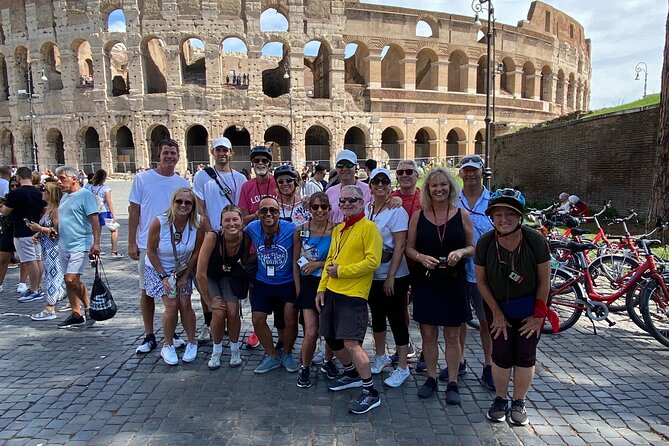
Piazza Venezia links Via del Corso with Via dei Fori Imperiali. Its present form reflects major rebuilding in the nineteenth and twentieth centuries, including the construction of the Monument to Vittorio Emanuele II.
The stop lasts about five minutes. It is brief, but the square helps explain how modern Rome reshaped the ancient center. Traffic and large roads can make it difficult to absorb everything at once, so listen closely and save detailed photographs for a quieter moment.
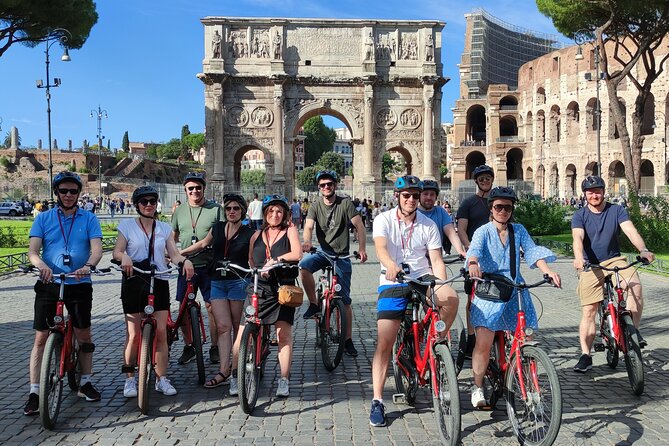
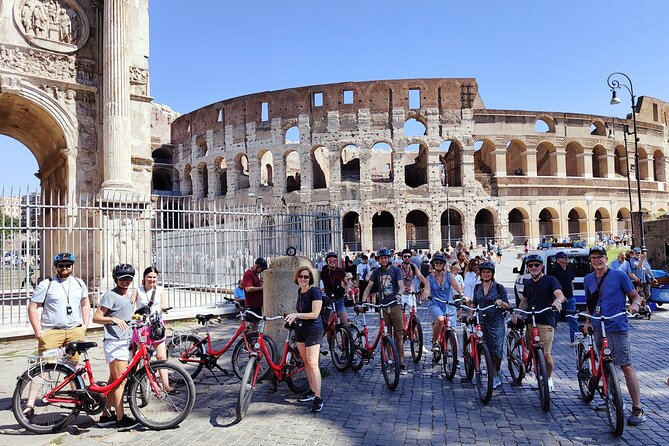
The Arch of Constantine follows, with another five-minute explanation. Built along the route of Roman triumphs, the arch celebrates Constantine’s victory over Maxentius on October 28, AD 312. It is the largest surviving honorary arch in Rome and carries political messages from the Constantinian era.
The final major stop is Circus Maximus, the enormous ancient entertainment venue. It measured about 600 meters long and 140 meters wide, making it one of the largest public entertainment buildings ever constructed. The site is also tied to the legend of the Rape of the Sabine Women and the earliest stories of Rome.
You get about eight minutes here. The open space offers a welcome change after the narrow central streets, and the guide can help you picture chariot racing and large public gatherings on ground that now looks surprisingly spare.
What the ride feels like on Rome’s streets
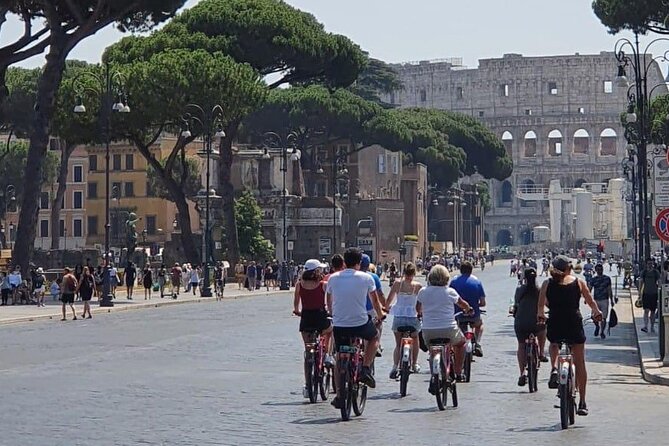
The route is described as mostly flat, and several riders found the pedaling easy. You do not need to be an athlete, but you should be comfortable riding in a group, navigating different surfaces, and staying alert around vehicles and pedestrians.
Rome’s cobbles are part of the experience and part of the challenge. They can make the ride joltier than expected, especially on an older bike or when the stones are wet. Pregnancy is strongly discouraged because of the uneven streets.
The bikes have generally been described as being in good or decent condition. Standard bikes are enough for many riders, but some people preferred an e-bike for a more relaxed ride or for occasional inclines. The tour allows you to choose a bike based on your needs and budget, so mention children’s heights when reserving the correct size.
A helmet is included. You also receive a front bike pouch and rear rack. Drinks are not included, and one rider specifically wished water bottles had been provided. Bring your own water, particularly in hot weather.
Guides use frequent regrouping and stops to keep the party together. That matters in Rome, where the person in front can disappear quickly behind a bus, crowd, or corner. One rider found it occasionally hard to hear through the headset while moving, so pay close attention during riding sections and expect the clearest explanations during stops.
The guides are a major part of the value
The strongest praise centers on the guides. Daniele has been singled out for amusing explanations and memorable comparisons, including treating Roman history like seasons of a television series or layers of lasagna. Nico was praised for keeping the group together while adding plenty of background.
Elena has been described as warm and engaging, bringing stories to life rather than simply reciting dates. Stefano earned praise for organization, communication, humor, and practical recommendations. Marika was appreciated for stopping often and giving first-time visitors enough time to take photos, enter a church, or look around.
Sarah was especially praised for safety, pacing, and water breaks. These details matter more than a polished speech. In a moving group, you need a guide who watches the rear riders, explains when to cross, and knows when the crowd has made a planned stop impractical.
There has been at least one complaint about a guide giving too little historical depth. That is worth keeping in mind. Guide quality can vary, and the experience is strongest when your guide combines solid facts with clear storytelling.
Who should book this Rome bike tour?
I would choose this tour if you are visiting Rome for the first time and want a fast but meaningful orientation. It suits adults, families with older children, and anyone who likes seeing a city through several eras in one outing.
Children are welcome if they have been riding for a while, feel comfortable in a group, and can handle varied surfaces. Everyone under 18 must be with an adult. Children aged one and under are not recommended for the activity.
You should be realistic about the physical setting. This is not a protected cycle path through a park. You will deal with traffic, pedestrians, cobbles, and crowded squares. If you are nervous on a bike, ask about the available bike type and consider choosing an e-bike.
For the best chance of an easy ride, I would select a morning departure. Afternoon crowds can be heavy, and Friday evening may be particularly difficult when concerts or other events fill the streets. Wear layers suited to the forecast, and bring a hat, sunscreen, gloves, scarf, or waterproof clothing as needed.
Should you book it?
Book this tour if you want maximum sightseeing with modest effort and a guide-led introduction to central Rome. The route gives you a strong list of places to revisit, while the small group and supplied equipment keep the cost reasonable at $54.44.
Skip it if you want extended time inside monuments, a quiet ride, or a detailed lecture at every ancient site. For most first-time visitors who are comfortable with city cycling, this is a smart way to get oriented quickly. Free cancellation is available up to 24 hours before the start time, which gives you some flexibility when planning your Rome days.
FAQ
How long does the Rome bike tour last?
The advertised duration is approximately three hours. The activity ends back at the starting meeting point.
Where does the tour begin and end?
The tour begins at Via dei Delfini, 35, 00186 Rome, Italy, and returns to the same meeting point.
What is included in the price?
The price includes a local tour guide, bike rental, helmet, front bike pouch, and rear rack.
Are drinks included?
No. Drinks are not included, so you should bring your own water.
Are attraction admission tickets included?
Admission is not included for Piazza Navona, the Pantheon, and Sant’Ignazio di Loyola. The listed stops at the Jewish Ghetto, Campo de’ Fiori, Tempio di Adriano, Trevi Fountain, Trajan’s Forum, Piazza Venezia, the Arch of Constantine, and Circus Maximus have no admission charge listed.
How many people can join the tour?
The maximum group size is 14 people.
Can children join the tour?
Yes. Children are welcome if they have been riding for a while, are comfortable riding in a group, and can navigate different surfaces. Anyone under 18 must be accompanied by an adult, and children aged one and under are not recommended.
What happens if I need to cancel?
You can cancel for a full refund if you do so at least 24 hours before the experience start time. Cancellations or changes made less than 24 hours before the start time are not accepted for a refund.
Recently added around Rome
- Rome: Pantheon, Trevi Fountain & Roman Squares Guided Tour★ 4.7 · 386 reviews
- Vatican: St. Peter’s Basilica with Audio Guide and Options★ 3.4 · 269 reviews
- Vatican: Pope Francis Tomb and Papal Basilicas Tour★ 4.7 · 340 reviews
- Rome: Vatican Museums Skip-the-line Entry Ticket and Tour★ 4.2 · 400 reviews
- Rome: Vatican Museums & Sistine Chapel Ticket + Tour Options★ 4.7 · 344 reviews
- Vatican: Museums, Raphael & Sistine Chapel + Basilica Option★ 4.7 · 350 reviews
- Vatican Museums & Sistine Chapel Guided Tour★ 4.3 · 832 reviews
- Vatican Museums & Sistine Chapel Entry Ticket★ 4.4 · 245 reviews
Cycling Tours, compared.

Rome EBike Tour: Appian Way, Catacombs & Roman Aqueducts
Read our review →
Top Highlights & Hidden Gems Tour by Cannondale E-Bike
Read our review →
Appian Way, Catacombs, & Roman Aqueducts E-bike Tour
Read our review →
Rome City Small Group Bike Tour with quality Cannondale EBike
Read our review →
Tuscany Bike Tours Through the Chianti Hills with Wine Tasting
Read our review →
Rome by Night – Ebike Small Group Tour – Food and Wine (Option)
Read our review →
Appian Way E-bike Tour with Catacombs, Aqueducts & Food
Read our review →
Browse the lists this tour appears in