
Reviewed · CITY TOURS
Alternative Walking Tour of Rome’s City Center & Hidden Gems
Rome rewards curiosity. This 2.5-hour walk connects the city’s famous sights with lesser-known corners, family rivalries, church politics, art, crime, and old Roman power games. I like the way it treats Trevi Fountain, the Pantheon, and Piazza Navona as part of a larger story rather than isolated photo stops. Guides such as Simone, Jacopo, Iris, and Jacob are praised for clear storytelling, humor, and an easy willingness to answer questions.
I also like the small-group feel reported by several people, including one tour that had only a single participant. The tour moves at a comfortable pace and does not rely on headphones, so you can speak directly with your guide. The main consideration is the tip-based price: the advertised $3.77 is only the reservation cost, and you should plan to tip at the end, usually between €10 and $50.
In This Review
- Key points to know before you book
- Rome told through families, not just monuments
- Beginning beside Trajan’s Column
- Piazza Venezia and the political center of Rome
- The secret stop and the monastery
- Trevi Fountain with the political story intact
- Sant’Ignazio and the power of illusion
- The Pantheon in five minutes
- Piazza Navona and the final Baroque reveal
- Why the guides matter so much
- Pace, language, and physical demands
- What the tip-based price really means
- Who should choose this Rome walk
- Booking details worth knowing
- Should you book it?
- FAQ
- How long does the walking tour last?
- Where does the tour begin?
- Where does the tour finish?
- Which languages are available?
- Is this a fixed-price tour?
- Which famous sights are included?
- Can I cancel the booking?
Key points to know before you book
- Rome’s power families are the main thread: Expect stories about dynasties, popes, artists, political influence, and the people behind the city’s grand spaces.
- The route mixes major sights with quieter stops: Trajan’s Column, Trevi Fountain, the Pantheon, and Piazza Navona appear alongside a secret stop and a monastery.
- The guides carry the experience: Simone and Jacopo receive especially strong praise for historical detail, humor, language skills, and lively delivery.
- The tone is frank and playful: Dark humor, scandals, corruption, murder, war, and betrayal are part of the approach.
- You will walk for 2.5 hours: Wear comfortable shoes and expect frequent stops for explanations and photos.
- The final cost is flexible but not zero: Reserve for $3.77 per person, then decide what the guide’s work was worth.
Rome told through families, not just monuments
Many introductory walks through Rome move from one famous building to the next. This one tries to explain who paid for those buildings, who controlled the city, and how private ambition became public architecture.
That focus gives the tour a useful shape. A fountain is not only a fountain. A church is not only a place of worship. A square can also be a display of family status, papal authority, political messaging, or artistic competition.
I find this approach particularly useful on a first visit because Rome can feel like a pile of unrelated centuries. Ancient columns sit beside Renaissance churches. Baroque fountains appear near medieval streets. Egyptian obelisks turn up in places where you might not expect them. A strong guide helps connect those pieces.
The tour also suits repeat visitors. Jasmine, who had already seen Rome’s major sights several times, joined specifically to find less familiar places and left with ideas for a future visit. That is a good sign for anyone who has already done the Colosseum, Vatican Museums, and standard city-center circuit.
The subject matter is not soft or sanitized. You may hear about corruption, murder, betrayals, wars, scandals, and family conflict. The humor can be dark and politically incorrect. I would choose a different walk for young children or anyone who prefers a formal art-history lecture.
More Walking Tours in Rome
- Rome: Trastevere & Campo de Fiori Street Food Walking Tour
★ 4.9 · 2,768 reviews - Rome: Paranormal Night Walking Tour & Secret Backstreets
★ 4.9 · 1,921 reviews - Rome by Night Walking Tour – Legends & Criminal Stories
★ 4.5 · 1,003 reviews
Beginning beside Trajan’s Column
The meeting point is on the steps of Chiesa del Santissimo Nome di Maria al Foro Traiano, beside Trajan’s Column and Trajan’s Forum. Look for the guide holding a sign with the tour name.
This is a strong starting point. Trajan’s Column is one of Rome’s clearest visual records of imperial power. Its carved spiral tells a military story, while the surrounding ruins show how emperors used architecture to make authority feel permanent.
You will have about 15 minutes here for a photo stop, a visit, guided explanation, and walking. Do not expect a full archaeological-site visit with extensive time inside the Forum. The value is the setting and the context. Your guide can begin explaining how Rome presented conquest, wealth, and order to its people.
This first stop also sets up the tour’s interest in powerful individuals. Rome’s monuments often look impersonal from a distance, but they were commissioned, shaped, and used by people with very specific goals.
Piazza Venezia and the political center of Rome
The route continues to Piazza Venezia for a short sightseeing stop of about five minutes. This is a busy, highly visible part of central Rome, so the stop is brief.
Piazza Venezia works well as a transition point between ancient Rome and later political Rome. You can see how grand avenues, monuments, government buildings, and older structures compete for attention in one compact area.
Here, the guide’s storytelling matters more than the length of the stop. You will not spend 25 minutes studying the square. Instead, expect a quick orientation and a few connections between the surrounding buildings, the people who shaped them, and Rome’s changing role over time.
If you are hoping for long photo sessions at every stop, the pace may feel quick. If you want a broad introduction before exploring further on your own, the short visit keeps the walk moving.
The secret stop and the monastery
The itinerary includes a secret stop lasting about five minutes, followed by a monastery visit of around 25 minutes. The exact identity of the secret stop is not given in advance, which is part of the appeal.
The wording promises places that may not be part of an ordinary sightseeing route, including locations with limited public access when circumstances allow. One person described a guide persuading a priest to let the group see something not normally open to the public. Treat that as a possibility, not a guaranteed feature. Access can depend on the day, the location, and permission.
The monastery is one of the longer stops. That gives the guide time to explain religious life, architecture, art, and the role of the Church in Rome’s growth. The tour’s description also includes admission to papal private gardens, but the supplied route does not identify a separate garden stop. I would confirm exactly how that admission is used when booking, especially if this inclusion is important to you.
This part of the walk may be the most rewarding for people who like places with a quieter atmosphere. It also provides a break from the city center’s famous landmarks and gives the tour its alternative character.
Still Rome, but a slower afternoon:
- Vatican: Museums & Sistine Chapel Entrance Ticket
★ 4.5 · 144,003 reviews - Vatican Museums & Sistine Chapel Tour with Optional Basilica
★ 4.3 · 67,413 reviews - Colosseum, Roman Forum & Palatine Guided Tour
★ 4.7 · 63,148 reviews - Vatican Museums, Sistine Chapel & St Peter’s Basilica Guided Tour
★ 4.5 · 39,149 reviews
Trevi Fountain with the political story intact
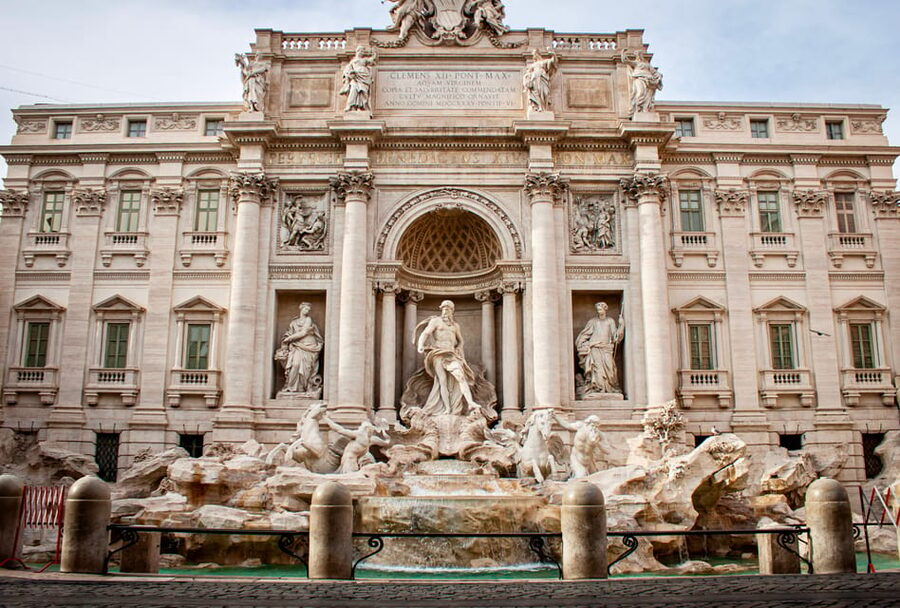
Trevi Fountain gets about 15 minutes, including a break, photos, a visit, guided commentary, free time, and sightseeing. That is enough to see the fountain, hear its main story, and take photographs, but it is not a long, leisurely pause.
Trevi is often treated as a wish-making machine. This tour looks behind the spectacle and explains how fountains became tools of papal image-making and public power. That framing helps you see why Rome’s fountains are so grand. They supplied water, shaped public space, and broadcast the authority of the people who commissioned them.
The stop includes free time, but the fountain is one of Rome’s busiest sights. Keep your belongings secure and stay aware of the group’s meeting point. The guide may need to project over a noisy crowd, although one participant specifically praised Simone for speaking clearly even in loud places.
Trevi is also a useful place to ask practical questions about the rest of your stay. Guides frequently offer suggestions for other places to visit, and several people appreciated receiving recommendations beyond the route.
Sant’Ignazio and the power of illusion
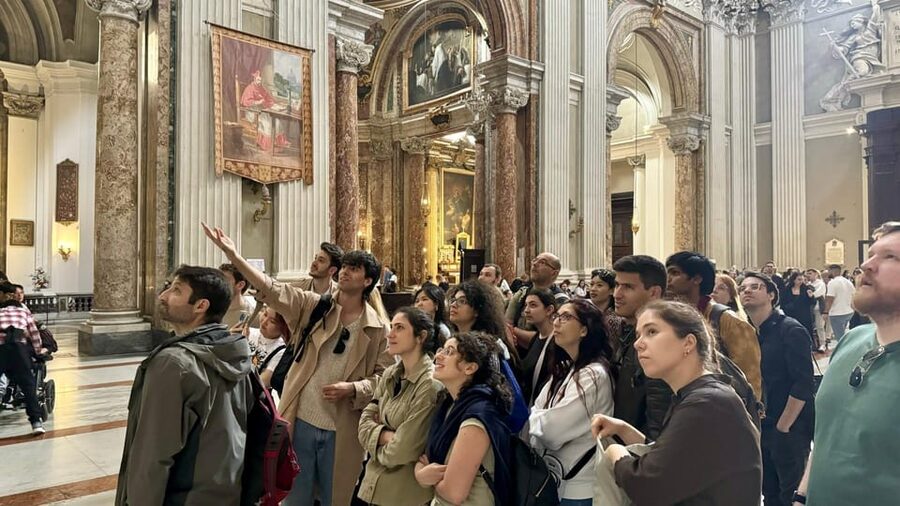
The Church of Sant’Ignazio di Loyola receives about 10 minutes. This is one of the route’s most visually striking interior stops.
The church is known for its remarkable ceiling fresco, which uses painted architecture and perspective to create the illusion of a much larger, more open space. Even if you know little about Baroque art, you can understand the basic trick by looking upward and comparing the painted structure with the real building.
This stop shows why the tour works best when it explains ideas rather than simply naming buildings. You will hear about religious ambition, artistic skill, and the way churches competed for attention. Rome has so many churches because religion, politics, art, wealth, and public identity were tightly linked.
The stop is short, so you may not get a full art lecture. Still, it gives you a memorable example of how Rome’s interiors can be as dramatic as its outdoor monuments.
The Pantheon in five minutes
The Pantheon is listed as a five-minute stop for photographs, a visit, guided commentary, sightseeing, and walking. That is a quick look, not a full architectural study.
The Pantheon deserves more time if you have never seen it. Its scale, ancient structure, and later religious use make it one of Rome’s most important buildings. On this tour, the guide’s job is to place it within the city’s larger story and point out why it matters.
I would not book this walk as your only Pantheon experience if you want to linger inside, study the construction, or sit quietly under the famous opening in the dome. Instead, use the tour to understand the building, then return independently if you want more time.
That is a recurring theme of the walk. It gives you a well-packed introduction, then leaves room for you to revisit the places that catch your interest.
Piazza Navona and the final Baroque reveal
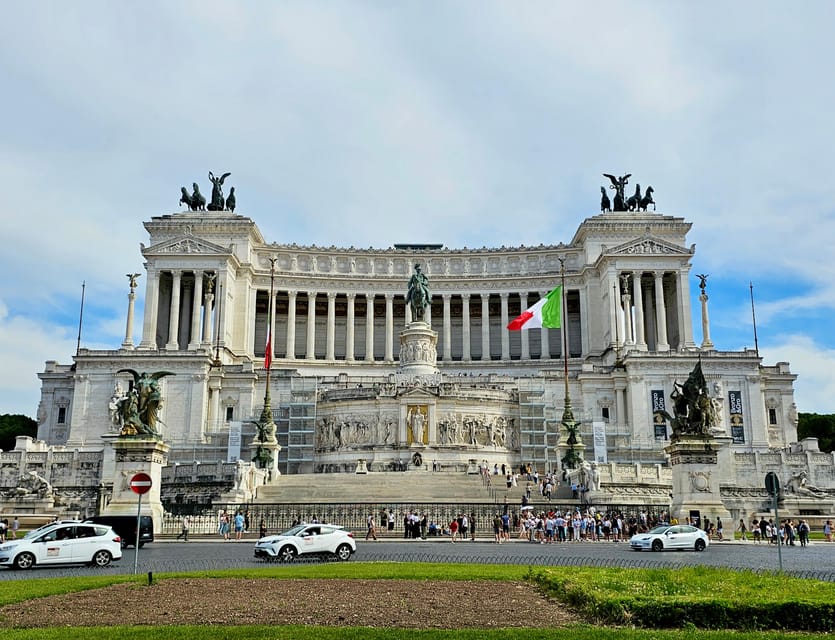
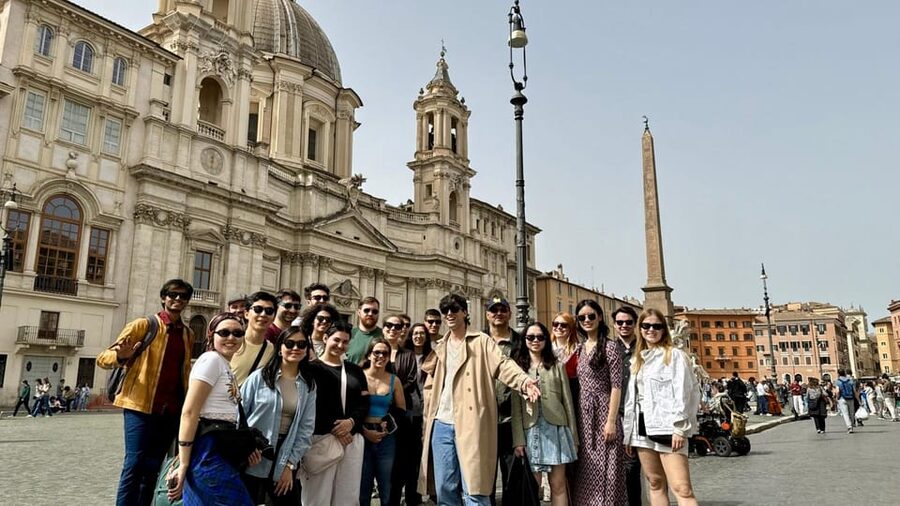
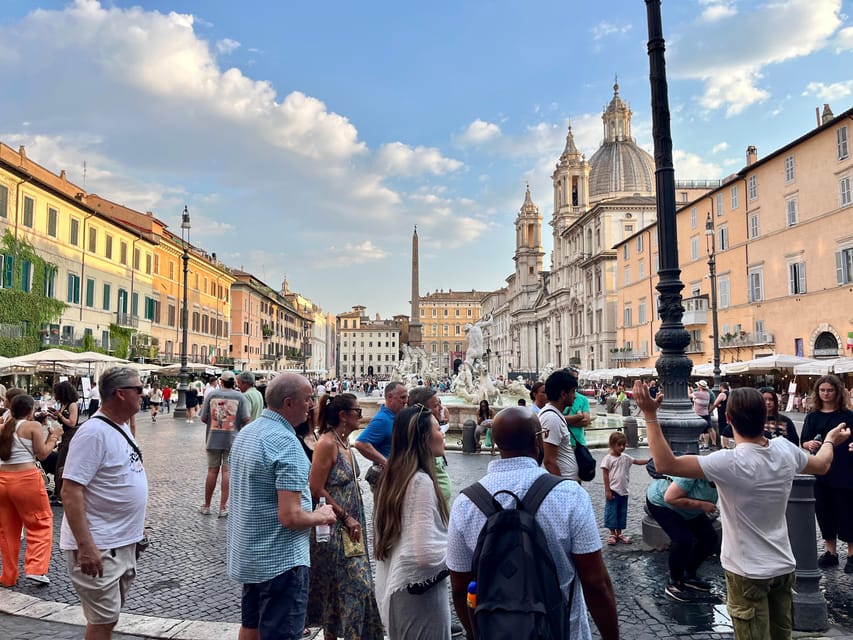
The tour ends at Piazza Navona after about 15 minutes of sightseeing, guided explanation, photos, and walking. This is a sensible finish because the square is both one of Rome’s essential sights and a good base for continuing your day.
Piazza Navona’s long shape reflects its earlier use as a stadium. Its fountains, churches, and surrounding architecture show the Baroque taste for movement, drama, and controlled spectacle. The guide can tie together several themes from the walk here: family rivalry, papal power, artistic competition, and fountains as public propaganda.
Ending here also gives you practical freedom. You can remain in the square, continue toward the Pantheon area, find a meal, or use the guide’s recommendations for another part of Rome.
The tour does not include a return transfer. That is not a problem in this central location, but remember that the walk ends somewhere different from where it begins.
Why the guides matter so much
The strongest feature of this experience is the guide’s ability to tell a story without turning Rome into a school lesson. Iris is praised for mixing information with humor. Simone receives repeated praise for energy, passion, clear English, and his focus on powerful Roman families. Jacopo is often described as charismatic, funny, and especially strong on ancient Rome and family history.
One guide, Simone, can read Latin and Ancient Greek, allowing him to translate old marble inscriptions. That is a rare bonus, though guide assignments vary and you should not assume a particular person will lead your departure.
Several people also liked the direct format without headphones. You can look at the guide, ask a question, and have a real exchange rather than following a voice through an earpiece. That works especially well for a story-driven walk.
The guides also appear willing to adjust to the group. One private-feeling departure had only one participant, while another small group was helped through crowded areas without feeling overwhelmed. Group size can change, so treat that as a possible advantage rather than a promise.
Pace, language, and physical demands
The tour lasts 2.5 hours and is conducted in English or Spanish. It combines steady walking with stops at churches, squares, monuments, and less public places.
You should wear comfortable shoes. Rome’s center is best understood on foot, but the route includes enough walking and standing that poor footwear will make the final hour less enjoyable.
The tour is not presented as a strenuous hike. Still, you will be outdoors for much of the time, moving through busy streets and stopping near popular monuments. Bring water and dress for the weather. Church visits may require respectful clothing, though no specific dress code is provided.
The English delivery appears to be a strength among the guides. People specifically praised clear speech and accents that were easy to understand, including in noisy locations. If you prefer Spanish, that language is also offered.
What the tip-based price really means
The booking price is listed as $3.77 per person, but that is not the full expected cost. This is a Pay-What-You-Want tour, so the guides work mainly for tips. The suggested real-world range is usually €10 to $50 at the end.
That model can be good value when you want an affordable introduction and prefer to judge the experience yourself. A strong guide can turn a modest reservation fee into one of the most useful purchases of your trip.
The model also requires honesty from you. Do not book this thinking the tour is effectively free. Set aside the tip before you arrive, and carry a payment method you can use at the end. Cash or card is accepted according to the tour information.
At the lower end, you are paying less than many fixed-price city tours. At the higher end, you may approach the cost of a standard paid walking tour. The difference is flexibility: you decide the amount, but you also need to budget for it.
Who should choose this Rome walk
I would recommend it to:
- First-time visitors who want a clear framework for Rome’s major sights.
- Repeat visitors who have already seen the standard monuments.
- History fans interested in families, popes, crime, scandal, and political power.
- People who enjoy humor and a guide with personality.
- Visitors who prefer conversation over headphone-based commentary.
- Anyone who wants recommendations for places to explore after the walk.
I would hesitate if you need long, quiet visits inside each monument. The Pantheon receives only about five minutes, and Trevi Fountain is handled in a compact 15-minute block. You should also skip it if dark humor or politically incorrect jokes are likely to bother you.
Families with older teenagers may enjoy the dramatic stories, but the subject matter is not described as child-focused. For very young children, the length and adult themes may be a poor fit.
Booking details worth knowing
The starting point is the steps of Chiesa del Santissimo Nome di Maria al Foro Traiano, right by Trajan’s Column and Trajan’s Forum. The guide carries a tour sign, which makes the meeting point easier to identify.
The tour offers free cancellation up to 24 hours before the start time, and you can reserve now while paying later through the booking arrangement. Starting times vary, so check availability for your date.
The experience is provided by What About Tours. It includes a local guide, the walking route, city highlights, lesser-known places, and admission listed for papal private gardens. Since the route details do not specify a separate garden visit, ask for clarification if that feature is central to your decision.
Should you book it?
I would book this tour if you want Rome explained through people, power, art, and uncomfortable stories rather than through a simple checklist of monuments. The route covers Trajan’s Column, Piazza Venezia, Trevi Fountain, Sant’Ignazio, the Pantheon, and Piazza Navona, but its real value is the connective tissue between them.
Choose it early in your stay. The historical background and guide recommendations can help you make better use of the rest of your time in Rome. Just budget for the tip, expect a brisk city-center walk, and remember that some interior access may depend on the day.
For a short introduction with strong storytelling, direct conversation, and a good mix of famous places and quieter stops, this is an appealing choice.
FAQ
How long does the walking tour last?
The tour lasts 2.5 hours.
Where does the tour begin?
It begins on the steps of Chiesa del Santissimo Nome di Maria al Foro Traiano, beside Trajan’s Column and Trajan’s Forum.
Where does the tour finish?
The tour finishes in Piazza Navona.
Which languages are available?
The live guides conduct the tour in English or Spanish.
Is this a fixed-price tour?
No. It uses a Pay-What-You-Want model. The reservation price is listed as $3.77 per person, and you tip the guide at the end. The usual tip range is stated as €10 to $50.
Which famous sights are included?
The route includes Trajan’s Column, Piazza Venezia, Trevi Fountain, the Church of Sant’Ignazio di Loyola, the Pantheon, and Piazza Navona.
Can I cancel the booking?
Yes. You can cancel up to 24 hours in advance for a full refund.
Recently added around Rome
- Palatine Hill and Roman Forum Tour with Fast-Track Entrance★ 4.2 · 417 reviews
- Tivoli: Villa D’Este & Villa Adriana Pass & App Audioguide★ 4.4 · 364 reviews
- From Rome: Villa D’Este & Villa Adriana Day Trip with Lunch★ 4.4 · 289 reviews
- Vatican Museums & Sistine Chapel Skip-the-Line Guided Tour★ 4.6 · 254 reviews
- Rome: The Three Tenors at St. Paul’s Church Concert Ticket★ 4.7 · 699 reviews
- Tivoli: Villa D’Este Entry Ticket and App Audio Guide★ 4.3 · 191 reviews
- Rome: Capitoline Museums and Centrale Montemartini Tickets★ 4.4 · 328 reviews
- Rome: St. Peter’s Basilica and Papal Tombs Guided Tour★ 4.6 · 477 reviews
City Tours, compared.
City Sightseeing Hop-on Hop-off Bus with Audioguide
Read our review →
City Sightseeing Hop-On Hop-Off Bus with Audio Guide
Read our review →
City Sightseeing Rome Hop-On Hop-Off Bus Tour
Read our review →

Fettuccine Pasta Cooking Class in Rome’s City Center
Read our review →
Vatican City: Vatican Museums & Sistine Chapel Entry Ticket
Read our review →

City Sightseeing Florence Hop-On Hop-Off Bus Tour
Read our review →Browse the lists this tour appears in