
Reviewed · WALKING TOURS
Walk the magic of Rome at night
Rome looks different after sunset. Stone turns gold, fountains glow, and busy streets can feel cooler and more inviting. This 2.5 to 3-hour walking tour links many of the city’s famous sights, from the Colosseum and Vittoriano to Trevi Fountain and the Spanish Steps, giving you a useful first look at Rome after dark. I like the broad route, which covers major landmarks without requiring monument entry, and I like the small group limit of 12 people, which should make it easier to hear the guide and stay together.
The main thing to consider is the amount of walking. You should expect a brisk pace across Rome’s historic center, sometimes with crowds and uneven pavement. Good shoes are essential, and the tour may feel tiring if you have already spent the day sightseeing. Guides such as Isuf, also called Joseph, and Drita have been praised for their humor, photography help, history explanations, and restaurant suggestions.
In This Review
- Key points to know before booking
- Why Rome works so well after dark
- Starting near the Colosseum and Vittoriano
- Piazza Venezia and the story behind its name
- Passing the Pontifical Gregorian University
- The Pantheon from the outside
- Trevi Fountain after sunset
- Piazza Navona and Rome’s evening atmosphere
- Finishing at the Spanish Steps
- The Colosseum at night, with no interior entry
- The guide can make or break the evening
- Pace, group size, and what to wear
- Is $42.34 good value?
- Who should book this night walk?
- Should you book it?
- FAQ
- How long does the Rome night walking tour last?
- What is the price?
- Where does the tour start?
- Where does the tour end?
- Is the tour offered in English?
- Does the tour enter the monuments?
- Which major sights are included?
- How many people can join the tour?
- What level of fitness is required?
- Can children join the tour?
- Is the tour refundable?
Key points to know before booking
- Night lighting changes the experience: The Colosseum, Pantheon, Trevi Fountain, and Vittoriano take on a dramatic look after sunset.
- A lot of Rome fits into one evening: You visit or pass major sights including the Colosseum, Piazza Venezia, Pantheon, Trevi Fountain, Piazza Navona, and Spanish Steps.
- It is a walking tour, not an entry tour: The monuments are viewed from outside, so you will need separate tickets if you want to visit interiors.
- Small groups help: The maximum is 12 people, a useful size for questions, photos, and keeping up in crowded streets.
- Guides add practical value: Isuf and Drita are noted for lively storytelling, photo help, bathroom or coffee breaks, and suggestions for restaurants and other places to visit.
- The meeting point requires care: The tour starts at Via del Monte Oppio, 3, near the Colosseum area, and ends at Piazza di Spagna.
Why Rome works so well after dark
Rome is a city made for evening walking. Its grand monuments are not hidden behind museum walls, so you can see a great deal simply by moving through the streets and squares. At night, floodlights pick out columns, arches, domes, and carved figures that can be easy to overlook in the harsh midday sun.
The cooler air is another advantage, especially during warm months. You also avoid committing to several hours inside a museum or archaeological site. Instead, you get a moving introduction to Rome, with stops long enough for the guide to explain the setting and point out details.
This tour is especially useful near the start of your stay. It gives you a mental map of central Rome and helps you decide where to return in daylight. You can note a restaurant recommendation, spot a café, or mark a monument for a closer visit later.
The trade-off is depth. You cannot properly explore the Colosseum, Pantheon, or other monuments in ten or fifteen minutes. Think of this as an orientation walk with history, atmosphere, and photographs, not as a substitute for an archaeological tour or museum visit.
More Walking Tours in Rome
- Rome: Trastevere & Campo de Fiori Street Food Walking Tour
★ 4.9 · 2,768 reviews - Rome: Paranormal Night Walking Tour & Secret Backstreets
★ 4.9 · 1,921 reviews - Rome by Night Walking Tour – Legends & Criminal Stories
★ 4.5 · 1,003 reviews
Starting near the Colosseum and Vittoriano
The tour begins at Via del Monte Oppio, 3, in the Colosseum area. This is a practical starting point because you are close to one of Rome’s most recognizable sights and to the broad avenue that leads toward the historic center.
One early focus is the Monumento a Vittorio Emanuele II, better known as the Vittoriano or Altar of the Fatherland. The guide explains its symbolic role and allows time for photographs. The immense white building can look almost theatrical at night, with its steps, columns, and statues lit against the dark sky.
You then pass along Via dei Fori Imperiali, the grand avenue associated with Mussolini’s reshaping of central Rome. This is one of the more interesting parts of the walk because it links modern political history with the remains of ancient imperial forums. The guide can help you read the layers of Rome instead of treating the avenue as just a route between attractions.
The stop at the Vittoriano lasts about ten minutes, and entry is not included. Since the tour does not go inside monuments, you will view the building from outside and hear the explanation in the square.
Piazza Venezia and the story behind its name
Piazza Venezia is only a short stop, listed at about two minutes, but it helps explain the layout of central Rome. The guide covers why the square is called Venice Square, giving you a small piece of urban history while the group moves through one of the city’s major junctions.
This is not a place for a long pause. Traffic, pedestrians, and the scale of the surrounding buildings make it more useful as a point of orientation than as a quiet square. Still, the brief explanation adds meaning to a place you may otherwise cross without noticing.
The nearby Vittoriano, Via dei Fori Imperiali, and Piazza Venezia work well together. You see how Rome’s ancient remains, modern national identity, and twentieth-century political history occupy the same few blocks.
Passing the Pontifical Gregorian University
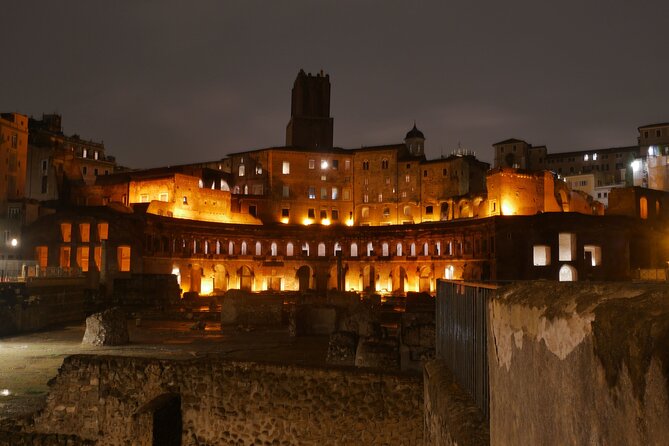
The route also passes the Pontifical Gregorian University, described as the first university founded by Jesuits. This is a short, roughly nine-minute part of the walk, and entry is not included.
It may not have the instant visual impact of the Colosseum or Trevi Fountain, but this stop broadens the tour beyond the usual postcard sights. Rome is also a center of religious education and international academic life. A guide who explains these less obvious places gives you a better sense of how the city functions today.
This is one reason the tour is more useful than a simple checklist walk. You are not only moving from one famous monument to the next. You are also hearing about institutions and streets that help make the historic center feel like a living city.
Still Rome, but a slower afternoon:
- Vatican: Museums & Sistine Chapel Entrance Ticket
★ 4.5 · 144,003 reviews - Vatican Museums & Sistine Chapel Tour with Optional Basilica
★ 4.3 · 67,413 reviews - Colosseum, Roman Forum & Palatine Guided Tour
★ 4.7 · 63,148 reviews - Vatican Museums, Sistine Chapel & St Peter’s Basilica Guided Tour
★ 4.5 · 39,149 reviews
The Pantheon from the outside
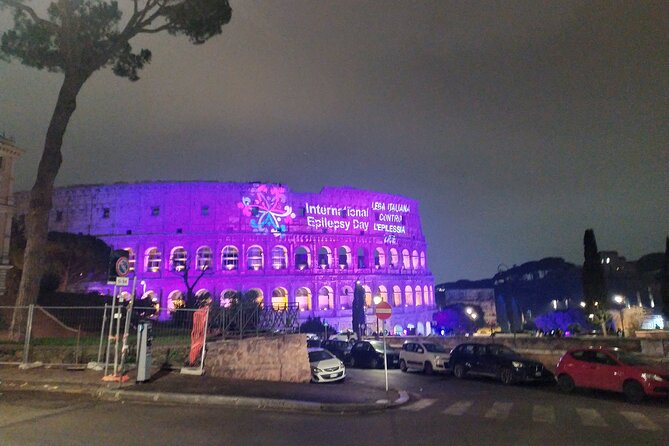
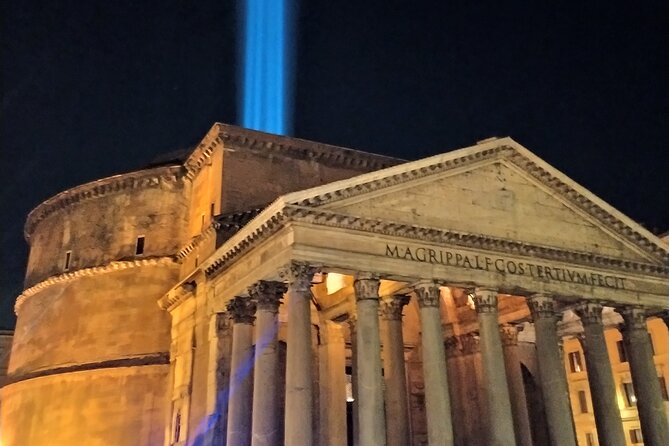
The Pantheon is one of the strongest stops on the route. It is among the best-preserved monuments from the Roman period, and its exterior gives you plenty to examine even without an interior visit.
The scheduled stop lasts about ten minutes. That is enough for an introduction, photographs, and a look at the building’s powerful front portico. If you want to understand the Pantheon in detail, you will need to return separately, but the evening visit gives you a clear reason to do so.
The square around the Pantheon can be crowded. The guide’s ability to keep the group together matters here, especially when people are stopping for photos or moving around the edges of the piazza. The smaller group size should help, though you should still expect other people nearby.
Trevi Fountain after sunset
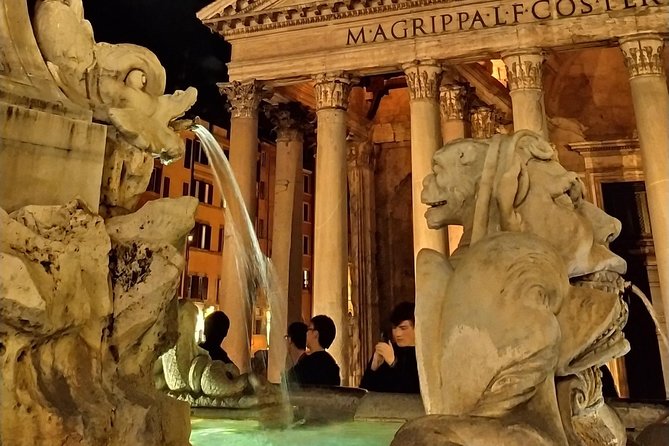
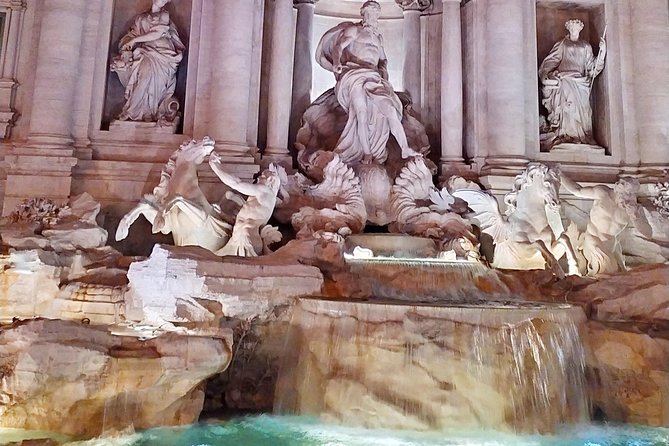
Trevi Fountain is the visual centerpiece for many people. At night, the water and stone are illuminated, making the fountain look especially dramatic. The tour allows about fifteen minutes here, the longest listed stop at a major fountain or square.
Do not expect solitude. Trevi Fountain is famous, and the area can remain crowded in the evening. The useful part of having a guide is knowing where to stand and how to get a decent photograph without wasting your entire stop searching for space.
Isuf, also known as Joseph, has been praised for helping with photos even in crowded conditions. That practical touch matters at Trevi, where a guide who can organize a quick picture is more useful than one who simply points toward the fountain.
The stop is free because you view the fountain from the public square. Bring patience, keep your belongings secure, and stay aware of the group. Fifteen minutes passes quickly here.
Piazza Navona and Rome’s evening atmosphere
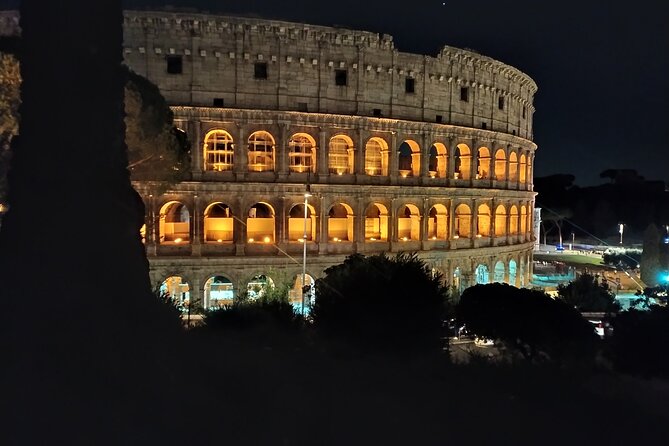
Piazza Navona is one of the tour’s highlights, even though the supplied stop details do not assign a separate duration to it. The long, elegant square is a natural place to experience Rome’s evening energy, with fountains, façades, cafés, and people moving through the center.
The tour gives you a taste of the square rather than a full visit. You may want to return during daylight or later in your trip, especially if you enjoy architectural details or want time to sit down. The advantage of seeing it as part of the route is that you can place it on your map alongside the Pantheon and Trevi Fountain.
Guides have also offered suggestions for coffee shops and restaurants. That advice can be particularly useful around this part of central Rome, where you will have many choices but not every choice offers good value.
Finishing at the Spanish Steps
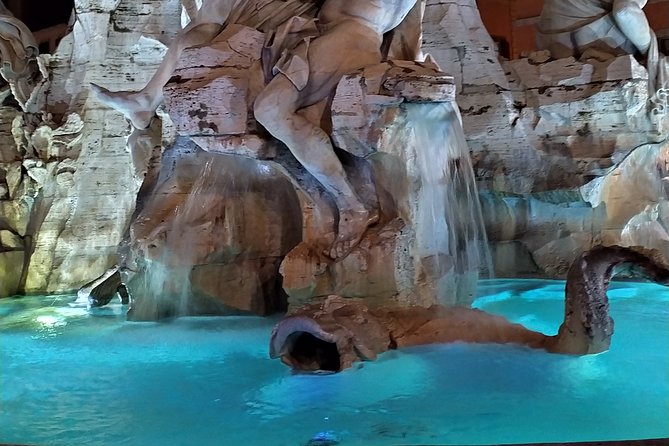
The route ends at Piazza di Spagna, at the Spanish Steps. The steps are known for their distinctive design, elegance, and romantic atmosphere, and the evening setting suits them well.
The listed stop lasts about ten minutes. That gives you time for a final explanation and photographs before the tour ends at the Spanish Square. Ending here is convenient because you finish in a central part of Rome rather than being returned to the starting point.
The end point also works well for planning the rest of your night. Guides have shared restaurant ideas and other recommendations, and the area has taxis available for returning home. The tour does not provide transport, so you are responsible for making your own way afterward.
Remember that the famous steps are not the only attraction nearby. The value of the final stop is also practical: you finish with a clear central location and a better idea of which streets and sights you may want to revisit.
The Colosseum at night, with no interior entry
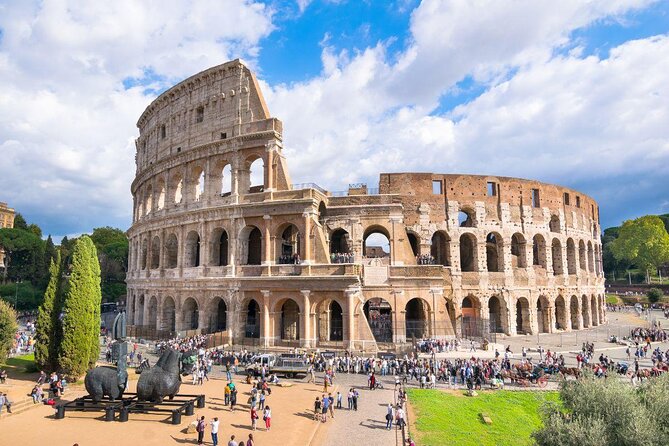
The Colosseum is discussed from outside, with about fifteen minutes devoted to its details. Seeing it illuminated after dark is a strong moment, particularly if this is your first evening in Rome.
The outside explanation can cover the building’s appearance, purpose, and place in Roman history, but the tour does not include admission. You will not walk through the arena, underground levels, or upper sections on this experience.
That limitation is important when judging the price. At $42.34 per person, you are paying for a guided evening route, storytelling, orientation, and group management, not a ticket package. If you already plan to visit the Colosseum separately, this tour can complement that visit by showing you the monument in a different setting. If you want a single tour that includes entry, this is not the right choice.
The guide can make or break the evening
The strongest part of the experience is the human element. Isuf, called Joseph by some participants, is repeatedly praised for keeping the walk fun, asking quiz-style questions, using jokes and trivia, and explaining Roman history in a way that sticks. He is also noted for taking photographs and giving advice for restaurants, bars, coffee shops, and further sightseeing.
Drita, also referred to as Darita or Rita, receives similar praise for her energy, clear explanations, and friendly manner. The guide assigned to your departure may vary, so you should not book solely on the expectation of one particular person. Still, the repeated praise for the guiding style suggests that this is more than a silent walk between monuments.
A bathroom or coffee break may be included during the longer versions of the walk. It is not presented as a fixed major stop, so you should not assume a long café visit, but the possibility is welcome on a three-hour route.
The route can sometimes run closer to four hours, based on the longer reported experiences. That may be a bonus if you enjoy a full evening, but it is worth leaving flexibility in your plans.
Pace, group size, and what to wear
The tour requires a moderate level of physical fitness. You will walk for several hours through central Rome, sometimes at a brisk pace. One description specifically warns of power walking at times, so this is not a slow stroll with long rests at every monument.
Wear shoes you can trust on old city streets. Bring water, and consider a light layer for cooler evenings. The tour can operate in rain, with one account describing the walk continuing with umbrellas and rain jackets.
The maximum group size is 12. That is small enough to create a more personal feel than a large city tour, while still giving you the social energy of meeting people from different age groups. The guide’s job is easier with a compact group, especially at Trevi Fountain and other crowded points.
The minimum age is 11. Babies under two can join free, though the physical demands of the route still matter for families. Public transportation is nearby, but you should allow time to find the start at Via del Monte Oppio, 3.
Is $42.34 good value?
The price is reasonable if you want a guided introduction to Rome at night and do not need monument entry. You are covering a wide central route, hearing explanations at major sights, and receiving practical help with photographs and planning.
The value is strongest for first-time visitors. In one evening, you can see where the Colosseum, Piazza Venezia, Pantheon, Piazza Navona, Trevi Fountain, and Spanish Steps fit together. That can save time later and help you choose which places deserve a daytime return.
The value is weaker if you prefer a slow pace or already know central Rome well. You may also find it expensive if you only want to see one or two sights, since this is an extended walking route rather than a short fountain visit.
No monument admission is included. Budget separately for any interior visits you plan to make.
Who should book this night walk?
I would choose this tour for a first or second night in Rome, especially if you want a friendly overview before exploring on your own. It suits couples, families with older children, solo visitors, and anyone who enjoys history delivered with humor rather than a formal lecture.
It is also a good fit if you want photos. The guides have a reputation for finding useful angles and helping at difficult spots such as Trevi Fountain.
I would skip it if you have limited walking ability, dislike crowds, or want detailed access inside the monuments. The route covers a lot of ground, and the outside-only format is central to the experience.
The tour is non-refundable and cannot be changed after booking. Because of that, check your schedule, meeting point, and walking readiness before paying.
Should you book it?
Book it if you want to see Rome’s major landmarks glowing at night, get your bearings quickly, and enjoy an outgoing guide who adds jokes, history, photos, and local suggestions. The route is broad, the group is limited to 12, and the ending at the Spanish Steps leaves you in a useful central location.
Skip it if your priority is entering the Colosseum or Pantheon, taking your time at each sight, or avoiding a long walk. For the right visitor, $42.34 buys a lively introduction to Rome after dark, not a replacement for full monument visits.
FAQ
How long does the Rome night walking tour last?
The tour lasts approximately 2 hours and 30 minutes to 3 hours. Some experiences may run longer, close to four hours.
What is the price?
The price is $42.34 per person.
Where does the tour start?
The meeting point is Via del Monte Oppio, 3, 00184 Roma RM, Italy.
Where does the tour end?
The tour ends at Piazza di Spagna, 77, 00187 Roma RM, Italy, at the Spanish Square.
Is the tour offered in English?
Yes. The tour is offered in English and includes a mobile ticket.
Does the tour enter the monuments?
No. The tour views the monuments from outside. Admission tickets are not included.
Which major sights are included?
The route includes the Colosseum, Monumento a Vittorio Emanuele II, Piazza Venezia, Pontifical Gregorian University, Pantheon, Piazza Navona, Trevi Fountain, and Spanish Steps.
How many people can join the tour?
The maximum group size is 12 people.
What level of fitness is required?
A moderate level of physical fitness is required because the experience involves several hours of walking.
Can children join the tour?
Participants must be at least 11 years old. Babies under two can participate free.
Is the tour refundable?
No. The experience is non-refundable and cannot be changed for any reason. If the operator cancels because the minimum number of participants is not reached, you will be offered another date or experience, or a full refund.
Recently added around Rome
- Rome: Pantheon, Trevi Fountain & Roman Squares Guided Tour★ 4.7 · 386 reviews
- Vatican: Pope Francis Tomb and Papal Basilicas Tour★ 4.7 · 340 reviews
- Vatican: St. Peter’s Basilica with Audio Guide and Options★ 3.4 · 269 reviews
- Rome: Vatican Museums Skip-the-line Entry Ticket and Tour★ 4.2 · 400 reviews
- Rome: Vatican Museums & Sistine Chapel Ticket + Tour Options★ 4.7 · 344 reviews
- Vatican: Museums, Raphael & Sistine Chapel + Basilica Option★ 4.7 · 350 reviews
- Vatican Museums & Sistine Chapel Guided Tour★ 4.3 · 832 reviews
- Vatican Museums & Sistine Chapel Entry Ticket★ 4.4 · 245 reviews
Walking Tours, compared.
Guided Walking Tour & Last Supper Visit with Ticket
Read our review →
Rialto Bridge & Offbeat Unusual Venice Walking Tour
Read our review →
Private 3 hrs Venice Tour: St Mark’s, Walking tour & Boat tour
Read our review →
Skip the line: Uffizi and Accademia Small Group Walking Tour
Read our review →Browse the lists this tour appears in