

Reviewed · AUDIO TOURS
Trieste Bus Tour with Audio Guide
Trieste reveals itself from the road. This air-conditioned bus tour links the city center, seafront, Barcola, and Miramare Castle, giving you a useful first look without tiring your feet. I especially like the clear audio guide and the 24-hour ticket, which let you learn the city first and return later to the places that catch your eye. The main drawback is timing: buses may be about an hour apart, and the Miramare stop leaves you roughly 700 meters from the castle.
I also like the friendly on-board help. Staff can explain where to get off and how long to allow, which matters when your time is short. The pick-up point at Molo Audace can be hard to spot because signage is limited, so arrive early and look for the bus in front of Piazza Unità d’Italia.
In This Review
- Key points to know before boarding
- Starting at Molo Audace beside Piazza Unità d’Italia
- Along the central waterfront and old harbor
- Roman Theatre, Orthodox churches, and grand squares
- San Giusto Hill gives you the city’s high point
- The train station and old port make this useful for short visits
- Barcola changes the mood from city to seaside
- Miramare Castle is the scenic payoff, with one catch
- How the audio guide works on the road
- The 24-hour ticket needs careful planning
- Who will get the most from this Trieste bus tour?
- Should you book the Trieste Bus Tour with Audio Guide?
- FAQ
- Where does the Trieste bus tour start?
- Where does the tour finish?
- How long does the bus tour last?
- How long is the ticket valid?
- Can I get off and board another bus later?
- Which languages are available for the audio guide?
- Are attraction entrance fees included?
- Can I bring my pet?
Key points to know before boarding
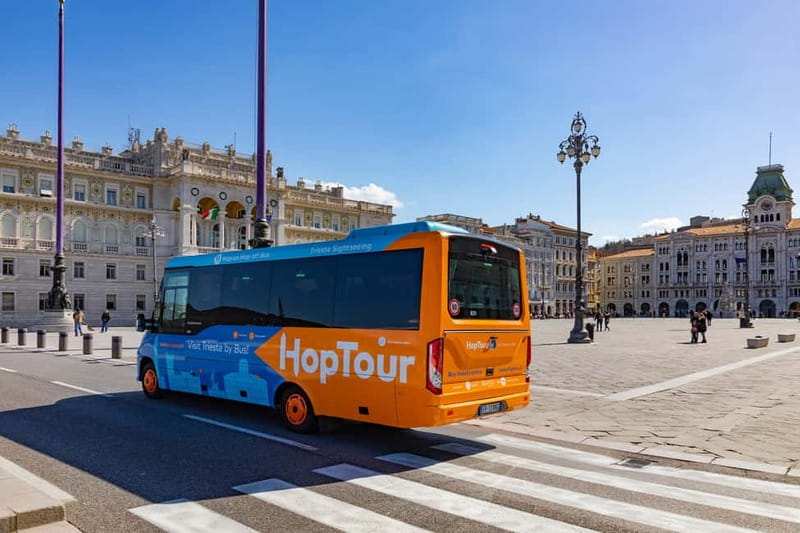
- A full city-and-coast circuit: In about 1.5 hours, you pass the grand central squares, Roman Theatre, San Giusto Hill, old port, Barcola, and Miramare Castle.
- A 24-hour ticket: You can hop off and use a later bus, but your reserved seat is guaranteed only for the departure you booked.
- Useful audio commentary: English, Italian, German, and Spanish commentary follows the route and points out the sights as you pass them.
- Best for a first look: The ride quickly shows you how Trieste’s historic center connects with its waterfront and northern coast.
- A practical cruise or train option: Big bags can be stored underneath, and the route reaches the train station.
- Small but important pet rule: Pets are allowed only when wearing a muzzle.
Starting at Molo Audace beside Piazza Unità d’Italia
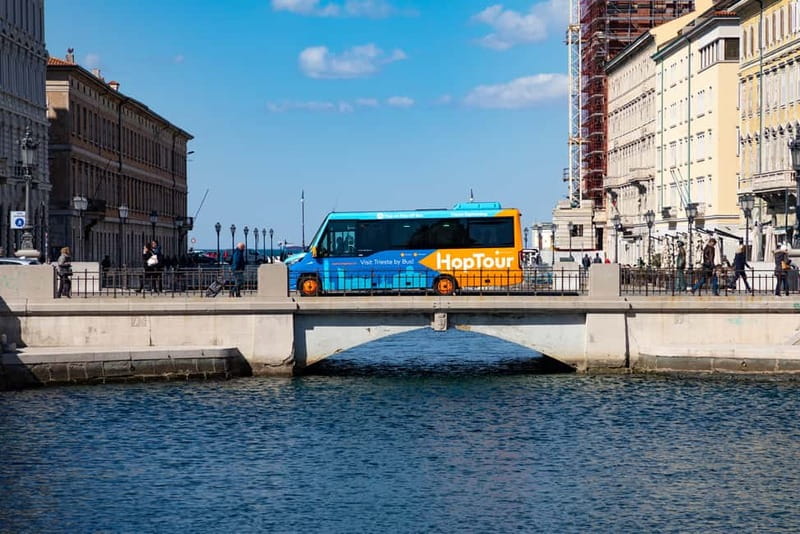
The tour begins at Molo Audace, in front of Trieste’s vast Piazza Unità d’Italia. This is one of the best places to begin understanding the city. The square opens directly onto the water, with grand Austro-Hungarian buildings forming a broad theatrical backdrop.
Molo Audace itself is a long pier built on the wreck of an old ship. From the bus, you get a quick look at the waterfront setting before the route turns through central Trieste. If you have never visited the city, this opening stretch gives you an immediate sense of its unusual character: part elegant European capital, part working port, part seaside resort.
The meeting point is convenient, but do not expect a large, obvious sign. The lack of clear signage has caused confusion, so I would arrive with enough time to identify the bus and ask the staff if needed. The team has been praised for being punctual, polite, and helpful, which makes this a manageable problem rather than a serious one.
A few more Italy bookings to compare
- Colosseum, Roman Forum & Palatine Guided Tour
★ 4.7 · 63,148 reviews - Vatican Museums, Sistine Chapel & St Peter’s Basilica Guided Tour
★ 4.5 · 39,149 reviews - Rome: Colosseum, Palatine Hill and Roman Forum Guided Tour
★ 4.8 · 32,814 reviews
Along the central waterfront and old harbor
The first part of the circuit follows the waterfront near the Mandracchio shore and Unità d’Italia Square. You pass the Salone degli Incanti, a former fish market now used as an exhibition space, and Eataly near the Nazario Sauro shore. These stops help show that Trieste’s waterfront is not simply a line of monuments. It is a working urban edge with food, public spaces, museums, and harbor buildings.
The bus then passes Campo Marzio Station and the Maritime Museum. You will not enter either attraction with this ticket, but the audio guide helps you decide if one deserves a later visit. That is the real strength of this ride. It is not a substitute for exploring on foot. It is a way to build a practical list of places to return to.
The route continues past Piazza Venezia and the Sea Museum area before heading toward the older center. The changing views are part of the appeal. You move from open water to tighter streets and historic buildings, then back toward broad squares.
Roman Theatre, Orthodox churches, and grand squares
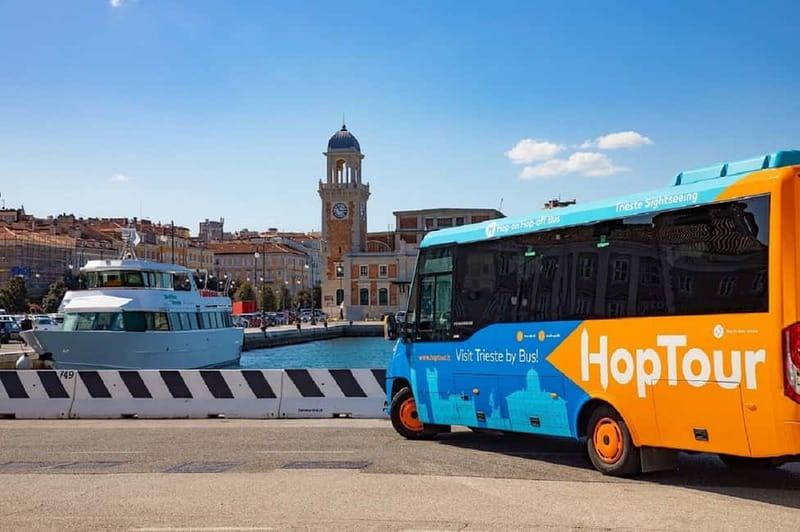
On Teatro Romano Street, the bus passes Santa Maria Maggiore and the Roman Theatre of Trieste. The theatre is tucked into the modern city, a reminder that ancient remains in Trieste are often woven into ordinary streets rather than isolated in a large archaeological park.
Next comes the Serbian Orthodox Church of Saint Spyridon, a striking church near the center. The route then reaches Saint Antonio Square and the Church of Sant’Antonio Nuovo, followed by Maria Teresia and the canals and squares around the historic core.
At Piazza Vittorio Veneto, you are close to the Grande Canal and Ponterosso Square. These are good places to get off if you want cafés, city views, and a walk through central Trieste. The bus passes the canal rather quickly, so I would not treat this part as a full sightseeing stop from your seat. Use the 24-hour ticket to return on foot, then catch a later bus if the timetable works.
The ride continues along Roma Street to Piazza della Borsa, another important central square. From here, the city’s main sights are close enough to connect on foot, but the bus gives you a useful sense of their order and distance.
San Giusto Hill gives you the city’s high point
The route climbs toward San Giusto Hill, passing the Castle of San Giusto and the Cathedral of San Giusto. This is one of the most valuable sections of the circuit because the hill explains Trieste’s shape better than any map.
You see how the old center rises above the waterfront and how the city stretches between the hill and the sea. The bus does not include entry to the castle or church, so you will need a separate ticket if you want to go inside. Still, seeing the hill from the bus can help you decide if the climb and visit fit your schedule.
After San Giusto, the bus returns toward Piazza Goldoni and Carducci Boulevard, then continues to Piazza Oberdan. This stretch is less about one famous monument and more about seeing the city as a whole. You pass ordinary streets, public transport connections, and central neighborhoods that are easy to miss if you only walk between the main squares.
Still Italy, but a slower afternoon:
- Vatican: Museums & Sistine Chapel Entrance Ticket
★ 4.5 · 144,003 reviews - Vatican Museums & Sistine Chapel Tour with Optional Basilica
★ 4.3 · 67,413 reviews - Milan: Cathedral and Duomo’s Terraces Entrance Ticket
★ 4.6 · 61,054 reviews - Venice: Doge’s Palace Reserved Entry Ticket
★ 4.6 · 42,716 reviews
The train station and old port make this useful for short visits
The bus reaches Piazza della Libertà and the train station before heading toward the old port. This is especially handy if you are arriving by train or finishing a cruise and want a simple way to connect with central Trieste.
One practical advantage is the storage space beneath the bus. Passengers with large bags have used it while staying on the circuit, making the ride a useful bridge between the cruise terminal, city center, and railway station. I would confirm with the on-board staff before relying on this, but the feature can save you from dragging luggage through the streets.
The old port section includes the Central Hydrodynamics building. This part of Trieste has a more industrial feel than the polished central squares. It also helps explain the city’s long relationship with shipping and trade without requiring a separate port tour.
Barcola changes the mood from city to seaside
From the old port, the bus follows Miramare Boulevard toward Barcola. You pass the Pinewood of Barcola, Barcola Beach, and the Topolini Baths. This is one of the most enjoyable parts of the ride because the setting shifts from urban history to open coast.
The Topolini Baths are a distinctive local seaside feature, with concrete platforms used for swimming and sunbathing. From the bus, you get a quick introduction rather than time for a swim, but the audio commentary and coastal views make this section a welcome break from the dense center.
Barcola is also a good place to use the hop-on, hop-off feature if you want a slower seaside walk. Keep an eye on the timetable, though. You may have at least an hour before the next bus, and that wait can be pleasant in good weather but inconvenient if you are trying to fit in several sights.
On a hot day, the air conditioning is a real benefit. It gives you a break from walking and lets you cover the long stretch between central Trieste and Miramare without spending your energy on transport.
Miramare Castle is the scenic payoff, with one catch
The route continues along Barcola toward Miramare Castle, Trieste’s most recognizable waterfront sight. The castle sits above the sea with landscaped grounds around it, making this the most scenic part of the circuit.
The bus passes the castle, but admission is not included. You also need to know that the stop is about 700 meters away from the entrance. That walk can feel tiring in hot weather, particularly for older visitors, and it reduces the time available for the castle and grounds if you are trying to catch the next bus.
For that reason, I would not plan a rushed Miramare visit around a single short stop. If the castle is a priority, allow enough time to walk from the bus stop, visit, and return without stress. If you are mainly interested in seeing the setting, remain on the bus and enjoy the approach from Barcola Boulevard.
The route also passes the Barcola crossroads and seafront before returning toward Piazza della Libertà and the train station. From there, it follows the waterfront past the Greek Orthodox Church of Saint Nicholas and returns to Molo Audace.
How the audio guide works on the road
The audio guide is synchronized with the route, so commentary arrives as the bus passes the relevant sights. It is available in English, Italian, German, and Spanish. This is more useful than a generic city recording because you can look out the window and connect the explanation with the building or square in front of you.
The commentary has been praised for offering a good balance of history and culture without overwhelming the ride. The on-board guide can also point out the sights and answer questions, giving you a human contact point alongside the recorded narration.
I would keep the supplied map close at hand. It shows the route, stops, and timing information, and it makes the hop-on, hop-off system easier to manage. The bus has a modern interior, air conditioning, and USB chargers, so you can keep your phone ready for maps and photos.
The 24-hour ticket needs careful planning
At $19 per person, this is good value if you use it as transport and orientation, not just as a one-time loop. A complete circuit takes about 1.5 hours, which is enough to cover a great deal of ground without paying for several separate rides.
The ticket remains valid for 24 hours. You can get off at a stop, explore, and board a later bus if there is space. Your seat is guaranteed only on the departure you booked, so do not assume that every later bus will have room when you need it.
The hop-on, hop-off option works best if you start early and choose one or two stops. Trying to visit the Roman Theatre, San Giusto, Barcola, and Miramare all in the same 24-hour period could become a timetable puzzle. I would first ride the whole loop, note the places that interest you, then return to one area on foot or by a later bus.
The staff can help you judge how long to spend at each stop. That advice is valuable because the route covers both the compact center and the spread-out coastal sights.
Who will get the most from this Trieste bus tour?
I would recommend it most strongly for a first day in Trieste, a short city break, or a cruise stop. It gives you a clear mental map and lets you see the waterfront and Miramare without arranging several local connections.
It is also a sensible choice if you are traveling with older relatives or anyone who cannot comfortably walk all day. The air-conditioned bus, helpful staff, and broad route make sightseeing less demanding.
Families may appreciate the simple format, though the value depends on how well children handle a long sightseeing loop. The audio guide keeps the ride informative, but the tour is mainly a viewing and orientation experience rather than an activity with hands-on stops.
You should choose a different plan if you want long guided visits inside monuments. The bus ticket does not include entrance fees, and most attractions are viewed from the road. You will get more from the ride if you treat it as a comfortable introduction, then explore your favorite areas independently.
Pets are allowed only if they wear a muzzle. That rule is worth checking before booking if you plan to bring an animal.
Should you book the Trieste Bus Tour with Audio Guide?
Book it if you want an efficient first look at Trieste, especially when your time is limited, the weather is hot, or walking is difficult. The $19 price is fair for the city-center circuit, coast road, audio commentary, air conditioning, USB charging, and 24-hour validity.
I would book it with a simple plan: take the full loop first, use the map to mark your priorities, and save Miramare for a visit with plenty of time. If you need a deep visit to every monument, this is not enough on its own. If you want to get your bearings fast and see how Trieste fits together, it is a practical and enjoyable choice.
FAQ
Where does the Trieste bus tour start?
The bus starts at Molo Audace, in front of Piazza Unità d’Italia.
Where does the tour finish?
The circuit returns to Molo Audace, the same meeting point where it begins.
How long does the bus tour last?
The complete circuit takes about 1.5 hours.
How long is the ticket valid?
The ticket is valid for 24 hours.
Can I get off and board another bus later?
Yes. You can hop off at any stop and take the next bus if there is a seat. Your seat is guaranteed only for the course you booked.
Which languages are available for the audio guide?
The audio guide is available in English, Italian, German, and Spanish.
Are attraction entrance fees included?
No. The ticket covers the bus ride and audio guide, but not entrance tickets to attractions or monuments.
Can I bring my pet?
Pets are allowed only if they are wearing a muzzle.
Recently added around Italy
- Florence Uffizi Gallery monolingual Small Group Tour★ 4.0 · 621 reviews
- Florence Private Walking tour with Skip-the-line to Accademia★ 4.5 · 236 reviews
- Uffizi Gallery Entrance Ticket with Priority Access★ 3.5 · 1,029 reviews
- Florence Skip-the-Line Duomo Tour with Guide & Brunelleschi Dome★ 5.0 · 1,176 reviews
- Skip-the-Line Accademia Guided Visit: David Secrets and Beyond★ 4.0 · 525 reviews
- Priority Entrance : Florence Accademia Gallery Timely Tickets★ 4.0 · 603 reviews
- Skip the line : David Guided Experience★ 4.5 · 1,076 reviews
- Private Tour in Siena, San Gimignano and Chianti Day Trip from Florence★ 5.0 · 405 reviews
Audio Tours, compared.
Colosseum & Forum with Audio Guide App -Optional Arena
Read our review →
Pantheon Fast-Track Ticket and Official Audio Guide
Read our review →
La Fenice Opera House Entry Ticket with Audio Guide
Read our review →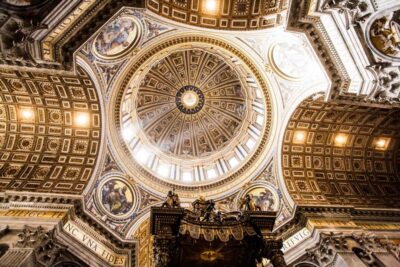
St. Peter’s Basilica & Dome Entry Ticket & Audio Tour
Read our review →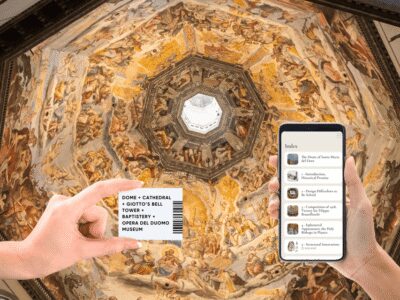
Cathedral & Brunelleschi’s Dome Ticket & Audio App
Read our review →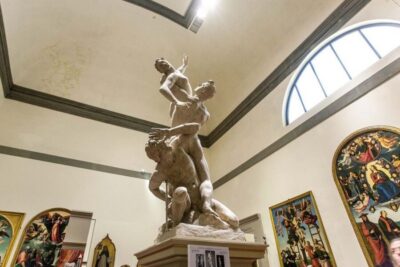
Michelangelo’s David Priority Ticket & Audio App
Read our review →
Uffizi Priority Ticket & Masterpieces Audio App
Read our review →Browse the lists this tour appears in