
Reviewed · PALERMO TOURS
Tour Cappella Palatina e palazzo Reale: patrimonio Unesco
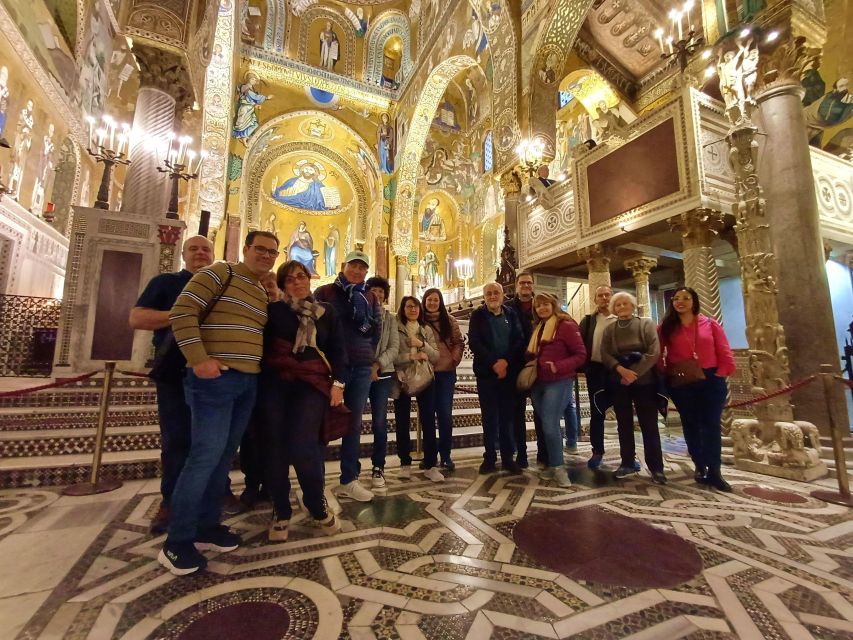
Gold covers the walls here. This Italian-language tour brings you into Palermo’s Royal Palace and the Palatine Chapel, where Byzantine mosaics, an Islamic-style ceiling, and Norman power meet under one roof. I like the strong historical scope, stretching from the palace’s ancient foundations to Frederick II, and I like that the guide explains what you are seeing rather than leaving you to decode the mosaics alone. The main drawback is clear: the $14 price covers the guide service, but your entrance ticket costs extra.
Fabrizio earns special praise for his precise, engaging explanations, while Claudio is described as energetic and tireless. You should also know that the tour is only in Italian, and much of the visit takes place on your feet. For anyone who understands Italian, this is a focused way to see Palermo’s grandest interior without paying a large guiding fee.
In This Review
- Key points to know before booking
- Why Palermo’s Royal Palace matters
- Meeting the guide near the ticket office
- The Palatine Chapel and its gold mosaics
- The royal rooms and the Chinese-style chamber
- Frederick II and the Sicilian Poetic School
- How the Italian guiding works for you
- Time on your feet and access concerns
- Is the $14 guide fee good value?
- Who should book this Palermo palace tour?
- Final verdict: a strong choice for Italian speakers
- FAQ
- Is the entrance ticket included in the $14 price?
- What language is the tour conducted in?
- Where is the meeting point?
- How much history does the Royal Palace represent?
- What are the main highlights inside the Palatine Chapel?
- Is the tour wheelchair accessible?
- What clothing is not allowed?
- Can I cancel the booking?
Key points to know before booking
- The $14 fee is for the Italian guide service: You must buy the Royal Palace and Palatine Chapel ticket separately at the ticket office or online.
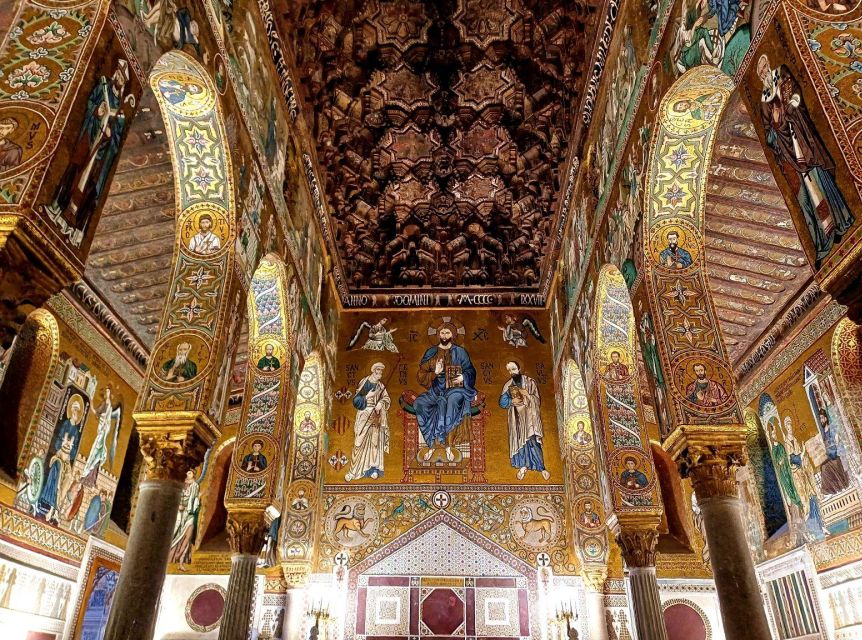
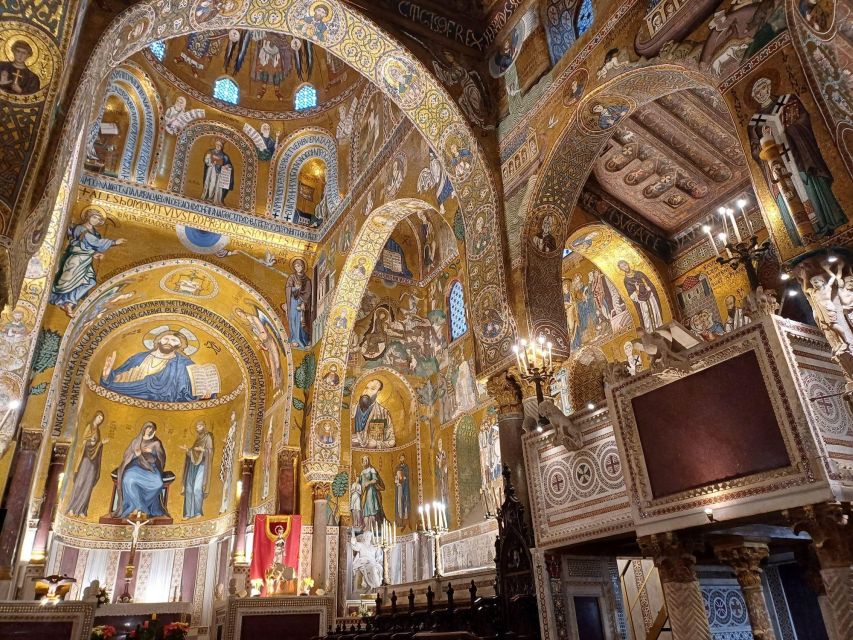
- The Palatine Chapel is the star attraction: Its gold mosaics, carved muqarnas ceiling, and patterned marble floor create an extraordinary blend of Byzantine, Islamic, and Romanesque art.
- The Royal Palace covers 2,700 years of Palermo’s story: It has served as a fortified stronghold, royal residence, court, treasury, government seat, and parliament building.
- Fabrizio and Claudio receive especially warm praise: Fabrizio is noted for careful explanations, while Claudio is praised for his lively, tireless approach.
- The tour is conducted only in Italian: You need enough Italian to follow a spoken explanation of architecture, politics, religion, and art.
- Dress modestly and expect limited seating: Shorts, short skirts, and sleeveless shirts are not allowed, and one visitor specifically warns that there are few places to sit.
Why Palermo’s Royal Palace matters
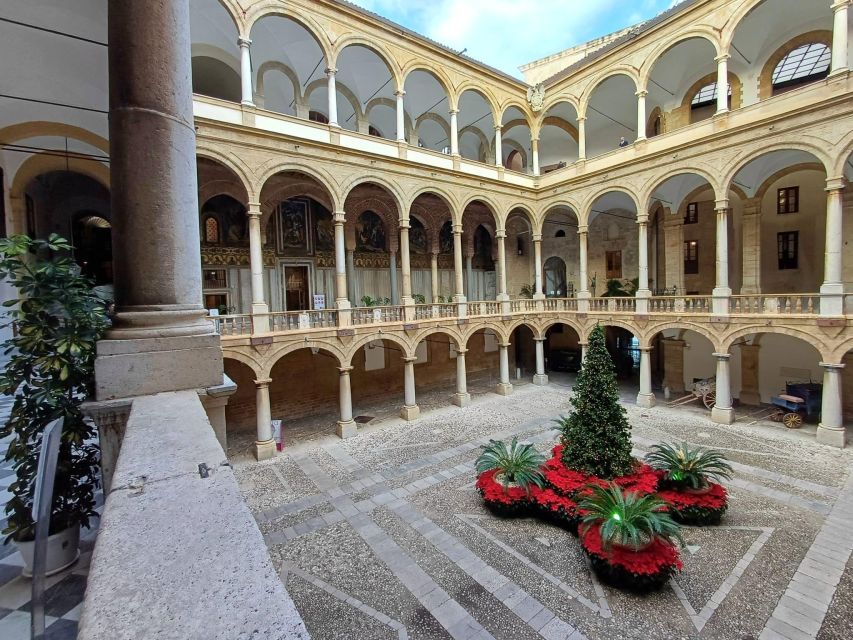
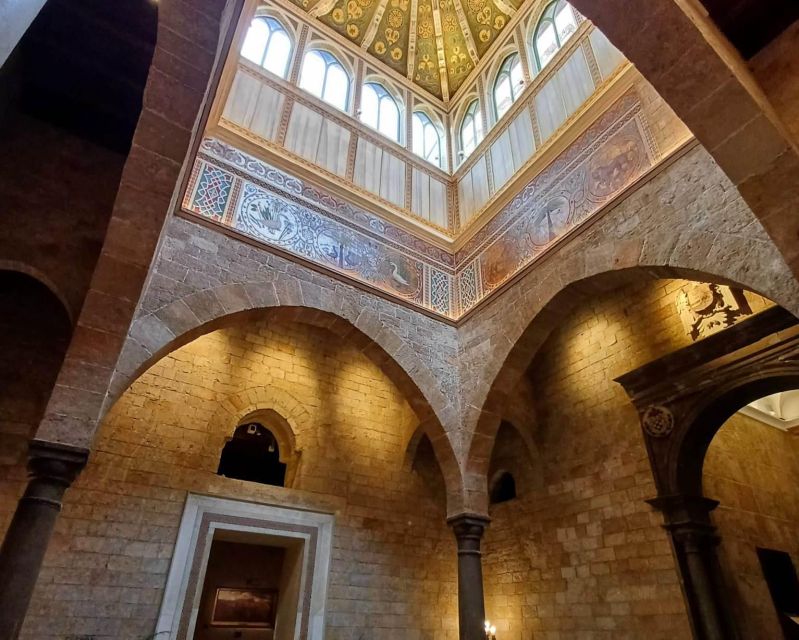
The Royal Palace, also called the Palazzo dei Normanni, is not just a grand building with a famous chapel attached. It is a record of Palermo’s changing rulers and cultures, built up over roughly 2,700 years.
The site began as a fortified settlement when Palermo was founded. The Norman kings later rebuilt and expanded it, turning it into their main residence. From here they managed the court, treasury, and royal workshops. That practical role helps explain why the palace feels larger in purpose than a single ceremonial residence.
The building also carries the story of Sicily’s political shifts. Under Frederick II, king and emperor, the palace became linked with the Sicilian Poetic School, an important chapter in European literary history. Later, it served for a period as the Court of the Inquisition, then as the seat of the viceroy and the Sicilian Parliament.
That long sequence gives your guide plenty to explain. You are not simply looking at decorated rooms. You are seeing a place where royal authority, religious ceremony, administration, literature, and law occupied the same complex.
I particularly like this setting for visitors who want context. Palermo can sometimes feel like a series of separate sights, each with its own style and period. The palace helps connect those pieces. Norman rulers drew on Byzantine art and Islamic craftsmanship, and later rulers adapted the same building for new political needs.
A few more Palermo bookings to compare
- Palermo: NO Mafia Walking Tour
★ 4.8 · 2,431 reviews - Palermo: Hop-on Hop-off Bus Tour 24-hour Ticket
★ 3.9 · 2,410 reviews - Palermo Original Street Food Walking Tour by Streaty
★ 5.0 · 2,105 reviews
Meeting the guide near the ticket office
The meeting point is in front of the ticket office, at a kiosk about 100 meters from the palace entrance. That detail matters. Do not assume that the guide will meet you directly at the main doorway.
Arrive with enough time to identify the kiosk and sort out your admission. Since the entry ticket is separate, you need to have your ticket ready or plan to buy it at the Royal Palace ticket office. Online purchase is also offered through the official website.
The tour costs $14 per person, which is a reasonable price for a professional guide service if you can follow Italian. The value depends heavily on your language ability. The palace and chapel are worthwhile on their own, but the guide adds the most when you can understand the explanations of the mosaic scenes, royal rooms, and political background.
Because the ticket is not included, compare the full cost before booking. The low advertised price is attractive, but it is not the complete admission cost. Think of this as an affordable guided supplement to your palace visit, not as a package covering everything.
The activity is listed as valid for one day, with starting times based on availability. The exact time matters because your admission and meeting arrangements need to match. The tour duration is presented as one day, but that wording does not give a precise number of touring hours, so confirm the available start time and schedule before you commit to other plans.
The Palatine Chapel and its gold mosaics
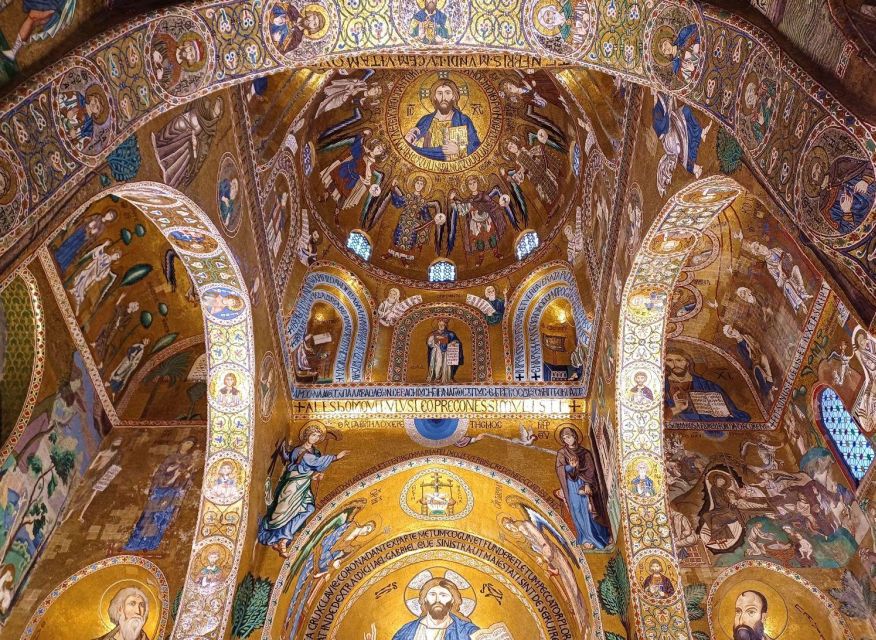
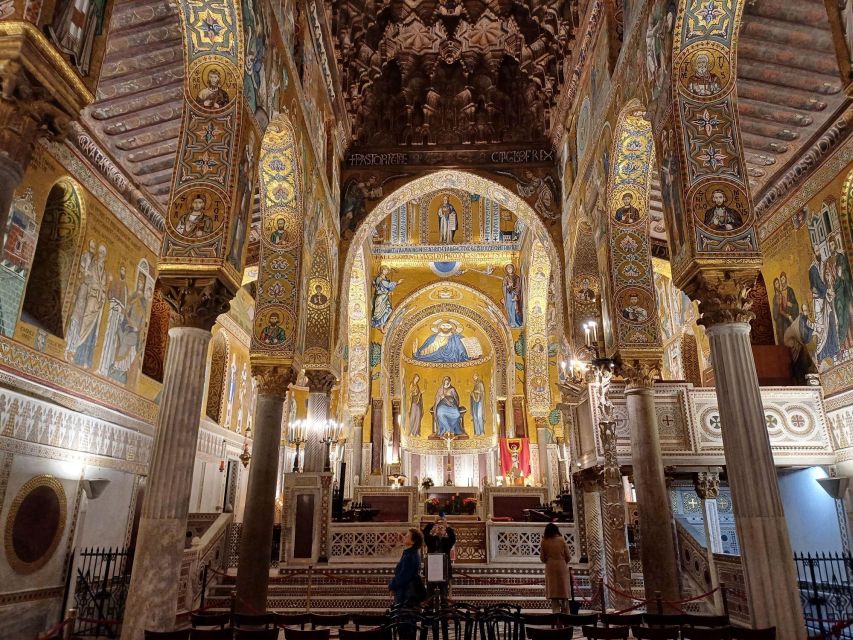
The chapel was built in 1140 by Roger of Hauteville, the first king of Sicily. Its purpose was not modest. It was a royal chapel and a public statement of power, linking the new Norman kingdom with the artistic traditions of the Byzantine world and the craftsmanship of Islamic Sicily.
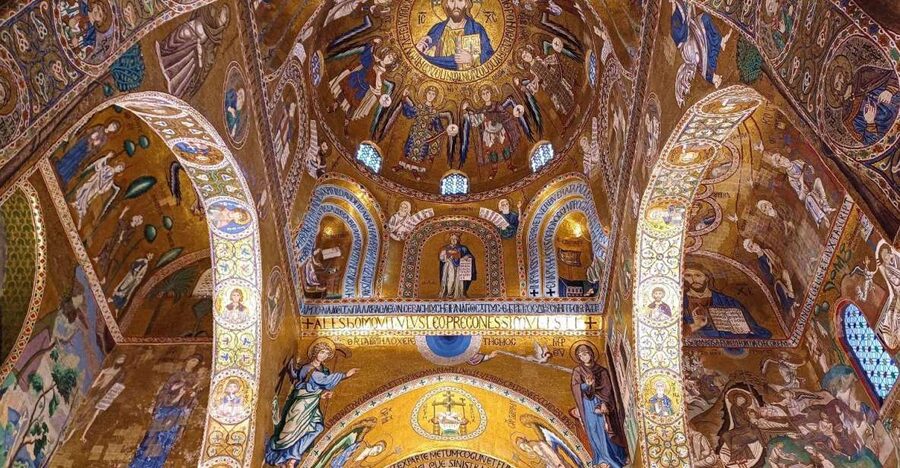
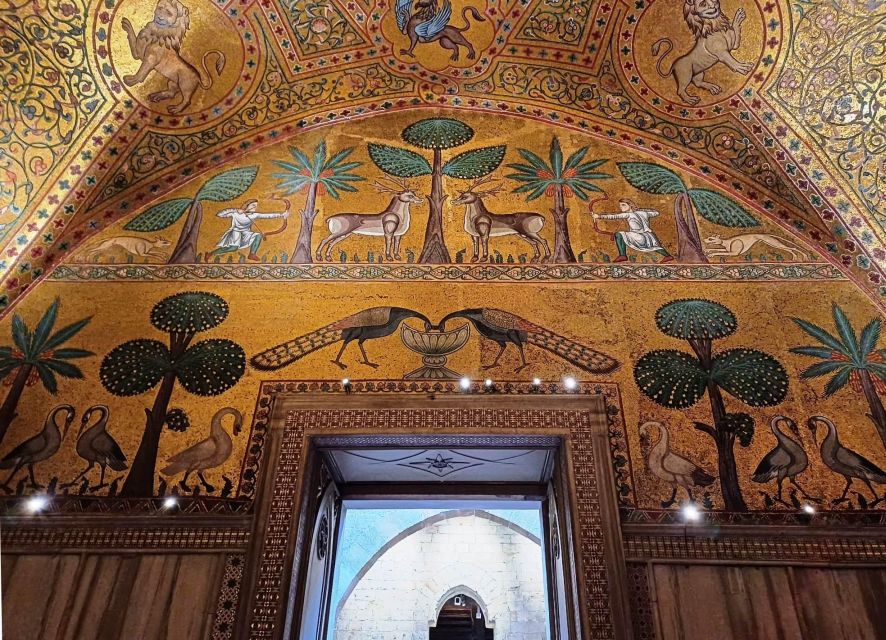
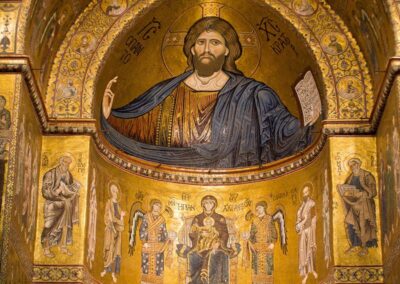
The walls are covered with Byzantine mosaics. Gold catches the light across the interior, giving the chapel its famous visual force. You may have seen photographs, but photographs tend to flatten the effect. The important point is not simply that the mosaics are gold. It is the way the gold creates a continuous field around the figures and stories.
A guide can help you read the narrative sequence rather than treating the walls as decoration. Fabrizio is praised for explaining the cycle shown in the chapel’s mosaics with precision, which is especially useful if you do not already know the biblical scenes and their arrangement.
Look upward as well as straight ahead. The ceiling features Islamic muqarnas, a honeycomb-like form made from many small carved elements. This is one of the chapel’s most striking signs of Sicily’s mixed artistic culture. Byzantine mosaic, Islamic design, and Norman royal ambition share the same room.
Underfoot, the marble floor adds another layer. Its inlays belong to the Romanesque tradition, giving the chapel a patterned base beneath the gleaming walls and carved ceiling. The result is not a single style repeated from floor to roof. It is a carefully assembled meeting of traditions.
Guy de Maupassant called the Palatine Chapel the most beautiful church in the world. That is a large claim, and you do not need to accept it literally to understand why the chapel inspires such praise. The scale of its decoration, the quality of its materials, and the mixture of artistic languages make it one of Palermo’s essential sights.
There is a practical issue here. The chapel is a place of worship as well as a historic monument, so modest clothing is required. Shorts, short skirts, and sleeveless shirts are not allowed. Dress for entry first, especially during hot Sicilian weather.
The royal rooms and the Chinese-style chamber
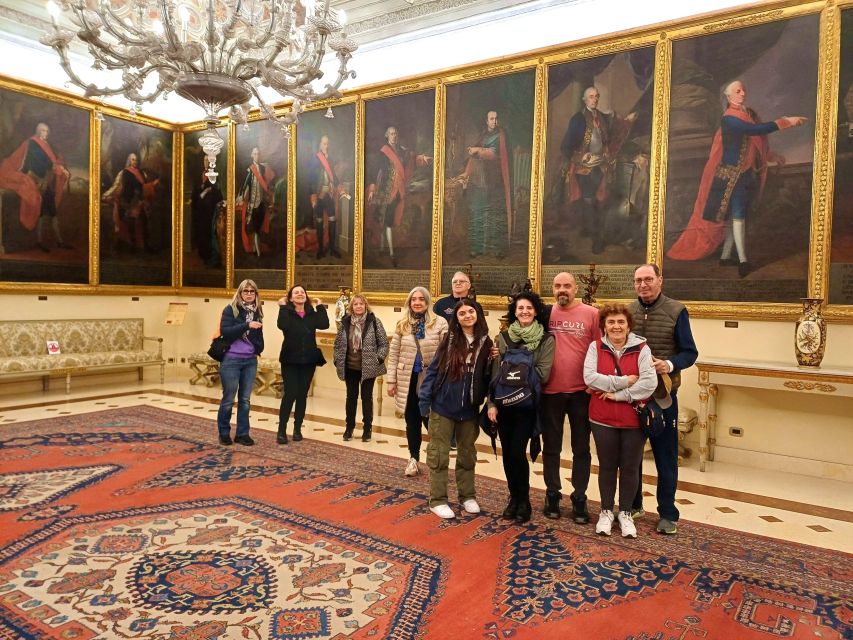
The palace visit also includes the royal rooms, including a chamber decorated in Chinese style. This room gives you a useful contrast with the chapel.
The Palatine Chapel speaks through medieval religious art and royal symbolism. The Chinese-style queen chamber points to later decorative tastes and the palace’s continued use by rulers and court officials. It reminds you that the building did not freeze in the Norman period.
The available information does not give a full room-by-room route, so you should not expect a fixed list of every chamber. What you can expect is an explanation of the royal interiors and their place in the palace’s story. One highly praised guide, Fabrizio, is specifically noted for describing the rooms of the royal apartments in detail.
This is where a live guide can make a real difference. A room may look attractive, but its importance is not always obvious. Who used it? When was it changed? How does it relate to the palace’s political role? Those are the questions that turn a series of interiors into a readable story.
The Chinese-style room may be one of the more unusual stops because it breaks up the medieval focus. You move from Norman and Byzantine Sicily into a later royal setting, seeing how taste changed while the palace kept serving the needs of power.
Still Palermo, but a slower afternoon:
- Segesta, Erice and Salt Pans Full-Day Excursion from Palermo
★ 4.2 · 1,791 reviews - Palermo: Teatro Massimo Opera House Guided Tour
★ 4.5 · 1,573 reviews - From Palermo: Monreale and Cefalù Half-Day Trip
★ 4.2 · 1,354 reviews - Palermo: Street Food and History Walking Tour
★ 4.9 · 1,294 reviews
Frederick II and the Sicilian Poetic School
Frederick II is one of the key figures connected with the palace. He was both king and emperor, and the building hosted the Sicilian Poetic School during his rule.
That detail gives the palace an intellectual side. Frederick’s court was not only concerned with government and ceremony. It also became associated with poetry and language. The palace therefore represents more than military rule or royal display.
Your guide may place Frederick within the broader sequence of rulers who shaped the building. The palace began as a fortified site, became a Norman royal residence, and later served different governments. Frederick’s period is important because it links the site to the development of literary culture in Sicily.
I like this part of the visit because it prevents the palace from becoming a parade of kings and dates. You get a sense of the people and institutions that operated here. The treasury, court, royal factories, parliament, and poetic circle all belonged to different parts of the same long story.
The description of Frederick as a king and emperor who amazed the world is grand language, but his role here is genuinely useful for understanding the palace. He represents the building at a moment when Sicily’s court had influence well beyond the island.
How the Italian guiding works for you
This is an Italian-language tour, with a live professional guide. That is not a small footnote. It should determine your booking decision.
If you speak Italian comfortably, the language restriction may be an advantage. You receive explanations in the guide’s native language, and the tour can focus on the art and history without a translation layer. The strong rating of 4.8 from 183 ratings, along with repeated praise for Fabrizio and Claudio, suggests that the guide service is a major reason people value the experience.
Fabrizio is described as well prepared, friendly, precise, and engaging. His explanations cover the palace’s history, the narrative cycle in the chapel mosaics, and the royal rooms. Claudio is praised for being engaging and tireless, which points to an active presentation rather than a quick escort from one room to the next.
If your Italian is basic, consider how much spoken detail you can absorb in a historic building. Names, dates, religious scenes, and architectural terms can pile up quickly. You may still enjoy the visual side, but you will receive less of the service you are paying for.
The tour is best for someone who wants interpretation, not just admission. If you prefer to explore silently at your own pace, buying an entry ticket alone may suit you better. If you want a guide to explain why the chapel looks as it does and how the palace developed, the $14 fee is easier to justify.
Time on your feet and access concerns
Plan for a visit with limited opportunities to sit. One French-speaking participant specifically warns that there are very few rooms where you can sit down and that standing for long periods may be difficult.
That advice is important for anyone with back, knee, or circulation problems. Bring sensible footwear and pace yourself when possible. The palace and chapel reward looking upward, but you do not want physical discomfort to rush you through the details.
The activity information contains conflicting access notes. It is marked wheelchair accessible in one section, yet it is also described as not suitable for wheelchair users. You should not rely on the general accessibility label without confirming current access arrangements directly before booking.
This is also not a tour for visitors who need a low-effort route or frequent rest stops. The guide service itself may be well organized, but the historic setting controls how much seating and movement space is available.
Is the $14 guide fee good value?
At $14 per person, the guide fee is modest for a major UNESCO-listed sight. The price becomes good value when three things line up: you understand Italian, you want historical explanation, and you are already prepared to pay the separate admission charge.
The separate ticket is the main cost issue. You need to buy it at the Royal Palace ticket office or online through the official website. Add that amount to the $14 before comparing this experience with other guided options.
The guide fee pays for professional interpretation, not transport, admission, or a full-day itinerary around Palermo. That narrow format is useful if you want to focus on the Royal Palace and Palatine Chapel without padding the visit with unrelated stops.
Free cancellation up to 24 hours before the activity and the option to reserve now and pay later add flexibility. These terms are helpful if your Palermo schedule is still shifting, but they do not change the need to secure the separate entry ticket.
The high overall rating supports the idea that the guiding adds real value, especially when you choose a guide such as Fabrizio or Claudio. Still, the language limit and standing time make this a specialized purchase rather than an automatic choice for everyone.
Who should book this Palermo palace tour?
I would recommend it to Italian-speaking visitors who want the palace explained by a live guide. It is especially suitable if you care about the relationship between Norman rule, Byzantine art, Islamic design, and later royal decoration.
It also suits first-time visitors who might otherwise look at the Palatine Chapel without understanding its visual program. The gold mosaics are impressive at a glance, but the narrative sequence and mixed artistic traditions deserve more than a quick look.
You may want a different plan if you do not speak Italian, need frequent seating, or use a wheelchair. The conflicting accessibility information needs direct confirmation, and the lack of included admission makes the total price less simple than the headline figure suggests.
Wear clothing that covers your shoulders and legs. Meet at the kiosk about 100 meters from the entrance, arrange your ticket separately, and allow enough time to find the meeting point. Those small preparations remove the main avoidable hassles.
Final verdict: a strong choice for Italian speakers
Book this tour if you want the Royal Palace and Palatine Chapel explained in Italian, not simply photographed. The chapel’s gold mosaics, muqarnas ceiling, and marble floor are the visual rewards, while the palace’s long political story gives the visit weight.
The best evidence of quality is the consistent praise for Fabrizio and Claudio, with Fabrizio receiving particular credit for clear explanations of the mosaics and royal rooms. The $14 guide fee offers good value, provided you add the separate entrance ticket and can manage the time on your feet.
Skip it if you need an English-language tour, a fully accessible route, or a visit built around frequent rest. For the right visitor, though, this is a focused and fairly priced way to understand Palermo’s most important royal interior.
FAQ
Is the entrance ticket included in the $14 price?
No. The $14 price covers the professional tourist guide service only. You must buy the Royal Palace and Palatine Chapel entrance ticket separately at the ticket office or online through the official website.
What language is the tour conducted in?
The tour is conducted only in Italian, with a live Italian-speaking guide.
Where is the meeting point?
Meet in front of the ticket office, at a kiosk located about 100 meters from the entrance to the Royal Palace.
How much history does the Royal Palace represent?
The Royal Palace has more than 2,700 years of history. It has served as a fortified site, royal residence, court, treasury, royal workshop center, Inquisition court, viceroy’s seat, and home of the Sicilian Parliament.
What are the main highlights inside the Palatine Chapel?
You will see Byzantine wall mosaics, an Islamic muqarnas ceiling, and a marble floor with Romanesque-style inlays. The chapel was built in 1140 by Roger of Hauteville.
Is the tour wheelchair accessible?
The activity information gives conflicting details. It is marked wheelchair accessible in one place but also listed as not suitable for wheelchair users. Confirm current access conditions before booking.
What clothing is not allowed?
Shorts, short skirts, and sleeveless shirts are not allowed inside the Palace and Palatine Chapel.
Can I cancel the booking?
Yes. You can cancel up to 24 hours in advance for a full refund. The activity also offers a reserve-now-and-pay-later option.
Recently added around Palermo
- Sicily: Etna Volcano & Taormina Tour★ 4.4 · 199 reviews
- Palermo: Pizza and Gelato Cooking Class with Dinner and Wine★ 4.9 · 951 reviews
- Palermo: Walking Tour of Historic Markets and Monuments★ 4.9 · 478 reviews
- Palermo, tour tra monumenti unici e mercati colorati★ 4.9 · 271 reviews
- Palermo: UNESCO World Heritage Sites Guided Walking Tour★ 4.8 · 548 reviews
- Palermo: Full-Day Snorkeling Boat Tour with Lunch and Wine★ 5.0 · 196 reviews
- Palermo Sicilian Street Food Tour: Small Group with a Local★ 4.8 · 259 reviews
- Palermo: Small Group Night Street Food Tour★ 4.8 · 589 reviews
Palermo Tours, compared.
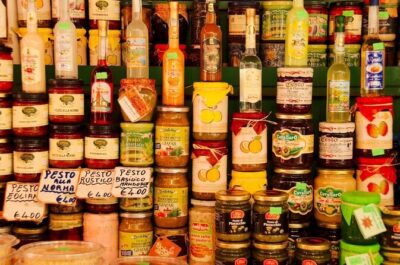
Palermo Original Street Food Walking Tour by Streaty
Read our review →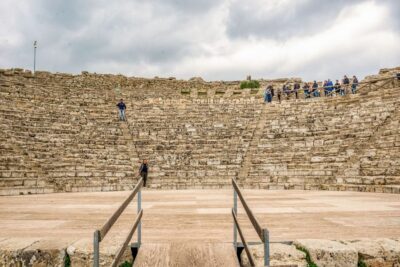
Segesta, Erice and Salt Pans Full-Day Excursion from Palermo
Read our review →

Agrigento and the Valley of the Temples Day Tour
Read our review →Browse the lists this tour appears in