
Reviewed · PALERMO TOURS
Palermo: Teatro Massimo Opera House Guided Tour
Palermo’s grandest room is worth 40 minutes. I like the way this tour brings you into the ornate foyer, gilded auditorium, and royal box, then explains how the building works as an opera house rather than treating it as a pretty photo stop. I also like the chance of seeing a rehearsal or audition in progress, which can make the visit feel wonderfully real. The main drawback is that the tour can feel rushed, especially when one guide serves groups in two languages, and access to the stage or working areas is not guaranteed.
At $14 per person, this is a good-value cultural stop in central Palermo. The building itself supplies the drama, while a live guide adds useful context about the rooms, decorations, acoustics, and opera production. Just keep your expectations in check: this is mainly a tour of the public interiors, not a full backstage exploration.
In This Review
- Key points to know before you go
- Why Teatro Massimo deserves a place in your Palermo plans
- Starting in the foyer with sculptures and bronze lamps
- The auditorium: gold, velvet, wood, and glass
- The royal box and the theatre’s social side
- The Coat of Arms and Pompeian Rooms
- What the stage visit really means
- The guide makes the difference
- Timing, meeting point, and how to use the flexible ticket
- Is $14 a fair price?
- Who will enjoy this tour most?
- Small tips for a better visit
- Should you book the Teatro Massimo tour?
- FAQ
- How long does the Teatro Massimo guided tour last?
- What rooms are included in the tour?
- Is stage access guaranteed?
- What languages are available?
- Where do I exchange the voucher?
- What are the tour hours?
Key points to know before you go
- The tour lasts about 40 minutes: Some departures have been closer to 30 minutes, so this works well between other Palermo sights.
- The royal box is a highlight: You get a clear sense of the theatre’s old social order and a fine view into the auditorium.
- The auditorium may be active: Rehearsals, auditions, or lighting work sometimes take place during the visit.
- The stage is not guaranteed: The tour description includes a look at stage operations, but access can be limited by rehearsals, maintenance, or private events.
- Tours run from 9:30 AM to 5:30 PM: The last departure begins at 5:00 PM, and available start times can change.
- The voucher is exchanged at the ticket office: Arrive at Teatro Massimo, go to the theatre ticket desk, and ask to join the next tour in your language.
Why Teatro Massimo deserves a place in your Palermo plans
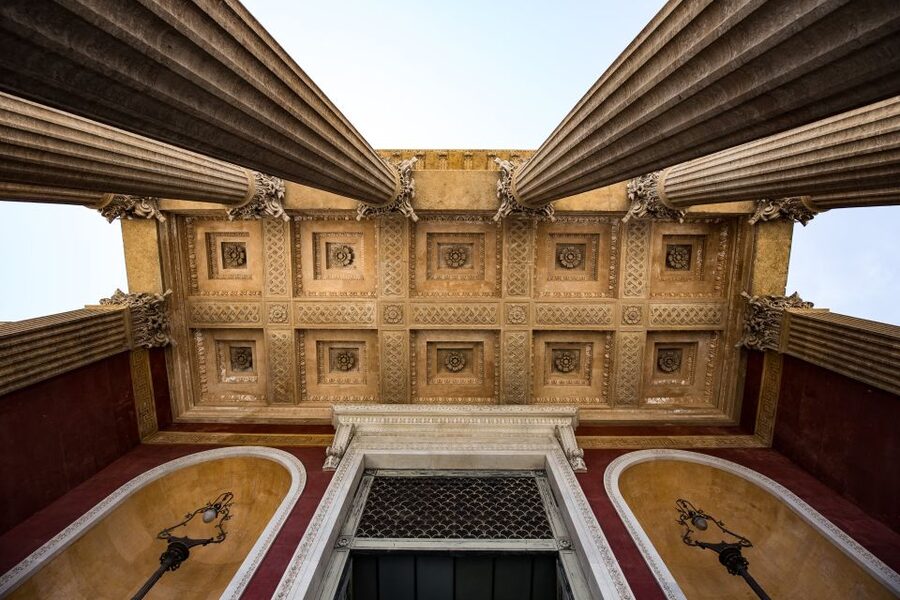
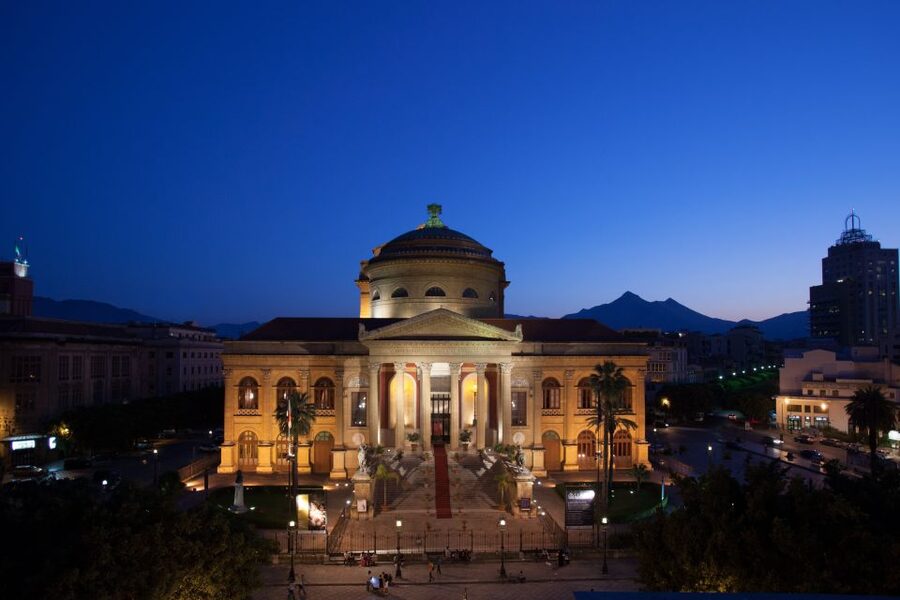
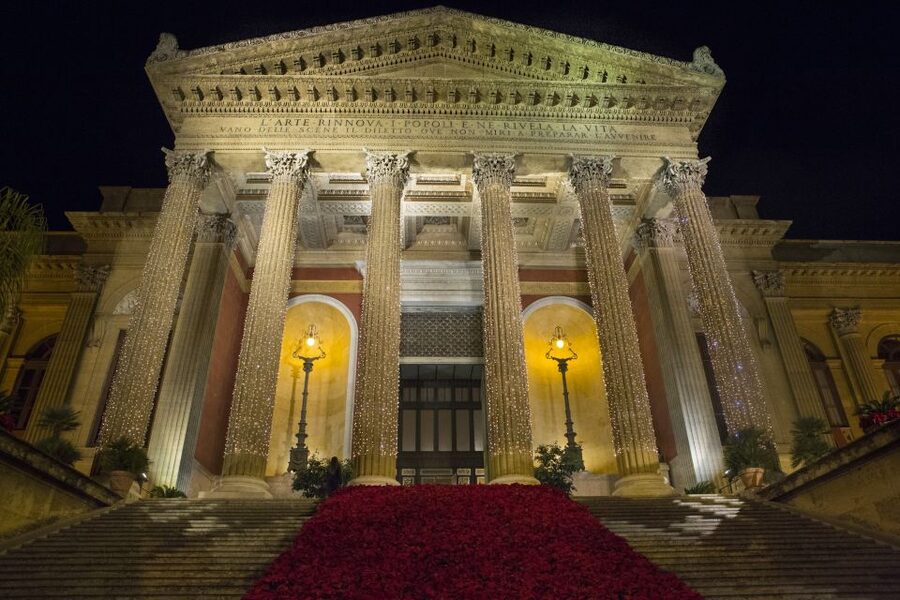
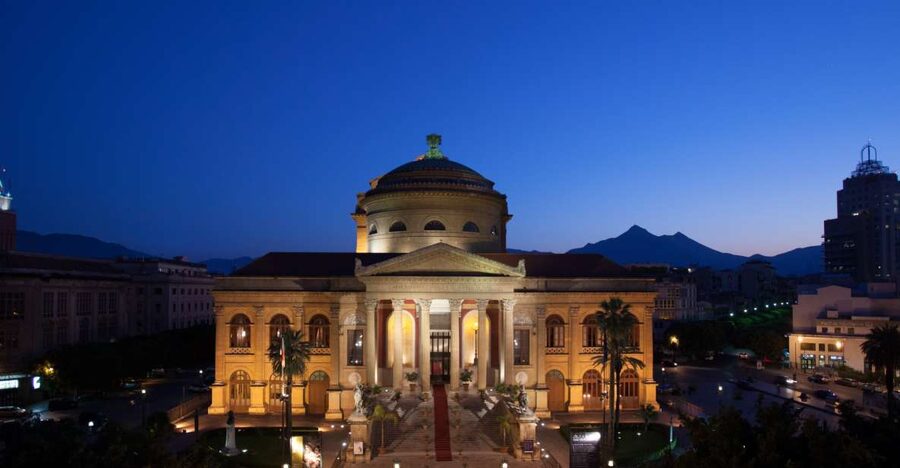
Teatro Massimo is one of Palermo’s signature buildings, and its scale surprises you. From the street, it is impressive. Inside, it becomes even larger, with a grand entrance hall, formal waiting rooms, a huge auditorium, private boxes, and decorative spaces tied to the theatre’s past.
You can visit the exterior on your own, but the guided tour gives the building a clear story. Without help, the foyer may look like a grand collection of sculptures and lamps. With a guide, you learn how the rooms were used, who they were meant for, and how the theatre functioned as both a performance hall and a place for Palermo’s social life.
I would not plan the tour as an all-day activity. It is a compact visit, and that is part of its appeal. You can fit it around the cathedral, Quattro Canti, the markets, or a meal in the historic center. For $14, it offers a polished interior, live commentary, and a chance to see a working theatre without paying for an opera performance.
A few more Palermo bookings to compare
- Palermo: NO Mafia Walking Tour
★ 4.8 · 2,431 reviews - Palermo: Hop-on Hop-off Bus Tour 24-hour Ticket
★ 3.9 · 2,410 reviews - Palermo Original Street Food Walking Tour by Streaty
★ 5.0 · 2,105 reviews
Starting in the foyer with sculptures and bronze lamps
The tour begins in the foyer, where the building makes its first strong impression. This is an opulent space, with sculptures and bronze-decorated candelabra that immediately signal the theatre’s original purpose: arrival, display, and ceremony.
Your guide uses the foyer to introduce the building and its story. This opening can feel a little hectic because several groups may be arriving or waiting for their departures. Once the tour moves farther inside, the pace usually becomes easier to follow.
Take a moment to look upward and around you before the guide moves on. The foyer is one of the best places to appreciate how much attention went into the entrance experience. It was not designed as a simple lobby. It was meant to make an arrival feel important.
Photo opportunities are generally possible during the visit, though you should listen for instructions and stay with the group. The theatre is large, and it is easy to fall behind if you stop too long in a room.
The auditorium: gold, velvet, wood, and glass
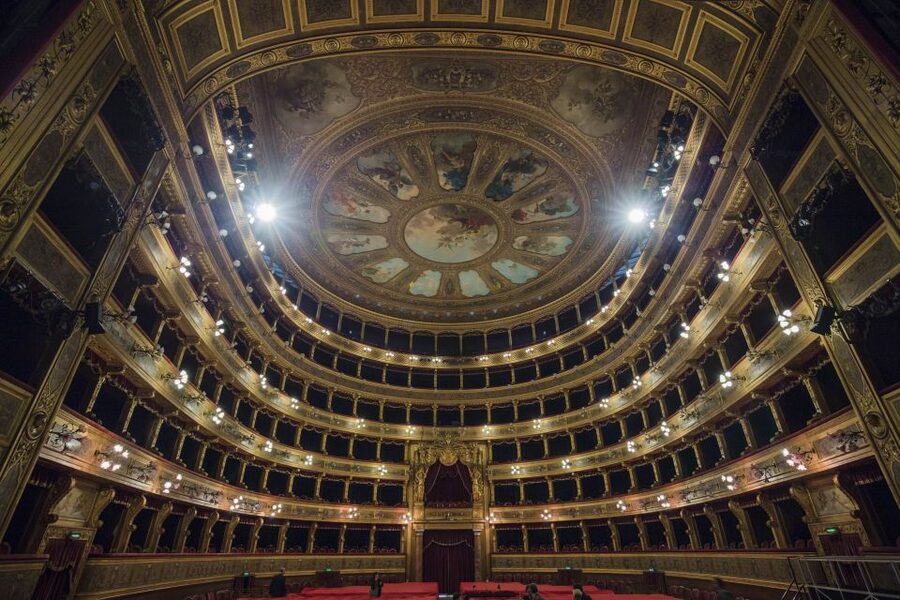
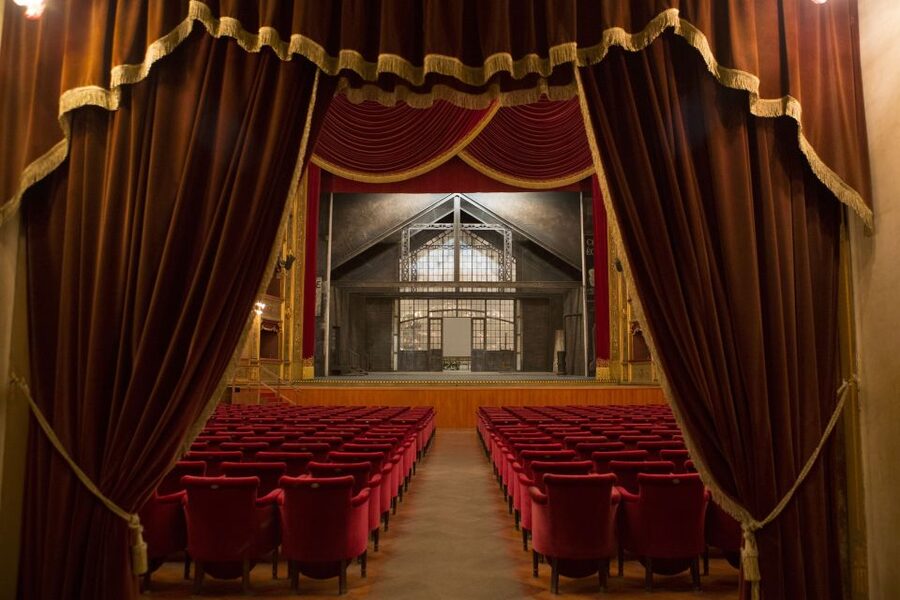
The auditorium is the tour’s visual centerpiece. Expect golden stuccoes, wooden details, velvet surfaces, and glass elements arranged in a formal, theatrical design. The room is built to impress from the moment you enter, but the guide helps you notice practical details as well as decoration.
Look across the seating area and up toward the boxes. From here, the theatre’s size becomes clear. The building feels even bigger inside than it does from the street, and the layered arrangement of seats and private boxes gives the room a strong sense of height.
The auditorium may not always look the same. At some departures, the lights have been adjusted for a rehearsal or technical session, leaving parts of the room darker than expected. That can make photographs harder, but it also shows that Teatro Massimo is still a working performance venue rather than a silent museum.
You might see an orchestra rehearsal, a ballet rehearsal, or operatic auditions. These moments are not promised, but they can be the most memorable part of the visit. Hearing musicians practice or watching performers prepare gives you a better idea of how the room functions acoustically and theatrically.
Do not count on sitting through a rehearsal. If one is taking place, you may get only a brief glimpse while the guide continues the tour. Still, even a short look can add something that a standard architectural visit cannot.
The royal box and the theatre’s social side
The royal box is one of the most popular stops. From this position, you see the auditorium from a privileged angle and understand how important status was inside a traditional opera house.
The view into the theatre is excellent, and this is usually a good place for photographs. The guide also explains the role of the box and its connection to the theatre’s formal social structure. It is not just another decorated room. Its position tells you who was meant to be seen, who was meant to watch, and how public performance extended into public life.
The tour does not necessarily include a regular box. Access is usually focused on the royal box and the main public rooms. If you are especially interested in the private boxes, ask at the start what your particular departure will include.
Still Palermo, but a slower afternoon:
- Segesta, Erice and Salt Pans Full-Day Excursion from Palermo
★ 4.2 · 1,791 reviews - From Palermo: Monreale and Cefalù Half-Day Trip
★ 4.2 · 1,354 reviews - Palermo: Street Food and History Walking Tour
★ 4.9 · 1,294 reviews - Palermo: Agrigento and the Valley of the Temples Day Tour
★ 4.2 · 1,240 reviews
The Coat of Arms and Pompeian Rooms
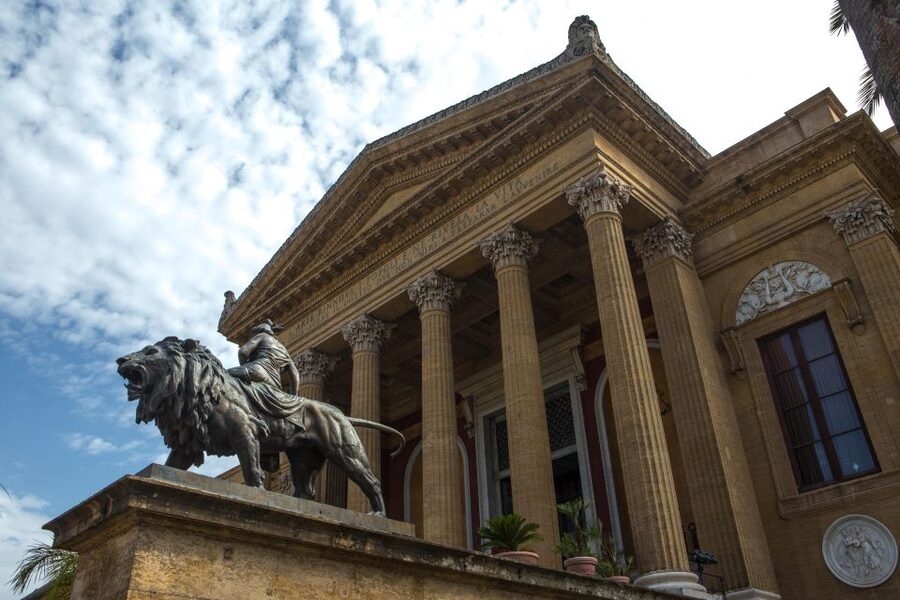
The itinerary also includes rooms such as the Coat of Arms and Pompeian Rooms. These spaces add variety after the main foyer and auditorium, and they show that Teatro Massimo was designed with more than one grand setting in mind.
The Pompeian decoration is especially useful for understanding the theatre’s taste and period. Rather than rushing only to the auditorium, pay attention to the smaller rooms. They often contain the details that explain how people moved through the building before and after a performance.
The amount of time in these spaces depends on the group and the guide. Some departures allow a comfortable look and time for photographs. Others move quickly, particularly when the guide is presenting in Italian and English, or another combination of languages.
A bilingual tour can work well. While the guide speaks to one group, you have a little extra time to examine the room. But a large mixed-language group can also make the tour feel hurried. If the guide is switching between languages, stay near the front and listen carefully.
What the stage visit really means
The tour description presents a chance to see the stage and learn how an opera is put on. That is an appealing promise, especially if you want more than a decorative tour.
In practice, stage access depends on what is happening inside the theatre. Some departures include an explanation of stage functions or a look toward working areas. Others remain in the public rooms because of rehearsals, maintenance, private events, or technical work. You may find that the tour shows you how the theatre operates without allowing you to walk fully onto the stage.
This is the biggest point to clarify before booking. If your main goal is a true backstage visit, you may be disappointed. If you mainly want to understand the theatre’s layout and see the grand interiors, the tour still delivers good value.
The changing activity inside the theatre is not entirely a negative. A quiet stage gives you a better view of the machinery and layout. A rehearsal or lighting session gives you a glimpse of the building in use. You simply need to treat either outcome as possible rather than guaranteed.
The guide makes the difference
The strongest part of this experience is usually the guide. The commentary is live, and the guide explains the theatre’s architecture, rooms, history, and practical function as you move through it.
Several guides have received particular praise for clear and engaging presentations. Daniele has been described as professional and fascinating, while other guides have handled English and Italian with ease. Guides have also presented in French and Spanish, with the activity information listing Italian, English, French, and Spanish as the main language choices. One information section also mentions German, so confirm the language when you check the available departure.
The best guides give both groups enough time to look around. They also answer questions instead of simply reciting facts. A well-run departure can feel like a short lesson in Palermo’s architecture and performance culture.
The weaker point is pace. If the group is large or divided between two languages, the guide may repeat the same explanation quickly. One departure was also criticized for a guide who seemed distracted and abrupt. That appears to be an exception, but it is worth remembering that the quality of a live tour depends on the person leading it.
Timing, meeting point, and how to use the flexible ticket
The tour is available between 9:30 AM and 5:30 PM, with the final tour starting at 5:00 PM. You should check the exact departure time when booking because the activity is valid for one day, not for a fixed multi-day period.
At the theatre, exchange your voucher at the Teatro Massimo ticket office. Have the booking ready and tell the staff which language you want. A practical tip is to arrive with enough time to handle the exchange and ask about the next available group. Some people have joined the next English tour after checking in at the desk, while others have waited around 20 minutes.
This flexibility is useful if you are walking around central Palermo and do not want to build your whole day around one strict departure. It also means you should not assume that the exact moment you arrive will match the next tour. The ticket office staff can direct you.
The building is easy to combine with other central sights, but the tour itself does not include hotel pickup, drop-off, food, or drinks. Plan to reach the theatre independently and allow extra time if you have a restaurant booking afterward.
Is $14 a fair price?
Yes, for most visitors. At $14, you are paying less for a long guided excursion and more for access to an important Palermo interior with useful explanation attached.
The value is strongest if you appreciate architecture, opera, decorative arts, or historic public buildings. You also get more than a quick look at the auditorium. The route can include the foyer, other formal rooms, the royal box, the Coat of Arms and Pompeian Rooms, and some explanation of stage operations.
The value is weaker if you expect a long backstage tour. The 40-minute length leaves little room for extended exploration, and some departures last closer to 30 minutes. You may also spend part of the time waiting for a bilingual explanation.
Still, the short format helps the tour fit into a busy Palermo day. You do not need to reserve half a day, and free cancellation up to 24 hours before the activity gives you some planning protection. The reserve-now, pay-later option also lets you hold a place without paying immediately.
Who will enjoy this tour most?
I would recommend it to first-time visitors who want to understand one of Palermo’s major buildings without committing to an opera performance. It is also a good choice for anyone who enjoys interiors, decorative detail, and stories about how public spaces were used.
Families may appreciate the manageable length, though younger children may find the spoken explanations less engaging than a performance. The chance of seeing musicians or dancers practicing can help, but it is not assured.
It suits photographers who want ornate rooms and auditorium views, provided they are comfortable taking pictures at the group’s pace. It also works well for people with a tight sightseeing schedule.
You should think twice if you require guaranteed stage access, a private guide, or a slow architectural study. This is a shared tour, and the pace may be brisk. A mixed-language departure can be perfectly understandable, but it may not feel as relaxed as a single-language tour.
Small tips for a better visit
- Arrive at the ticket office before your preferred departure, especially if you want a specific language.
- Keep your voucher ready so the exchange is quick.
- Stay close to the guide once the group enters the building.
- Leave room for photographs, but do not wander off. The theatre is large and the group may move on.
- Ask at the start if the stage or rehearsal areas are available that day.
- If the auditorium is dark for technical work, focus on the guide’s explanation and enjoy the rare chance to see the theatre being prepared.
- If you have a choice of language times, choose the departure that best matches your language rather than assuming every group will move at the same pace.
Should you book the Teatro Massimo tour?
Book it if you want an affordable look inside Palermo’s most famous opera house, especially if you value good guiding and grand interiors. The foyer, auditorium, royal box, and decorative rooms justify the modest price, and an unexpected rehearsal can make the visit even better.
Skip it only if you are booking mainly for a guaranteed backstage or stage experience. Access can change, and the tour may be short or hurried in a bilingual group. For most people, though, this is an easy, worthwhile addition to a Palermo sightseeing day. Go in expecting a polished introduction rather than a full theatre-production tour, and you are likely to leave pleased.
FAQ
How long does the Teatro Massimo guided tour last?
The scheduled guided tour lasts about 40 minutes. Some departures may be shorter, closer to 30 minutes, depending on the route and what is happening inside the theatre.
What rooms are included in the tour?
The route begins in the foyer and can include the auditorium, royal box, Coat of Arms, Pompeian Rooms, and other opulent areas. The tour also explains stage operations when access and theatre activity allow.
Is stage access guaranteed?
No. The tour information includes a visit to the stage, but access can be restricted by rehearsals, technical work, maintenance, or private events. Some departures see only the public areas.
What languages are available?
The listed tour languages are Italian, French, English, and Spanish. Another section of the activity information also mentions German, so check the available language and departure time before booking.
Where do I exchange the voucher?
Exchange your voucher at the Teatro Massimo ticket office. Tell the staff that you have already booked and ask to join the next available tour in your preferred language.
What are the tour hours?
Guided tours are available between 9:30 AM and 5:30 PM. The last tour starts at 5:00 PM, and you should check availability for the exact starting times.
Recently added around Palermo
- Sicily: Etna Volcano & Taormina Tour★ 4.4 · 199 reviews
- Palermo: Pizza and Gelato Cooking Class with Dinner and Wine★ 4.9 · 951 reviews
- Palermo: Walking Tour of Historic Markets and Monuments★ 4.9 · 478 reviews
- Palermo, tour tra monumenti unici e mercati colorati★ 4.9 · 271 reviews
- Palermo: UNESCO World Heritage Sites Guided Walking Tour★ 4.8 · 548 reviews
- Palermo: Full-Day Snorkeling Boat Tour with Lunch and Wine★ 5.0 · 196 reviews
- Palermo Sicilian Street Food Tour: Small Group with a Local★ 4.8 · 259 reviews
- Palermo: Small Group Night Street Food Tour★ 4.8 · 589 reviews
Palermo Tours, compared.
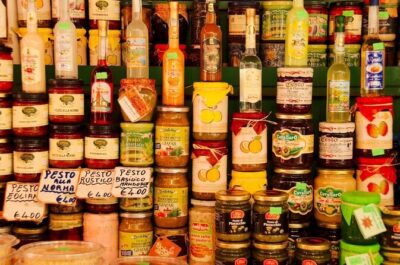
Palermo Original Street Food Walking Tour by Streaty
Read our review →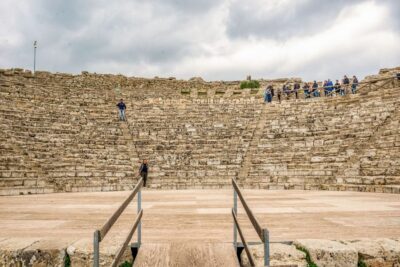
Segesta, Erice and Salt Pans Full-Day Excursion from Palermo
Read our review →

Agrigento and the Valley of the Temples Day Tour
Read our review →
Pizza and Gelato Cooking Class with Dinner and Wine
Read our review →Browse the lists this tour appears in