
Reviewed · WALKING TOURS
Palermo: NO Mafia Walking Tour
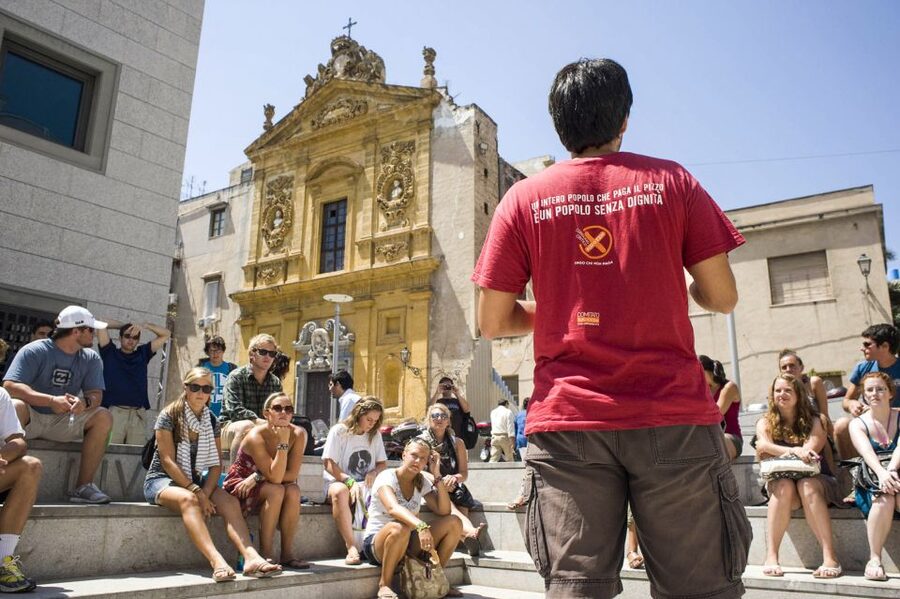
Palermo tells its hardest stories in the open. This three-hour walk connects the city’s famous sights with the Mafia’s impact on daily life and the citizens pushing back. I like the clear-eyed history, which cuts through movie myths, and the direct link to Addiopizzo, a real civic movement rather than a theatrical Mafia-themed show. The main consideration is that the tour is talk-heavy, so you need comfortable shoes and an appetite for serious subject matter.
I also like the route’s range. You see Teatro Massimo, the Capo market, Palermo Cathedral, city hall, and the Mafia memorial at Piazza Della Memoria while learning why these places matter. Guides such as Linda, Valeria, Salvatore, Attilio, Giuseppe, Ermes, Laura, and Marinella have been praised for bringing passion, humor, and strong English to a difficult subject.
At $40 per person, the tour is not the cheapest way to see Palermo, especially since museum and monument entrances are not included. Still, for three hours of guided context, local perspective, and a contribution to Addiopizzo, I consider it good value if you want to understand the city beyond its churches and street food.
In This Review
- Five things to know before booking
- Why this Palermo walk is different
- Teatro Massimo: starting with Palermo’s grand public face
- Il Capo market and the everyday city
- Piazza Della Memoria and the cost of resistance
- Orange stickers along the Cassaro
- Piazza Beati Paoli, the cathedral, and city hall
- The guides make or break the three hours
- What you actually learn about the Mafia
- Three hours and a $40 price tag
- Who should book this experience
- Practical tips for a better walk
- Should you book Palermo’s No Mafia Walking Tour?
- FAQ
- How long does the Palermo No Mafia Walking Tour last?
- How much does the tour cost?
- What languages are available?
- Is a guide included?
- Are museum and monument entrance fees included?
- Does the tour support an anti-mafia organization?
- What should I bring?
- Is a small-group option available?
- Can I cancel for a refund?
Five things to know before booking
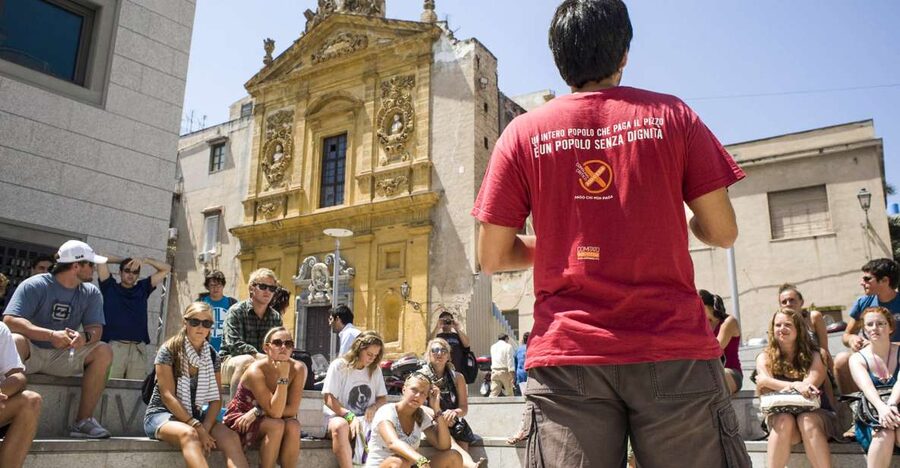
- The story matters more than the photo stops: The buildings provide the setting, but the guide’s explanation is the main event.
- You see Palermo’s anti-mafia message in daily life: Orange stickers mark businesses connected to the pago chi non paga ethical consumer campaign.
- Teatro Massimo and the cathedral are part of a wider route: You get major Palermo sights without taking a standard sightseeing tour.
- Piazza Della Memoria gives the walk emotional weight: The memorial honors prosecutors and judges killed by the Mafia.
- The tour supports Addiopizzo: Your booking includes a contribution to the charitable organization behind the anti-mafia work.
- Three hours can pass quickly, but the subject is serious: This suits curious adults, families with older children, and anyone ready to listen closely.
Why this Palermo walk is different
Palermo has no shortage of tours focused on Norman architecture, markets, churches, and food. This one uses those same streets to explain power, fear, corruption, courage, and civic action.
That difference matters. The Mafia is often presented through glamorous films, gangsters, dramatic murders, and colorful legends. This tour works against that picture. It places Cosa Nostra within Sicilian society and politics, then gives equal attention to people who resisted it.
I like that balance. You do not get a Mafia spectacle or a hunt for supposed gangster hangouts. You get a serious account of how extortion and intimidation affected shop owners, public life, and the wider community. You also learn that opposition did not come only from famous judges and prosecutors. Ordinary citizens and organized local groups have played a major role.
The result is a walking tour with a civic purpose. You still see central Palermo, but you look at its streets differently.
More Walking Tours in Palermo
- Palermo Original Street Food Walking Tour by Streaty
★ 5.0 · 2,105 reviews - Palermo: Street Food and History Walking Tour
★ 4.9 · 1,294 reviews - Palermo: Private Custom Walking Tour with Local Guide
★ 4.7 · 661 reviews
Teatro Massimo: starting with Palermo’s grand public face
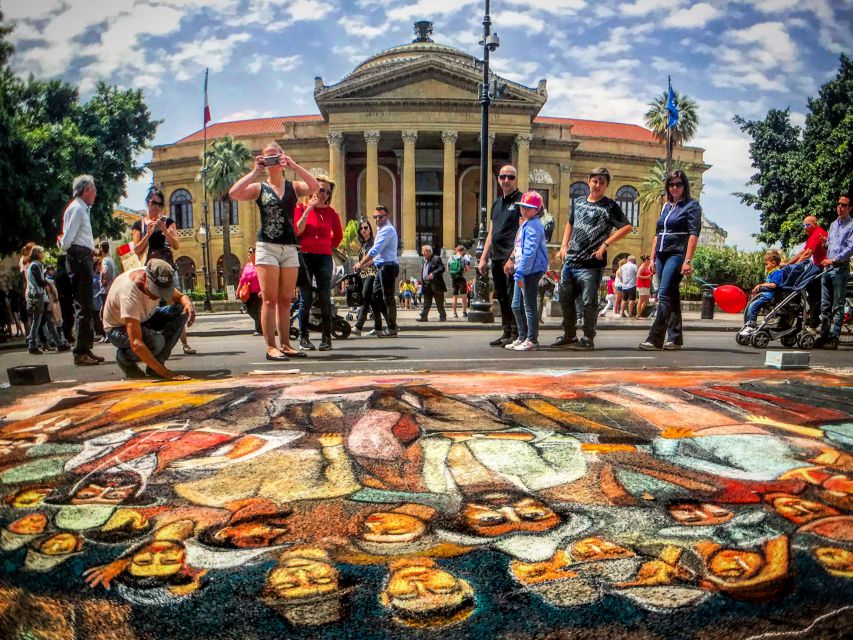
Teatro Massimo is one of the city’s major landmarks and one of the clearest visual reminders that Palermo is a city of public spectacle. On this walk, the opera house is more than an impressive building for a quick photograph.
Your guide uses the city center to set the scene for the larger story. The route shows how beauty, commerce, politics, and public life share the same streets. That approach helps you place the Mafia story in an actual city rather than treating it as a distant chapter in a textbook.
You should expect to pause and listen rather than enter the theater. Admission to museums and monuments is not included, so this experience is about seeing the exterior landmarks and understanding their place in Palermo’s life.
That is an important distinction. If you want a detailed tour of Teatro Massimo’s interior, this is not the right booking. If you want a strong introduction to Palermo before exploring on your own, it is a useful first stop.
Il Capo market and the everyday city
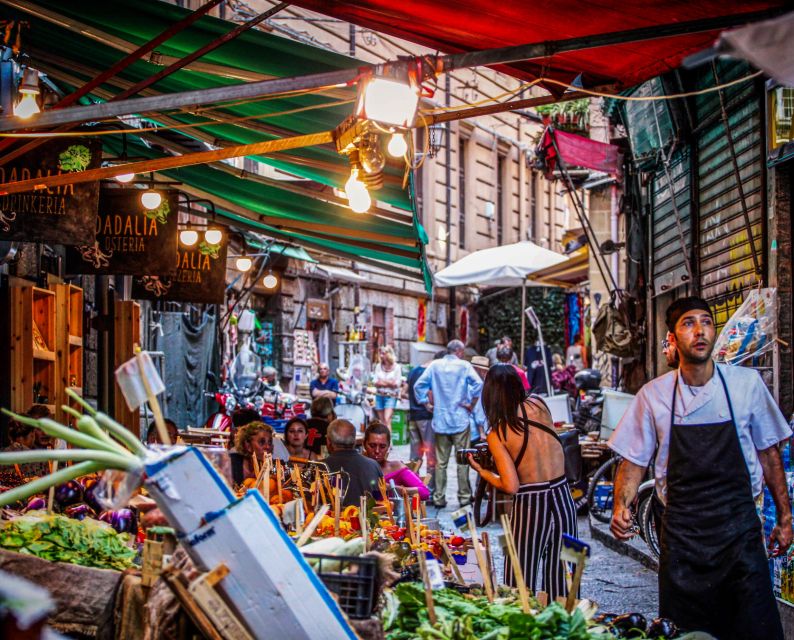
The route includes Il Capo, an open-air market where the atmosphere shifts from grand architecture to ordinary daily business. This is one of the most useful parts of the walk because the Mafia story becomes easier to understand when you see the city as a place where people work, shop, and run small businesses.
The market also keeps the tour from becoming a procession of memorials. Palermo is not only a city defined by violence and political crime. It is a living place with food, noise, trade, and local routines.
Your guide may connect this everyday setting to the pressures faced by business owners. The point is not to make the market feel threatening. The point is to show why extortion has been a social issue, not simply a crime story involving people at the top.
I would avoid treating this stop as a food tour. You may get suggestions for Sicilian specialties later, but the main subject here is the relationship between public life, commerce, and organized crime.
Piazza Della Memoria and the cost of resistance
Piazza Della Memoria is a memorial dedicated to prosecutors and judges killed by the Mafia. It gives the tour a place for remembrance, not just explanation.
This stop helps put names and human consequences behind the broad term Mafia. Your guide discusses violence, intimidation, murders, and the long fight against impunity. The material is serious, but the purpose is not shock for its own sake. It is to explain what resistance demanded from people who challenged criminal power.
Several guides have been praised for handling this section with passion and care. Attilio, for example, is described as holding attention for the full three hours, while Valeria has been praised for explaining both the historical events and the anti-mafia movement with conviction.
You may want to allow yourself a little mental space here. The tour covers painful events and political realities. It is suitable for people who want substance, but less suitable if you are looking for a light morning walk between sightseeing stops.
Still Palermo, but a slower afternoon:
- Palermo: Hop-on Hop-off Bus Tour 24-hour Ticket
★ 3.9 · 2,410 reviews - Segesta, Erice and Salt Pans Full-Day Excursion from Palermo
★ 4.2 · 1,791 reviews - Palermo: Teatro Massimo Opera House Guided Tour
★ 4.5 · 1,573 reviews - From Palermo: Monreale and Cefalù Half-Day Trip
★ 4.2 · 1,354 reviews
Orange stickers along the Cassaro
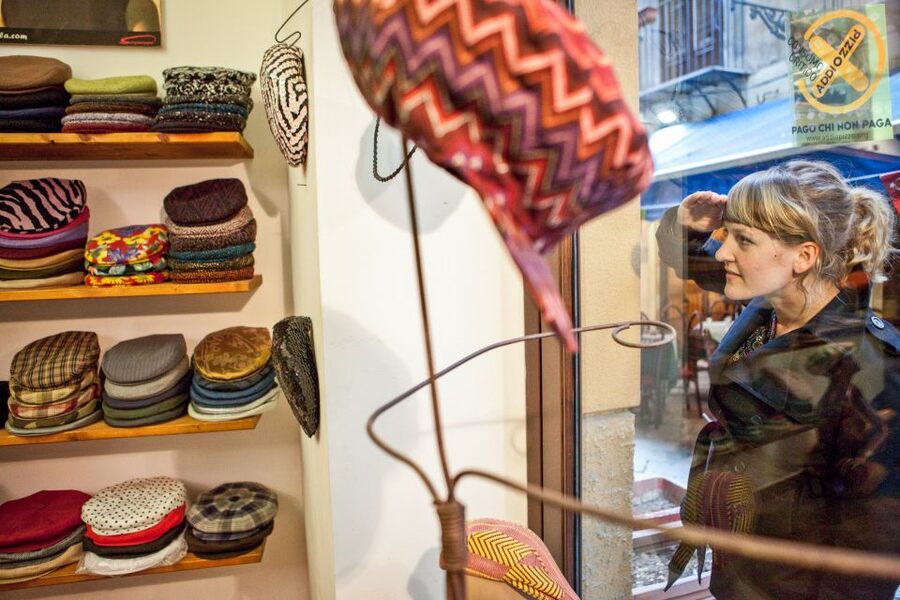
One of the most distinctive details on the route appears along the Cassaro. Look for businesses with orange stickers in their windows.
These stickers identify owners who have refused to pay the extortion racket and joined the pago chi non paga campaign, which means I pay who does not pay. The idea is simple but powerful: customers can support businesses that resist extortion rather than leaving shop owners to face that pressure alone.
This is where the tour turns from history into a practical question for you. How does a visitor support local resistance? By choosing businesses connected with ethical consumer campaigns, you can make your spending part of the answer.
I appreciate this detail because it gives you something concrete to notice after the tour ends. You are not asked only to remember famous cases or courtroom battles. You are shown how a civic campaign appears on ordinary shopfronts.
Do not expect every business in Palermo to carry an orange sticker. The tour points out examples along the route and explains what they mean. The stickers are symbols of refusal, but they also represent a wider attempt to change buying habits and community expectations.
Piazza Beati Paoli, the cathedral, and city hall
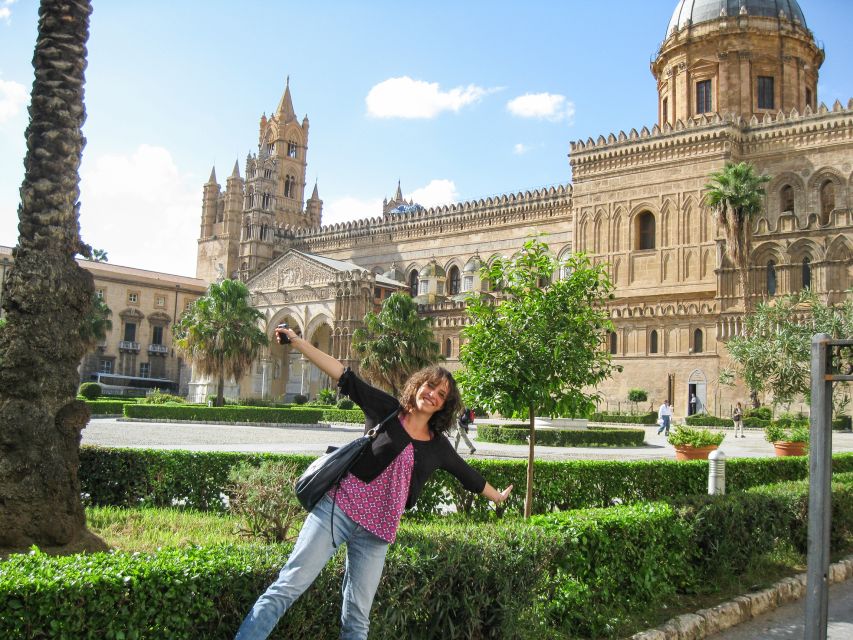
The walk also passes Piazza Beati Paoli, Palermo Cathedral, and the city hall. Each location adds another layer to the city center, but none should be mistaken for a full guided visit inside a monument.
Piazza Beati Paoli brings in Palermo’s older legends and associations. The cathedral offers a reminder of the city’s religious and architectural importance. City hall shifts attention toward government and public authority.
Together, these places show why the route works as more than a single-topic lecture. You move through religion, folklore, administration, commerce, and public memory. The guide ties those settings to the social and political context of Sicily.
I would not book this tour solely to collect landmark photographs. A standard Palermo walking tour may give you more architectural detail. This one gives you a different way to read the same streets, with the Mafia and anti-mafia movement forming the main thread.
The guides make or break the three hours
The strongest part of the experience is the guide. The subject requires more than memorized dates. It needs judgment, clarity, and the ability to explain difficult events without turning them into entertainment.
The guides praised most often include Valeria, Salvatore, Attilio, Giuseppe, Ermes, Laura, Linda, and Marinella. Their strengths vary in style, but the pattern is clear: strong subject knowledge, personal commitment, clear explanations, patience with questions, and, at times, a welcome sense of humor.
That last point matters. Three hours is a long time to listen outdoors. A guide who can vary the pace, explain complex political developments in plain language, and make room for questions will make the time pass more easily.
One useful detail from the experience is that guides may offer places to sit in the shade during parts of the talk. That is helpful in Palermo’s heat, though you should still wear comfortable shoes and be prepared for a substantial amount of standing and walking.
The tour is offered in English, Italian, Spanish, and French. English-language guests have praised the guides’ clarity. Polish is not among the listed languages, so Polish speakers should plan on joining in one of the available languages.
What you actually learn about the Mafia
The tour aims to move beyond clichés and myths. You learn about the Mafia’s origins, its influence, its links with society and politics, and the harm caused by violence, intimidation, and corruption.
The emphasis is not simply on famous criminals. You hear about prosecutors, judges, public figures, citizens, and civic groups who challenged Mafia power. That wider focus is important because it explains why change cannot depend only on arrests or a few celebrated individuals.
The tour also looks at the past, present, and future of the anti-mafia movement. That gives the experience a forward-looking quality. You are not left with the idea that Palermo’s story ended after the dramatic events of previous decades.
I especially value the attention given to grassroots action. The tour explains how ordinary people and organized movements can resist extortion and help reduce the Mafia’s grip. It also shows how visitors can support that effort through ethical spending.
This is not a claim that all problems have disappeared. The point is more honest: resistance exists, progress has been made, and civic choices still matter.
Three hours and a $40 price tag
The tour costs $40 per person and lasts three hours. You receive a live guided walking tour, and part of the booking fee supports Addiopizzo.
For a sightseeing walk alone, $40 might feel high, especially because entrances to museums and monuments are excluded. You are paying for the guide’s interpretation, not for admission tickets or transportation.
For me, the price makes sense if you see it as both a city walk and an educational experience. You cover several central landmarks, learn the background behind a major part of modern Sicilian public life, and support an anti-mafia organization at the same time.
Value also depends on how you plan your Palermo visit. If you already have several architecture tours booked, this gives you a different subject and a more local civic focus. If your main goal is to enter monuments, sample food, or spend the morning shopping, another tour may suit you better.
Small-group options are available. Group size affects how easily you can hear the guide and ask questions, so check the option you select rather than assuming every departure has the same format.
You can reserve now and pay later, and cancellation is free up to 24 hours in advance for a full refund. The meeting point may vary by booking option, so check your confirmation carefully.
Who should book this experience
I would recommend the No Mafia Walking Tour to you if you:
- Want a serious account of Sicily beyond film stereotypes
- Enjoy history explained through real streets and public places
- Care about ethical travel and local civic movements
- Want a different Palermo experience after seeing the usual churches and palaces
- Are comfortable listening to difficult material about violence and corruption
- Like asking questions and spending several hours with a guide
Families can consider it too. One parent described the tour as holding a teenager’s attention, but the subject matter is not light. You know your child best.
It is also a strong choice for your first day in Palermo. The route introduces major central sights, gives you food suggestions, and helps you understand the city before you explore it independently.
I would choose something else if you want a relaxed stroll with little narration, a dedicated food experience, or interior visits to monuments. The locations are important, but the spoken story is the reason to book.
Practical tips for a better walk
Wear comfortable shoes. This is a three-hour walking tour, and even the most engaging guide cannot make sore feet disappear.
Bring water and consider sun protection, especially because parts of the tour take place outdoors. The route may include opportunities to sit in the shade, but you should still prepare for Palermo’s weather.
Keep your attention on shop windows along the Cassaro. The orange pago chi non paga stickers are easy to miss if you are focused only on churches and fountains.
Ask questions. The guides are used to explaining the subject in detail, and several have been praised for answering patiently. If you want food advice, ask before the tour ends. Guides can suggest places to taste Sicilian specialties and help you continue your visit.
Finally, leave room in your schedule afterward. You may want time to think, visit a memorial, or walk back through the center with a sharper understanding of what you have just seen.
Should you book Palermo’s No Mafia Walking Tour?
Yes, if you want Palermo to be more than a collection of beautiful buildings. At $40, this is a worthwhile choice for an informative, serious, and socially minded experience that combines major sights with the city’s anti-mafia story.
Book it early in your stay if you want its advice on food, neighborhoods, and ethical businesses to shape the rest of your visit. Skip it only if you prefer a lighter tour or need extensive monument interiors.
For me, the strongest reason to go is its honesty. You do not leave with a glamorous Mafia fantasy. You leave with a clearer view of the damage caused by organized crime and a better understanding of the Sicilian citizens working to resist it.
FAQ
How long does the Palermo No Mafia Walking Tour last?
The tour lasts three hours.
How much does the tour cost?
The listed price is $40 per person.
What languages are available?
The tour is offered in English, Italian, Spanish, and French.
Is a guide included?
Yes. A live tour guide and the walking tour are included.
Are museum and monument entrance fees included?
No. Entrance to museums and monuments is not included.
Does the tour support an anti-mafia organization?
Yes. The booking includes a contribution to the Addiopizzo charitable organization.
What should I bring?
You should bring comfortable shoes because the experience is a three-hour walking tour.
Is a small-group option available?
Yes. A small-group option is available, depending on the booking choice.
Can I cancel for a refund?
Yes. You can cancel up to 24 hours in advance for a full refund.
Recently added around Palermo
- Sicily: Etna Volcano & Taormina Tour★ 4.4 · 199 reviews
- Palermo: Pizza and Gelato Cooking Class with Dinner and Wine★ 4.9 · 951 reviews
- Palermo: Walking Tour of Historic Markets and Monuments★ 4.9 · 478 reviews
- Palermo, tour tra monumenti unici e mercati colorati★ 4.9 · 271 reviews
- Palermo: UNESCO World Heritage Sites Guided Walking Tour★ 4.8 · 548 reviews
- Palermo: Full-Day Snorkeling Boat Tour with Lunch and Wine★ 5.0 · 196 reviews
- Palermo Sicilian Street Food Tour: Small Group with a Local★ 4.8 · 259 reviews
- Palermo: Small Group Night Street Food Tour★ 4.8 · 589 reviews
Walking Tours, compared.
Guided Walking Tour & Last Supper Visit with Ticket
Read our review →
Rialto Bridge & Offbeat Unusual Venice Walking Tour
Read our review →
Private 3 hrs Venice Tour: St Mark’s, Walking tour & Boat tour
Read our review →
Skip the line: Uffizi and Accademia Small Group Walking Tour
Read our review →Browse the lists this tour appears in