
Reviewed · WALKING TOURS
Palermo No Mafia walking tour: discover the Anti-mafia culture in Sicily
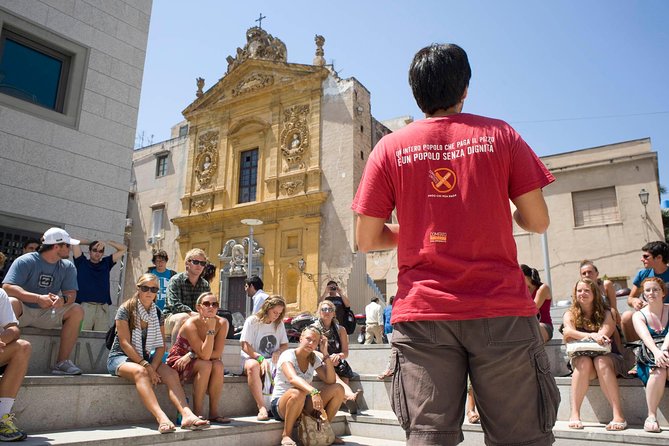
Palermo tells its hardest stories in public. This three-hour walking tour links major sights with the city’s long fight against organized crime, showing you how citizens, judges, shopkeepers, politicians, and community groups pushed back against Mafia power. I like its honest focus on resistance, rather than treating the Mafia as a colorful movie prop. I also like that part of your $39.30 ticket supports Addiopizzo, a local organization backing a Mafia-free economy.
The tour is not a standard introduction to Palermo’s art and architecture. You will see important landmarks, but the main subject is civil courage and anti-Mafia action. That focused approach is the tour’s strength, though anyone expecting a broad historical walking tour may find some explanations repetitive or wish for more time devoted to the city’s monuments.
In This Review
- Key points to know before you book
- Why this Palermo walk is different
- Teatro Massimo: beginning with Palermo’s public image
- The 70-meter Wall of Legality
- The open-air market and the price of refusing pizzo
- Palazzo di Giustizia and the Piazza della Memoria
- Palermo Cathedral and the church’s complicated role
- Cappadonia Gelati and shopping with a purpose
- Palazzo Pretorio and the end at Fontana Pretoria
- What $39.30 gets you
- Weather, meeting point, and practical planning
- Who should book this tour
- Should you book the Palermo No Mafia tour?
- FAQ
- How long does the Palermo No Mafia walking tour last?
- Where does the tour start?
- Where does the tour end?
- What language is the tour offered in?
- Is food included in the tour price?
- What happens if it rains?
Key points to know before you book
- The route connects six meaningful locations, from Teatro Massimo to Fontana Pretoria, with a stop at Palermo Cathedral and the City Hall.
- The tour explains the anti-Mafia movement, including the fight against extortion payments known as pizzo.
- A 70-meter Wall of Legality puts faces to people killed by the Mafia and makes a powerful photo stop.
- The group is limited to 15 people, which gives you a better chance to hear the guide and ask questions.
- Local guides bring personal passion to the subject, with guides such as Sylvia, Federico, Valeria, Francesco, and Marienella praised for clear, engaging presentations.
- The tour costs $39.30, including a local guide and a small contribution to Addiopizzo, but not food or hotel transport.
Why this Palermo walk is different
Many Mafia-themed tours lean heavily on film references, dramatic stories, and familiar stereotypes. This one takes another path. It uses Palermo’s streets and public buildings to explain how Cosa Nostra affected ordinary life, and how the city responded.
That distinction matters. The tour does not celebrate Mafia power or spend all its time on violent episodes. Instead, it explains the efforts to weaken that power, from court officials confronting criminal networks to shopkeepers refusing to pay extortion money.
I would use this tour early in a Palermo visit. It gives you a framework for seeing the city. A market becomes more than a noisy food stop. A sticker on a shop window becomes a sign of economic resistance. A courthouse memorial becomes a reminder that Palermo’s modern story includes both fear and determined opposition.
The guides are a major part of the experience. Sylvia is repeatedly praised for her passion and command of the topic. Other guides, including Federico, Valeria, Francesco, Marienella, and Salvador, have also been singled out for answering questions, explaining complicated subjects clearly, and connecting the story to everyday life.
The English is generally described as easy to follow. Still, this is a serious subject, and the tour involves listening outdoors for long stretches. If you prefer a fast-moving sightseeing walk with constant motion, the format may feel slow at times.
More Walking Tours in Palermo
- Palermo: NO Mafia Walking Tour
★ 4.8 · 2,431 reviews - Palermo Original Street Food Walking Tour by Streaty
★ 5.0 · 2,105 reviews - Palermo: Street Food and History Walking Tour
★ 4.9 · 1,294 reviews
Teatro Massimo: beginning with Palermo’s public image
The meeting point is at Piazza Giuseppe Verdi, outside Teatro Massimo. This grand opera house is famous to film fans as the setting for the dramatic final scene of The Godfather Part III. The tour uses that connection as an opening, but it quickly moves beyond cinema.
Teatro Massimo is presented as a symbol of Palermo’s attempt to reclaim its public identity after decades of Mafia violence. You get about 30 minutes here, with no admission ticket required. The guide sets the tone by explaining how a famous cultural building can represent a city’s desire to change its image.
This first stop works well because it corrects an easy mistake. Palermo is not simply a backdrop for Mafia stories. It is a city with institutions, artists, shopkeepers, judges, families, and activists who have fought to define their own future.
The opera house itself is one of the route’s most recognizable sights, so you get a useful orientation point even if you know little about Palermo. The drawback is that this is not an interior tour of Teatro Massimo. You should not expect an architectural visit or a performance-related history lesson.
The 70-meter Wall of Legality
The next stop is the Wall of Legality, a 70-meter mural described as the longest wall painting in Italy. Its subject is direct: it shows some of the best-known people killed by the Mafia.
This is one of the route’s most effective visual moments. Instead of hearing a long list of names, you encounter faces. That makes the human cost easier to grasp, particularly if you have arrived with only a vague picture shaped by films and television.
You have around 10 minutes here. That is enough to look closely, hear the explanation, and take photographs. The mural is also part of an urban renovation project, so the stop connects remembrance with the physical improvement of the neighborhood.
I would pay attention to the guide’s explanation rather than treating this only as a quick picture stop. The point is not simply to identify famous victims. It is to understand how public memory can challenge the silence and fear that organized crime depends on.
The open-air market and the price of refusing pizzo
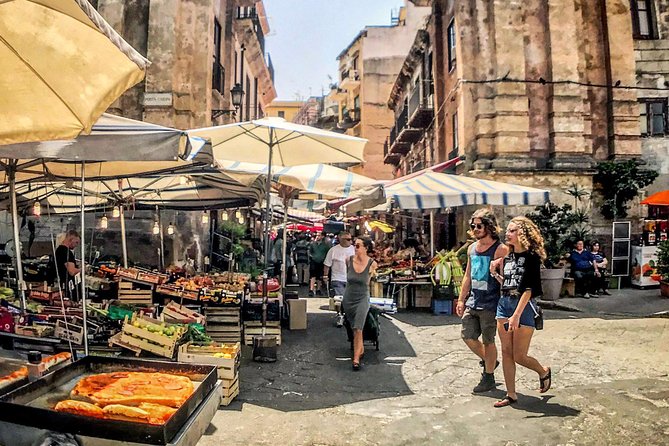
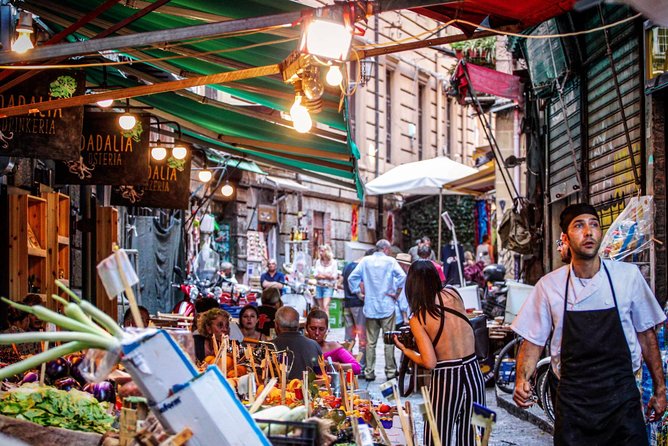
The route continues through Palermo’s colorful old open-air market. The market is loud, crowded, and full of daily commerce, making it a useful place to discuss the relationship between Mafia power and shopkeepers.
The key idea here is pizzo, the extortion payment demanded from businesses. The guide explains how refusing to pay has become part of the anti-Mafia movement, and why saying no can require more than private disapproval.
This section gives the tour a practical edge. You are not just hearing about crime as something locked in the past. You are learning how criminal influence can enter ordinary business relationships, and how shopkeepers and customers can support alternatives.
The market may be the most sensory part of the walk, but it can also be the hardest place to hear every word. You are moving through one of the city’s most active areas, and the guide may stop the group to speak. Stay close and ask for clarification if you miss a point.
The tour does not appear to include lunch, so plan your food separately. The market is a good place to continue exploring or eat afterward, but the $39.30 price covers the guided walk, not a meal.
Still Palermo, but a slower afternoon:
- Palermo: Hop-on Hop-off Bus Tour 24-hour Ticket
★ 3.9 · 2,410 reviews - Segesta, Erice and Salt Pans Full-Day Excursion from Palermo
★ 4.2 · 1,791 reviews - Palermo: Teatro Massimo Opera House Guided Tour
★ 4.5 · 1,573 reviews - From Palermo: Monreale and Cefalù Half-Day Trip
★ 4.2 · 1,354 reviews
Palazzo di Giustizia and the Piazza della Memoria
At the Palermo Court House, the group visits Piazza della Memoria. This memorial honors judges and prosecutors killed by the Mafia.
The location adds an important layer to the story. Anti-Mafia resistance was not only a matter of public speeches or private bravery. It also involved legal officials who investigated, prosecuted, and confronted criminal organizations at great personal cost.
You spend about 15 minutes here. The stop is likely to appeal most to people interested in the legal and political side of the subject, though the guide also uses it to explain the human cost behind the court system.
This is one of the points where the tour’s serious tone is clearest. The subject is painful, and the memorial asks you to consider individual sacrifice rather than treating Palermo’s past as an entertaining crime story.
If you are visiting with children, the tour can still work. One family completed it with a four-year-old and found the three hours manageable. Still, the subject includes violence, corruption, and people who lost their lives, so parents should decide if that tone suits their child.
Palermo Cathedral and the church’s complicated role
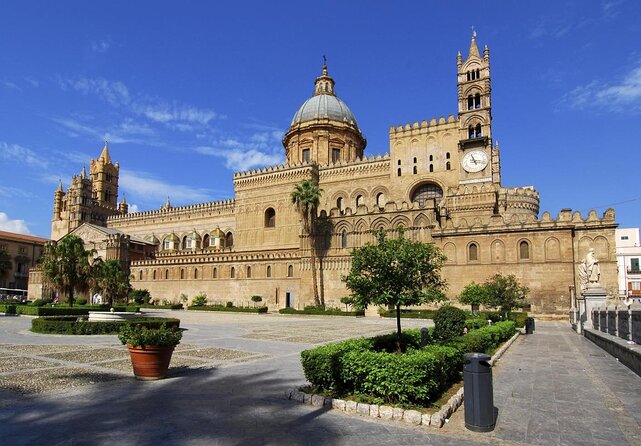
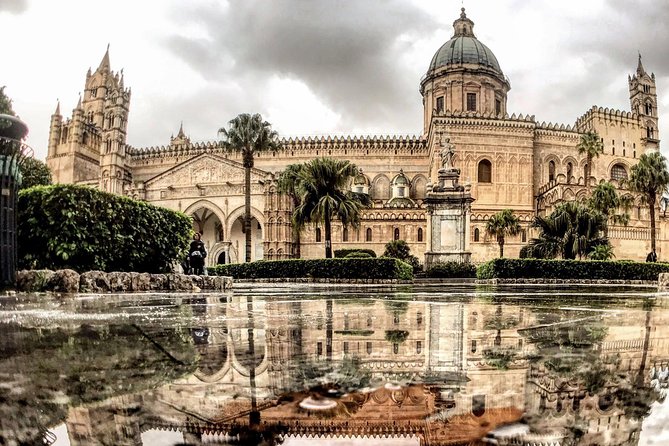
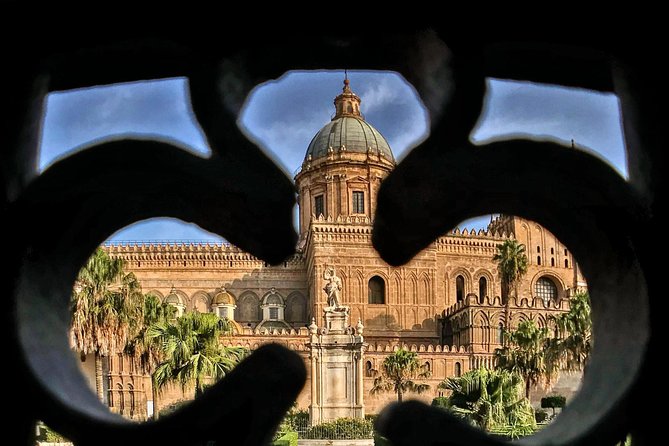
The walk then reaches Palermo Cathedral, one of the city’s great Arab-Norman monuments. You hear about the relationship between the Catholic Church and the Mafia while standing outside the spectacular building.
This pairing is useful. Palermo Cathedral represents centuries of religious and civic authority, while the discussion asks how the church related to organized crime and to the effort to oppose it. The result is more complex than a simple story of good institutions fighting bad ones.
You get about 15 minutes at the cathedral. The tour does not include an interior visit, and the focus is not the building’s full artistic or architectural story. If you want a detailed explanation of the cathedral’s Arab-Norman design, mosaics, chapels, or royal connections, plan a separate visit.
That limitation is worth knowing. The cathedral functions here as a setting for the anti-Mafia discussion, not as a complete sightseeing stop. I like the way the tour makes familiar landmarks part of a wider civic story, but you should not mistake this experience for a general Palermo monuments tour.
Cappadonia Gelati and shopping with a purpose
Along the Cassaro, the guide points out orange stickers displayed by businesses that have said no to paying pizzo. These shops take part in Addiopizzo’s critical consumption campaign.
Cappadonia Gelati is the featured stop. You can buy gelato there, but the purchase has a wider meaning. Supporting a business that refuses extortion turns a pleasant holiday treat into a small act of economic solidarity.
This is a clever part of the tour because it gives you something concrete to do. The anti-Mafia movement is not presented only as a collection of past battles. It is also tied to current choices about where you spend money.
The stop lasts about 15 minutes and admission is free. Your gelato is extra, of course, but this is one of the few places where the tour invites you to make a purchase. The guide can help you recognize the orange Addiopizzo symbol elsewhere during your stay.
The small contribution included with your booking also goes to Addiopizzo. That gives the ticket value beyond the guide’s time, especially if you want your sightseeing budget to support a local civic group.
Palazzo Pretorio and the end at Fontana Pretoria
The final main stop is Palazzo Pretorio, Palermo’s City Hall, in Piazza Pretoria. The guide discusses how the building has been connected with both corrupt politicians and officials who fought Mafia influence.
That contrast brings the tour back to institutions. The story is not simply about criminals operating outside government. It also examines how public offices can be corrupted, and how people within those institutions can work against that corruption.
The walk ends at Fontana Pretoria, in the center of Palermo’s old town. This is a convenient finish because you are already in a useful area for continuing your sightseeing and finding Sicilian food.
The guide offers suggestions for what to see and eat next. Since the starting point is near Teatro Massimo and the ending point is near the old town center, the route also works as a practical introduction to Palermo’s central streets.
What $39.30 gets you
At $39.30 per person, the tour is not the cheapest way to walk around Palermo. You could see the outside of several landmarks on your own for nothing. The value comes from the organized explanation, the connection between sites, and the support for Addiopizzo.
A small group of no more than 15 people helps. It is easier to hear a guide in a public square, and you have a better chance to ask about a point that interests you. The experience is not private, but it should feel more personal than a large coach-style excursion.
The three-hour length is also useful. It is long enough to develop a clear understanding of the anti-Mafia movement without taking an entire day. The tradeoff is that much of the time is spent standing while the guide speaks. One person found that the tour could have kept moving more often, perhaps with headphones, so you should wear comfortable shoes and be ready for pauses.
The tour is usually booked about 24 days ahead. That suggests you should reserve early if your Palermo dates are fixed, especially since the group limit is 15. Confirmation arrives at booking, and free cancellation is available until 24 hours before the start time. Cancellations or changes inside that window are not accepted for a refund.
Weather, meeting point, and practical planning
You meet at Piazza Giuseppe Verdi, 455, near Teatro Massimo. The tour finishes at Fontana Pretoria, Piazza Pretoria. Hotel pickup and drop-off are not included, so you need to make your own way to the starting point.
The route is near public transportation, and most people can take part. No special health restrictions are listed. Comfortable shoes are important because this is a three-hour city walk, with standing at several stops.
Rain does not automatically cancel the experience. Bring an umbrella and a dry jacket if the forecast looks poor. The tour is conducted in English and uses a mobile ticket.
I would avoid scheduling a major timed attraction immediately after the walk. The advertised duration is approximately three hours, and public squares, market streets, questions, and group movement can affect the exact finish time.
Who should book this tour
You should book it if you want to understand Palermo beyond the Mafia stereotypes found in popular culture. It is especially useful if you care about civil movements, modern Italian politics, ethical tourism, or the way organized crime affects daily commerce.
It also suits people who want an intelligent first activity in Palermo. The route introduces central areas and gives you ideas for later visits, including the option of returning to a museum or memorial mentioned during the walk.
Families can take part, but consider the subject matter and the standing time. The tour is accessible to most people according to the available information, but it is still a walking experience rather than a seated presentation.
You may want to skip it if you mainly want Palermo’s art, churches, markets, and architecture explained in detail. You will see those places, but the guide uses them to discuss anti-Mafia efforts. That focus is deliberate, not a flaw in the design.
Should you book the Palermo No Mafia tour?
I would book this tour, especially near the start of a Palermo stay. The strongest guides, including Sylvia and Valeria, bring clear explanations and real passion to a difficult subject. The best part is the shift in emphasis from Mafia mythology to the people working to resist it.
Just set the right expectation. This is not a complete Palermo history walk, not a movie-location tour, and not a cathedral visit. It is a focused three-hour lesson in how a city remembers violence, challenges corruption, and supports businesses that refuse pizzo.
At $39.30, the combination of a small group, a local English-speaking guide, central sights, and an Addiopizzo contribution makes good sense for the right audience. Bring shoes for walking, patience for standing, and a willingness to listen carefully. You will leave with a more grounded view of Palermo and some practical ideas for spending your money in support of its anti-Mafia movement.
FAQ
How long does the Palermo No Mafia walking tour last?
The tour lasts approximately three hours.
Where does the tour start?
It starts at Piazza Giuseppe Verdi, 455, in Palermo, near Teatro Massimo.
Where does the tour end?
The tour ends at Fontana Pretoria, Piazza Pretoria, in Palermo’s old town center.
What language is the tour offered in?
The tour is offered in English.
Is food included in the tour price?
No. Lunch is not included. The gelato stop at Cappadonia Gelati is also an optional purchase rather than part of the ticket.
What happens if it rains?
The tour can require an umbrella and a dry jacket in rainy weather. Comfortable shoes are suggested in all conditions.
Recently added around Palermo
- Palermo: Wine Tasting with Snacks at Bottega Monteleone★ 4.8 · 453 reviews
- Palermo : Private Custom Walking Tour with a Local Guide★ 4.5 · 237 reviews
- Sicilian Cooking Class★ 5.0 · 289 reviews
- Discover Palermo in 3 hours. Art, history, markets and street food★ 5.0 · 352 reviews
- Palermo’s Delight: Unleash the Secrets of Pizza and Gelato Making★ 5.0 · 497 reviews
- Palazzo Conte Federico★ 5.0 · 650 reviews
- Discover the Charm of Palermo: A 3-Hour UNESCO Sites Walking Tour★ 5.0 · 264 reviews
- Palermo Half Day Boat Tour with Palermo Experiences★ 5.0 · 224 reviews
Walking Tours, compared.
Guided Walking Tour & Last Supper Visit with Ticket
Read our review →
Rialto Bridge & Offbeat Unusual Venice Walking Tour
Read our review →
Private 3 hrs Venice Tour: St Mark’s, Walking tour & Boat tour
Read our review →
Skip the line: Uffizi and Accademia Small Group Walking Tour
Read our review →Browse the lists this tour appears in