
Reviewed · WALKING TOURS
Syracuse: Ortigia and Neapolis Guided Walking Tour
Syracuse keeps antiquity in plain sight. I like the way this private tour links Neapolis Archaeological Park with Ortigia, so you see both the grand Greek remains and the living city around them. I also like the small-group format, headset, and choice of six guide languages. The main drawback is cost: $317.20 covers up to five people, but monument tickets, drinks, and any taxi between areas are extra.
This is a history-heavy walk, but it is not only about stones and dates. A good guide helps you read the Cathedral of Syracuse as both a Christian church and a former pagan temple, then explains how Greek, Roman, Arab, and Spanish rule shaped the city. Guides such as Giuseppe, Anna, Laura, Marcelo, and Rosanna have earned especially warm praise for clear storytelling, patience, and a knack for answering questions.
In This Review
- Key points to know before booking
- Why this Syracuse pairing works so well
- Starting at Neapolis Archaeological Park
- The Greek Theater and its Ionian Sea view
- Paradise Latomia and the Ear of Dionysos
- Temple of Athena and Syracuse Cathedral
- Walking through Ortigia’s old streets
- A private group for families and curious adults
- Timing, transfers, and the extra costs
- What I would bring and how I would pace it
- Should you book this Syracuse tour?
- FAQ
- How long is the Syracuse Ortigia and Neapolis tour?
- Where does the tour begin?
- Is the tour private?
- Are monument entrance fees included?
- Does the tour include hotel pickup or drop-off?
- Which languages are available?
- Is the tour suitable for children and wheelchair users?
Key points to know before booking
- Two faces of Syracuse in three hours: Connect the ancient Greek and Roman remains of Neapolis with the lime-white streets of Ortigia.
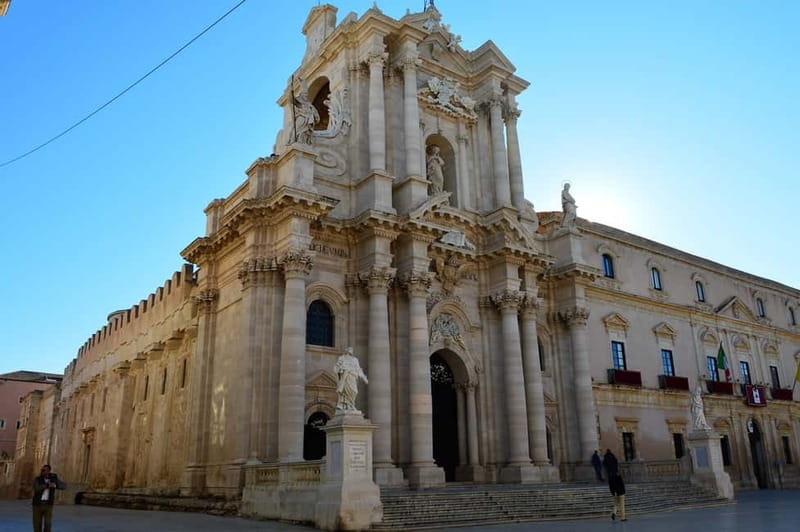
- The Cathedral contains a surprise: The church incorporates the ancient Temple of Athena, allowing you to see pagan and Christian architecture in one place.
- Private guiding changes the pace: You can ask questions, pause for photos, and adjust the discussion more easily than on a large group tour.
- The Greek Theater brings the best view: From its seating area, you can look toward the Ionian Sea while learning about ancient performance and civic life.
- Tickets are not included: Plan separately for admission to the archaeological park. One participant reported a fee of €13 per person, but confirm the current price.
- Wear practical gear: Comfortable shoes, a hat, and water matter on a three-hour walk through exposed archaeological areas and old streets.
Why this Syracuse pairing works so well
Syracuse is easier to understand when you see its ancient center and its later urban heart together. The Neapolis Archaeological Park presents the city as a major Greek power, while Ortigia shows how the same place continued to change under Roman, Arab, Spanish, and later influences.
I like this structure because it avoids a common sightseeing problem: looking at an isolated ruin without understanding the city around it. The Temple of Athena and Cathedral provide a direct link between religious traditions. The Greek Theater and Roman Amphitheater show how public life changed over time. Ortigia then gives you narrow lanes, old stonework, and a sense of Syracuse as a place where people still live rather than a museum set aside for visitors.
The tour is private for your group, with a maximum of five people at the advertised price. That is a useful size for a walking tour. You can hear the guide more clearly, ask about details that catch your eye, and avoid losing the guide in a crowd. The supplied headset is another practical touch, especially around open archaeological spaces where voices can carry unevenly.
More Walking Tours in Sicily:
- Walking Tour and street food Tour Palermo / History and Food
★ 5.0 · 379 reviews - Palermo Walking Food Tour with Secret Food Tours
★ 5.0 · 304 reviews - Syracuse: Street Food Walking Tour in Ortigia with Tastings
★ 4.9 · 293 reviews
Starting at Neapolis Archaeological Park
The listed meeting point is the Biglietteria Parco Archeologico Neapolis on Via Luigi Bernabò Brea. Your guide meets you at the ticket office holding a sign with the local partner’s name. The activity also lists the Temple of Apollo as another possible starting location, so check your confirmed meeting instructions carefully.
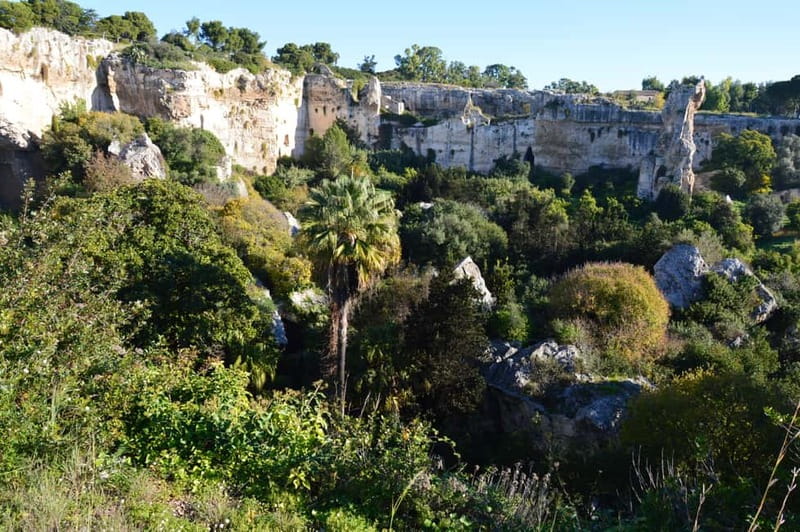
Starting at Neapolis puts the largest ancient remains first. This is the section where you will see the Greek Theater, Roman Amphitheater, Paradise Latomia, and Ear of Dionysos. These sites are spread through an archaeological setting rather than arranged as one compact building, so comfortable shoes are not optional decoration. You will be on your feet, and parts of the route may feel exposed to sun.
Entrance fees are not part of the tour price. You also do not receive hotel pickup or drop-off, food, or drinks. The guide handles the interpretation, but you handle the practical extras. Bring water from the start, since the activity specifically advises it.
The park is where a strong guide earns the fee. Ancient Syracuse can look like a series of impressive but disconnected structures. A guide can explain how architecture reflected religious practice, public entertainment, civic power, and military ambition. Giuseppe, Anna, Marcelo, and the other named guides are repeatedly praised for making these subjects accessible, including for teenagers and children.
The Greek Theater and its Ionian Sea view
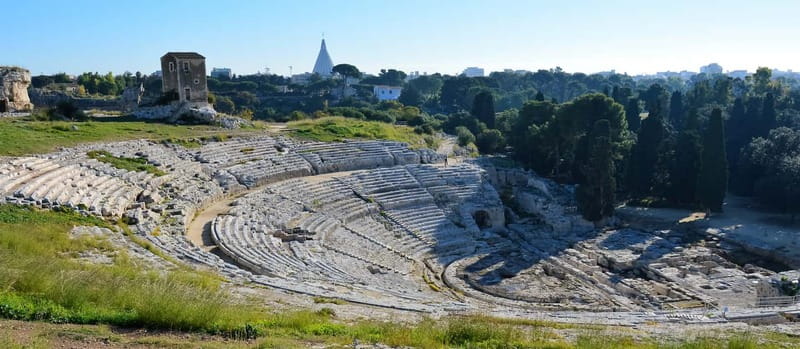
The Greek Theater is one of the tour’s major stops. Its scale helps you understand that ancient Syracuse was not a minor outpost. This was a city capable of supporting large public performances and gatherings, with architecture designed around sightlines and sound.
Your guide discusses the theater in its wider Greek setting rather than treating it as a photo stop alone. That context matters. You get a better sense of why theaters occupied such an important place in ancient civic life and how religious and public events could overlap.
The view toward the Ionian Sea adds a welcome change of pace. After listening to explanations about stone, power, and performance, you can look outward and see the setting that helped make Syracuse such an important Mediterranean city. Bring your camera, but do not let the view rush you. This is one of the places where a private tour allows time for questions and photos.
The tradeoff is that a three-hour tour must keep moving. The total time includes more than one major area, so you will not have unlimited time at every monument. If you want a long, slow archaeological study session, you may prefer a dedicated park visit. If you want the main story and the essential sights, the pace should suit you better.
Paradise Latomia and the Ear of Dionysos
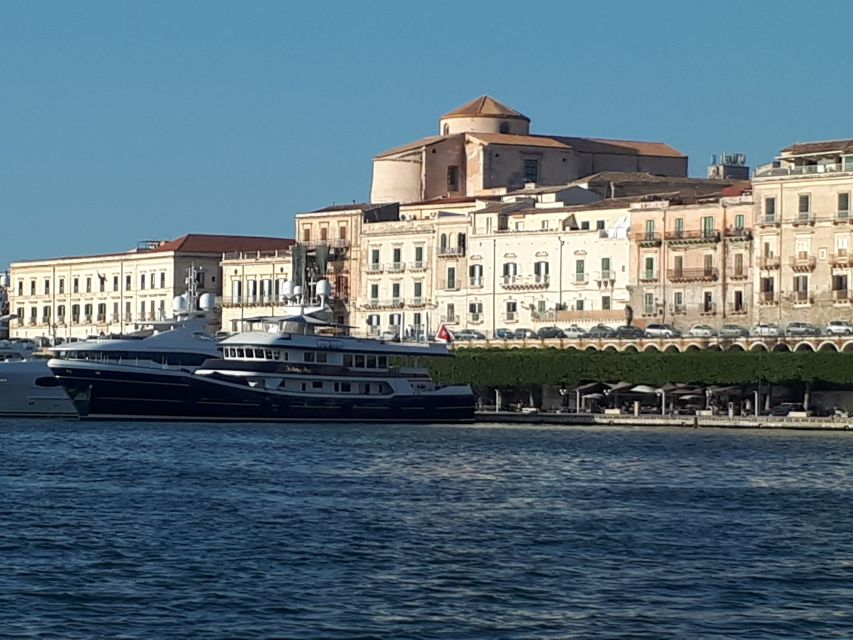
The Paradise Latomia is another important part of the archaeological park. A latomia is a stone quarry, and this setting helps show how ancient Syracuse used the land itself for building and, in later periods, confinement. The name Paradise may sound cheerful, but the site carries a more serious historical weight.
The Ear of Dionysos is one of the park’s most memorable features. Its shape and acoustic reputation make it easy to remember, but the value of seeing it with a guide is the explanation behind the name and the stories connected with the space. I would pay attention here rather than treating it as a quick stop for a clever photograph.
These sites also show why the headset is useful. A guide may speak while you are moving through a large open area, and the headset helps you keep the thread of the story without standing shoulder to shoulder. It is a small inclusion, but it improves the experience.
The park is wheelchair accessible according to the activity details, though any visitor with specific mobility needs should confirm the exact route and current conditions before booking. The supplied information does not give a detailed surface-by-surface accessibility plan.
A few more Sicily bookings to compare
- From Trapani: Cruise to Favignana and Levanzo with lunch
★ 4.2 · 2,286 reviews - From Milazzo: Panarea and Stromboli Boat Trip by Night
★ 4.2 · 1,605 reviews - Agrigento: Valley of the Temples Skip-the-Line Sunset Tour
★ 4.5 · 1,512 reviews - From Trapani: Day Cruise to Favignana & Levanzo with Lunch
★ 4.3 · 1,483 reviews
Temple of Athena and Syracuse Cathedral
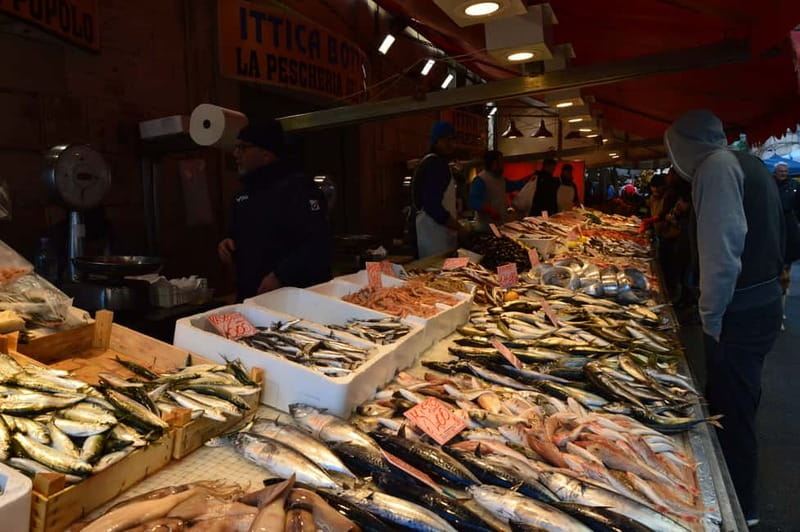
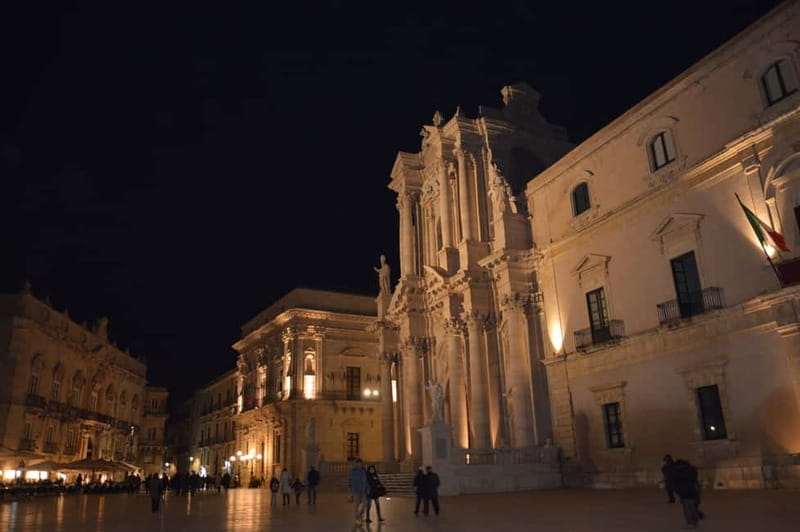
The Temple of Athena and Cathedral of Syracuse form the tour’s strongest historical connection. The Cathedral incorporates the ancient pagan temple, so you are not merely looking at two separate monuments from different periods. You are seeing one building shaped by changing religious beliefs and architectural needs.
The Cathedral’s lime-white exterior and central position in Ortigia make it one of the city’s essential sights. Inside and around the structure, your guide explains its different architectural styles and points out how earlier elements were absorbed into the Christian building.
This is exactly the kind of stop that benefits from an expert guide. Without help, you might admire the facade and move on. With the right explanation, the building becomes a record of Syracuse’s changing identity. Greek foundations, Christian worship, and later architectural changes all meet in one place.
The Temple of Athena is listed as a guided visit and photo stop lasting about 30 minutes. That gives you enough time for a focused explanation, though not an exhaustive architectural study. If religious history interests you, this may become the most rewarding part of the tour.
Walking through Ortigia’s old streets
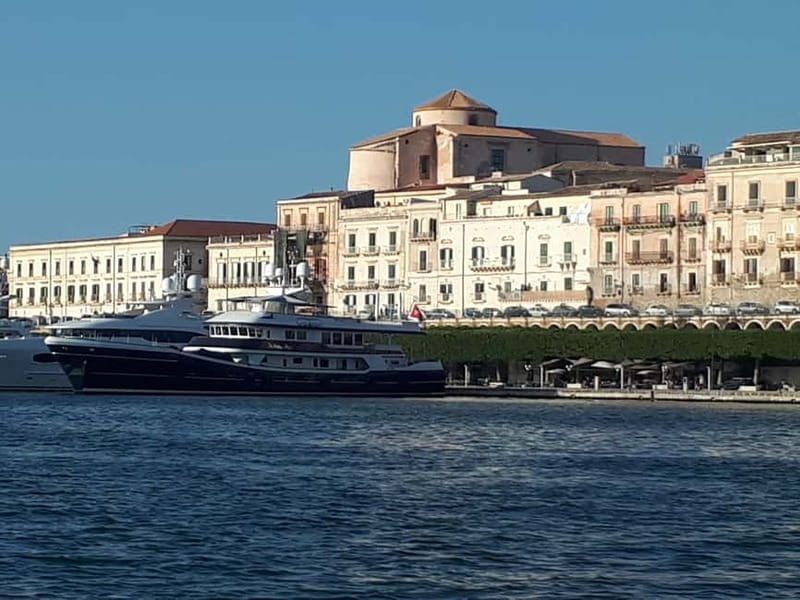
Ortigia is a gorgeous, lime-white island linked to Syracuse’s wider urban area. Its old streets are described as labyrinthine, and that is part of the appeal. You are not simply walking from one isolated monument to another. You are following a route through a historic district where the street pattern itself becomes part of the lesson.
The guide helps you connect the visible details to the city’s long past. Greek origins are only the beginning. The island also carries traces of Roman, Arab, and Spanish rule, and the city’s continuing Greek identity remains an important part of the story.
I would expect Ortigia to feel less structured than the archaeological park. At Neapolis, you move among named sites with clear boundaries. In Ortigia, the interest comes from the combination of architecture, lanes, churches, and urban layers. This makes the guide’s local knowledge particularly useful because the story is not always marked by a sign.
Several guides receive praise for warmth as well as factual skill. Giuseppe is described as energetic and especially good with stories and legends. Anna is praised for a smooth pace, strong knowledge of Sicilian art and architecture, and patience with children. Marcelo reportedly extended a private visit beyond the scheduled three hours, though you should treat that as an individual experience rather than something guaranteed.
A private group for families and curious adults
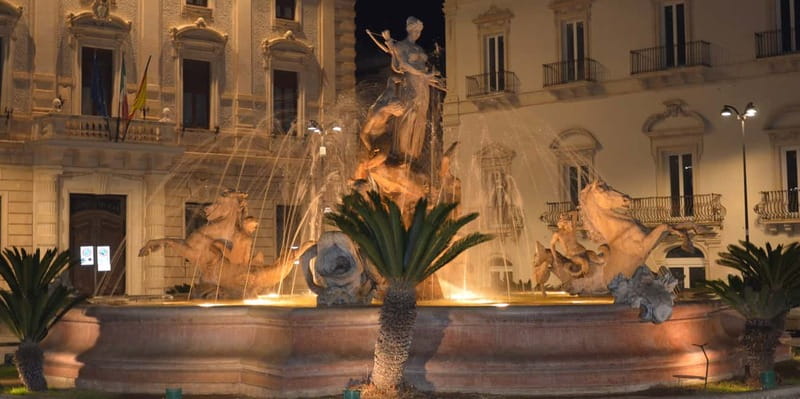
The private format is the tour’s clearest practical advantage. At the maximum advertised group size, the price works out to about $63.44 per person for five people, before entrance fees. For four people, it is about $79.30 each. For a couple, the same fixed group price becomes much harder to justify.
I would book this for a family, two couples, or a small group that wants one guide for the day’s main sights. A private guide is also useful if your group has mixed interests. One person can ask about architecture, another about Greek mythology, and a teenager can ask for the more dramatic stories without holding up a busload of strangers.
The guides appear comfortable with children of all ages. One named guide, Anna, was praised for patience when a family arrived late because of traffic, and another account describes teenagers enjoying Giuseppe’s colorful, interactive storytelling. That suggests the tour can work well for families, provided you prepare children for several hours of walking.
Older visitors can also benefit from the private arrangement. One participant specifically noted that Giuseppe adjusted for four older adults who walked more slowly. Still, the tour remains a walking experience, so you should discuss pace and mobility needs with the provider in advance.
Timing, transfers, and the extra costs
The advertised duration is three hours, with starting times available according to the date you choose. The published meeting information says the activity ends back at the meeting point, while the itinerary also gives Ortigia and Neapolis as possible drop-off locations. One account describes a short taxi ride from the archaeological park to Ortigia during a longer private tour.
Because these details can vary, confirm the exact route, end point, and any transfer arrangements before you set your day around it. Pickup and drop-off are not included, and food and drinks are not included. If a taxi is used between the park and Ortigia, budget for it separately unless the provider confirms otherwise.
The tour price is not cheap, but value depends on your group size. Five people sharing a private guide can get a strong deal for personal attention. Two people pay much more per head, and you still need to add monument admissions. The value is strongest if you care about historical explanation and want to ask plenty of questions, not if you only want quick photographs.
A useful benefit is free cancellation up to 24 hours before the tour for a full refund, along with the option to reserve and pay later. That helps if your Sicily schedule is still shifting. The tour is offered in English, French, Italian, Russian, Spanish, and German.
What I would bring and how I would pace it
I would wear shoes with solid support and bring a hat and a full bottle of water. The park’s open spaces, old surfaces, and three-hour duration make light clothing and sun protection sensible.
I would also leave a little breathing room around the booking. A guide may spend more time on a subject that interests your group, and weather can affect the pace. One tour continued through a sudden rainstorm in Ortigia, with the guide keeping the explanation going, but rain protection is still a good idea.
Take advantage of the private format by telling the guide what matters to you at the beginning. If you care most about Greek architecture, ask for more detail at the theater and Temple of Athena. If you are traveling with children, ask for stories and legends. If you have already visited major Greek sites elsewhere in Sicily, ask the guide to focus on what makes Syracuse different.
Should you book this Syracuse tour?
I would book it if you want one well-organized introduction to both Neapolis and Ortigia, especially with a group of four or five. The strongest features are the private guide, clear connection between pagan and Christian Syracuse, and the chance to ask questions throughout the walk.
I would skip it if your main goal is independent wandering, low-cost sightseeing, or a long archaeological study of one site. The entrance fees are extra, transportation is not included, and the fixed price is less attractive for one or two people.
For most small groups, this is a smart way to understand Syracuse quickly without reducing it to a checklist. Choose your guide language, confirm the meeting and end points, bring water, and reserve enough time to enjoy the Greek Theater view and Ortigia’s old streets at a human pace.
FAQ
How long is the Syracuse Ortigia and Neapolis tour?
The tour lasts three hours. Starting times depend on availability for your selected date.
Where does the tour begin?
The primary meeting point is the Biglietteria Parco Archeologico Neapolis on Via Luigi Bernabò Brea in Syracuse. The guide meets you there with a sign showing the local partner’s name. The Temple of Apollo is also listed as a possible starting location, so confirm your meeting instructions.
Is the tour private?
Yes. It is a private group activity, with the advertised price covering up to five people.
Are monument entrance fees included?
No. Admission fees are separate from the tour price. One participant reported paying €13 per person for the archaeological park, but you should confirm the current fee.
Does the tour include hotel pickup or drop-off?
No. Pickup and drop-off are not included. The published information lists Ortigia and Neapolis as possible end locations, so confirm the final arrangement before booking.
Which languages are available?
The live guide can conduct the tour in English, French, Italian, Russian, Spanish, or German.
Is the tour suitable for children and wheelchair users?
Children of all ages can join, and the guide will involve both parents and children. The activity is listed as wheelchair accessible, but you should confirm the exact route if your group has specific mobility requirements.
Recently added around Sicily
- Quad Tour Excursion from the Castle to the Sea★ 5.0 · 194 reviews
- Stromboli: sunset trekking to Sciara del Fuoco – Ashàra★ 4.5 · 270 reviews
- Syracuse: Ortigia Private Walking Tour★ 4.8 · 181 reviews
- Syracuse: Coast and Sea Caves Full Transparent Boat Tour★ 4.8 · 330 reviews
- Syracuse: Ortigia Island and Sea Caves Boat Tour with Drinks★ 4.6 · 337 reviews
- Syracuse: Ortigia Sunset Cruise with Aperitif★ 4.8 · 291 reviews
- Syracuse: Neapolis Archaeological Park Small Group Tour★ 4.7 · 350 reviews
- Syracuse: Boat Tour with Captain Mirko, Snorkeling & Caves★ 4.7 · 746 reviews
Walking Tours, compared.
Guided Walking Tour & Last Supper Visit with Ticket
Read our review →
Rialto Bridge & Offbeat Unusual Venice Walking Tour
Read our review →
Private 3 hrs Venice Tour: St Mark’s, Walking tour & Boat tour
Read our review →
Skip the line: Uffizi and Accademia Small Group Walking Tour
Read our review →Browse the lists this tour appears in