

Reviewed · AUDIO TOURS
Rome: Navona Square Underground Ticket with Audio Guide
Rome has another story below the pavement. Beneath Piazza Navona, you can explore the Stadium of Domitian, the first and only stadium in Ancient Rome built entirely from masonry. I like the clever location, since you can connect the ruins directly with the famous piazza above, and I like the clear audio and visual material that helps rebuild a site now reduced to foundations and fragments. The main drawback is size: the archaeological area is smaller than many first-time visitors expect.
This is a self-guided visit, not a walking tour led by a person. You receive an audio guide in Spanish, English, French, German, Italian, Russian, or Portuguese, then move through the underground remains at your own pace. At about $18 per person, it is a fair buy for anyone interested in Roman history, though I would place it below the Colosseum and Pantheon on a first visit to Rome.
In This Review
- Key points to know before you go
- What lies beneath Piazza Navona
- Following the route underground
- Seeing the stadium through stone and brick
- Using the audio guide and visual displays
- How the ancient stadium became Piazza Navona
- What the visit feels like in practice
- The optional cocktail or wine tasting
- Is $18 a fair price?
- Who should book this experience?
- Practical tips for a smoother visit
- Should you book the Stadium of Domitian?
- FAQ
- Where is the Stadium of Domitian entrance?
- How far underground is the archaeological site?
- How long does the visit take?
- Is this a guided tour?
- Which languages are available for the audio guide?
- What does the ticket include?
- Is the aperitif included?
- Is there a wine tasting option?
- Is the site wheelchair accessible?
Key points to know before you go
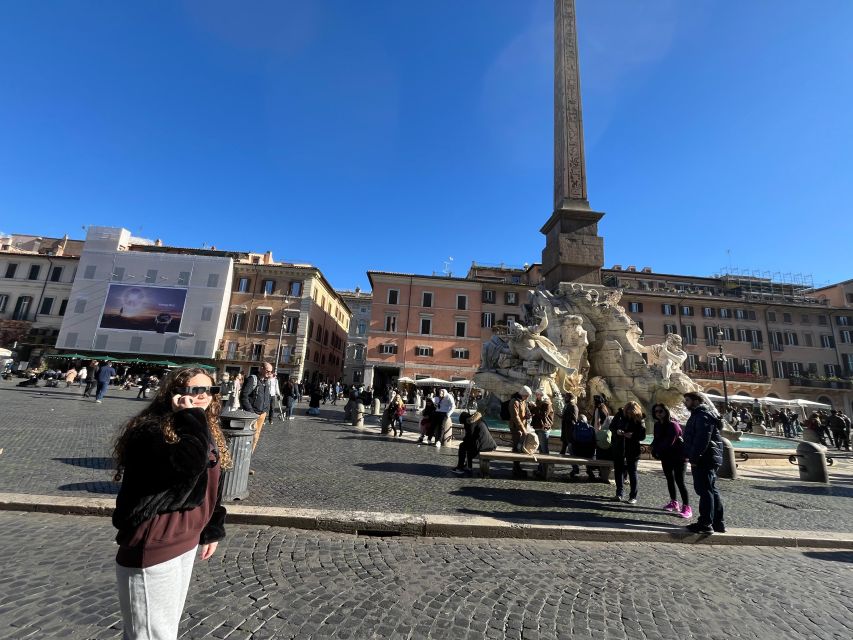
- Five meters below Piazza Navona: See the ancient structure beneath one of central Rome’s most famous public squares.
- A stadium for up to 30,000 people: Learn how spectators were arranged and how Roman sports worked.
- Audio and visual displays: Use numbered stations, photographs, video, and 3D reconstructions to picture the original building.
- A compact visit: Most people should allow about 45 minutes to one hour, depending on how closely you follow the audio.
- Optional drinks afterward: Some ticket choices include one cocktail with snacks, or two wines paired with a traditional appetizer board.
- Easy central location: Redeem your voucher at the tourist point in front of the main fountain at Piazza Navona, 25.
What lies beneath Piazza Navona
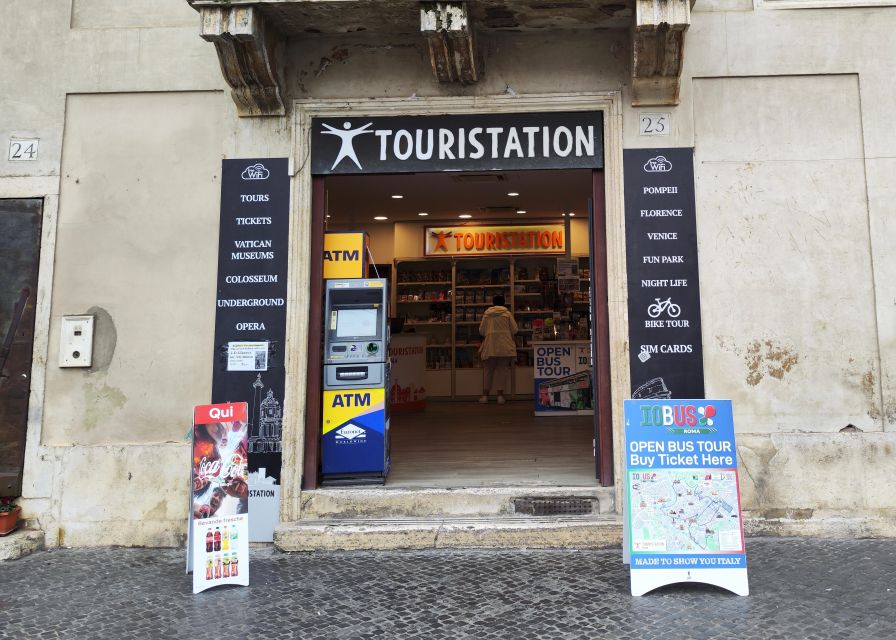
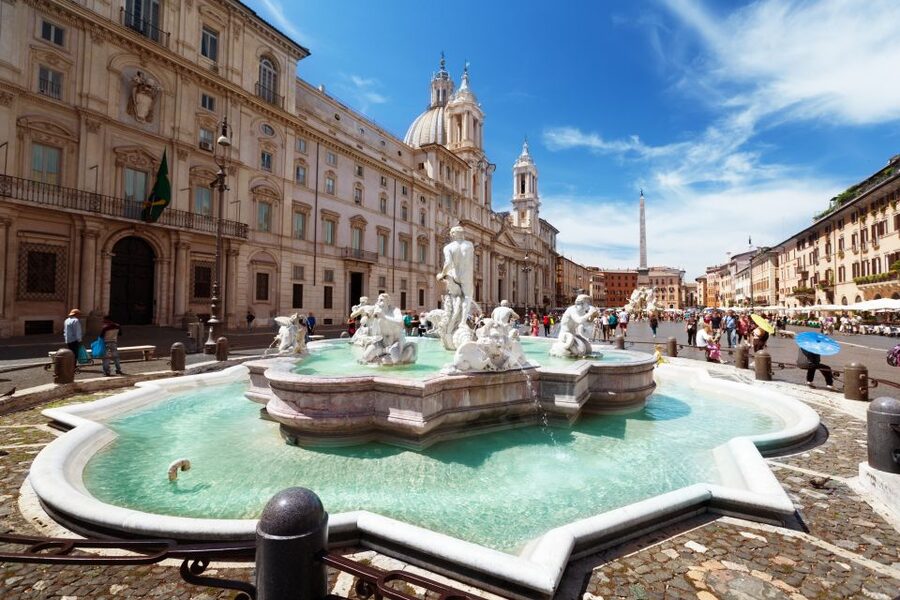
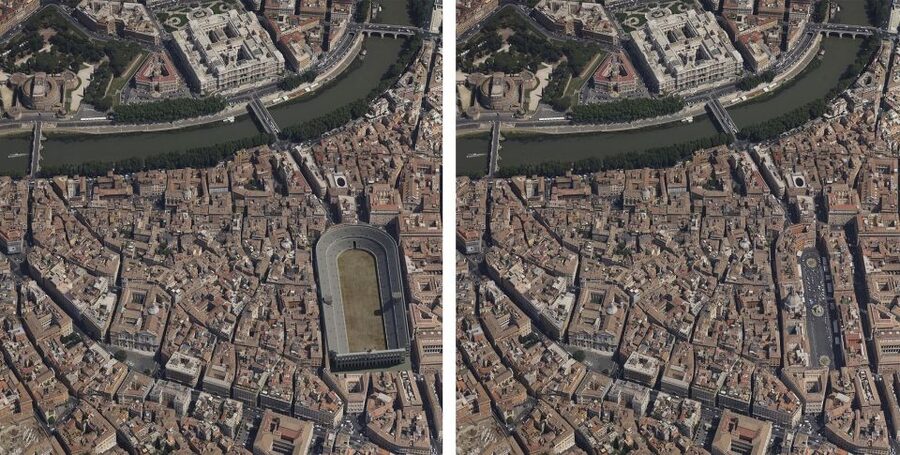
Piazza Navona looks like a grand Baroque square, with fountains, churches, restaurants, and open space for people to wander. Its older identity is less obvious. The piazza follows the shape of the ancient Stadium of Domitian, and the archaeological site sits roughly five meters below today’s street level.
That change in level gives the visit its basic appeal. You are not simply looking at isolated stones in a museum case. You are standing among the surviving remains of a large Roman sports venue while the modern square continues above you.
The stadium was built from masonry and could hold up to 30,000 spectators. The audio guide explains how the crowd was divided around the arena and how ancient Roman sports fitted into public life and imperial rule.
This context matters. The site is not the Colosseum, and it was not designed for the same type of spectacles. The focus here is a stadium used for athletic contests and public events. The visit gives you a more rounded picture of Roman entertainment, beyond the familiar image of gladiators.
A few more Rome bookings to compare
- Vatican: Museums & Sistine Chapel Entrance Ticket
★ 4.5 · 144,003 reviews - Vatican Museums & Sistine Chapel Tour with Optional Basilica
★ 4.3 · 67,413 reviews - Colosseum, Roman Forum & Palatine Guided Tour
★ 4.7 · 63,148 reviews
Following the route underground
You begin by redeeming your voucher at the tourist point in front of the main fountain at Piazza Navona, 25. Pay attention to the exact instructions when you arrive. Some visitors have found the ticket process a little confusing because a phone voucher may need to be exchanged for a printed ticket at a nearby ticket office before you return to the entrance.
That extra step can add five to ten minutes. Staff members are described as patient and helpful, but I would arrive with a little spare time rather than plan to walk straight from the fountain into the ruins.
Once inside, the route is compact. You can move from the entrance remains to displays explaining the stadium’s construction and its later development beneath the piazza. This is a good visit for people who prefer not to commit to a long guided tour.
The site is clearly marked, and the numbered points give you a sequence to follow. The numbering is not always perfectly intuitive, so listen carefully and match each audio section to the nearby display. A few people have found that the sound and images do not always line up exactly, but the material remains useful when you take your time.
Allow 45 minutes for a brisk but complete visit. An hour is more comfortable if you listen to every audio section, stop at the panels, and study the models and images.
Seeing the stadium through stone and brick
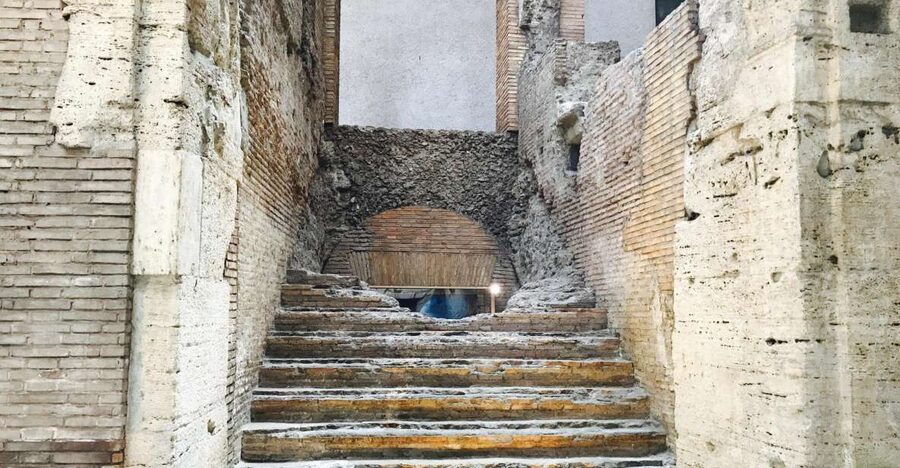
The most valuable part of the visit is the surviving construction. You can examine travertine blocks, brickwork, and marble columns linked to the main entrances. These details show how the stadium was assembled, rather than leaving you with only a broad outline of its shape.
The audio guide helps explain what you are seeing. Without it, some of the walls may look like an attractive but confusing collection of ancient masonry. With the commentary, the fragments become parts of entrances, seating areas, and the arena’s wider design.
You also learn how spectators were organized. A capacity of up to 30,000 people required careful movement and separation, and the information about seating divisions makes the stadium feel like a working public building rather than a silent ruin.
The remains do not fill a huge area. That is worth stressing because the word stadium may set up the wrong expectation. You will not spend half a day walking a massive structure, and you cannot see every feature that once existed above ground. The reward comes from the quality of the explanation and the connection to the piazza overhead.
Using the audio guide and visual displays

The audio guide is essential here. A self-guided visit without commentary would leave you guessing about the purpose of many walls and fragments. The available languages are English, Spanish, French, German, Italian, Russian, and Portuguese.
The material combines spoken explanations with informative panels, photographs, video, and 3D renderings. The visual displays are especially helpful because the ancient stadium is no longer complete. They show how the building may have looked in its original form and help you picture the scale of the seating and entrances.
A video presentation adds another layer to the visit. It gives you a visual account of the site’s development and helps link the ancient stadium to the modern Piazza Navona.
The audio is generally easy to follow, but you should not expect the exact experience of a private guide pointing to each wall at the right moment. The numbered stations can feel slightly mixed up, and some sections may not match the pictures with perfect precision. If that happens, pause, look around, and use the panels as a second reference.
Families may appreciate the child-friendly audio option. One five-year-old particularly enjoyed using the audio pen and map independently. The underground area is small enough that a parent can keep track of a child without having to cross a huge complex.
Still Rome, but a slower afternoon:
- Vatican Museums, Sistine Chapel & St Peter’s Basilica Guided Tour
★ 4.5 · 39,149 reviews - Rome: Colosseum, Palatine Hill and Roman Forum Guided Tour
★ 4.8 · 32,814 reviews - Rome: Guided Tour of Colosseum, Roman Forum & Palatine Hill
★ 4.7 · 27,897 reviews - Rome: Colosseum & Forum with Audio Guide App -Optional Arena
★ 4.2 · 24,770 reviews
How the ancient stadium became Piazza Navona
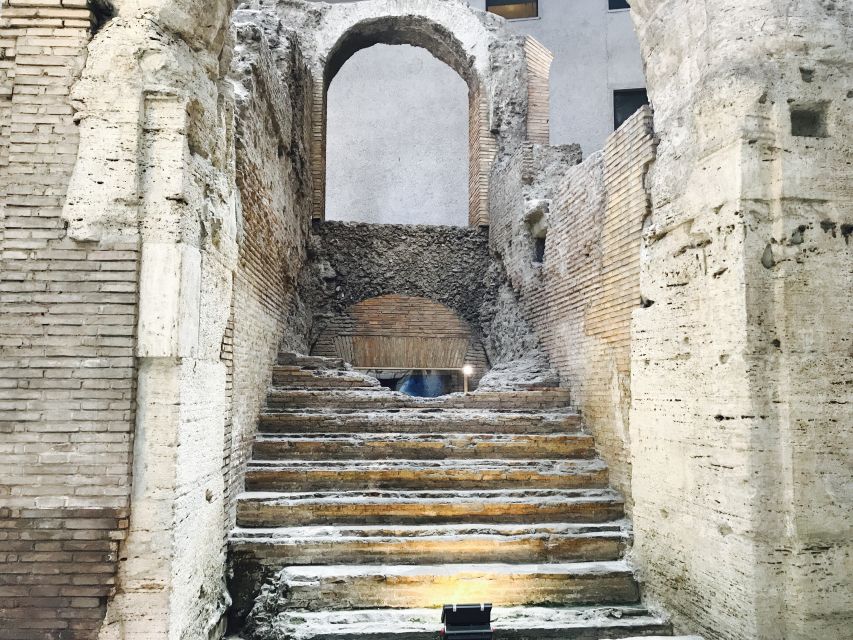
The visit does more than explain the original building. It also traces the development of the site into the piazza you see today.
That is one of the strongest reasons to visit before or after spending time above ground. The oval shape of Piazza Navona makes more sense once you know it follows the footprint of the former stadium. The modern square is not an unrelated space placed over Roman ruins. Its shape preserves the memory of the ancient venue.
The exhibition uses photographs and information panels, including material described as previously unpublished, to tell this longer story. You see how the stadium changed, disappeared from everyday view, and became part of the city beneath the pavement.
For me, this is the site’s best lesson: Rome often keeps its past in plain sight, but not always at eye level. You may have crossed Piazza Navona before without realizing that an ancient sports arena lies below.
What the visit feels like in practice
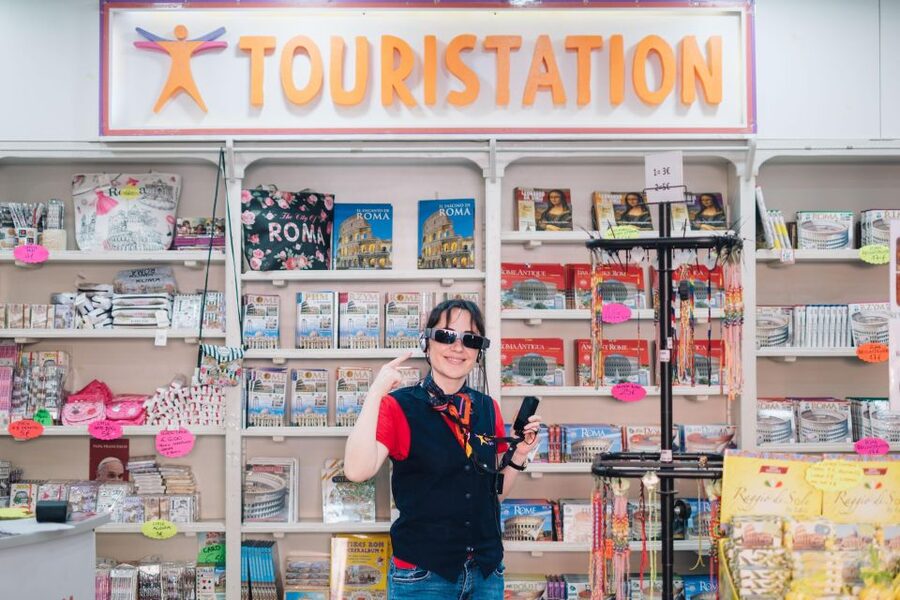
The archaeological area is clean and well maintained. Toilets and a gift shop are available, which makes the stop easy to fit into a day of sightseeing around central Rome.
Because the visit is self-guided, you are free to stay with a section that interests you or move on when the information becomes repetitive. There is no group pace to follow and no need to wait for a guide to gather everyone together.
The tradeoff is atmosphere. You may hear street sounds from above, especially near areas with a street-level viewing point. If you are hoping for a completely quiet underground setting, the modern city will remain present.
That is not necessarily a flaw. The noise reminds you how closely the ancient and modern city occupy the same space. Still, it can make it harder to hear the audio, so keep the volume comfortable and give yourself time at each station.
The site is wheelchair accessible. It is not especially pram friendly, so families with young children using a stroller should plan around that limitation.
The optional cocktail or wine tasting
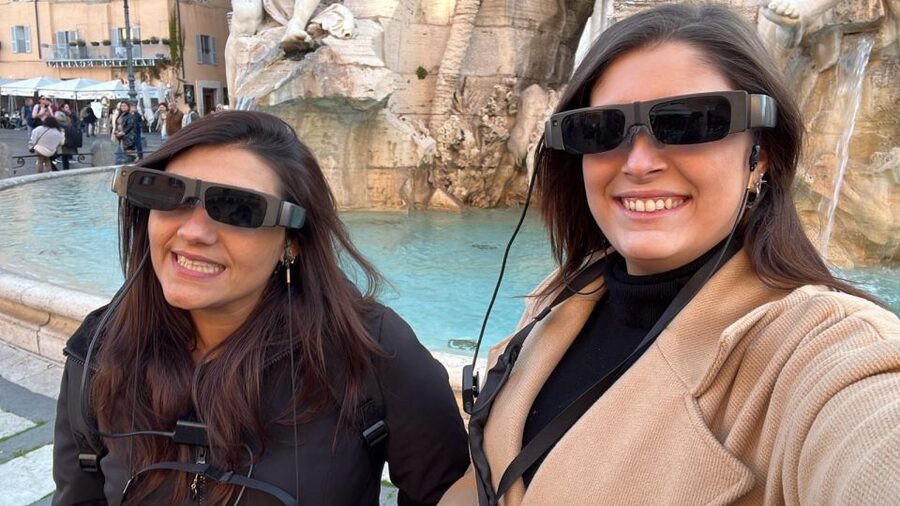
Some ticket choices include an aperitif, making the experience more than an archaeological stop. With the cocktail option, you receive one cocktail and snacks at a viewpoint in the heart of Rome. Staff reserve your table at the meeting point.
Another choice includes a tasting of two wines paired with a traditional appetizer board. This can work well after the underground visit, especially if you want to turn a short museum stop into a relaxed break.
Check the exact option before paying. The drink experience is not included with every ticket, and transportation is not included either.
I would choose the aperitif only if the added price fits your plans and you want a pause with refreshments. The ruins themselves are the main reason to book. The drinks add convenience and atmosphere, but they do not make the archaeological visit stronger.
Is $18 a fair price?
At $18 per person, the ticket offers reasonable value if you enjoy Roman archaeology and want a focused visit near the center of Rome. You receive entry, an audio guide, and access to the visual displays. The compact size also means you can fit it between larger sights without losing half a day.
The value is weaker if you are visiting Rome for the first time with a tight budget. The city offers so many major sights that the Colosseum, Roman Forum, Pantheon, and Vatican Museums may deserve priority, depending on your interests and ticket plans.
I would also compare the cost with your daily schedule. If you are already walking around Piazza Navona, the site is easy to add. You do not need transportation, and the visit lasts roughly an hour. That makes the admission easier to justify than a separate trip across town.
The strongest value comes from the interpretation. You are paying not only to see stones but also to understand the stadium’s purpose, construction, audience, and transformation into the present-day piazza.
Who should book this experience?
I would recommend it most strongly to:
- Anyone who has already seen Rome’s major monuments and wants a less obvious historical site.
- Visitors fascinated by Roman engineering, sports, and city planning.
- Families who want a shorter indoor activity with a child-friendly audio option.
- People staying near the historic center who can add the visit while exploring Piazza Navona.
- Independent sightseers who prefer audio commentary to a scheduled group tour.
I would be more cautious if you want a large, dramatic ruin or a long guided experience. The site is small, and some of the presentation can feel slightly empty or loosely arranged. The audio guide is informative, but it does not replace a live guide who can answer questions and direct your attention.
You should also know that the advertised selfie and photography appeal is modest. Piazza Navona itself provides the stronger city views and photo opportunities. Underground, the interest comes from the ancient walls, construction details, and the contrast between the ruined stadium and the modern square above.
Practical tips for a smoother visit
Redeem your voucher before heading to the entrance, and allow extra time in case you need to collect a printed ticket at another nearby location. This is the single most useful logistical tip.
Use the audio guide from the beginning. The remains are much easier to understand when you know what the walls and fragments represent.
Give yourself at least 45 minutes. If you rush, you can see the main area quickly, but you will miss much of the material about Roman sports and the development of Piazza Navona.
If you are visiting with a child, ask about the special children’s audio guide. The map and audio pen can make the experience more active for younger children.
Pair the site with time in Piazza Navona. Look at the square before entering, then return afterward. The ancient footprint is easier to appreciate once you have seen both levels.
Book with flexibility if your schedule may change. Cancellation is free up to 24 hours before the visit, and the reservation option allows you to pay later. The activity is valid for one day, with starting times based on availability.
Should you book the Stadium of Domitian?
Book it if you like history that explains the city beneath your feet. The Stadium of Domitian is compact, but its location, clear audio material, 3D reconstructions, and surviving masonry make it a worthwhile addition to a central Rome walking day.
Skip it if this is your first short visit and you have not yet seen Rome’s biggest monuments. The site will not match the scale of the Colosseum, and the underground route may take less than an hour.
For most people, I would call it a good secondary sight rather than an essential first stop. At $18, it earns its price through convenience and interpretation, especially for anyone who has already visited the headline attractions. Add the aperitif or wine tasting if you want a relaxed finish, but book the ruins for the history.
FAQ
Where is the Stadium of Domitian entrance?
Redeem your voucher at the tourist point in front of the main fountain at Piazza Navona, 25.
How far underground is the archaeological site?
The remains are located about five meters below street level.
How long does the visit take?
Most people spend about 45 minutes to one hour exploring the site and listening to the audio guide.
Is this a guided tour?
No. This is a self-guided visit with an audio guide. A live guide is not included.
Which languages are available for the audio guide?
The audio guide is available in Spanish, English, French, German, Italian, Russian, and Portuguese.
What does the ticket include?
The standard experience includes entry to the Stadium of Domitian underground archaeological site and the audio guide.
Is the aperitif included?
The aperitif is included only with the ticket option that specifically offers it. That option includes one cocktail and snacks.
Is there a wine tasting option?
Yes. The wine tasting option includes two wines paired with a traditional appetizer board.
Is the site wheelchair accessible?
Yes, the activity is wheelchair accessible. It is not considered pram friendly.
Recently added around Rome
- Palatine Hill and Roman Forum Tour with Fast-Track Entrance★ 4.2 · 417 reviews
- Tivoli: Villa D’Este & Villa Adriana Pass & App Audioguide★ 4.4 · 364 reviews
- From Rome: Villa D’Este & Villa Adriana Day Trip with Lunch★ 4.4 · 289 reviews
- Vatican Museums & Sistine Chapel Skip-the-Line Guided Tour★ 4.6 · 254 reviews
- Rome: The Three Tenors at St. Paul’s Church Concert Ticket★ 4.7 · 699 reviews
- Tivoli: Villa D’Este Entry Ticket and App Audio Guide★ 4.3 · 191 reviews
- Rome: Capitoline Museums and Centrale Montemartini Tickets★ 4.4 · 328 reviews
- Rome: St. Peter’s Basilica and Papal Tombs Guided Tour★ 4.6 · 477 reviews
Audio Tours, compared.
Colosseum & Forum with Audio Guide App -Optional Arena
Read our review →
Pantheon Fast-Track Ticket and Official Audio Guide
Read our review →
La Fenice Opera House Entry Ticket with Audio Guide
Read our review →
St. Peter’s Basilica & Dome Entry Ticket & Audio Tour
Read our review →
Cathedral & Brunelleschi’s Dome Ticket & Audio App
Read our review →
Michelangelo’s David Priority Ticket & Audio App
Read our review →
Uffizi Priority Ticket & Masterpieces Audio App
Read our review →Browse the lists this tour appears in