
Reviewed · WALKING TOURS
Rome: Moonlight Walking Tour – Free for Kids
Rome after dark has a different voice. This 2 to 2.5-hour evening walk links fountains, churches, ancient ruins, and the Colosseum when the heat and daytime crowds have eased. A local English or Spanish-speaking guide leads you from central Rome through a string of famous sights, with stories and photo stops along the way.
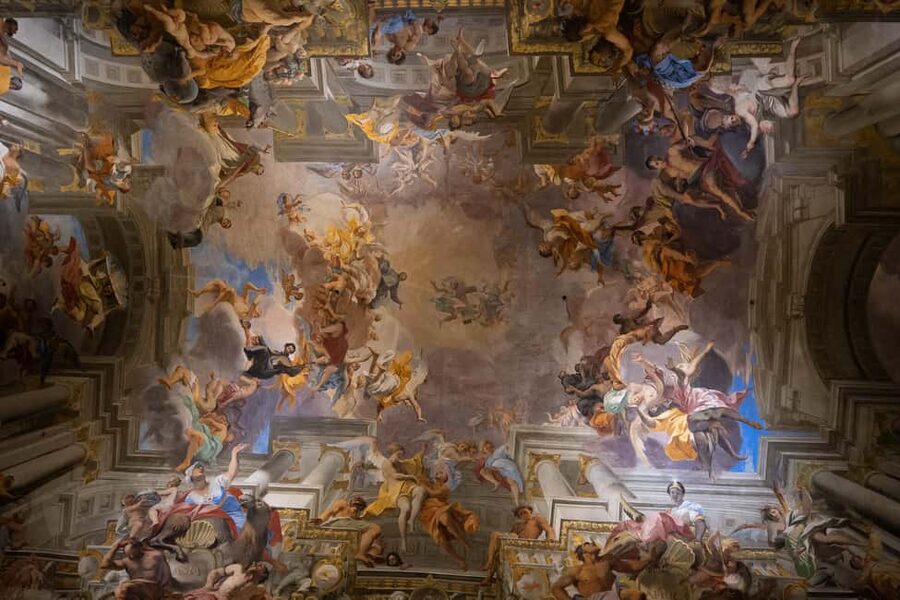
I like the route for two clear reasons: it gives you a fast, useful introduction to central Rome, and it includes a few details you could easily miss on your own, especially the painted false dome in Sant’Ignazio Church and the final view of the illuminated Colosseum. The main drawback is the walking pace and length. Some departures have lasted close to three hours, which can feel long after a full day on your feet.
I also like the small-group feel available on some departures, with one group reported at only six to eight people. Guides such as Aline, Sila, Dan, Sharon, Anna, Mary, and Csenge have been praised for their enthusiasm, clear explanations, and friendly way with children and teenagers. Still, the exact guide, meeting point, and final stop depend on the option you book.
In This Review
- Key things to know before booking
- Why Rome looks better after sunset
- Starting at Piazza Navona and Pasquino
- The Pantheon, with the Church of Sant’Ignazio close behind
- Galleria Sciarra and Rome’s quieter details
- Trevi Fountain and the famous coin toss
- Piazza Venezia and the enormous monument
- Trajan’s Column and the Imperial Forums
- The final Colosseum viewpoint
- Guides, group size, and the human side of the walk
- Who should book this Rome night walk?
- Should you book the Moonlight Walking Tour?
- FAQ
- How long does the Rome Moonlight Walking Tour last?
- How much does the tour cost?
- What languages are available?
- Where does the tour start?
- Where does the tour finish?
- Is the tour private?
- Can I cancel the booking?
Key things to know before booking
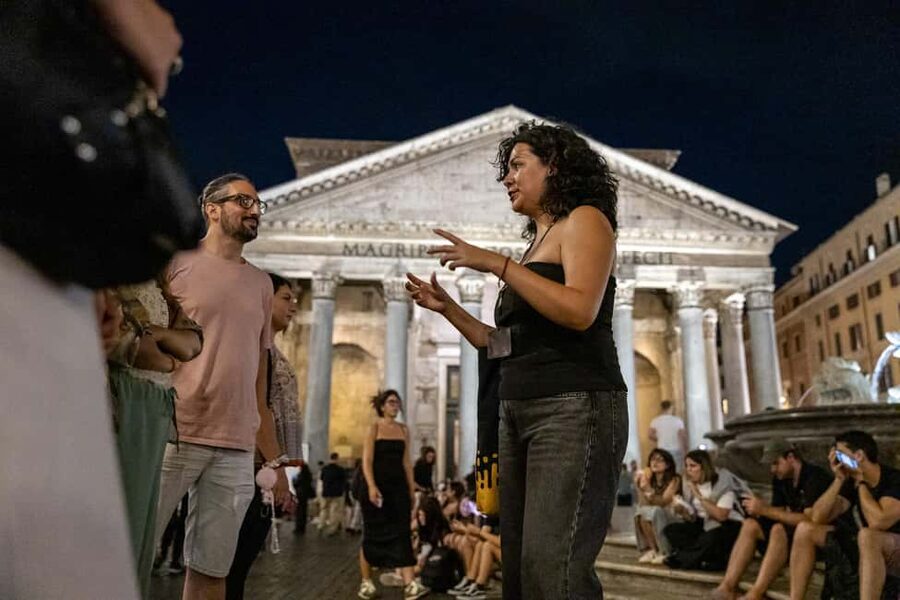
- Rome’s best night views arrive at the end: The walk finishes near a picture-perfect viewpoint overlooking the illuminated Colosseum.
- Sant’Ignazio is a real highlight: The church’s painted ceiling creates the illusion of a dome, an unexpected stop between the better-known monuments.
- The route covers a lot of ground: Piazza Navona, the Pantheon, Trevi Fountain, Piazza Venezia, Trajan’s Column, the Imperial Forums, and the Colosseum all appear in one evening.
- Guides shape the experience: Aline, Sila, Dan, Sharon, Anna, Mary, and others have been praised for lively storytelling and thoughtful answers.
- Kids are advertised as free: The tour title says free for kids, but no age limit is given, so check the booking conditions before you commit.
- Wear proper walking shoes: The route includes cobbled lanes and several hours of standing and walking, with food and drinks not included.
Why Rome looks better after sunset
Rome is not a quiet city by day. Coaches, delivery vans, tour groups, church bells, and summer heat can make even a short walk tiring. At night, the city often feels easier to read. Monument lighting draws your eye to columns, domes, statues, and arches, while the cooler air helps you pay attention.
This tour is not a nighttime entry tour. You do not go inside the Colosseum or Pantheon, and you should not expect long visits inside every church. Its value comes from moving through the city with someone who can connect the sights and explain what you are seeing.
That makes it a good first-night activity. You get your bearings quickly, learn where several major monuments sit, and collect ideas for places to return during daylight. One guide even helped a solo participant arrange a taxi at the end, which is a useful touch for anyone who feels unsure about navigating Rome late in the evening.
The advertised price is $28 per person. That is a fair rate if you want a live guide and a route that covers this much ground. It is less compelling if you prefer to stop often, take your time at each monument, or already know central Rome well. Kids are listed as free, but the qualifying age is not stated.
More Walking Tours in Rome
- Rome: Trastevere & Campo de Fiori Street Food Walking Tour
★ 4.9 · 2,768 reviews - Rome: Paranormal Night Walking Tour & Secret Backstreets
★ 4.9 · 1,921 reviews - Rome by Night Walking Tour – Legends & Criminal Stories
★ 4.5 · 1,003 reviews
Starting at Piazza Navona and Pasquino
The tour has two possible starting points: Piazza di Pasquino or Piazza d’Aracoeli. Your exact meeting point may vary with the option selected, so check the confirmation carefully rather than assuming you will begin at Piazza Navona.
The walk then reaches Piazza Navona, one of Rome’s grandest public spaces. Here, the guide explains the square and gives you time to look at Bernini’s Fountain of the Four Rivers. The fountain’s sculpted figures and tall central obelisk are especially effective under artificial light.
This is a strong opening because the square offers both art and city atmosphere. You are not simply ticking off a monument. You are beginning in a place where Rome’s grand civic design, fountains, churches, restaurants, and evening foot traffic all meet.
The guided portion here is listed at about 20 minutes. That is enough for an orientation and a few photographs, but not enough for every detail. If Piazza Navona matters greatly to you, return in daylight for a slower look.
The Pantheon, with the Church of Sant’Ignazio close behind
From Piazza Navona, the route passes the Pantheon. This is one of the most complete surviving ancient Roman buildings, and the guide explains the mystery surrounding its construction and continued survival. The stop is listed as a pass-by rather than a full interior visit, so set your expectations accordingly.
You will have a chance to see the exterior and take photographs, but this tour does not replace a daytime Pantheon visit. The building’s interior, especially its famous open roof, deserves more time than a passing stop can provide.
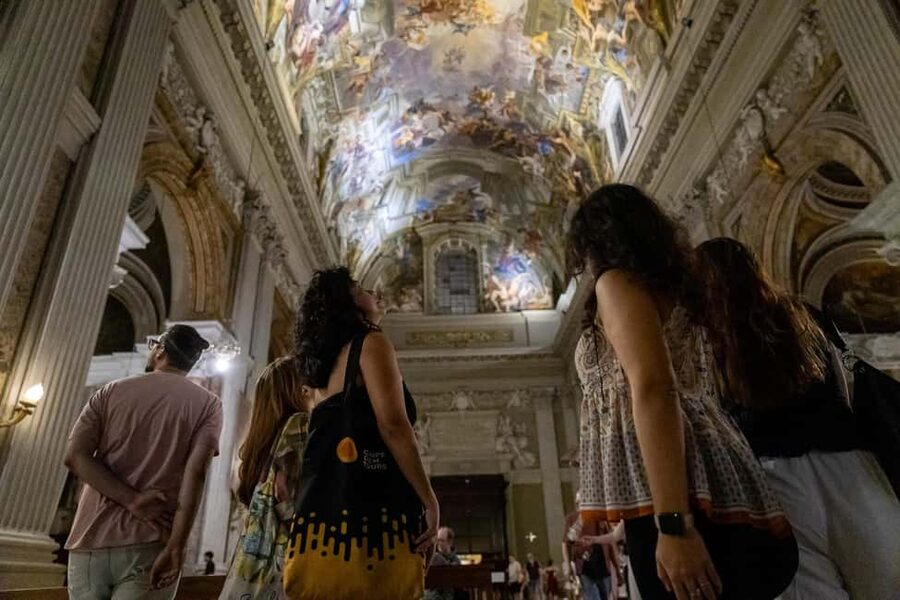
The next stop is the Church of Sant’Ignazio di Loyola, with about 30 minutes of guided attention. This is one of the most rewarding parts of the route because many people walk past without realizing what is overhead. The ceiling painting creates a false architectural dome through perspective and illusion.
Several guides have used this church to make art and architecture easy to understand. An art historian guide was especially praised for filling the evening with clear explanations, while other guides added side stories and answered questions without rushing. If your group includes teenagers, this is the kind of stop that can hold attention better than a long lecture about dates.
The church also gives your feet a short change of rhythm. After open squares and busy streets, you get a more focused look at a single interior. Remember that this is a guided visit, not an assurance of unlimited free time.
Galleria Sciarra and Rome’s quieter details
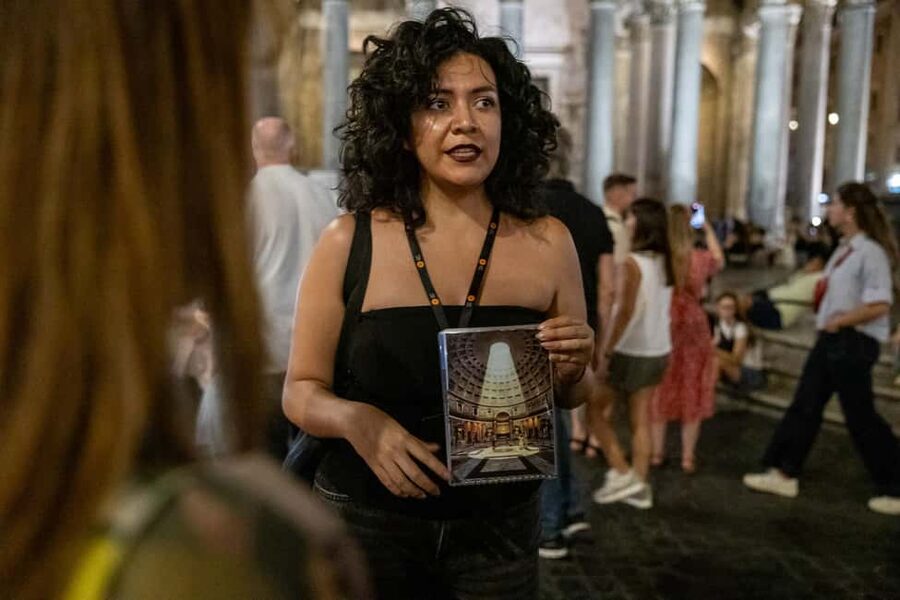
The walk continues to Galleria Sciarra, where the guide spends about 20 minutes. This is one of the route’s less obvious stops and helps balance the major sights. The gallery provides a chance to notice decorative details and architecture that do not carry the same crowds as the Pantheon or Trevi Fountain.
This part of the tour shows the benefit of having a local guide. Rome’s center is full of courtyards, passages, facades, and small architectural surprises. Without context, you may pass them as just another street. With a guide, you get a reason to pause.
The route also winds through romantic cobbled alleyways. That sounds appealing, and it is, but cobbles are not kind to flimsy footwear. Wear shoes you can walk in comfortably for at least two hours. The tour includes standing at fountains and squares, too, so comfort matters as much as style.
Still Rome, but a slower afternoon:
- Vatican: Museums & Sistine Chapel Entrance Ticket
★ 4.5 · 144,003 reviews - Vatican Museums & Sistine Chapel Tour with Optional Basilica
★ 4.3 · 67,413 reviews - Colosseum, Roman Forum & Palatine Guided Tour
★ 4.7 · 63,148 reviews - Vatican Museums, Sistine Chapel & St Peter’s Basilica Guided Tour
★ 4.5 · 39,149 reviews
Trevi Fountain and the famous coin toss
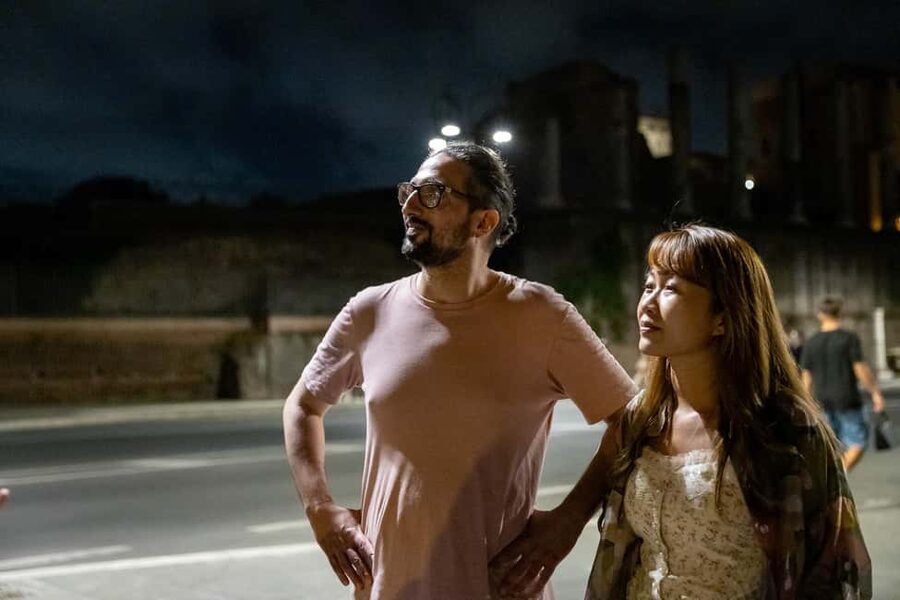
Trevi Fountain receives roughly 30 minutes of guided time. At night, its water and stonework are lit dramatically, making this one of the tour’s strongest photo stops. The guide explains the fountain’s history and the familiar coin-toss legend.
This is also where the practical side of an evening walk becomes clear. Fountains are noisy, and one participant found it harder to hear the guide while standing close to the water. Pay attention to where the guide positions the group, and move closer if you lose the thread of the explanation.
You may get a short pause here for photographs or a refreshment. Food and drinks are not included, so budget separately if you want gelato, coffee, or water. One family found a gelato stop after about two hours of walking especially welcome. That kind of break can make a difference, particularly in warm weather or with children.
Do not expect Trevi Fountain to be empty. Nighttime reduces the daytime pressure, but this is still one of Rome’s most popular spots. The benefit is the cooler air and the lighting, not complete solitude.
Piazza Venezia and the enormous monument
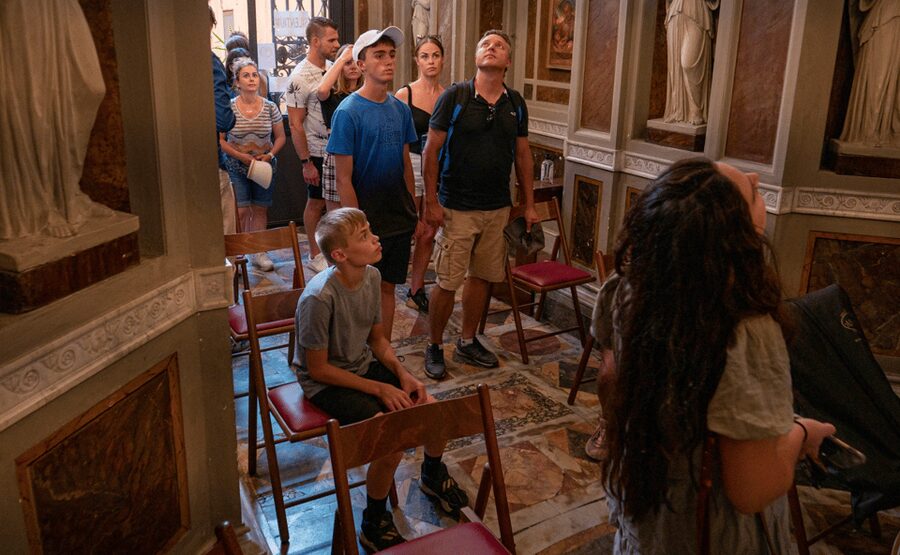
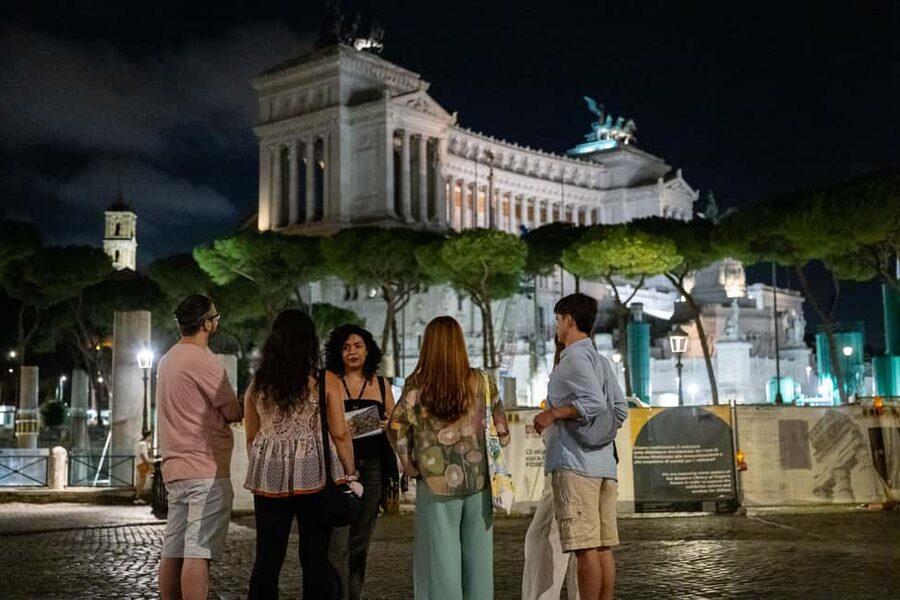
Next comes Piazza Venezia, where you see Rome’s huge white monument to Vittorio Emanuele II. The route describes it as the biggest building in Rome and explains its connection with the founder of unified Italy.
The scale can be startling. The monument is often called the wedding cake by people who dislike its size, but it is hard to ignore, and the lighting gives its broad stairways and columns a theatrical quality. Your guide helps place it in the story of modern Italy rather than leaving it as a giant white shape in the distance.
This stop is listed at about 20 minutes. That is enough to understand the setting and take pictures, though the surrounding traffic and open square can make it feel less intimate than Piazza Navona or the smaller church stop.
The route’s mix works well here. You move from ancient Roman architecture to Renaissance and Baroque Rome, then into the era of Italian unification. The evening becomes a quick lesson in how several different Romes overlap in the same few streets.
Trajan’s Column and the Imperial Forums
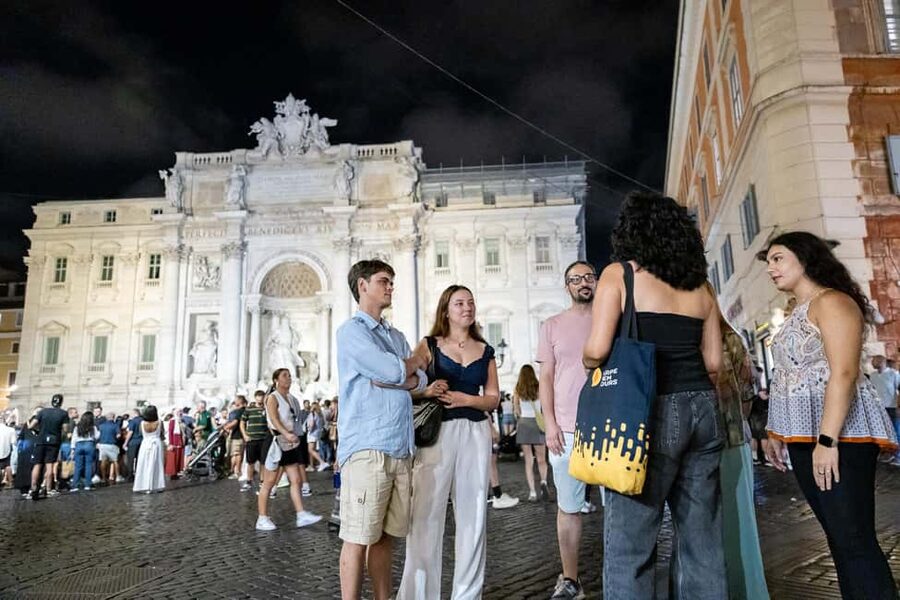
At Trajan’s Column, the guide explains the monument and its carved scenes. The column commemorates Emperor Trajan’s military victories, and its spiral relief is one of the most striking examples of Roman imperial storytelling.
You will not get a full archaeological-site visit here. Instead, the guide uses the column as a doorway into the Imperial Forums. From there, you walk along Via dei Fori Imperiali, taking in the illuminated statues, columns, temples, triumphal arches, and winding roads.
This section is strongest after dark. Lighting picks out individual ruins and gives the forums a clear visual shape. During the day, the same area can feel sprawling and hard to interpret. At night, the guide can direct your attention to the remains and explain how the pieces fit together.
The route lists about 20 minutes at Trajan’s Column and another 20 minutes passing along Via dei Fori Imperiali. That is enough for an introduction, not a full archaeological study. If ancient Rome is your main interest, plan a separate daytime visit to the Forum and Colosseum.
There is also a physical cost. By this point, you have crossed much of central Rome. Several people found the tour excellent value but longer than expected, with some walks reaching three hours. If your day already includes the Vatican Museums or a long Forum visit, book this for an evening when you can take it easy beforehand.
The final Colosseum viewpoint
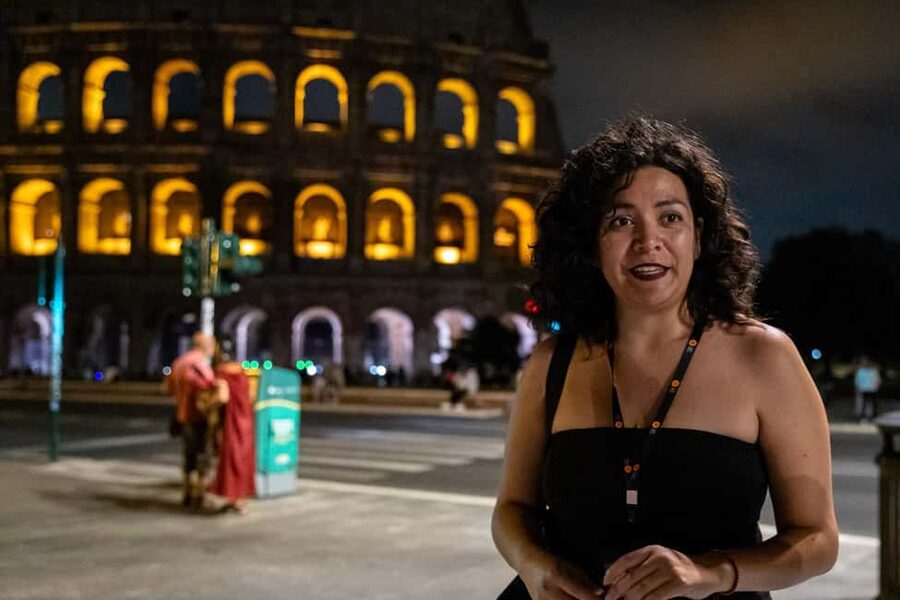
The tour saves its strongest image for last: a secret viewpoint overlooking the illuminated Colosseum. The exact location is not specified, which is part of its appeal. The guide positions the group for photographs and gives you a final view of Rome’s most famous ancient monument.
You do not enter the Colosseum on this experience. That distinction matters. This is a viewing and storytelling stop, not an archaeological or interior tour. Still, seeing the amphitheater lit at night after walking past the Imperial Forums creates a satisfying finish.
The activity can end at Piazza Navona or the Colosseum, depending on the option booked. Check this before making dinner plans or arranging a taxi. The advertised meeting details also say the activity may finish back at the meeting point, so confirm the specific departure and return information for your reservation.
Guides, group size, and the human side of the walk
The guide is the heart of this experience. The strongest guide reports praise clear English, passion for Rome, humor, and an ability to answer questions without losing the group. Aline was singled out for making the history feel personal, while Sila was praised for mixing useful facts with fun stories. Dan received praise for his energy and strong command of the city, though his walks sometimes ran long.
Sharon, Anna, Mary, Csenge, Paulina, Anastasia, and Dogus were also praised for friendly, engaging presentations. The exact quality can vary because the guide changes, but the repeated pattern is encouraging: the best guides do more than recite dates. They explain why a monument matters, add side anecdotes, and watch the group.
Spanish and English are available. A private group option is also offered, which may suit families or friends who want more control over the pace and questions. A regular group can be better value, especially when the group remains small, but you have less control over the walking speed.
The tour is advertised as free for kids. That could make it a sensible family choice, but because no age range is supplied, confirm the rule before booking. Several guide reports point to good rapport with children and teenagers, though the length still matters. Young legs may enjoy the fountains and illuminated ruins but struggle with the final stretch.
Who should book this Rome night walk?
I would choose this tour if you want a broad first look at central Rome rather than an in-depth visit to one monument. It is especially useful on your first evening, when you want help finding your way and a quick introduction to the city’s major sights.
It suits solo visitors who prefer company at night, families who want a guide to keep the evening organized, and anyone visiting during hot weather. It also works well for photographers because the route includes repeated stops beside illuminated fountains, churches, columns, and monuments.
I would think twice if you dislike long walks, need frequent sitting breaks, or want extended indoor visits. The Pantheon is passed rather than toured inside, and the Colosseum is viewed from outside. Ancient Rome fans should treat this as an introduction before booking a separate daytime archaeological visit.
Reserve up to 24 hours before the start for a full refund, and reserve now with payment later if you want to keep plans flexible. Those terms help if your Rome schedule is still shifting. Bring comfortable clothes and shoes, and check the starting point carefully.
Should you book the Moonlight Walking Tour?
Book it if you want Rome’s headline sights tied together by lively stories, good night views, and a few less obvious stops. The false dome at Sant’Ignazio, the illuminated Imperial Forums, and the final Colosseum viewpoint give the route more character than a simple monument checklist.
Skip it if your group cannot manage two to three hours of walking or if you expect monument entry. At $28 per person, the value is strongest when you make full use of the guide’s explanations and the broad route. With free places for eligible children, it can be an especially practical family option, but confirm the age policy before paying.
FAQ
How long does the Rome Moonlight Walking Tour last?
The stated duration is 2 to 2.5 hours, although some departures may run close to three hours. Check the available starting times and allow extra time if you have dinner or transport plans afterward.
How much does the tour cost?
The listed price is $28 per person. The experience is advertised as free for kids, but no qualifying age is provided, so check the booking details for the child policy.
What languages are available?
The live guide is available in English or Spanish.
Where does the tour start?
There are two possible starting locations: Piazza di Pasquino and Piazza d’Aracoeli. The exact meeting point may vary according to the option you book.
Where does the tour finish?
The listed ending options are Piazza Navona and the Colosseum. The specific final location depends on the selected option, so check your booking information.
Is the tour private?
A private group option is available. Other departures may use a shared group, with one reported group size of six to eight people.
Can I cancel the booking?
You can cancel up to 24 hours in advance for a full refund. A reserve-now, pay-later option is also available.
Recently added around Rome
- Palatine Hill and Roman Forum Tour with Fast-Track Entrance★ 4.2 · 417 reviews
- Tivoli: Villa D’Este & Villa Adriana Pass & App Audioguide★ 4.4 · 364 reviews
- From Rome: Villa D’Este & Villa Adriana Day Trip with Lunch★ 4.4 · 289 reviews
- Vatican Museums & Sistine Chapel Skip-the-Line Guided Tour★ 4.6 · 254 reviews
- Rome: The Three Tenors at St. Paul’s Church Concert Ticket★ 4.7 · 699 reviews
- Tivoli: Villa D’Este Entry Ticket and App Audio Guide★ 4.3 · 191 reviews
- Rome: Capitoline Museums and Centrale Montemartini Tickets★ 4.4 · 328 reviews
- Rome: St. Peter’s Basilica and Papal Tombs Guided Tour★ 4.6 · 477 reviews
Walking Tours, compared.
Guided Walking Tour & Last Supper Visit with Ticket
Read our review →
Rialto Bridge & Offbeat Unusual Venice Walking Tour
Read our review →
Private 3 hrs Venice Tour: St Mark’s, Walking tour & Boat tour
Read our review →
Skip the line: Uffizi and Accademia Small Group Walking Tour
Read our review →Browse the lists this tour appears in