

Reviewed · WALKING TOURS
Rome: Jewish Ghetto Walking Tour
Rome keeps its best stories in plain sight. This Jewish Ghetto walking tour links ancient ruins, Jewish history, lively squares, and Tiber Island in one thoughtful 2.5-hour walk. I like the way it places the neighborhood in a much wider Roman story, beginning at Trajan’s Column and reaching back more than 2,000 years. I also like the human details, from the Turtle Fountain’s tale of unrequited love to the wartime story of a hospital on Tiber Island.
The main consideration is that this is an outdoor walking tour, and the Great Synagogue is viewed from outside rather than visited inside. You’ll also need to arrive on time, since late arrivals cannot be accommodated. At $65 per person, the price is fair if you value a strong guide and historical context, but it is not the cheapest way to take a stroll through the neighborhood.
In This Review
- Key points to know
- Starting beneath Trajan’s Column
- Theater of Marcellus: Rome’s older stage
- The Turtle Fountain and a Roman love story
- Entering the Jewish Ghetto through its difficult past
- Portico d’Ottavia and ancient Rome in use
- Kosher gelato, with a practical pause
- The Great Synagogue and the limits of the route
- Crossing to Tiber Island
- Guide quality is the main value
- Timing, weather, and what to carry
- Who should book this Rome walking tour?
- Should you book it?
- FAQ
- How long is the Rome Jewish Ghetto walking tour?
- How much does the tour cost?
- What language is the tour conducted in?
- Where does the tour begin?
- Is kosher food included?
- Does the tour enter the Great Synagogue of Rome?
- What should I bring?
Key points to know

- A wide historical sweep: You move from Trajan’s Column and ancient Rome to the medieval and modern Jewish community.
- Theater of Marcellus comes early: This ancient structure predates the Colosseum and remains part of the city’s everyday streetscape.
- Kosher gelato is included: The tour pauses at a gelateria for homemade kosher gelato or coffee.
- Small groups can be a real advantage: Several departures have been especially intimate, including private walks when only one booking was made.
- The Great Synagogue is seen from outside: An interior visit is not part of the stated program.
- Comfortable shoes matter: The tour runs in sun, rain, and other weather, so dress for the day and bring water.
Starting beneath Trajan’s Column
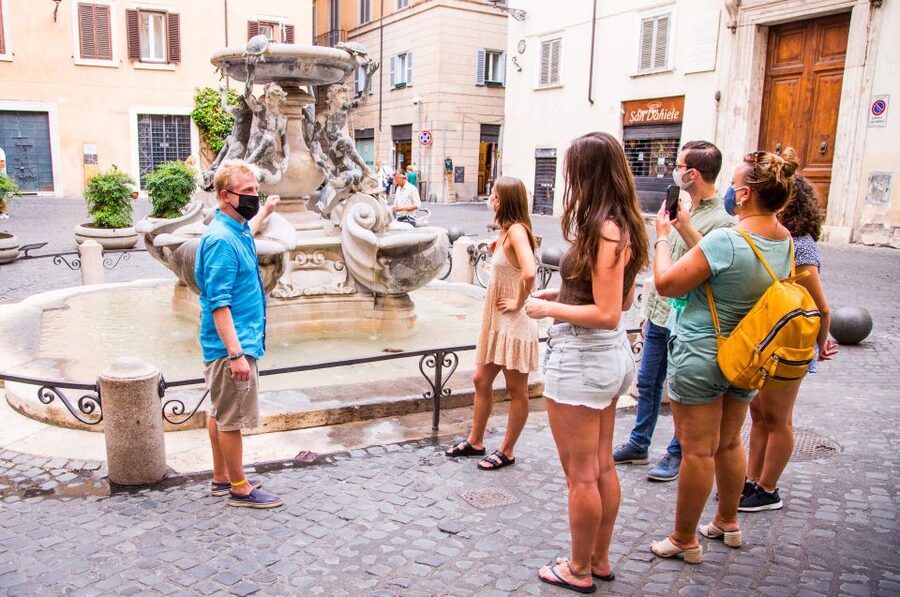
The tour begins at Trajan’s Column at Foro Traiano, 84. Look for the orange Roman Vacations sign. This is a sensible meeting point because it gives your guide room to introduce Rome before you enter the Jewish Ghetto.
Starting here also prevents the neighborhood from feeling like an isolated stop. Rome’s Jewish story is tied to the city’s emperors, republics, churches, bridges, markets, and political changes. A guide who handles this well can show you how those layers sit on top of one another, rather than treating the Ghetto as a single chapter.
That broader approach is one of the tour’s strongest features. Guides such as James, Angela, Tom, Daniel, and Maria have been praised for explaining Roman history in clear, manageable sections. Several people especially appreciated guides who could connect the ancient past with the Jewish community’s later experiences.
The tour is conducted in English with a live guide. The guide’s personality will shape the experience, but the consistently strong feedback points to a company that regularly pairs the walk with lively, well-prepared leaders. James is often singled out for turning history into a story, while Angela is praised for her energy, warmth, and command of the subject.
More Walking Tours in Rome
- Rome: Trastevere & Campo de Fiori Street Food Walking Tour
★ 4.9 · 2,768 reviews - Rome: Paranormal Night Walking Tour & Secret Backstreets
★ 4.9 · 1,921 reviews - Rome by Night Walking Tour – Legends & Criminal Stories
★ 4.5 · 1,003 reviews
Theater of Marcellus: Rome’s older stage
The first major stop is the Theater of Marcellus, where the guide spends about 20 minutes. Many people arrive in Rome focused on the Colosseum, so this is a useful correction: the Theater of Marcellus is older.
The remains are particularly interesting because they are not sealed away as a distant ruin. The ancient stone forms part of the modern city, showing how Rome repeatedly reused its old structures. You’ll look at the theater while hearing about the ancient city around it, then begin to see the Jewish Ghetto not simply as a neighborhood of later buildings but as a place shaped by Rome’s earliest urban growth.
This stop rewards a guide who can explain scale and change. Without context, ancient arches can blur together after a day of sightseeing. With a good explanation, you start to understand how public entertainment, civic power, and later construction all occupied the same patch of ground.
The 20-minute format is about right. You get enough time for an explanation and questions without standing in one place for too long. Bring a water bottle, especially in summer, since much of the walk takes place outdoors.
The Turtle Fountain and a Roman love story
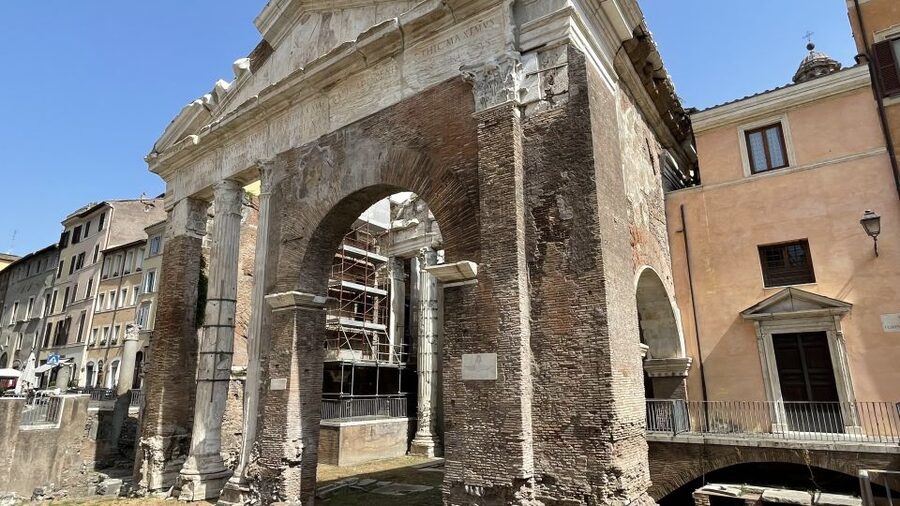
From the theater, the walk continues toward Piazza Mattei and the Fontana delle Tartarughe, or Turtle Fountain. The guide spends around 20 minutes here, which allows time to look closely at the fountain and hear the story of unrequited love connected with it.
This is the kind of small story that makes a walking tour work. Rome’s grand monuments can tell you about emperors and popes, but a fountain in a neighborhood square can carry a tale about ambition, romance, and social standing. The exact details matter less than the way the story gives the piazza a human scale.
Piazza Mattei also provides a change of mood. You are no longer looking only at huge ancient structures. The tour slows down around a public space where architecture, sculpture, and daily life meet. I like this rhythm: one major archaeological site, followed by a more intimate urban setting.
The guide’s storytelling style matters here. James has been praised for adding small anecdotes, while other guides have been appreciated for using humor and clear explanations. If your guide invites questions, this is a good place to ask how the fountain fits into the wider neighborhood.
Entering the Jewish Ghetto through its difficult past
The central portion of the tour takes you into the Jewish Ghetto, with about 20 minutes listed for the guided visit before the walk continues through nearby sights. Do not expect a museum visit with a neat beginning and end. The history unfolds outdoors, street by street, through walls, markers, buildings, and stories.
Your guide explains how Rome’s Jewish community lived through long periods of restriction and hardship, as well as how it endured and continued. You’ll see the last remaining section of the wall that confined the Jewish community to this area for centuries. That physical remnant helps make the past easier to grasp. It is one thing to hear that movement and living conditions were controlled. It is another to stand beside the piece of wall that marked that boundary.
This part can be emotionally serious. The tour deals with persecution, loss, and the difficult experiences of Roman Jews across the centuries. Several guides have been praised for handling these subjects with care, passion, and a strong sense of connection to the people who lived here.
You do not need to be Jewish to find this worthwhile. The walk explains a major part of Rome’s civic and cultural story, and it also asks you to look at familiar monuments from a different point of view. The best guides avoid reducing the community to suffering alone. They also talk about resilience, culture, continuity, and the way history remains visible in the present city.
Still Rome, but a slower afternoon:
- Vatican: Museums & Sistine Chapel Entrance Ticket
★ 4.5 · 144,003 reviews - Vatican Museums & Sistine Chapel Tour with Optional Basilica
★ 4.3 · 67,413 reviews - Colosseum, Roman Forum & Palatine Guided Tour
★ 4.7 · 63,148 reviews - Vatican Museums, Sistine Chapel & St Peter’s Basilica Guided Tour
★ 4.5 · 39,149 reviews
Portico d’Ottavia and ancient Rome in use
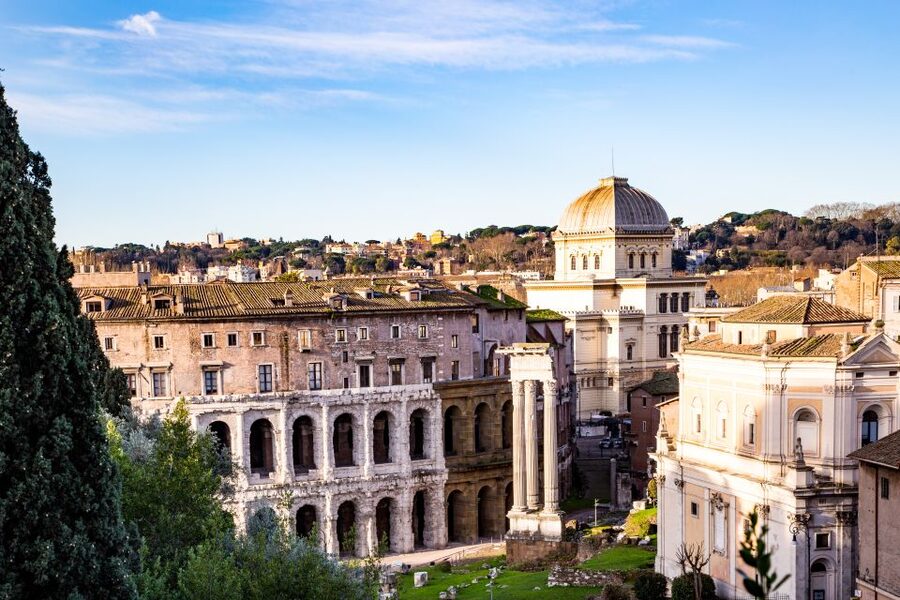
The Portico d’Ottavia receives about 15 minutes of guided attention. This ancient structure is one of the clearest examples of how Rome’s Jewish quarter sits beside, and sometimes within, the remains of imperial Rome.
The portico’s location helps you understand the neighborhood’s unusual character. Ancient columns and masonry are not far from religious buildings, restaurants, homes, and narrow streets. Rome does not always separate old and new for your convenience. That is part of the pleasure, but it can also make the past easy to miss if you are walking alone.
Your guide brings out the connection between the ancient structures and the later Jewish community. The result is not just a parade of ruins. You learn how the same urban space changed meaning over time.
This is also a good point to manage expectations. The program focuses on outdoor interpretation. If you want long interior visits or archaeological access, you’ll need other sites and tours in your Rome plans. Here, the value is the way the guide connects what you see on the street.
Kosher gelato, with a practical pause
The tour includes a stop at a gelateria for homemade kosher gelato or coffee. The exact choice may depend on what you prefer, but the included refreshment gives the walk a welcome pause.
Kosher gelato is not just a snack added at the end of a standard route. It connects the food stop with the identity of the neighborhood and gives you a small taste of contemporary Jewish life in Rome. It also breaks up the historical material. Two and a half hours of dates, restrictions, wars, and ancient monuments can be a lot to absorb without a pause.
Extra food and drinks are not included, so do not expect a full meal. If you need more than gelato or coffee, eat beforehand or plan a meal after the tour. Some published comments refer to broader food and wine experiences, but the stated inclusion for this walk is kosher gelato or coffee, so I would plan around that rather than assume additional tastings.
The Great Synagogue and the limits of the route
The walk passes the Great Synagogue of Rome, one of the neighborhood’s most important landmarks. You’ll hear about the Jewish community and its difficult past as you approach the synagogue and surrounding area.
The key detail is that an interior visit is not listed as part of this experience. If entering the synagogue is important to you, ask about separate visiting arrangements before booking. Several people specifically wished that an inside visit had been included, so this is the clearest gap in an otherwise well-received route.
Even from the outside, the stop has value because your guide places the building in the story of Roman Jews and the neighborhood’s survival. Still, do not confuse an exterior explanation with a synagogue tour. The distinction matters, especially if religious architecture is your main reason for choosing this walk.
You should also bring a cover for bare shoulders if the route includes entry into any churches. The advice is simple and practical: modest, weather-appropriate clothing keeps you ready for the full walk.
Crossing to Tiber Island
The final section takes you across the oldest functioning bridge in Rome to Tiber Island. The island receives about 15 minutes of guided attention, but its stories give the tour a strong ending.
Here, the guide discusses the hospital that helped save people during World War II. That story shifts the focus from ancient ruins to courage and protection in the modern era. You’ll also hear about Asclepius and the temple connected with healing, now a church.
Tiber Island works as a conclusion because it gathers several themes from the tour in one place: ancient belief, Christian adaptation, medical care, and the moral choices people made during wartime. The island is not simply a scenic finish. It shows how Rome’s buildings and institutions keep changing purpose while retaining traces of earlier lives.
The final stop also gives the guide a chance to bring the history together. A strong leader will help you see that the tour was not a straight line from ancient Rome to the Jewish Ghetto. It was a walk through overlapping communities, buildings, faiths, and memories.
Guide quality is the main value

At $65 per person, this is not a bargain-priced neighborhood walk. The value rests mainly in the guide rather than admissions, since no major ticketed entrance is included.
I think the price makes sense if you want a well-organized explanation of a complicated area and prefer to ask questions as you go. It is especially good value for people who have already seen Rome’s headline monuments and now want a more focused subject. The guides have been praised for answering detailed questions, adjusting their pace, and making the material understandable to teenagers and adults alike.
Group size can change the feel. Some walks have been small, with four people or even only two. In those cases, the guide can adjust the pace and turn the outing into something close to a private conversation. That is a strong advantage, though you should not assume every departure will be private.
I also like that multiple guides have received praise for helping people who walk slowly. Still, this is a 2.5-hour walking tour, not a seated lecture. If you have mobility concerns, contact the provider before booking so you can understand what the route will require.
Timing, weather, and what to carry
Tours cannot wait for late arrivals, and missed tours are not refunded. I would arrive early enough to locate the orange Roman Vacations sign at Trajan’s Column without rushing.
The walk operates in all weather. Wear comfortable shoes, use sunscreen, and bring a sun hat in warm months. A reusable water bottle is useful, and an umbrella plus weather-appropriate clothing will help if the forecast is uncertain.
Friday afternoon may require extra thought. One person specifically advised avoiding that timing just before the Sabbath begins. The tour may still be possible, but the neighborhood’s rhythm and the timing of religious observance can affect what you see and how comfortably the walk fits into your day.
Free cancellation is available up to 24 hours before the start time, and you can reserve now and pay later. Those terms are useful when your Rome schedule is still shifting, but they do not change the late-arrival rule.
Who should book this Rome walking tour?
I would choose this tour if you want history explained through places you can actually see. It suits first-time visitors who want more than the usual ancient Rome circuit, repeat visitors looking for a quieter subject, and families with teenagers who respond better to stories than to long blocks of dates.
You will get the most from it if you enjoy asking questions and are open to serious material. The tour is also a good choice for non-Jewish visitors who want a respectful introduction to Rome’s Jewish community without needing prior knowledge.
I would look elsewhere if you mainly want to enter the Great Synagogue, spend long periods inside buildings, or sample a full range of food. This route is about streets, ruins, memory, and interpretation. The included gelato or coffee is a pleasant touch, not a meal.
Should you book it?
Yes, if you want a guide-led walk that connects ancient Rome, Jewish history, wartime courage, and present-day neighborhood life. The strongest reason to book is the quality of the storytelling, with guides such as James, Angela, Tom, Daniel, and Maria praised for clear explanations, warmth, humor, and flexible pacing.
Before paying, make sure you are comfortable with three points: the $65 price, the outdoor format, and the fact that the Great Synagogue is viewed from outside. If those fit your plans, this is a thoughtful way to spend a morning or afternoon in one of Rome’s most historically layered neighborhoods.
FAQ
How long is the Rome Jewish Ghetto walking tour?
The tour lasts 2.5 hours.
How much does the tour cost?
The price is $65 per person.
What language is the tour conducted in?
The live tour guide speaks English.
Where does the tour begin?
The meeting point is at Foro Traiano, 84, near Trajan’s Column. Look for an orange Roman Vacations sign.
Is kosher food included?
Yes. The tour includes homemade kosher gelato or coffee. Extra food and drinks are not included.
Does the tour enter the Great Synagogue of Rome?
The stated route passes the Great Synagogue, but an interior visit is not included.
What should I bring?
Bring comfortable shoes, a sun hat, sunscreen, an umbrella, weather-appropriate clothing, and a reusable water bottle. If you enter a church, bring a cover for bare shoulders.
Recently added around Rome
- Palatine Hill and Roman Forum Tour with Fast-Track Entrance★ 4.2 · 417 reviews
- Tivoli: Villa D’Este & Villa Adriana Pass & App Audioguide★ 4.4 · 364 reviews
- From Rome: Villa D’Este & Villa Adriana Day Trip with Lunch★ 4.4 · 289 reviews
- Vatican Museums & Sistine Chapel Skip-the-Line Guided Tour★ 4.6 · 254 reviews
- Rome: The Three Tenors at St. Paul’s Church Concert Ticket★ 4.7 · 699 reviews
- Tivoli: Villa D’Este Entry Ticket and App Audio Guide★ 4.3 · 191 reviews
- Rome: Capitoline Museums and Centrale Montemartini Tickets★ 4.4 · 328 reviews
- Rome: St. Peter’s Basilica and Papal Tombs Guided Tour★ 4.6 · 477 reviews
Walking Tours, compared.
Guided Walking Tour & Last Supper Visit with Ticket
Read our review →


Rialto Bridge & Offbeat Unusual Venice Walking Tour
Read our review →
Private 3 hrs Venice Tour: St Mark’s, Walking tour & Boat tour
Read our review →

Skip the line: Uffizi and Accademia Small Group Walking Tour
Read our review →Browse the lists this tour appears in