
Reviewed · WALKING TOURS
Rome: Guided Walking Tour in English or Spanish
Rome comes alive after sunset. This two-hour walk links Rome’s historic centre with lively stories, famous fountains, grand squares, and monuments glowing under evening lights. I especially like the clear focus on the main sights and the chance to hear the political gossip, church oddities, and architectural clues that are easy to miss on your own. The main drawback is finding the guide at the start, so arrive early and read the meeting instructions carefully.
I also like the price: at $28 per person, you get a guided introduction to several major sights without paying for museum admission you may not need. Guides such as Dan, Anna, Sila, Theo, Sharon, Alina, and Domenica have been praised for humor, patience, strong storytelling, and useful Rome tips. Wear good shoes, though, because this is a steady city walk with no seated sightseeing.
In This Review
- Key points to know before you book
- Why this short Rome walk works so well
- Starting near Piazza d’Aracoeli or Piazza di Pasquino
- Monument to Vittorio Emanuele II and the story of modern Italy
- Trevi Fountain after dark
- The Pantheon and Rome’s layers of time
- Piazza Navona, churches, and visual tricks
- Trajan’s Column and the ancient city
- What the guides do best
- Pace, comfort, and the night setting
- What the $28 price really buys you
- Who should book this Rome walking tour?
- Final verdict: book it for stories and orientation
- FAQ
- How long does the Rome walking tour last?
- What languages are available?
- How much does the tour cost?
- Where does the tour start?
- Where does the tour finish?
- Does the tour visit the Pantheon?
- Does the tour include Trevi Fountain?
- Is food or drink included?
- Is a private group available?
- What should I bring?
Key points to know before you book
- Evening light changes the mood: Trevi Fountain, the Pantheon, and Rome’s squares can feel especially atmospheric after sunset.
- The route covers major landmarks: You pass the Monument to Vittorio Emanuele II, Trevi Fountain, the Pantheon, Piazza Navona, and Trajan’s Column.
- Stories matter as much as sights: Guides explain statues, political scandals, church illusions, Italian unification, and neighborhood history.
- The meeting point needs care: Depending on your selected option, you may start near Piazza d’Aracoeli, Piazza di Pasquino, Trajan’s Column, or Piazza Navona.
- English and Spanish are offered: A private group option is also available.
- It is a strong first-night activity: You get your bearings in central Rome and finish with practical recommendations.
Why this short Rome walk works so well
Rome can be confusing at first. One minute you are beside an ancient column, and the next you are in a Baroque square, facing a church that seems to have appeared from nowhere. A guide helps connect those pieces.
This walk is not built around entering major museums or spending an hour at one monument. Instead, it gives you a compact tour of central Rome’s streets and open-air sights. That makes it useful early in a visit, especially if you want context before returning to the Pantheon, Trevi Fountain, or Piazza Navona on your own.
The guides are the heart of the experience. Dan is praised for mixing humor with Roman history, while Anna is described as energetic and generous with recommendations. Sila has a patient style that works well for families with younger children. Theo is known for clear explanations and a witty approach. Sharon adds practical tips to stories spanning several periods of Rome’s past.
You may also get a guide such as Alina, Polina, Dinara, Denis, Vlad, Domenica, or Csemge. The personalities differ, but the strongest pattern is clear: the tour works best when your guide turns a collection of monuments into a connected story.
More Walking Tours in Rome
- Rome: Trastevere & Campo de Fiori Street Food Walking Tour
★ 4.9 · 2,768 reviews - Rome: Paranormal Night Walking Tour & Secret Backstreets
★ 4.9 · 1,921 reviews - Rome by Night Walking Tour – Legends & Criminal Stories
★ 4.5 · 1,003 reviews
Starting near Piazza d’Aracoeli or Piazza di Pasquino
The start depends on the option you book. The listed starting choices include Piazza d’Aracoeli and Piazza di Pasquino, while some arrangements may meet near Trajan’s Column or Piazza Navona. Check your confirmation closely rather than assuming the meeting point is the same for every departure.
This is the one practical weakness I would take seriously. A few people had trouble spotting the guide, especially in a garden or open public area. One useful suggestion was to provide a larger flag or clearer description of nearby landmarks. Until that changes, plan to arrive early and allow time to look around.
Do not rely on a vague glance at your phone once you reach the general area. Match the address, the named square, and the guide’s description. If the directions mention a garden beneath trees, compare that with the surrounding buildings and transport stops. Rome’s centre is full of similar-looking lanes, courtyards, and piazzas.
Once you find the group, the tour should settle quickly. Your guide introduces the route and begins putting Rome’s monuments into context. The walk ends back at the meeting point or at one of the stated finishing locations, including Piazza Navona or the Colosseum area, depending on the arrangement.
Monument to Vittorio Emanuele II and the story of modern Italy
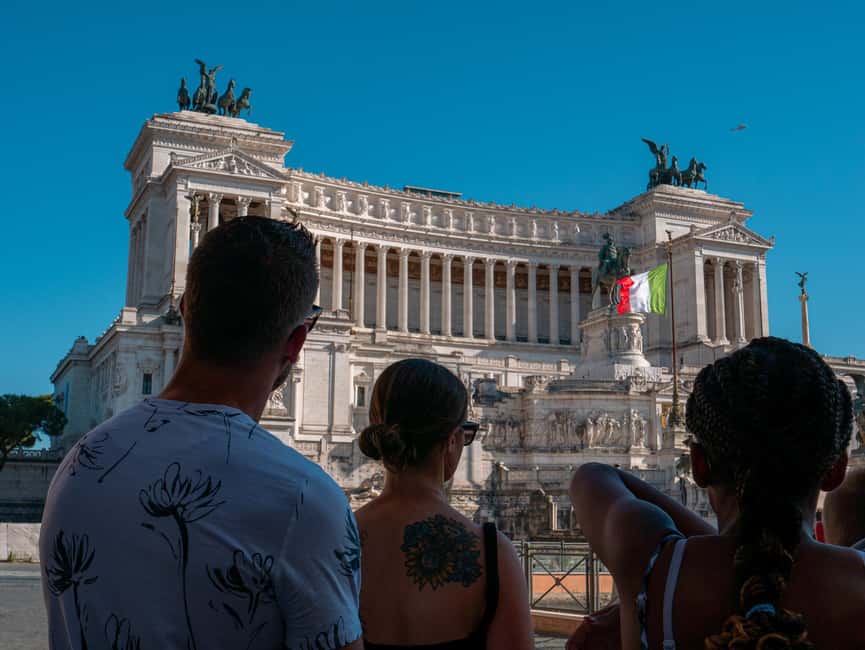
The first major stop is the Monument to Vittorio Emanuele II, the enormous white structure on Piazza Venezia. The guided explanation lasts about 10 minutes.
This is a good place to begin because the monument represents a much newer chapter than the ancient ruins nearby. It relates to Italian unification and the creation of a modern Italian state. The contrast is striking: Rome is not only a city of emperors and popes. It also tells the story of national politics, changing power, and the reshaping of the city.
Your guide may point out why the monument has such a commanding presence. Even without entering it, you get a useful orientation to the streets radiating from Piazza Venezia. From here, the route moves into the older centre, where Roman, medieval, Renaissance, Baroque, and modern history overlap within a short walk.
This stop is more about setting the scene than lingering. If you want detailed information about the monument’s interior or viewing areas, this tour is not designed for that. Its value comes from linking the building to the political story of Italy.
Trevi Fountain after dark
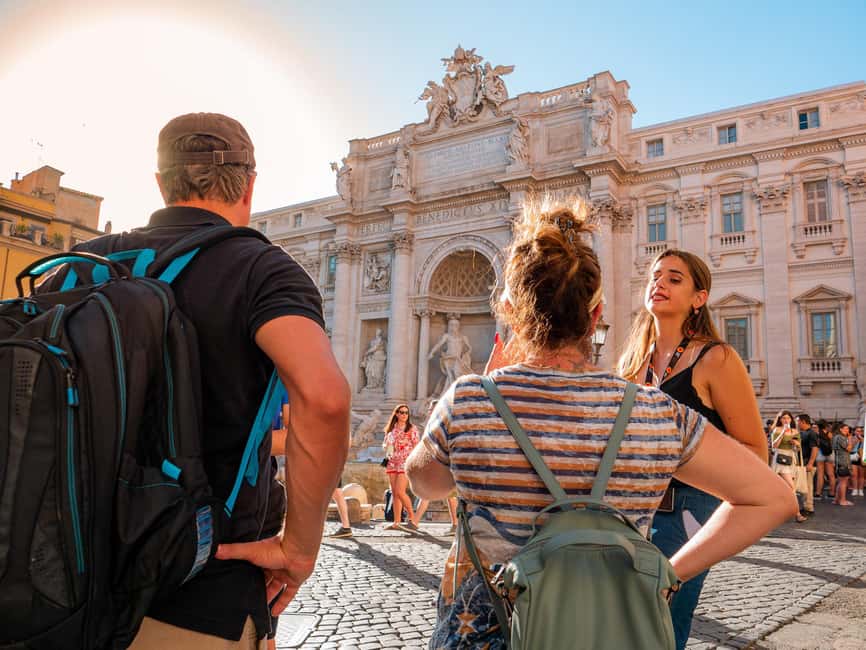
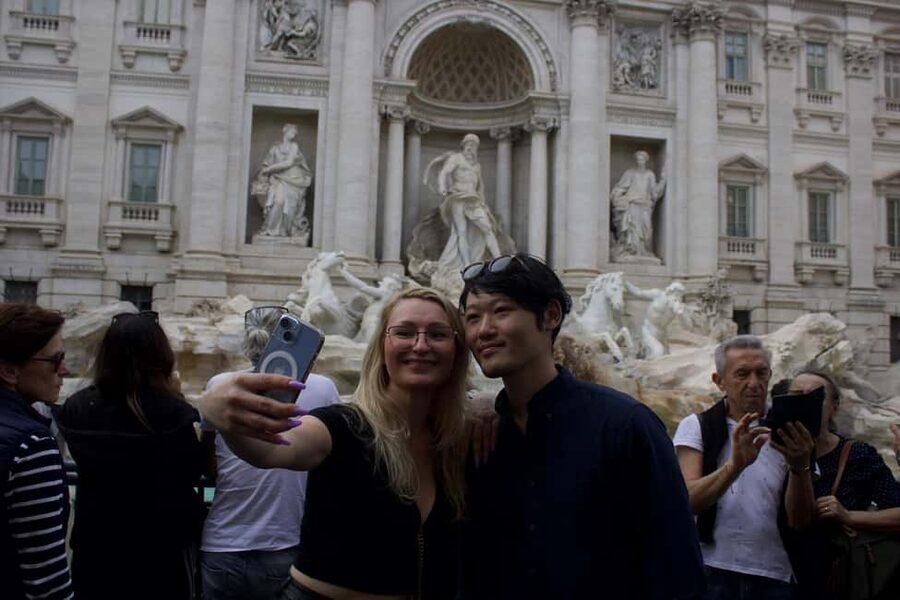
The next stop is Trevi Fountain, with roughly 15 minutes for explanation. This is one of the route’s most photogenic moments, particularly when the stone and water are lit at night.
The fountain is easy to admire on your own, but a guide gives you more to notice than the central statue and crowded basin. Listen for the stories connected to the fountain’s design, the surrounding streets, and Rome’s habit of turning public spaces into theatre.
A night visit can also change your priorities. In daylight, you may focus on the crush of people and the bright stone. In the evening, the lighting gives the fountain a more dramatic feel. One guide, Dogus, was praised for making a night walk feel comfortable and memorable for a solo participant. That matters if you would rather see central Rome with a group after dark than wander alone.
The time here is enough for an introduction, not a quiet private visit. You may need to stay close to your guide and listen carefully amid city noise. If your group is large, stand near the guide during the explanation, then take your own photographs afterward if time allows.
Still Rome, but a slower afternoon:
- Vatican: Museums & Sistine Chapel Entrance Ticket
★ 4.5 · 144,003 reviews - Vatican Museums & Sistine Chapel Tour with Optional Basilica
★ 4.3 · 67,413 reviews - Colosseum, Roman Forum & Palatine Guided Tour
★ 4.7 · 63,148 reviews - Vatican Museums, Sistine Chapel & St Peter’s Basilica Guided Tour
★ 4.5 · 39,149 reviews
The Pantheon and Rome’s layers of time
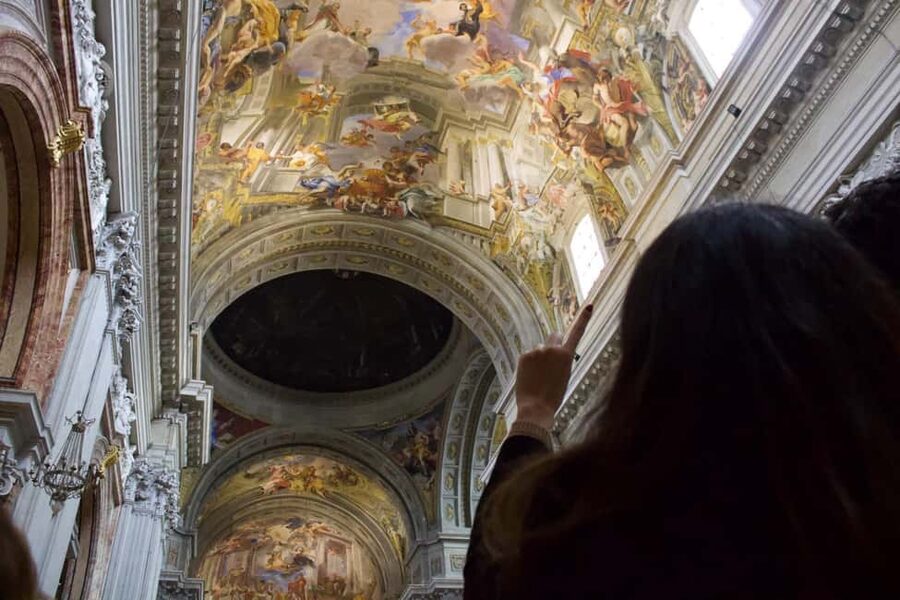
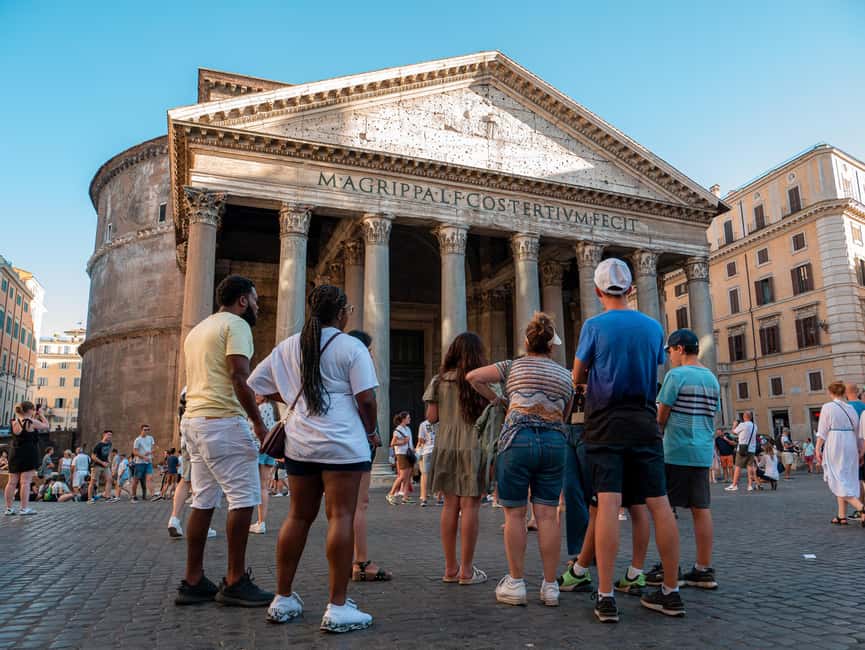
The Pantheon receives about 20 minutes of guided attention. Along with Piazza Navona, it is one of the tour’s most rewarding stops because the building brings several eras together in one place.
You can expect an explanation of the Pantheon’s architecture and its place in Rome’s long story. The tour passes by the monument rather than promising an interior visit, so do not book this walk expecting entry or an extended look inside. The point is to understand the building as part of the city around it.
This is where a good guide makes a real difference. A statue, column, or façade can look decorative until someone explains why it faces a certain direction or why a particular detail was preserved. Alina was praised for explaining those small clues, and that is exactly the sort of information that helps Rome make more sense.
The surrounding streets also show how Rome’s old centre functions today. Ancient structures sit beside shops, churches, cafés, and working streets. You are not walking through a sealed archaeological park. You are seeing history woven into daily city life.
Piazza Navona, churches, and visual tricks
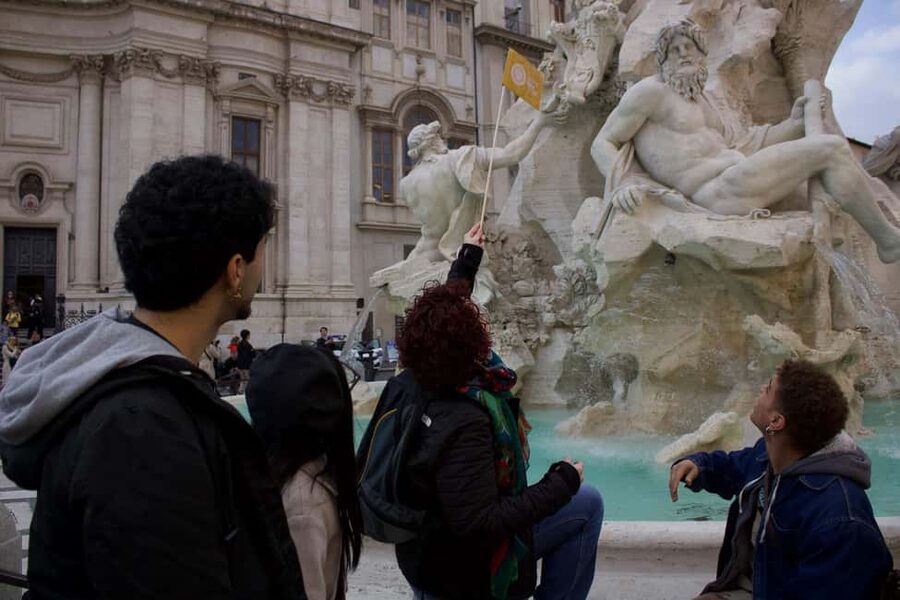
Piazza Navona gets around 20 minutes, making it the longest stop on the route. Its broad shape and fountains provide a natural place for the guide to explain Rome’s Baroque period, public squares, and the rivalries that shaped the city.
The tour also points out historic churches and less obvious details in the centre. You may pass Rome’s smallest church and a church containing a painted illusion. These are excellent additions because they show why Rome rewards looking up, checking side streets, and listening for details beyond the postcard sights.
The guide also discusses stories and scandals connected with more recent Italian politicians. This gives the tour a sharper edge than a simple procession of dates and building names. Rome’s past is not presented as a clean, polite timeline. It includes power struggles, vanity, religious competition, and political mischief.
Piazza Navona is a comfortable place to pause, but remember that the tour remains a walking activity. You are not getting a long café break or a formal sit-down lecture. I would use this stop to listen first, then take photographs when the guide finishes speaking.
Trajan’s Column and the ancient city
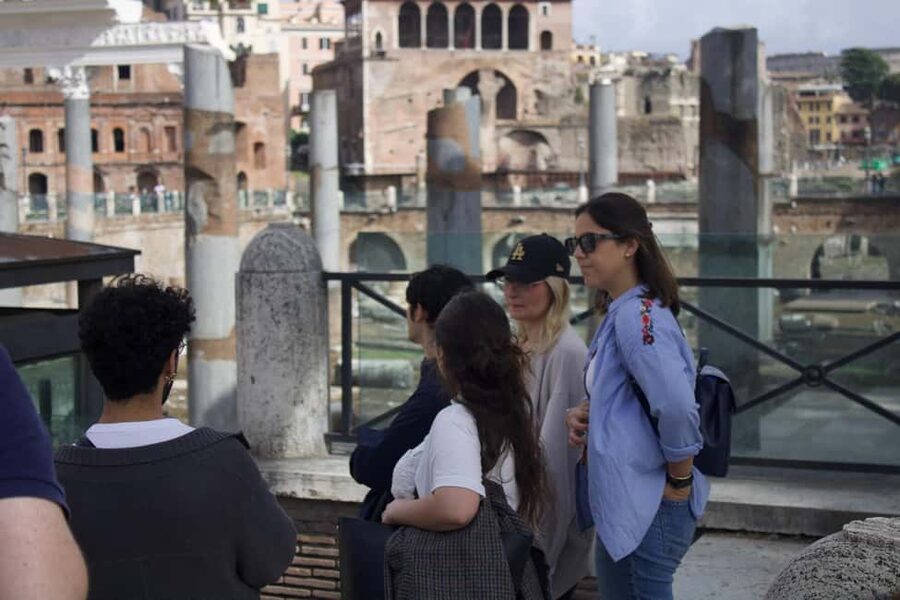
The route includes about 15 minutes at Trajan’s Column. This is another useful reminder that central Rome is an open-air record of different periods.
The column carries a carved visual account of Emperor Trajan’s military campaigns. You do not need to study every detail during a short stop, but the guide can help you understand how monuments communicated power in ancient Rome. The column also helps you see how later buildings and streets grew around older Roman structures.
Depending on your chosen starting point and route order, Trajan’s Column may be the first meeting area or a later stop. That is one reason to follow the exact meeting information for your booking. The route details vary by option, even though the central sights remain broadly similar.
This part of the walk is best for people who enjoy connections. You see how a public monument served political purposes, how later Rome reused its surroundings, and how the city keeps placing new stories beside old stone.
What the guides do best
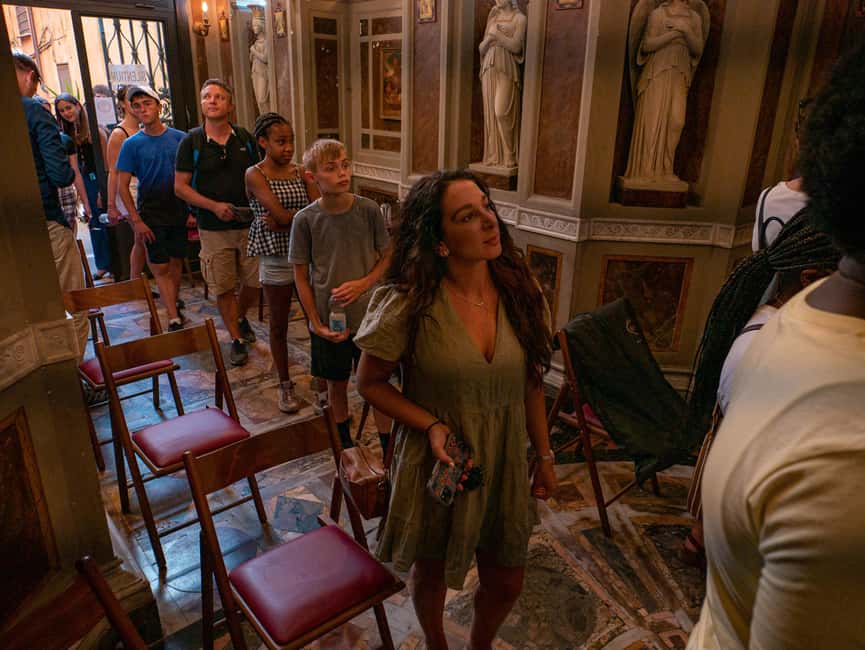
The strongest part of this tour is not the number of stops. It is the way the guide fills the walking time between them.
Dan is repeatedly praised for an easy pace, humor, and a clear love of Roman history. Theo is described as witty, precise, and calm, even with a challenging group. Domenica adjusted the pace, answered questions carefully, and took time to speak with people during the walk. Those qualities matter more than a memorized speech.
Anna brings energy and a large store of facts, while Sila makes the tour accessible to younger participants. Sharon combines stories from different periods with useful advice for spending time in Rome. Other guides, including Polina, Dinara, Denis, Vlad, Csemge, and Alina, are also praised for friendliness and strong explanations.
You should still keep your expectations sensible. A live walking tour depends on the guide assigned to your departure, the size of the group, street noise, and how many questions arise. One useful suggestion was to provide small radios because the guide could be harder to hear in some streets. Stay near the guide, especially during explanations.
Pace, comfort, and the night setting
The advertised duration is two hours, though one walk ran almost an hour longer because the guide took time with the group. That can be a pleasant bonus if you have a flexible evening, but it may cause trouble if you have a restaurant reservation or another timed activity.
The pace is generally described as comfortable, neither too slow nor too fast. Still, you should wear supportive shoes and comfortable clothing. You will be walking on city streets and moving between open squares, churches, fountains, and monuments.
Evening timing is one of the tour’s main attractions. Paulina was praised for choosing a route that moved from sunset into night, giving you two different views of Rome. At first, the streets may have the warm light of evening. Later, the fountains and façades take on a more theatrical look.
This timing suits a first evening in Rome, a solo visit, or anyone who wants a gentle introduction after arriving. It is less suitable if you want to enter the Pantheon, climb monuments, or spend long periods studying individual artworks.
What the $28 price really buys you
At $28 per person, the value is good if you want orientation, stories, and a compact route through central Rome. You are paying for a local guide, a two-hour walking tour, and a list of recommendations. Food and drinks are not included.
The price is especially fair for a first look at the city’s main monuments. You would spend time and energy finding these sights yourself, and you might miss the connections between them. A guide also gives you a chance to ask questions and receive suggestions for the rest of your stay.
The price does not cover admission to attractions, and the activity is primarily outdoors. That is not a problem if your goal is to see the streets and façades at night. It matters if you expect an interior tour of the Pantheon or a museum-style presentation.
Free cancellation is available up to 24 hours before the activity for a full refund, and you can reserve now and pay later. Those terms are useful if your Rome plans may shift.
Who should book this Rome walking tour?
I would recommend it to first-time visitors who want to see several central sights in one evening. It also suits solo visitors who prefer company at night, families who benefit from a guide’s stories, and couples looking for a relaxed introduction to Rome’s illuminated monuments.
It is a good choice if you enjoy anecdotes, politics, church details, architecture, and the odd scandal. You will get more from it if you ask questions and stay close enough to hear the answers.
I would choose something else if you want archaeological depth, museum entry, a private lecture, or a slow photography walk. The route gives you a strong overview, but two hours cannot explain every monument in detail.
Final verdict: book it for stories and orientation
Book this tour if you want Rome’s major central sights tied together by a personable guide. The $28 cost is reasonable, the evening setting is appealing, and the mix of famous monuments with smaller church details gives the walk more character than a simple checklist.
Before paying, confirm your meeting point and starting time. Arrive early, wear comfortable shoes, and keep close to the guide in noisy streets. If you do that, this is a practical first step into Rome, with enough history and humor to help you see the city more clearly afterward.
FAQ
How long does the Rome walking tour last?
The stated duration is two hours. Some tours may run longer if the guide spends extra time answering questions or adjusting to the group.
What languages are available?
The tour is offered with a live guide in English or Spanish.
How much does the tour cost?
The listed price is $28 per person.
Where does the tour start?
The meeting point depends on the option you choose. Listed starting areas include Piazza d’Aracoeli, Piazza di Pasquino, Trajan’s Column, and Piazza Navona.
Where does the tour finish?
The activity ends back at the meeting point. The stated finishing locations include Piazza Navona and the Colosseum area, depending on the selected option.
Does the tour visit the Pantheon?
The route includes a guided stop at the Pantheon for about 20 minutes. The information provided does not include admission inside the building.
Does the tour include Trevi Fountain?
Yes. The route includes a guided stop at Trevi Fountain lasting about 15 minutes.
Is food or drink included?
No. Food and drinks are not included in the tour price.
Is a private group available?
Yes. A private group option is available.
What should I bring?
Bring comfortable shoes and comfortable clothing because the activity is a walking tour.
Recently added around Rome
- Palatine Hill and Roman Forum Tour with Fast-Track Entrance★ 4.2 · 417 reviews
- Tivoli: Villa D’Este & Villa Adriana Pass & App Audioguide★ 4.4 · 364 reviews
- From Rome: Villa D’Este & Villa Adriana Day Trip with Lunch★ 4.4 · 289 reviews
- Vatican Museums & Sistine Chapel Skip-the-Line Guided Tour★ 4.6 · 254 reviews
- Rome: The Three Tenors at St. Paul’s Church Concert Ticket★ 4.7 · 699 reviews
- Tivoli: Villa D’Este Entry Ticket and App Audio Guide★ 4.3 · 191 reviews
- Rome: Capitoline Museums and Centrale Montemartini Tickets★ 4.4 · 328 reviews
- Rome: St. Peter’s Basilica and Papal Tombs Guided Tour★ 4.6 · 477 reviews
Walking Tours, compared.
Guided Walking Tour & Last Supper Visit with Ticket
Read our review →
Rialto Bridge & Offbeat Unusual Venice Walking Tour
Read our review →
Private 3 hrs Venice Tour: St Mark’s, Walking tour & Boat tour
Read our review →
Skip the line: Uffizi and Accademia Small Group Walking Tour
Read our review →Browse the lists this tour appears in