
Reviewed · GOLF CART TOURS
Rome: Catacombs and Appian Way Golf Cart Small-Group Tour
Rome rewards a slower, smarter approach. This three-hour golf cart ride links famous ancient sights with the quieter Appian Way and Rome’s underground catacombs, giving you far more ground than a walking tour. I especially like the easy access to places such as the Baths of Caracalla and Circus of Maxentius, plus the chance to stand on the original Appian Way pavement.
I also like the live English commentary, delivered through a headset so traffic does not swallow every word. Guides such as Federico, Antonella, Anna, and Alessandro have been praised for bringing Roman stories to life with humor and enthusiasm. The main drawback is the ride itself: cobbled streets can feel rough, and the golf cart’s structure can make it hard to see a monument clearly while moving.
In This Review
- Key points to know before booking
- Why a golf cart works well for Ancient Rome
- Meeting near Termini, then heading toward ancient Rome
- The Colosseum and Baths of Caracalla from the road
- Domine Quo Vadis and the story of Saint Peter
- The catacombs: atmospheric, sacred, and physically demanding
- San Sebastián Basilica and the ancient road
- Circus of Maxentius and a quieter Roman setting
- The Pyramid, Mouth of Truth, and central Rome
- The guides are the strongest part
- Is $113.29 a fair price?
- Practical advice for a smoother ride
- Who should book this Rome tour?
- FAQ
- How long does the golf cart tour last?
- Where does the tour begin and end?
- Which catacombs does the tour visit?
- Is catacomb admission included?
- Is the catacomb visit suitable for people with limited mobility?
- What should I bring for the catacombs?
Key points to know before booking
- The catacombs are a real underground visit: You descend about 16 meters, using 50 uneven steps down and 50 back up.
- The Appian Way adds a quieter side of Rome: You can walk on ancient Roman pavement instead of seeing only the packed center.
- You cover a lot in three hours: The route includes the Colosseum, Baths of Caracalla, Circus Maximus, Pyramid of Caius Cestius, and more.
- The guides make or break the experience: Federico, Antonella, Anna, Alessandro, and others have been praised for clear explanations, humor, and strong storytelling.
- Golf cart comfort has limits: It saves your legs, but cobblestones can produce a bumpy ride and the open-sided design offers limited views while moving.
- The price reflects convenience: At $113.29 per person, this is not a cheap sightseeing ride, but it combines transport, guiding, and catacomb admission.
Why a golf cart works well for Ancient Rome
Rome’s ancient sights are spread across a surprisingly large area. The Colosseum, Baths of Caracalla, Appian Way, Circus Maximus, Pyramid of Caius Cestius, and Theatre of Marcellus do not form one tidy walking route. You could visit them independently, but you would spend much of the day crossing busy roads and retracing your steps.
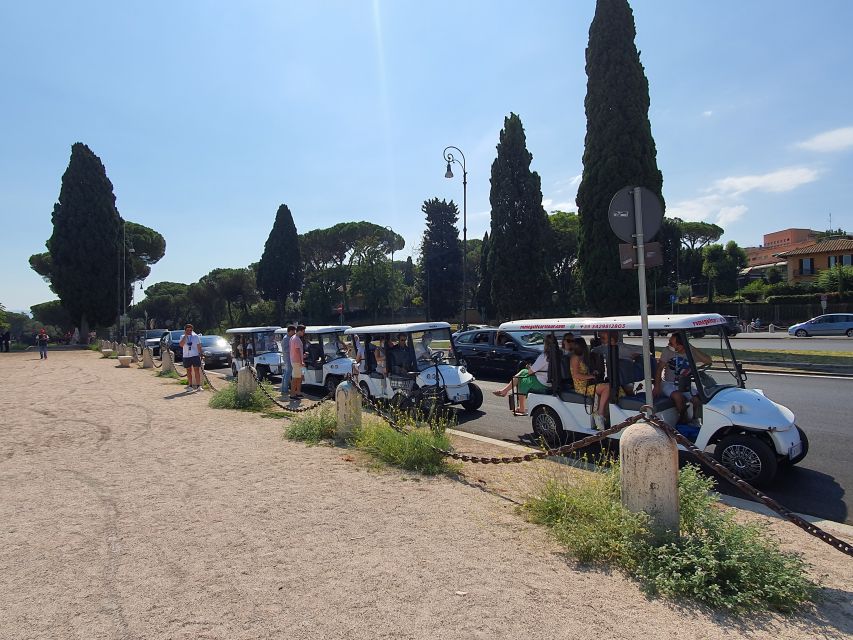
The golf cart solves that problem. You sit while your guide handles the route, then get out for selected stops and short walks. I like this balance because you are not trapped in a vehicle for three hours, yet you avoid turning the day into a march through Roman traffic.
The carts are modern and comfortable enough for a sightseeing ride, and bottled water is included. On colder days, blankets may be available, a small touch that made a difference for one group touring in chilly weather. Still, do not expect a silent, smooth glide. Rome’s ancient streets and cobblestones can make the ride jolt, especially near the older sites.
The cart also gives you a higher view than a normal car, but not an unobstructed one. The frame and other passengers can block parts of a building as you pass. Treat the moving sections as orientation and storytelling time, then use the stops for your best photographs.
More Golf Cart Tours in Rome:
- Rome by Golf Cart Private Tour: Beyond the Landmarks
★ 5.0 · 4,361 reviews - Rome on a Golf Cart Semi-Private Tour Max 6 with Private Option
★ 5.0 · 2,502 reviews - Rome Highlights by Golf Cart Private Tour
★ 5.0 · 2,379 reviews
Meeting near Termini, then heading toward ancient Rome
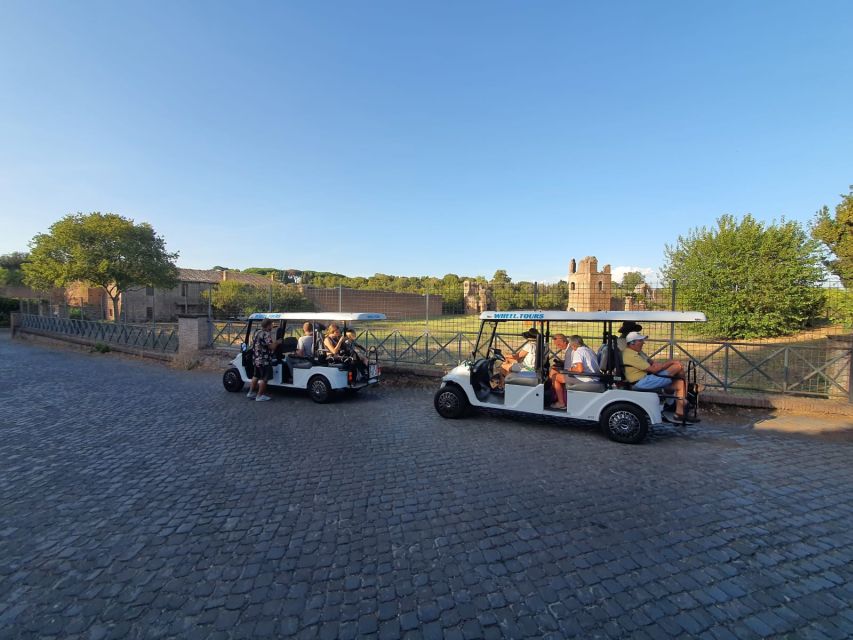
The meeting point is about a five-minute walk from Termini Central Train Station. That makes this a practical choice if you are staying near the station or arriving by train. Look for the guide holding a Wheel Tours sign, and allow enough time to find the exact spot without rushing.
The activity ends back at the same meeting point. There is no hotel pickup or drop-off, so you need to make your own way to Termini at the beginning and end. The tour runs for three hours, with starting times depending on availability.
The small-group format is important here. A compact cart can move through Rome more easily than a full-size bus, and a smaller group gives you a better chance to ask questions. It also lets the guide adjust the pace when someone needs a little extra time at a stop.
The Colosseum and Baths of Caracalla from the road
The tour begins with a drive by the Colosseum. You do not get a ticket to enter the amphitheater on this excursion, so think of this as an outside introduction rather than a substitute for a Colosseum visit.
That limitation is worth understanding before you book. The cart lets you see the Colosseum as part of a wider ancient-Rome route, but you will not spend time inside its arches, corridors, or arena. If entering the Colosseum is a top priority, plan a separate visit.
The drive continues toward the Baths of Caracalla. These enormous ruins once formed one of Rome’s great public bathing complexes, and their scale is easier to grasp from a vehicle moving around the area. Your guide explains what you are seeing, helping you picture the original Roman setting rather than viewing the remains as isolated stone walls.
This is where a good guide adds real value. Federico has been praised for describing how sites looked in their original state, while Antonella has been appreciated for connecting Roman history with religion, plants, and word origins. The best guides turn the drive into a running lesson without making it feel like a lecture.
Domine Quo Vadis and the story of Saint Peter
A visit to the Church of Domine Quo Vadis brings a strong religious story into the route. The church is linked to the tradition that Saint Peter encountered Jesus here while leaving Rome. The words Quo vadis?, meaning where are you going, give the site its memorable name.
The appeal is not only the building itself. It is the connection between a physical road, an old Christian tradition, and the early religious world beneath Rome. One stop helps explain why the Appian Way mattered as more than a transport route.
The church is also a useful pause in the tour. After several outdoor sights and city traffic, you get a more reflective setting before continuing toward the catacombs. The experience is religious and historic, so it may appeal most if you enjoy places where stories and physical evidence overlap.
A few more Rome bookings to compare
- Vatican: Museums & Sistine Chapel Entrance Ticket
★ 4.5 · 144,003 reviews - Vatican Museums & Sistine Chapel Tour with Optional Basilica
★ 4.3 · 67,413 reviews - Colosseum, Roman Forum & Palatine Guided Tour
★ 4.7 · 63,148 reviews - Vatican Museums, Sistine Chapel & St Peter’s Basilica Guided Tour
★ 4.5 · 39,149 reviews
The catacombs: atmospheric, sacred, and physically demanding
The underground portion is the emotional center of the tour. Depending on the departure time, the schedule includes the Catacombs of San Callixtus or the catacombs connected with San Sebastián. The supplied itinerary identifies San Callixtus for afternoon tours and San Sebastián for morning tours, so check the exact arrangement when you reserve.
You descend roughly 16 meters underground. The catacombs stay around 15 degrees Celsius, or 59 degrees Fahrenheit, and the air is humid. Bring a light layer even if Rome is warm above ground.
The physical demands are clear. You must manage about 50 irregular steps down and the same number back up. There is no elevator, no place to sit along the route, and the floor is uneven. The site is not wheelchair accessible and is not recommended for people with serious walking problems or claustrophobia.
That warning should guide your decision. The catacombs are not a quick museum room with a lift and polished floors. You are entering narrow, historic underground passages in a sacred place. Wear sensible shoes, move carefully, and follow the instructions given inside.
The catacomb entrance fee is included, which is useful because this is the part of the tour most difficult to arrange as an add-on during a busy day. A separate catacomb guide may lead the underground visit. The quality of that explanation can differ from the main golf cart commentary, so listen closely and save questions for the appropriate guide.
San Sebastián Basilica and the ancient road
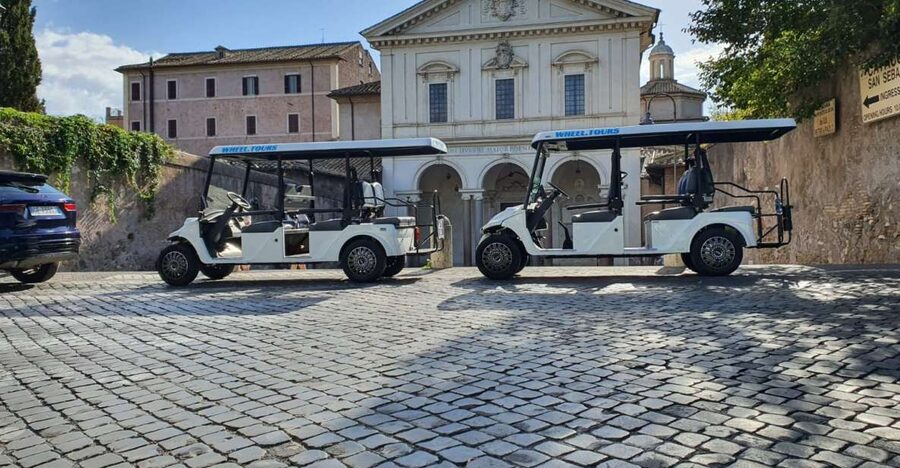
The Basilica of Saint Sebastian gives the route another change of mood. You can go inside to see its religious art and historical objects, then return to the road and countryside around the Appian Way.
The basilica has been singled out as an unexpectedly rewarding stop. It feels more intimate than Rome’s grandest churches, and that smaller scale can make the visit more personal. If you have spent days moving through crowded major monuments, this quieter church offers welcome contrast.
The Appian Way itself is the tour’s most distinctive setting. You can walk on sections of the original pavement, worn by centuries of use. That simple act makes Roman engineering tangible. Instead of looking at a reconstructed display, you are standing on the route that once connected Rome with the wider Roman world.
The road also changes your sense of Rome. Within a short ride of the city center, the setting becomes less urban and more open. You get a better feel for how the ancient road moved beyond the dense center, linking military, commercial, political, and religious sites.
Circus of Maxentius and a quieter Roman setting
The Circus of Maxentius is one of the less familiar stops, and that is part of its strength. It does not have the name recognition of the Colosseum, but it helps you understand the range of public buildings created for Roman entertainment.
Your guide can explain how the site fitted into the wider network of imperial monuments along the Appian Way. The value here is context. You are not simply ticking off another ruin. You are seeing how ancient Rome extended beyond the monuments most visitors know.
The tour may also include the Belvedere of Romulus and Remus at Circus Maximus. From this point, you can take in a broad view across one of Rome’s oldest public spaces. The stop links the legendary founding story of the city with the huge arena where chariot races once drew crowds.
This is a good place for photographs, but do not expect a long independent visit at every stop. Three hours is enough for many highlights, not for detailed exploration of each monument. If one site captures your interest, note it and return later with more time.
The Pyramid, Mouth of Truth, and central Rome
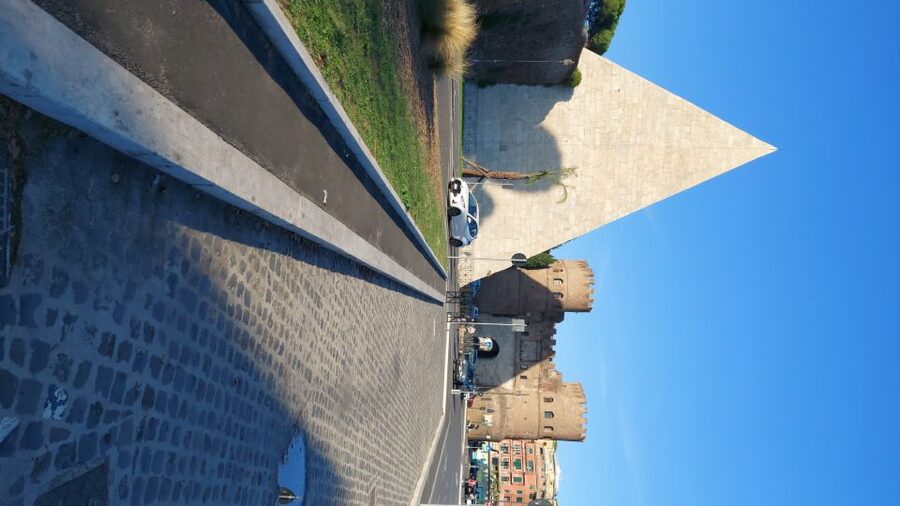
The route passes the Pyramid of Caius Cestius, a striking reminder that ancient Rome absorbed outside styles and ideas. Its pointed shape looks unlike the familiar arches and columns of the city, making it one of the more surprising sights on the ride.
You also drive by the Mouth of Truth, the Theatre of Marcellus, and the busy area around Venetian Square. These stops help connect the ancient remains with later layers of Roman history. The Theatre of Marcellus, for instance, shows how entertainment architecture continued to shape the city long after the Republic.
At Venetian Square, the route includes a panoramic view of the Fatherland Monument. The enormous white building is hard to miss, and the guide’s commentary helps place it within Rome’s modern national story. The final view of Trajan’s Column adds another ancient landmark, with its carved spiral scenes celebrating the emperor’s military campaigns.
You will not get equal time at all these locations. Some are drive-bys, while others allow you to get out and take photographs. That is a sensible trade for a three-hour tour, but it means you should not book this expecting a detailed interior visit at every church or monument.
The guides are the strongest part
The guide’s personality shapes this experience more than the vehicle does. Federico has been praised for passion, clear explanations, theatrical storytelling, and careful answers to questions. One especially memorable style involved speaking in character as Marcus, a Roman farmer who disliked Christians.
Other guides have made a strong impression for different reasons. Antonella has been described as joyful and able to move from religion to botany, etymology, and Roman history without losing the group. Alessandro has been praised for handling a small group of five with energy and genuine interest. Anna has been appreciated for her patience and love of Rome.
You receive a headset, and that matters. Rome’s traffic can be noisy, especially during major events and crowded periods. The headset lets you hear the guide while the cart is moving, though you may still need to pay attention if your guide speaks quickly. Martino, for example, was praised for his humor and information but noted as a fast speaker.
The strongest guides do more than recite dates. They help you visualize missing buildings, explain why a road was placed where it was, and connect ancient religious stories with the places around you. If you enjoy asking questions, use the stops for conversation. The small group makes that easier.
Is $113.29 a fair price?
At $113.29 per person, this is a premium half-day outing. You are paying for the golf cart, a live English-speaking guide, headsets, bottled water, and admission to the catacombs. Food, drinks beyond the included water, and hotel transfers are not included.
The value depends on how you would otherwise visit these sites. If you tried to combine the Appian Way, catacombs, Baths of Caracalla, Circus Maximus, and the central ancient sights on your own, you would need to plan transport carefully and spend considerable time walking or changing vehicles. The tour saves that effort and gives you an explanation as you go.
It is less good value if you want long visits inside major monuments. The Colosseum, for example, is viewed from outside, and several other sights are drive-bys. You are buying breadth, transport, and interpretation rather than deep access to one site.
For me, the price makes the most sense late in a Rome visit, when your feet are tired but you still want to see more. It also suits a first visit if you want a clear overview before choosing which ruins to revisit on your own.
Practical advice for a smoother ride
Dress for two different conditions. Rome’s streets may be warm and sunny, while the catacombs are cool and humid. Bring a light layer, and wear shoes with good grip for the uneven underground floor and ancient road pavement.
A face mask or protective covering is listed among the items to bring. Pets are not allowed. Since the tour ends where it begins, you can plan lunch or another activity near Termini afterward, though the end time may vary slightly with traffic and the group’s pace.
Keep your camera ready, but do not spend the whole ride trying to photograph monuments through the cart. The best images will come at the planned stops. Listen during the drive, then use the pauses for photos.
You can cancel up to 24 hours before the activity for a full refund, and the reserve-now, pay-later option keeps your plans more flexible. Starting times vary, so check availability before building the rest of your day around it.
Who should book this Rome tour?
I would recommend it to anyone who wants to cover a wide stretch of ancient Rome without walking between every site. It is especially useful for older adults, families with older children, and anyone reaching the end of a busy Rome itinerary with tired legs.
It also suits people who enjoy stories more than museum labels. A lively guide can make the Appian Way, Domine Quo Vadis, Circus of Maxentius, and the catacombs feel connected rather than random stops.
I would hesitate if you have serious mobility limits, dislike enclosed spaces, or need a smooth ride. The catacombs involve 100 irregular steps in total, and the cobbled streets can be bumpy. I would also choose another activity if your priority is entering the Colosseum or spending long periods inside individual monuments.
FAQ
How long does the golf cart tour last?
The tour lasts three hours. Starting times vary, so you need to check availability for the date you want.
Where does the tour begin and end?
The meeting point is about a five-minute walk from Termini Central Train Station. The tour ends back at the same meeting point.
Which catacombs does the tour visit?
The schedule identifies the Catacombs of San Callixtus for afternoon tours and San Sebastián for morning tours. Check the exact catacomb assigned to your departure time when booking.
Is catacomb admission included?
Yes. The entrance fee to the catacombs is included in the tour price.
Is the catacomb visit suitable for people with limited mobility?
The catacombs are not wheelchair accessible. You must go down and back up about 50 irregular steps, with no elevator, no seating along the route, and uneven flooring. The visit is also not recommended for people with serious walking problems or claustrophobia.
What should I bring for the catacombs?
Bring a face mask or protective covering and a light layer. The catacombs remain around 15 degrees Celsius, or 59 degrees Fahrenheit, and are humid. Comfortable shoes are also a sensible choice because of the uneven steps and floor.
Recently added around Rome
- Palatine Hill and Roman Forum Tour with Fast-Track Entrance★ 4.2 · 417 reviews
- Tivoli: Villa D’Este & Villa Adriana Pass & App Audioguide★ 4.4 · 364 reviews
- From Rome: Villa D’Este & Villa Adriana Day Trip with Lunch★ 4.4 · 289 reviews
- Vatican Museums & Sistine Chapel Skip-the-Line Guided Tour★ 4.6 · 254 reviews
- Rome: The Three Tenors at St. Paul’s Church Concert Ticket★ 4.7 · 699 reviews
- Tivoli: Villa D’Este Entry Ticket and App Audio Guide★ 4.3 · 191 reviews
- Rome: Capitoline Museums and Centrale Montemartini Tickets★ 4.4 · 328 reviews
- Rome: St. Peter’s Basilica and Papal Tombs Guided Tour★ 4.6 · 477 reviews
Golf Cart Tours, compared.
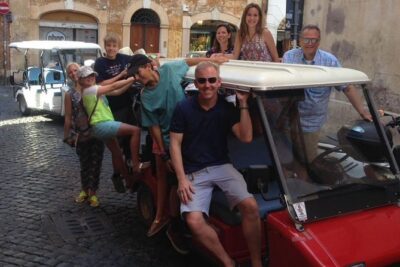
Rome by Golf Cart Private Tour: Beyond the Landmarks
Read our review →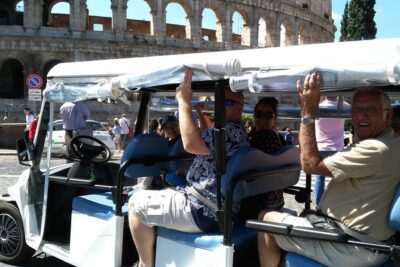
Rome on a Golf Cart Semi-Private Tour Max 6 with Private Option
Read our review →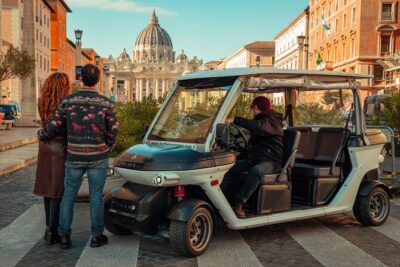
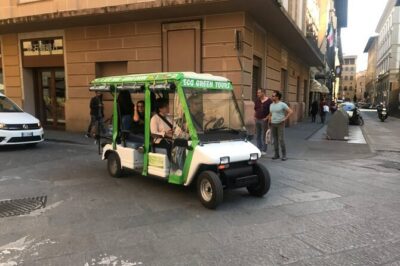
Golf Cart Tour to Fiesole Roman Theatre and Museum
Read our review →
Eco-Friendly Golf Cart City Tour with Audio Guide
Read our review →

City Highlights Golf Cart Tour with Local Guide
Read our review →Browse the lists this tour appears in