
Reviewed · WORKSHOPS
Milan: Pasta, Ravioli, and Gelato Class in a Glamorous Home
Fresh pasta tastes better when you make it. This three-hour Milan cooking class takes you into an elegant historic home, about a 20-minute walk from the Duomo, where you learn family recipes for tagliatelle and ravioli. I like the hands-on format and the setting filled with 16th-century paintings and antique furniture. The main thing to consider is that the group may be larger than expected, despite the small-group description.
The food is only half the pleasure here. I also like the warm teaching style, with Bruna, Laura, Federico, Paolo, Marco, Katerina, and other family instructors guiding beginners with patience and humor. Portions may feel modest if you arrive very hungry, and the class is conducted in English unless you arrange a private multilingual session in advance.
In This Review
- What makes this Milan cooking class special
- Entering an elegant Milanese home near the Duomo
- The first lesson: turning simple ingredients into pasta
- Ravioli with a Michelin-trained family recipe
- Choosing between tiramisu and chocolate gelato
- A meal with wine, limoncello, and new friends
- The family teaching style
- Is $88 a fair price?
- Who will enjoy the three-hour format?
- Small details that make the class memorable
- Booking advice before you commit
- Should you book this Milan cooking class?
- FAQ
- How long does the Milan cooking class last?
- What dishes will I prepare?
- Is wine included?
- Where is the meeting point?
- Is the class taught in English?
- Can children join the class?
What makes this Milan cooking class special
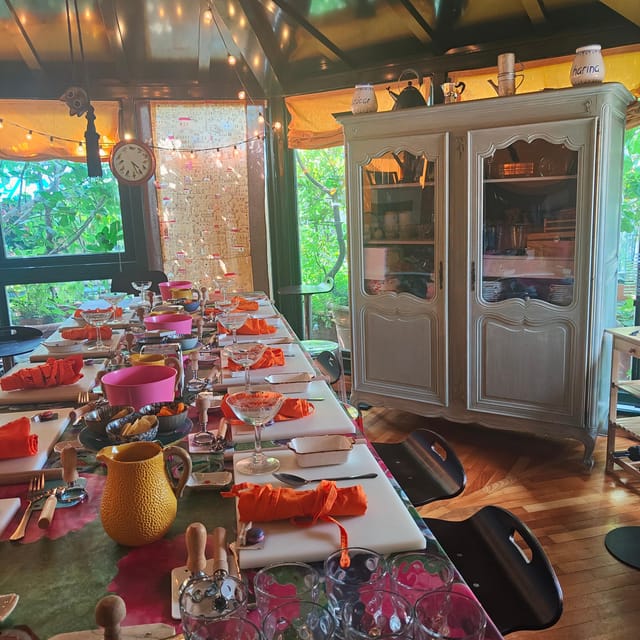
- You cook in a real family home: The class takes place in a refined Milanese residence, not a plain commercial kitchen.
- You make several dishes from scratch: The menu includes tagliatelle with tomato sauce, ravioli, and either tiramisu or gelato, depending on the class arrangement.
- You learn family methods, not just restaurant tricks: Recipes come from grandmothers and have also been refined through serious culinary training.
- You eat what you prepare: The class ends with a shared meal, wine, water, and homemade limoncello.
- You get practical take-home material: Recipes are sent by email so you can repeat the dishes at home.
- The location is easy to reach: Coni Zugna subway stop is about 20 meters from the workshop building.
Entering an elegant Milanese home near the Duomo
The class is held in a historic home in one of central Milan’s designer and fashion districts. From Duomo Square, allow about 20 to 25 minutes on foot. By subway, use the blue line and get off at Coni Zugna, taking the Coni Zugna-Via Foppa escalator exit. The building is said to be only 20 meters from the station, which is useful after a long day of sightseeing.
The setting changes the feel of the class. You are not simply sitting at a workbench in a cooking school. You are surrounded by family art, fine furnishings, and antique pieces connected with the family’s Palladian palace. The home is presented almost like a private museum, but the mood remains relaxed and social.
That contrast is part of the appeal. You might admire an old painting while dusting flour from your hands. The surroundings give the class a strong sense of place, yet the activity itself stays practical and friendly.
After booking, you receive the private address and a phone number by email. Read that message carefully, since the meeting details are not fully public in advance. Comfortable clothes are the only stated clothing advice, and that is sensible. Flour, dough, sauce, and dessert preparation can get untidy.
A few more Milan bookings to compare
- Milan: Cathedral and Duomo’s Terraces Entrance Ticket
★ 4.6 · 61,054 reviews - Milan: Da Vinci’s Last Supper Guided Tour
★ 4.7 · 10,143 reviews - Milan: Science and Technology Leonardo da Vinci Museum Entry
★ 4.5 · 7,169 reviews
The first lesson: turning simple ingredients into pasta
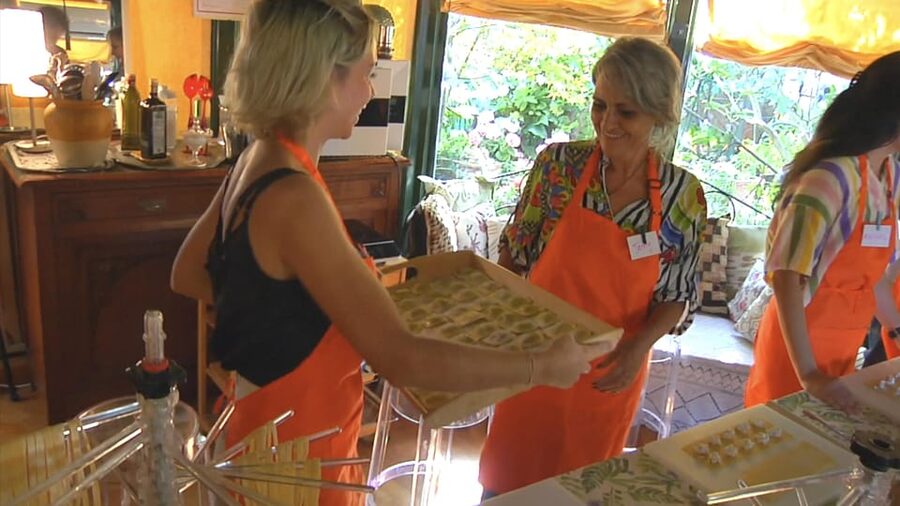
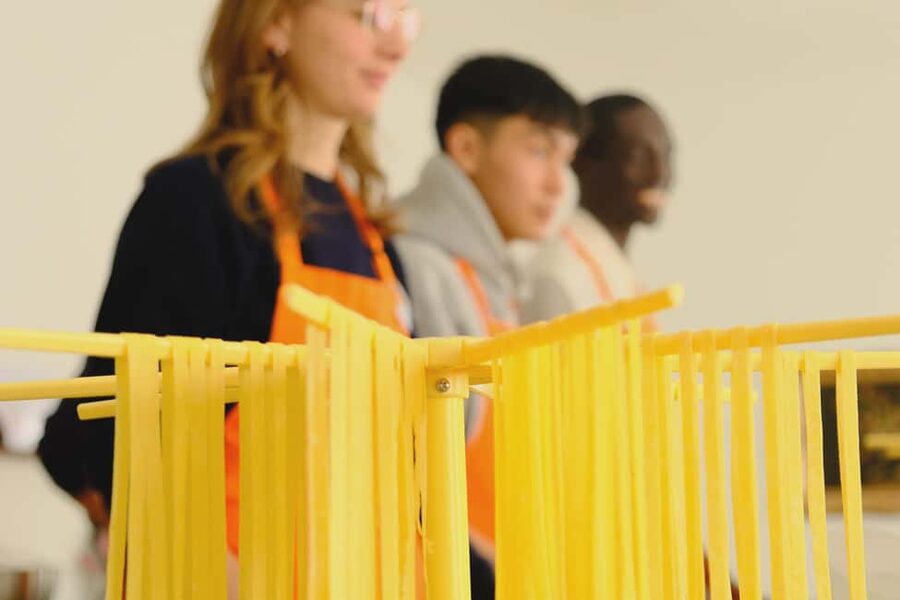
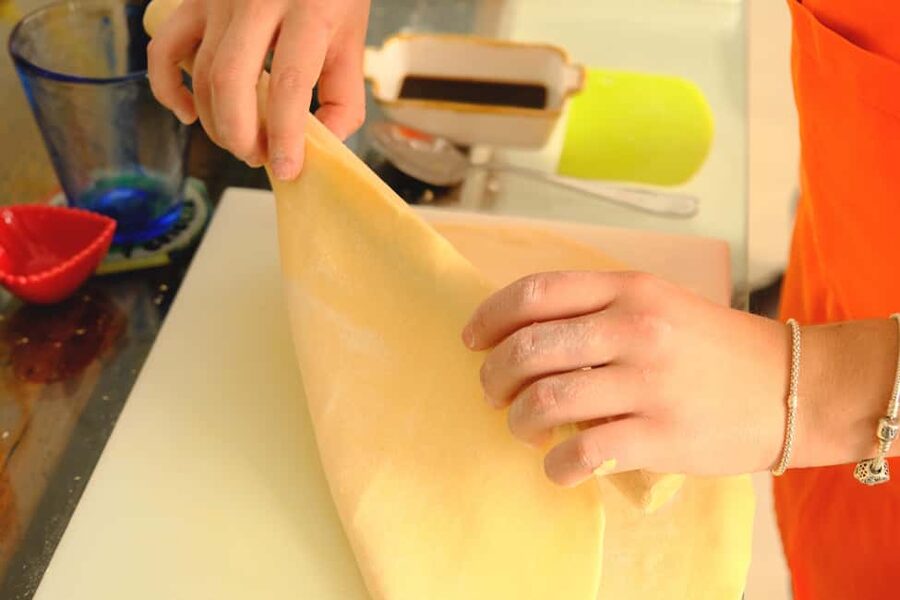
The class begins with pasta making, the part many people most want to learn. You work with dough from scratch, then shape it into tagliatelle and ravioli. This is not a demonstration where you watch someone else do the work. You get tools, an apron, and a place in the process.
The appeal of fresh pasta is that the ingredient list is short, but the technique matters. You learn how dough should feel, how to roll it, and how to handle it without making it tough or sticky. Those are the useful lessons you can carry into your own kitchen.
Tagliatelle is paired with tomato sauce. The dish is familiar, but making the noodles yourself gives it a different character. The class also provides a chance to learn small habits that are hard to pick up from a recipe alone, such as how to judge texture and when the pasta is ready.
The instructors appear to adjust their approach for different skill levels. Bruna is described as precise and kind, while Laura, Federico, Paolo, and Katerina are praised for keeping the room lively and helping people step by step. That matters if you are a first-time pasta maker. You do not need advanced cooking skills to take part.
One practical point: some sessions may have around 15 or 16 people, even though the activity is described as limited to 10. That means the working space and individual attention can vary. If a very small class is important to you, ask about the expected group size before confirming.
Ravioli with a Michelin-trained family recipe
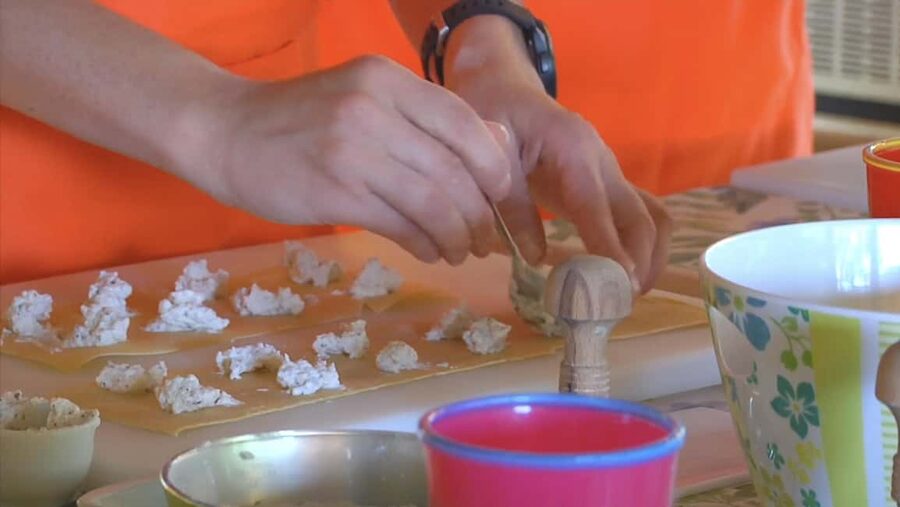
Ravioli is often the most memorable part of an Italian cooking class, and this one gives it proper attention. You prepare ravioli from scratch with a filling created by a Michelin-starred chef. The supplied menu describes a butter and sage finish, while one class description refers to ricotta cacio e pepe ravioli.
The exact filling may vary by session, so do not assume every class uses precisely the same recipe. That variation is not necessarily a problem. It reflects the way family cooking works, with a trusted method adapted by different cooks and instructors.
Ravioli teaches more than pasta dough. You must place the filling carefully, seal the edges, and avoid trapping air inside. You also learn how thin the pasta should be and how to keep the pieces from opening during cooking.
This is the dish where patience pays off. If your ravioli look a little irregular, that is part of the fun. Handmade pasta should not look factory-made, and the final meal gives you a chance to taste the result while it is fresh.
The butter and sage preparation is simple, which helps you focus on the pasta itself. It also shows an important Italian cooking principle: good ingredients and careful technique often need very little decoration.
Choosing between tiramisu and chocolate gelato
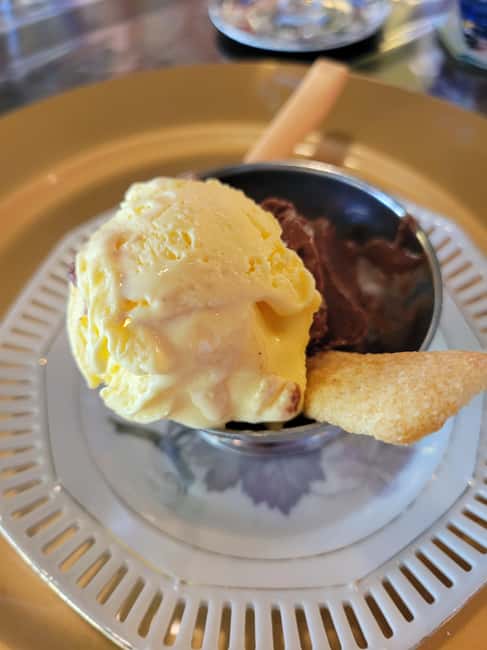
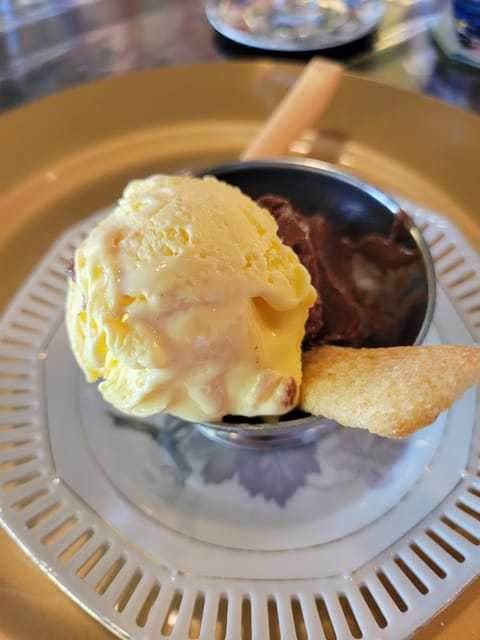
Dessert varies between tiramisu and gelato, so check the available option when you book. The class information includes soft, homemade tiramisu as well as gelato in tiramisu and chocolate flavors. Some sessions have offered both chocolate ice cream and a zabaglione-style preparation, but the exact dessert plan may depend on the group.
Tiramisu is a good choice if you want a classic Italian recipe that is easy to repeat at home. The teaching focuses on making the dessert soft and balanced rather than relying on a packaged shortcut. One family description calls the method easier than expected, which is encouraging if you are not a confident baker.
Gelato gives you a different lesson. You learn about a dessert that often requires advance preparation, especially when a base needs time to chill. One class description notes that the ice cream preparation can take two to three hours, so the instructors may start it early and return to it later.
The dessert choice can affect the rhythm of the class. You might prepare gelato first, then work on pasta while it sets. Tiramisu may fit more naturally near the end. Either way, you should expect a full cooking session rather than three separate mini-lessons with equal time for each.
Still Milan, but a slower afternoon:
- Milan: City Sightseeing Hop-On Hop-Off Bus with Audio Guide
★ 4.0 · 6,256 reviews - Milan Cathedral: Duomo Terraces Ticket (No Church Access)
★ 4.6 · 6,111 reviews - Milan: Milan Cathedral Direct Entrance – Terrace Excluded
★ 4.5 · 5,782 reviews - Milan: Guided Walking Tour & Last Supper Visit with Ticket
★ 4.7 · 5,409 reviews
A meal with wine, limoncello, and new friends

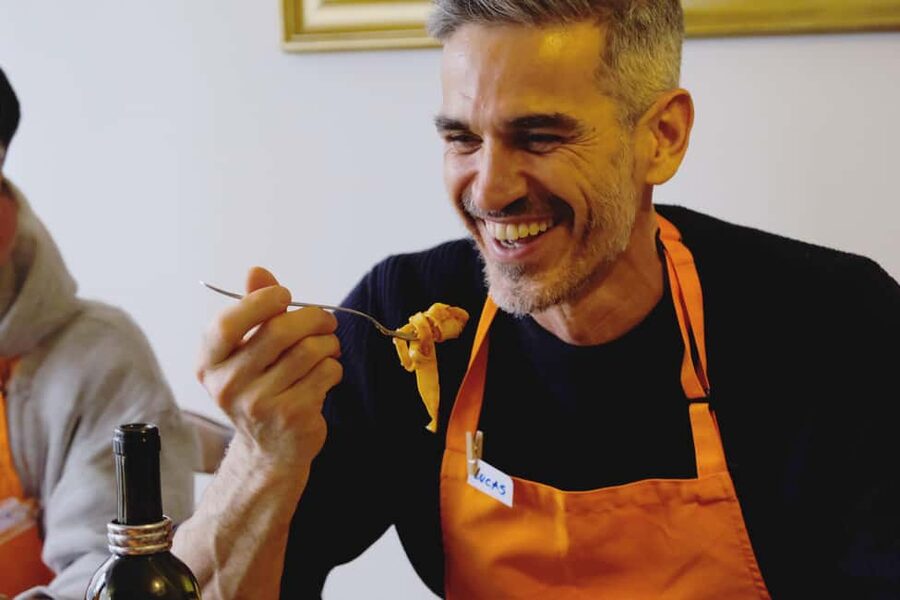
Once the cooking is finished, you sit down and eat the dishes you prepared. The included meal features tagliatelle with tomato sauce, ravioli, and dessert, with water and either organic wine or a soft drink. The wine is described as produced without pesticides, and the allowance is about one-quarter of a bottle per person.
The meal is social by design. You share a table with people from different countries and compare pasta shapes, cooking habits, and Milan plans. The instructors keep the mood light, often using humor to help the group relax.
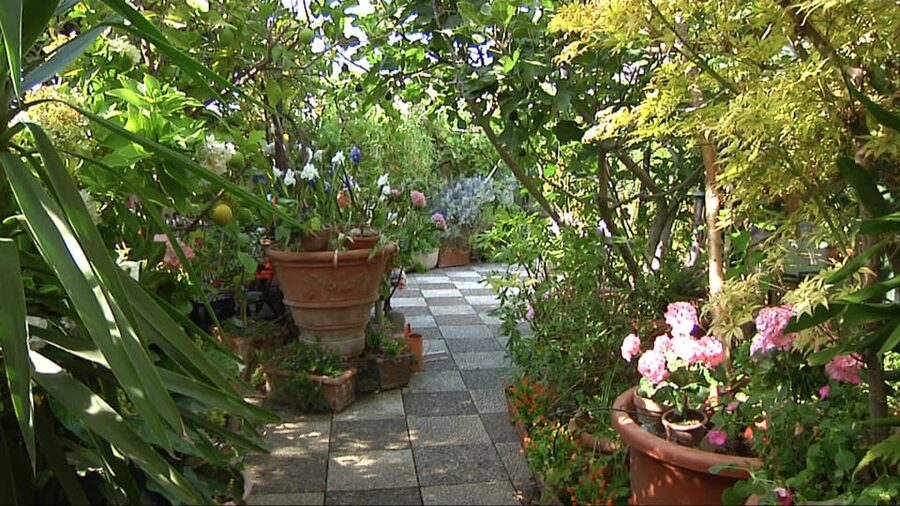
Homemade limoncello is served as a final touch. The lemons come from the host’s terrace, which is a small but memorable detail. It brings the family setting into the meal and gives you something distinctly personal that a standard cooking school may not offer.
Food portions are worth noting. One person found the dishes delicious but wished there had been more to eat. The class includes a full meal, but it is safest to think of it as a generous tasting and shared dinner rather than a large restaurant feast. If you skipped lunch, a snack beforehand may be wise.
The family teaching style
The family story is central to the class. Bruna is the grandmother whose recipes and cooking tradition shape the activity. When she needs to rest, her daughter or grandchildren take over, continuing the lessons in the same home.
Different instructors are named in the class descriptions and participant comments, including Marco, Laura, Federico, Katerina, Paolo, Lucas, Paulo, Lara, and Bruna. The names may vary according to the date and session, but the common thread is clear: the teacher is expected to cook, explain, organize, and entertain.
That last part matters. A cooking class can become stressful if the instructor rushes or leaves beginners behind. Here, the teaching style is repeatedly described as patient, funny, clear, and encouraging. Laura is praised for including everyone, Federico for humor and energy, and Bruna for precision and warmth.
The class is suitable for beginners and people with some cooking experience. You will have help if your dough needs correcting or your ravioli needs sealing. At the same time, someone who already makes pasta may find the class more social than technically advanced.
English is the standard teaching language. Italian, Spanish, French, German, Russian, Ukrainian, Hebrew, and Persian are listed among the languages connected with the instructors, but you should request another language in advance. Non-English instruction is offered for private groups, with a stated minimum of 10 participants.
Is $88 a fair price?
At $88 per person, this is not the cheapest way to eat pasta in Milan. You can find a plate of tagliatelle for much less. The value comes from the combination of instruction, ingredients, equipment, wine, dessert, a meal, limoncello, and recipes for future use.
You also pay for the setting. Cooking in an elegant family residence filled with art is a different proposition from taking a lesson in a basic classroom. The atmosphere gives the three hours a sense of occasion, especially if you are celebrating a birthday, traveling with family, or looking for an evening activity beyond the usual restaurant meal.
The class also has practical value. If you use the emailed recipes, the experience continues after your holiday. A successful ravioli technique or dependable pasta dough can become part of your regular home cooking.
The value is strongest for people who want to participate. If you mainly want a meal, the price may feel high because portions can be on the small side. If you want food, instruction, conversation, and a personal Milan setting, the cost is easier to justify.
Who will enjoy the three-hour format?
I would choose this class for couples, families, solo visitors who enjoy meeting people, and small groups of friends. It also works well for mixed-age groups. An 80-year-old participant reportedly had a wonderful time, and a 10-year-old enjoyed an evening session with a parent.
Children under 6 are not allowed, and the activity is also marked as unsuitable for children under 7. That age guidance is slightly inconsistent, so families with young children should ask before booking. Baby strollers, baby carriages, and non-folding wheelchairs are not allowed.
The class is a good rainy-day plan because most of the time is spent indoors. It can also be a smart evening choice. One useful tip is to book the 6 p.m. session if available, since you can spend the daylight hours seeing Milan and then finish with dinner.
Solo visitors should not worry about arriving alone. The format encourages conversation, and the shared table makes it easy to meet people. For a private group, ask in advance about language options and group size.
Small details that make the class memorable
Several touches give the experience more personality than a standard cooking lesson:
- The lemons for the limoncello come from the host’s terrace.
- The home contains family art and antique furniture connected with the family’s old palace.
- Recipes are passed down through generations but have also been refined at Paul Bocuse’s three-Michelin-star culinary school in Ecully.
- The class includes organic wine or a soft drink, not just water.
- You eat the food you made instead of watching a chef prepare a separate meal.
- The emailed recipe booklet helps you repeat the dishes at home.
These details matter because they connect the cooking to a particular family and place. You leave with more than a pasta shape. You leave with a story about how the dish was taught, served, and shared.
Booking advice before you commit
The activity lasts three hours, but the pace can feel quick because it covers pasta, ravioli, and dessert. Wear comfortable clothes, arrive ready to work with your hands, and avoid scheduling a tight appointment immediately afterward.
Confirm the dessert option, expected class size, language, and meeting instructions before the day. The booking terms allow free cancellation up to 24 hours in advance, and you can reserve now and pay later, which helps if your Milan plans are still changing.
This is not the right pick if you need a fully private lesson, a large meal, or a completely predictable menu. It is a strong choice if you want family recipes, direct instruction, a beautiful home, and a meal that feels connected to the people who prepared it.
Should you book this Milan cooking class?
I would book it if you want to do something active and personal in Milan. The strongest features are the family home, the patient instructors, the from-scratch pasta and ravioli, and the chance to sit down with the food you made.
Go with realistic expectations. Group size may be larger than the advertised small-group wording, portions may not satisfy a huge appetite, and English is the default language. For most people who enjoy cooking, conversation, and a good glass of wine, the $88 price offers solid value and one of the more memorable ways to spend three hours in central Milan.
FAQ
How long does the Milan cooking class last?
The class lasts three hours. Starting times vary, so you should check availability for the date you want.
What dishes will I prepare?
You will prepare pasta, ravioli, and dessert. The included dishes are tagliatelle with tomato sauce, ravioli with a butter and sage preparation, and either tiramisu or gelato, depending on the class arrangement.
Is wine included?
Yes. The class includes organic wine produced without pesticides, with about one-quarter of a bottle per person. You may choose a soft drink instead.
Where is the meeting point?
The workshop is near the Coni Zugna subway stop on Milan’s blue line. Use the Coni Zugna-Via Foppa escalator exit. The building is about 20 meters from the stop and roughly a 20 to 25-minute walk from Duomo Square.
Is the class taught in English?
Yes. English is the standard lesson language. Other languages may be available for private groups, but you must ask in advance. The listed language options include Italian, Spanish, French, German, Russian, Ukrainian, Hebrew, and Persian.
Can children join the class?
Children under 6 are not allowed, and the activity is also marked as unsuitable for children under 7. Baby strollers, baby carriages, and non-folding wheelchairs are not allowed.
Recently added around Milan
- Milan: City Highlights Walking Tour with The Last Supper★ 4.9 · 195 reviews
- Milan: The Milan Pass City Card★ 4.0 · 655 reviews
- Milan: Skip-the-Line Guided Walk and “The Last Supper”★ 4.5 · 606 reviews
- Milan: Duomo & Rooftop Tour with Optional Hop-On Hop-Off Bus★ 4.5 · 262 reviews
- Milan: Duomo and The Last Supper Skip-the-Line Guided Tour
- Milan: Leonardo’s Last Supper and Michelangelo’s Pietà Tour★ 4.6 · 559 reviews
- Milan: Sforza Castle and Michelangelo’s Pietà Rondanini Tour★ 4.7 · 1,119 reviews
- Milan: San Sepolcro Crypt Skip-the-Line Entry Ticket★ 4.2 · 512 reviews
Workshops, compared.

3 in 1 Cooking Class near Navona: Fettuccine, Ravioli & Tiramisu
Read our review →
Florence Pizza or Pasta Class with Gelato Making at a Tuscan Farm
Read our review →
Pasta & Tiramisu Cooking Class with Unlimited Wine
Read our review →
Pizza-Making Workshop with Drink and Appetizer
Read our review →
Pasta & Tiramisu Class with Fine Wine by the Vatican
Read our review →
Cooking Class and Lunch at a Tuscan Farmhouse with Local Market Tour from Florence
Read our review →Browse the lists this tour appears in