
Reviewed · MILAN TOURS
Milan: Milan Cathedral Direct Entrance – Terrace Excluded
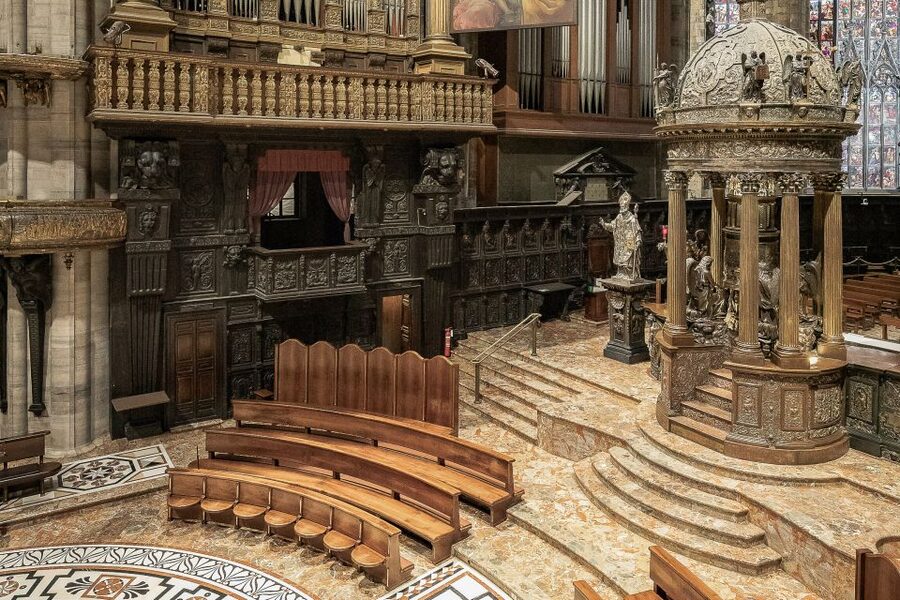
Milan’s marble giant rewards a close look. This direct-entry ticket gets you into the Milan Cathedral to study its soaring columns, Gothic vaults, stained glass, altars, statues, sarcophagi, and Grand Organ at your own pace. I like the low $13 price and the simple entry system: scan your ticket at the main door, pass security, and begin exploring. The main catch is clear: the terraces are not included, nor is the Archaeological Area.
I also like the freedom of an unguided visit. You are not pushed from room to room, and you can spend 40 minutes or more than an hour inside, depending on your interest. The drawback is that the cathedral can be difficult to interpret without an audio guide or prior reading, especially when you want to understand the statues and artwork rather than simply admire them.
In This Review
- Key points to know before you book
- What the $13 Milan Cathedral ticket really gives you
- Scanning your ticket at the Duomo entrance
- Inside the nave, where the scale takes over
- Stained glass, statues, and the details worth hunting
- The Grand Organ and the quieter corners
- Adding the Duomo Museum
- Why the terraces are a separate decision
- Dress code and practical preparation
- How much time should you allow?
- Who should book this experience?
- Should you book the Milan Cathedral direct-entry ticket?
- FAQ
- Does this ticket include the Milan Cathedral terraces?
- Is the Archaeological Area included?
- Is the Duomo Museum included?
- Where do I enter the cathedral?
- Do I have to pass through security?
- What clothing is required?
- Can I bring a large bag or luggage?
- How late can I enter?
Key points to know before you book
- The ticket covers the cathedral only: Terraces and the Archaeological Area require a separate ticket.
- Scan at the main entrance: There is no meeting with a guide. Go straight to the Duomo entrance with your ticket ready.
- Expect airport-style security: Large bags, luggage, sharp objects, drones, tripods, and several other items are forbidden.
- Dress like you are entering a church: Knees and shoulders must be covered for everyone. Shorts and tank tops are not allowed.
- The museum can add real value: If you choose the version with Duomo Museum entry, you can see artwork and objects connected to the cathedral’s construction and decoration.
- You can set your own pace: Each area may be visited once, and the last entry for all sites is at 5:50 PM.
What the $13 Milan Cathedral ticket really gives you
At $13 per person, this is a modest way to enter one of Milan’s essential sights. The price buys access to the cathedral interior, not the full Duomo complex. That distinction matters because many people picture the famous rooftop forest of spires when they hear Duomo ticket. You will not reach those terraces with this option.
Still, the interior is a serious attraction in its own right. The cathedral is one of the largest Gothic churches in Italy and Europe, with a vast floor plan, massive marble columns, tall vaults, carved figures, chapels, altars, and colored windows. You can easily spend 40 minutes inside, and an hour or more makes sense if you want to pause for the details.
I see this ticket as a good basic admission rather than a complete Duomo experience. It works well if you have limited time, if rooftop stairs are not suitable for you, or if you mainly want to see the interior without paying for areas you may not use.
The price also compares well with the cost of many major Milan attractions. You are paying for access to a landmark that can anchor a day in the city, and there is no required guided tour or fixed route once you enter. The value drops only if your main goal is the rooftop view. In that case, book a ticket that specifically includes the terraces.
A few more Milan bookings to compare
- Milan: Cathedral and Duomo’s Terraces Entrance Ticket
★ 4.6 · 61,054 reviews - Milan: Da Vinci’s Last Supper Guided Tour
★ 4.7 · 10,143 reviews - Milan: Science and Technology Leonardo da Vinci Museum Entry
★ 4.5 · 7,169 reviews
Scanning your ticket at the Duomo entrance
The meeting point is unusually simple. Go directly to the main entrance of the cathedral and scan your ticket. There is no guide holding a sign, no group assembly, and no complicated transfer across town.
The phrase direct entrance should not be read as a promise of walking straight past every person. You still need to join the appropriate entry line and pass security. Several visitors found the wait short, while others still stood in line for a few minutes. In busy periods, the ticket mainly saves you from buying an admission ticket on site and gives you a clearer route into the building.
Have your ticket open before reaching the entrance. A phone with the ticket loaded will make the process faster, especially when the queue moves. The entry is tied to availability and a selected starting time, but some people were allowed in earlier when conditions permitted. I would not count on early admission. Arrive at the stated time and allow room for the security check.
All visitors pass through airport-style screening. The rules are strict enough to affect your plans. Large bags and luggage are not allowed, and the cathedral also forbids weapons, sharp objects, glass items, drones, skateboards, tripods, smoking, flash photography, and explosive substances. Pets are not allowed, apart from assistance dogs.
Inside the nave, where the scale takes over

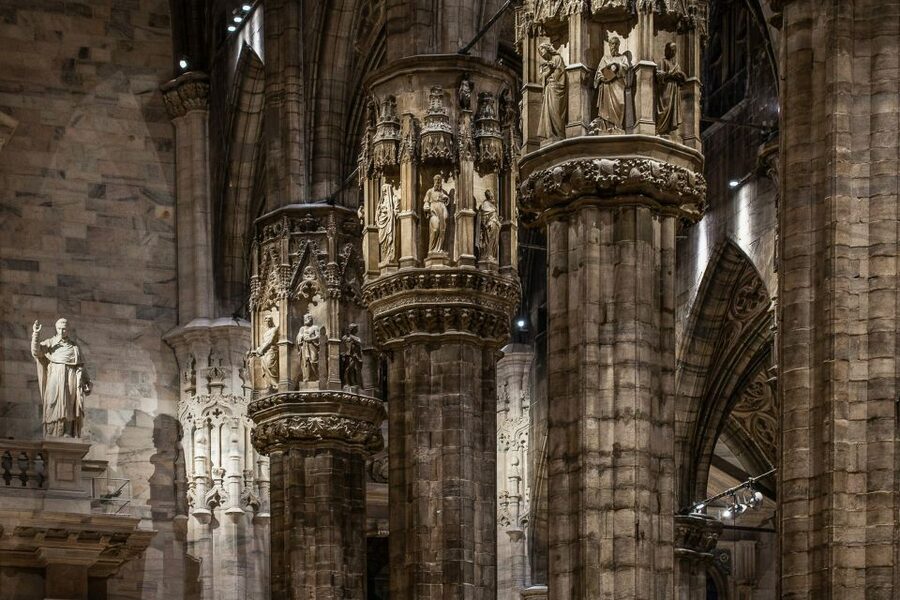
The first effect of the interior is size. The nave and columns make ordinary human scale feel very small, which is part of the reason this building has such force. Look up at the Gothic vaults, then back down at the marble floor and the patterned details around your feet. The view changes as you turn, so this is not a place to rush through with one photograph.
The columns are especially important. Their height and number create long visual lines through the building, while the stonework gives the interior a cool, solemn character. Even if you are not a specialist in church architecture, you can understand the basic achievement simply by looking upward and taking in how much structure surrounds you.
The cathedral is a working place of worship, not just a monument. Services and special events can limit access to parts of the interior. One visit included an orchestra, which made the setting memorable but also prevented some movement through the cathedral. Sunday Mass may also affect how freely you can walk around.
That mixture of sightseeing and religious use is worth respecting. Keep your voice low, follow staff directions, and avoid treating the building like a photo studio. Flash photography is not allowed, and tripods are forbidden.
Stained glass, statues, and the details worth hunting
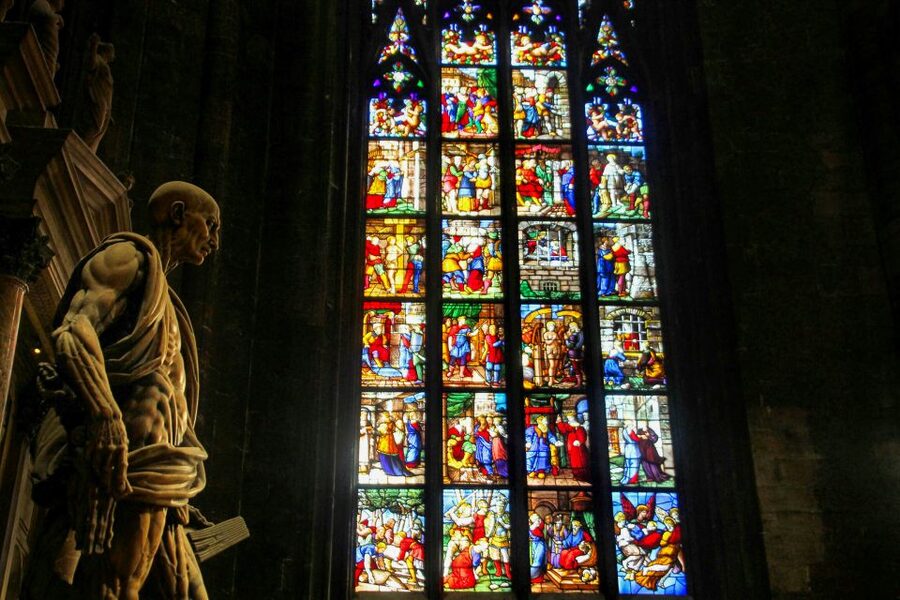
The stained-glass windows are among the best reasons to go inside. Light passing through them changes the feeling of the huge interior, adding color to the otherwise pale stone. From a distance, you see the overall effect. From closer positions, you can study the small scenes and figures packed into the windows.
The windows do not always reveal themselves in a single glance. I would move slowly along the permitted route and look back toward the glass from different points. At times, the route may force you to take a longer walk around an aisle rather than crossing directly from one section to another. That can feel awkward, but it also gives you new views of the columns, floor, and light.
The most famous statue inside is Saint Bartholomew Flayed. It depicts the apostle with his own skin draped over his body, a dramatic work that can be easy to miss if you focus only on the grand architecture. Ask yourself why the sculptor chose such a startling image. The figure connects religious devotion with a very physical reminder of sacrifice.
You will also find sarcophagi, magnificent altars, and many other statues. The cathedral contains far more than its most photographed details, so a little preparation helps. An audio guide is available inside for an additional charge. Some people found the roughly €8 option worthwhile, while others used their own advance research and were satisfied without it.
I think the audio guide is most useful if you want names, dates, and explanations. Without it, the experience is more visual and emotional. You can still appreciate the building, but you may miss why a particular statue, chapel, painting, or carved figure matters.
Still Milan, but a slower afternoon:
- Milan: City Sightseeing Hop-On Hop-Off Bus with Audio Guide
★ 4.0 · 6,256 reviews - Milan Cathedral: Duomo Terraces Ticket (No Church Access)
★ 4.6 · 6,111 reviews - Milan: Guided Walking Tour & Last Supper Visit with Ticket
★ 4.7 · 5,409 reviews - Milan: Fast-Track Milan Cathedral and Terraces Guided Tour
★ 4.7 · 5,240 reviews
The Grand Organ and the quieter corners
The Grand Organ is another highlight. It is described as one of the largest organs in the world, although this ticket does not include a performance. You may see the instrument without hearing it, which can feel like looking at a concert hall piano with the lid closed. Even so, its scale adds to the cathedral’s sense of ceremony.
Do not ignore the lower and quieter areas. The crypt can offer a more peaceful contrast to the open nave. One visit found it especially calm, and singing from the crypt created an unusual atmosphere. Access and movement can vary with services or events, so treat it as an area to visit if staff directions allow.
The combination of public monument and active church gives the Duomo more depth than a simple photo stop. You might spend your first minutes staring at the ceiling, then notice a small altar or carved figure that changes the mood. Give yourself enough time to make that shift.
Adding the Duomo Museum
Some ticket versions include entry to the Duomo Museum. Check the exact option before paying, since the base cathedral admission does not automatically include it.
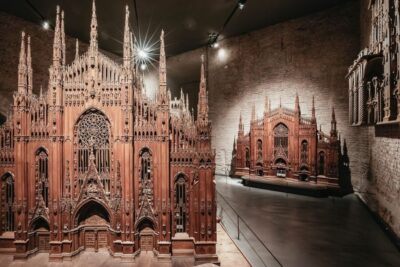
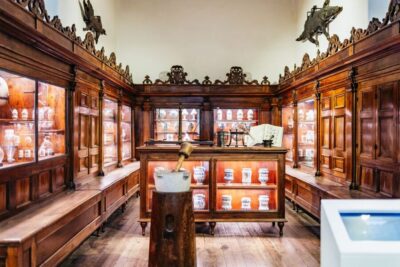
The museum is across from the cathedral and gives useful background on how the Duomo was built and decorated. Its displays include sculptures, paintings, artifacts, and material connected with the cathedral’s long construction. It also lets you see certain original sculptures kept indoors for protection.
This makes the museum more than an optional add-on for art specialists. Inside the cathedral, you see the finished setting. In the museum, you can examine pieces at closer range and understand the work behind the building’s decoration. You may also find examples of sculptures affected by war or pollution and later replaced in the cathedral.
If the museum version costs only a few dollars more than the basic ticket, I consider it the stronger buy for anyone curious about the Duomo’s making. It also gives you a useful indoor stop if rain or heat makes long outdoor sightseeing unpleasant.
Do not confuse museum entry with terrace entry. The museum does not put you on the roof. The ticket details should show clearly which areas are included.
Why the terraces are a separate decision
The terraces are the great omission here. The ticket specifically excludes them, along with the Archaeological Area. You will need a different ticket if you want to walk among the spires and see Milan from above.
Several people felt that the rooftop added something essential to the Duomo experience. From the terraces, you can examine the marble pinnacles and statues at close range, rather than seeing them only from the piazza. The rooftop is also the part many people have in mind when they call the Duomo a must-see.
But skipping the terraces is not automatically a mistake. Some people did not want the lift or narrow stairs, and the cathedral interior alone was enough for a worthwhile visit. If you have limited mobility, dislike heights, or simply want the church itself, the $13 ticket keeps the plan simple.
Look carefully at your priorities. Choose this ticket if the interior, stained glass, statues, and quiet religious atmosphere are your main aims. Pay for terrace access if the skyline, marble spires, and rooftop architecture are the reason you came.
Dress code and practical preparation
The dress code is not a minor suggestion. Knees and shoulders must be covered for both men and women. Shorts, tank tops, sleeveless shirts, and see-through clothing can lead to refused entry.
The enforcement may not feel perfectly consistent at every door or on every day, but do not plan your visit around that uncertainty. Dress appropriately from the start. If you arrive unprepared, nearby sellers may offer a shawl for about €7, and paper coverings may also be available at a side entrance. That is a backup, not the best plan.
Wear clothing that lets you pass security without carrying extra layers or a large bag. Since luggage and large bags are forbidden, arrange storage elsewhere before heading to the entrance. Also leave the tripod at your accommodation, and turn off flash photography.
The building is wheelchair accessible, which makes the interior option practical for visitors who cannot use the tight stairways associated with some rooftop visits. Access to every part can still be affected by services, events, and security rules.
How much time should you allow?
The ticket is valid for one day, with the final entry for all sites at 5:50 PM. Each area can be visited only once, so do not assume you can leave and re-enter the cathedral whenever you like.
For a quick look, allow about 40 minutes. That gives you time to take in the nave, columns, windows, major statues, and the general scale of the place. I would allow at least an hour if you want to pause at the Saint Bartholomew statue, look at the organ, visit the crypt when open, and study the altars.
Add more time if your ticket includes the museum. The museum is especially useful if you want context for the cathedral’s construction and sculpture. Keep in mind that special events, Mass, and crowd-control measures can change your route.
The self-guided format makes timing flexible. You will not be hurried by a group, and there is no required end time once you enter. That is one of the best features of this inexpensive ticket.
Who should book this experience?
I would choose it for a first visit to Milan when I want a straightforward look inside the Duomo. It suits independent sightseers, couples, families who prefer to move at their own pace, and anyone who wants a low-cost ticket without a guided tour.
It is also a sensible choice if you have already seen the terraces or do not want them. The interior is large enough to justify the visit, and the stained glass, marble columns, altars, statues, and crypt provide plenty to notice.
I would hesitate only if you want detailed explanations and do not plan to use an audio guide or do any preparation. The building can be visually overwhelming, and without context some of the art may blur into a long sequence of stone and glass.
I would also avoid this ticket if the rooftop is your main goal. You may leave feeling that the central part of your visit was missing. Buy a terrace-inclusive option instead, and check if the Archaeological Area is included as well.
Should you book the Milan Cathedral direct-entry ticket?
Yes, for most visitors who want the cathedral interior at a sensible price. The entry process is simple, the visit is self-paced, and the building delivers the scale and detail you expect from Milan’s landmark.
Book the museum version if the price difference is small and you want to understand the Duomo’s artwork and construction. Choose a terrace ticket instead if rooftop views and close-up spires matter most. For everyone else, this $13 admission is an efficient way to see the inside of one of Europe’s great Gothic churches, provided you arrive dressed for worship and prepared for security.
FAQ
Does this ticket include the Milan Cathedral terraces?
No. The terraces are excluded from this ticket and require separate admission.
Is the Archaeological Area included?
No. Entrance to the Archaeological Area is not included.
Is the Duomo Museum included?
Only if you select the ticket option that includes it. Check the chosen option before booking.
Where do I enter the cathedral?
Go directly to the main entrance of the Duomo Cathedral and scan your ticket.
Do I have to pass through security?
Yes. Every visitor must pass through airport-style security checks.
What clothing is required?
Knees and shoulders must be covered for both men and women. Shorts, tank tops, sleeveless shirts, and see-through clothing are not allowed.
Can I bring a large bag or luggage?
No. Luggage and large bags are not allowed, along with sharp objects, tripods, drones, glass objects, skateboards, and other prohibited items.
How late can I enter?
The last entry for all sites is at 5:50 PM. The ticket is valid for one day, and each area can be visited only once.
Recently added around Milan
- Milan: City Highlights Walking Tour with The Last Supper★ 4.9 · 195 reviews
- Milan: The Milan Pass City Card★ 4.0 · 655 reviews
- Milan: Skip-the-Line Guided Walk and “The Last Supper”★ 4.5 · 606 reviews
- Milan: Duomo & Rooftop Tour with Optional Hop-On Hop-Off Bus★ 4.5 · 262 reviews
- Milan: Duomo and The Last Supper Skip-the-Line Guided Tour
- Milan: Leonardo’s Last Supper and Michelangelo’s Pietà Tour★ 4.6 · 559 reviews
- Milan: Sforza Castle and Michelangelo’s Pietà Rondanini Tour★ 4.7 · 1,119 reviews
- Milan: San Sepolcro Crypt Skip-the-Line Entry Ticket★ 4.2 · 512 reviews
Milan Tours, compared.
Cathedral and Duomo’s Terraces Entrance Ticket
Read our review →
Science and Technology Leonardo da Vinci Museum Entry
Read our review →
City Sightseeing Hop-On Hop-Off Bus with Audio Guide
Read our review →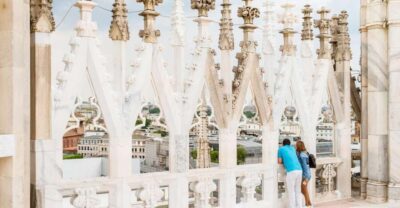
Milan Cathedral: Duomo Terraces Ticket (No Church Access)
Read our review →
Guided Walking Tour & Last Supper Visit with Ticket
Read our review →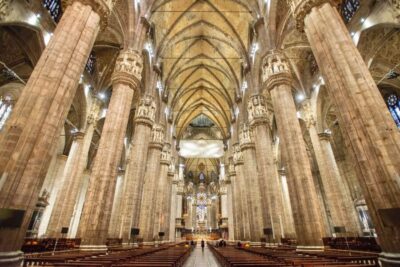
Fast-Track Milan Cathedral and Terraces Guided Tour
Read our review →
Browse the lists this tour appears in