
Reviewed · COOKING CLASSES
Milan: Italian Cooking Class with Food and Wine
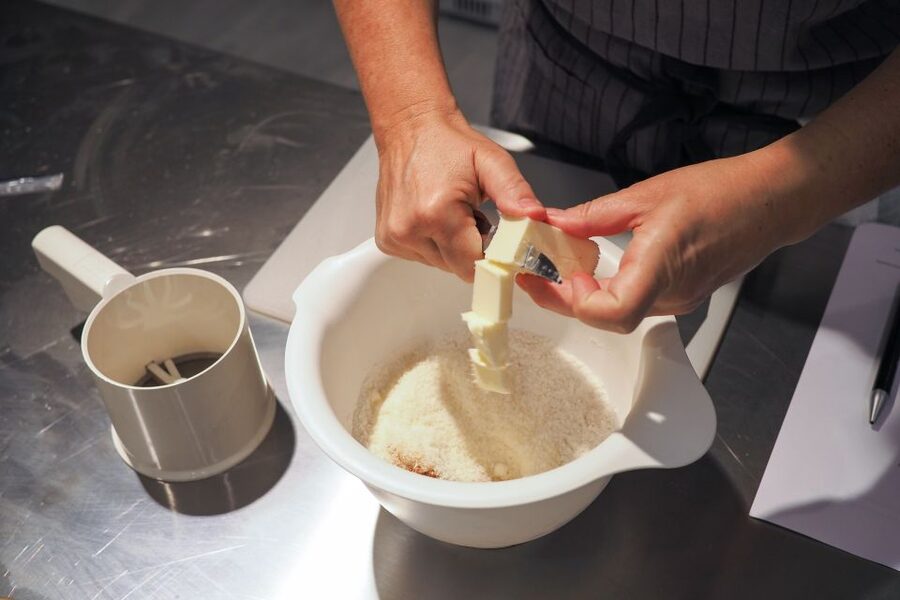
Fresh pasta is the best souvenir from Milan. This three-hour workshop combines hands-on cooking with a shared meal, and I like that you work at your own station rather than simply watching a demonstration. I also like the relaxed social side, with wine, snacks, and recipes to take home. The main consideration is that the exact dishes can change, and some sauces may be prepared ahead of time.
Chef Ilaria is frequently praised for her humor, clear instruction, and real enthusiasm for Italian food. You may make tagliatelle, gnocchi, ravioli, bruschetta, tiramisù, or another traditional dish, so arrive ready to learn rather than expecting one fixed menu. The class is best for adults and older children who can follow kitchen rules and work comfortably on their feet.
In This Review
- Key points to know before you book
- Entering Chef and the City in Milan
- The first taste: snacks before the serious work
- Making pasta from scratch, the hands-on centerpiece
- Bruschetta, antipasti, and the logic of simple ingredients
- Dessert is part of the lesson, not an afterthought
- Sitting down to eat what you made
- Chef Ilaria’s teaching style
- How much cooking do you really do?
- Price, group atmosphere, and practical value
- Who will enjoy this Milan cooking class?
- Should you book Chef and the City?
- FAQ
- How long does the Milan cooking class last?
- How much does the cooking class cost?
- What dishes will I prepare?
- Is fresh pasta included in the class?
- Is food included in the price?
- Is wine included?
- Will I receive the recipes?
- What languages are spoken?
- Can I bring luggage or a large bag?
- Is the class suitable for children or wheelchair users?
Key points to know before you book
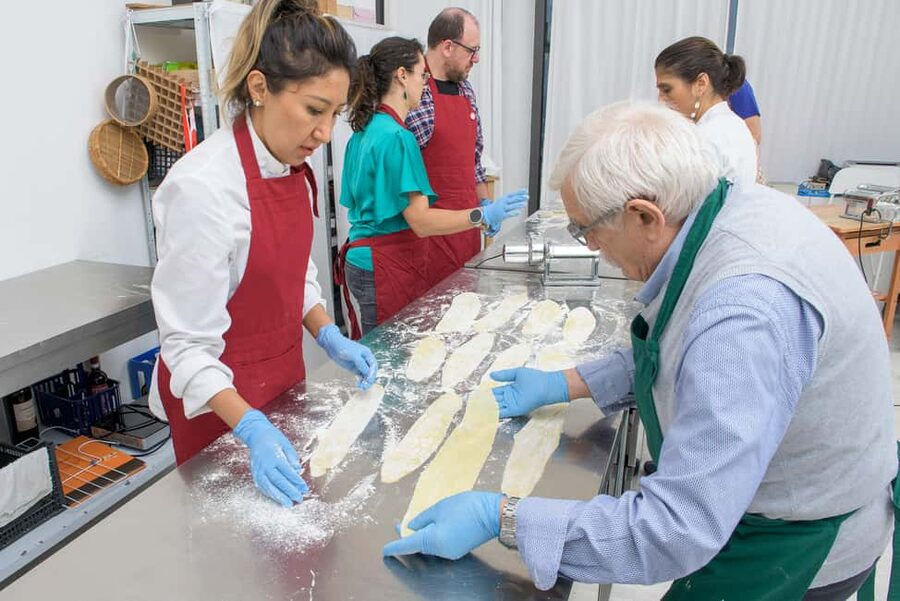
- Three dishes in three hours: You typically prepare an appetizer, a pasta or main course, and a dessert.
- Fresh pasta is the star lesson: You may roll, cut, or shape pasta by hand and with a pasta machine.
- Chef Ilaria brings personality: Clear explanations, Italian food stories, and plenty of humor are central to the class.
- The meal is included: Sit down afterward to eat what you prepared, with wine, snacks, coffee, tea, and water.
- Recipes go home with you: The supplied recipes are intended to be practical enough for your own kitchen.
- Come light and prepared: Large bags, luggage, pets, smoking, and food or drinks during the cooking session are not allowed.
Entering Chef and the City in Milan
The meeting place is easy to identify. Chef and the City is a street-level shop with three large windows and three red signs bearing the name. When you arrive, ring the bell at the main window door.
That simple detail matters in Milan, where a cooking school can otherwise be easy to walk past. Allow enough time to find the storefront and arrive ready to begin. Private transportation is not included, and you cannot leave luggage or large bags at the venue, so this is not an activity to pair with a hotel checkout and a suitcase in tow.
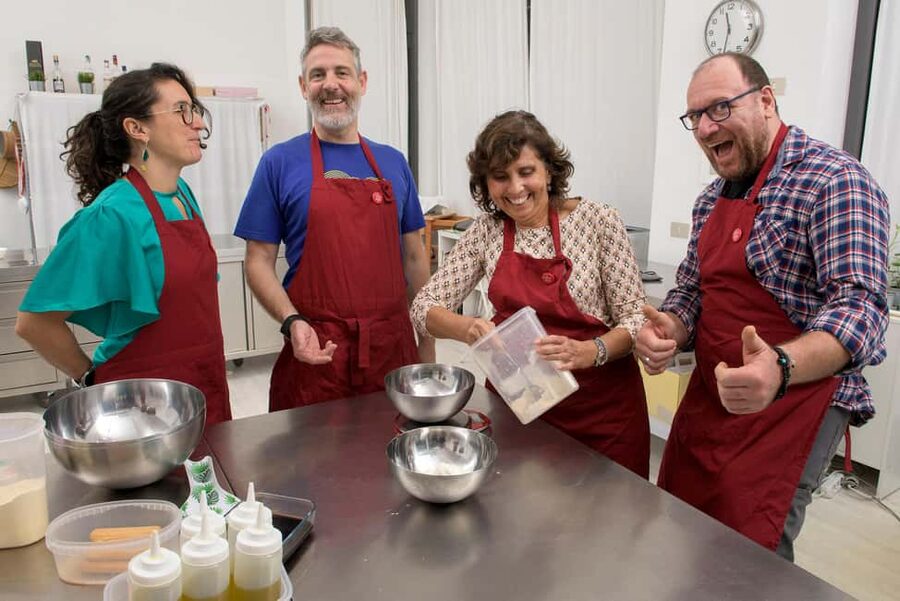
The setting is a professional cooking lab rather than a restaurant dining room. You receive cooking tools, an apron, and gloves, and you work from your own personal desk. That arrangement gives you a proper role in the meal. You are not just standing behind a chef while someone else does the important work.
The class is offered in Italian and English. Chef Ilaria and the team have been praised for explaining techniques clearly in English, which is especially useful when a recipe depends on small details such as dough texture, timing, or the amount of pressure used to shape pasta.
More Cooking Classes in Milan
- Milan: Pasta and Tiramisu Cooking Class with Wine
★ 4.8 · 1,106 reviews - Milan: Pasta and Tiramisu Small Group Cooking Class with Wine
★ 5.0 · 660 reviews - Milan Cooking Class: Authentic Pizza & Gelato Making
★ 5.0 · 582 reviews
The first taste: snacks before the serious work
The session includes light food while you get settled. You might find cheese, sun-dried tomatoes, mortadella, olives, cookies, biscuits, and sweets, along with coffee, tea, herbal infusions, and water.
These extras help make the workshop feel social from the beginning, but they are not a substitute for the meal you cook later. The kitchen rules are strict for a sensible reason: while cooking, you must not eat or drink, and you should not taste food as you work. Tie back long hair, follow the chef’s instructions, and keep the cooking area orderly.
I appreciate this practical approach. It may feel a little formal at first, especially if you are used to nibbling as you cook at home, but it keeps the professional workspace clean and safe. The snacks are available during suitable breaks, and the main meal comes after the cooking is finished.
Making pasta from scratch, the hands-on centerpiece
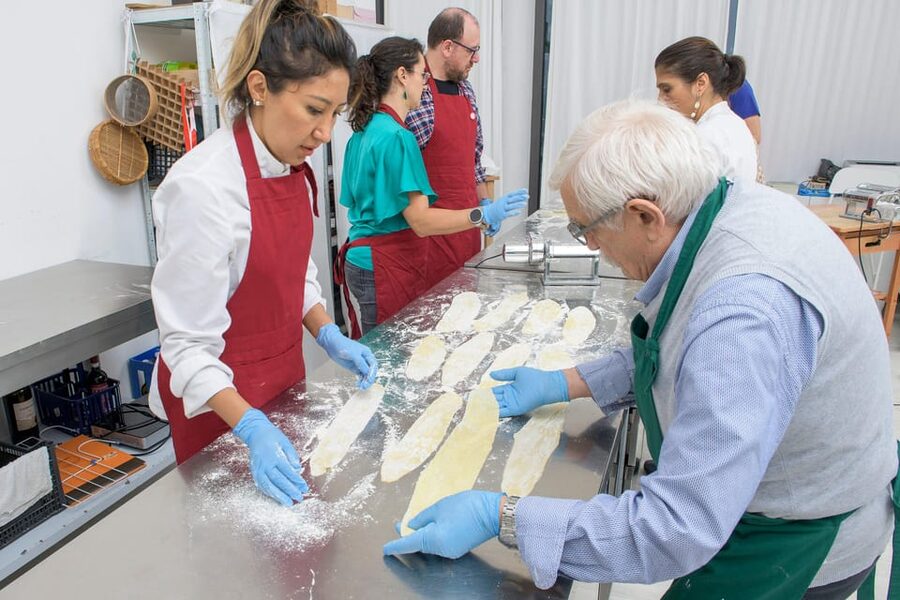
Fresh pasta is the lesson most likely to stay with you after the class. Depending on the day, you might make tagliatelle, ravioli, or another pasta shape. Some sessions include a pasta machine, which lets you see how a rough piece of dough becomes thin, workable sheets.
The value here is practical. You learn more than the name of a dish. You get a sense of how pasta dough should feel, how thin it needs to be, and how to handle it without tearing. Beginners can follow the process, while more experienced home cooks can pay attention to the chef’s small corrections and timing tips.
You may also prepare gnocchi, depending on the menu. One session included gnocchi with butter and sage, a simple combination where texture matters more than a long ingredient list. The cooking method is not hidden behind restaurant equipment. You take part in the preparation and then eat the result at the table.
One useful limitation is worth noting. A three-hour class cannot cover every sauce from start to finish. In one particularly clear explanation, Chef Ilaria provided homemade ragù and cacio e pepe sauces because they require more time than the workshop allowed, then supplied the recipes for making them at home. You still learn how the dishes fit together, but you may not personally cook every component that reaches your plate.
That is not a flaw if you book this as a compact introduction to Italian cooking. It could disappoint you if you expect to prepare every sauce, filling, and garnish entirely from raw ingredients. Check the menu for your date if a particular dish matters to you.
Bruschetta, antipasti, and the logic of simple ingredients
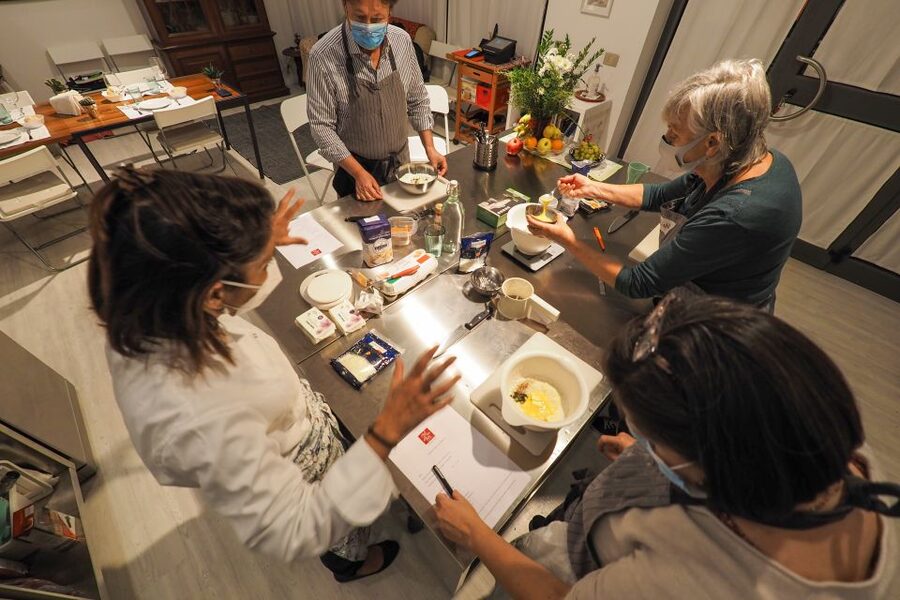
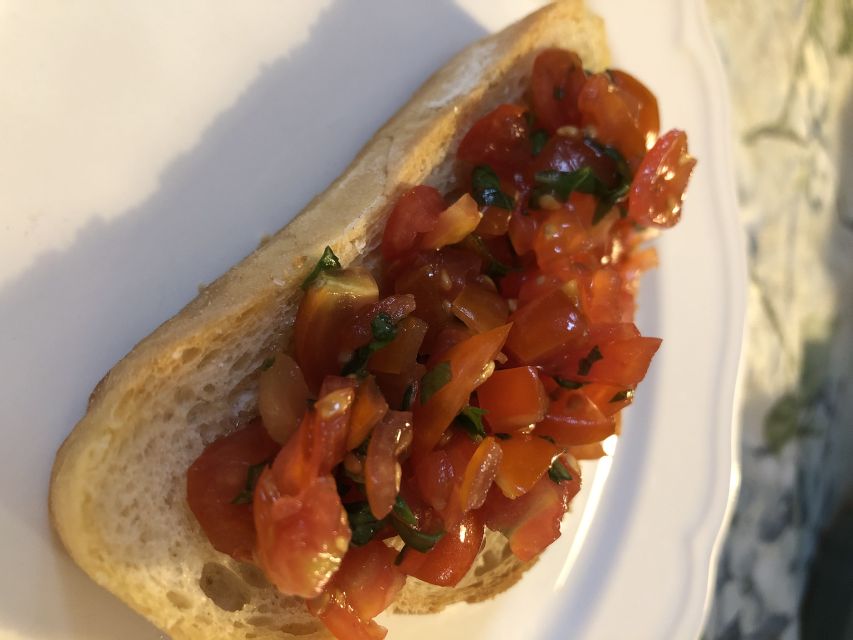
An appetizer such as bruschetta often appears in the class. It is a good choice for teaching Italian cooking because the dish is straightforward but not careless. The quality and handling of bread, tomatoes, olive oil, garlic, and seasoning make the difference.
The class also focuses on healthy, low-waste cooking. That does not mean you are attending a nutrition lecture. Instead, the chef introduces ways to use ingredients carefully and avoid unnecessary waste, while showing how traditional food can be prepared in a modern home kitchen.
I like this part of the experience because it gives you something you can repeat easily. Fresh pasta may require a little equipment and practice, but bruschetta can become a useful weeknight dish. The recipes are handed out so you do not have to rely on memory once you return home.
The precise appetizer changes. You may encounter bruschetta in one session and a different starter in another. Think of the class as a lesson in Italian techniques and habits, not a guaranteed menu printed in stone.
More Food Tours in Milan
- Milan’s Authentic Street Food tour: A Gourmet Experience
★ 4.5 · 717 reviews - Small-Group Barolo Wine Tasting, Alba & UNESCO Piedmont Hills
★ 5.0 · 689 reviews - Milan: Guided Street Food Walking Tour with Food Tasting
★ 4.8 · 654 reviews - Milan: Sunset Navigli Food & Drinks Tour with a Local
★ 4.6 · 264 reviews
Dessert is part of the lesson, not an afterthought
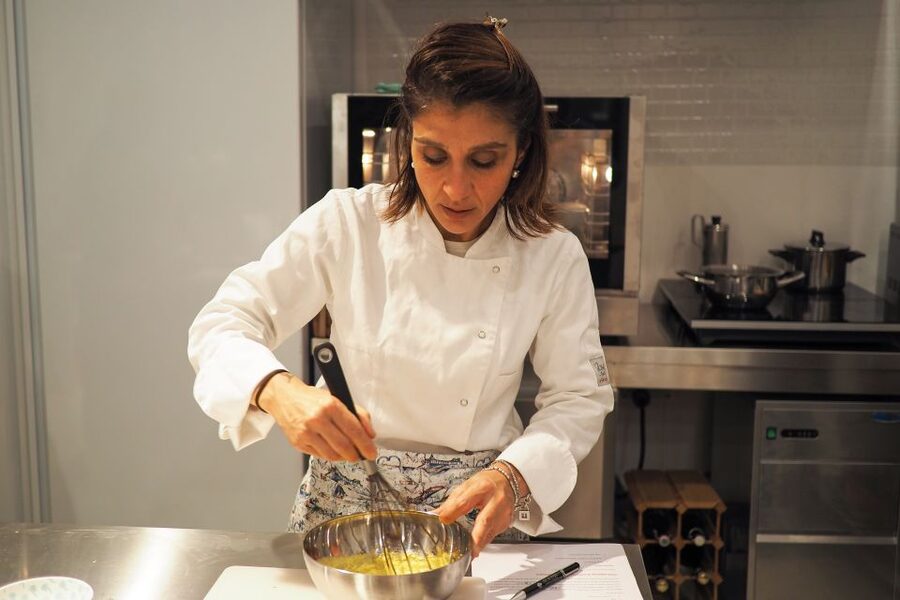
The third dish is often a dessert such as tiramisù, biscotti, cantucci, apple strudel, or another sweet preparation. This gives the class a satisfying rhythm: savory starter, substantial pasta or main course, then something sweet to finish.
Tiramisù has produced some of the most memorable food advice from the class. Chef Ilaria has explained that traditional tiramisù is not prepared with amaretto, despite that ingredient appearing in some versions outside Italy. That kind of distinction is exactly what makes a cooking class more useful than a generic recipe demonstration. You learn how a dish is understood in Italy, not just how to reproduce an international restaurant version.
Biscotti and cantucci are also practical choices for home cooking because they keep better than a delicate plated dessert. Still, the menu varies. If you have your heart set on gnocchi and tiramisù, confirm the scheduled dishes before booking.
Sitting down to eat what you made
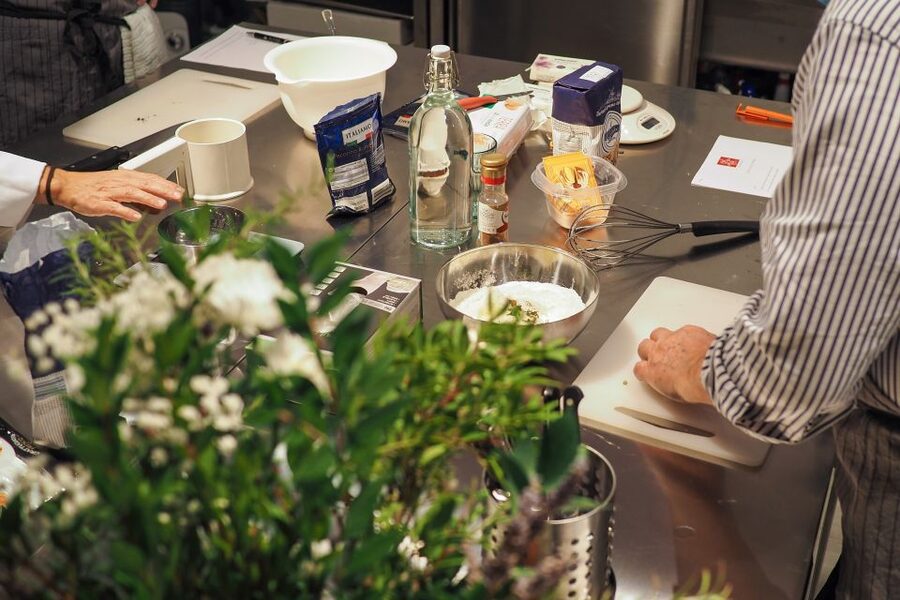
Once the cooking is finished, the class shifts into a shared meal. You sit together in the dining room and eat the dishes prepared during the workshop. Wine is included, with red and white options, and the atmosphere becomes more conversational.
This shared table is one of the strongest parts of the experience. You meet people from different countries, compare pasta shapes, and talk about Milan over the meal. Solo visitors can join without needing to arrange a private group, while couples and families have a natural activity that is more engaging than simply ordering another restaurant dinner.
The wine is part of the package, not an extra purchase added at the end. Some sessions have generous pours, so pace yourself if you are cooking later, sightseeing afterward, or simply want to remember the difference between tagliatelle and ravioli.
The meal also gives you a useful reality check. If the pasta is uneven or the dessert is not perfect, you still get to see how the finished food comes together. Several classes have been praised for producing a complete, edible meal, which speaks well of the instruction and organization.
Chef Ilaria’s teaching style
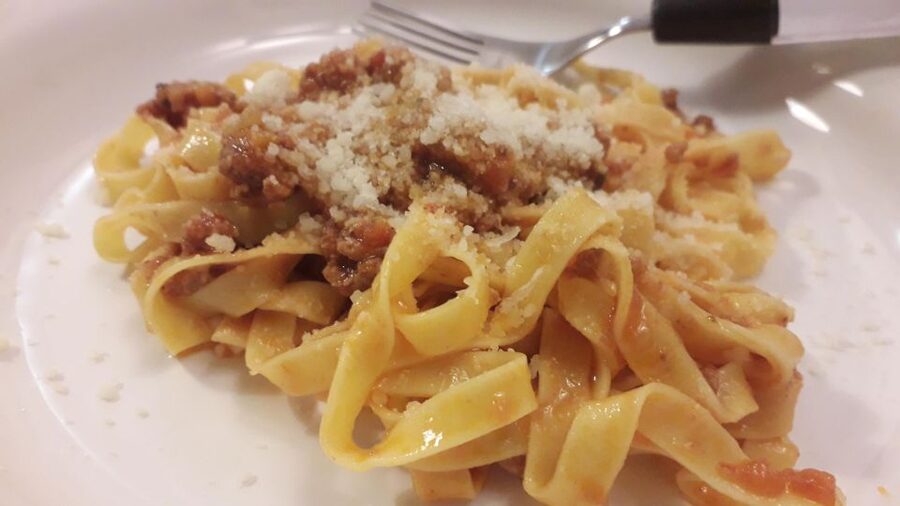
Chef Ilaria is the personality at the center of the experience. Her approach combines instruction with stories about Italian food, cultural details, and jokes that keep the class moving. She has been praised for correcting mistakes without making beginners feel uncomfortable.
That matters because a cooking class can go wrong in two ways. It can become a lecture where you barely touch the food, or it can become chaotic, with everyone chopping and mixing without understanding why. Here, the strongest reports describe a good balance of explanation, practice, and conversation.
I especially value the moments when the chef explains why a technique matters. A comment about the proper way to make carbonara, including the firm Italian view that cream and bacon do not belong in the traditional version, turns a recipe into a lesson in food culture. You can adapt a dish at home, but you also learn what makes it authentically recognizable.
The team may include an assistant, such as Fernando, or another instructor. The exact teaching team can vary, so do not assume every session will be led by Ilaria herself. One class participant expected her personally and received a different arrangement, yet still found the workshop enjoyable. That is a useful reminder to book for the format and subject, not one guaranteed personality.
How much cooking do you really do?
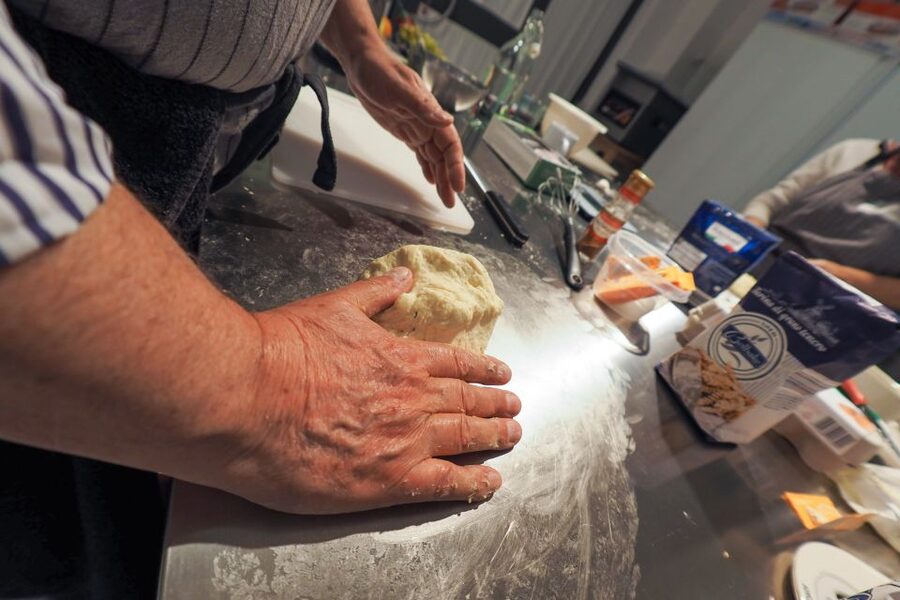
You should expect genuine participation, but not an all-day apprenticeship. The workshop lasts three hours, which is enough time to prepare three dishes at a comfortable pace, eat together, and ask questions. It is not enough time to make every elaborate sauce, filling, or dough from scratch.
The hands-on work is strongest when making fresh pasta. Other parts may involve cutting, mixing, assembling, or preparing ingredients under direction. If you want a complete start-to-finish lesson for a particular recipe, ask about the menu and how much of each dish participants prepare.
This balance suits beginners. You get clear guidance and a finished meal without spending an exhausting day in the kitchen. More experienced cooks may wish for greater depth, particularly with sauces. The recipe sheets help fill that gap, giving you the chance to try the longer preparations at home.
Dietary needs can sometimes be accommodated. One gluten-free participant was able to join fully, and the chef took food restrictions and allergies into account. You should still communicate any allergy or dietary requirement when booking rather than relying on an informal adjustment at the door.
Price, group atmosphere, and practical value
At $80 per person, the workshop is fairly priced for a three-hour experience that includes food, wine, cooking tools, an apron, gloves, snacks, and recipes. You are paying for instruction and an evening activity, not merely for a plate of pasta.
The value is best if you use what you learn later. A restaurant meal may cost less or more depending on where you eat, but it will not teach you how to roll pasta, shape gnocchi, or make an Italian dessert. The recipe collection adds lasting value, especially if you plan to buy a pasta machine after the class.
Group size can affect the mood. Some sessions are small and personal, while others bring together an international mix of participants. A very small class can mean more direct attention, but it may feel quieter. One couple found themselves as the only two participants and still had fun, though the social energy was naturally lower.
The class is not suitable for children under 10 or people with mobility impairments. It is also not wheelchair accessible. Pets, smoking, luggage, and large bags are not permitted. These restrictions are easy to manage if you arrive without unnecessary belongings.
Who will enjoy this Milan cooking class?
I would choose this experience if you want a social evening with real kitchen participation. It works especially well for:
- First-time pasta makers who want patient instruction
- Couples looking for something beyond museums and restaurants
- Solo visitors who enjoy meeting people over a shared meal
- Families with children aged 10 and older
- Home cooks interested in Italian technique and food customs
- Anyone who wants recipes that can be repeated after the trip
I would hesitate if you need a fully private class, have limited mobility, or want a fixed menu guaranteed in advance. I would also think twice if your main goal is advanced sauce work, since some longer sauces may be prepared by the chef ahead of time.
Book with flexible expectations. You will learn three dishes, but the particular trio may change. That variety is part of the charm, provided you care more about learning than ticking off one exact recipe.
Should you book Chef and the City?
Yes, if you want an affordable, friendly, hands-on introduction to Italian cooking in Milan. The strongest reasons are the fresh pasta lesson, Chef Ilaria’s lively teaching, the included wine, and the chance to eat a meal you helped prepare.
Before booking, check the scheduled menu, note the age and accessibility limits, and leave your luggage elsewhere. If you do that, this is an easy activity to recommend. You return home with recipes, new kitchen confidence, and a better sense of why Italian cooking often depends on technique, restraint, and good ingredients rather than complicated tricks.
FAQ
How long does the Milan cooking class last?
The experience lasts three hours, including the cooking workshop and the shared meal afterward.
How much does the cooking class cost?
The listed price is $80 per person.
What dishes will I prepare?
The class teaches three Italian dishes. Possible recipes include bruschetta, fresh tagliatelle, gnocchi, ravioli, cacio e pepe, ragù, focaccia, eggplant parmigiana, tiramisù, biscotti, cantucci, and apple strudel. The exact dishes can vary.
Is fresh pasta included in the class?
Fresh pasta is a central part of the workshop and may include tagliatelle, ravioli, or another pasta shape. Some sessions also include gnocchi.
Is food included in the price?
Yes. Food, cooking tools, gloves, and aprons are included, along with the meal prepared during the class.
Is wine included?
Yes. Wine is included, with red and white wine available during the meal. Coffee, tea, infusions, and water are also provided.
Will I receive the recipes?
Yes. The chef provides copies of the recipes so you can recreate the dishes at home.
What languages are spoken?
The class is offered in Italian and English.
Can I bring luggage or a large bag?
No. Luggage and large bags are not allowed, and there is no luggage storage at the venue.
Is the class suitable for children or wheelchair users?
The activity is not suitable for children under 10, people with mobility impairments, or wheelchair users. The venue is not wheelchair accessible.
Recently added around Milan
- Milan: City Highlights Walking Tour with The Last Supper★ 4.9 · 195 reviews
- Milan: The Milan Pass City Card★ 4.0 · 655 reviews
- Milan: Skip-the-Line Guided Walk and “The Last Supper”★ 4.5 · 606 reviews
- Milan: Duomo & Rooftop Tour with Optional Hop-On Hop-Off Bus★ 4.5 · 262 reviews
- Milan: Duomo and The Last Supper Skip-the-Line Guided Tour
- Milan: Leonardo’s Last Supper and Michelangelo’s Pietà Tour★ 4.6 · 559 reviews
- Milan: Sforza Castle and Michelangelo’s Pietà Rondanini Tour★ 4.7 · 1,119 reviews
- Milan: San Sepolcro Crypt Skip-the-Line Entry Ticket★ 4.2 · 512 reviews
Cooking Classes, compared.

3 in 1 Cooking Class near Navona: Fettuccine, Ravioli & Tiramisu
Read our review →
Florence Pizza or Pasta Class with Gelato Making at a Tuscan Farm
Read our review →
Pasta & Tiramisu Cooking Class with Unlimited Wine
Read our review →
Pizza-Making Workshop with Drink and Appetizer
Read our review →
Pasta & Tiramisu Class with Fine Wine by the Vatican
Read our review →
Cooking Class and Lunch at a Tuscan Farmhouse with Local Market Tour from Florence
Read our review →Browse the lists this tour appears in