
Reviewed · WALKING TOURS
Ghosts, Legends & Mysteries of Rome Tip-Based Walking Tour
Rome gets stranger after sunset. This 90-minute night walk trades emperors and marble for ghosts, executions, poisoners, corrupt popes, witches, and crimes tied to the streets around Castel Sant’Angelo and Campo de’ Fiori. I like the mix of documented history and local legend, along with the guides’ lively storytelling and dark humor.
I also like that the route uses real landmarks rather than treating Rome as a stage set. The stories connect to bridges, palaces, fountains, churches, and narrow lanes you can revisit later. The main consideration is the tip-based price: the advertised booking cost is only $3.77, but you should plan to tip your guide, usually at least €10 per person and possibly more if you value the experience.
The tone is not gentle or polished. The tour covers brutality, religious persecution, assassinations, poison, and terrible deaths, sometimes with politically incorrect jokes. That combination works well for curious adults who want a different view of Rome, but it may not suit children or anyone looking for a calm, traditional sightseeing walk.
In This Review
- Key things to know before booking
- Starting beneath Castel Sant’Angelo
- From famous sights to Rome’s less comfortable stories
- Witches, heretics, and the Inquisition
- The secret stops and the Fountain of the Mask
- Farnese Palace and the politics of power
- Giulia Tofana and the city’s criminal past
- Campo de’ Fiori closes the walk
- How the guides shape the experience
- Price, tipping, and real value
- Who should book this Rome night walk?
- Should you book Ghosts, Legends & Mysteries of Rome?
- FAQ
- Where does the Ghosts, Legends & Mysteries of Rome tour begin?
- Where does the tour finish?
- How long does the tour last?
- Is this a free tour?
- How much should I tip the guide?
- Which languages are available?
- Can I cancel or pay later?
Key things to know before booking
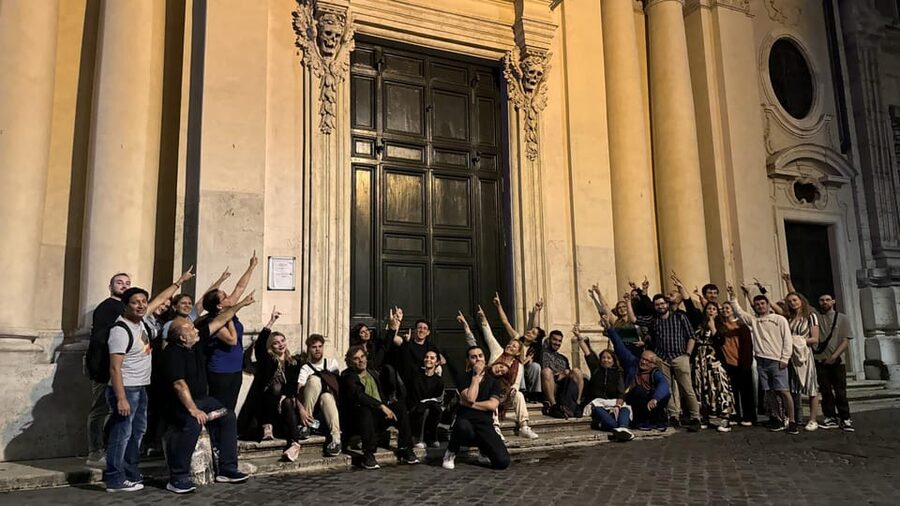
- Castel Sant’Angelo begins the story: Meet in front of the castle entrance, by Ponte Sant’Angelo, and start with one of Rome’s most dramatic night settings.
- The route ends at Campo de’ Fiori: After passing through central Rome, you finish near a square filled with restaurants and evening activity.
- Giulia Tofana is part of the darker history: Her story brings poison, murder, and Roman society into sharp focus.
- The guides make or break the evening: Ivan, Leonardo, Simone, Simon, and Max have all led memorable tours, with humor and strong storytelling praised repeatedly.
- You pay the guide directly through a tip: The low booking price does not represent the full cost you should budget.
- English and Spanish are available: You can choose between the two languages when checking tour times.
Starting beneath Castel Sant’Angelo
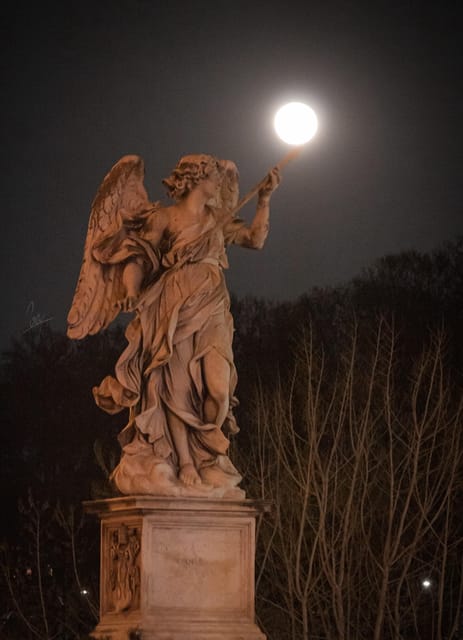
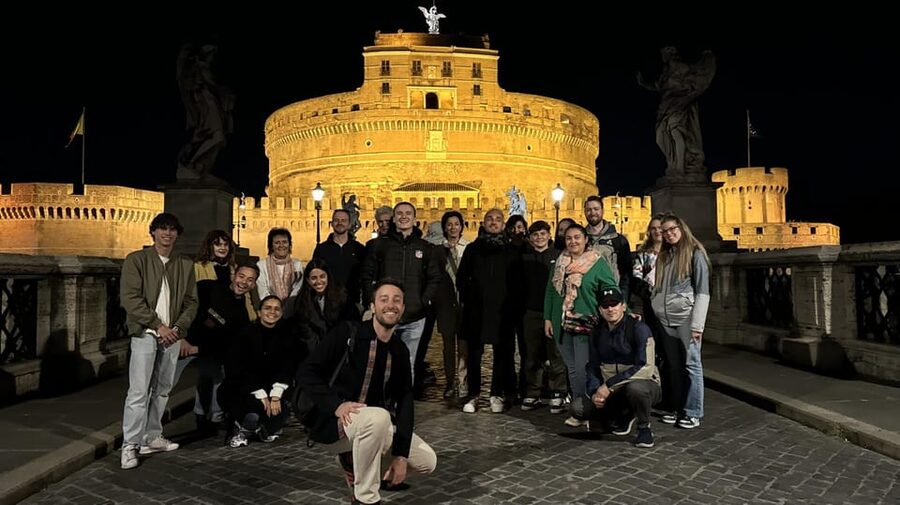
The meeting point is easy to identify: stand in front of the entrance to Castel Sant’Angelo, near the bridge lined with Bernini-designed angels. This is a practical place to begin because the castle already carries a sinister mood. Its round mass, dark river setting, and long connection with Rome’s rulers give the guide a strong opening scene.
The experience begins with a photo stop and about 15 minutes of guided attention around Castel Sant’Angelo. You should not expect an interior visit to the castle. Instead, the guide uses the building and its surroundings to explain the darker episodes connected with this part of Rome.
Castel Sant’Angelo has served several roles over time, and that changing identity makes it useful for a tour about power and fear. The guide may connect its past to popes, executions, prisoners, and secretive acts of authority. The exact stories can vary by guide, but the setting gives the first section weight before the group moves into the streets.
This opening also helps you get your bearings. If you arrive early, you can look across the Tiber and take in the bridge before the group gathers. At night, the area provides some of the most atmospheric views of the walk, though you should keep your attention on the guide rather than expecting a formal photo session.
More Walking Tours in Rome
- Rome: Trastevere & Campo de Fiori Street Food Walking Tour
★ 4.9 · 2,768 reviews - Rome: Paranormal Night Walking Tour & Secret Backstreets
★ 4.9 · 1,921 reviews - Rome by Night Walking Tour – Legends & Criminal Stories
★ 4.5 · 1,003 reviews
From famous sights to Rome’s less comfortable stories
After Castel Sant’Angelo, the route moves through several short stops. Some are listed simply as guided sightseeing points, while others are described as secret stops. That wording suggests the appeal is not a series of major paid attractions, but the stories attached to ordinary corners and buildings you could easily pass without noticing.
The walking sections are short, generally five to ten minutes at a time. This keeps the tour moving and prevents the evening from becoming a long lecture in one place. You hear a story, walk through the city, then stop again as the next location changes the subject.
I like this format for Rome because the city can overwhelm you with famous monuments. A guide who points out a less obvious doorway or alley gives you a new way to read the center. You begin to notice how close grand palaces, churches, fountains, and sites of punishment can be to one another.
The tradeoff is that the route may feel more like a chain of dark anecdotes than one tightly structured tale. One of the less enthusiastic assessments found the facts somewhat disconnected, with people, crimes, and local details not always building toward a final climax. That is fair. This is a collection of unsettling stories, not a single mystery with a carefully staged ending.
Witches, heretics, and the Inquisition
The tour’s subject matter reaches beyond ghosts. Stories about witches, heretics, and the Inquisition show how fear worked in earlier Roman society. These episodes are useful because they put supernatural beliefs beside real violence. A ghost story may be entertaining, but persecution and execution reveal the very real consequences of people being branded dangerous.
Expect the guide to present history without much softening. The stated focus includes corruption among popes, assassins, executions, and crimes committed by people with power. The dark humor helps keep the mood from becoming relentlessly grim, though it also makes the tour unsuitable for anyone who dislikes jokes about death, religion, or cruelty.
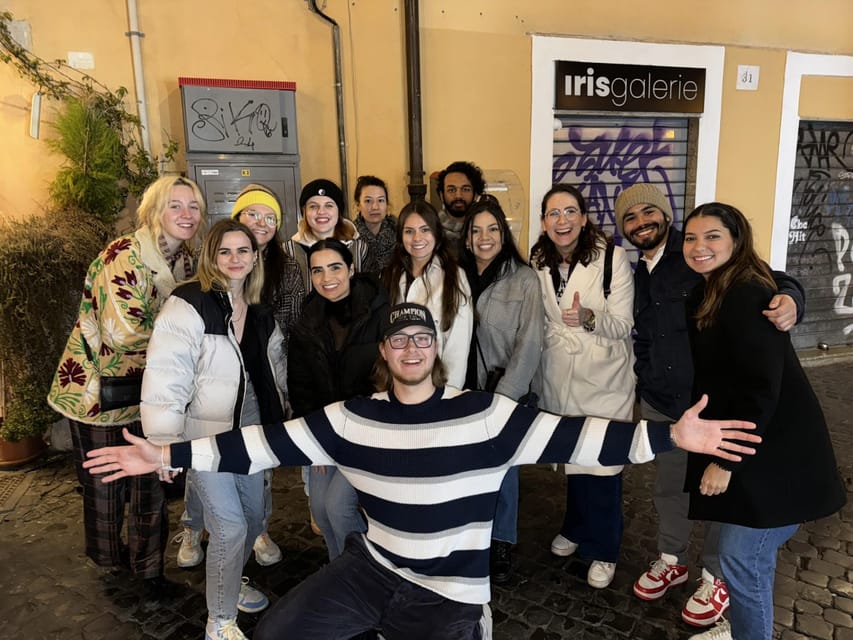
The best guides use humor as a delivery tool rather than as the entire point. Ivan is repeatedly praised for being funny, sincere, and able to keep a group attentive. Leonardo is also singled out for charisma and strong preparation. Simone and Simon receive similar praise for making grim material entertaining while answering questions from the group.
This personal style matters. The same story can feel flat in a crowded street if it is read from a script. Here, the guide’s performance is a central part of the value. You are not simply collecting dates and names. You are listening to someone shape an eerie tale around the place where it supposedly happened.
The secret stops and the Fountain of the Mask
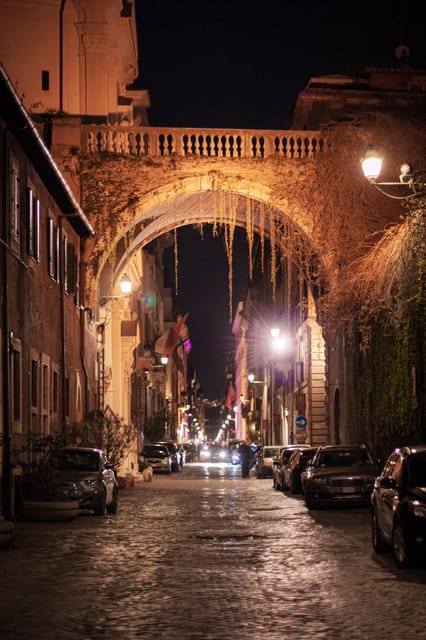
Several stops are kept unnamed in the public route description. That adds a small sense of discovery, but it also means you cannot fully judge the route from the stop list alone. You should think of these locations as story points rather than major monuments requiring long visits.
The unnamed locations are covered in short bursts of about five or ten minutes. They may involve a building, street, or corner connected with crime or legend. Because no interior admissions are included, the value comes from the guide’s explanation and your ability to connect the story with the surrounding city.
The Fountain of the Mask is one of the more distinct named stops. A fountain might seem like a decorative pause during a crime walk, but Rome’s fountains often carry local tales and odd details. The name itself fits the tour’s interest in secrecy, identity, and unsettling public symbols.
You should expect to remain outdoors throughout. Wear shoes that are comfortable for walking on Rome’s old streets, and bring a light layer for the evening. The supplied details do not promise seating, indoor shelter, or audio equipment. One particularly positive point is that the group used no headphones, allowing direct conversation and questions with the guide.
That face-to-face format is valuable if you enjoy asking about a detail that catches your attention. It can be less convenient if the group becomes large or gathers around a narrow pavement. One assessment noted that a bigger group made it harder for everyone to speak up. Most accounts describe a comfortable pace, but group size can change the feel of the evening.
Still Rome, but a slower afternoon:
- Vatican: Museums & Sistine Chapel Entrance Ticket
★ 4.5 · 144,003 reviews - Vatican Museums & Sistine Chapel Tour with Optional Basilica
★ 4.3 · 67,413 reviews - Colosseum, Roman Forum & Palatine Guided Tour
★ 4.7 · 63,148 reviews - Vatican Museums, Sistine Chapel & St Peter’s Basilica Guided Tour
★ 4.5 · 39,149 reviews
Farnese Palace and the politics of power
Farnese Palace provides another change in tone. The building’s grand setting lets the guide connect architecture with influence, wealth, and the people who shaped Roman life from positions of authority. On this tour, a palace is not simply a beautiful façade. It becomes evidence of the social world behind the crimes and intrigues.
The stop lasts around five minutes, so this is not an architectural tour. You will hear a focused story, look at the exterior, and continue. If you want detailed art or building history, you will need a separate visit. If you want a quick explanation of how Rome’s powerful families fit into the darker side of the city, the stop should serve you well.
This is one of the tour’s strengths: it places disturbing tales beside familiar sights. You can return during daylight and see the same palace through a more complicated lens. Rome becomes less like a collection of pretty backdrops and more like a city shaped by ambition, fear, religion, and revenge.
Giulia Tofana and the city’s criminal past
The story of Giulia Tofana is one of the advertised highlights, and it gives the tour a particularly sharp human focus. She is remembered as an infamous poisoner, linking domestic danger, murder, and the limited choices available to people living under rigid social rules.
I would not book this walk expecting a courtroom reconstruction or a full biography. The experience lasts only 1.5 hours and covers many subjects. Instead, the Tofana story functions as one striking chapter in a broader night of crimes, assassins, and suspicious deaths.
This kind of story also shows why the tour is more than a ghost walk. The supernatural material attracts attention, but the strongest moments may come from crimes that could actually have happened. You get a blend of true, tragic episodes and urban legends, with the guide explaining the difference as part of the presentation.
That blend does require a flexible attitude. Some stories are linked to documented people and locations. Others belong to the city’s folklore. If you need every tale presented with academic footnotes, this will feel loose. If you enjoy history told as a series of vivid human episodes, the approach is much more rewarding.
Campo de’ Fiori closes the walk
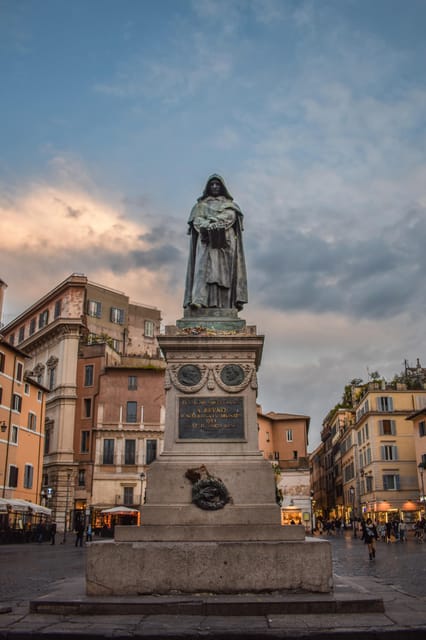
The tour finishes at Campo de’ Fiori after about ten minutes of guided attention there. The square is a practical ending point because you are close to food, drinks, and central Rome’s evening streets. The experience provider also offers recommendations for local eateries, gelaterias, and other places to eat.
That final advice is more useful than it may sound. A night walk ending at Campo de’ Fiori leaves you in a good position to continue the evening, but the square can be touristy. A guide who can point you toward local options adds value beyond the stories themselves.
The statue in the square also gives the guide another chance to discuss punishment, religious conflict, and Rome’s public memory. The ending may not produce a dramatic theatrical finale. One assessment called the tour a little short and felt the stories did not always build to a climax. Still, finishing in a central square gives you an easy transition to dinner or a return walk.
I would plan a meal after the tour rather than before it if you want to use the food suggestions. The exact recommendations can vary, but the guide has time to share them as the group breaks up.
How the guides shape the experience
Guide quality is the clearest strength of this walk. Ivan is repeatedly praised for humor, warmth, and an ability to hold attention. Leonardo is described as especially strong at storytelling, with a well-prepared and charismatic delivery. Simone and Simon are also praised for passion, clear explanations, and an easy way with questions.
Max received similar praise for making the evening informative and fun. One guide even helped people who were late or lost find the group, which is useful in central Rome, where a wrong turn can quickly put you on another street or bridge.
The consistent pattern is not simply factual accuracy. It is presentation. The guides tell grim stories with enough energy that the evening does not become a list of names and dates. Their dark humor gives the experience its identity.
Language matters here. English and Spanish tours are offered, but you should choose the language in which you can follow fast storytelling, jokes, and historical detail comfortably. Humor is harder to catch than basic sightseeing information, especially when the subject matter is already complex.
Price, tipping, and real value
The booking price of $3.77 looks almost symbolic because this is a pay-what-you-want tour. The guide works primarily for tips, so you should not treat the advertised price as the full cost of the experience.
A practical budget is at least €10 per person in cash. The stated usual range runs from €10 to $50, depending on what you feel the tour was worth. Tipping is optional, but it is the main way to pay the guide for the 1.5-hour walk.
At €10, the value is strong if you enjoy dark history and lively storytelling. You see several central areas, hear material that does not appear on standard Rome sightseeing walks, and receive food recommendations. At a higher tip, you are paying for the guide’s preparation, performance, and personal knowledge rather than for entry tickets or transport.
There are no paid admissions included. The cost is therefore easy to understand: you are paying for interpretation, not access to a monument. That makes the tour a good supplement to museum and Vatican visits, not a replacement for them.
You can reserve now and pay later, and cancellation is available up to 24 hours before the start for a full refund. Check the available start times when booking, since the walk is designed for the evening and the exact schedule can vary.
Who should book this Rome night walk?
I would choose this tour if you enjoy:
- Crimes, executions, and unsettling historical episodes
- Urban legends mixed with documented events
- Dark jokes and an informal guide
- Seeing central Rome after sunset
- Short walks with frequent stops
- Asking questions directly rather than listening through headphones
It is especially good for a repeat visit to Rome, when you have already seen the Colosseum, Trevi Fountain, and Vatican sights. It also suits first-time visitors who want one evening that feels different from the standard grand-tour route.
I would skip it if you want a scholarly lecture, a tightly plotted ghost story, or a tour focused on art and architecture. The material can be gruesome, and the politically incorrect humor will not work for everyone. A larger group may also make it harder to hear or join the conversation.
The 1.5-hour length is both a benefit and a limitation. You can fit it into a busy Rome schedule without losing an entire evening. Yet if the stories capture your interest, you may wish it lasted longer. Several guides are so engaging that the finish can feel sudden.
Should you book Ghosts, Legends & Mysteries of Rome?
Yes, if you want Rome’s uncomfortable side, not just its polished monuments. The combination of Castel Sant’Angelo, secret street stops, the Fountain of the Mask, Farnese Palace, and Campo de’ Fiori creates a compact route through the city’s darker memories.
Book with realistic expectations. Bring comfortable shoes, arrive at the castle entrance by Ponte Sant’Angelo, and carry cash for a tip. If possible, choose a smaller group and a guide such as Ivan, Leonardo, or Simone, though guide assignments can vary.
For the small booking charge and a sensible tip, this is a strong value. It will not explain every mystery or end with a grand revelation, but it can change how you see Rome’s streets after dark. I would add it to a Rome itinerary for an evening of sharp stories, uneasy laughs, and history that refuses to behave politely.
FAQ
Where does the Ghosts, Legends & Mysteries of Rome tour begin?
The meeting point is in front of the entrance to Castel Sant’Angelo, by Ponte Sant’Angelo.
Where does the tour finish?
The walk finishes at Campo de’ Fiori.
How long does the tour last?
The tour lasts 1.5 hours.
Is this a free tour?
It is a tip-based, pay-what-you-want tour. The booking price is listed as $3.77, but the guide works for tips, so you should budget an additional amount.
How much should I tip the guide?
The stated usual tip ranges from €10 to $50. One practical suggestion is to plan for at least €10 per person in cash, depending on what you feel the experience was worth.
Which languages are available?
Live tours are available in English and Spanish.
Can I cancel or pay later?
You can cancel up to 24 hours before the experience for a full refund. You can also reserve your place and pay later.
Recently added around Rome
- Palatine Hill and Roman Forum Tour with Fast-Track Entrance★ 4.2 · 417 reviews
- Tivoli: Villa D’Este & Villa Adriana Pass & App Audioguide★ 4.4 · 364 reviews
- From Rome: Villa D’Este & Villa Adriana Day Trip with Lunch★ 4.4 · 289 reviews
- Vatican Museums & Sistine Chapel Skip-the-Line Guided Tour★ 4.6 · 254 reviews
- Rome: The Three Tenors at St. Paul’s Church Concert Ticket★ 4.7 · 699 reviews
- Tivoli: Villa D’Este Entry Ticket and App Audio Guide★ 4.3 · 191 reviews
- Rome: Capitoline Museums and Centrale Montemartini Tickets★ 4.4 · 328 reviews
- Rome: St. Peter’s Basilica and Papal Tombs Guided Tour★ 4.6 · 477 reviews
Walking Tours, compared.
Guided Walking Tour & Last Supper Visit with Ticket
Read our review →

Rialto Bridge & Offbeat Unusual Venice Walking Tour
Read our review →
Private 3 hrs Venice Tour: St Mark’s, Walking tour & Boat tour
Read our review →
Skip the line: Uffizi and Accademia Small Group Walking Tour
Read our review →Browse the lists this tour appears in