
Reviewed · CITY TOURS
Ferrara: City Highlights Walking Tour with Local Guide
Ferrara rewards slow looking. This two-hour walk links the Estense Castle, Corso Ercole I d’Este, Palazzo dei Diamanti, Certosa, and Piazza Ariostea in a tidy route through the city’s medieval and Renaissance center. I especially like the way it shows Ferrara as a complete urban design, not just a list of famous buildings. I also like the low $17 price for a live guide and an Italian audio guide.
The main consideration is language. The live tour is in Italian, so you will get the most from it if you understand Italian. Entrance tickets are not included, and the tour focuses on walking and exterior views, with an interior visit to the Renaissance church of San Cristoforo alla Certosa.
The route has a calm, human scale. You move from the castle and broad Renaissance streets to quiet arcades, gardens, and a historic cemetery complex. Guide Maria Chiara has been praised for being especially prepared, pleasant, and professional, though guide assignments can vary.
In This Review
- Key points to know before you book
- Starting beneath the Estense Castle loggia
- Following Corso Ercole I d’Este into the Renaissance Addition
- Seeing the stone diamonds at Palazzo dei Diamanti
- A pause among the cedars of Massari Park
- Entering San Cristoforo alla Certosa
- Finishing with Ariosto in Piazza Ariostea
- What the two-hour format does well
- Language, accessibility, and practical comfort
- Is $17 good value for Ferrara?
- Who should book this walking tour?
- Should you book Ferrara City Highlights?
- FAQ
- Where does the Ferrara walking tour meet?
- How long does the tour last?
- What language is the tour in?
- Are entrance tickets included?
- Is the tour wheelchair accessible?
- Can I cancel the tour for a refund?
Key points to know before you book
- A $17 introduction to Ferrara: Two hours gives you a useful first look at the city without the cost of a full-day tour.
- The Estense family shapes the story: The route explains the power, legends, and city planning connected with Ferrara’s ruling Este family.
- Corso Ercole I d’Este is more than a pretty street: It crosses the Renaissance expansion known as the Addizione Erculea, created under Duke Ercole I.
- Palazzo dei Diamanti is the visual centerpiece: Its unusual diamond-shaped stonework makes it one of Ferrara’s most memorable facades.
- The walk ends in a quieter Ferrara: San Cristoforo alla Certosa, Massari Park, and Piazza Ariostea bring gardens, arcades, and poetry into the itinerary.
- Italian is the working language: An Italian audio guide is included, and the route is wheelchair accessible.
Starting beneath the Estense Castle loggia
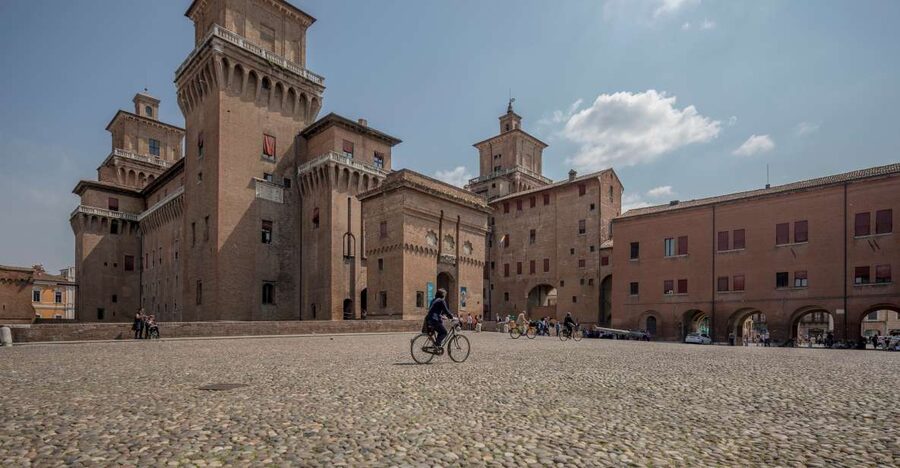
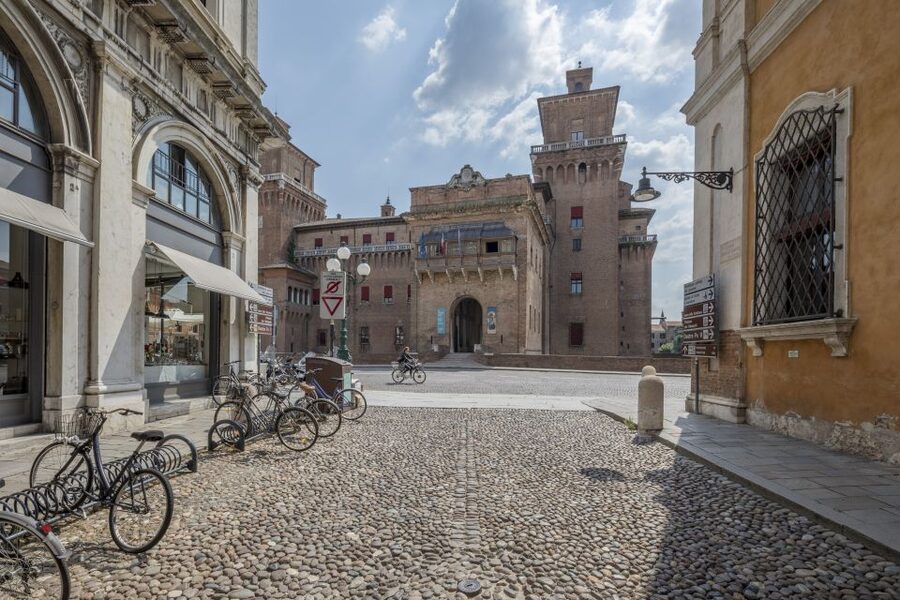
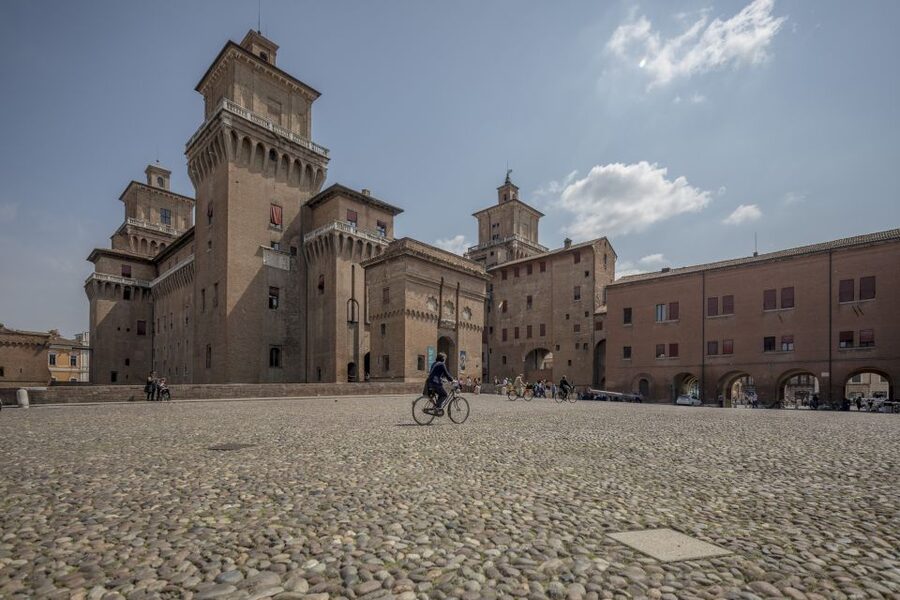
The meeting point is in the courtyard of Estense Castle, near the loggia. That is a practical place to begin because the castle is Ferrara’s clearest symbol and an easy landmark to find in the city center.
The castle itself gives the tour an immediate sense of drama. Its towers, moat, and fortified appearance recall a time when Ferrara’s ruling family needed both a palace and a defensive stronghold. From here, the guide introduces the Este family and the legends tied to them. This is where the walk moves beyond architecture. You begin to see the castle as the center of political power, family intrigue, and civic life.
Do not assume that the castle interior is part of the tour. The stated route begins in its courtyard, and entrance tickets are not included. If you want to visit the castle museum or rooms afterward, plan that as a separate activity and allow extra time.
The opening stop is also useful for orientation. Ferrara’s center can feel broad and open compared with many Italian towns, and the castle helps you understand how the old city is organized around its former seat of power.
More Walking Tours in Italy:
- Milan: Guided Walking Tour & Last Supper Visit with Ticket
★ 4.7 · 5,409 reviews - Naples: Street Food Walking Tour with Local Guide
★ 4.8 · 4,256 reviews - Venice Walking Tour and Gondola Ride
★ 3.5 · 3,630 reviews
Following Corso Ercole I d’Este into the Renaissance Addition
From the castle, you follow Corso Ercole I d’Este toward the north gate of Ferrara’s walls. This road crosses the Addizione Erculea, the major Renaissance expansion commissioned by Duke Ercole I d’Este and designed by the Ferrarese architect Biagio Rossetti.
That urban plan is one of the most valuable parts of the tour. Instead of seeing Ferrara as a random collection of old buildings, you learn how a ruler enlarged and reshaped the city. The road connects the castle to the northern edge of the walls, giving the route a clear line and purpose.
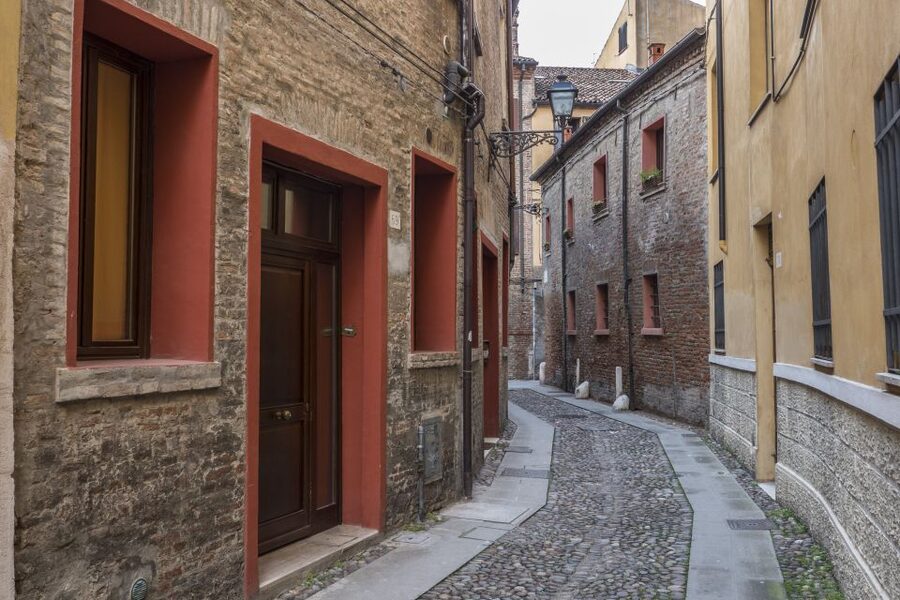
The broad street also changes the rhythm of the walk. Medieval lanes tend to feel tight and irregular. Here, the views open up, and palaces and churches sit within a more deliberate plan. The result is a city that feels orderly without becoming stiff or grand for its own sake.
I would pay attention to the relationship between the street and the buildings rather than rushing from one monument to the next. The guide’s explanation of Rossetti’s work helps you read the city as a piece of Renaissance planning. That context is hard to pick up from a quick independent stroll.
Seeing the stone diamonds at Palazzo dei Diamanti
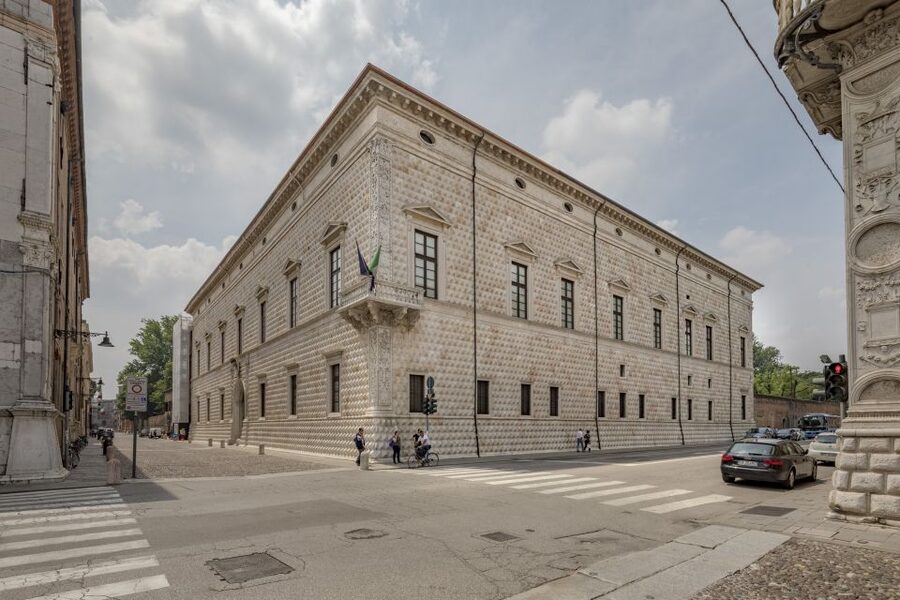
The route reaches Palazzo dei Diamanti in the heart of the Addizione Erculea. Its facade is covered in diamond-shaped projections, giving the palace its famous name. The effect changes as you walk past it, since light and shadow break across the stone surface.
This is likely the most instantly recognizable building on the route, but it is not the only reason to stop. The palace helps show how the Este court used architecture to project status. A residence did not need a tower or a moat to make an impression. Carefully planned decoration could do the work just as well.
The tour treats Palazzo dei Diamanti as part of a larger group of Renaissance palaces and churches. That is important because Ferrara’s appeal is not limited to one spectacular facade. The pleasure comes from seeing how different monuments sit together along the planned streets.
Entrance fees are not part of the $17 tour price. The walk gives you the outside view and the guide’s explanation, while any paid interior visit would be an extra decision. For many people, that is a fair arrangement. You get a compact city introduction and can choose later which interiors deserve your time and money.
A pause among the cedars of Massari Park
After the historic crossroads near Palazzo dei Diamanti, the route continues toward Massari Park. This section gives your feet and your eyes a break from stone facades. The park is known for its old cedars of Lebanon and other substantial plantings, with the University Botanical Garden nearby.
I like this change of setting. Ferrara’s Renaissance character is not only found in palaces, churches, and walls. The gardens show how the city’s formal buildings are balanced by planted spaces and open views. You get a quieter sense of the city here, one that feels less tied to court ceremony.
The tour description highlights the vegetation facing the botanical garden, but it does not promise a botanical garden visit. Treat this as a route past the area rather than a separate garden tour.
Massari Park also helps make the two-hour route feel varied. If every stop were another palace facade, the walk could become visually repetitive. Instead, the itinerary moves through streets, public green space, and religious architecture. That variety is one reason the tour does not feel like a hurried checklist.
A few more Italy bookings to compare
- Rome: City Sightseeing Hop-on Hop-off Bus with Audioguide
★ 4.0 · 16,045 reviews - Milan: City Sightseeing Hop-On Hop-Off Bus with Audio Guide
★ 4.0 · 6,256 reviews - City Sightseeing Rome Hop-On Hop-Off Bus Tour
★ 3.5 · 5,446 reviews - Bologna: City Center Walking Tour
★ 4.5 · 3,478 reviews
Entering San Cristoforo alla Certosa
A few steps from the park, you reach the monumental complex of San Cristoforo alla Certosa. The site began as a Carthusian monastery, established in Ferrara by Duke Borso d’Este in the mid-15th century. Over time, it became a Monumental Cemetery.
The square in front is framed by elegant arcades. Their repeated curves create a quieter, more reflective mood than the castle or Palazzo dei Diamanti. This is a good example of the route’s broader character: it pairs famous urban monuments with places that reward attention to atmosphere.
An internal visit to the Renaissance church is part of the described route. The church was once an important religious setting for the Carthusian monks, and its inclusion gives the walk a needed interior moment. You are not only looking at facades from the street. You get a chance to see the kind of sacred space that shaped Ferrara’s identity.
The cemetery function matters, too. It changes how you read the arcades and square. The setting is not simply decorative. It is designed for remembrance and reflection, and the tour presents that shift clearly.
Because entrance tickets are not included, ask the guide how any required admission is handled on the day. The information provided confirms the church visit but does not specify a separate ticket price.
Finishing with Ariosto in Piazza Ariostea
The final stop is Piazza Ariostea, a historic open space named for the poet Ludovico Ariosto. His statue rises above the central column, giving the square a strong literary connection.
The tour ends beneath the loggia along the green area. This is a relaxed place to finish, and it fits the character of Ferrara better than ending at another imposing palace. You can take in the open space, the arcades, and the connection between poetry and the city that supported Ariosto.
Piazza Ariostea also gives you a final reminder that Ferrara’s culture was not limited to politics and architecture. The Este court supported writers and artists, and Ariosto remains one of the clearest names linked with that world.
If you are planning your own time afterward, this is a useful point to pause and decide what to see next. The route has already covered the main Renaissance framework, so you can choose an interior, return to the castle, or simply continue walking through the center at your own pace.
What the two-hour format does well
Two hours is enough to create a coherent picture of Ferrara, but not enough for long interior visits at every major building. I see that as a strength for a first visit. You get a guided framework without giving up an entire morning or afternoon.
The route also avoids spending all its time in the busiest central streets. After the castle and Palazzo dei Diamanti, it leads into parks, the Certosa complex, and Piazza Ariostea. That makes the city feel more complete.
The tradeoff is pace. You will cover several important sites in two hours, so some stops will be introductions rather than full examinations. If you want detailed art history, extensive church interiors, or a museum visit, you will need additional time on your own.
The guide’s role is especially important here. Recent ratings give the experience 4.6 out of 5 from 219 reviews, with repeated praise for preparation, punctuality, professionalism, and a pleasant manner. Maria Chiara received particular praise, described as very good and well prepared. Those comments suggest that the quality of the explanation is a major part of the value.
Language, accessibility, and practical comfort
The live guide speaks Italian, and the included audio guide is also in Italian. This is the single biggest booking question. If Italian is not comfortable for you, the tour may be less useful than a multilingual alternative, even at its modest price.
The route is listed as wheelchair accessible. That is helpful, but historic Italian streets and monumental sites can still involve varied surfaces or access conditions. If you use a wheelchair, confirm the current route details with the provider before setting out, especially for the church and cemetery complex.
Bring an umbrella if rain is possible. This is an outdoor walking route, and the tour continues through streets, parks, and open squares. Comfortable shoes are a sensible choice, though the supplied information does not specify a required dress code or equipment.
The meeting point is the courtyard of Estense Castle, near the loggia. Arrive with enough time to find that exact spot, since castle courtyards can have several entrances and gathering points.
Is $17 good value for Ferrara?
At $17 per person, this is a strong value if you want a guided orientation rather than a series of paid admissions. The price covers a two-hour live walking tour with an Italian guide and an Italian audio guide. You also get a route that connects the city’s major Renaissance planning ideas with specific monuments.
The price does not include entrance tickets. That keeps the initial cost low, but you should budget separately if you want to enter the castle or other paid sites. The tour is best understood as a guided city walk, not an all-inclusive sightseeing pass.
I also like the option to reserve now and pay later, along with free cancellation up to 24 hours before the start for a full refund. Those terms make it easier to fit the walk into a changing Emilia-Romagna itinerary.
The value is highest for a first-time visitor, a short-stay visitor, or anyone who wants the city explained in a clear sequence. It is less useful if you already know Ferrara well or want a private, English-language art history lesson.
Who should book this walking tour?
I would choose this tour if you want to understand why Ferrara looks the way it does. The route explains the Este family, the Renaissance expansion, the role of Biagio Rossetti, and the connection between monuments and open spaces.
It also suits you if you prefer a manageable walk with frequent changes in scenery. The castle, grand avenue, diamond-faced palace, park, church, cemetery, and literary square offer plenty of variety in two hours.
Families and older visitors may appreciate the short format and wheelchair-accessible designation. Italian speakers will get the fullest benefit from the live commentary. If you need English, Spanish, French, or another language, this particular tour is not the right choice based on the information available.
Should you book Ferrara City Highlights?
Book it if you want an affordable, well-organized introduction to Ferrara’s medieval and Renaissance character, especially if you speak Italian. The route is carefully shaped, the city’s major sights are put into context, and the final stops at Certosa and Piazza Ariostea add more feeling than a basic castle-and-palace walk.
Skip it if you need a non-Italian tour or if your main goal is entering museums and monuments. In that case, use the $17 walk only as a starting point and plan separate admission visits.
For most first visits, I think the tour earns its place early in your Ferrara schedule. It helps you get your bearings, shows you where the city’s most interesting areas connect, and leaves enough of Ferrara unexplained for you to keep exploring.
FAQ
Where does the Ferrara walking tour meet?
The meeting point is in the courtyard of Estense Castle, near the loggia.
How long does the tour last?
The walking tour lasts two hours.
What language is the tour in?
The live tour guide speaks Italian. An Italian audio guide is included.
Are entrance tickets included?
No. Entrance tickets are not included in the tour price.
Is the tour wheelchair accessible?
Yes, the activity is listed as wheelchair accessible.
Can I cancel the tour for a refund?
Yes. You can cancel up to 24 hours in advance for a full refund.
Recently added around Italy
- Florence Uffizi Gallery monolingual Small Group Tour★ 4.0 · 621 reviews
- Florence Private Walking tour with Skip-the-line to Accademia★ 4.5 · 236 reviews
- Uffizi Gallery Entrance Ticket with Priority Access★ 3.5 · 1,029 reviews
- Florence Skip-the-Line Duomo Tour with Guide & Brunelleschi Dome★ 5.0 · 1,176 reviews
- Skip-the-Line Accademia Guided Visit: David Secrets and Beyond★ 4.0 · 525 reviews
- Priority Entrance : Florence Accademia Gallery Timely Tickets★ 4.0 · 603 reviews
- Accademia Gallery Entrance Ticket with Priority Access★ 4.0 · 1,088 reviews
- Skip the line : David Guided Experience★ 4.5 · 1,076 reviews
City Tours, compared.
City Sightseeing Hop-on Hop-off Bus with Audioguide
Read our review →
City Sightseeing Hop-On Hop-Off Bus with Audio Guide
Read our review →
City Sightseeing Rome Hop-On Hop-Off Bus Tour
Read our review →

Fettuccine Pasta Cooking Class in Rome’s City Center
Read our review →
Vatican City: Vatican Museums & Sistine Chapel Entry Ticket
Read our review →

City Sightseeing Florence Hop-On Hop-Off Bus Tour
Read our review →Browse the lists this tour appears in