
Reviewed · SICILY TOURS
Agrigento: Valley of the Temples Ticket & App Audioguide
Ancient Greece, under the Sicilian sun. This ticket gives you access to one of Sicily’s great archaeological sites, where Doric temples, aqueducts, terraces, and open countryside stretch across roughly 1,300 hectares. I especially like the chance to explore at your own pace and the included digital audioguide, which adds historical context without tying you to a group. I also like the Pemcards feature, which lets you turn a phone photo into a real postcard.
The main drawback is the phrase skip-the-line. You still need to exchange your voucher for a paper ticket at the Temple of Giunone ticket office, and there may be a wait. The audioguide has also been uneven in practice, with some visitors finding it less useful than the basic audio service sold on site.
In This Review
- Key points before you book
- Why the Valley of the Temples deserves your time
- Exchanging the voucher near the Temple of Juno
- The Temple of Juno and the first views
- Walking among the ancient temples
- Temple of Concordia
- Temple of Heracles
- Temple of Zeus
- Aqueducts, terraces, and the ancient city
- The gymnasium and the less obvious remains
- How good is the app audioguide?
- Pemcards: a nice extra with a catch
- Timing, heat, and the best way to walk the site
- Is the $19 price good value?
- Who should book this experience?
- Should you book the Agrigento temple ticket?
- FAQ
- Where do I exchange the voucher?
- Is transportation included?
- How long is the ticket valid?
- Can I enter more than once?
- Is there a live guide?
- Is the site wheelchair accessible?
- Do I need identification?
- Is there a security check?
- Can I cancel the booking?
- What exhibition is included?
Key points before you book
- Start at the Temple of Giunone ticket office: This is the only place where you can exchange your voucher, so do not head to another entrance first.
- The site is huge: The Valley of the Temples covers about 1,300 hectares, though the main route focuses on the best-known monuments.
- Expect a single entry: Your ticket is valid for one admission only, not repeated visits throughout the day.
- Go early or near sunset: Shade is limited, and summer afternoons can be very hot. An evening visit may let you see the temples lit up.
- The temples are the main event: Concordia, Juno, Hercules, and Zeus offer the strongest visual rewards, with views toward Agrigento and the sea.
- The audio is useful but not essential: Bring your phone, and keep the printed signs and site maps in play as a backup.
Why the Valley of the Temples deserves your time
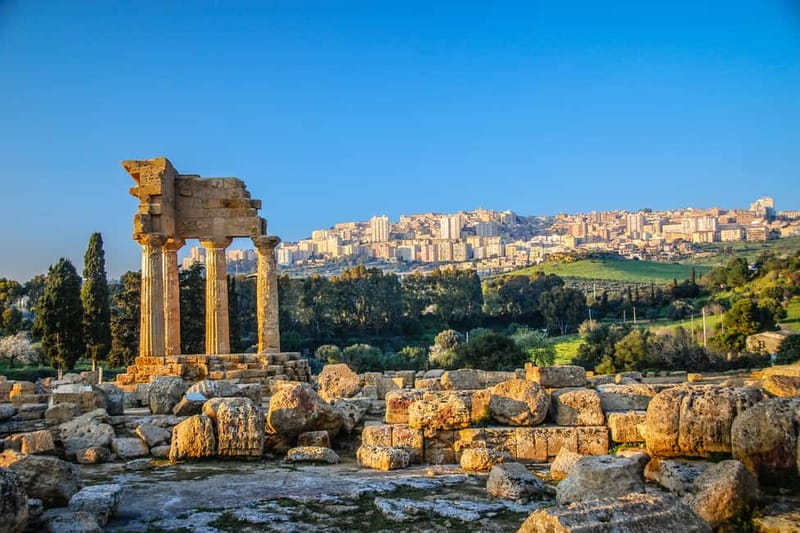
Agrigento’s archaeological zone is not a small collection of ruins tucked behind a museum. It is an enormous ancient complex spread along a ridge below the modern town. The remains belong to Akragas, a Greek colony founded in the 6th century BC that grew into one of the largest Greek cities in the Mediterranean.
That scale changes the experience. You are not simply walking from one temple to the next. You are crossing terraces that once held public life, religious ceremonies, athletic activity, and civic buildings. The open setting gives the monuments room to breathe, while the views toward the city and coast remind you that this was a real city, not an isolated monument.
I love the contrast between the pale stone and the Sicilian countryside. The site can feel calm, especially outside the hottest and busiest hours. It also has an impressive sense of age without being difficult to understand. Even if you know little about Greek archaeology, the columns and long processional route make the place memorable.
The experience is self-guided, so you decide how much time to spend at each stop. That suits people who prefer stopping for photos, reading signs, or simply sitting near a temple rather than keeping up with a guide.
A few more Sicily bookings to compare
- From Trapani: Cruise to Favignana and Levanzo with lunch
★ 4.2 · 2,286 reviews - From Milazzo: Panarea and Stromboli Boat Trip by Night
★ 4.2 · 1,605 reviews - Agrigento: Valley of the Temples Skip-the-Line Sunset Tour
★ 4.5 · 1,512 reviews
Exchanging the voucher near the Temple of Juno
Your first practical task is not entering the ruins. It is finding the Temple of Giunone ticket office on Via Panoramica Valle dei Templi and exchanging your voucher there. This is the only designated exchange point, so build in time for that step.
The ticket office is near the Temple of Juno, which means you begin close to one of the site’s major monuments once the ticket process is finished. The arrangement can be confusing because the online voucher is not always the final ticket. You may need to wait briefly to receive the paper admission ticket before proceeding.
That is why I would not arrive at the last possible minute. The ticket is advertised as skip-the-line, and it can save time when the entrance is busy, but it does not remove every queue. Several people have found that the voucher exchange created a shorter line rather than no line at all.
You also need to pass through a security check. If you selected a reduced-price ticket, bring valid identification. The ticket permits one entry, so avoid leaving the site unless you are certain you have seen everything you want.
The Temple of Juno and the first views
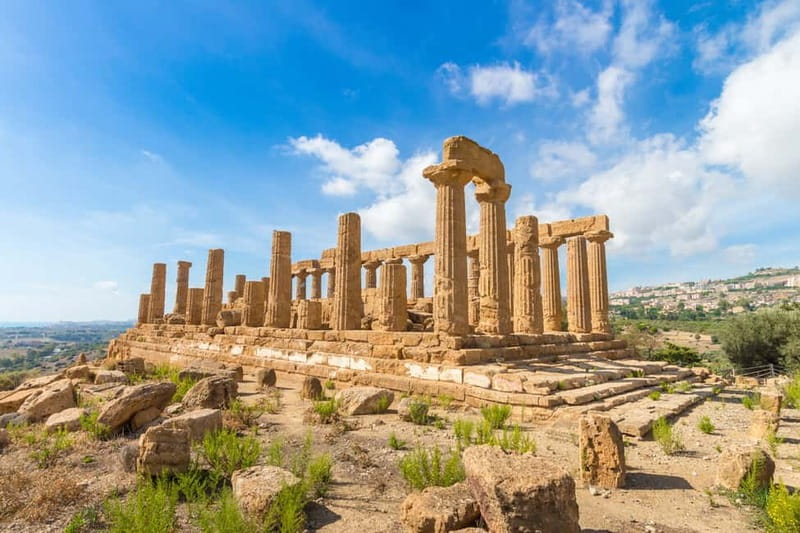
The Temple of Juno, or Hera, sits at the eastern end of the archaeological zone. Its position gives you an immediate sense of the ridge and the long route ahead. The monument is partly ruined, but its remaining columns and high setting make it a strong opening point.
This is a good place to get your bearings. Look across the site before walking onward, then check the map and audioguide instructions. The route is fairly straightforward, but the sheer size of the area can make distances feel deceptive.
The first minutes are also when you should decide how much walking suits you. The route is not generally strenuous, but it is expansive. You will be outside for much of the visit, and shade is limited. Take water, especially in summer.
Some drinking fountains have been working, but you should not depend entirely on them. A cafe is available around the middle of the route, which can be useful if you are visiting with children or need a break.
Walking among the ancient temples
The central stretch contains the monuments most people come to see. Each has a different character, and the pleasure comes from comparing them rather than rushing through a checklist.
Still Sicily, but a slower afternoon:
- From Trapani: Day Cruise to Favignana & Levanzo with Lunch
★ 4.3 · 1,483 reviews - Stromboli: Sunset Trekking at Sciara del Fuoco
★ 4.6 · 1,372 reviews - Boat Tour Egadi Day discover Favignana and Levanzo from Trapani
★ 5.0 · 1,183 reviews - From Milazzo: Lipari and Vulcano Day Trip
★ 4.3 · 1,166 reviews
Temple of Concordia
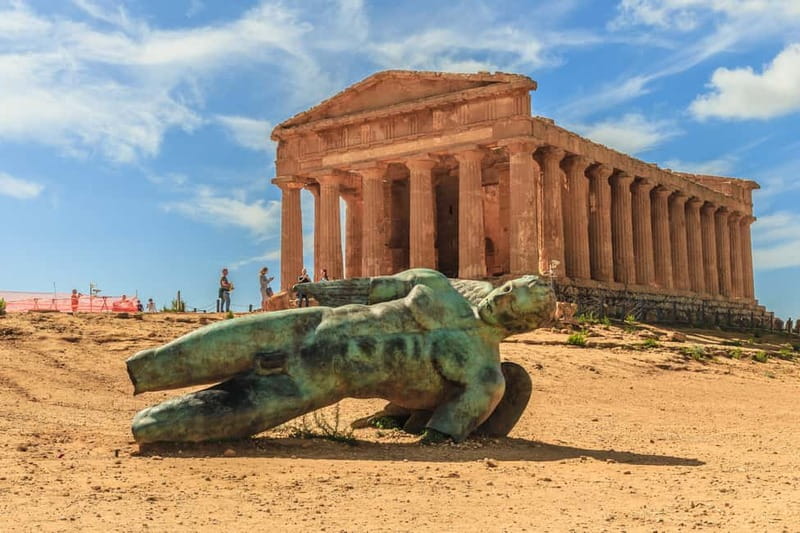
The Temple of Concordia is the visual star of the site. Its columns and overall form remain remarkably complete, making it easier to imagine the original Greek building than at many other ruins.
The temple is especially powerful from a distance, where its clean Doric lines rise above the surrounding ground. Walk around it if you can, since the changing views show how much of the structure survives. It is also one of the best places for photographs.
The setting adds to its appeal. Ancient stone, open fields, and distant views create a scene that feels much larger than the monument itself. If you only have limited time, give Concordia a proper pause rather than treating it as another quick stop.
Temple of Heracles
The Temple of Heracles, also called Hercules, is older and more fragmented. Its fallen columns and broken foundations reveal how much archaeology is about reading traces rather than seeing a complete building.
I find this stop valuable because it helps you understand the site’s long timeline. Concordia shows the power of a largely intact temple, while Heracles shows the effects of centuries of change, damage, and reuse.
The remains are spread out, so keep looking at ground level as well as upward. The large stones and scattered blocks help explain the original scale, even where the structure no longer survives.
Temple of Zeus
The Temple of Zeus was planned on a massive scale, but it is now a ruin of foundations and fallen architectural pieces. It may not offer the same instantly recognizable shape as Concordia, yet it is important for understanding the ambition of ancient Akragas.
This is a good place to use the audio commentary or the written signs. Without some explanation, the remains can seem like a confusing field of stone. With context, the size of the project becomes clearer.
The temple area also shows why a site map matters. Distances between monuments are real, and the route is not a compact indoor museum circuit. You are walking through an archaeological zone where space is part of the story.
Aqueducts, terraces, and the ancient city
The Valley of the Temples is not only about temples. The terraced levels once supported public life in the Greco-Roman city, and the aqueducts reveal the practical systems that allowed the settlement to function.
These parts require a little more imagination. Columns attract the eye, but water channels, retaining walls, and street levels explain how people lived around the religious buildings. I recommend slowing down at these less famous remains instead of moving directly from one major temple to the next.
The broad route can feel exposed in the afternoon. That is one reason morning and evening visits receive such strong praise. In spring, the setting can be particularly pleasant, with almond trees in bloom and a softer quality of light.
At sunset, the temples shift from pale stone to warm gold, then to illuminated ruins after dark. A late entry around 6 p.m. can work beautifully if the opening hours and available time allow it. Check the exact schedule before relying on sunset, since the ticket is valid for one day but not for repeated re-entry.
The gymnasium and the less obvious remains
The gymnasium was used for athletic, educational, and recreational activity. It gives the site another dimension, showing that Akragas was more than a place of worship.
This area can be less immediately dramatic than the famous temples, but it is worth including if you have enough time. The gymnasium helps connect the ancient city to ordinary routines: exercise, education, public gathering, and social life.
I would allow at least several hours for a relaxed visit, though the exact time depends on your pace and how many stops you make. You can move through the main monuments faster, but doing so reduces the value of such a large archaeological site.
How good is the app audioguide?
The included digital audioguide is a useful idea, but you should keep your expectations sensible. An app lets you explore privately, pause when you want, and avoid joining a scheduled group. That freedom is a real advantage at a place where the best photographs and quietest moments do not always occur at the same time.
The audio quality has not been consistent for everyone. Some people found it disappointing or difficult to use, while others relied more on the maps and information signs. One practical issue is that only one person in a group may be able to scan the QR code successfully, leaving others to pay extra for an audio guide from the ticket booth.
I would treat the app as an added resource, not the main reason to buy the ticket. Download or open it before you begin, make sure your phone is charged, and use the site’s written information as a backup. If you want a detailed historical explanation at every stop, a live guide may suit you better, but no live guide is included here.
Pemcards: a nice extra with a catch
The Pemcards feature lets you use a digital photo from your visit to create a real postcard and send it anywhere in the world. That is a charming souvenir, especially from a place where the classic temple photographs are easy to capture.
The weakness is practical rather than creative. The Pemcards stand can be hard to locate, and staff may not always know where to direct you. If this extra matters to you, ask about it early rather than waiting until you are leaving.
I would consider it a bonus, not a deciding feature. The archaeological site is worthwhile without it, and the postcard option should not distract you from the main route.
Timing, heat, and the best way to walk the site
Agrigento is exposed, with limited shade along much of the route. Summer afternoons can be punishing, especially when you are walking between temples on pale stone and open ground.
My first choice would be early morning. You get cooler air and a better chance of moving through the entrance before the busiest period. A late afternoon visit can also be excellent, particularly if you want sunset and evening lighting.
If you arrive by car, one useful strategy is to park near Gate V and take the taxi service to the upper entrance, then walk downhill. This reduces the uphill effort and lets the route unfold more naturally. Parking has been described as good value, but transportation is not included with this ticket.
A shuttle can take you from the temples back to the entrance for about €3 each way. That can make a real difference if you have limited mobility or simply run out of energy. The site is wheelchair accessible, though the large distances and outdoor surfaces still make planning important.
Is the $19 price good value?
At $19 per person, the ticket is reasonable if it genuinely saves you a long wait and you want the convenience of booking ahead. Flexible cancellation up to 24 hours before the visit and the option to reserve now and pay later add useful protection to a changing itinerary.
The value is less clear during quiet periods. Some people found no queue at all, especially outside the busiest times, and the voucher exchange still required a stop at the ticket office. A standard admission purchased at the entrance has been reported at €13, so compare the current official price before booking.
The included audioguide and access to the I Tesori d’Italia exhibition, available through December 31, 2025, add something to the package. Still, the audio experience may not work perfectly for every phone or every member of your group.
I would pay the premium when visiting during a busy season, when your schedule is tight, or when cancellation flexibility matters. I would think twice during a quiet weekday, particularly if you do not care about the app audio.
Who should book this experience?
This suits independent visitors who want to explore without a group or fixed walking commentary. It is also a good fit for first-time visitors to Sicily who want a straightforward way to secure admission before making the trip to Agrigento.
Families can manage it, but plan breaks and bring water. Children may enjoy the open setting, yet the long distances and limited shade can become tiring. Older adults and anyone with reduced mobility should consider the shuttle or taxi options.
History enthusiasts may want a live guide or a stronger audio product. Casual sightseers can get plenty from the monuments, signs, maps, and views even if the app audio is underwhelming.
Should you book the Agrigento temple ticket?
Book it if you value advance planning, want a possible shorter entry queue, and expect to visit during a busy period. The Valley of the Temples is one of Sicily’s essential sights, and the temples, aqueducts, gymnasium, and views easily justify a half-day outing.
Skip this particular online option if the price difference is large, the site is quiet, or you only want basic admission. In that case, compare the entrance price and any combined museum ticket before paying. Either way, arrive early or near sunset, begin at the Juno ticket office, carry water, and allow enough time to walk downhill through the ruins instead of racing from column to column.
FAQ
Where do I exchange the voucher?
Exchange your voucher at the Temple of Giunone ticket office near the Temple of Juno on Via Panoramica Valle dei Templi. This is the only entrance where the voucher can be exchanged.
Is transportation included?
No. Transportation is not included in the ticket. Taxi and shuttle services may be available separately at the site.
How long is the ticket valid?
The ticket is valid for one day. Check the available starting times when booking.
Can I enter more than once?
No. The ticket allows a single entry into the Valley of the Temples.
Is there a live guide?
No. The package includes a digital audioguide, not a live guide.
Is the site wheelchair accessible?
Yes, the activity is listed as wheelchair accessible. The archaeological zone is large, so the distance between monuments should still be considered.
Do I need identification?
Bring valid identification if you selected a reduced-price ticket.
Is there a security check?
Yes. You must pass a security check before entering the archaeological site.
Can I cancel the booking?
Yes. You can cancel up to 24 hours in advance for a full refund.
What exhibition is included?
The ticket includes access to the I Tesori d’Italia exhibition until December 31, 2025.
Recently added around Sicily
- Stromboli: sunset trekking to Sciara del Fuoco – Ashàra★ 4.5 · 270 reviews
- Quad Tour Excursion from the Castle to the Sea★ 5.0 · 194 reviews
- Syracuse: Ortigia Private Walking Tour★ 4.8 · 181 reviews
- Syracuse: Coast and Sea Caves Full Transparent Boat Tour★ 4.8 · 330 reviews
- Syracuse: Ortigia Island and Sea Caves Boat Tour with Drinks★ 4.6 · 337 reviews
- Syracuse: Ortigia Sunset Cruise with Aperitif★ 4.8 · 291 reviews
- Syracuse: Ortigia and Neapolis Guided Walking Tour★ 4.7 · 205 reviews
- Syracuse: Neapolis Archaeological Park Small Group Tour★ 4.7 · 350 reviews
Sicily Tours, compared.
From Trapani: Cruise to Favignana and Levanzo with lunch
Read our review →
From Milazzo: Panarea and Stromboli Boat Trip by Night
Read our review →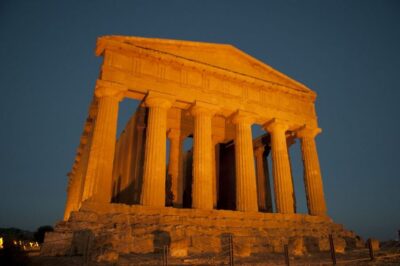
Agrigento: Valley of the Temples Skip-the-Line Sunset Tour
Read our review →
From Trapani: Day Cruise to Favignana & Levanzo with Lunch
Read our review →
Stromboli: Sunset Trekking at Sciara del Fuoco
Read our review →
Boat Tour Egadi Day discover Favignana and Levanzo from Trapani
Read our review →

Syracuse: Boat Trip of Ortigia Island and Sea Caves
Read our review →Browse the lists this tour appears in