Reviewed · TICKETS
Ticket to Piazza Navona Undergrounds Stadium of Domitian
Rome has another layer below street level. The Stadium of Domitian gives you a look at the ancient structure beneath Piazza Navona, and I like two things right away: the low $12.10 price and the freedom to explore with an audio guide at your own pace. I also like that the site is usually calm, making it a useful break from Rome’s packed major monuments.
The main drawback is size. You descend about five metres and see a carefully presented section of the stadium, not a vast underground complex. The audio guide can also feel long for such a small space, and a faulty device could spoil the visit, so check that it works before you begin.
In This Review
- Key points about the Stadium of Domitian visit
- What lies beneath Piazza Navona
- The ancient stadium and its purpose
- How the self-guided audio visit works
- What you see during the 40 to 50 minutes
- Why the multimedia displays matter
- Location and finding the entrance
- Is $12.10 good value?
- Crowds, comfort, and practical details
- Who will enjoy this visit most?
- How to make the most of the visit
- Should you book the Stadium of Domitian?
- FAQ
- Where does the Stadium of Domitian visit begin?
- How long does the visit take?
- Is an audio guide included?
- What are the opening hours?
- Is the visual reconstruction included?
- Is the attraction suitable for children?
- Can I cancel for a refund?
Key points about the Stadium of Domitian visit
- Five metres beneath Piazza Navona: See the excavated remains hidden under one of Rome’s best-known squares.
- A short, self-guided experience: Plan on roughly 40 to 50 minutes, though you can move faster if you prefer reading to listening.
- The first and only masonry stadium in Roman history: The displays explain its design, purpose, and place in ancient Roman sports.
- Usually a quiet stop: The underground setting offers a cooler, less crowded hour away from Rome’s main sights.
- Audio for adults and children: A children’s audio guide is available for ages 6 and above.
- Optional visual media: Displays, unpublished photographs, videos, and an extra-cost AI or VR-style reconstruction help show how the stadium may once have looked.
What lies beneath Piazza Navona
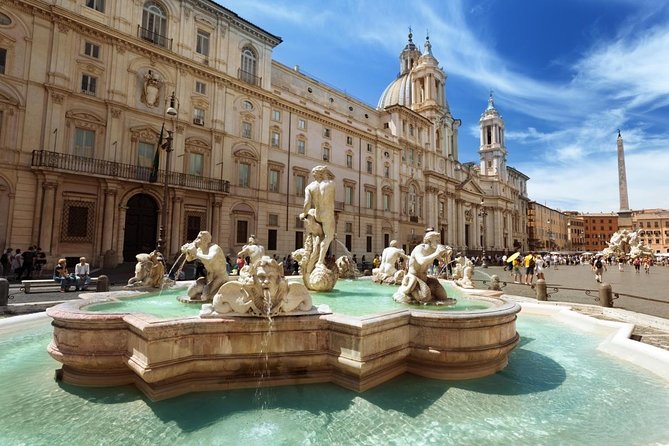
Piazza Navona is famous for its fountains, cafés, churches, street artists, and grand Baroque setting. Yet the square sits over the remains of an ancient Roman stadium. This visit lets you step below the modern piazza and see part of that earlier city.
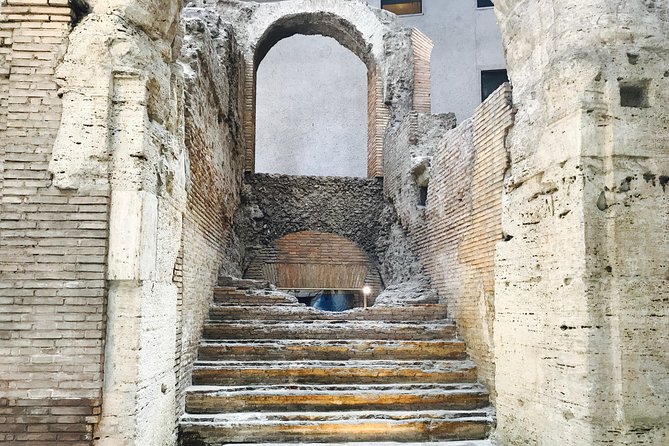
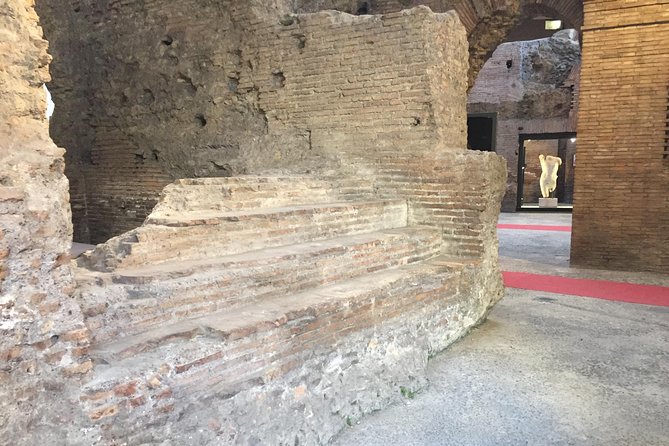
The excavations opened to the public in 2014. You descend around five metres below the current street level, where brick walls, arches, columns, and fragments of sculpture reveal the shape of the old structure.
That change in level is the point of the visit. Rome often feels like a city built in layers, with modern streets resting over medieval homes and Roman foundations. Here, you can see that idea in a compact and direct way.
The ruins are not presented as a fully restored arena. You will need to use the diagrams, photographs, signs, and audio explanations to picture the complete stadium. If you expect something on the scale of the Colosseum, you may find the site modest. If you enjoy understanding how Rome grew over older buildings, the setting is much more rewarding.
A few more Rome bookings to compare
- Vatican: Museums & Sistine Chapel Entrance Ticket
★ 4.5 · 144,003 reviews - Vatican Museums & Sistine Chapel Tour with Optional Basilica
★ 4.3 · 67,413 reviews - Colosseum, Roman Forum & Palatine Guided Tour
★ 4.7 · 63,148 reviews
The ancient stadium and its purpose
The Stadium of Domitian was built as a place for athletic contests and public spectacles. The displays explain ancient Roman sports and how the stadium was used, giving you a clearer sense of why this structure mattered.
It was the first and only masonry stadium in Roman history, according to the site’s interpretation. That detail gives the remains added importance. You are not just looking at a few old walls. You are seeing part of a purpose-built sports venue that helped shape the area now known as Piazza Navona.
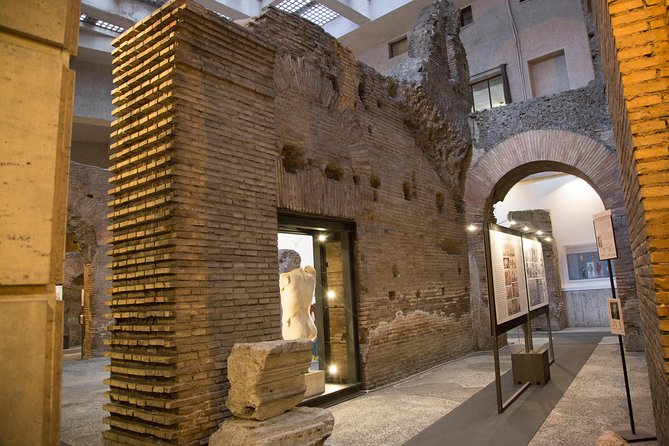
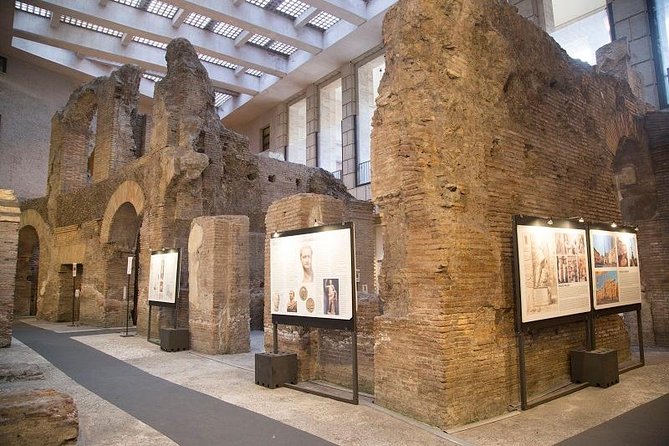
The ruins themselves are fragmentary. Expect stretches of masonry, brick columns, arches, and broken statues rather than a complete building. The surviving pieces may look plain at first, but the audio guide and visual material help connect them to the original stadium plan.
I recommend pausing at the diagrams before listening to every audio track. Once you understand the shape of the building, the remains below the piazza become easier to read. You can then decide which explanations are worth your time.
How the self-guided audio visit works
This is not a guided walk led by a person. You receive a handheld audio device and move through the underground area on your own. That format works well if you dislike being tied to a group schedule.
The audio guide covers the stadium, Piazza Navona, ancient sports, and the changing use of the site. Several people find it clear and thorough, while others find it repetitive or too wordy. I would treat it as one part of the visit rather than the only source of information.
The written panels are useful. If you prefer a quick visit, you can read the displays and focus on the main ruins. If you enjoy background stories, use the audio at a slower pace. The flexibility means you can finish in about 30 minutes or stay closer to the advertised 40 to 50 minutes.
Before walking away from the entrance, test the device. One reported problem involved a battery dying early, with no replacement offered. That does not appear to be the usual experience, but it is a sensible check. If you are visiting with another person, make sure each person has a working device if separate audio is important to you.
A children’s audio guide is available for children aged 6 and above. That makes the visit more practical for families, especially since the subject is sports rather than only architecture or religious art.
What you see during the 40 to 50 minutes
The visit follows a simple path through the excavated underground levels. You begin by learning about the relationship between the stadium and the present-day piazza, then move through the remains and supporting displays.
The first impression is likely to be architectural. You see the structure’s masonry and the restricted sections that have been uncovered and preserved. The space is smaller than many people expect, but that also makes it easy to understand without spending half a day underground.
The next layer is interpretation. Signs and audio explain how the stadium worked, what different areas may have been used for, and how the site changed over time. This is where the visit gains most of its value. The stones alone cannot tell you much. The explanations give them a setting.
You may also encounter photographs and multimedia material, including unpublished photos referenced as part of the presentation. A 3D or visual reconstruction shows changes to the stadium from its ancient form to the present day. This is particularly helpful because the modern piazza above can hide the original scale and shape.
The optional reconstruction experience costs an additional €4. It helps you picture the ancient building in its original form. Check the price before choosing it, since the extra charge may not be obvious inside. If you want the full visual context, it could be worthwhile. If you are watching every euro, the standard entrance and audio guide provide the main experience.
Still Rome, but a slower afternoon:
- Vatican Museums, Sistine Chapel & St Peter’s Basilica Guided Tour
★ 4.5 · 39,149 reviews - Rome: Colosseum, Palatine Hill and Roman Forum Guided Tour
★ 4.8 · 32,814 reviews - Rome: Guided Tour of Colosseum, Roman Forum & Palatine Hill
★ 4.7 · 27,897 reviews - Rome: Colosseum & Forum with Audio Guide App -Optional Arena
★ 4.2 · 24,770 reviews
Why the multimedia displays matter
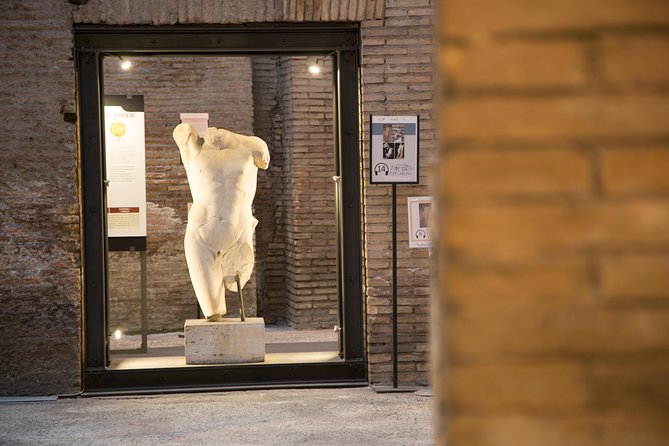
Ancient ruins can be difficult to read. A low wall rarely tells you how high a building was, how people entered it, or what happened inside. The videos, photographs, diagrams, and reconstructions help bridge that gap.
The 3D presentation is especially useful for first-time visitors to Roman archaeological sites. It shows the stadium as a functioning building rather than a collection of disconnected fragments. I would give it extra attention if you are visiting with children or if Roman architecture is new to you.
Still, the media is support, not a replacement for the ruins. The most satisfying part is comparing the reconstruction with what remains. You can look at a brick arch, then see how that arch fitted into the wider stadium.
The gift shop and on-site library add another layer to the visit. You can find art and history books, antique prints, postcards, souvenirs connected with artistic crafts, multimedia DVDs, and a children’s section. The shop is not essential, but it may be useful if you want a small Roman history book or a child-friendly item after the visit.
Location and finding the entrance
The meeting point is Via di Tor Sanguigna, 3, 00186 Rome. The attraction is near Piazza Navona and close to public transportation, making it easy to combine with a walk around the historic centre.
Finding the doorway may take patience. The entrance is not always well marked, and an old description referring to the nearby Raphael Hotel can cause confusion because that hotel has been closed for some time. Use the street address rather than relying on an outdated landmark.
This is a good visit to pair with the piazza itself. You can first admire the fountains and churches above ground, then go below to see what occupied the site in antiquity. The contrast takes little time and gives you a better sense of how Rome’s modern centre rests on older foundations.
Because the attraction ends where it begins, you can continue directly into Piazza Navona afterward. From there, the area offers many other historic sights within walking distance, though the exact walking time to each is not specified here.
Is $12.10 good value?
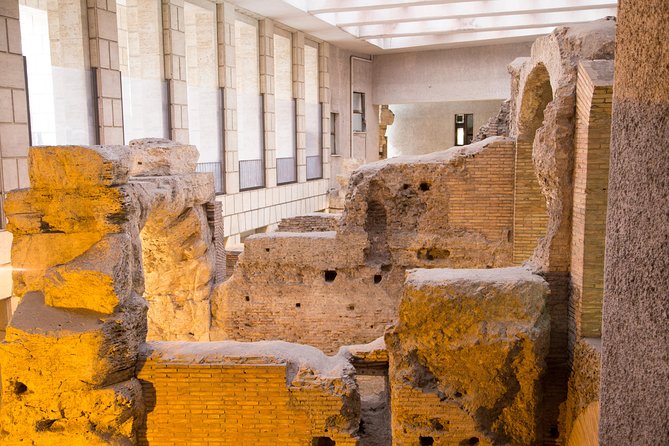
At about $12.10 per person, this is one of the easier Rome admissions to fit into a sightseeing budget. Taxes and the audio guide are included, and the visit takes less than an hour for most people.
The value depends on what you want from an archaeological site. You are paying for access to an unusual underground location, interpretation, audio content, and visual material. You are not paying for a large monument with many rooms and long galleries.
I consider it good value if you enjoy ancient history, Roman construction, or the story beneath the streets. It is also a practical choice during the hottest part of the day, since the underground space offers a cooler pause.
You may prefer to spend your money elsewhere if your priority is Rome’s major monuments. The Colosseum, Roman Forum, and Palatine Hill offer much more physical scale and take considerably longer to visit. This site works best as a focused supplement, not as a substitute.
Free cancellation is available if you cancel at least 24 hours before the start time. Cancellations made later are not refunded, and changes within that period are not accepted.
Crowds, comfort, and practical details
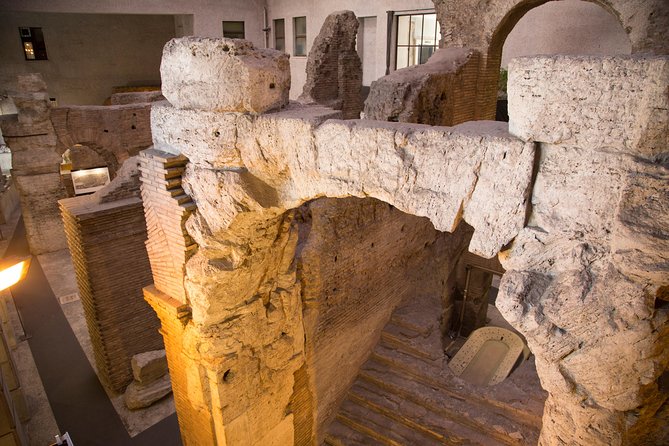
The visit is generally described as clean, organized, and not very crowded. That matters in Rome, where a short quiet stop can feel like a luxury after standing in lines or moving through packed streets.
Wear comfortable walking shoes. The visit is brief, but you are still moving through an archaeological space below street level. Most people can participate, and service animals are allowed.
The opening hours listed for this experience are 10:00 a.m. to 6:00 p.m., Monday through Sunday, for the stated operating period ending February 16, 2027. Private events can affect access, so keep your booking confirmation handy and check for any same-day notice before setting out.
The stated maximum is 150 people, though the underground area may feel much smaller than that number suggests. A quieter atmosphere is one of the reasons this stop works well between larger attractions.
Who will enjoy this visit most?
I would recommend the Stadium of Domitian to:
- Roman history enthusiasts who want more than the headline monuments.
- Families who can use the children’s audio guide for ages 6 and above.
- Repeat visitors to Rome who have already seen Piazza Navona but never looked below it.
- Independent sightseers who prefer moving at their own pace.
- Heat-sensitive visitors looking for an indoor archaeological stop.
- People with a spare hour between larger tours and reservations.
You may not enjoy it as much if you need a large, dramatic ruin or a live guide to bring the story to life. The space is small, and some of the audio content may feel slow. Reading the panels instead can make the visit faster and more direct.
How to make the most of the visit
Start by locating the entrance before your planned time. The doorway can be easy to miss, especially if you search for a former hotel landmark rather than the street address.
Allow at least 30 minutes, but keep 40 to 50 minutes available if you want to use the audio guide and study the displays. Add time for the optional €4 visual experience if you decide to purchase it.
Test the audio device immediately. If you are visiting as a couple or family, ask for the child audio option if needed and confirm that the equipment is working.
Do not rush straight to the audio. First look at the floor plan, photographs, and reconstruction images. Then listen to the sections that explain what you are seeing. This approach avoids the feeling of hearing a long narration without knowing where the story fits.
Finally, visit Piazza Navona before or after the underground stop. The above-ground square is not just a convenient location. It is the modern expression of the ancient site, and seeing both levels makes the visit much more meaningful.
Should you book the Stadium of Domitian?
Yes, if you have an extra hour and enjoy ancient Rome beyond the famous checklist. The price is modest, the location is convenient, and the self-guided format lets you control the pace.
I would not make it a top priority over the Colosseum or Roman Forum on a first, very short visit. The ruins are limited, and the audio guide may be longer than the physical space requires.
For repeat visitors, families, history fans, and anyone curious about the layers under Piazza Navona, this is a smart small-scale addition. Book it when you want a quiet, informative stop rather than a grand spectacle. Just allow time to find the entrance, test the audio device, and check any extra charge before choosing the visual reconstruction.
FAQ
Where does the Stadium of Domitian visit begin?
The meeting point is Via di Tor Sanguigna, 3, 00186 Roma RM, Italy, near Piazza Navona.
How long does the visit take?
The approximate duration is 40 to 50 minutes. Some people may finish in 30 minutes, while those who listen to the full audio and read the displays can take closer to an hour.
Is an audio guide included?
Yes. The admission includes an audio guide, and a children’s audio guide is available for children aged 6 and above.
What are the opening hours?
The listed opening hours are 10:00 a.m. to 6:00 p.m., Monday through Sunday, during the stated operating period ending February 16, 2027.
Is the visual reconstruction included?
The standard admission includes the audio guide and site displays. An additional AI or VR-style visual experience is available for €4.
Is the attraction suitable for children?
Yes. Most people can participate, and a children’s audio guide is available for ages 6 and above.
Can I cancel for a refund?
You can cancel at least 24 hours before the experience start time for a full refund. Cancellations or changes made less than 24 hours before the start time are not accepted for a refund.
Recently added around Rome
- Rome: Pantheon, Trevi Fountain & Roman Squares Guided Tour★ 4.7 · 386 reviews
- Vatican: Pope Francis Tomb and Papal Basilicas Tour★ 4.7 · 340 reviews
- Vatican: St. Peter’s Basilica with Audio Guide and Options★ 3.4 · 269 reviews
- Rome: Vatican Museums Skip-the-line Entry Ticket and Tour★ 4.2 · 400 reviews
- Rome: Vatican Museums & Sistine Chapel Ticket + Tour Options★ 4.7 · 344 reviews
- Vatican Museums & Sistine Chapel Guided Tour★ 4.3 · 832 reviews
- Vatican Museums & Sistine Chapel Entry Ticket★ 4.4 · 245 reviews
- Vatican: Museums, Raphael & Sistine Chapel + Basilica Option★ 4.7 · 350 reviews
Tickets, compared.
Cathedral and Duomo’s Terraces Entrance Ticket
Read our review →
Skip-The-Line Uffizi Gallery Timed Entry Ticket
Read our review →
Naples Underground Entry Ticket and Guided Tour
Read our review →
Pantheon Fast-Track Ticket and Official Audio Guide
Read our review →
Entry Ticket and Guided Tour with an Archaeologist
Read our review →