

Reviewed · SICILY TOURS
SALT TOUR-all inclusive: salt tour: Trapani, Paceco, Nubia
Salt turns seawater into history. This 2.5-hour outing from Trapani takes you across three salt pans, into a 600-year-old mill, and along the working path of the salt makers. I especially like the small-group format and the tasting of Trapani salt, including fleur de sel flavored with citrus and herbs. The sunset views can be beautiful, too.
I also like the way guide Alessio connects the work of salt making with local life, old tools, trade customs, and family traditions. The main drawback is value: at $60.46 per person, you pay for transport, guiding, museum entry, and several stops, but a visitor with a car could reach the salt museum for less. Also, an optional aperitivo may extend the outing and cost extra, so ask about it if you have dinner plans.
In This Review
- Key things to know before visiting Trapani’s salt pans
- Why Trapani’s salt pans are worth your time
- Meeting at Trapani’s port
- Maria Stella and Trapani’s first mill
- Salina Calcara and the four stages of salt
- Saline Culcasi and the Salt Museum
- Tasting fleur de sel and flavored crystals
- Walking the salt worker’s path
- Sunset, timing, and the optional aperitivo
- How Alessio shapes the experience
- Who should book this salt tour?
- Should you book the Trapani salt tour?
- FAQ
- Where does the salt tour begin?
- Where does the tour end?
- How long does the tour last?
- What is the price?
- What language is the tour offered in?
- Is transportation included?
- What is included in the ticket?
- Is the aperitivo included?
- Can I cancel for a full refund?
- What happens if bad weather cancels the tour?
Key things to know before visiting Trapani’s salt pans
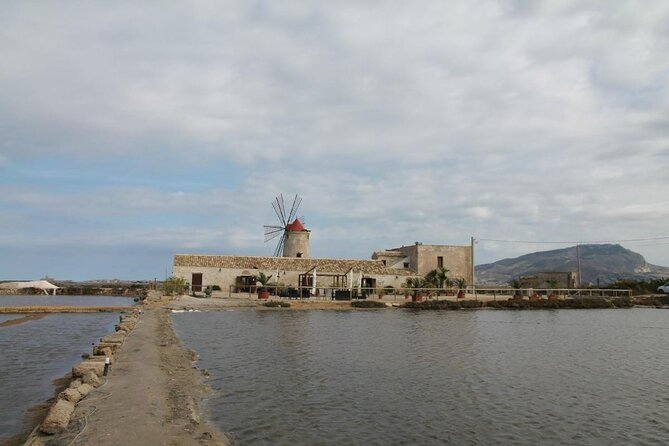
- Three different salt pans: Maria Stella, Salina Calcara, and Saline Culcasi each show a different part of the area’s story.
- A 600-year-old mill: The Culcasi stop includes an old mill now used as the Salt Museum.
- Salt tasting included: You sample several crystals, including fleur de sel and flavored versions with orange, lemon, rosemary, and oregano.
- Wildlife sightings: Flamingos, herons, egrets, and Italian stilts may appear around the shallow water.
- A guide who brings the subject alive: Alessio is praised for clear explanations, humor, and deep practical knowledge of salt production.
- Best light near sunset: The salt pans can look especially striking in the evening, although clouds may spoil the sunset.
Why Trapani’s salt pans are worth your time
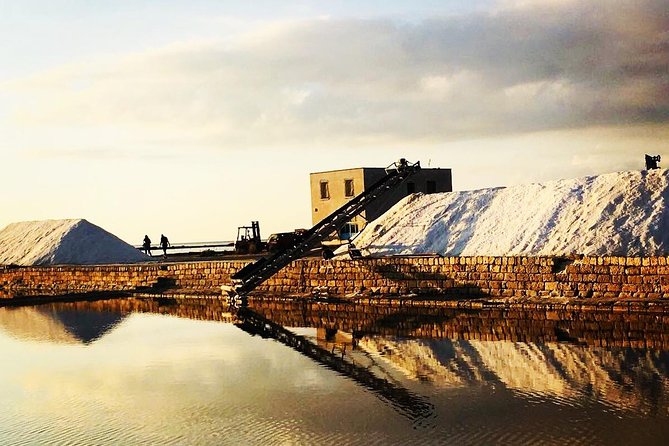
Trapani is known for seafood, baroque streets, and access to western Sicily’s islands. Yet just outside town, the Saline di Trapani and Paceco nature reserve offers a quieter, more unusual experience. Long strips of shallow water catch the sun, windmills rise above the pans, and piles of salt form bright white shapes beside the road.
This is not just a photo stop. The salt pans still show a working tradition shaped by sea, weather, and human labor. Generations of salt workers learned when to move water, when to harvest, and how to separate different grades of salt. The tour gives you the context to understand what you are seeing instead of simply looking at white ponds and old mills.
I find that useful because the process is not obvious at first. Salt production here depends on a sequence of tanks. Seawater moves through four orders of salt pans, becoming more concentrated as evaporation removes the water. Each stage has a purpose, and the final crystals differ in size, texture, and use.
The reserve also gives the tour a natural side. The shallow pans attract flamingos, herons, egrets, and Italian stilts. Sightings are never guaranteed, but you have a fair reason to keep looking up from the salt. Bring patience, especially if you enjoy birds and quiet views.
A few more Sicily bookings to compare
- From Trapani: Cruise to Favignana and Levanzo with lunch
★ 4.2 · 2,286 reviews - From Milazzo: Panarea and Stromboli Boat Trip by Night
★ 4.2 · 1,605 reviews - Agrigento: Valley of the Temples Skip-the-Line Sunset Tour
★ 4.5 · 1,512 reviews
Meeting at Trapani’s port
The tour begins at the Vigili del Fuoco fire station at Via Ammiraglio Staiti 101, near the port. This is a practical meeting point if you are staying in central Trapani or arriving by public transportation.
You meet the guide there and travel in an air-conditioned vehicle. The drive to the first salt pan takes about ten minutes. That short transfer matters because the salt pans are spread across the area, and reaching three separate sites on foot would not be realistic in a two-and-a-half-hour outing.
The vehicle is listed as sanitized under COVID-19 regulations. The activity is offered in English, and service animals are allowed. Most people can take part, but the experience is outdoors and includes a walk inside the salt pans, so comfortable shoes make sense.
The advertised group size is slightly confusing. The experience is described as limited to eight people for a more personal outing, while the additional information gives a maximum of sixteen. If having a very small group is important to you, confirm the expected size before booking.
Maria Stella and Trapani’s first mill
After the short drive, you reach Maria Stella, the first salt pan. The main historic feature here is a mill built at the end of the fifteenth century, one of the earliest mills connected with salt production in Trapani.
This first stop works as an introduction. You begin to see how wind, water, stone, and wooden machinery worked together. The old mill is not treated as a random antique. It belongs to a system that made salt production possible long before modern equipment.
The stop is brief, so do not expect a long museum visit here. Instead, it sets the scene for the rest of the tour. You get your first view of the salt pans, learn why mills were needed, and begin to recognize the relationship between the buildings and the water channels.
For photographers, the first stop may be more about atmosphere than close detail. The pale salt, old structures, and open sky provide a strong sense of place. The exact light depends on the time of day and weather.
Salina Calcara and the four stages of salt
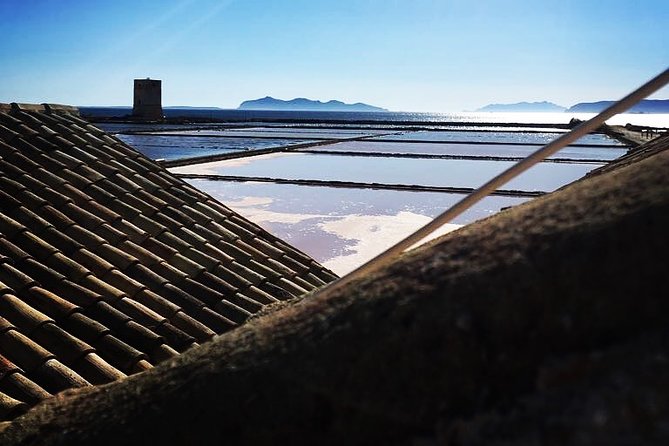
At Salina Calcara, also called Salina Chiusicella in the tour description, the guide explains the four orders of salt tanks. This is one of the most useful parts of the experience because it explains the basic mechanics of salt making.
Seawater does not become harvestable salt in one large pond. It passes through a series of shallow tanks. As the water evaporates, the salt concentration changes. The guide explains how the stages transform seawater into crystals and how the workers manage that process.
This is where Alessio’s teaching style seems especially valuable. He is praised for making complicated details easy to follow, including old measurement practices and the practical thinking behind the salt workers’ tools and buildings. One unusual detail concerns the use of twelve as a divisor rather than the decimal system based on ten. Another connects roof-tile width with the artisan’s thigh, a reminder that older work often relied on body measurements and local custom.
The open pans also offer the best chance for bird watching. Flamingos may be the stars, but herons, egrets, and Italian stilts add plenty of interest. You may find yourself switching between the guide’s explanation and the water’s edge, searching for movement among the reflections.
The nature reserve is not a manicured garden. The appeal comes from working salt pans, birds, wind, and wide views. That also means the visit can feel exposed. Sun, wind, or clouds will affect your comfort and the quality of the views.
Still Sicily, but a slower afternoon:
- From Trapani: Day Cruise to Favignana & Levanzo with Lunch
★ 4.3 · 1,483 reviews - Stromboli: Sunset Trekking at Sciara del Fuoco
★ 4.6 · 1,372 reviews - Etna Morning Trip
★ 4.5 · 1,241 reviews - Boat Tour Egadi Day discover Favignana and Levanzo from Trapani
★ 5.0 · 1,183 reviews
Saline Culcasi and the Salt Museum
The longest stop takes place at Saline Culcasi. Here, you enter an ancient mill more than 600 years old, now preserved as a Salt Museum. This is the central historical part of the tour.
Inside, you learn how salt was collected and how the mill operated. The display covers tools, working roles, hierarchies, and the place salt held in local life. The guide also explains the difference between past and present methods, including the ways some parts of harvesting remain partly manual.
That last point gives the museum more weight. You are not only looking at machinery from a vanished industry. You are seeing equipment linked to a practice that still shapes the area. The mill helps explain the labor behind the product on your table.
The museum is described as small but worthwhile. I would not plan this as a large, polished museum experience. Its value comes from the old structure, the working tools, and Alessio’s explanation. Without that context, some of the objects could be hard to understand.
The building also includes a family salt farm, old structures, and a rooftop windmill. These details help you see how production, storage, and family life once fit together. The setting is particularly attractive in the late afternoon, when the old buildings and salt pans take on warmer colors.
Tasting fleur de sel and flavored crystals
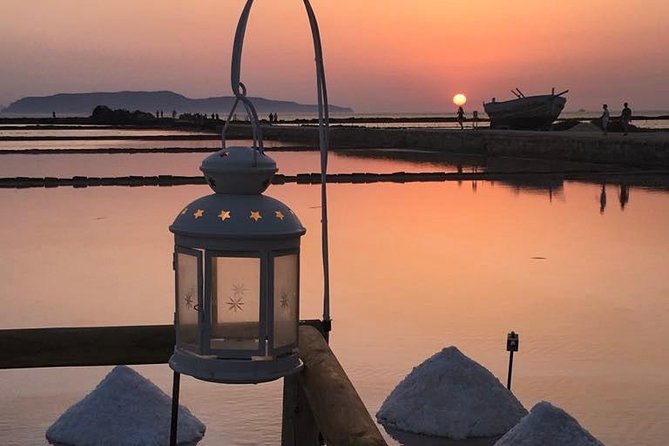
The tasting gives the tour a direct, practical finish. You sample different salt crystals and compare their textures and flavors. The highlight is fleur de sel, the delicate surface salt often treated as the most prized part of the harvest.
You also taste flavored fleur de sel with orange, lemon, rosemary, oregano, and other seasonings. This is a small part of the tour, but it gives you a clearer idea of how salt differs beyond the basic label of salty. Fine crystals, larger grains, natural salt, and flavored salt each have different uses in the kitchen.
The tasting is included in the $60.46 price. That matters because the tour is not simply a ride to a museum. Your fee covers the air-conditioned vehicle, guide, museum ticket, all listed taxes and fees, three salt pans, the salt worker’s path, and the tasting.
Still, the price is not automatically a bargain for every visitor. If you have a rental car and only want to see the museum, driving there may cost less. I would pay for this tour when I wanted the full explanation, several sites, and a guide who could connect the process to regional culture. I would skip it if I preferred a quick self-guided stop.
Walking the salt worker’s path

After the museum and tasting, you follow the path of the salt worker inside the pans. This is the most physical section, though it is presented as a suggestive walk rather than a strenuous hike.
The path helps you understand the scale of the work. Salt production is not just a machine turning seawater into a product. It involves moving through the pans, checking the water, collecting crystals, and working with conditions that change by season and weather.
The tour gives you a glimpse of that routine without pretending you are taking part in a full harvest. If you want to see the largest piles of newly collected salt, July through September may be the strongest period for photographs. Outside harvest season, you can still see the pans and learn how they function, but the working activity may feel less dramatic.
Wear shoes you can walk in and expect outdoor conditions. The experience is short enough for most people, and the information says most participants can join, but the exact comfort level will depend on weather and the state of the path.
Sunset, timing, and the optional aperitivo
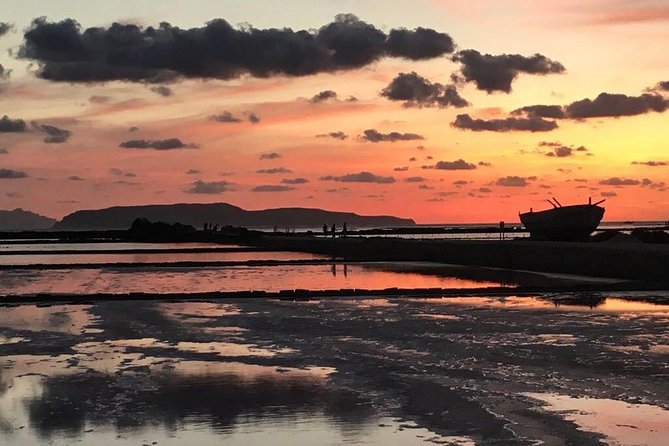
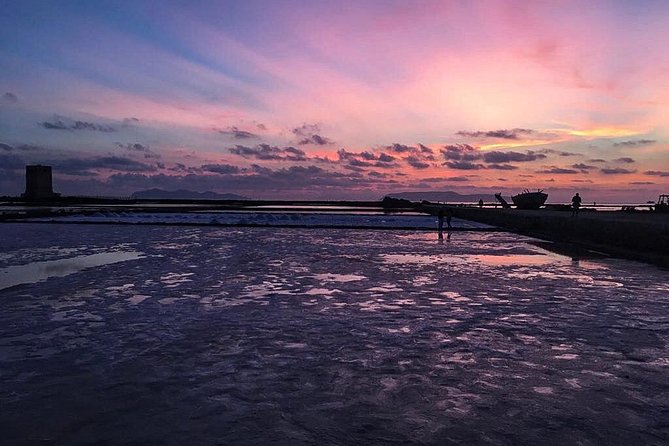
The tour’s timing can make a major difference. Several outings have been arranged around sunset, and the evening light over the salt pans can be beautiful. The low sun brings out reflections in the water and adds color to the old mills and salt heaps.
Do not book solely for a guaranteed sunset, though. Clouds can block it, and weather affects the experience. The tour requires good weather, so poor conditions may lead to a different date or a full refund.
One practical warning concerns an aperitivo sometimes offered at the salt pans after the main experience. It costs an additional 10 euros and can extend the outing well beyond the stated two hours and thirty minutes. That may sound pleasant, especially in such a setting, but it can create trouble if you have a fixed dinner reservation.
Ask before the tour starts whether the aperitivo is planned and whether you can decline it. The salt tour itself is not advertised as including this extra, and your schedule should not be held hostage by a last-minute group decision.
How Alessio shapes the experience
The guide is a major reason this tour receives such strong praise. Alessio is described as warm, entertaining, flexible, and deeply informed about salt production. He has worked in hospitality and has lived and traveled around the world before returning to Sicily, which gives him a broad frame for explaining Trapani’s salt.
His approach seems to combine facts with stories. You learn about mills, tools, measurements, roof tiles, work roles, and the differences between salt types. You also hear how the industry shaped the culture of the region and how Trapani’s salt compares with salt made elsewhere.
That makes a difference in a subject that could otherwise become technical. Alessio is also praised for explaining the process simply enough for children, while still offering details that interest adults who cook or teach history.
The language offered is English. Italian is also used, and one French-speaking couple found that they needed to make some effort to follow the English explanations. If English is not comfortable for you, keep that in mind.
Who should book this salt tour?
I would recommend it to you if you enjoy local industries, working traditions, food, birds, old machinery, and scenic evening outings. Families can find it accessible because the salt-making process can be explained in simple terms, while the tasting gives children and adults something concrete to enjoy.
It also suits couples looking for a quiet sunset activity. The old mills and reflective pans create a more unusual setting than another restaurant or city walk.
Food lovers will get extra value from the crystal tasting. You will leave with a better understanding of why fleur de sel costs more and how flavored salt can be used. The tour does not replace a cooking class, but it gives your meal in Sicily a stronger sense of place.
I would be more cautious if you are traveling on a tight budget, already have a car, or only want the museum. In that case, the price may feel high. I would also avoid committing to an evening restaurant reservation immediately after the tour unless you confirm the exact finish time and refuse the extra aperitivo if necessary.
The activity is commonly booked well ahead, with an average booking lead time of about thirty days. Free cancellation is available up to twenty-four hours before the start time. If the minimum number of participants is not reached, or bad weather cancels the outing, you can choose another date or receive a full refund.
Should you book the Trapani salt tour?
Book it if you want the salt pans explained rather than simply photographed. The strongest reasons are the three separate sites, the old mill museum, the included tasting, and Alessio’s ability to turn salt production into a clear local story.
Skip it if you can easily drive to Saline Culcasi and prefer to explore independently. At $60.46, the tour earns its price through transport, guiding, access, and interpretation, not through luxury.
For most first-time visitors to western Sicily, I think it is a worthwhile half-evening. Choose a time near sunset if the schedule suits you, ask about the group size, confirm whether an aperitivo is planned, and leave room around dinner. You may arrive thinking salt is just salt. You will leave noticing the difference.
FAQ
Where does the salt tour begin?
It begins at the Vigili del Fuoco fire station at Via Ammiraglio Staiti 101, 91100 Trapani, near the port.
Where does the tour end?
The experience ends back at the same meeting point in Trapani.
How long does the tour last?
The tour lasts approximately two hours and thirty minutes.
What is the price?
The listed price is $60.46 per person.
What language is the tour offered in?
The tour is offered in English.
Is transportation included?
Yes. An air-conditioned vehicle is included, along with travel between the salt pans.
What is included in the ticket?
The tour includes the guide, all fees and taxes, entry to the Salt Museum, visits to three salt pans, the salt worker’s path, and a tasting of salt crystals and flavored fleur de sel.
Is the aperitivo included?
No. An aperitivo may be offered as an extra for 10 euros, but it is not included in the listed tour price.
Can I cancel for a full refund?
Yes. You can cancel at least twenty-four hours before the start time for a full refund. Changes or cancellations made less than twenty-four hours before the start are not accepted for a refund.
What happens if bad weather cancels the tour?
If poor weather causes cancellation, you will be offered another date or a full refund. If the minimum number of participants is not reached, you will be offered another date, another experience, or a full refund.
Recently added around Sicily
- Trapani: Salt Pans Sunset Tour and Flamingo Way★ 4.4 · 252 reviews
- Trapani: 2-Hour Salt Flats Tour★ 4.9 · 286 reviews
- Boat tour to Egadi Favignana and Levanzo islands from Trapani★ 5.0 · 614 reviews
- Mini Cruise to Favignana and Levanzo with lunch on board★ 4.0 · 270 reviews
- Full Day Boat Tour San Vito Lo Capo to Castellammare del Golfo★ 5.0 · 292 reviews
- 8-Hour Boat Tour from Castellammare del Golfo to San Vito Lo Capo★ 5.0 · 357 reviews
- Egadi Islands Tour: Favignana and Levanzo from Trapani★ 5.0 · 607 reviews
- Favignana and Levanzo, Egadi islands tour by boat from Trapani★ 5.0 · 720 reviews
Sicily Tours, compared.
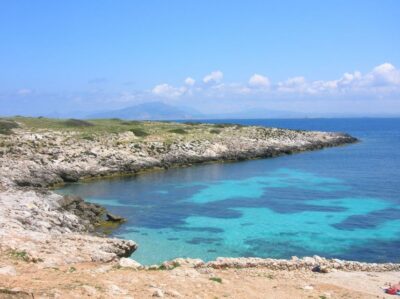
From Trapani: Cruise to Favignana and Levanzo with lunch
Read our review →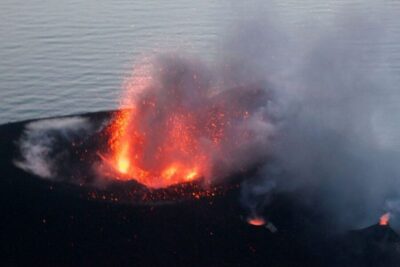
From Milazzo: Panarea and Stromboli Boat Trip by Night
Read our review →
Agrigento: Valley of the Temples Skip-the-Line Sunset Tour
Read our review →
From Trapani: Day Cruise to Favignana & Levanzo with Lunch
Read our review →
Stromboli: Sunset Trekking at Sciara del Fuoco
Read our review →

Boat Tour Egadi Day discover Favignana and Levanzo from Trapani
Read our review →
Browse the lists this tour appears in