Reviewed · ROME TOURS
Rome: Welcome To Rome Immersive Multimedia Show
Rome makes more sense when you see its layers. This compact multimedia show turns 2,700 years of Roman history into a 27-minute visual journey, using projections, sound, narration, and a large city model. I like its clear timeline and its clever way of showing how ancient ruins, churches, palaces, and modern streets came to share the same city.
I also like the freedom to arrive at any point during opening hours, since the presentation runs continuously. The main drawback is value: at $21 per person, it is not a cheap one-hour stop, especially if you have already booked several major sights. Still, families, first-time visitors, and anyone who wants a quick overview will get useful context here.
In This Review
- Key points at a glance
- Why this short show helps you understand Rome
- Entering the former Cinema Augustus
- The 27-minute projection through 2,700 years
- Four models that make famous monuments clearer
- Why the timing matters
- How long you should allow
- Audio guides and family appeal
- Is $21 a fair price?
- Who should book Welcome To Rome?
- Practical advice before you go
- Should you book it?
- FAQ
- Where is Welcome To Rome located?
- How long does the main show last?
- How long should I allow for the full visit?
- Can I arrive at any time?
- When does the last show begin?
- Which languages are available?
- Is the audio guide included?
- Is the experience wheelchair accessible?
- What landmarks are covered by the interactive models?
- Is this a good activity for children?
- Can I cancel my booking?
- Can I reserve now and pay later?
Key points at a glance
- A 27-minute flight through Rome: Watch the city change from its earliest days through imperial, medieval, Renaissance, and modern periods.
- A large illuminated model: See Rome’s growth spread across the city in a way that ordinary sightseeing rarely makes clear.
- Four interactive masterpieces: Explore the Imperial Forum, Augustus Forum, Mausoleum of Adrian, and St. Peter’s Basilica.
- Nine audio-guide languages: Choose Italian, English, Spanish, French, German, Russian, Chinese, Croatian, or Japanese.
- Best timing: Go near the beginning of your Rome visit, then use the story as a map for the monuments you see afterward.
- Easy central location: The entrance is at Corso Vittorio Emanuele II, 203, a few hundred meters from Piazza Navona.
Why this short show helps you understand Rome
Rome can be confusing at first. You walk past a temple beside a church, see an ancient wall behind a traffic lane, and find imperial ruins surrounded by modern apartment buildings. The city did not replace one age with another. It kept building on top of itself.
That is the central value of Welcome To Rome. Instead of asking you to memorize names and dates, the presentation shows Rome changing over time. You see the city expand, monuments appear, and political and religious power reshape the same streets.
I would not treat this as a substitute for the Colosseum, Roman Forum, Pantheon, or Vatican Museums. It is a primer, not the main course. But a primer can be very useful in Rome, where even a famous ruin can be hard to interpret without a sense of what once surrounded it.
The format also helps if your group has mixed interests. A history enthusiast gets a timeline. A child gets moving images and a glowing model. Someone with limited time gets an overview without committing to a long guided tour.
A few more Rome bookings to compare
- Rome: Gladiator Show and Museum Tickets
★ 4.5 · 237 reviews - Glass Blowing Show Visit Murano Glass Factory & Showroom OMG
★ 4.2 · 679 reviews
Entering the former Cinema Augustus
The show is housed inside the former Cinema Augustus on Corso Vittorio Emanuele II. This is a convenient stop if you are walking between Piazza Navona and other central sights. The location makes it easy to fit into a day of sightseeing rather than requiring a separate trip across town.
The visit begins with the exhibition areas and interactive models before or around the main projection experience. Exact movement through the rooms may feel a little informal. One visitor specifically wished for clearer signs showing which exhibits to see first, so keep your eyes open for the intended order instead of wandering without a plan.
The venue is accessible to people with disabilities. That is important because Rome’s ancient streets and archaeological sites can be difficult for anyone with limited mobility. The available information does not promise seating throughout the exhibition areas, however, and one visitor noted that an older family member had trouble standing for long stretches. If you need frequent seats, ask the staff when you arrive.
Staff members are described as friendly and helpful, and the entrance process is generally simple. With a reserved ticket, you can skip the ticket line. The show runs continuously during opening hours, so you are not tied to one exact presentation time. The final show begins one hour before closing, a detail worth checking if you plan to arrive late.
The 27-minute projection through 2,700 years
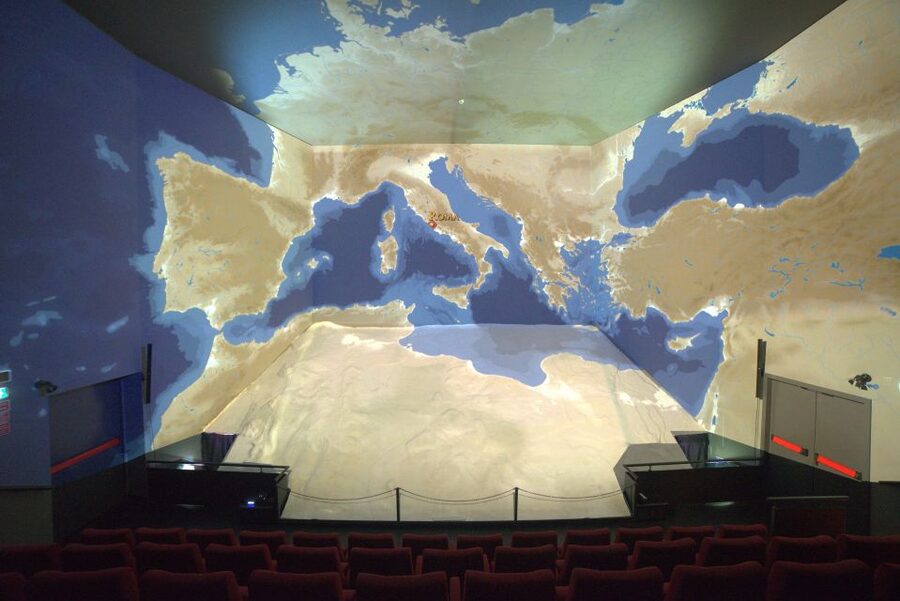
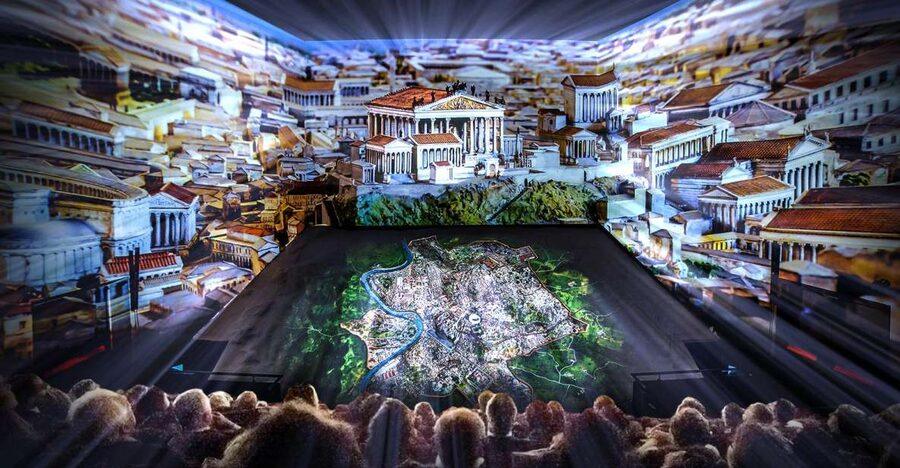
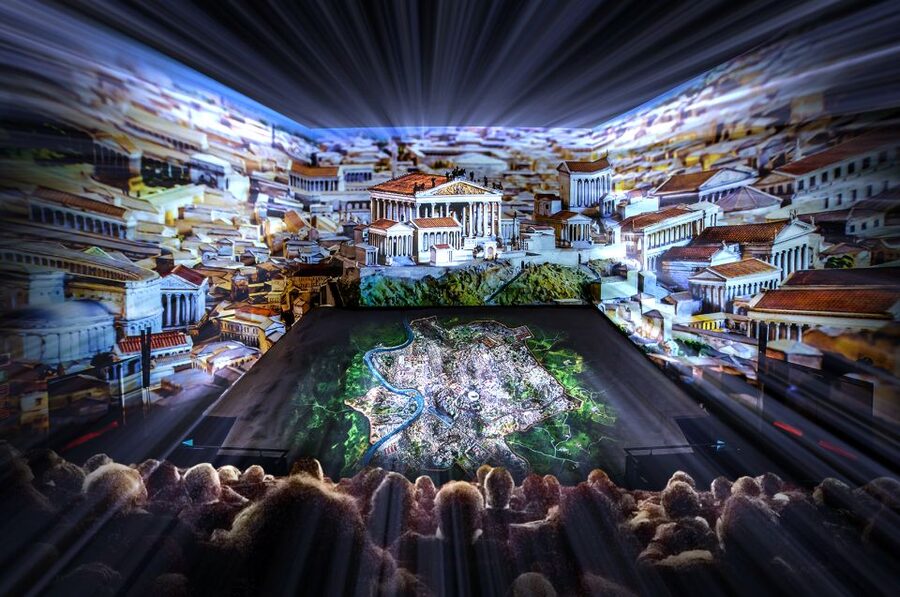
The main event uses projections on walls and ceilings, with a large model of Rome on the floor. The city lights up and changes as the narration moves through its different ages.
The clever part is the sense of movement. The presentation gives you the illusion of flying over Rome, then carries you inside monuments, palaces, churches, and squares. You are not just looking at a list of famous buildings. You are watching them appear within the larger city.
The show covers Rome from its earliest development through the Roman imperial period and later centuries. The information is arranged in chronological order, which makes a difficult subject easier to follow. Rome’s past includes kings, republics, emperors, religious transformation, political decline, artistic renewal, and modern growth. A 27-minute presentation cannot cover every detail, but it can give you the framework needed to place the details.
The large floor model is especially useful. From street level, Rome’s ancient center can seem like a collection of disconnected ruins. From above, you can see how the forums, monuments, and neighborhoods relate to one another. This bird’s-eye view helps explain why the city’s old center mattered and how its later development spread beyond it.
The production is polished enough to hold attention. Several people praised the quality of the 3D animation and the way the visuals bring ancient buildings back to life. The presentation also uses technology, including computer-generated imagery, to suggest what Rome may have looked like before centuries of collapse, rebuilding, and adaptation.
Do not expect a detailed academic lecture. The narration is designed to be clear and digestible. That is a strength for most visitors, but serious Roman history students may find it broad rather than probing. The aim is to give you a strong orientation, not settle every debate about ancient Rome.
Four models that make famous monuments clearer
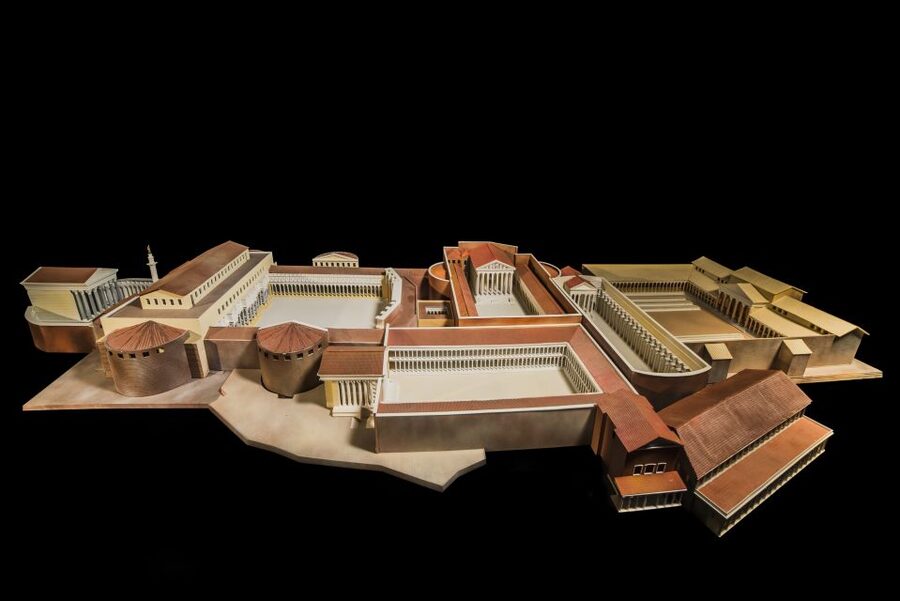
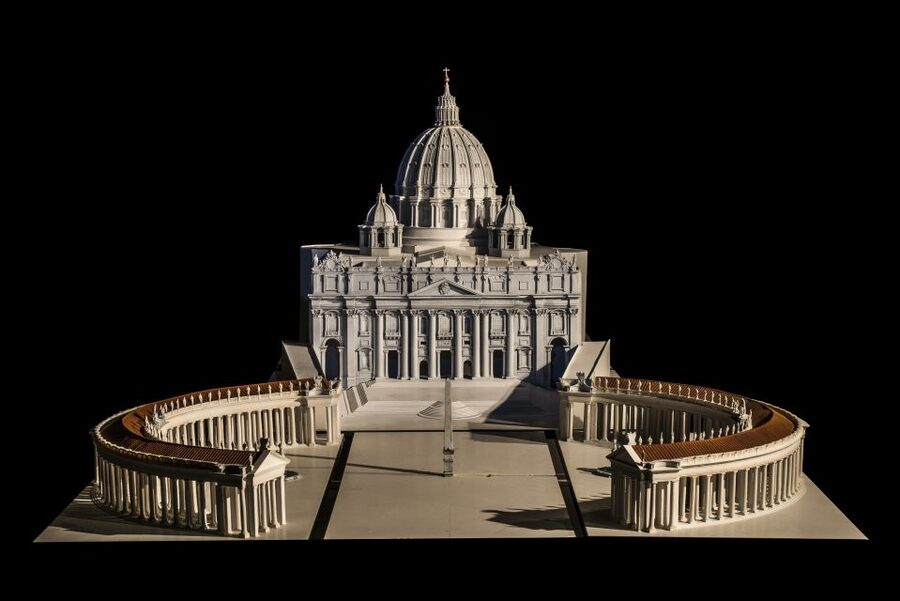
After or around the projection, you can examine four large interactive models. These focus on the Imperial Forum, the Augustus Forum, the Mausoleum of Adrian, and St. Peter’s Basilica.
The Imperial Forum model helps you see the scale and density of the ancient political center. Today, you encounter fragments, columns, walls, and open archaeological areas. A model can show how those pieces once fit into a planned urban setting.
The Augustus Forum gives you a closer look at one of the imperial forums and its role in Rome’s public image. The model format is valuable here because the original structures are incomplete, while the display can show their intended arrangement.
The Mausoleum of Adrian, now associated with Castel Sant’Angelo, offers another example of Rome changing purpose over time. The model lets you focus on the monument’s form and setting, details that are easy to miss when you see only the later fortified building.
The St. Peter’s Basilica model shifts the story from ancient Rome to the city’s Christian and papal identity. It also gives you a chance to understand the church as a major architectural project rather than simply a vast interior you visit on foot.
These models are not a replacement for seeing the actual sites. Their value is spatial. They give you a way to picture buildings in three dimensions and understand the relationship between structure, surrounding streets, and the wider city.
Still Rome, but a slower afternoon:
- Vatican: Museums & Sistine Chapel Entrance Ticket
★ 4.5 · 144,003 reviews - Vatican Museums & Sistine Chapel Tour with Optional Basilica
★ 4.3 · 67,413 reviews - Colosseum, Roman Forum & Palatine Guided Tour
★ 4.7 · 63,148 reviews - Vatican Museums, Sistine Chapel & St Peter’s Basilica Guided Tour
★ 4.5 · 39,149 reviews
Why the timing matters
I would recommend visiting Welcome To Rome near the start of your stay. That advice came through repeatedly for good reason. If you see the show before the Colosseum, Forum, Pantheon, or Vatican area, you already have a basic sequence in mind.
Then, when you stand among broken columns or look at a church built over older foundations, the scene has more meaning. You may recognize the period, the political purpose, or the way the building fits into Rome’s growth. The show does not make the real monuments less impressive. It gives you a better chance of noticing what you are looking at.
There is also a good case for visiting after sightseeing. If you have already walked through the Forum or explored central Rome, the projections can pull scattered impressions into one story. Places you have seen at ground level may suddenly make sense when they appear together on the model.
For a short Rome visit, this can be especially useful. You may not have time for a full history book or a long lecture. An hour here gives you a quick structure for the rest of your trip.
How long you should allow
The central projection lasts 27 minutes. In practice, allow about an hour for the full visit if you want time with the four interactive models and the other exhibition areas.
The continuous format gives you flexibility. You can start when you arrive instead of waiting for a scheduled departure. That helps if you are planning around lunch, a museum reservation, or a family member who needs a slower pace.
The format is also useful in hot weather. One visitor appreciated the show as a cool indoor break, and the presentation gives you a chance to sit during the main film. However, not every area necessarily has seating, so do not assume the entire visit is a rest stop.
Going early may give you a quieter experience. One visitor arrived first thing in the morning and found the venue nearly empty. Crowd levels can change, but an early visit is a sensible choice if you want more time with the models.
Audio guides and family appeal
The audio guide is included in nine languages: Italian, English, Spanish, French, German, Russian, Chinese, Croatian, and Japanese. This makes the experience practical for international groups and removes the need to depend on English-language explanations.
The presentation works well for many families because it combines a simple historical sequence with large moving images. Children around school age may enjoy seeing Rome appear and change, while adults can follow the political and architectural story.
The age range is not unlimited. One parent found the show suitable for children but noted that very young children may not stay entertained. That is fair. The program is educational, and although the images are dramatic, it is still a history presentation rather than a theme-park attraction.
For a family with children around eight to twelve, I would consider it a strong introduction. Older parents may appreciate the short length and indoor setting, though the standing areas deserve attention if mobility is an issue.
Is $21 a fair price?
At $21, this is a mid-priced introduction to Rome. You are paying for a produced multimedia presentation, an audio guide, the interactive models, and the convenience of a central location.
The value depends on how you use it. If you visit at the start of your trip and let it shape several days of sightseeing, the price feels easier to justify. If you only want a 27-minute film and rush out, it may feel high.
Some visitors considered a price closer to $12 to $15 more appropriate for roughly an hour. That criticism is worth taking seriously. This is not a major archaeological site, and your ticket does not include entry to the Colosseum, Forum, or St. Peter’s Basilica.
On the other hand, the show offers something those places cannot: a single visual explanation of Rome’s development. For first-time visitors who feel overwhelmed by the city, that organizing view may be worth more than another small museum stop.
I would rate it as good value for families, short-stay visitors, and people who enjoy visual learning. If your budget is tight and you already have a packed list of paid attractions, make it optional rather than essential.
Who should book Welcome To Rome?
You should consider it if:
- This is your first visit to Rome.
- You want a clear introduction before touring ancient sites.
- Your group includes children or several generations.
- You learn better through images and models than through long text panels.
- You need a short indoor activity near Piazza Navona.
- You want to understand how ancient and modern Rome overlap.
- You have limited time and need a quick historical framework.
You may skip it if you prefer detailed museum displays, live guides, or original artifacts. The production is broad and fast. It gives you the shape of Rome’s story, but you will need the actual monuments, museums, or a specialist guide for depth.
Practical advice before you go
Reserve ahead if you want the flexibility of paying later and free cancellation up to 24 hours before the visit. The ticket is valid for one day, and the exact starting options depend on availability.
Plan your visit around the final entry rule. The last show starts one hour before closing, so a late arrival can leave too little time for the full experience.
At the entrance, ask about the best order for the models and exhibitions. Clearer signposting would help, and a quick question can save you from walking around aimlessly.
If you are traveling with an older adult or anyone who cannot stand for long, mention that before beginning. The projection area offers a chance to sit, but seating in the other rooms may be limited.
Should you book it?
Book it if you want Rome to make sense before you explore it. The strongest reason to go is not the novelty of the projections. It is the way the show connects Rome’s scattered monuments into one timeline and one city.
I would place it early in a first Rome visit, ideally before major ancient-site tours. If you have already seen the ruins, it still works as a useful recap. At $21, it is not a must for every budget, but it is a smart orientation stop for families, first-time visitors, and anyone who looks at Roman ruins and thinks, What exactly am I seeing?
FAQ
Where is Welcome To Rome located?
The entrance is at Corso Vittorio Emanuele II, 203, in Rome. It is a few hundred meters from Piazza Navona.
How long does the main show last?
The main multimedia projection lasts 27 minutes.
How long should I allow for the full visit?
The full experience may take about an hour if you allow time for the projection, four interactive models, and the other exhibition areas.
Can I arrive at any time?
Yes. The show runs continuously during opening hours, so you can begin your visit at any point during that period.
When does the last show begin?
The last show starts one hour before closing time.
Which languages are available?
The audio guide is available in Italian, English, Spanish, French, German, Russian, Chinese, Croatian, and Japanese.
Is the audio guide included?
Yes. An audio guide is included with admission.
Is the experience wheelchair accessible?
Yes. The projection and interactive exhibits are accessible to people with disabilities.
What landmarks are covered by the interactive models?
The models cover the Imperial Forum, Augustus Forum, Mausoleum of Adrian, and St. Peter’s Basilica.
Is this a good activity for children?
It can be a good choice for children, especially those interested in visual presentations and history. Very young children may not remain entertained throughout the educational content.
Can I cancel my booking?
You can cancel up to 24 hours in advance for a full refund.
Can I reserve now and pay later?
Yes. The reserve-now, pay-later option allows you to hold your plans without paying immediately.
Recently added around Rome
- Palatine Hill and Roman Forum Tour with Fast-Track Entrance★ 4.2 · 417 reviews
- Tivoli: Villa D’Este & Villa Adriana Pass & App Audioguide★ 4.4 · 364 reviews
- From Rome: Villa D’Este & Villa Adriana Day Trip with Lunch★ 4.4 · 289 reviews
- Vatican Museums & Sistine Chapel Skip-the-Line Guided Tour★ 4.6 · 254 reviews
- Rome: The Three Tenors at St. Paul’s Church Concert Ticket★ 4.7 · 699 reviews
- Tivoli: Villa D’Este Entry Ticket and App Audio Guide★ 4.3 · 191 reviews
- Rome: Capitoline Museums and Centrale Montemartini Tickets★ 4.4 · 328 reviews
- Rome: St. Peter’s Basilica and Papal Tombs Guided Tour★ 4.6 · 477 reviews
Rome Tours, compared.
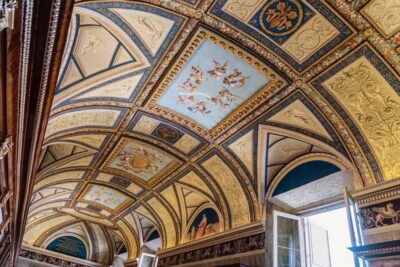
Vatican Museums & Sistine Chapel Tour with Optional Basilica
Read our review →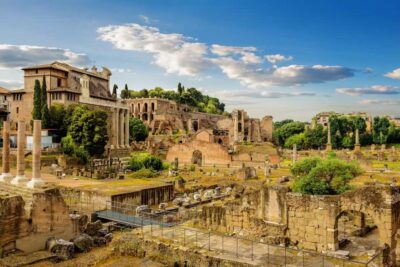
Colosseum, Roman Forum & Palatine Guided Tour
Read our review →
Vatican Museums, Sistine Chapel & St Peter’s Basilica Guided Tour
Read our review →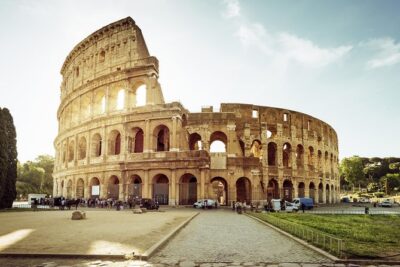
Colosseum, Palatine Hill and Roman Forum Guided Tour
Read our review →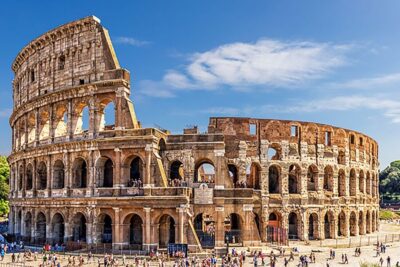
Guided Tour of Colosseum, Roman Forum & Palatine Hill
Read our review →
Colosseum & Forum with Audio Guide App -Optional Arena
Read our review →